Kyrgyz Nomad Lifeway

Daniil Sulaimanov


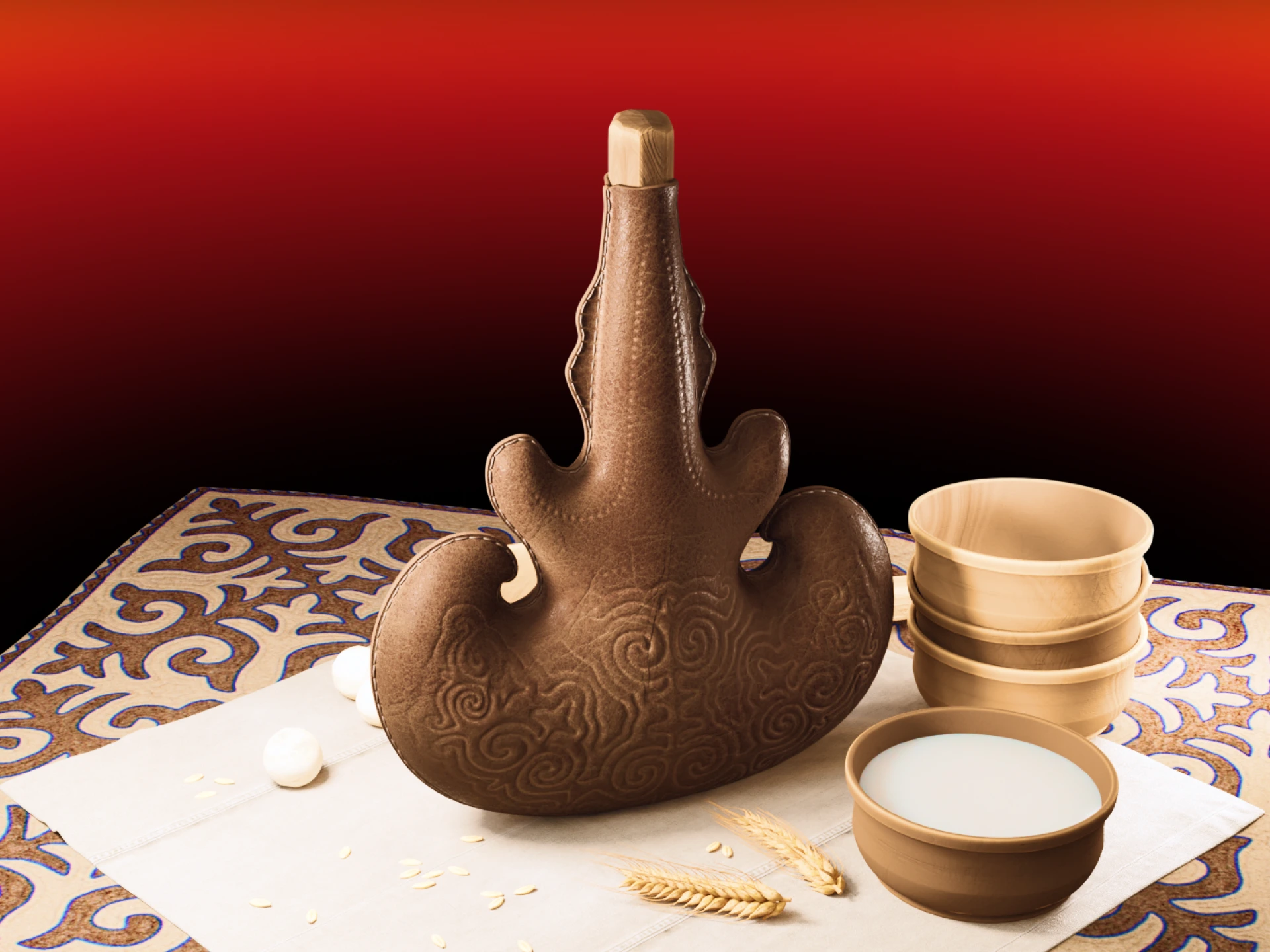
Kyrgyz Nomad Lifeway
Infographics and 3D visualization of Kyrgyz culture
Everyday objects, traditional crafts, and a strategy game, explained through 3D, animation, and interactive editorial features.
MY ROLE
Visual concept, 3D, diagrams, animation, photo editing, covers, and responsive Tilda pages.
TOOLS
Blender · After Effects · Illustrator · Photoshop · Tilda
Created primarily for people in Kyrgyzstan, the series introduces objects that are rarely encountered in urban life today. It also offers prospective visitors a closer look at the country’s culture.
The features were published separately. A shared approach to their design and presentation allowed me to bring them together as a series.
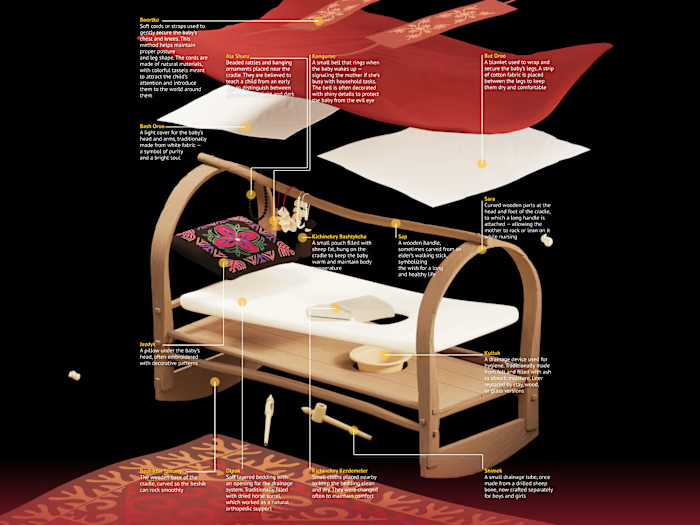
An overview of the series · 3D objects, materials, and animation
From references to a 3D object
Each feature began with an editor’s text, sometimes accompanied by photographs from the state archives. I studied the objects’ form and construction, found additional visual references, and clarified details with consultants. The editors supplied the texts and source materials; I handled the visual work and built the pages.
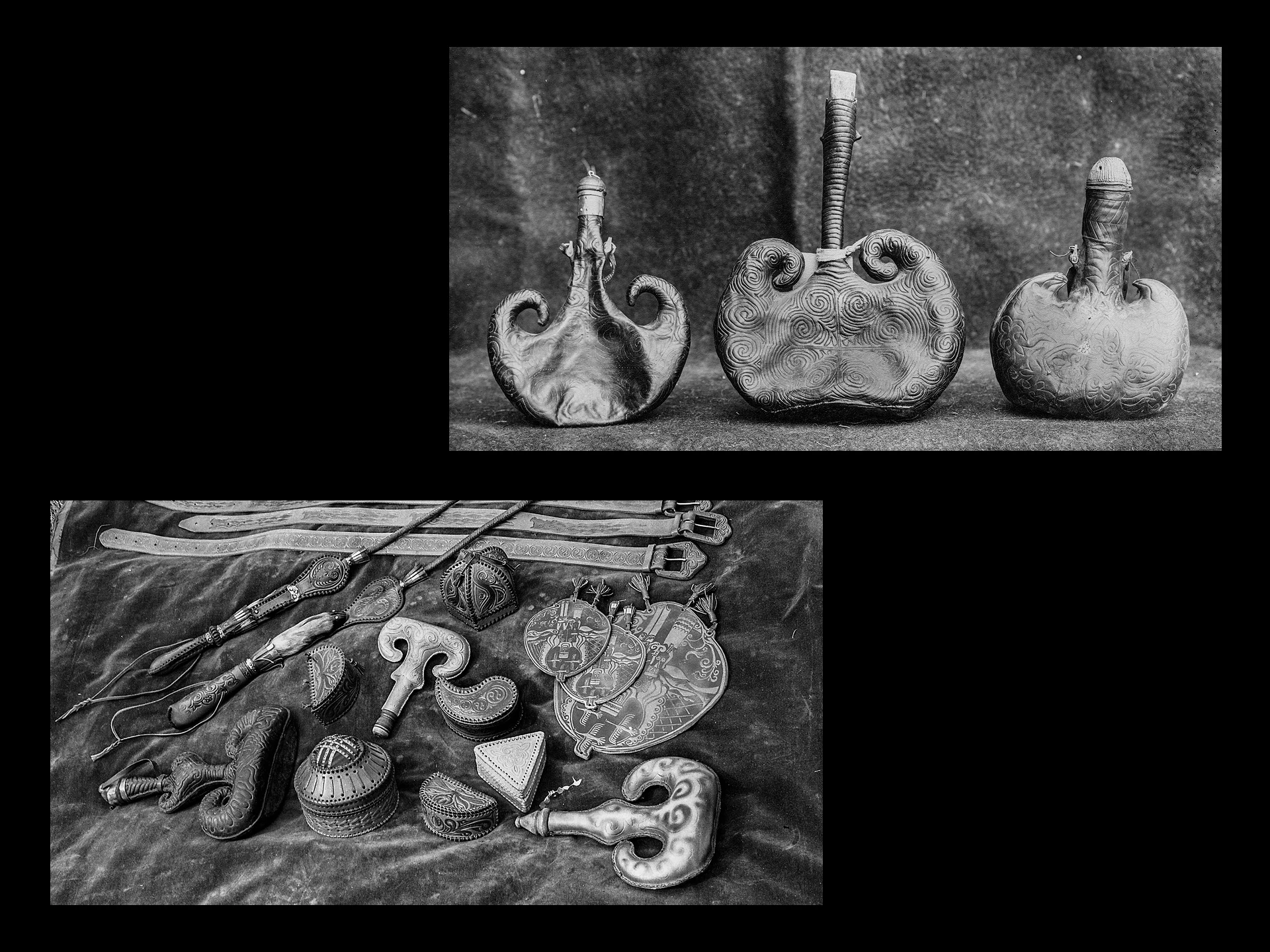
Archival images used to study form, ornament, and construction
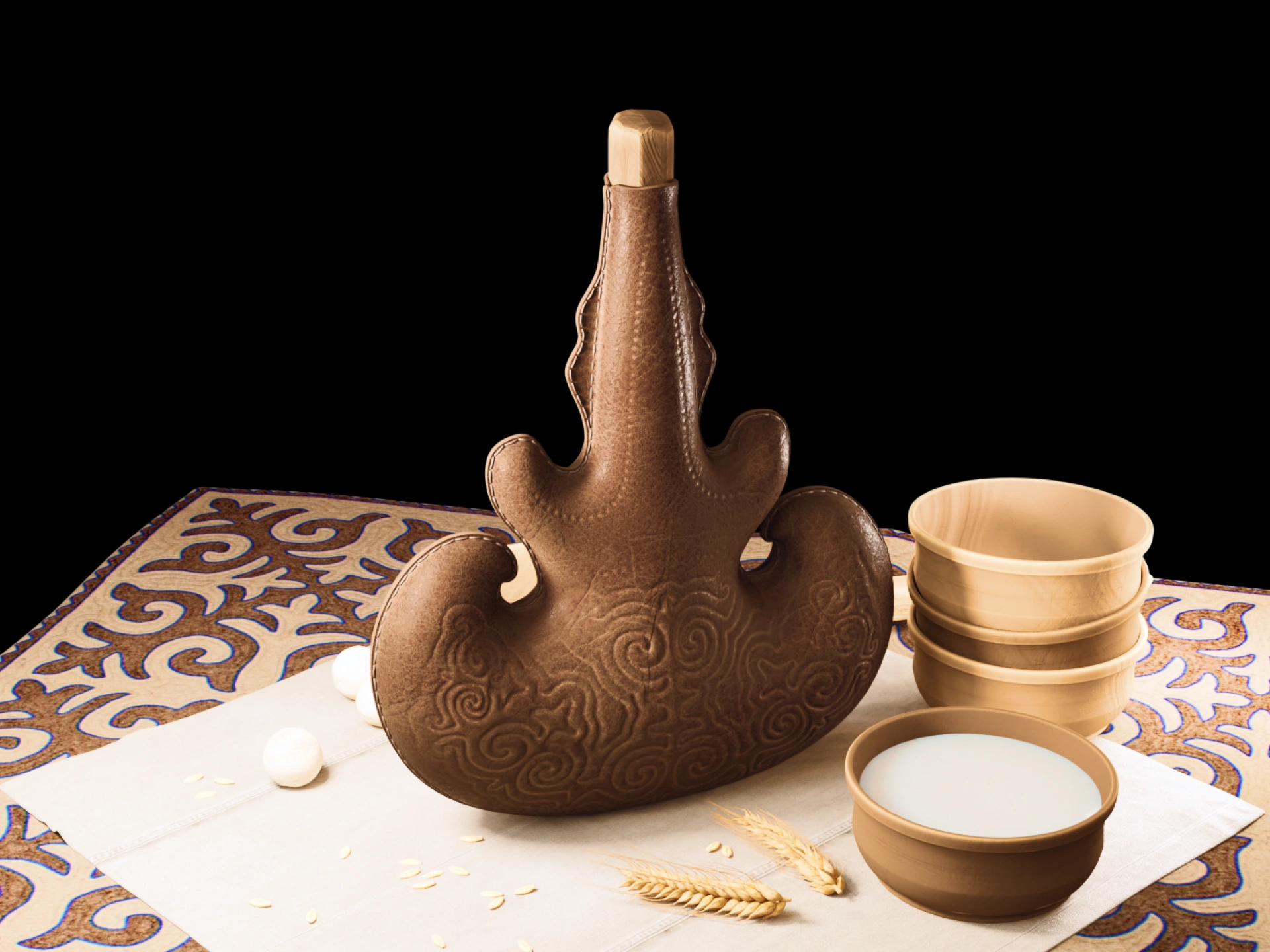
The finished visualization, with materials, lighting, and surrounding objects
Toguz Korgool: understanding the game before explaining it
I studied the rules of Toguz Korgool and played with a colleague on a physical board. I needed to understand what happened during a turn before explaining it visually. As I learned, I became interested in the game itself.
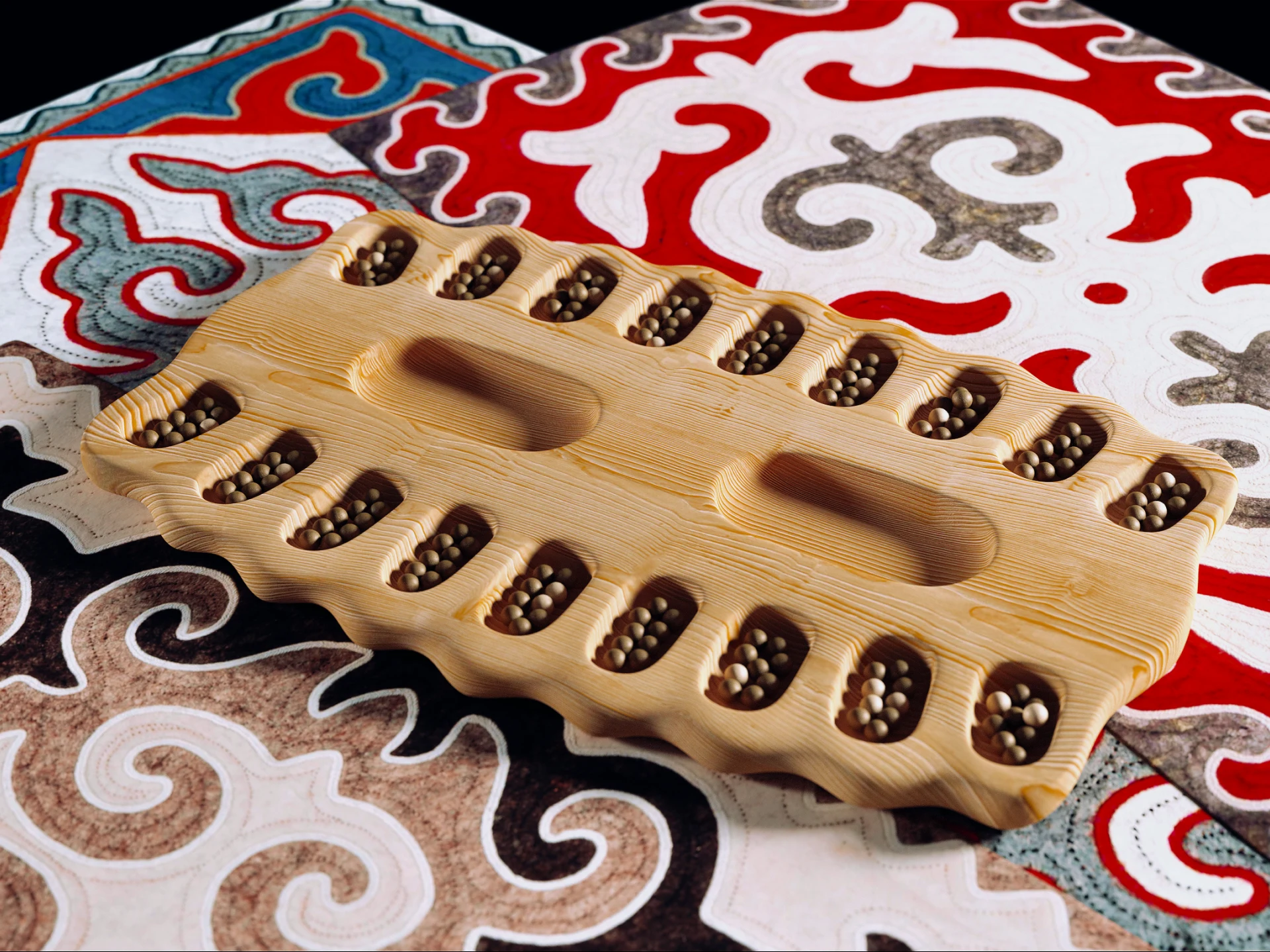
The board and playing stones, recreated in 3D
Following a move
The 3D view introduces the board. Animated diagrams explain the sequence of actions, showing how the stones move between pits. I drew the diagrams in Illustrator and animated them in After Effects.
A move explained through an animated diagram
Showing form and construction
Working on the bow meant understanding its shape and how it changes when the string is removed. I prepared the model, materials, lighting, and camera in Blender, then processed the rendered image sequences in After Effects.
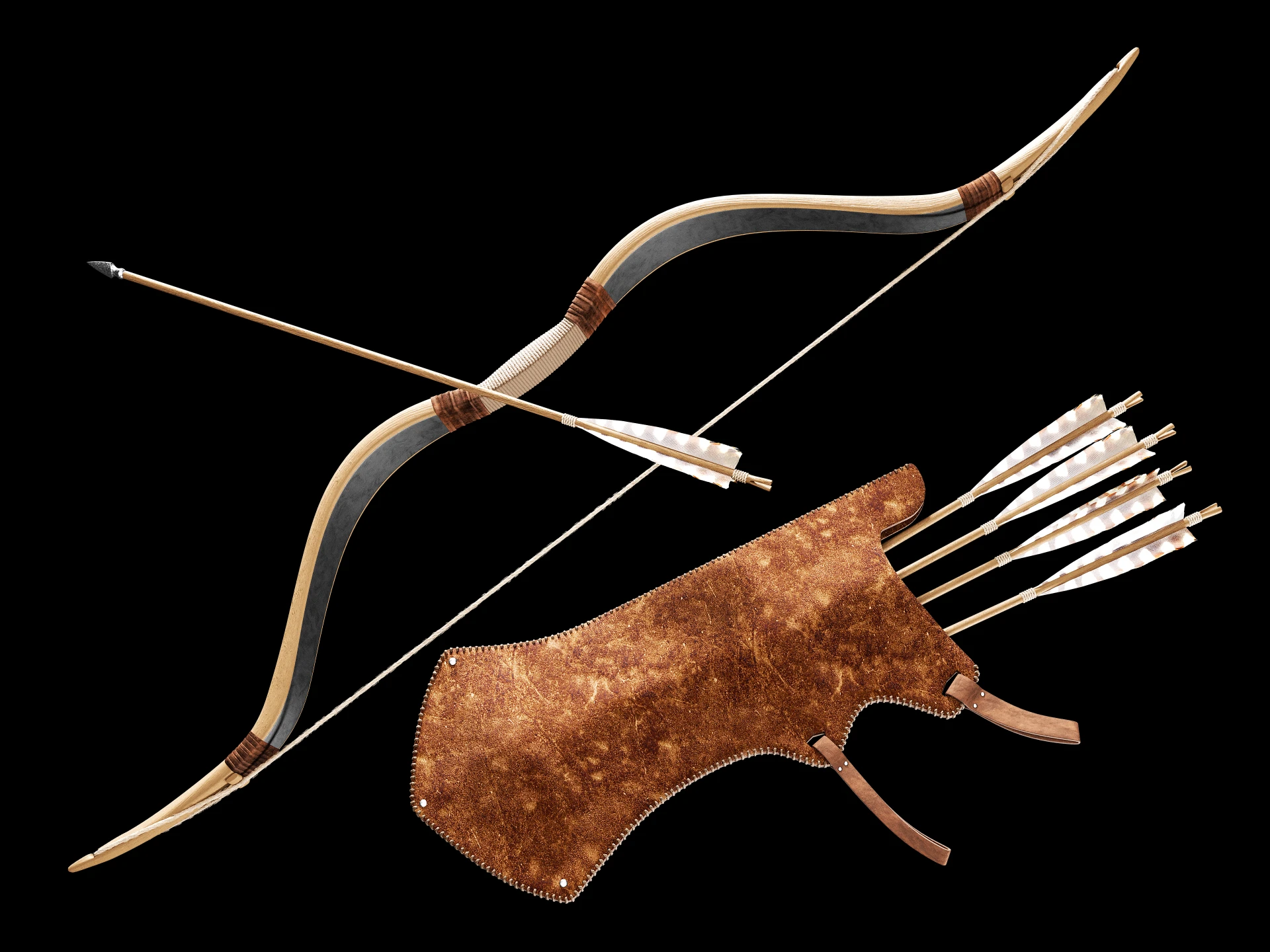
The change in shape from an unstrung to a strung bow
The finished render and the model without materials
Making materials visible
A black background keeps attention on silhouettes, surfaces, and details. I aimed for photorealism so readers could examine objects they might never have held: fuzzy wool thread, rough spindle whorls, carved wood, and metalwork.
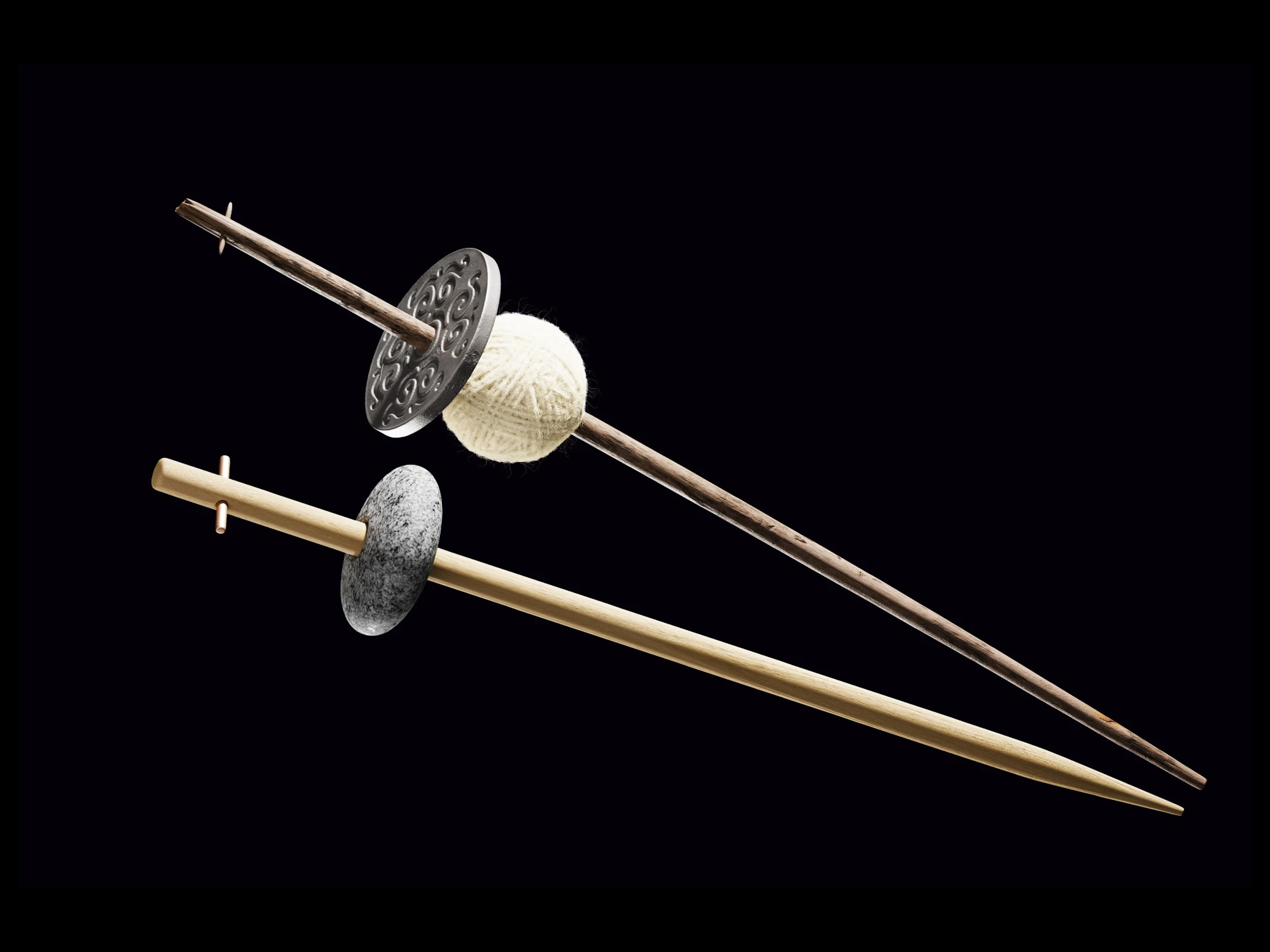
Iyik · Traditional spindles
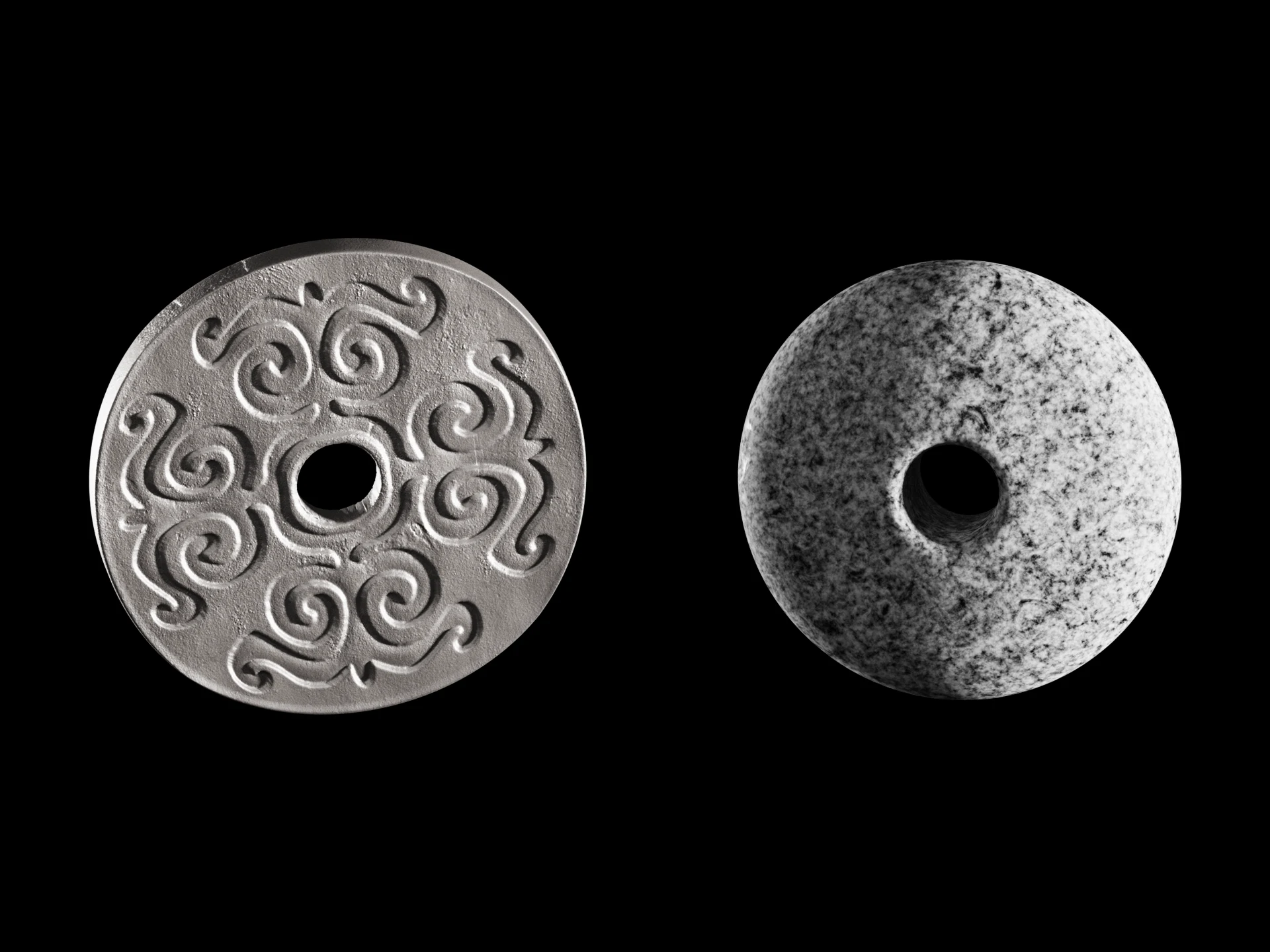
Surface detail and ornament on the spindle whorls
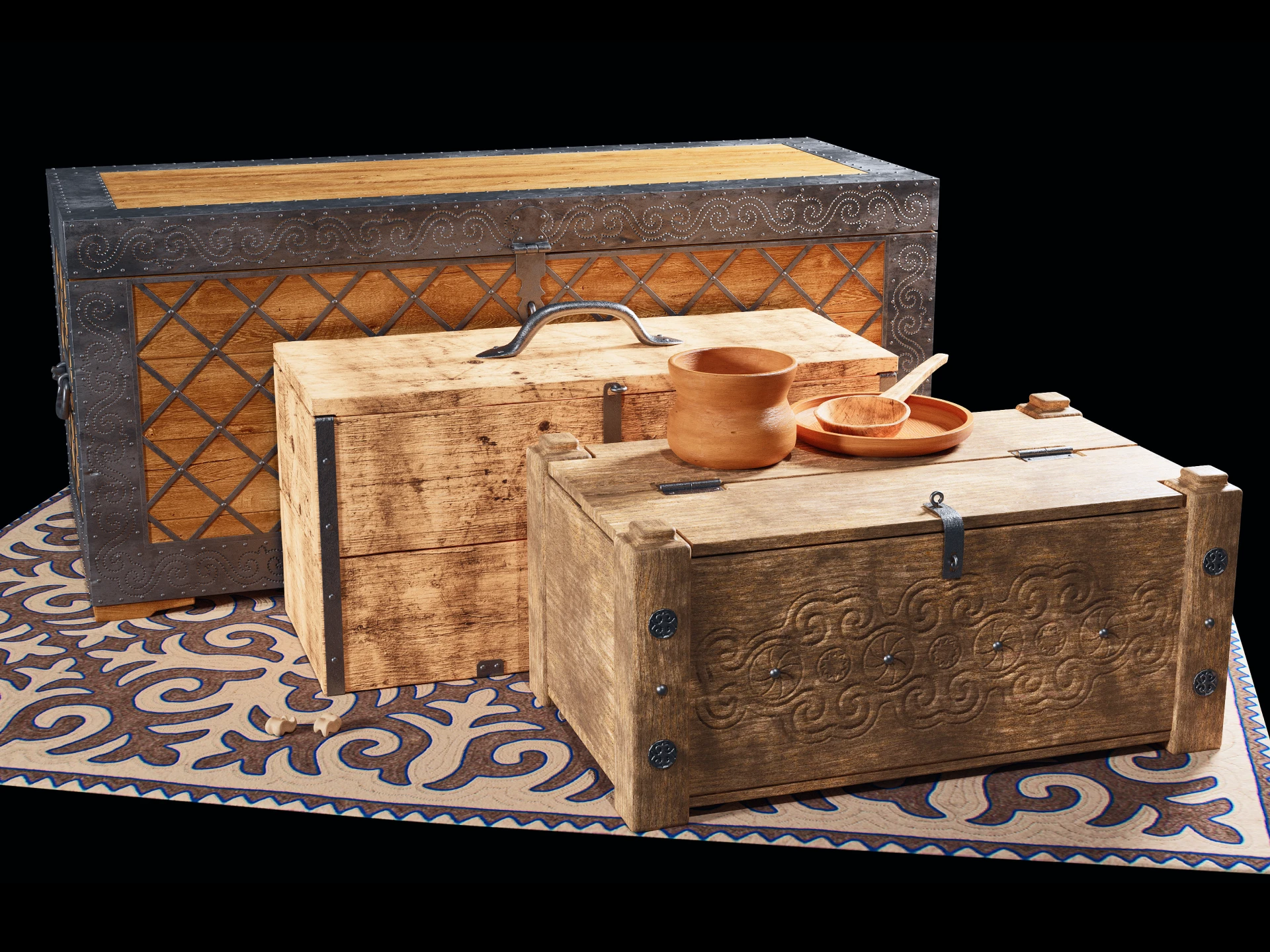
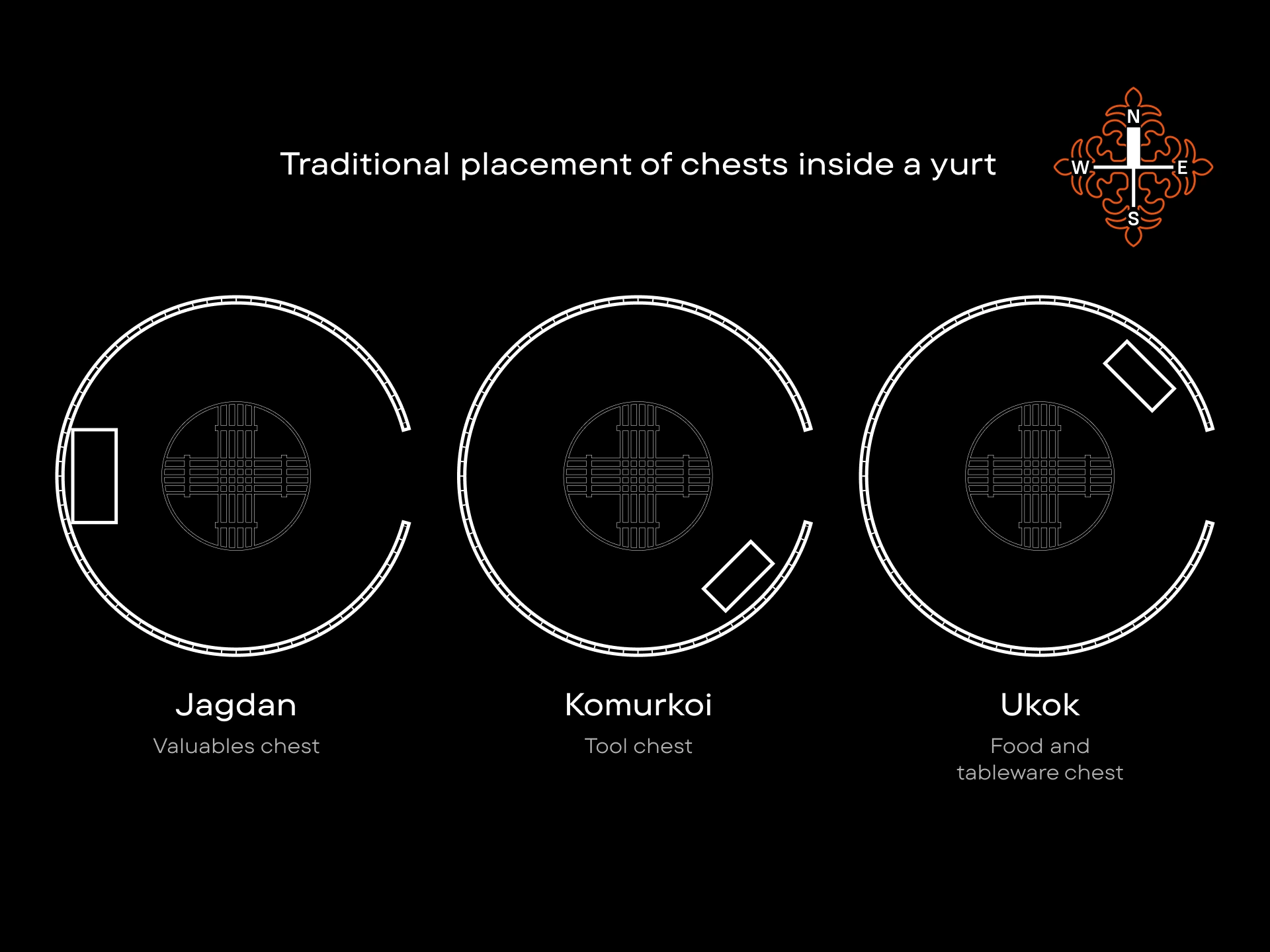
Chests with different uses, finishes, and construction
Where each chest belonged
The diagram connects different types of chest with their traditional placement inside a yurt.
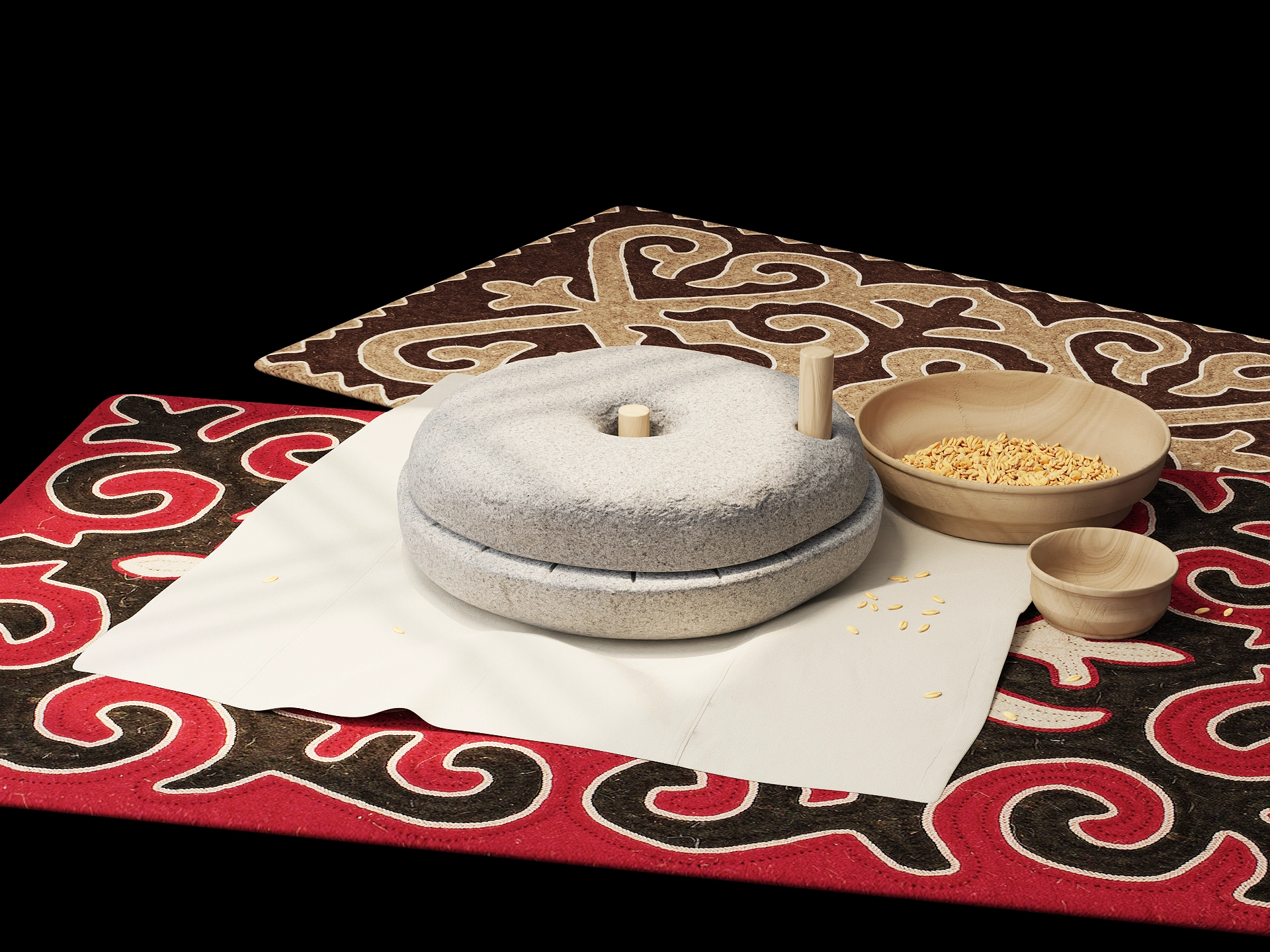
An object you can set in motion
The jargylchak is a traditional hand mill. Alongside the rendered view and diagrams, I prepared a sequence of images that readers could control themselves. Dragging through the sequence turns the upper millstone.
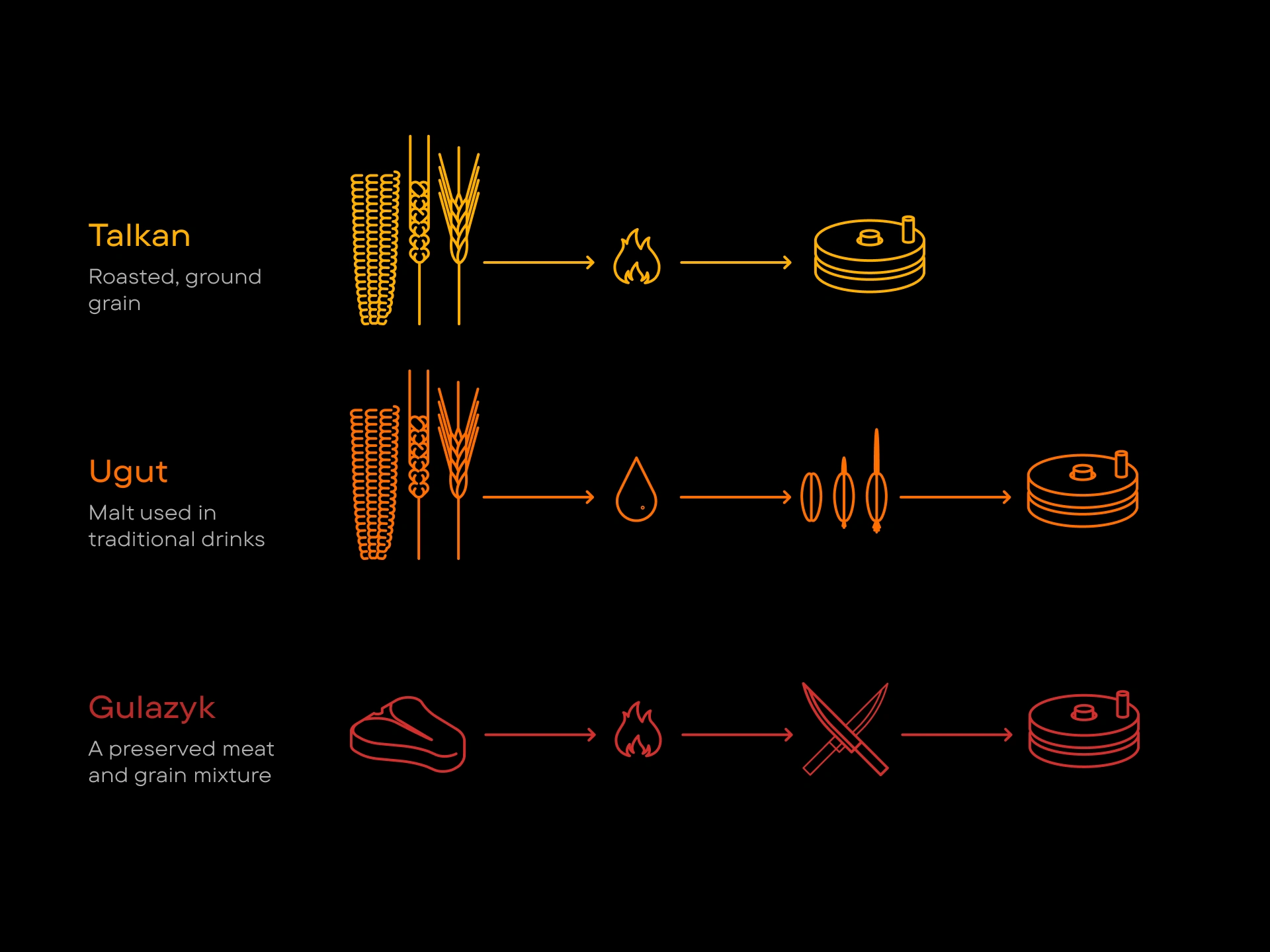
Explaining how the mill was used
Three illustrated sequences introduce foods prepared with the hand mill.
From the web to print
The models and graphics continued to support new formats after publication. Materials were adapted into short vertical videos, and the Toguz Korgool illustration was also used in print, combining the board with diagrams and short explanations.
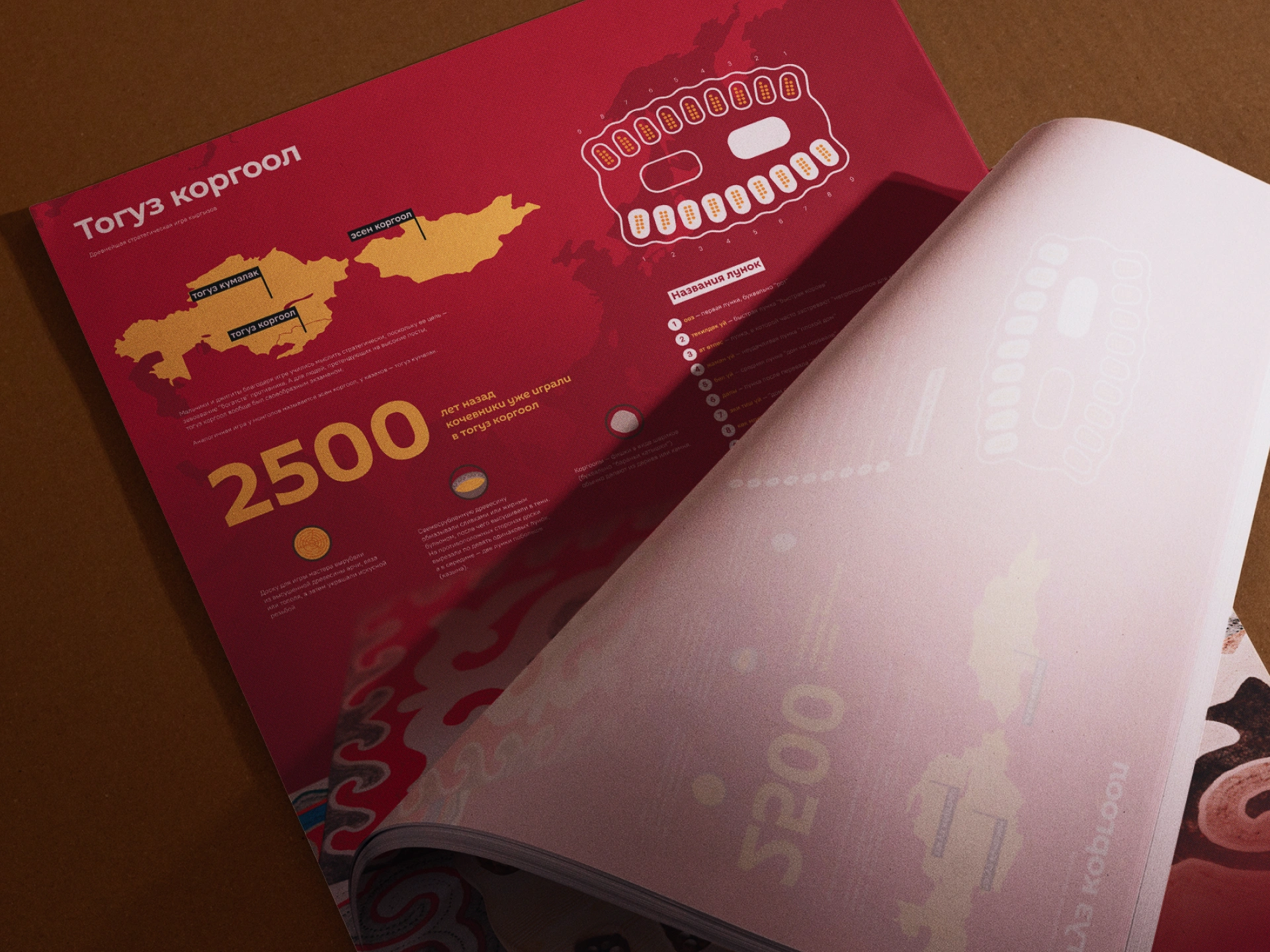
A close-up presentation of the print adaptation
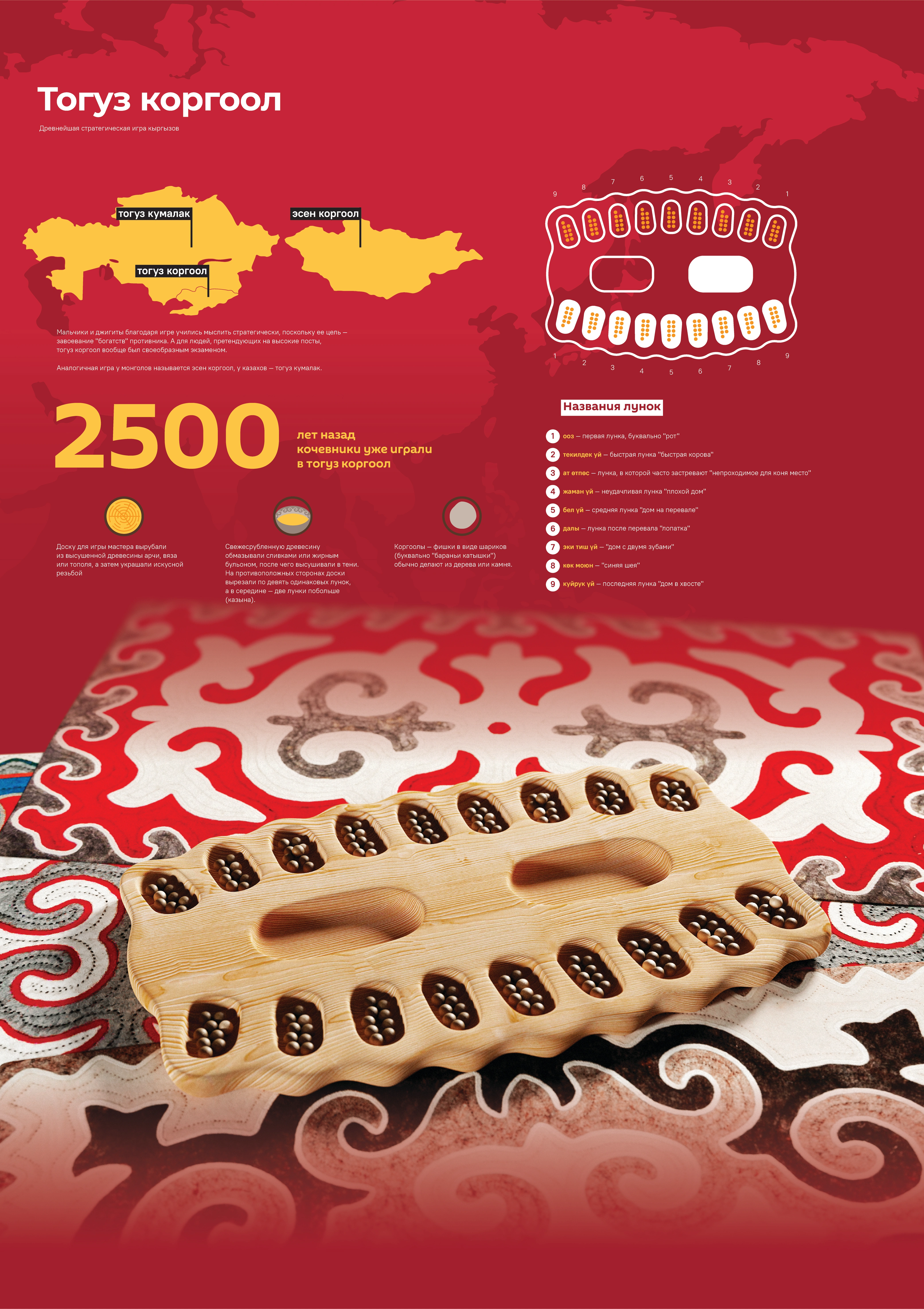
The print composition combines 3D and explanatory graphics
I create infographics and visualizations for cultural and educational projects, using images, animation, and interactive pages to explain objects, processes, and traditions.
Like this project
Posted Oct 27, 2026
Infographics and 3D visualization of Kyrgyz culture