Podcast Transcription Platform: Self-Hosted Whisper

Amadou Boubacar Niang


The product
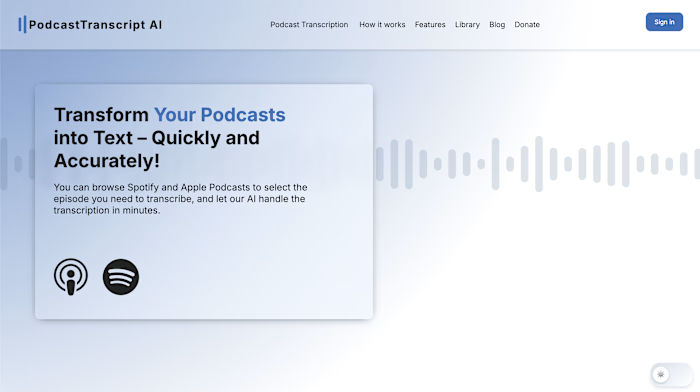
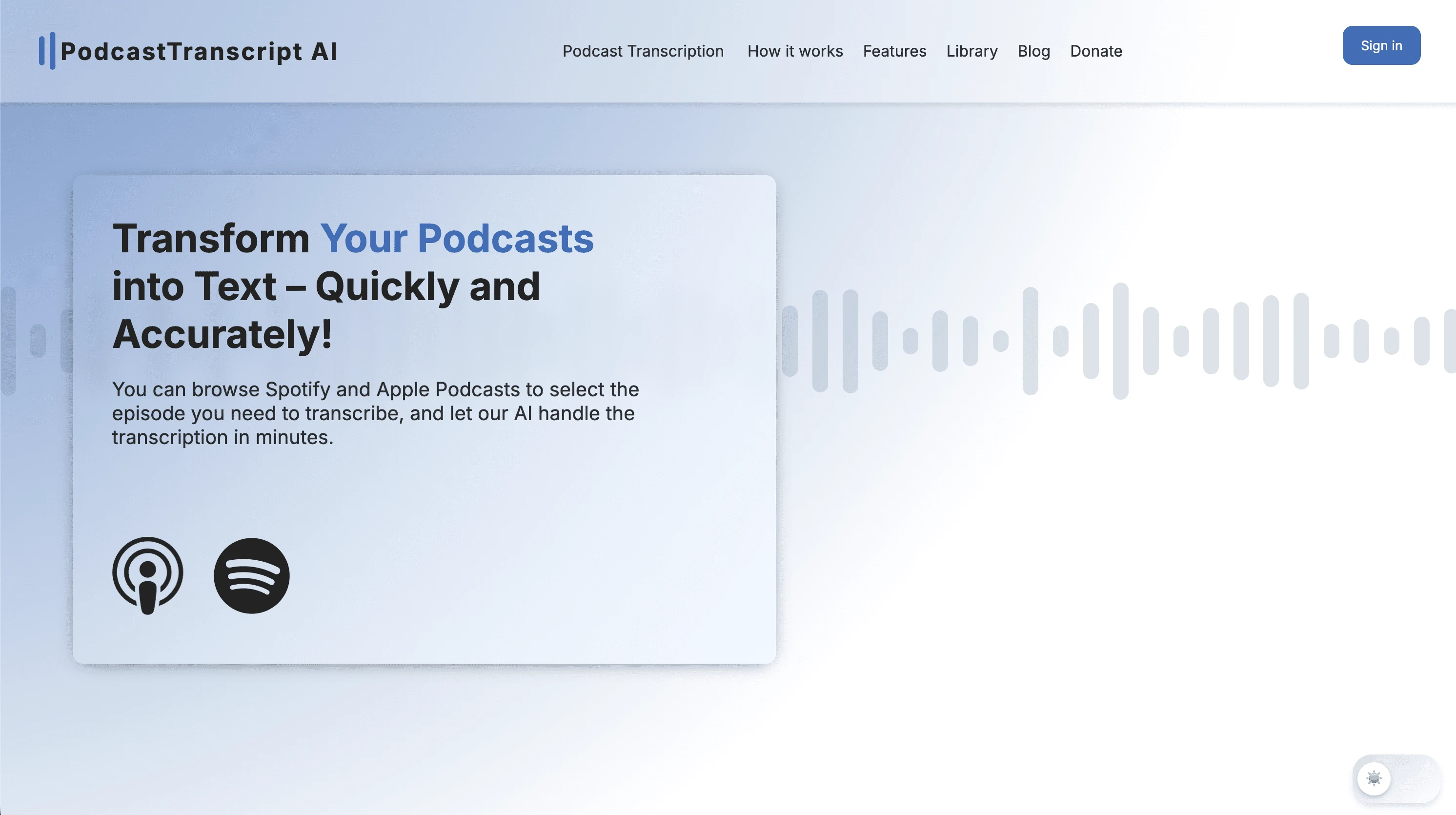
Paste a podcast link from Apple Podcasts, Spotify or RSS and get back a transcript, summary, chapters and FAQs. Transcripts go into a public, searchable library, and a paid API gives developers the same engine.
My role
I took over the backend in September 2025 and have written about 576 of the 593 backend commits since then, including the move to self-hosted transcription.
What I built
Self-hosted transcription: replaced a paid speech-to-text API with whisper.cpp running on an in-house GPU server.
Job queue across two servers, with paid, free and crawler tiers and crash recovery.
Long-audio processing in chunks, with corrected timestamps and real progress reporting.
AI summaries from a local model and a hosted model, under a daily spending cap.
Back-catalogue crawler that transcribes older episodes while the GPU is idle.
Episode features: speaker labels, search, chat with an episode, and export to PDF, SRT, VTT, Notion and Obsidian.
Public API with credit plans, plus a second brand running on the same backend.
Hard problems
A clean-up step that blocked the server: removing Whisper's repeated lines had quadratic cost and froze the server for minutes on long episodes. I rewrote it to run in bounded time.
Billing you can trust: API refunds are claimed exactly once, and an append-only ledger records every credit change.
Results
52,700+ public transcripts.
41,000+ hours of audio transcribed.
73 languages.
3,200+ backend tests.
Like this project
Posted Oct 19, 2026
Backend engineering for podcasttranscript.ai: paste a podcast link, get a transcript, summary, chapters and FAQs. Moved transcription in-house to whisper.cpp on a GPU server.
Likes
0
Views
5
Timeline
Sep 1, 2025 - Ongoing
Clients
PodcastTranscript.ai