Process & Workflow Design at All Trans Remanufacturing

Shane Sapolis


My Role at All Trans Remanufacturing (2018–2020)
During my time at All Trans Remanufacturing, I held multiple roles—Sales Order Processor, Catalog Research Assistant, Warranty Returns Processor, and ultimately sole IT Administrator. My core contribution across all titles was identifying chaos and imposing structure.
I built tools, SOPs, and lightweight automations that spanned Sales, Shipping, Warranty, Production, and Purchasing. From reclassifying finished goods to overhauling the warranty process, my work reduced fulfillment times by 1.5 days and saved the company over $100,000 annually. I introduced documentation standards that made previously tribal knowledge shareable and reliable. When systems broke down, I was the one people turned to.
Working Within Constraints
Many of the tools showcased here were built within a highly constrained environment. Core processes relied on paper, undocumented knowledge, and outdated systems. I often had to deliver modern workflows using legacy tools, shared Excel sheets and macro automations, Access databases, and printed forms, because those were the formats the organization was comfortable adopting.
What I’m proud of isn't simply what I built, but rather making it work within real-world limits. These were not mere makeshift patches; they were purpose-built solutions that delivered.
Sales Order Tracking – Cross-Departmental Visibility Tool
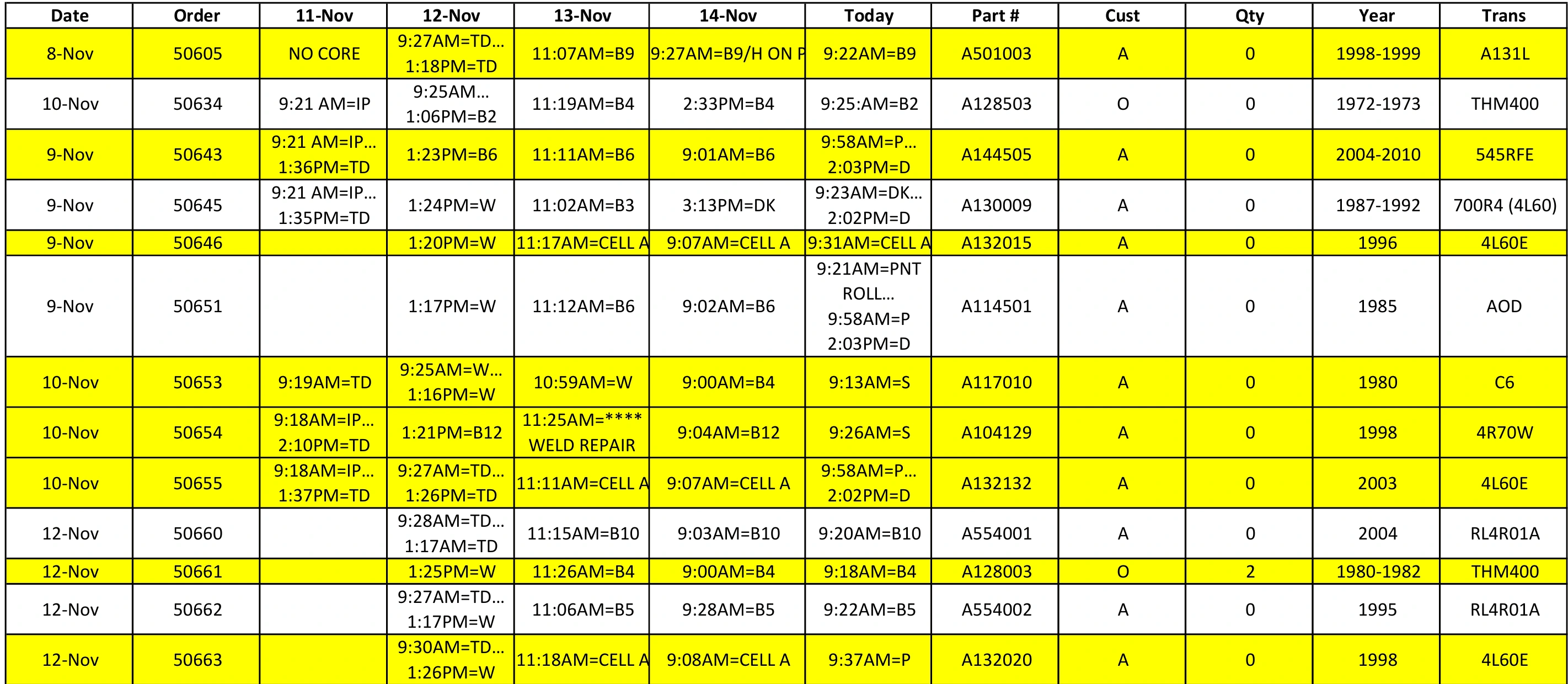
This spreadsheet was shared across departments to track the real-time status of sales orders as they moved through the fulfillment pipeline. Each department would update the sheet as an order passed through their hands—removing the need for Customer Service (and others) to physically walk the warehouse hunting down units or interrupting staff for updates.
It gave Sales Order Processing a live snapshot of all in-flight orders, which made it possible to identify opportunities for priority swaps and rerouting, allowing us to fulfill high-urgency orders quickly and without disrupting documentation or production. Shipping utilized it to project outgoing load volume and coordinate with carriers, and it helped executive leadership monitor daily operations without having to rely on secondhand updates.
What started as a workaround became a central tool for day-to-day logistics, cross-team coordination, and proactive decision-making. I created and maintained the sheet throughout my time at the company, continually refining its structure based on department feedback and evolving needs.
FG Interchange DB - Internal Fulfillment Optimization Tool
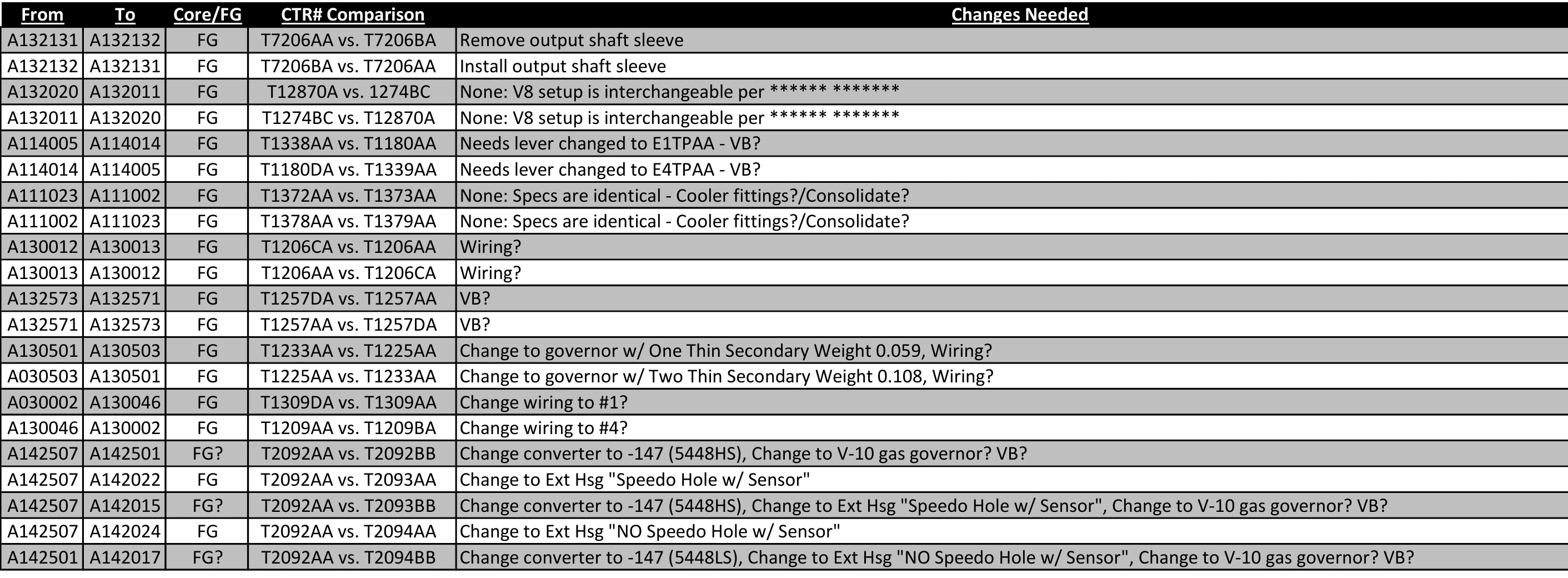
This reference sheet was developed to reduce fulfillment time by identifying opportunities to reclassify compatible finished goods. As Sales Order Processor, I traced backward through production—starting with finished goods and moving through warranty returns, dyno, paint, builder stations, and disassembly—to locate units that could be converted between part numbers with only minor physical changes (e.g., wiring, governor, torque converter, bellhousing, or tailhousing substitutions).
By enabling this targeted reclassification, we reduced the average time-to-ship by 1.5 days across the board.
Hub Inventory Macro-Powered Spreadsheet - SLA Compliance & Forecast Alignment Tool
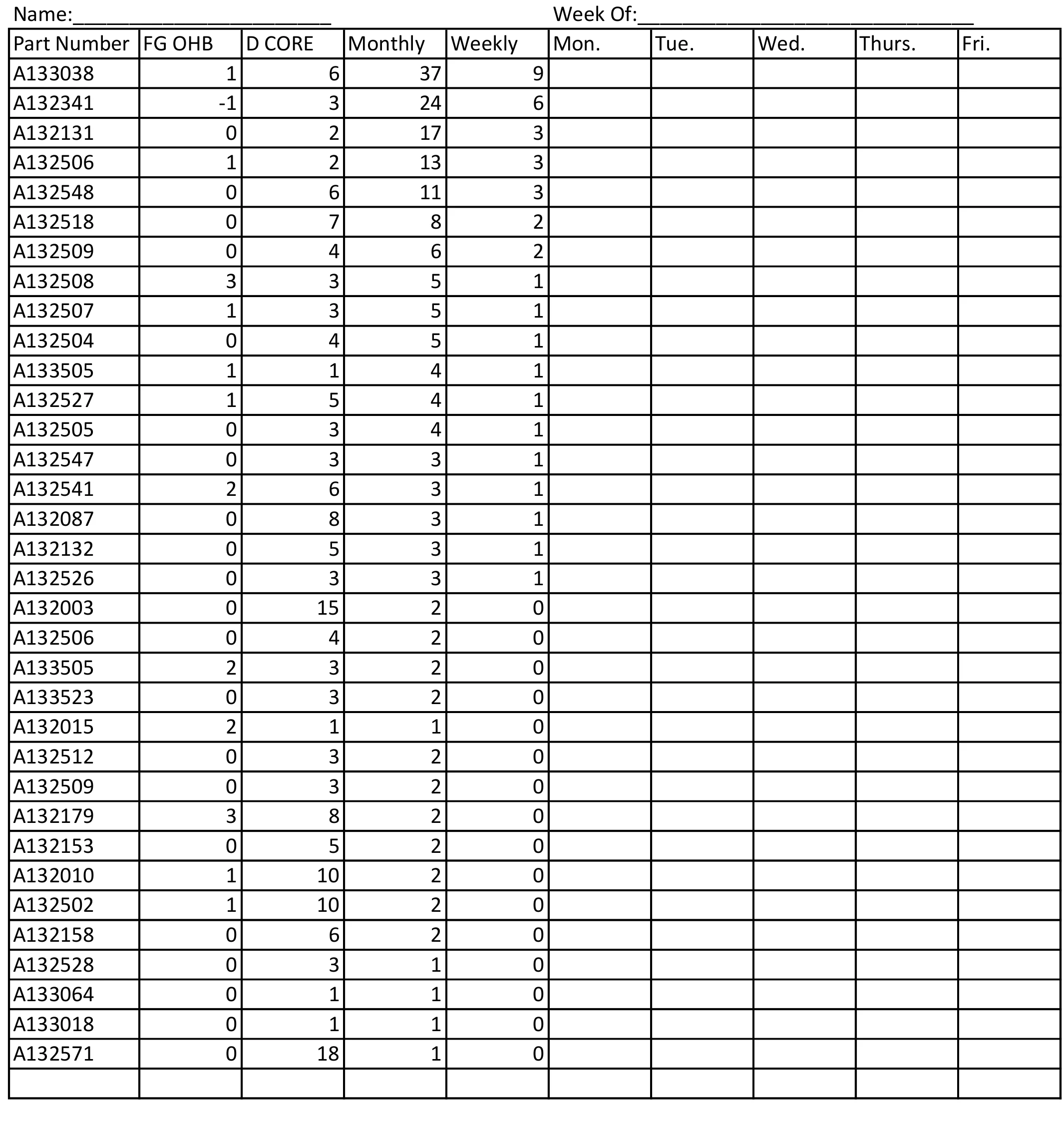
Each Monday, our largest partners—AutoZone, O’Reilly’s, and others—placed bulk “Hub orders” to pre-stock their regional warehouses. These orders averaged 55–65 units weekly—nearly double our normal weekly production capacity—and carried financial penalties for late or incomplete fulfillment.
To meet this demand without disrupting standard production, I developed a macro-driven tool that interfaced directly with our ERP system. It pulled raw inventory data into Excel, mapped it against Hub-specific part numbers, and automatically populated a clean, formatted dashboard. The tool showed which units were already available in Finished Goods, which had viable cores in stock, and how sales trends should guide replenishment priorities.
This system allowed us to stage Hub orders 1–2 days early, avoid late-fulfillment penalties, and maintain stable production throughput. I maintained and iterated on the tool weekly to reflect shifts in order volume, core availability, and sales velocity.
New Returns Process SOP - Warranty Workflow Standardization
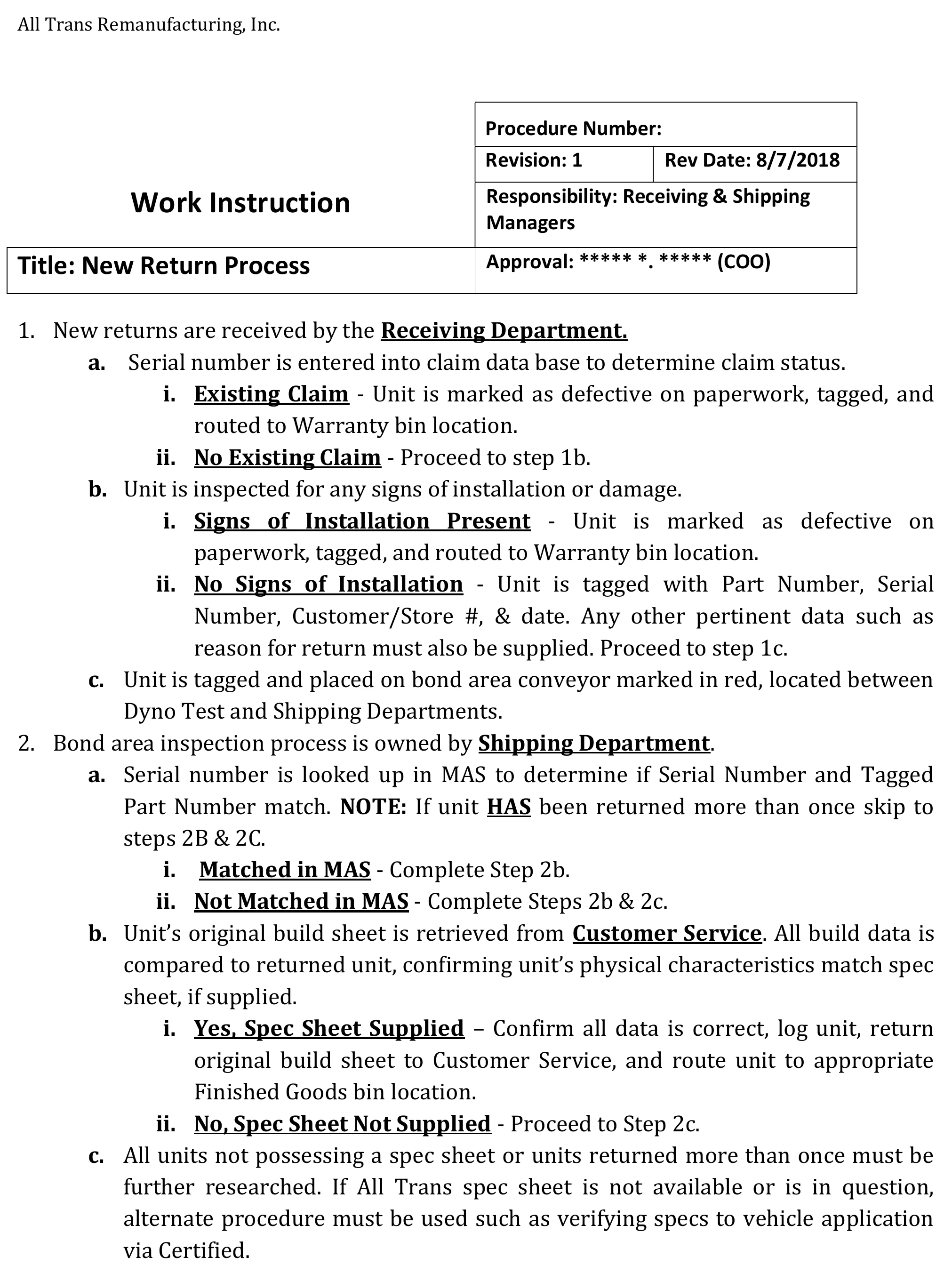
When I took over Warranty Returns Processing, the existing workflow lacked formal structure. Returned units were inconsistently tracked, inspected, and routed, leading to delays, lost inventory, and preventable claim payouts.
After mapping the informal process and collaborating with relevant departments, I developed this formal SOP to standardize intake, inspection, and classification of returned units. It ensured consistent documentation, improved interdepartmental communication, and helped enforce inspection deadlines.
Following implementation, the company saw improved inspection throughput, a reduction in return-related errors, and monthly cost savings exceeding $10,000.
R&R Check-In Worksheet - Documentation & Transparency Tool
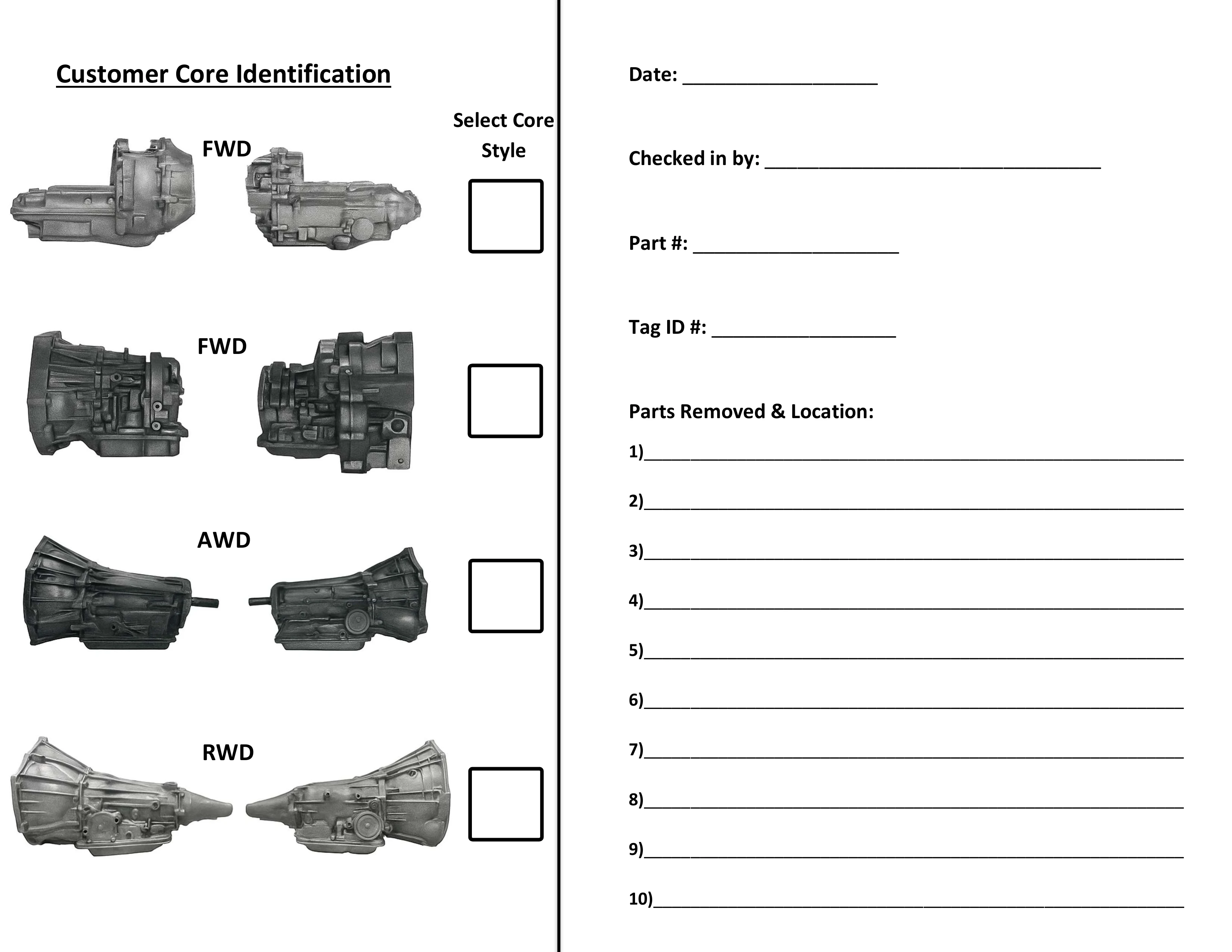
R&R Check-In Worksheet – Documentation & Transparency Tool
In response to recurring customer complaints regarding our R&R service, alleging that parts were either replaced unnecessarily or not replaced at all, I created this worksheet to formalize and document the process.
Each incoming R&R unit was logged using this template, including key identifiers and check-in details. The worksheet was used alongside photographic documentation to ensure every unit’s condition, required work, and actual service could be transparently verified. It created a paper trail that protected both the company and the customer, and dramatically reduced disputes and turnaround confusion across departments.
Though simple in design, it became a reliable first step in our R&R intake process and helped restore trust and accountability.
Order Swapping SOP – Error Prevention & Accountability System
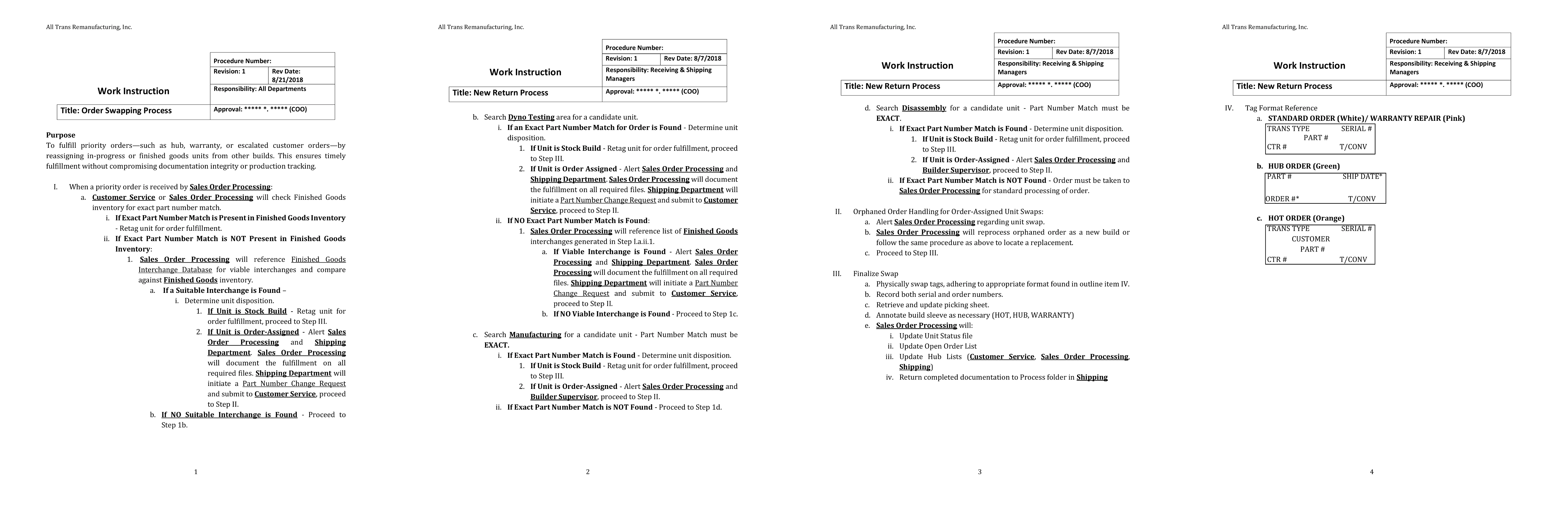
This process was created to formalize and control how transmission units were reallocated across production to fulfill hot or priority orders. Before this SOP existed, order swaps were often done informally and inconsistently—frequently resulting in incorrect part numbers being shipped, misaligned documentation, or orphaned original orders.
The structure of this document wasn’t just for formality—it was intentional. The complexity served as a gatekeeper, encouraging staff to think twice before attempting to freelance swaps without full knowledge of the production and fulfillment workflow. The result was a measurable decrease in fulfillment errors and fewer disruptions to internal tracking, customer service, and warranty resolution.
By implementing this SOP, we moved the order-swapping process from informal and arcane operational knowledge to standardized procedure, codifying its proper execution and rendering accountability enforceable.
Like this project
Posted Jun 17, 2025
Developed SOPs, tracking tools, and inventory workflows to reduce errors, improve accountability, and expedite order fulfillment.
Likes
1
Views
22
Timeline
Mar 12, 2018 - Apr 3, 2020
Clients
All Trans Remanufacturing