Heavy Goods: Framer Ecommerce, End to End

Andrew Norman


Context
Framer doesn't ship native ecommerce. No cart, no checkout, no product sync. Ecombitz fills that gap: a Framer-native ecommerce platform that connects a plugin, Stripe Connect, and CMS collections into a working commerce stack. But a plugin alone doesn't sell itself. People need to see it running in something that feels like a real store.
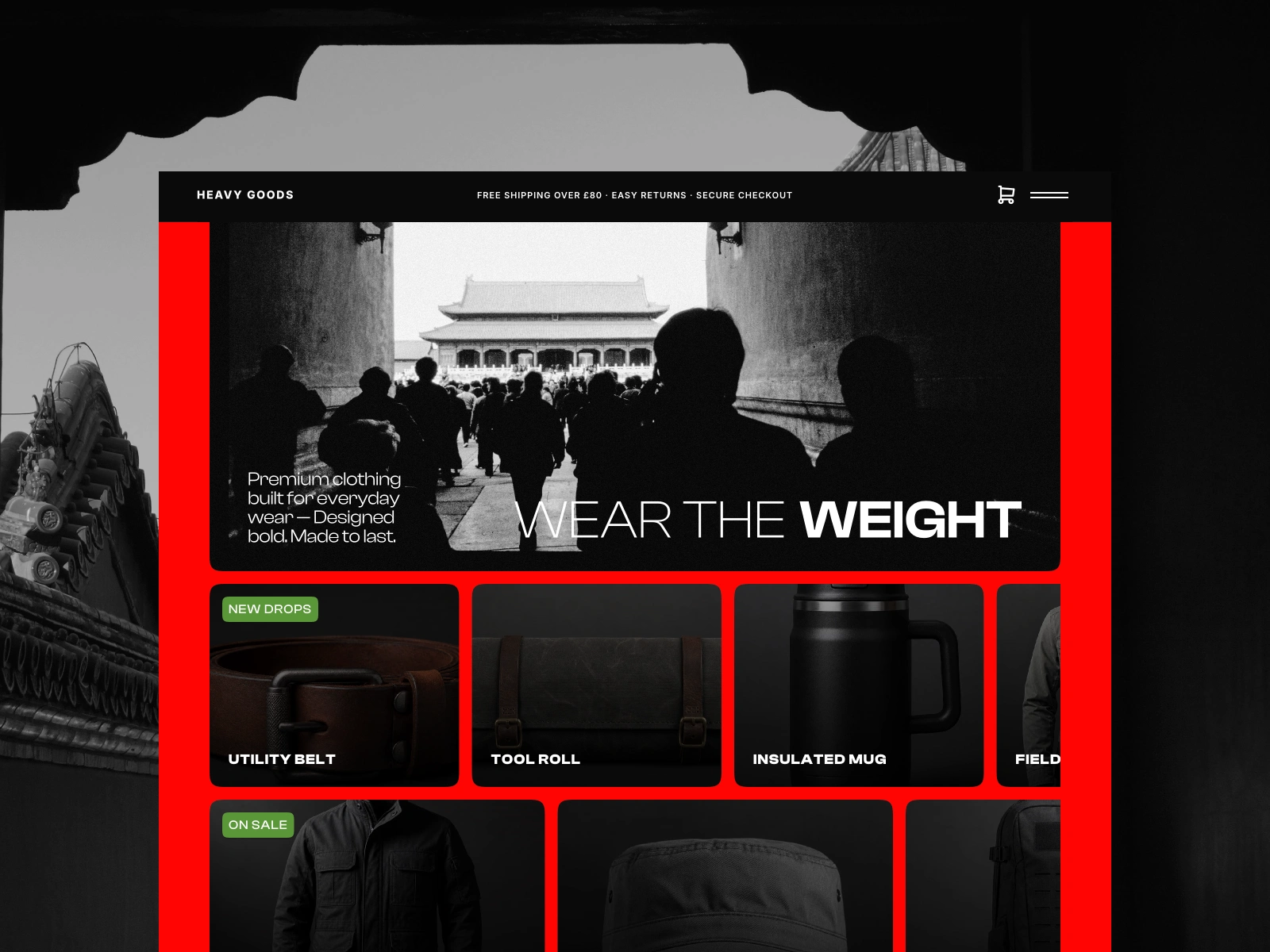
That's where Heavy Goods comes in. A free, fully remixable Framer storefront template that serves as the polished demo for the entire Ecombitz platform. The template is free; the business is the plugin.
The Goal
Build a free demo storefront convincing enough that someone would remix it, connect Stripe, and start selling. Not a wireframe with placeholder cards. A full marketplace-style site with real taxonomy, real product detail pages, and a checkout flow that actually works in test mode.
The audience is two groups: vendors who want a store without code, and developers who want a commerce-ready Framer starter they can tear apart and rebuild.
Brand and Catalog Direction
I designed Heavy Goods around a fictional brand called "Field & Carry" — apparel, bags, and everyday tools. Industrial tone, dark UI, orange accent, Clash Display type. The visual direction had to feel like a real DTC brand, not a template preview. If the demo looks like a demo, nobody remixes it.
The catalog spans 12+ products across three categories (Wear, Carry, Goods), four brands, and multiple audience segments. Enough depth to stress-test the CMS architecture and show how taxonomy-driven landing pages actually work.
CMS and Commerce Architecture
The core design problem wasn't visual. It was structural: how do you build a CMS model that vendors can edit without breaking the commerce layer?
The answer was a clear separation between store content and store configuration:
Product collections handle catalog data: images, pricing, options, availability, brand, group, and audience taxonomy
Site Setup CMS controls store-wide globals: announcement bar copy, currency symbol, social links, confirmation page text, cart icon, and checkout behavior
Legal CMS powers terms, returns, cookies, and privacy pages from a single collection
Taxonomy collections (groups, brands, audiences) drive filtered landing pages automatically
Availability states flow through to the product detail page. If a product is out of stock, the Add to Cart button reflects that. Currency symbols pull from Site Setup, not hardcoded into every price. One CMS entry updates every surface.
The Product Detail Page
The PDP is where the commerce wiring gets tested hardest. Each product page includes:
Multi-image gallery with thumbnail navigation
Option selection (size, color) with availability-aware Add to Cart states
Testimonials section pulled from CMS
Same-brand product grid for cross-selling
Price display with sale pricing and currency from Site Setup
Everything on the page is CMS-driven. A vendor swaps out the product images, updates the price, toggles availability, and the page rebuilds itself.
Dual-Template Strategy
Heavy Goods is the full demo: 12+ products, taxonomy pages, brand pages, about, contact, FAQ, legal, order confirmation, 404. It's designed to show what Ecombitz can do at scale.
But not everyone needs a full storefront. So I also built ECOMBASE — a lean, products-only CMS starter for developers who want the same commerce stack without the design opinions. Same plugin, same Stripe connection, minimal UI. Two entry points into the same platform.
The Setup Path
A template nobody can configure is a template nobody uses. I built an in-Framer Set Up guide that walks remixers through the process: connect the CMS, populate the catalog, wire the Ecombitz plugin, preview, publish. The goal was to make the gap between "remix" and "live store" as short as possible for non-technical users.
Outcome
Heavy Goods is live as a free remixable template with working Stripe checkout in test mode. It serves as the primary demo for the Ecombitz platform, showing the full loop from product catalog to cart to checkout inside Framer.
Reflection
The interesting design challenge here wasn't the storefront itself. It was designing two things at once: the store a customer sees, and the setup path a remixer follows inside the Framer editor. Every CMS decision had to work for both audiences. That constraint shaped the entire architecture, from Site Setup globals down to how availability states map to button labels.
Like this project
Posted Jul 24, 2026
Designed and built Heavy Goods, a free Framer storefront template that demos Ecombitz — a Framer-native ecommerce platform with Stripe checkout, CMS sync, and a plugin architecture for vendors and developers.
Likes
0
Views
1