
Case study
Jind Mahia
A cross-border ethnic-wear store, rebuilt collection by collection.
Brand identity, a multi-currency Shopify storefront rebuilt one collection at a time, and a shared content engine.
At a glance
Industry
Apparel & Ethnic Wear
Timeline
2025 to 2026
Stack
Shopify, Liquid, Next.js, Tailwind CSS
The challenge
What they needed.
Jind Mahia sells handcrafted Indian ethnic wear across five currencies, with listed addresses in both New Delhi and Virginia. The fastest route to a store that size is to export an existing catalogue and bulk import it, which gets a storefront live quickly and leaves a specific mess behind: prices carried over from another market, product data that does not match the new listing, and collection pages that look assembled rather than designed. A catalogue in that state is slow to fix, because every product needs a human decision. Done badly, the cleanup drags on invisibly while the store is already live and customers are already browsing the half-corrected version. The brand needed the store brought to a coherent state in a way the client could actually watch progress on, not a black box that would emerge finished weeks later, and it needed the brand identity and storefront details that decide whether a cross-border shopper trusts the checkout.
Our approach
What we did.
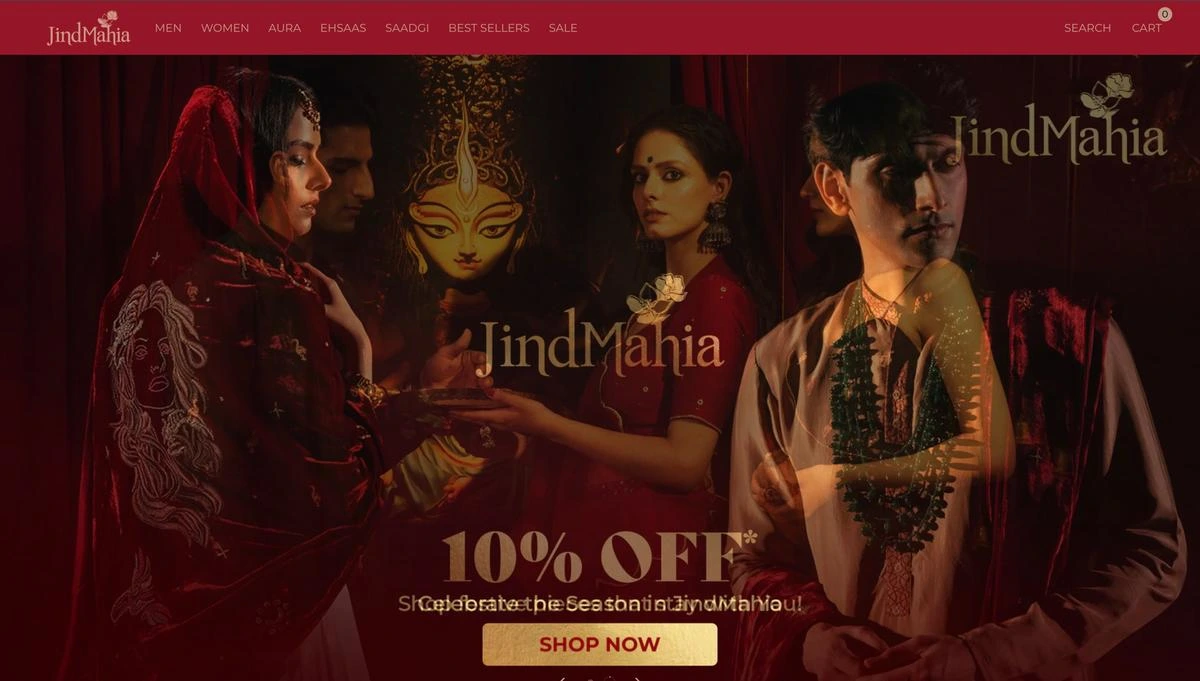
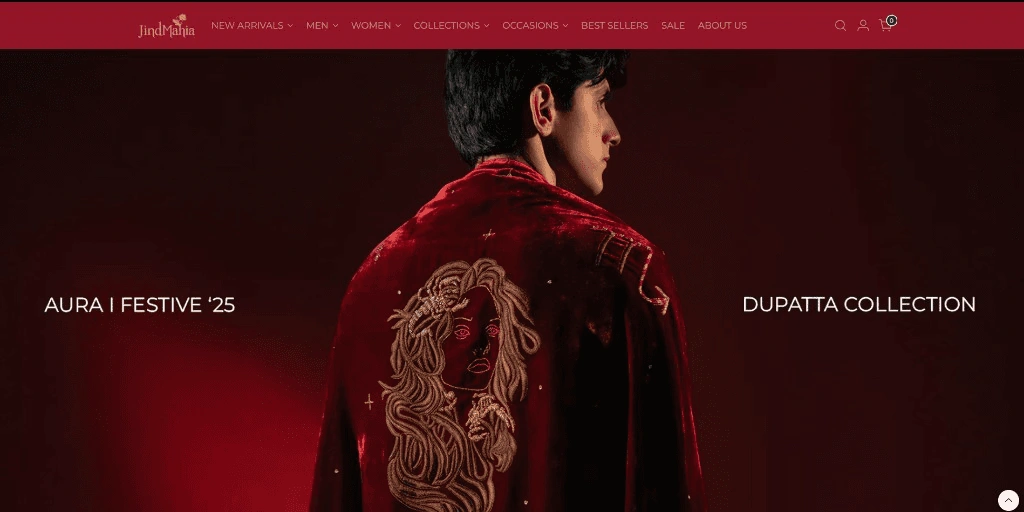
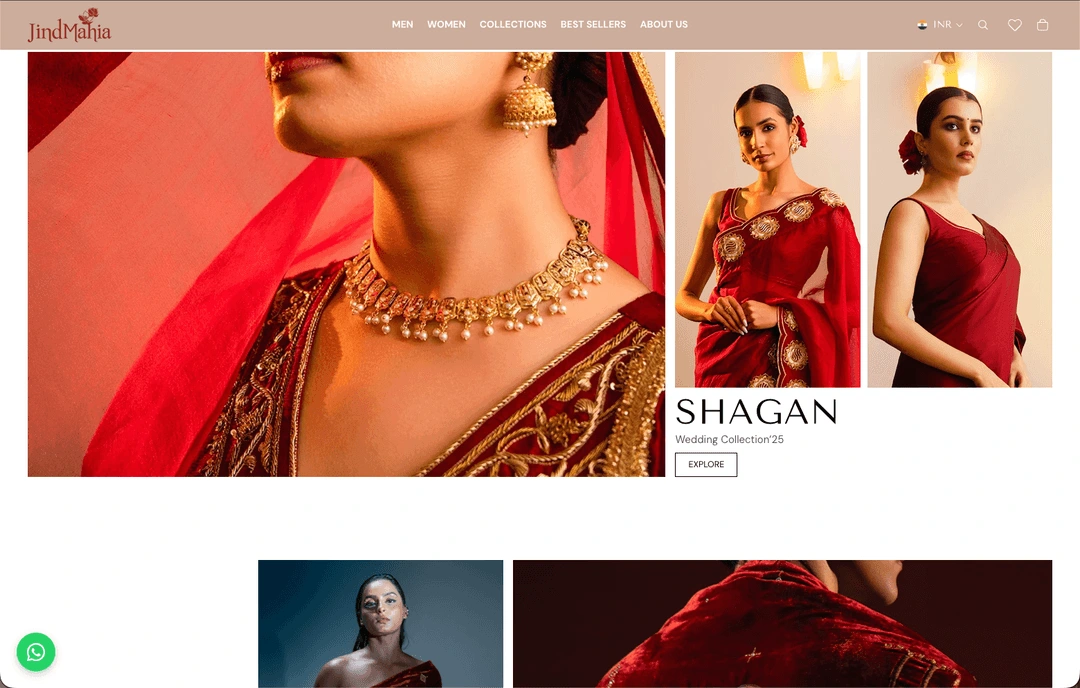
We rebuilt the storefront collection by collection rather than product by product. Working one collection at a time meant pricing, product detail and imagery could be corrected as a coherent set, and progress was visible to the client as whole sections of the store came right, across eight named collections. Alongside the catalogue work: brand identity across horizontal, vertical and reversed logo variants plus favicon and print assets, a landing site, an instance of the shared Akyra content engine, and the storefront details that decide whether a browsing customer keeps going. The store presents in USD, GBP, INR, CAD and AUD, with separate Women and Men navigation trees running from lehenga and sarees through to kurta sets, and product pages carry an image carousel, related products and recently viewed items. Customer testimonials, newsletter capture and links across five social platforms round out the storefront, and the blog instance on the shared Akyra engine is already carrying seven posts, so the brand has an organic-search channel of its own from day one. Working in named collections also gave the project a natural rhythm: each collection could be reviewed, corrected and signed off as a unit, which kept the cross-border pricing consistent across every currency and meant the client always knew exactly how much of the store was finished.
Why collection by collection, and not product by product
A bulk-imported catalogue rarely has one big problem. It has hundreds of small ones: a price carried over from another market, a description that does not match the listing, an image that sits oddly next to the rest. Fixing them one product at a time looks like progress on a spreadsheet, but a shopper browsing the store still sees a half-corrected mix.
Working through eight named collections changed that. Each collection was reviewed, corrected and signed off as a set, so pricing stayed consistent across USD, GBP, INR, CAD and AUD, and the client could see a whole section of the store come right before the next one began.
Built for a shopper in another country
A customer buying ethnic wear from outside India needs a few things before they trust a checkout: prices in their own currency, navigation that makes sense to them, and signs that real people have bought before. Separate Women and Men navigation trees, multi-currency presentation and customer testimonials do that work quietly, while the blog on the shared Akyra engine gives the brand its own search channel over time.
What we built
Everything that shipped.
Brand identity: horizontal, vertical and reversed logo variants plus favicon and print assets
Multi-currency Shopify storefront presenting in USD, GBP, INR, CAD and AUD
Catalogue rebuilt collection by collection across eight named collections
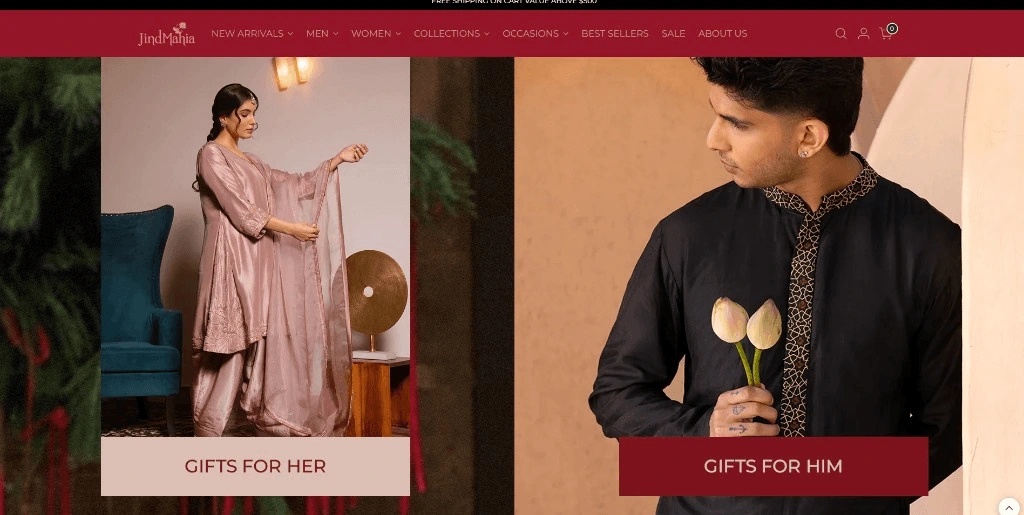
Separate Women and Men navigation trees, from lehenga and sarees to kurta sets
Product detail pages with an image carousel, related products and recently viewed items
Customer testimonials, newsletter capture and links across five social platforms
Blog instance on the shared Akyra content engine, seven posts live
Stack
What it was built with.
Shopify
Liquid
Next.js
Tailwind CSS
Inside the build
See it in action.
Gifts
Hero
Shagan
Outcomes
The results.
5
Currencies supported
8
Named collections
7
Posts published
Services used
0 likes · 0 views · Nov 13, 2026
Brand identity and a five-currency Shopify storefront for an Indian ethnic-wear label selling into the US, with the catalogue rebuilt collection by collection.