Rollout: Turning One Song Into a Full Release

Harrison Songolo


The problem it solves
A finished song is only half the job. What comes next is the cover art, the visualizer, the short-form clips, the press kit, the release page, and a plan to get all of it out on the same day. That mountain is where most songs quietly die, not because they were bad but because the artist ran out of energy before anyone heard them.
Rollout takes one finished track and builds the release kit in minutes, then hands back the controls so the artist can direct every piece until it sounds like them.
Why it is a systems problem, not a design problem
The interesting engineering here is not the generation. It is that this is a multi-tenant product where what you are allowed to do depends on what you pay, and that constraint touches everything.
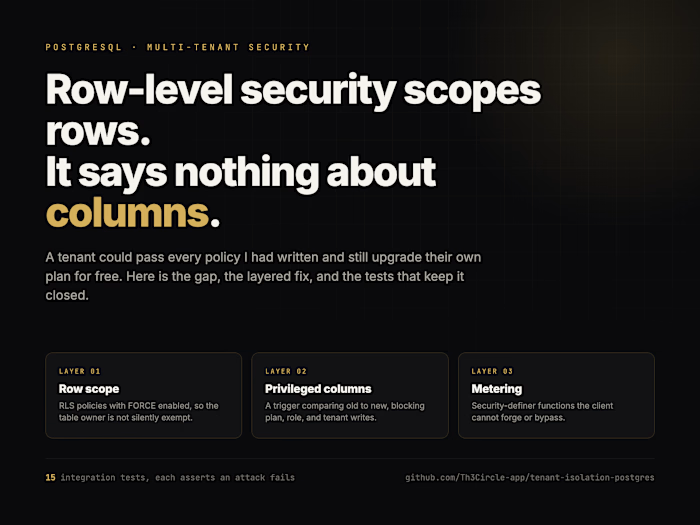
Plan gating lives in the database. Entitlements are not a flag the client checks before showing a button, because a limit enforced in the client is not a limit, it is a suggestion. Consumption goes through security-definer functions that perform the check and the increment together, inside one statement, so the caller supplies no count and cannot reach the counter directly.
Doing the check and the increment in one database call is also what makes the limit correct under concurrency. A read-compare-write pattern in the client has a race between the read and the write, and two simultaneous requests can both see a count below the limit and both proceed.
One compositor, two consumers
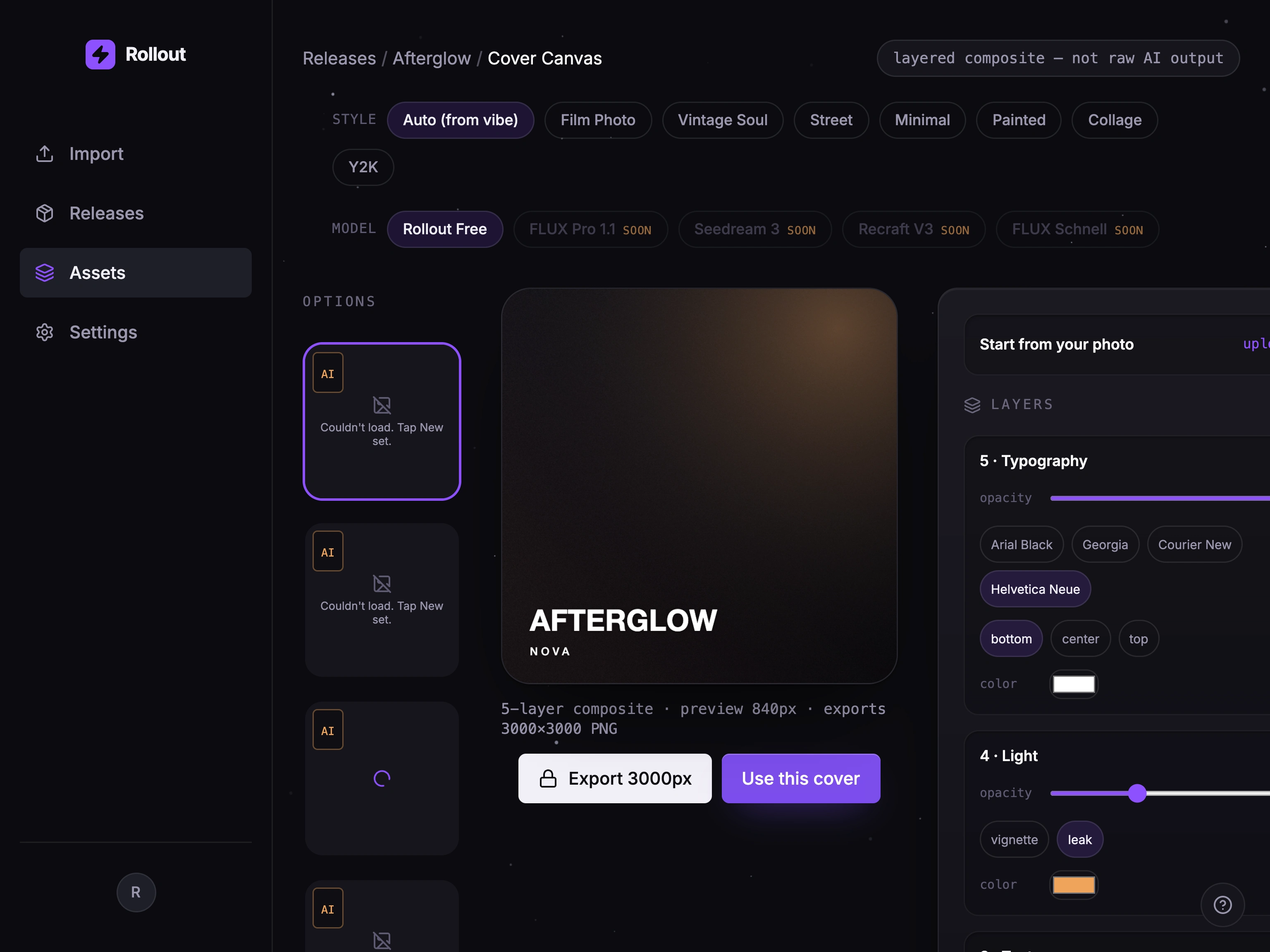
Preview and export share a single rendering path. This sounds like an implementation detail and it is actually the whole product promise.
If preview and export are separate renderers, they drift. The artist directs something on screen, exports it, and gets a file that does not match what they approved. Once that happens the tool cannot be trusted, and an artist who cannot trust the output goes back to doing it by hand.
Sharing the compositor costs some flexibility and buys the guarantee that what you saw is what you get.
What the product actually is
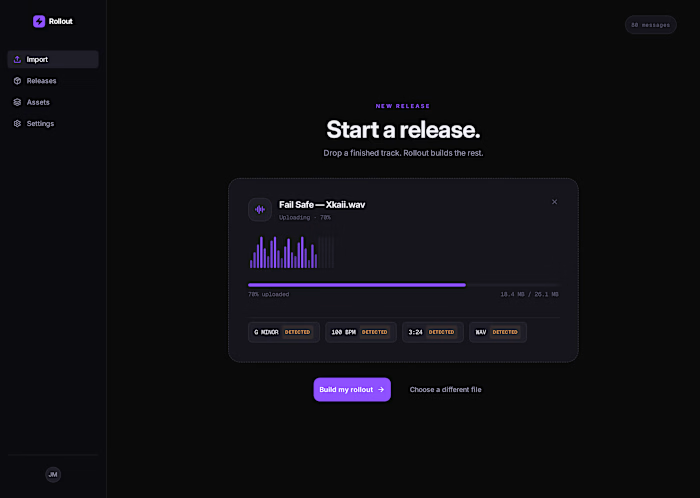
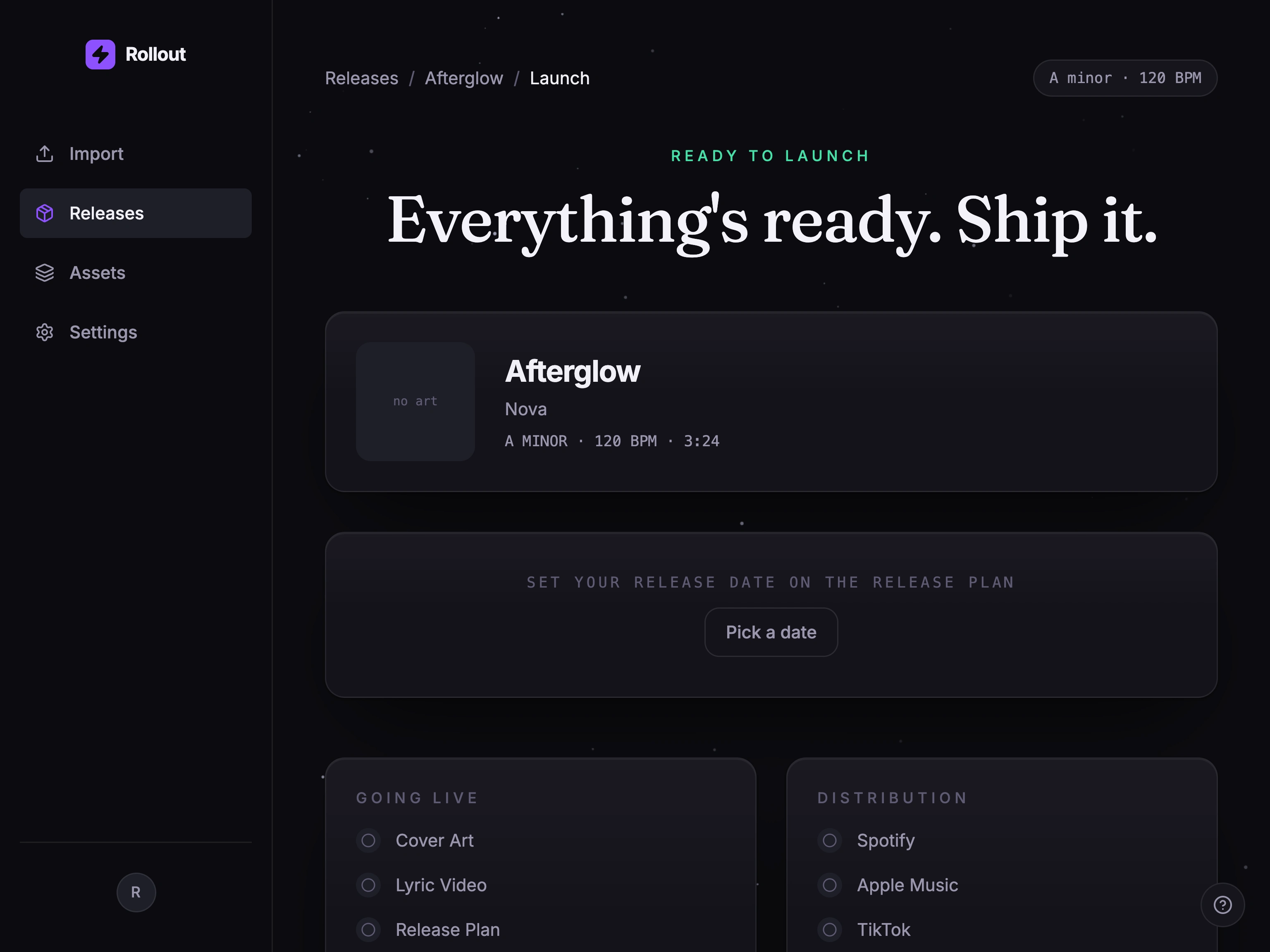
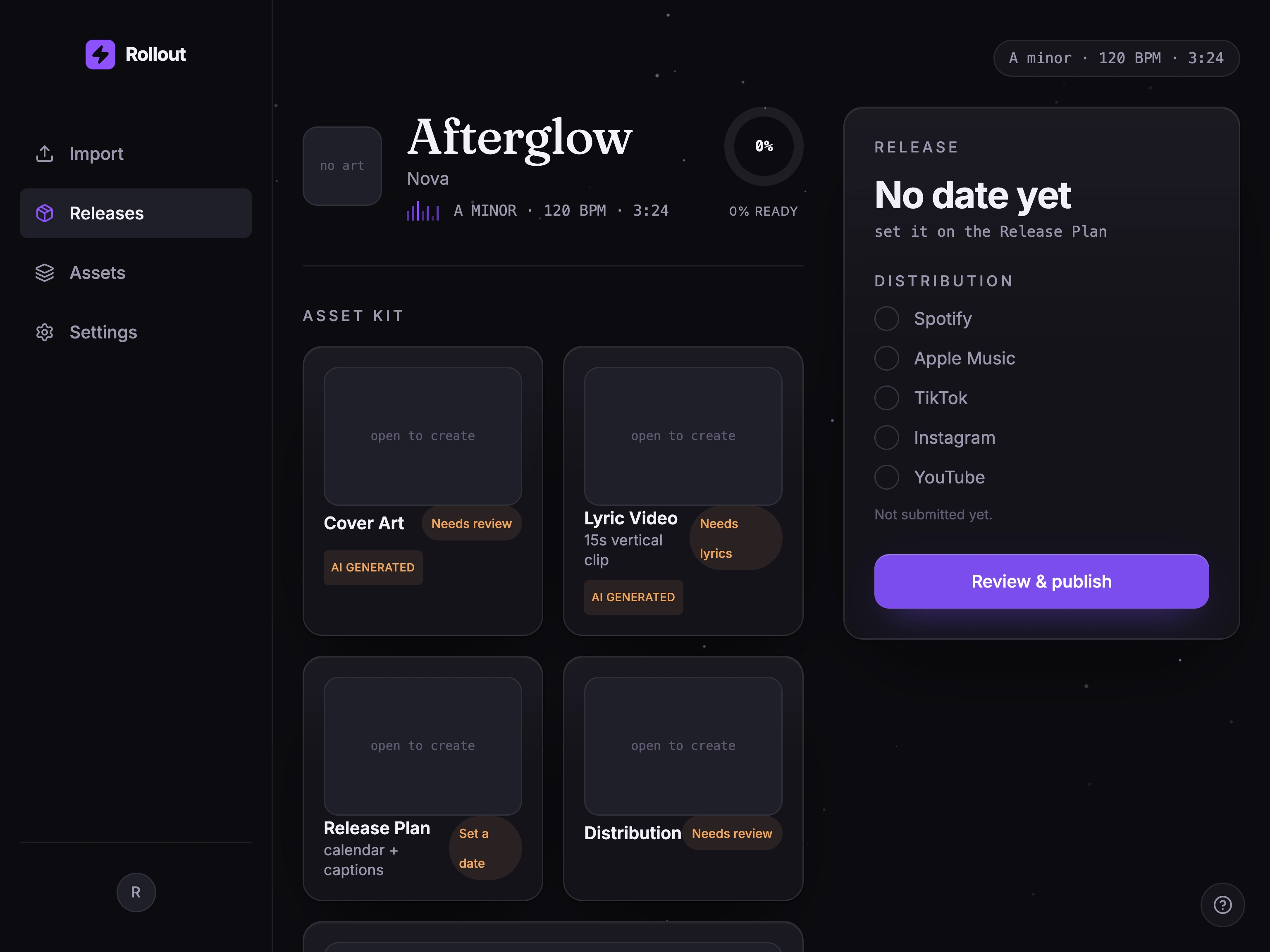
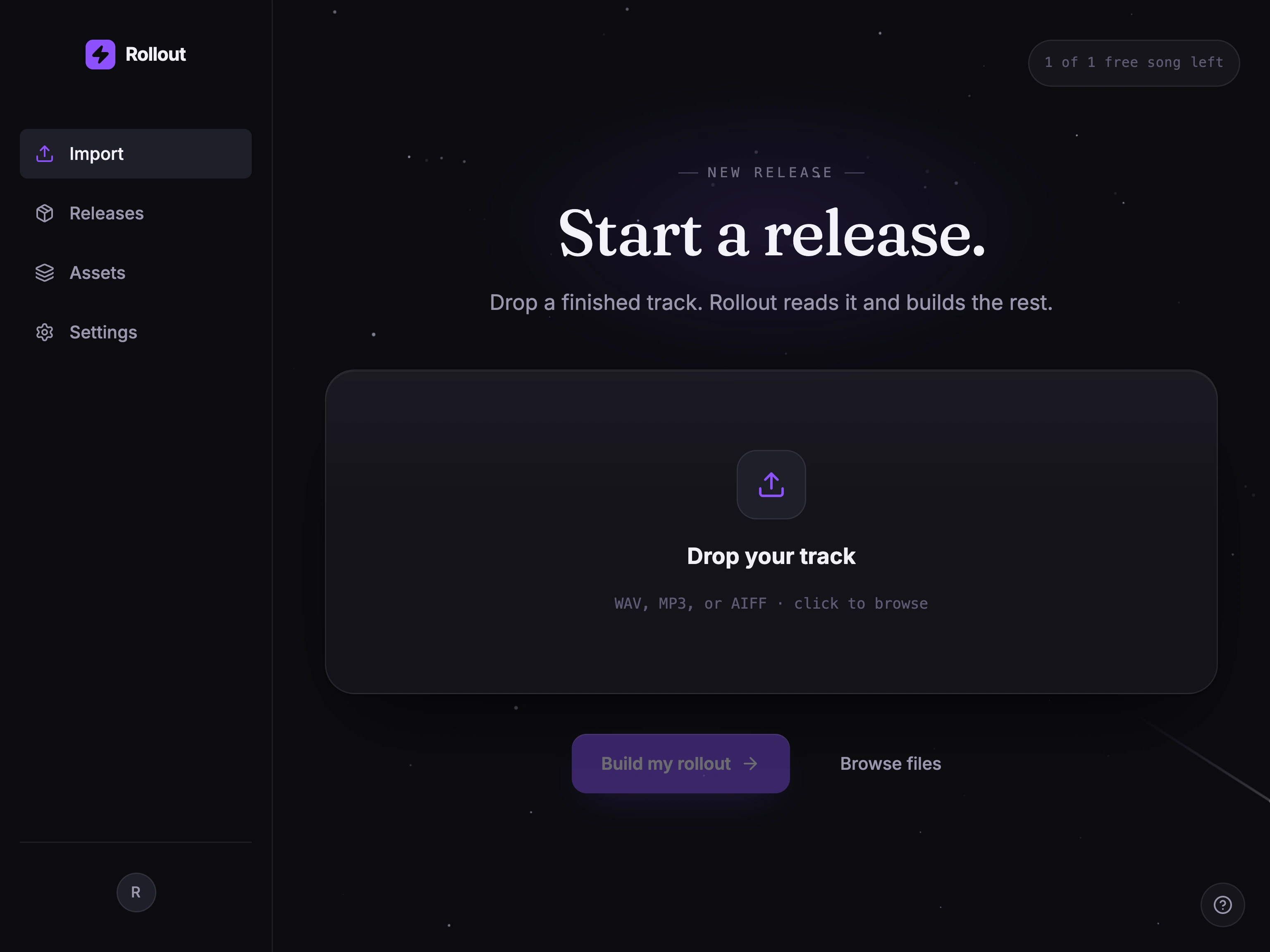
Seven connected screens rather than a flat mockup. Import reads the key, BPM, and length off the track. Building shows the kit generating in real time. Ready hands over the finished set. The dashboard is a release command center with every asset, a readiness ring, and a distribution checklist across Spotify, Apple, TikTok, Instagram, and YouTube. Then the directable pieces: cover art, visualizer, and clips, each one steerable rather than take-it-or-leave-it.
What I took from building it
The parts users notice are the generated assets. The parts that decide whether the product works are the entitlement model and the shared render path, and neither is visible in a screenshot.
That is generally true of subscription software. The visible layer is the pitch, and the invisible layer is whether it survives real usage.
Like this project
Posted Aug 1, 2026
A multi-tenant SaaS that turns a finished track into a full release kit. Plan gating enforced in the database, one compositor shared by preview and export.