TailorFit: A Tailor's Measurement Tracker

Salihu Abdullahi

TailorFit: A Measurement and Order Tracker for Tailors
Overview
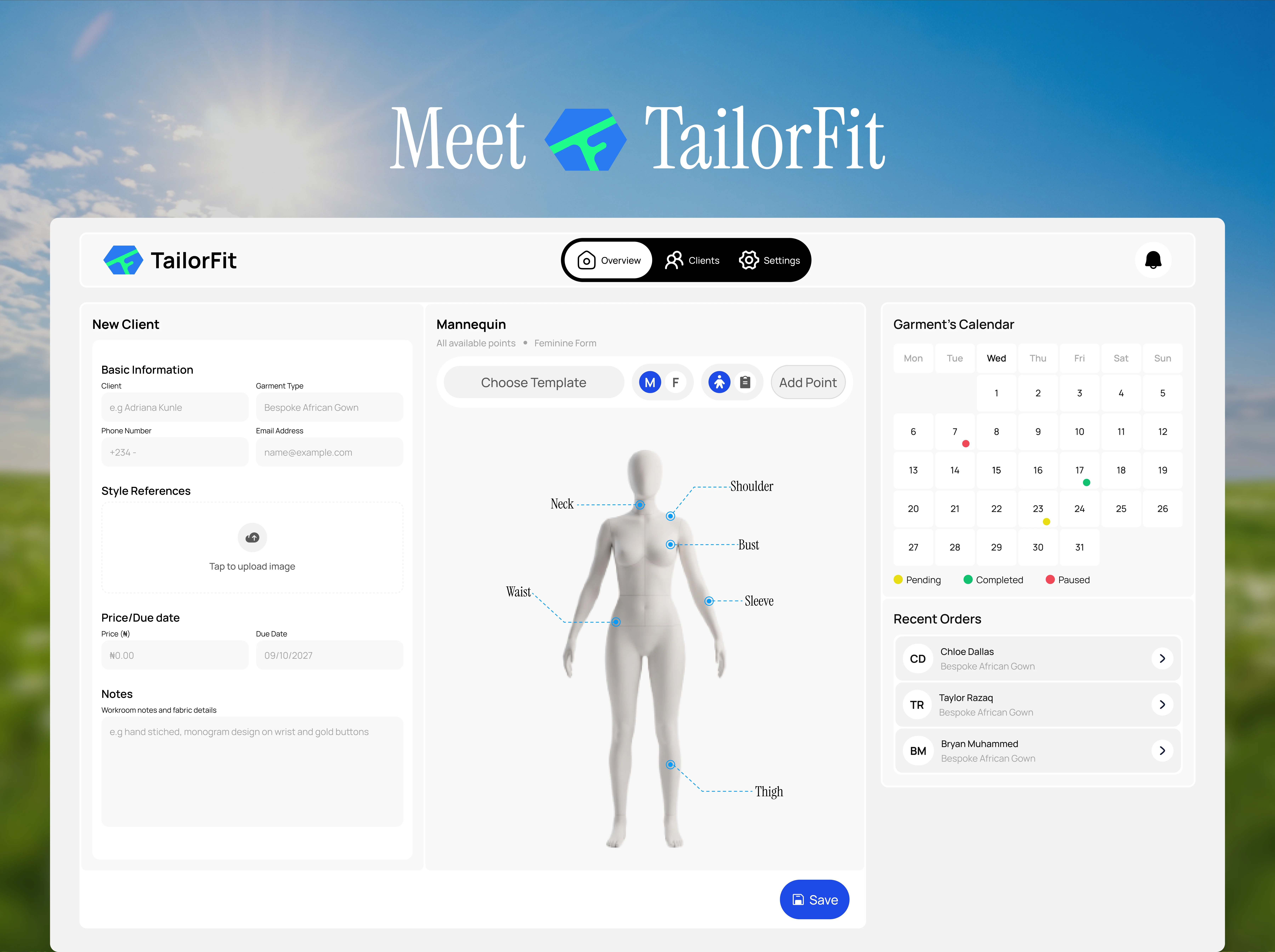
TailorFit is a web app for tailors and fashion designers who work with bespoke clients. It keeps client details, body measurements, style references, prices, and due dates in one place, so none of it lives in a diary or a phone gallery.
The Problem
Tailors still keep most client records in a diary. It works on the day you take the measurements, but it falls apart later. When a regular client comes back months after, their numbers have changed, and updating an old entry means crossing things out or squeezing new figures in next to old ones. Over time the records get messy and hard to trust.
Research
Measurements also aren’t the only thing a tailor needs to make a good garment. There are style references, fabric notes, a price, and a due date, and these usually end up in different places.
I spoke with tailors about how they keep records today. One told me two things clearly:
Updating a client’s measurements in his diary gets harder over time.
He wants everything he needs to make a good garment saved in one place
The Goal
Give tailors one place where a client’s details, measurements, references, and order information live together, and where updating a measurement is as easy as taking it the first time.
What I Designed
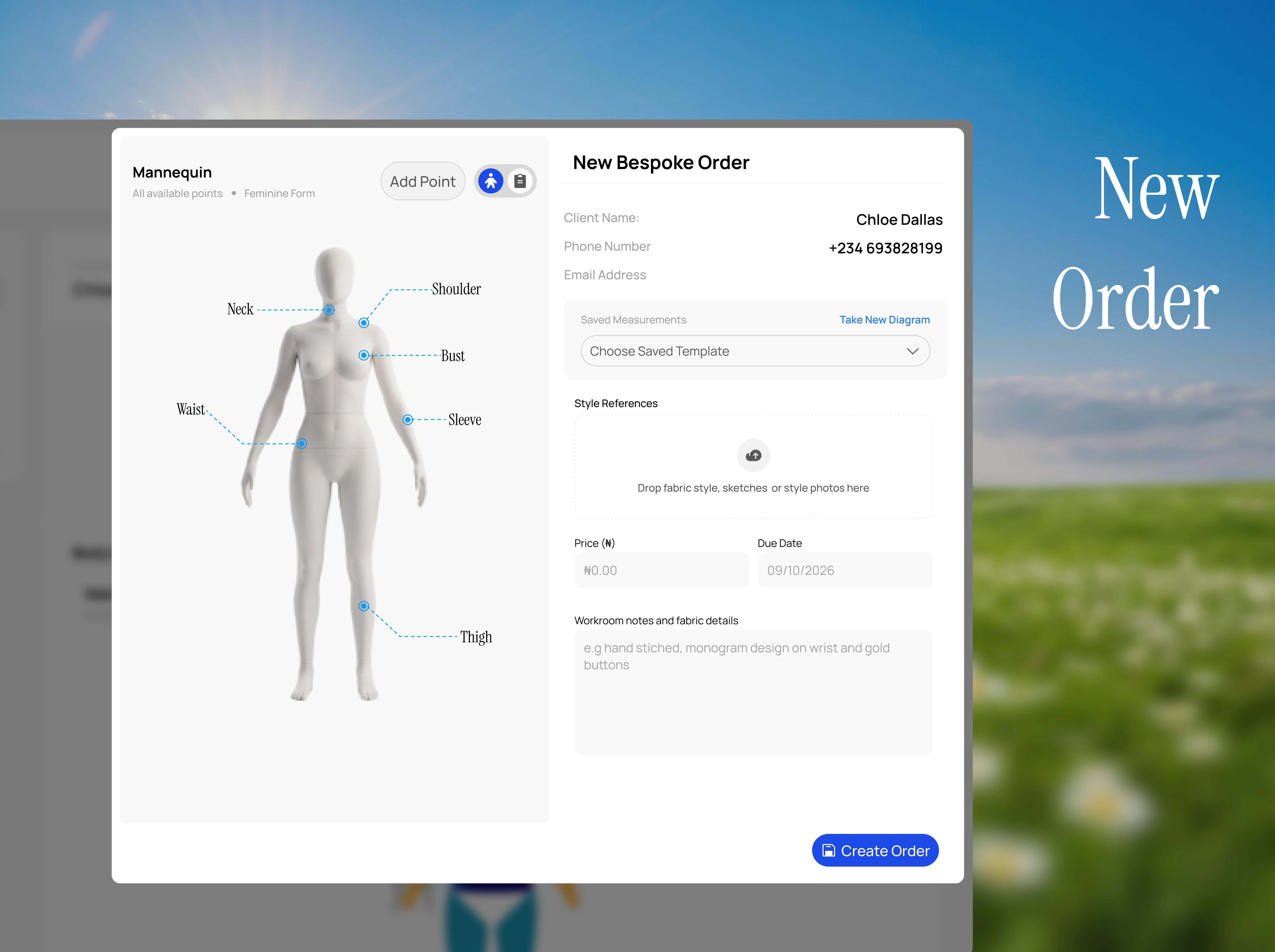
A mannequin you can tap. Instead of a long form, the measurement screen shows a body with marked points: neck, shoulder, bust, waist, sleeve, thigh. A tailor taps the spot they’re measuring. It matches how they already think about a body and makes it harder to mix up one measurement with another.
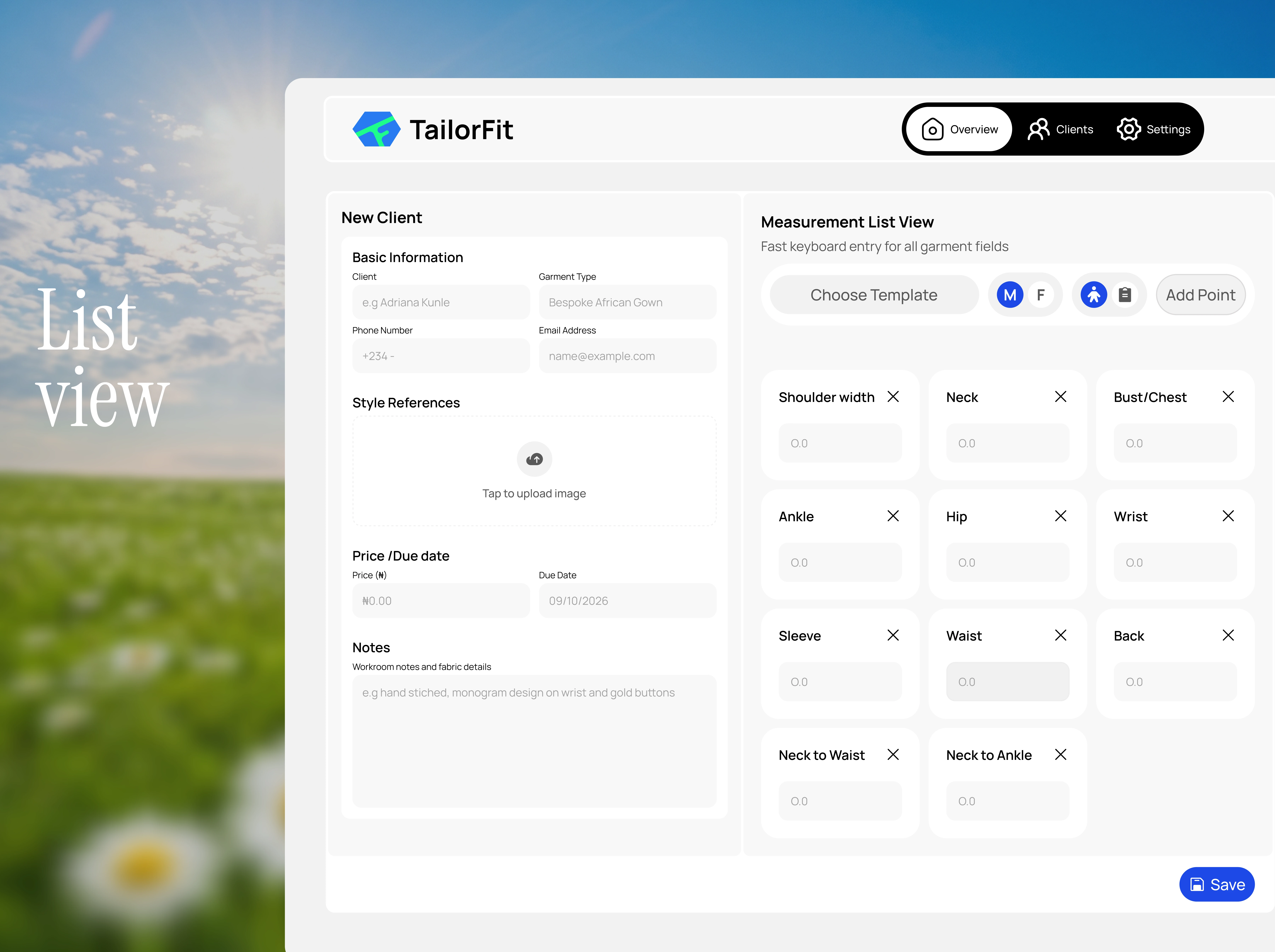
A list view for speed. Some people prefer typing to tapping, so a toggle switches to a grid of fields built for fast keyboard entry. Any field can be removed if the garment doesn’t need it.
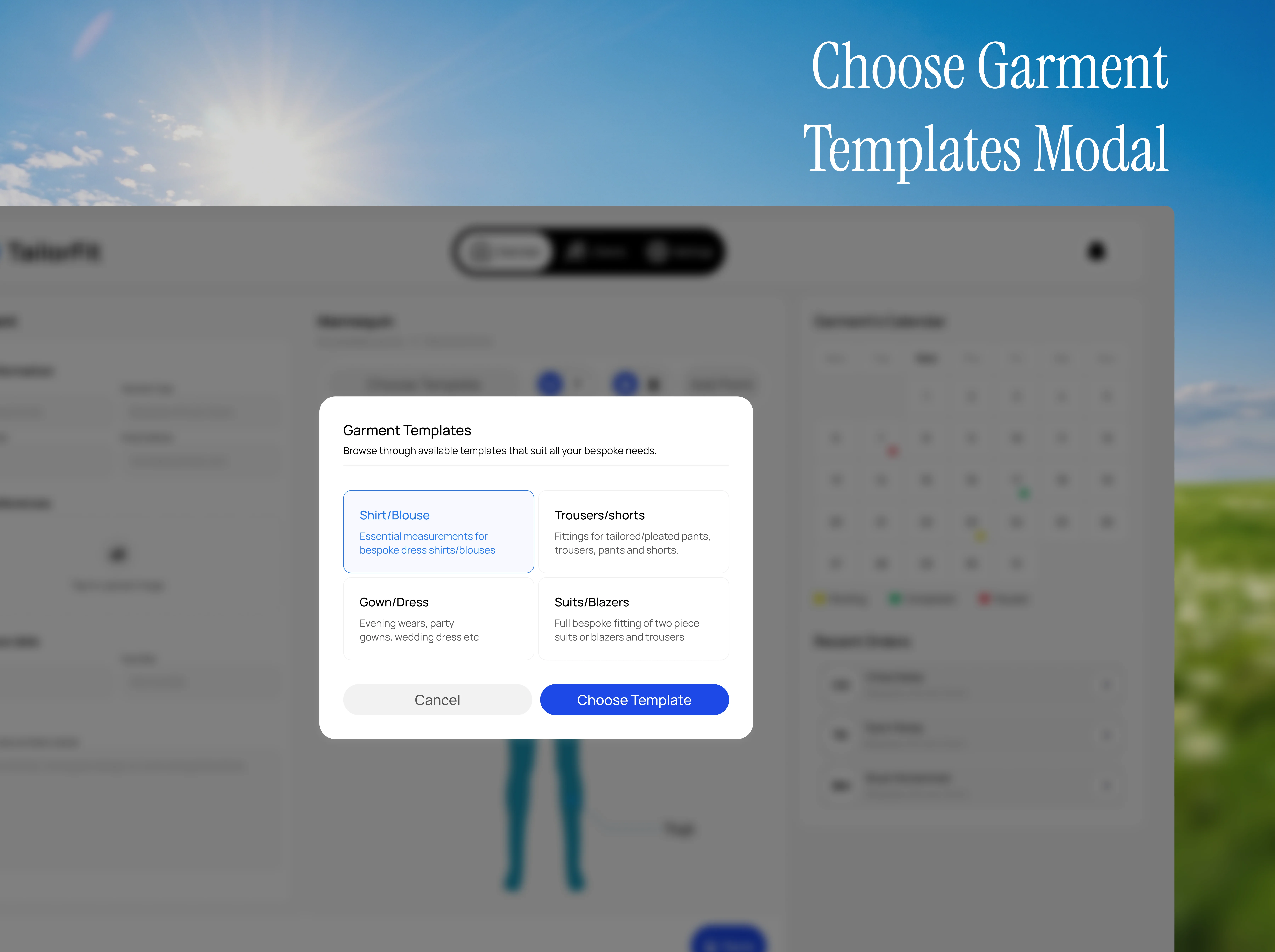
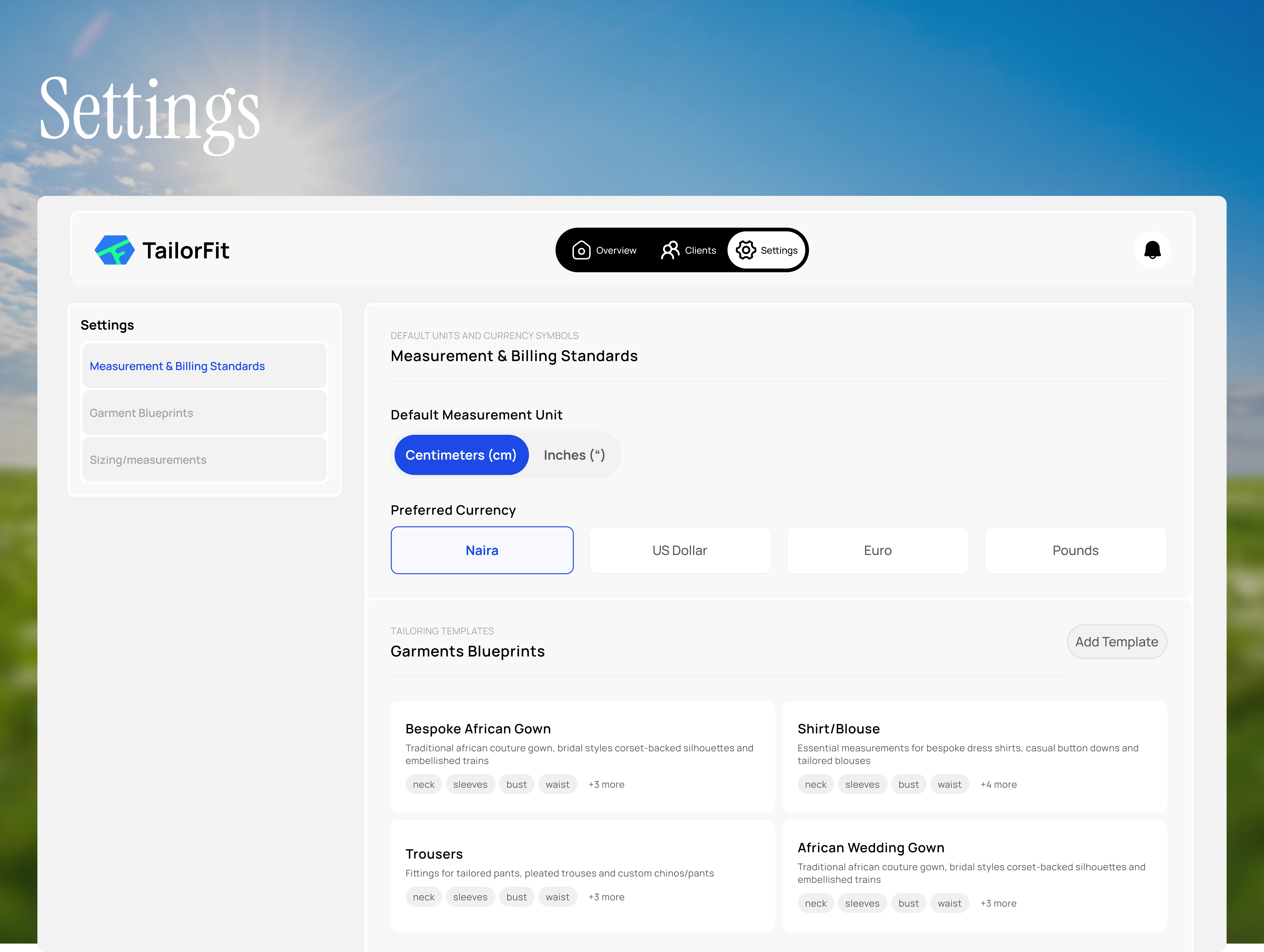
Garment templates. Choosing Shirt/Blouse, Trousers/Shorts, Gown/Dress, or Suits/Blazers loads the right set of measurement points. Tailors can edit these blueprints in Settings.
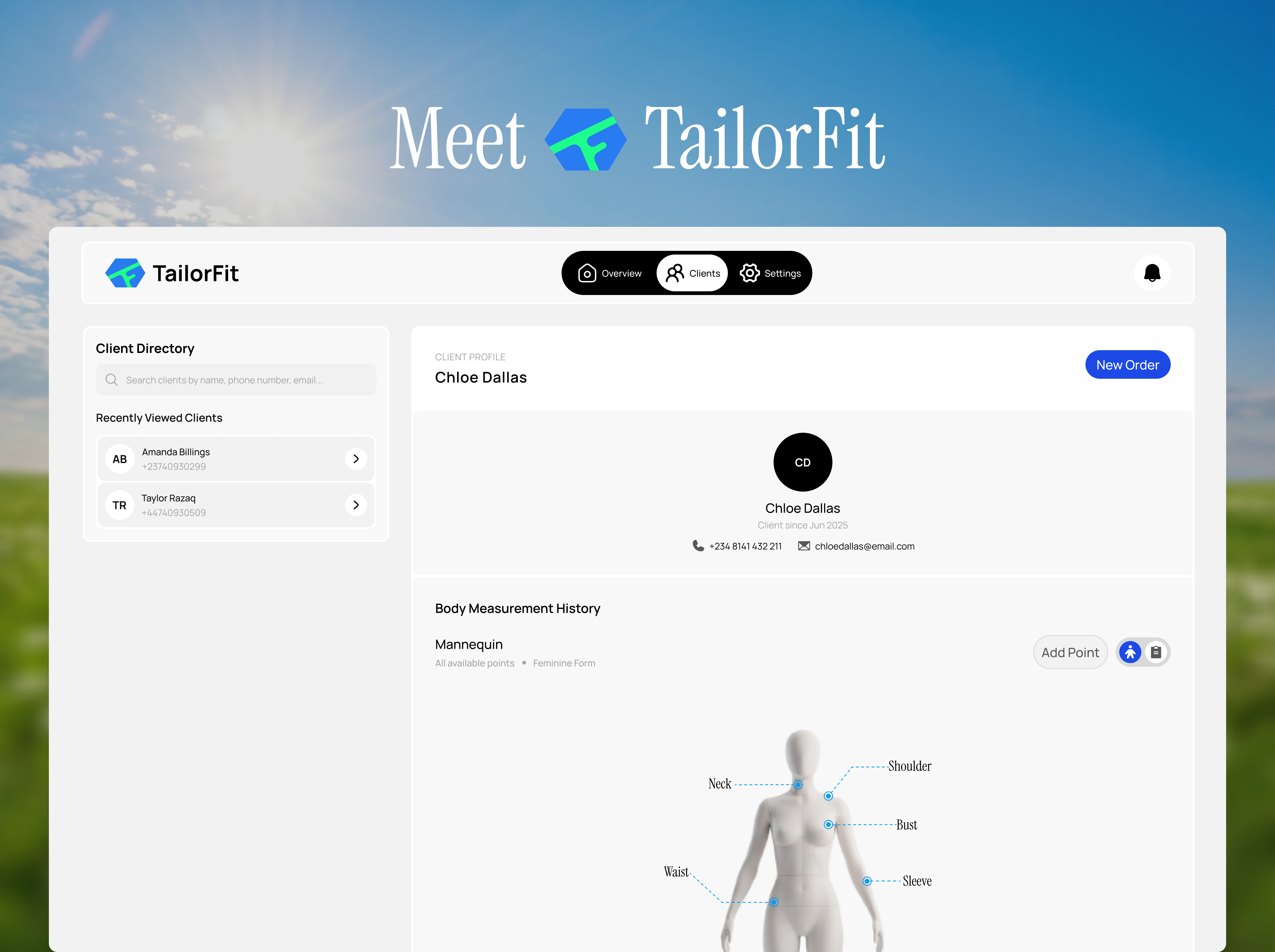
Easy updates, with history. Each client profile keeps a measurement history, and both views let a tailor change a single value without redoing the whole set. This came straight from the diary problem.
Everything for one garment in one place. The New Order screen brings together the client’s details, saved measurements, style reference photos, workroom notes, price in naira, and due date. A calendar on the Overview page marks orders as pending, completed, or paused, so the week is visible at a glance.
A client directory. Tailors can search by name, phone number, or email. Each profile shows when the person became a client, how to reach them, and their measurement history.
A simple main screen. I kept the toolbar to four actions: choose template, switch male or female form, switch view, and add a point. Things a tailor sets once, like cm or inches and which currency to bill in, live in Settings.
Local details. Naira pricing, +234 phone formatting, and “Bespoke African Gown” as a garment type were there from the start, so the app fits the market it’s for.
Outcome
TailorFit is a concept project, so I don’t have usage numbers to share. What I delivered is a full set of screens (Overview, Clients, New Order, list view, garment templates, and Settings) and a working prototype. I built it around problems I heard directly from a tailor.
Likely Outcomes
If TailorFit were put in front of working tailors, these are the changes I’d hope to see, and how I’d check each one:
Faster measurement updates. A tailor should be able to change a returning client’s numbers in a minute or two, with no crossing out. How I’d check: time a few tailors updating a record in TailorFit and in their diary.
Fewer repeat fittings. With clean, current measurements, there should be fewer cases of a garment being cut from outdated or missing numbers. How I’d check: ask tailors how often this happens before and after a few weeks of use.
Less searching for details. With references, notes, price, and due date saved with the order, a tailor shouldn’t need to scroll through chats or photos to find them. How I’d check: watch whether tailors ever leave the app to find order information.
Fewer missed deadlines. The calendar and order statuses should make due dates harder to forget. How I’d check: compare late or forgotten orders before and after.
Quicker setup for new orders. Saved templates should shorten the time from “new client walks in” to “first measurement saved.” How I’d check: time the full New Order flow with first-time users.
What I’d Do Next
Test the mannequin with more tailors and note where they hesitate.
See whether tailors lean on the list view more than the mannequin.
Add a side-by-side comparison of a regular client’s measurements over time.
Like this project
Posted Oct 12, 2026
Created a web app prototype, TailorFit, for tailors to manage client details and measurements efficiently.
Likes
0
Views
1
Timeline
Sep 10, 2026 - Oct 1, 2026