Tablz's Restaurant Discovery Portal

Eric Yam

Tablz's Restaurant Discovery Portal
May 2023 - August 2023

Overview Image
Overview
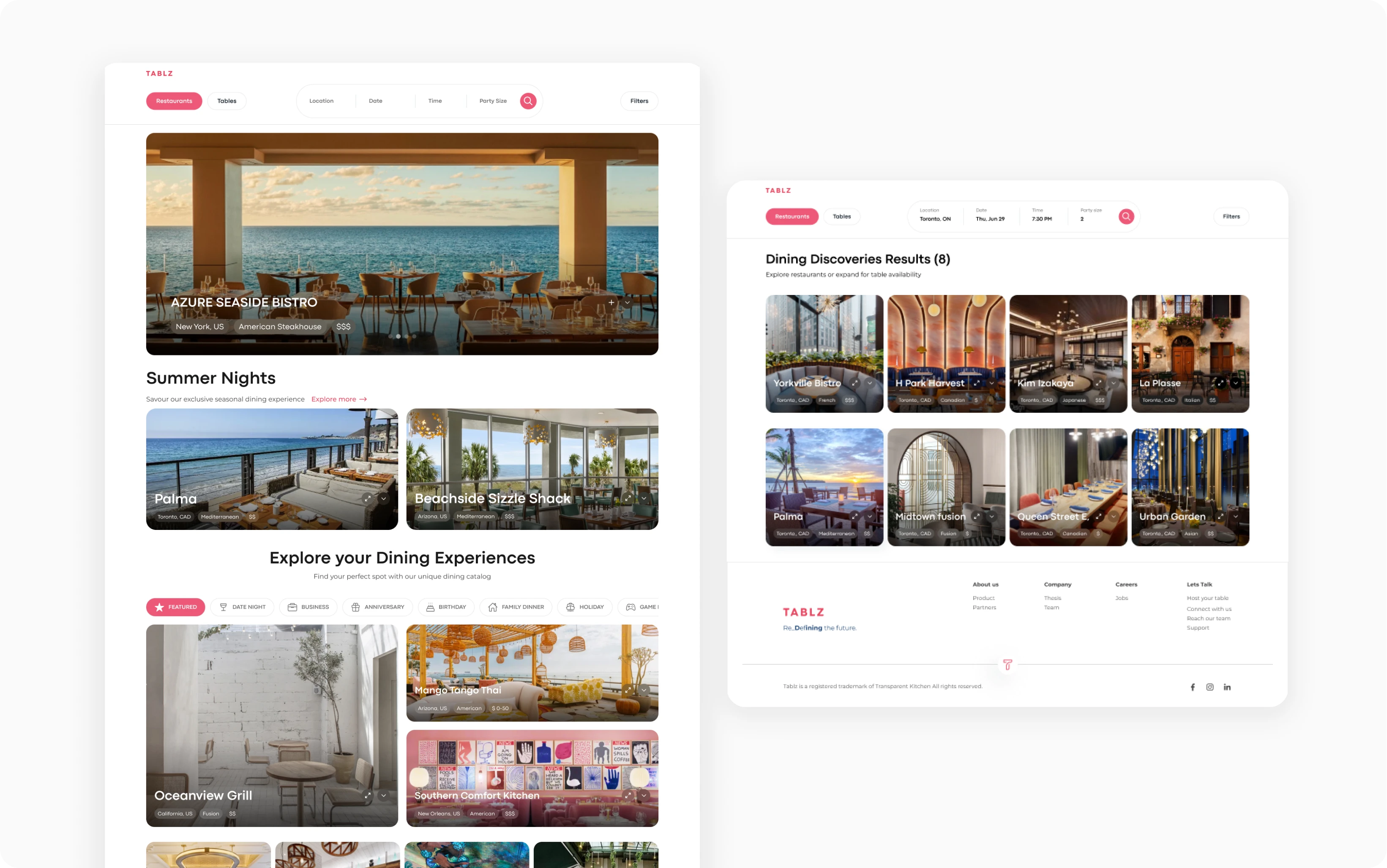
Tablz is a table reservation platform connecting diners with curated partner restaurants, but its fragmented booking process lacked an intuitive way to explore venues and compare table options.
As the UX/UI Designer, I developed the Restaurant Discovery Portal to streamline the experience, boosting user engagement and table booking conversions.
Role
UX/UI Design, User Research, Interaction Design, Design Systems
Team
3 UX Designers
Duration
3 Months
Highlight
Highlight 2
Highlight 3
Context
Understanding the Limitations
Tablz’s platform only allowed users to browse one restaurant at a time, offering no way to compare venues or explore multiple options efficiently. This lack of flexibility created friction in decision-making, leading to drop-offs after just 2–3 clicks.
Users needed a way to seamlessly browse, compare, and reserve without feeling restricted by the platform’s structure. A more dynamic, visual, and flexible system was critical to keeping users engaged and increasing table bookings.
Context Image
Problem
And with a growing user base and expanding partnerships ...
How might we help users seamlessly discover and book tables while minimizing drop-offs?
Project Constraints
Starting from Scratch
Tablz’s web platform has no existing components or research to build from. This meant designing everything from the ground up, creating both a new exploration model and the first light-mode product for the company.
While the lack of existing structure posed challenges, it also gave us the freedom to innovate. We leveraged rapid iteration and constant usability testing to shape a scalable, visual-first, and user-focused system.
Constraints Image
User-flow
Understanding Current Friction Points
Users were restricted to viewing one restaurant at a time, making comparisons difficult and increasing decision fatigue. Drop-offs after 2–3 clicks signaled that the system was unintuitive, causing users to abandon bookings before reaching checkout.
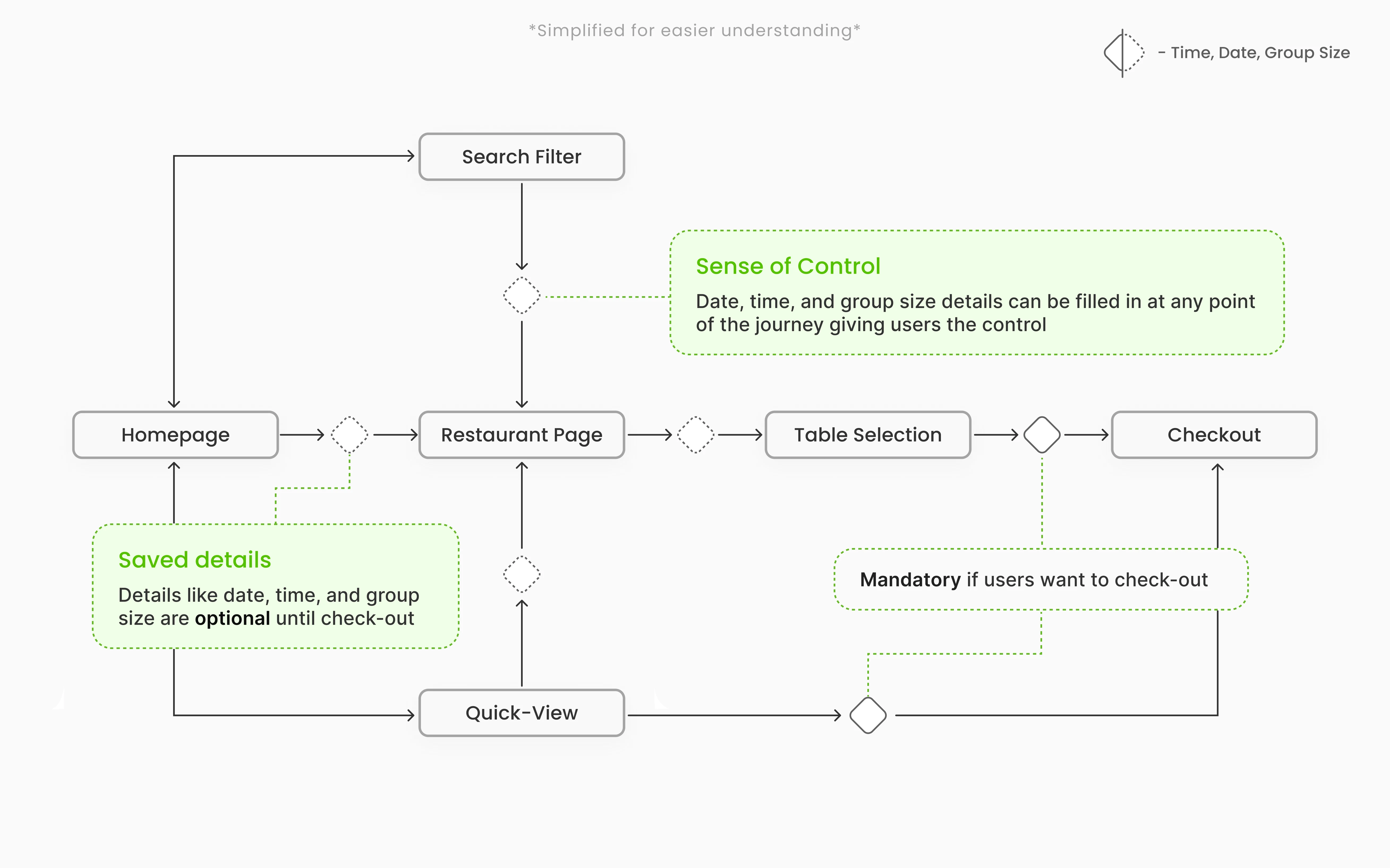
Through usability testing, and observational research, we identified that users struggled with repetitive inputs, re-entering details like guest count, date, and budget multiple times. The checkout process was buried 8–10 steps in, leading to unnecessary friction.
User Flow Image
Always 1 Step Closer To Check-out
We restructured the user flow with a progressive approach, ensuring users could modify key details at any stage without disrupting their journey. Auto-save eliminated redundant inputs, and checkout was made accessible at nearly every step.
Visual Design
Restaurant Cards: Simple, Focused, Designed for Action
Cards aren’t meant to tell the whole story. They’re a starting point to encourage further exploration. Too much information upfront slows decision-making and creates friction, so we kept them light, structured, and scannable.
Visual Design 1
Interaction Design
Smart Previews: Adapting to Different User Behaviors
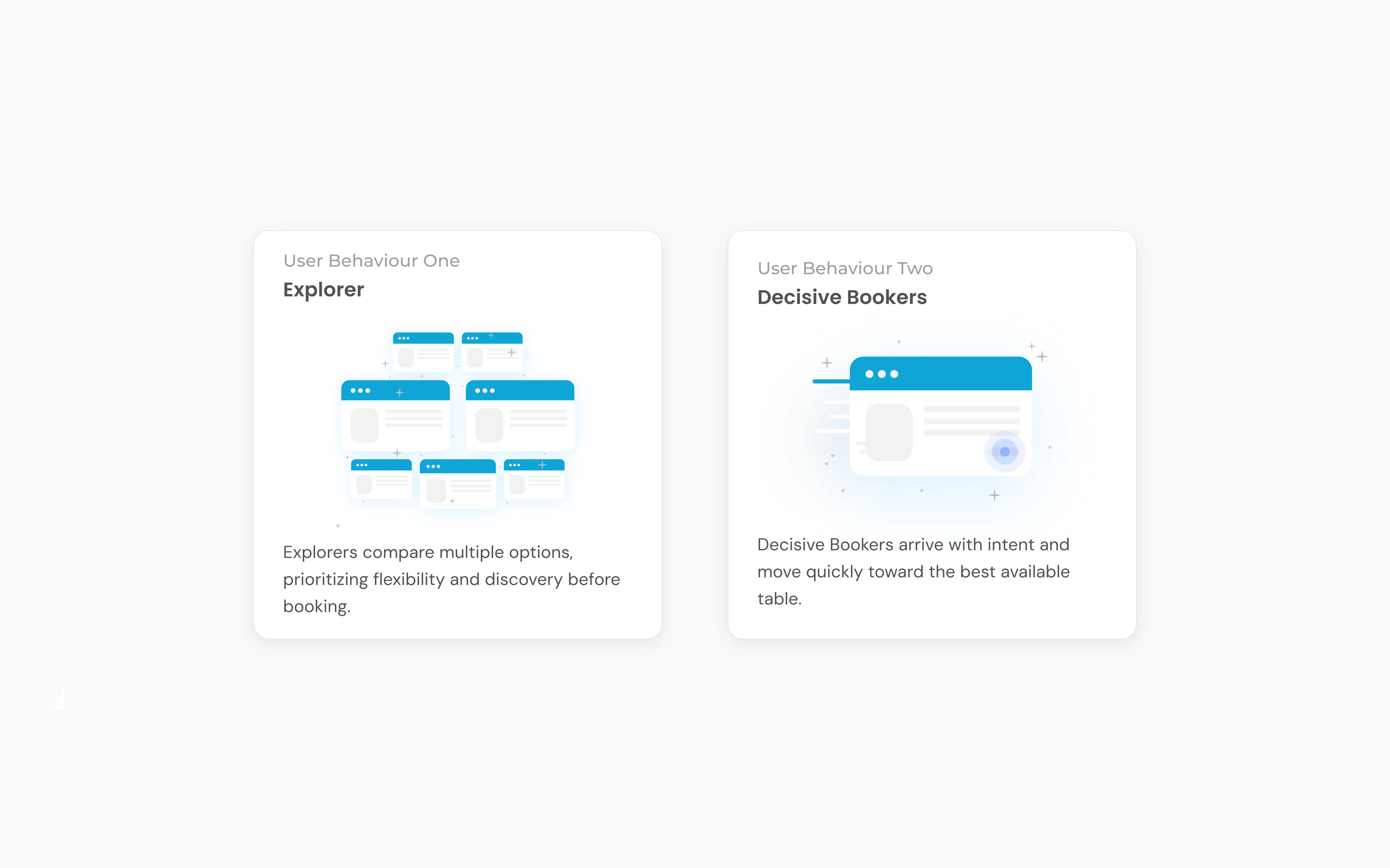
Three-Tiered Exploration System
To accommodate different decision-making styles, we introduced a three-tiered system that let users preview, compare, or fully explore restaurant options at their own pace. This ensured that users weren’t forced into a rigid journey but could access details in a way that suited their needs.
Design Systems
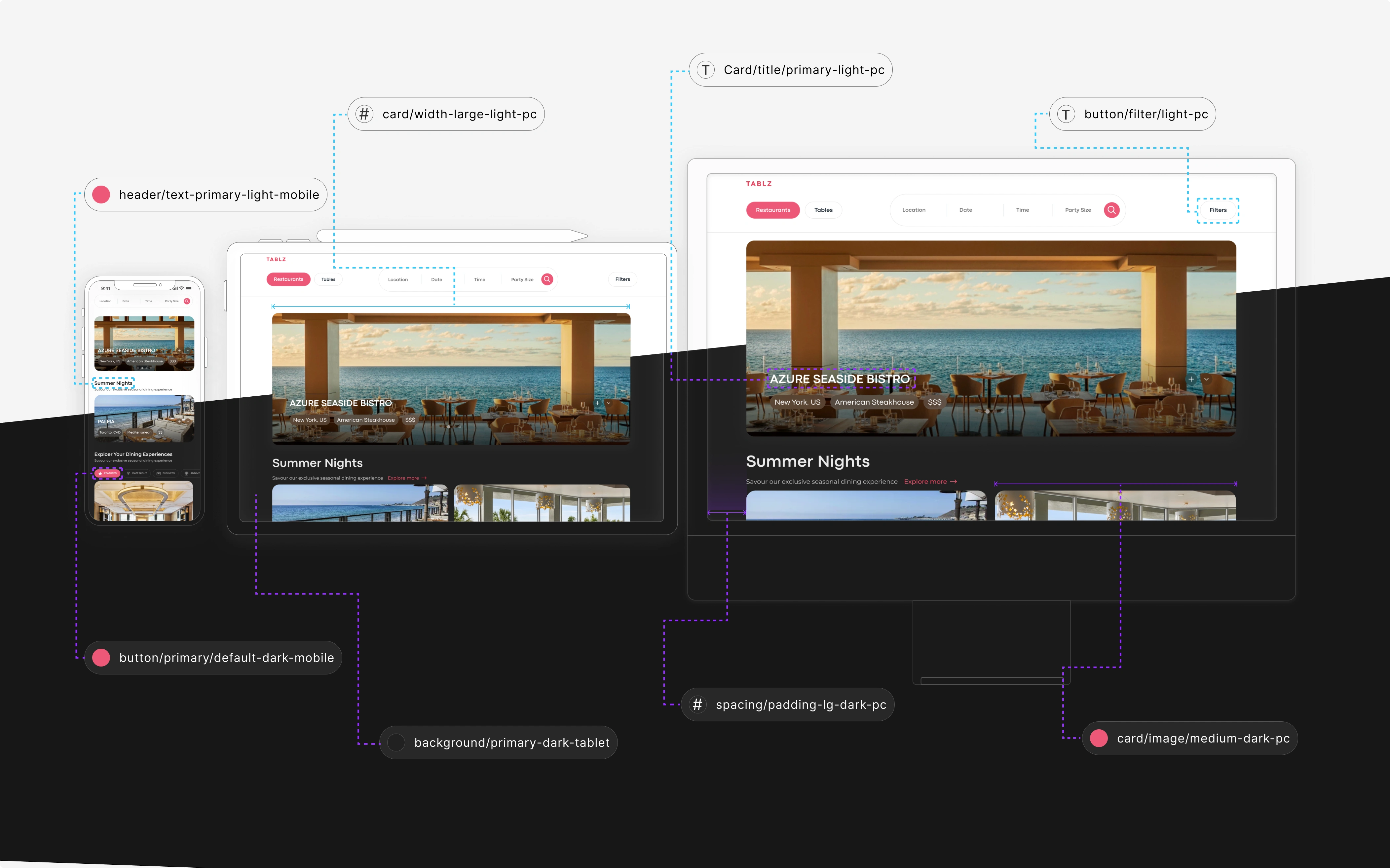
Creating a Scalable Foundation
When tasked with solving responsiveness issues across devices, I saw an opportunity to create a Variable Design System that would streamline the Restaurant Discovery Portal and future-proof Tablz’s design ecosystem.
Outcome
Impact and Wins
While this project didn’t go live during the internship, our testing and research provided valuable insights that shaped Tablz’s design strategy. The project enhanced usability, accelerated design workflows, and improved platform scalability.
Research Sessions Led: Over 30
Quicker Time-To-Checkout: 30% faster
Variable System Implementation: Fully integrated, reducing iterations by 50%.
Reflection
Key Learning and Takeaways
Mistakes were inevitable, but understanding why I failed and how to overcome challenges refined my approach, ensuring every iteration led to better results.
Like this project
Posted May 31, 2026
Developed a Restaurant Discovery Portal to optimize table reservations and enhance user experience.