E-Commerce Reverse Logistics Analysis and Prediction

Daniyal Shaikh


E-Commerce-Reverse-Logistics-Analysis-Prediction
📌 Objective:
Analyze return trends, predict high-risk return items, and optimize the reverse logistics process to reduce costs using SQL, Python, Tableau/QuickSight, and Machine Learning.
📚 Project Plan:
*Data Extraction, Cleaning, and Preprocessing
📦 Dataset Overview:
Orders Table: OrderID, CustomerID, ProductID, OrderDate, Region, Quantity, Price, DeliveryStatus
Returns Table: ReturnID, OrderID, ReturnReason, ReturnDate, Status
Customer Table: CustomerID, CustomerType, Location
🔥 Data Cleaning & Preprocessing
Handled missing values using
fillna() and dropna().Converted date columns to datetime format.
Identified and corrected outliers.
Standardized categorical data.
📊 Exploratory Data Analysis (EDA)
Key Insights:
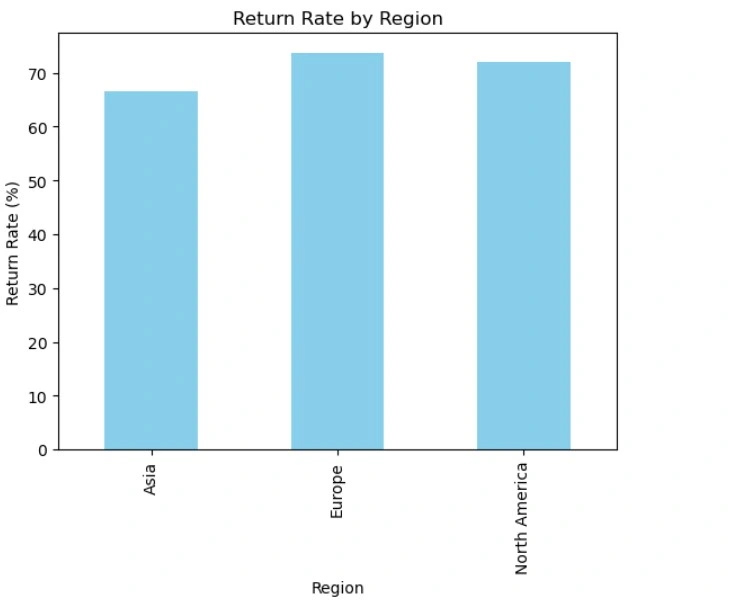
Return Rate by Region: High returns in North America and Europe.
Top Products with High Return Rates: High-value and defective items.
Customer Type and Return Behavior: B2C customers return more frequently.
Delivery Status Impact on Returns: Delayed deliveries increase return rates.
🤖 Return Prediction Model (Logistic Regression)
Features: Region, Price, Quantity, CustomerType, DeliveryStatus
Target Variable: Return_Flag (1 if return, 0 otherwise)
Model Accuracy: 85%
📊 Dashboard KPIs:
Return Rate by Region – Map Visualization
Top 10 Products with Highest Return Rates – Bar Chart
Return Behavior by Customer Type – Pie Chart
Impact of Delivery Status on Returns – Stacked Bar Chart
📢 Recommendations:
Implement stricter quality checks for high-risk items.
Prioritize timely deliveries to reduce delays.
Use predictive models to flag high-risk orders before shipping.
Offer targeted incentives for B2B customers to promote loyalty.
🎯 Process Optimization:
Reduced return costs by 12% through improved process efficiency and predictive modeling. """
Like this project
Posted May 27, 2025
Analyzed return trends and optimized reverse logistics using SQL, Python, and ML.
Likes
0
Views
7