Tribloc | Evidence-Backed AI Research & Data Automation

Benjamin Zsigri


PROBLEM
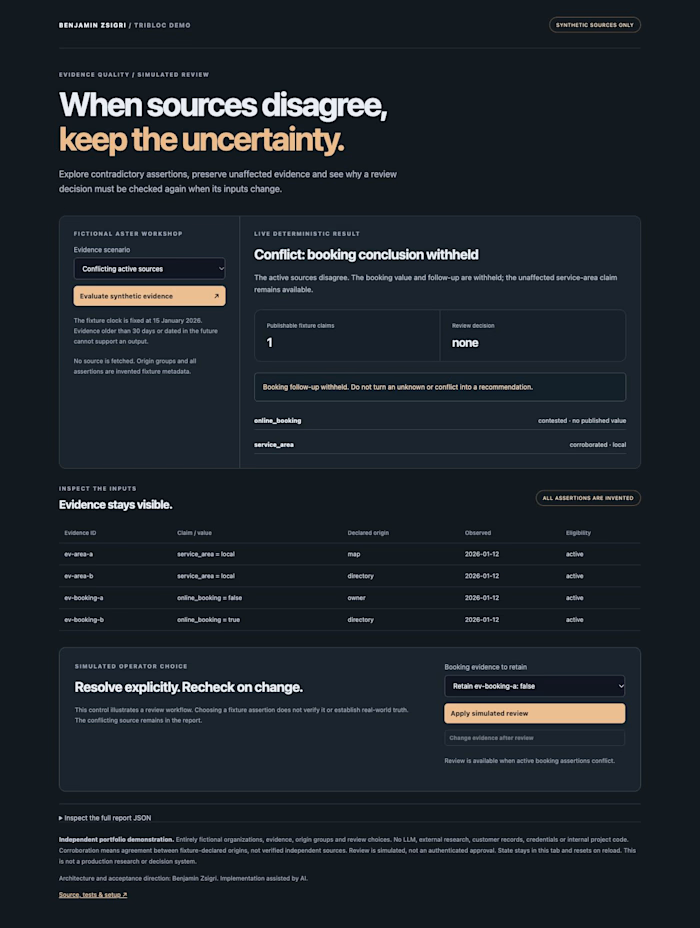
Public-source company research becomes unreliable when incomplete, conflicting or unsupported claims are treated as verified facts.
ARCHITECTURE
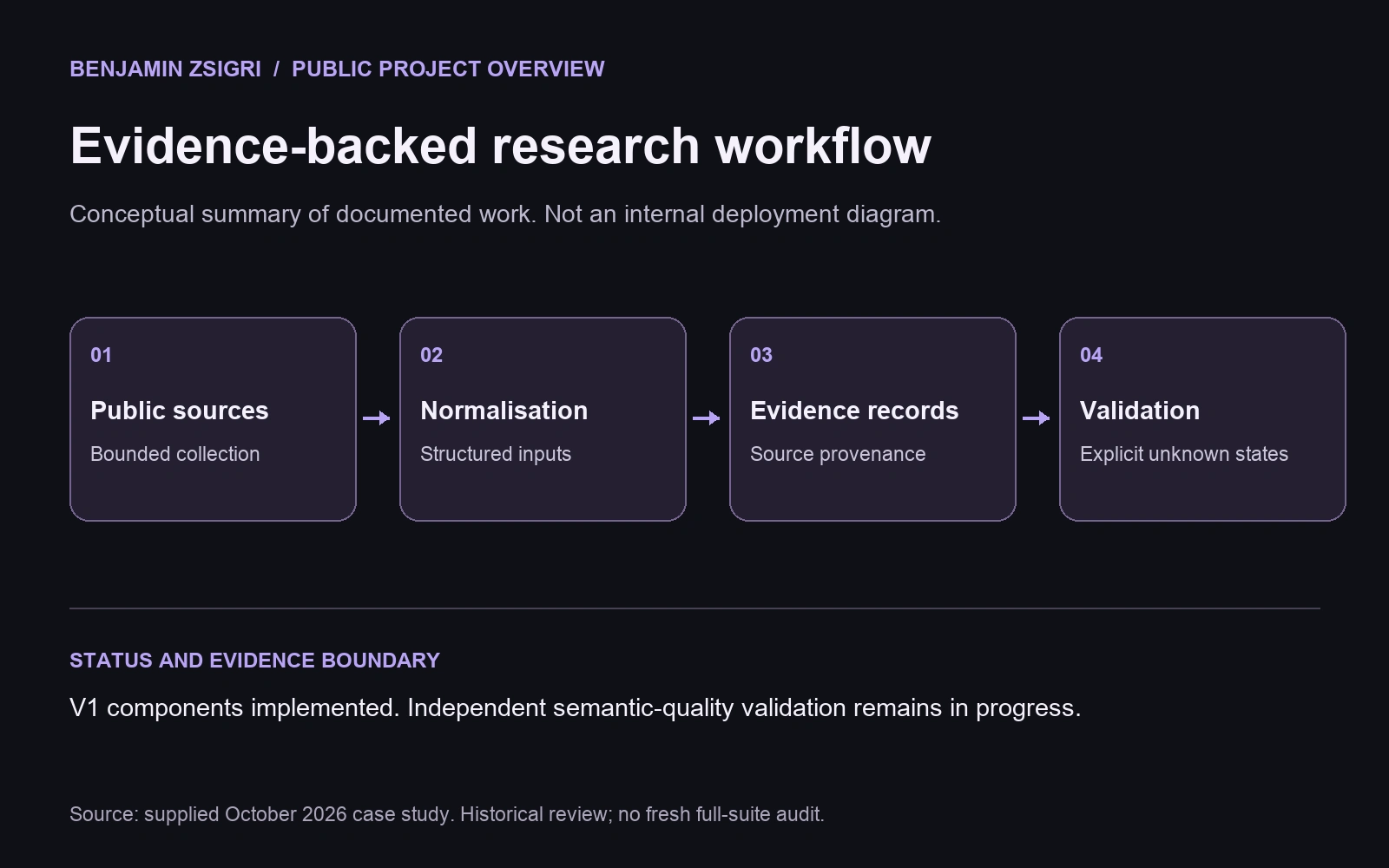
Python research components connect public-source collection, normalisation, structured evidence records and validation tooling. Provenance and explicit unknown states link research outputs to supporting sources. This is a public-level workflow overview, not a disclosure of internal architecture.
MY ROLE
I defined evidence and quality requirements, directed architecture and coordinated AI-assisted implementation and validation planning. AI tools produced most implementation code and contributed design analysis.
IMPLEMENTATION
Implemented V1 components include source adapters, research tooling, structured input/output contracts, evidence records and evaluation tooling. Research and message dispatch are treated as separate activities.
VALIDATION
The October 2026 case study documents repository components and offline synthetic tests. Independent semantic-quality measurement and client-specific qualification remain under validation. The source review was not a fresh full test run or independent quality audit.
OUTCOME
An implemented research foundation for traceable public-source analysis. It does not establish independently proven lead accuracy, buyer intent, conversion gains or superiority over alternatives.
MEDIA
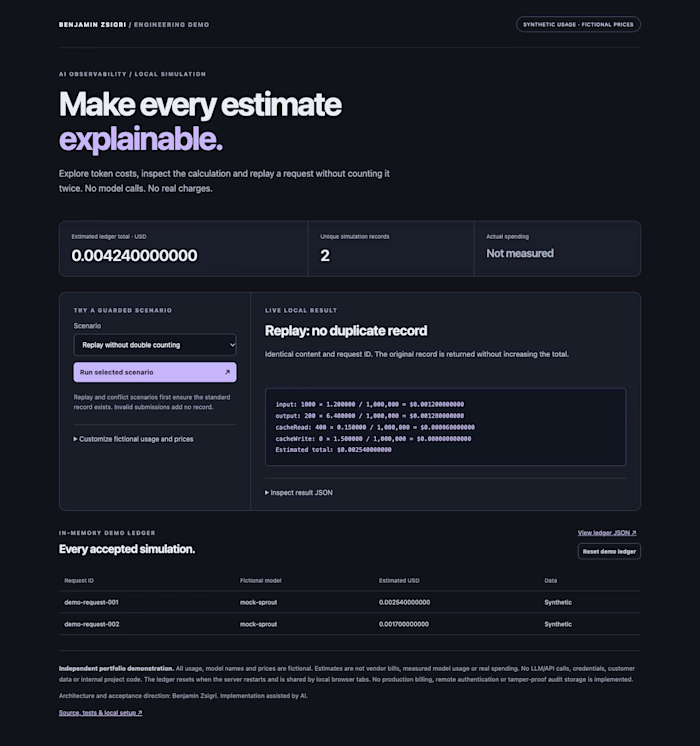
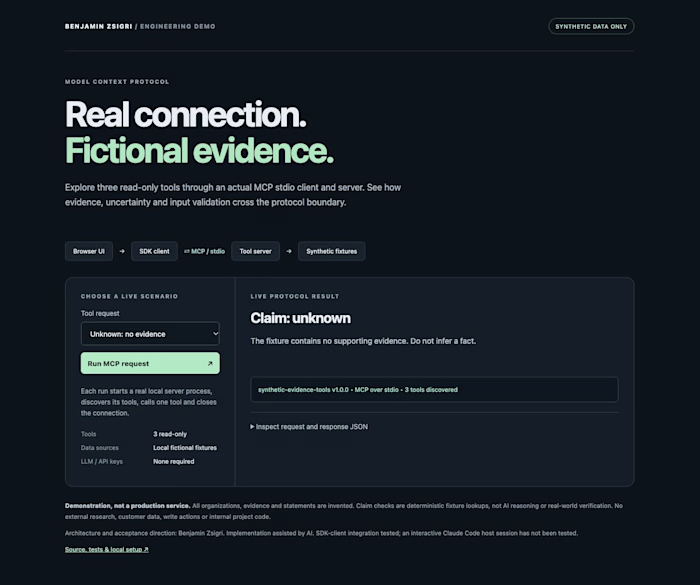
The diagram summarises the documented research process. The animation uses fictional companies and illustrative scores; those scores are not benchmark results and the video is not a customer deployment recording.
CLIENT RELEVANCE
Source-backed enrichment pilots, API research pipelines, data normalisation, provenance and AI-output validation.
Like this project
Posted Oct 16, 2026
Founder-led Python research automation with source provenance and explicit uncertainty. Video uses fictional companies to illustrate the research workflow.
Likes
0
Views
0