Agroforestry for Paper industry in India

Satabdi
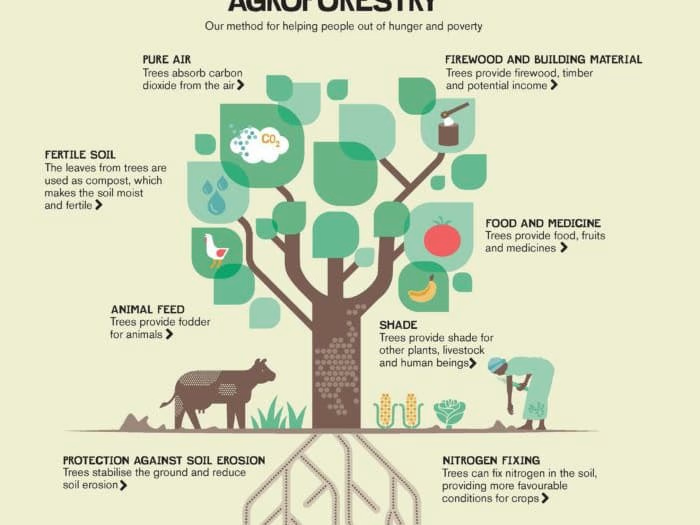
Agroforestry, a land-use system combining agriculture and forestry, supports environmental protection and rural livelihoods by harnessing the ecological benefits of trees. Scientifically, trees in agroforestry systems enhance carbon sequestration, mitigate soil erosion, and improve water retention, thereby protecting the environment. They create microclimates that foster biodiversity and reduce the impact of climate change. Economically, agroforestry provides a sustainable supply of raw materials like wood and bamboo, crucial for industries like paper production, while offering farmers additional income through timber, fruits, and fodder. This dual role of environmental conservation and livelihood generation makes agroforestry a cornerstone of sustainable development, especially in rural areas.
Agroforestry is integral to the sustainability of India’s paper and pulp industry, ensuring a steady supply of wood-based raw materials while simultaneously addressing environmental and socio-economic concerns. Nearly 90% of the wood fiber required by Indian paper mills is sourced from agroforestry, significantly reducing the pressure on natural forests. Farmers cultivate species like eucalyptus, casuarina, and acacia alongside agricultural crops, benefiting from intercropping and diversified income streams. The paper industry has played a proactive role in promoting agroforestry by developing high-yield, disease-resistant tree clones tailored to different agro-climatic conditions. These efforts have enabled a 23% increase in net sown area under agroforestry, providing a robust supply chain for wood pulp. Furthermore, this practice boosts rural employment, involving over 5 million farmers, while enhancing soil quality, biodiversity, and carbon sequestration.
Like this project
Posted Dec 11, 2024
Agroforestry integrates agriculture and forestry to support environmental conservation and rural livelihoods. Crucial for India’s paper industry, it provides 90
Likes
0
Views
1