Pets & Disability

Elisa Figueroa




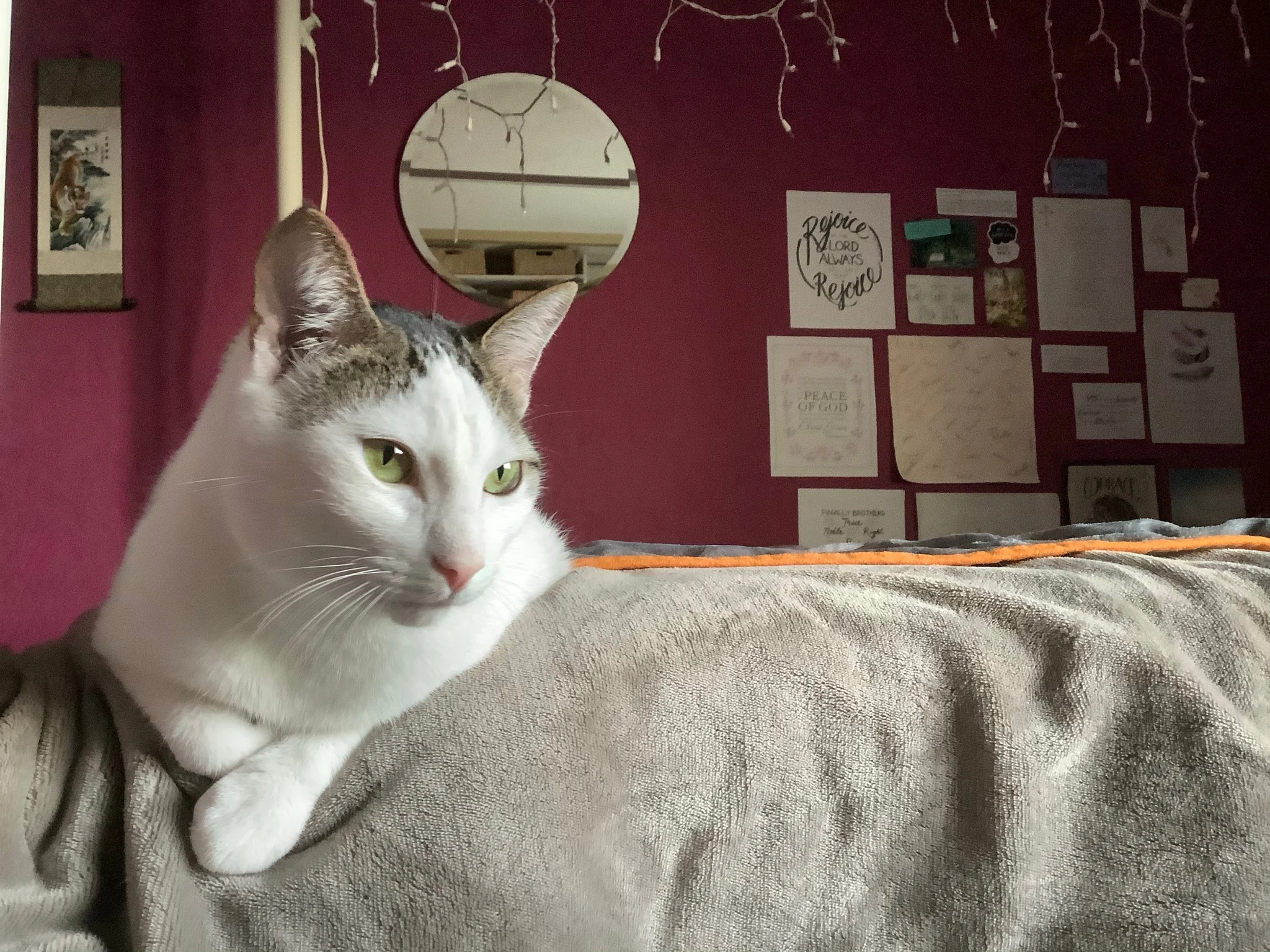
<<Image description: A photo of Simon siting on Elisa’s bed taken from slightly below him. Simon is a green-eyed cat with white fur and brown tabby patches. One paw is curled under him and the other rests a little over the bed’s edge. He is not looking at the camera.>>
My one and only fur child turned seven in June and it’s had me reflecting on our past four years together. I wanted to adopt a pet to lighten my loneliness, and to have more than a stuffed animal for comfort. So yes, I adopted Simon for purely selfish reasons. And you know what? It’s worked out pretty well for us both. Poor, traumatized boy got a chance at probably his best, most pampered life, and I got a meowing companion.
No good pet parent alive can deny the joy and support their domestic creatures provide, but I think pets provide particular benefits to the disabled and chronically ill.
So here are seven ways Simon has made my life better:
1. His physical proximity
I’ve been home bound for a great deal of this brain injury journey. Inability to drive, lack of energy and an influx of physical pain makes for a pretty lonely existence. Having a living, breathing, heat producing being near is oh so comforting. Obviously its not as comforting as having people near, but Simon shrunk the glaring hole in my life to a more manageable size. I wasn’t so alone anymore.
According to a John Hopkins Medicine article, interacting with Simon floods my brain with oxytocin, often called the “love hormone.” This is the same feel-good hormone a person gets when hugging someone they love.
2. Taking care of him
Not being able to care for myself without help was a frustration hard to adequately express. Taking care of myself felt less like an ability and more like a right. So when I couldn’t do it I felt indignant and helpless.
Being able to care for an animal helped ease the ache of the demoralizing blow physical inability left me with. I couldn’t cook myself a meal, but I could poor Simon’s kibble. I couldn’t wash my hair properly, but I could brush Simon’s fur until it gleamed. I couldn’t make my own bed, but I could make his.
3. Giving him pets
I had to re-learn how to self-soothe as an adult, something infants and children intrinsically do to make themselves feel better. I think this concept was re-introduced to me in the context of cognitive behavioral therapy. I was encouraged to find physical ways to ease emotional turmoil. Grounding myself through tactile means became my go-to, whether it was running my hands over clothes, or putting a hand over my heart and tapping lightly.
Introducing a cat into my emotionally charged life gave me my favorite way to self-soothe- giving pets. Luckily for me, he’s a willing and eager participant 80% of the time. The John Hopkins article also said petting Simon actually decreases the level of cortisol (stress hormone) in my body.
4. Reminding me to stay present
Something I’ve always struggled with, even before brain injury, is staying present. One thought can fork into ten and then I’ve just spent five minutes in an internal world of unreality instead of focusing on the thing at hand.
Having a cat has helped root me in the current moment. I think it has something to do with how peaceful he looks when he’s napping and how actively he responds to stimuli when awake. He is very present in his environment and it makes me want to be as well. Just watching him be his kitty self has become a mindfulness activity. No thoughts. Just me watching, admiring and appreciating my cat.
5. Being my familiar
No, my cat does not assist me in doing magic and I am not a witch, but I do feel like Simon fulfills the role of a “familiar” from European folklore. He is my best companion and biggest fan. He watches me like a hawk and wants to know what I’m doing every time I change positions. He is aware of my mood, temperament and energy, and I am aware of his. If only he could actually speak.
6. Making me laugh
I was definitely lacking in the myrrh department before I adopted Simon. Sure life had it’s funny moments, but having the bodily experience of laughing on a regular basis was something I was missing.
I had no idea pets were so amusing, especially species felis catus. The amount of facial expression Simon has is staggering and one look from him can send me into a fit of giggles. He’ll momentarily become possessed and get this deranged look in his eyes and start running around the house, crashing into things. He also loves to hunt and feast on each and every insect he comes across, including flies. Even his meows are hilarious.
7. He’s a reason to get out of bed
There are days when I open my eyes and I think, “Not again! I have to do this again? I have to get up and live another day of my life in this body again?!” And then I don’t want to leave my bed because getting up means I have to face the actuality of those thoughts. Knowing Simon prefers it when I feed him and is so happy to see me in the morning, is a motivating force that ejects me from my sleeping sanctuary.
There are plenty more ways Simon has improved my quality of life, but I thought seven would do for this article. So if you’re dealing with any of the struggles I described above, and if your health and finances allow, consider adding a fur baby to your clan. The mutual love between human and pet is something I hope everyone gets to experience at least once in their lives.
Love Always,
Elisa
Like this project
Posted Sep 2, 2025
Elisa shares the benefits of owning a pet as a disabled person.