Luna Vector - Figma Redesign & Framer Development

Zlatko Marjanovic


Overview
LunaVector helps people track rules-based crypto index strategies without giving up custody of their assets. Users connect exchange accounts via trade-only API keys, choose a MarketVector index, review monthly rebalance proposals, and approve trades themselves.
The product is nuanced: non-custodial security, index methodology, pricing tiers, and compliance-friendly language all have to land on the first visit. My job was to redesign the marketing experience in Figma and ship it in Framer so the story feels clear, credible, and conversion-ready.
Live site: lunavector.com
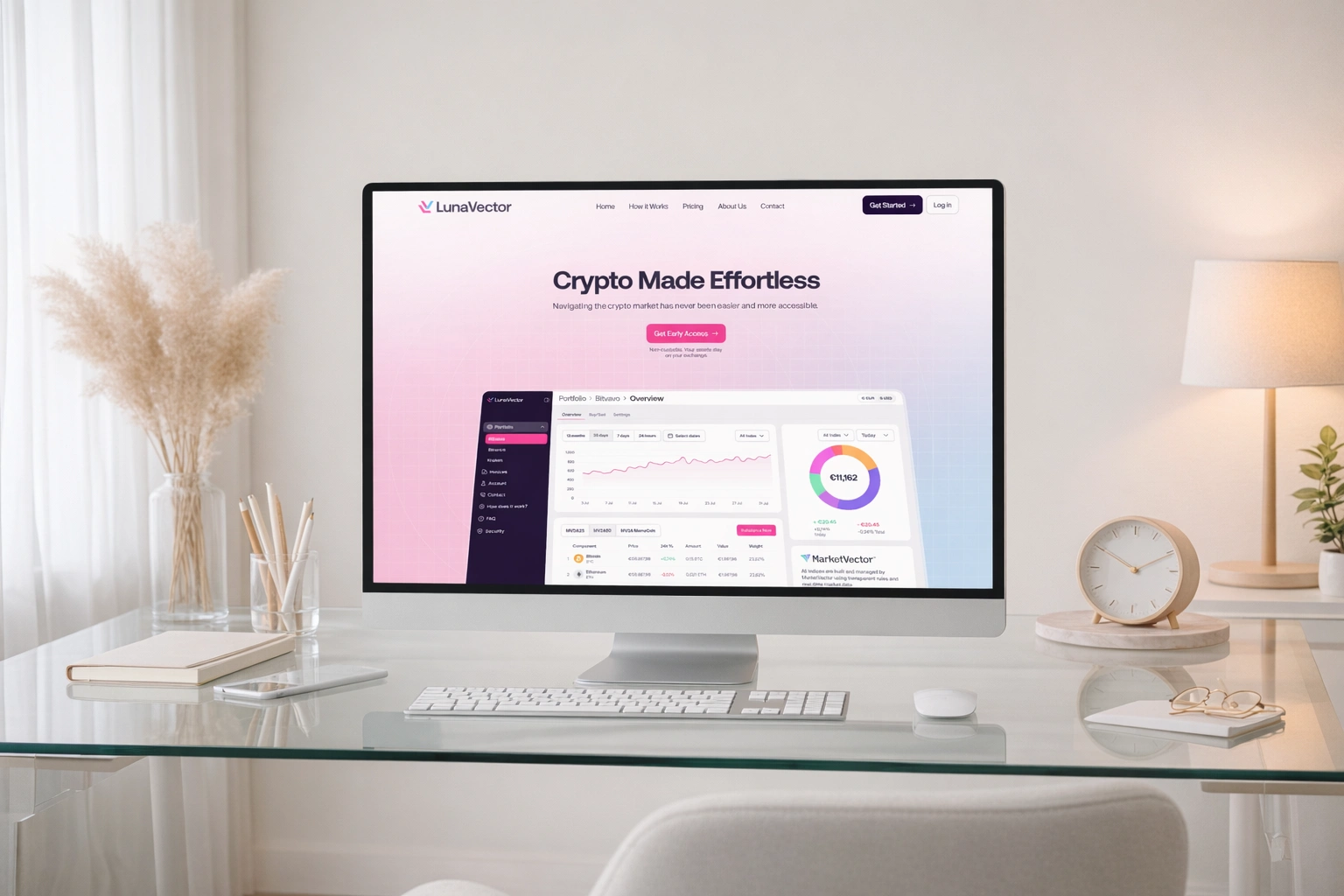
LunaVector homepage and product storytelling
The challenge
Crypto investing products often fail in one of two ways:
Too technical — API keys, rebalance logic, and index drift explained in jargon that scares mainstream visitors.
Too vague — Pretty hero sections that do not explain custody, control, or what actually happens after signup.
LunaVector needed a site that could speak to thoughtful retail investors and partners while staying precise about:
Non-custodial architecture (funds stay on the user's exchange)
Rules-based indexes powered by MarketVector
Monthly rebalance proposals the user must approve (nothing auto-trades without consent)
Transparent subscription pricing tied to invested amount
Security, privacy, and trust signals appropriate for fintech
My role
Figma redesign + Framer development (design system, page structure, responsive build, launch polish).
I owned the marketing site layer: information architecture, visual design, component structure, and Framer implementation. The goal was a site that could carry product depth without feeling like a whitepaper.
What I focused on
1. Product story before feature list
We structured the page around the real user journey:
Connect exchange
Choose an index
Receive monthly rebalance proposal
Review, edit, and approve
That sequence became the backbone for sections, visuals, and CTA placement instead of a generic "features grid."
2. Trust and custody as a first-class message
For fintech, trust is the product. I emphasized non-custodial language, trade-only API access, and user control in high-visibility areas (hero support copy, security section, FAQ-style blocks) so visitors understand the model quickly.
3. Making complexity scannable
Index investing, drift, simulators, and pricing tiers can overwhelm a homepage. I used:
Strong section headers with one idea per block
Product UI mockups to show the dashboard experience
Step-based layouts for "how it works"
FAQ patterns for objections (custody, automation, exchange support)
4. Conversion paths that match intent
Primary CTAs point to signup and learning flows (
Get Started, pricing, how-it-works). Secondary paths support research-heavy visitors (simulator, trust page, pricing comparison) so the site works for both ready-to-try and still-evaluating users.5. Framer build quality
In Framer I focused on:
Responsive layout across desktop and mobile
Consistent type scale and spacing rhythm
Reusable components for repeated patterns (steps, cards, pricing, quotes)
Performance-conscious structure for a content-heavy marketing site
Design decisions (selected)
Outcome
The redesigned LunaVector marketing site launched on Framer with a clearer product narrative, stronger trust framing, and a structure that supports both education and conversion.
For a category where users are skeptical by default, the site now explains what LunaVector does, what it never does, and what the user stays in control of without dumbing down the product.
Stack
Figma — UX/UI redesign, layout system, component direction
Framer — Production marketing site build and launch
Like this project
Posted Mar 18, 2026
Figma redesign and Framer build for LunaVector, a non-custodial crypto index platform. Clarified trust, product story, and conversion paths.
Likes
1
Views
18
Clients
LunaVector