
OPALÈNNE
CONTROLLED CREATIVE TEST ARCHITECTURE
Independent portfolio concept using public brand assets. It was not commissioned by, produced for, or affiliated with Opalènne, and it is not backed by account-side performance data.
WHY THIS CASE EXISTS
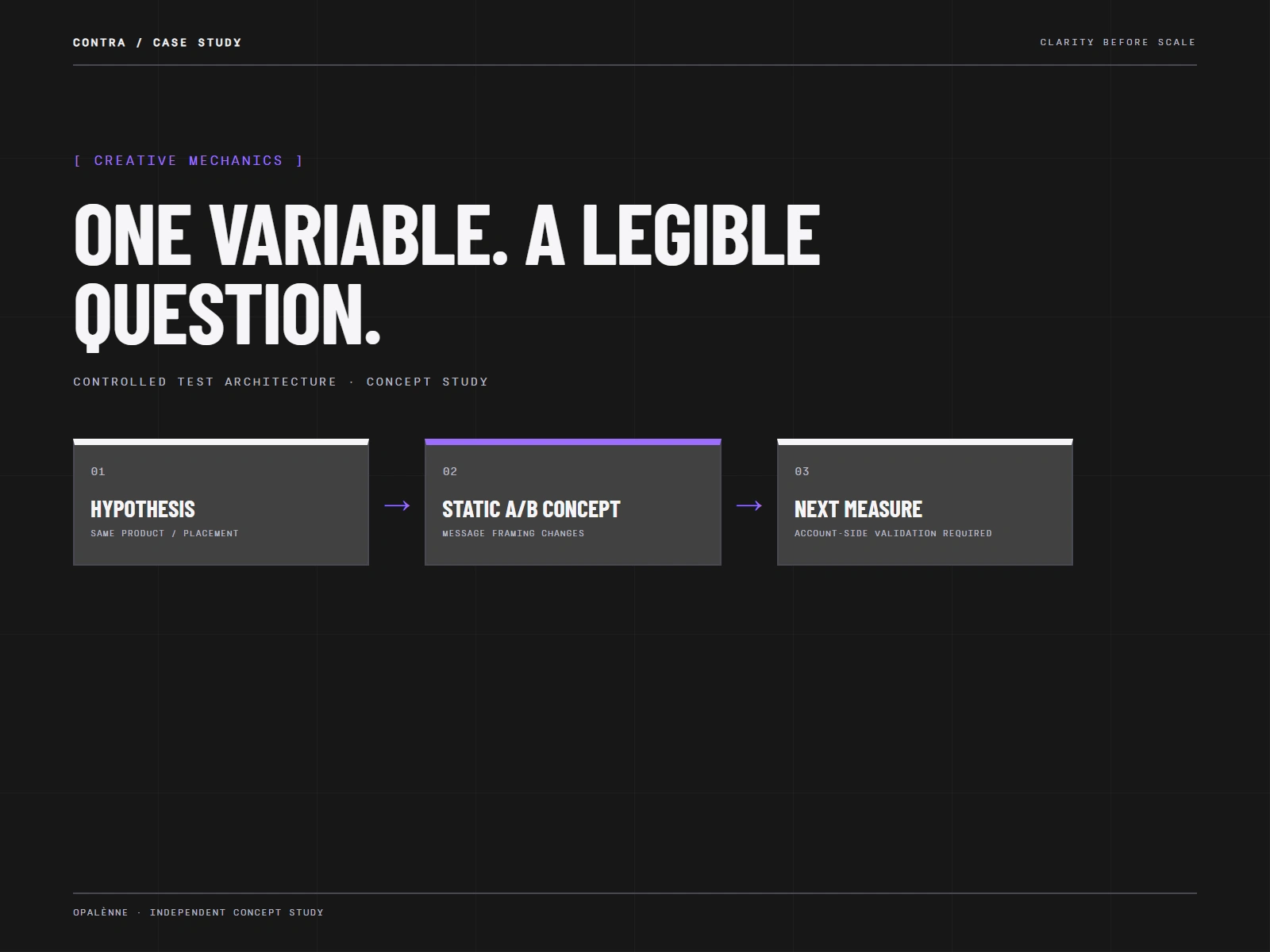
Creative development becomes difficult to read when the message, visual metaphor, layout, placement and motion all change together. This study shows a narrower operating model: define one question, hold the baseline steady, and make each future account-side test isolate one predefined variable.
THE DECISION PROBLEM
Can outcome framing and scientific-authority framing be evaluated as separate hypotheses without changing the product treatment, recognition hierarchy and format at the same time?
01 — SIGNAL ISOLATION LAYER
Two message routes were structured as separate hypotheses. Public data does not establish winner status. The purpose is to make an eventual account-side comparison easier to interpret.

A fixed visual baseline makes the message change easier to read.

Scientific-authority framing isolated as one proposed route.
02 — CONTROLLED AMPLIFICATION
Three copy variations retain the same central metaphor, product treatment and recognition hierarchy. Across the set, wording, copy density and response framing vary. They are concept routes, not a one-variable test matrix; any account-side test would need to isolate one predefined variable before launch. These are proposed learning units, not reported performance results.
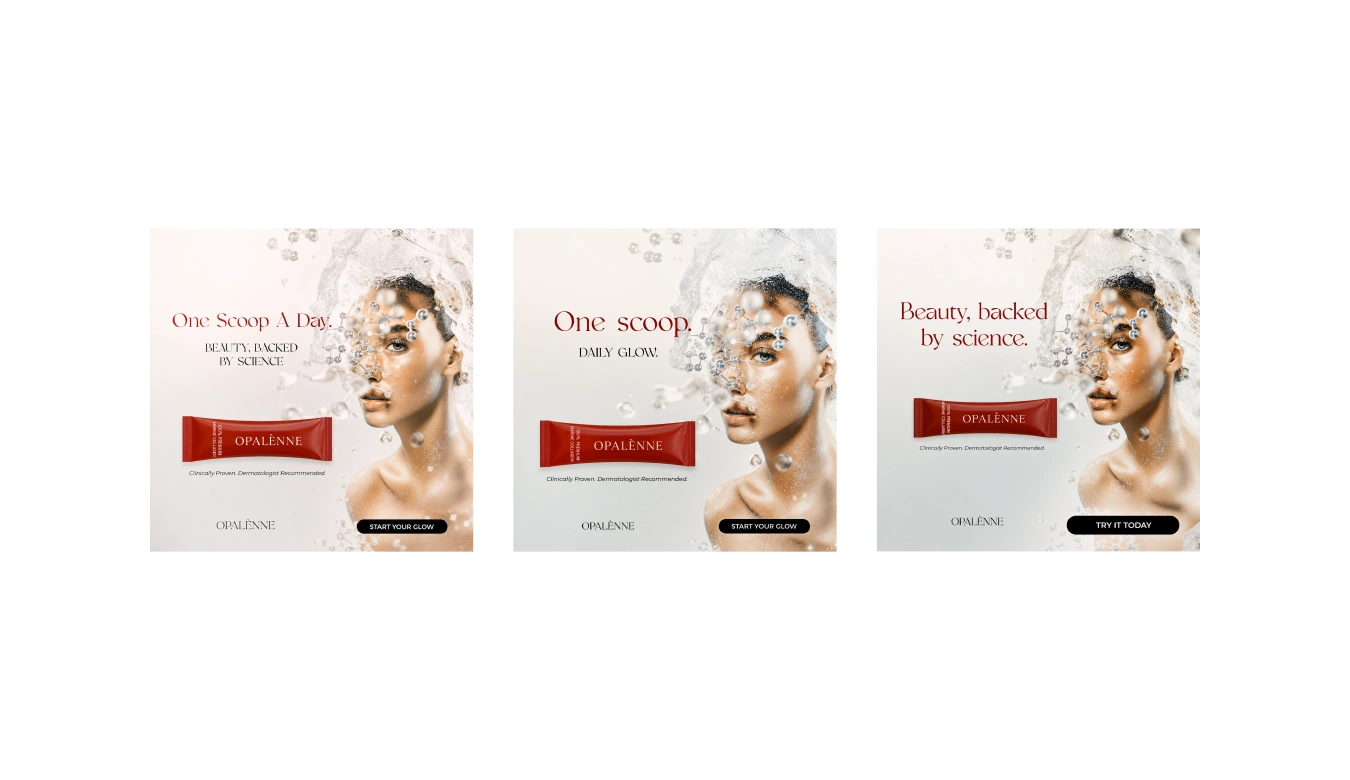
Micro-variations preserve the central metaphor and product hierarchy.
03 — PLACEMENT CONTROL
The 4:5 and 9:16 adaptations preserve the same reading order and product recognition. This limits format-driven production variation; it does not prove delivery, scaling readiness or performance stability.
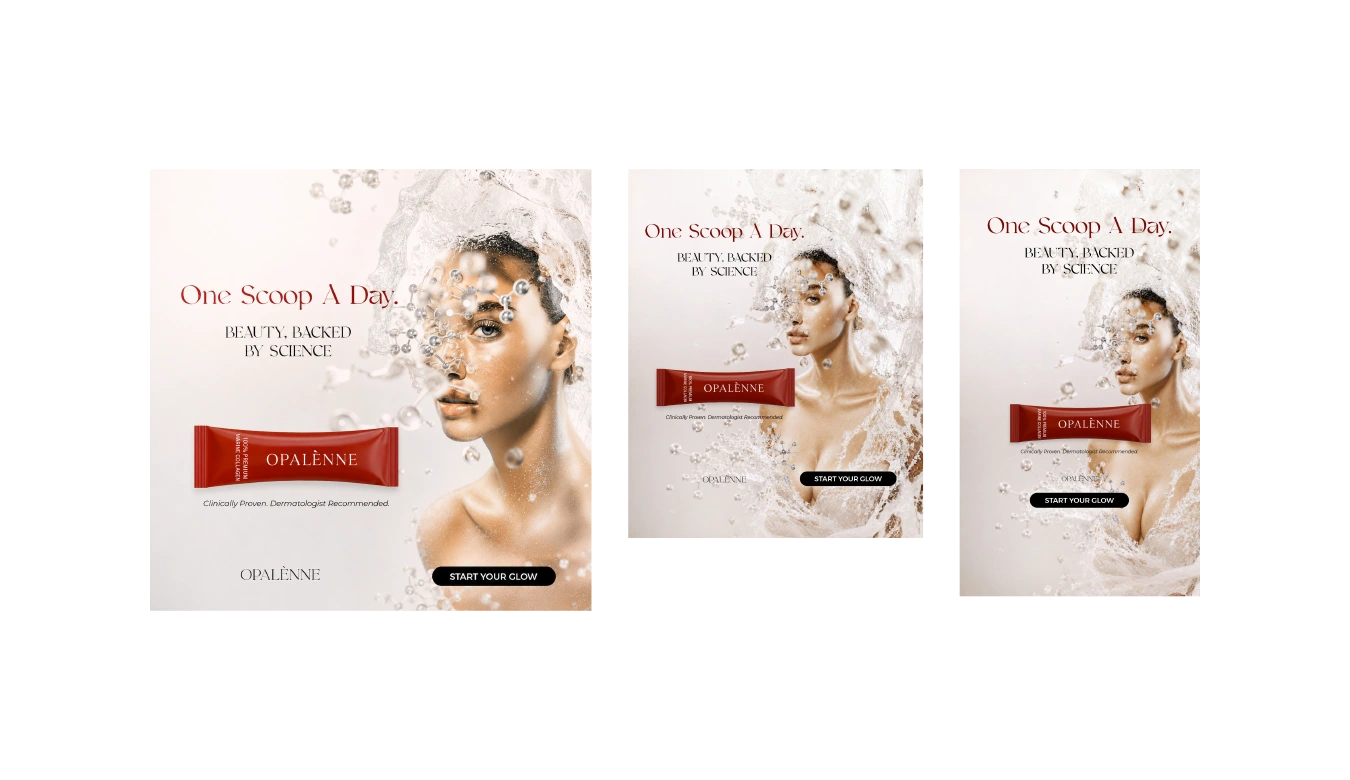
Placement adaptations preserve the reading order across 4:5 and 9:16.
04 — MOTION AS AN EXTENSION
The static structure is prepared for a possible motion extension only after an account-side read supports continuing that route. Motion is a production change, not evidence that the hypothesis is stronger.
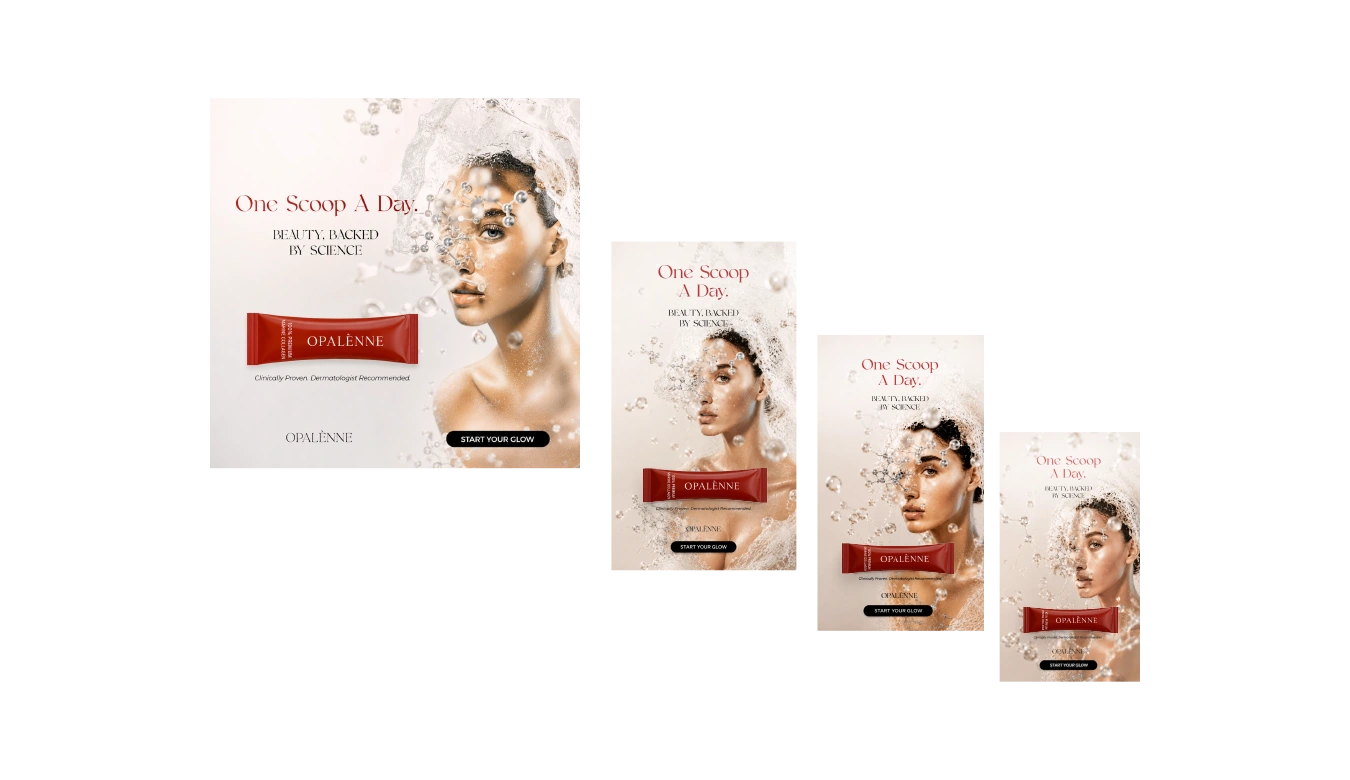
Format sequence prepared for a possible motion extension; not evidence of validation.
05 — EXCLUSION LOG
Unused directions remain documented because they introduce a different message or visual system. Exclusion keeps every interesting idea from becoming a test at the same time.

Excluded directions remain documented as part of the learning plan.
WHAT THIS DEMONSTRATES
My role is to turn available creative evidence into a testable question, name the variable, set the production constraints and define what still requires account-side validation. The output is pre-test decision context for creative production; any performance readout must come from account-side measurement.
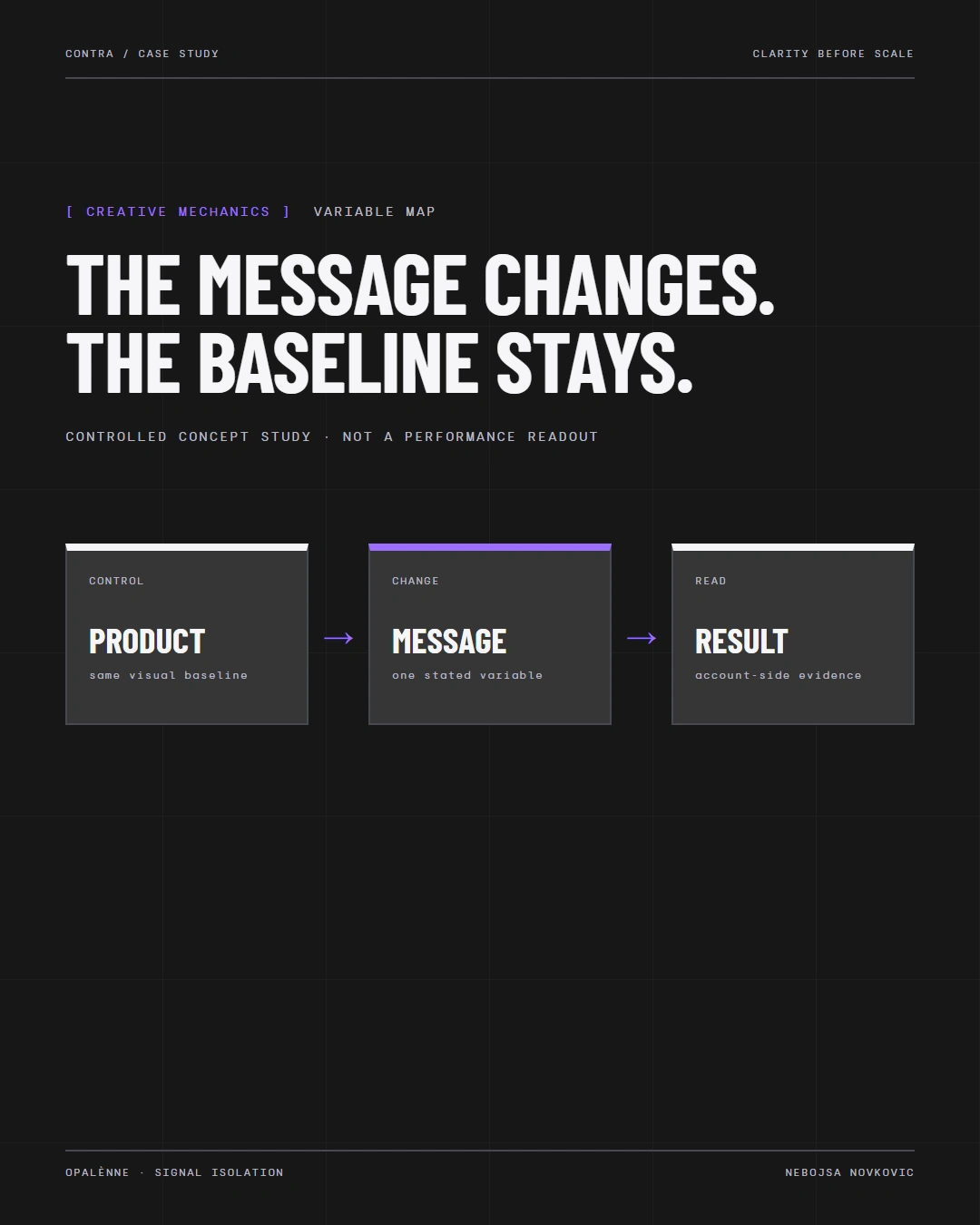
One defined question. One constrained concept build. Account-side validation required.
SERVICE CONNECTION
Creative Test Design — hypothesis, production constraints and account-side validation boundary.
Creative Validation Sprint — one variable, controlled build and decision handoff.
EVIDENCE BOUNDARY
This study documents process and creative execution. It does not report spend, CTR, CPA, ROAS, conversions, a validated direction, a winning route or a scaling outcome.
CLARITY BEFORE SCALE.
SCOPE
This is an independent portfolio study using public brand assets. It was not commissioned by, produced for, or affiliated with Opalènne.
1 like · 28 views · May 18, 2026
Independent concept study using public brand assets: constrained creative routes frame variables that future account-side tests would need to isolate.

