Artifacts - An Interaction Archive

Oluwasogo Balogun


Artifacts - An Interaction Archive
Creative Development · Interaction Design · Frontend Engineering
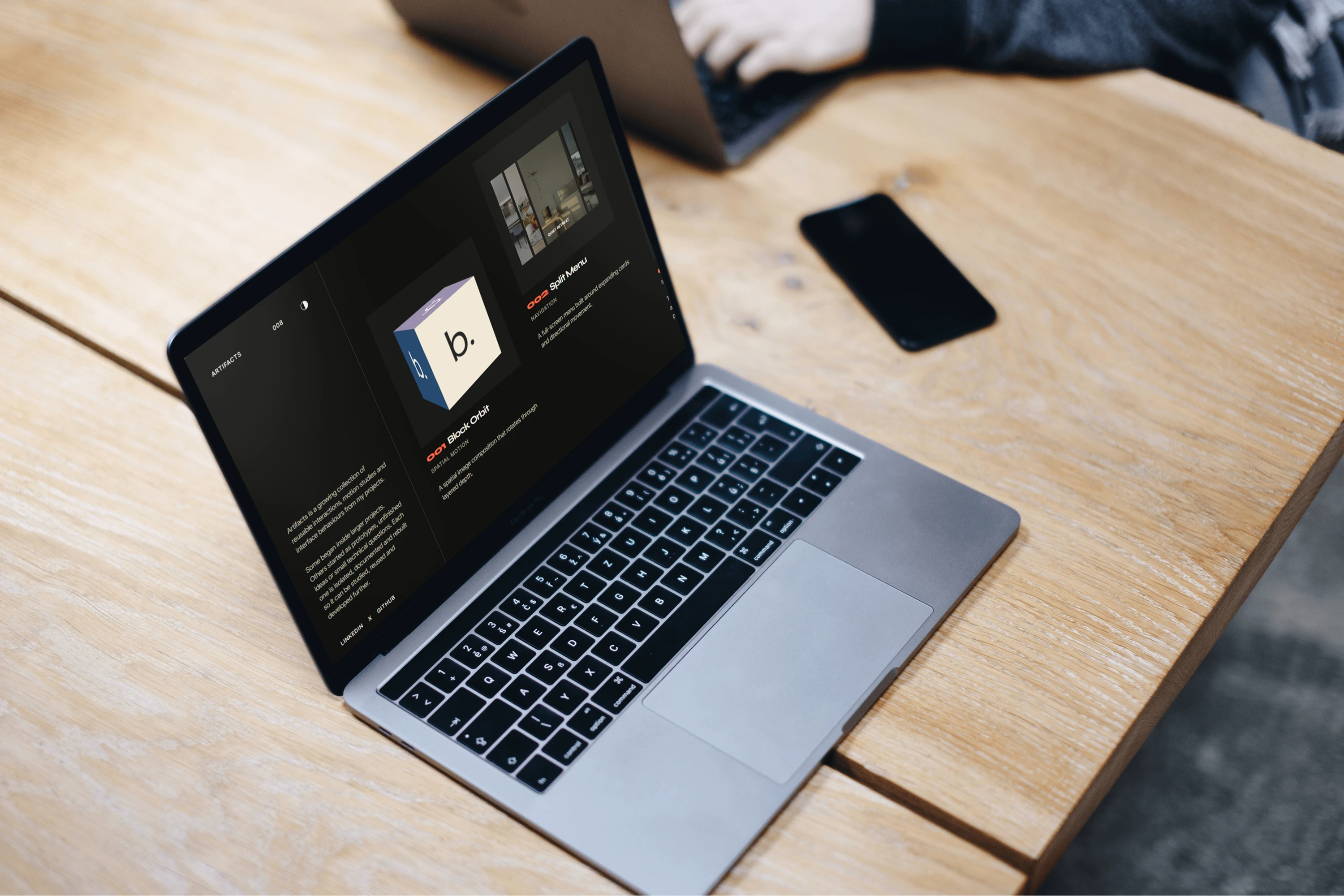
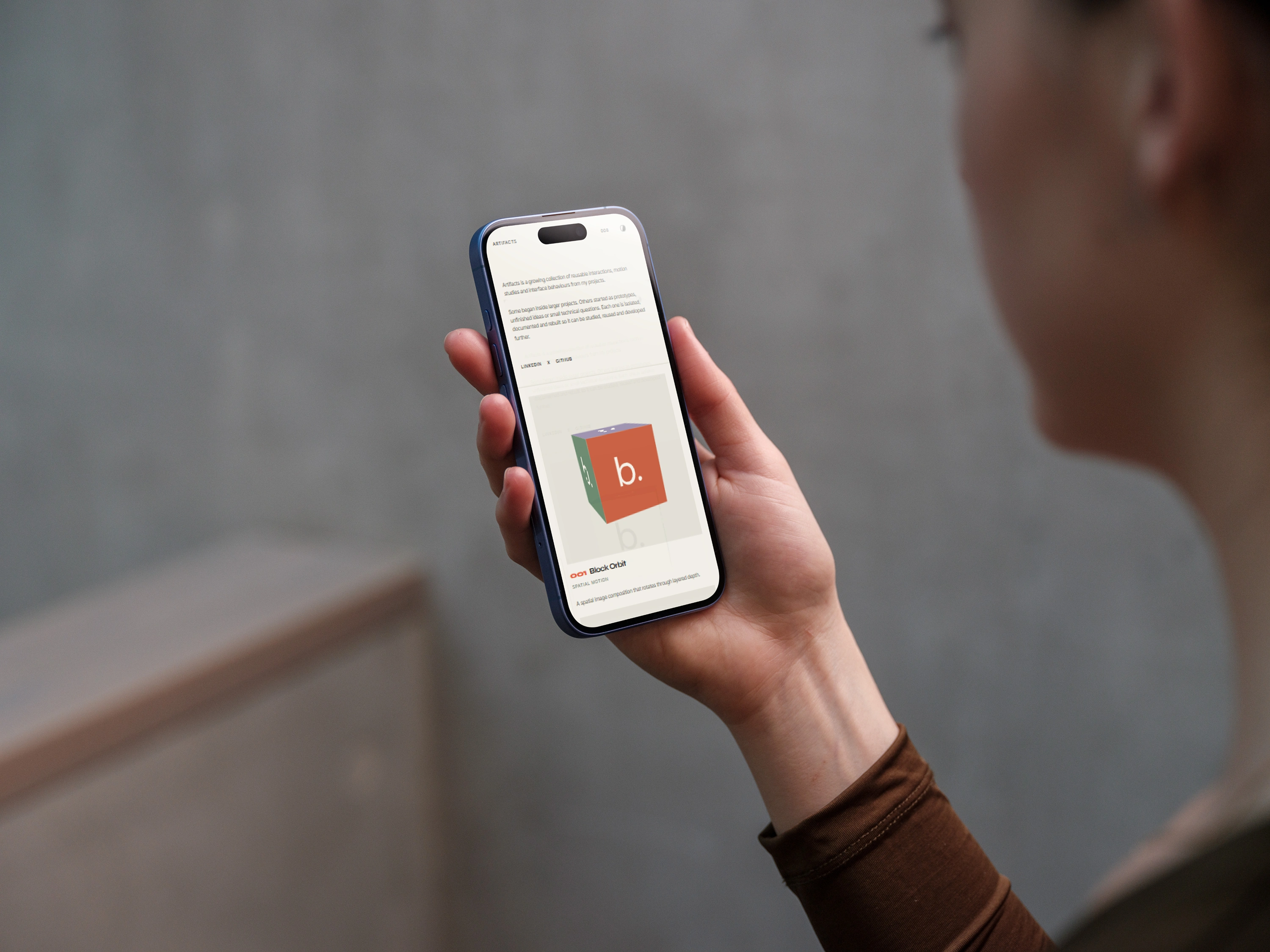
Artifacts is a growing collection of ten motion studies and interface behaviors, rebuilt as standalone experiences that can be explored beyond the projects where they began.
The idea
Good interactions can disappear inside a finished website. A transition may occupy only a small part of a page, even though designing and building it required its own thinking.
I created Artifacts to pull those moments into focus. Some studies came from larger projects; others began as prototypes or technical questions. Each has its own page, context and room to be experienced directly.
An archive built for exploration
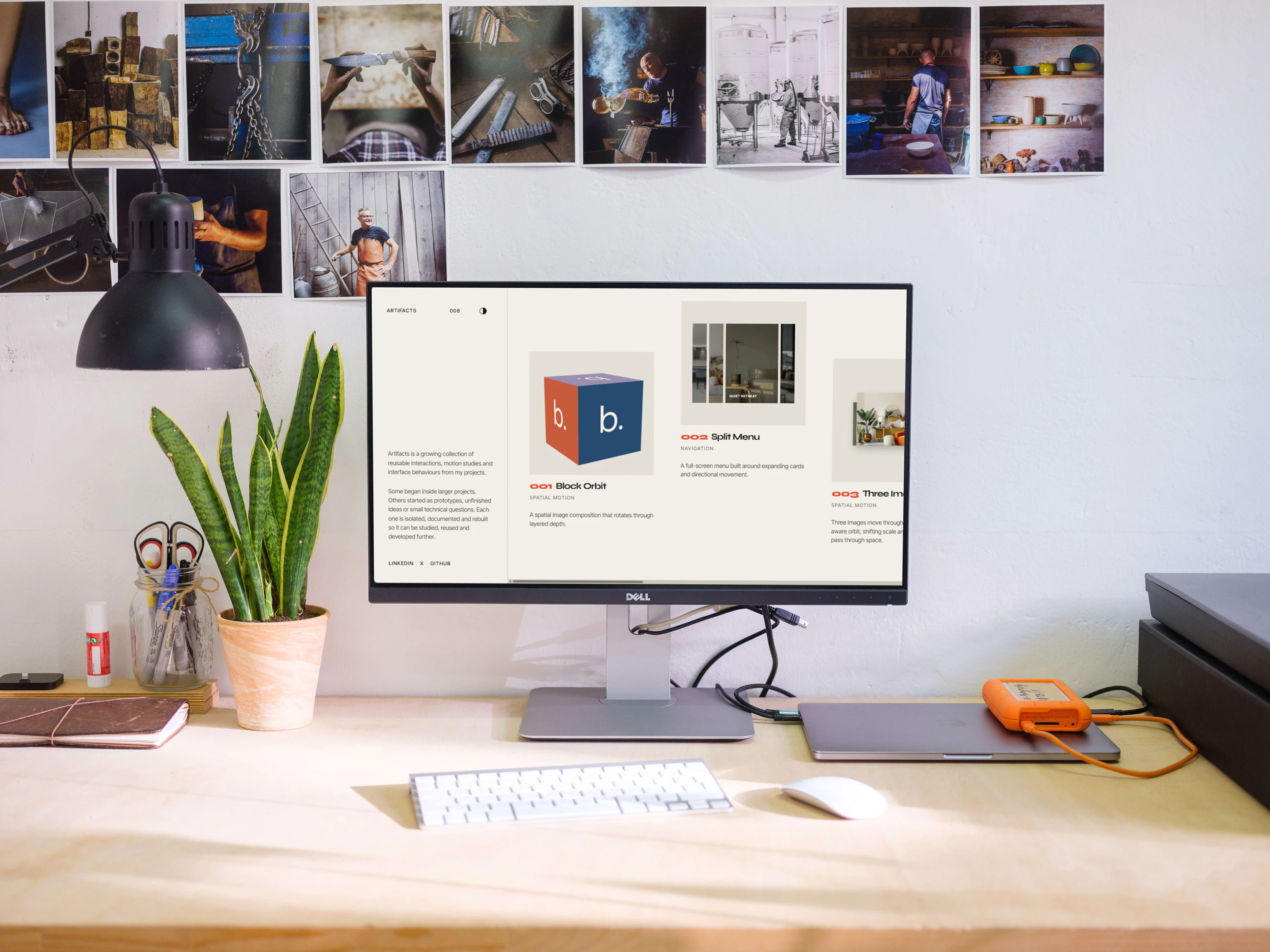
The homepage presents all ten studies as a browsable collection. Opening one removes the surrounding project and makes the interaction the whole experience. An information panel explains what it does and where it came from.
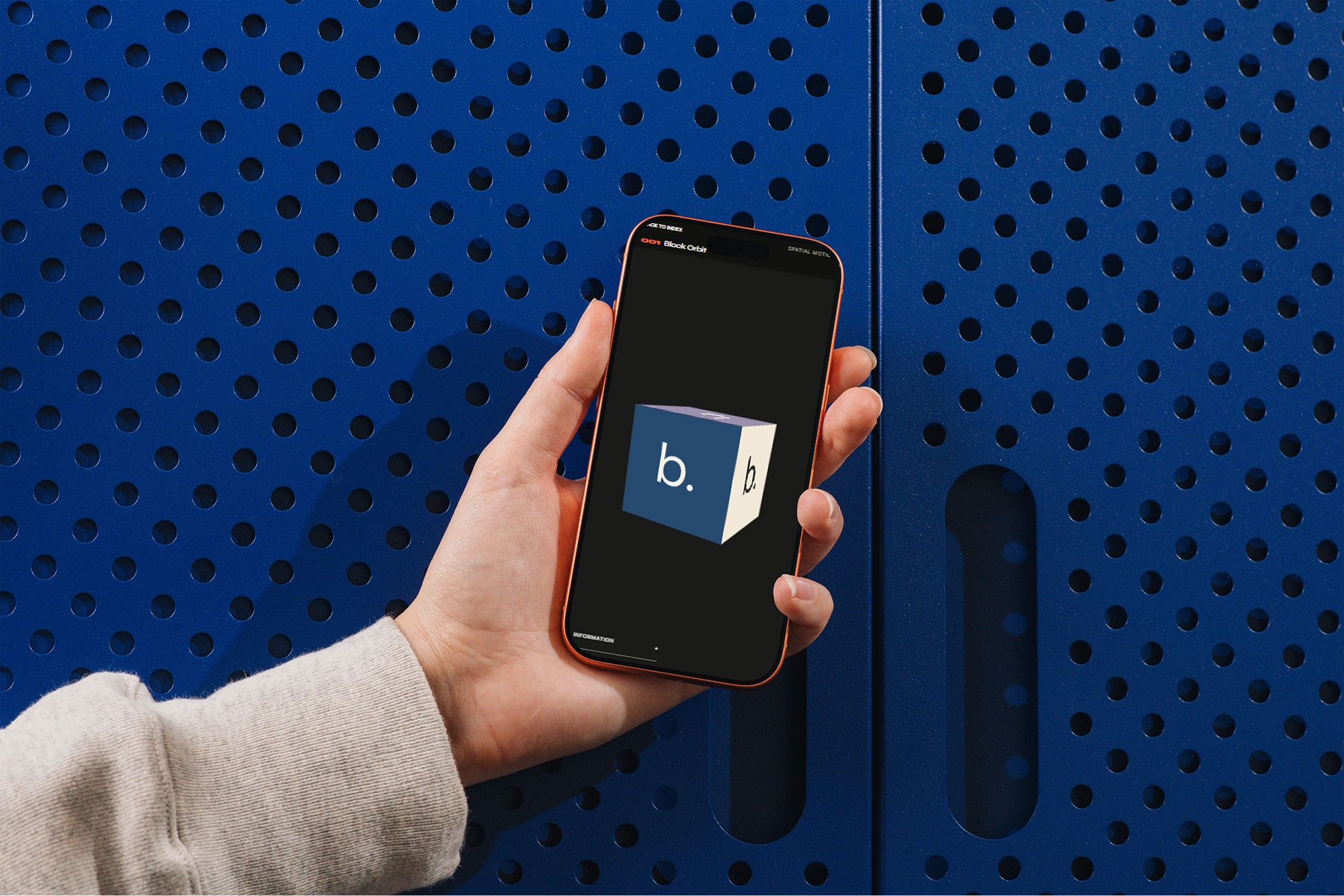
The collection moves across spatial motion, navigation, scroll behavior, color and interface state. Block Orbit explores depth; Split Menu turns navigation into an expanding composition; Scroll Sequence connects movement through a page to a changing index and progress display.
Motion with a job to do
I treated motion as part of the interface logic. Changing tracks coordinates artwork, text and atmosphere. A scroll sequence keeps its index in step with what is visible. A card reveal adds information while preserving its relationship to the other cards.
These details matter to me because an expressive transition should still help someone understand what changed and where they are.
From project detail to independent study
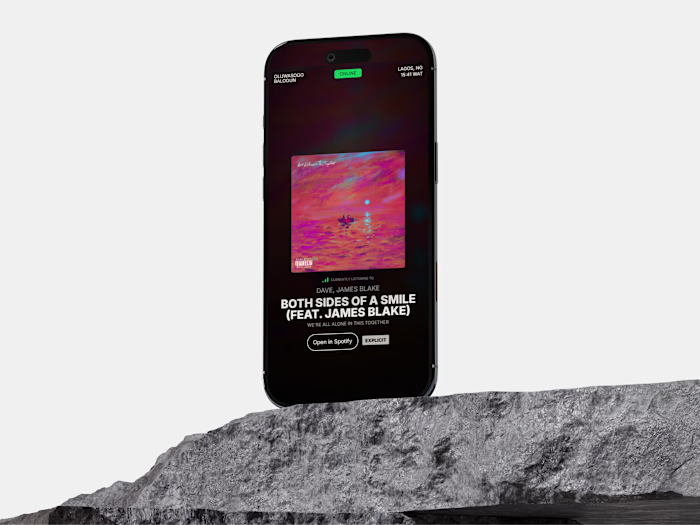
Several pieces have a life outside the archive. The music-related interactions originated in Spotify Now Playing; Split Menu came from Toby & Tye; and Scroll Sequence and Card Flip came from Ace Trail.
Rebuilding them as isolated studies gave me a way to examine each behavior on its own and make the decisions behind it easier to see. The archive can keep growing as new interactions emerge from future work.
The result
Artifacts brings ten distinct studies into one cohesive home. Together, they show how I approach spatial motion, navigation, scroll behavior, color and interface state - and how I turn an interaction idea into something people can actually use.
Explore the archive
The best way to understand these studies is to interact with them.
Like this project
Posted Sep 27, 2026
A collection of ten interactive studies exploring motion, navigation, scroll behavior and visual state, rebuilt as standalone experiences.
Likes
0
Views
5