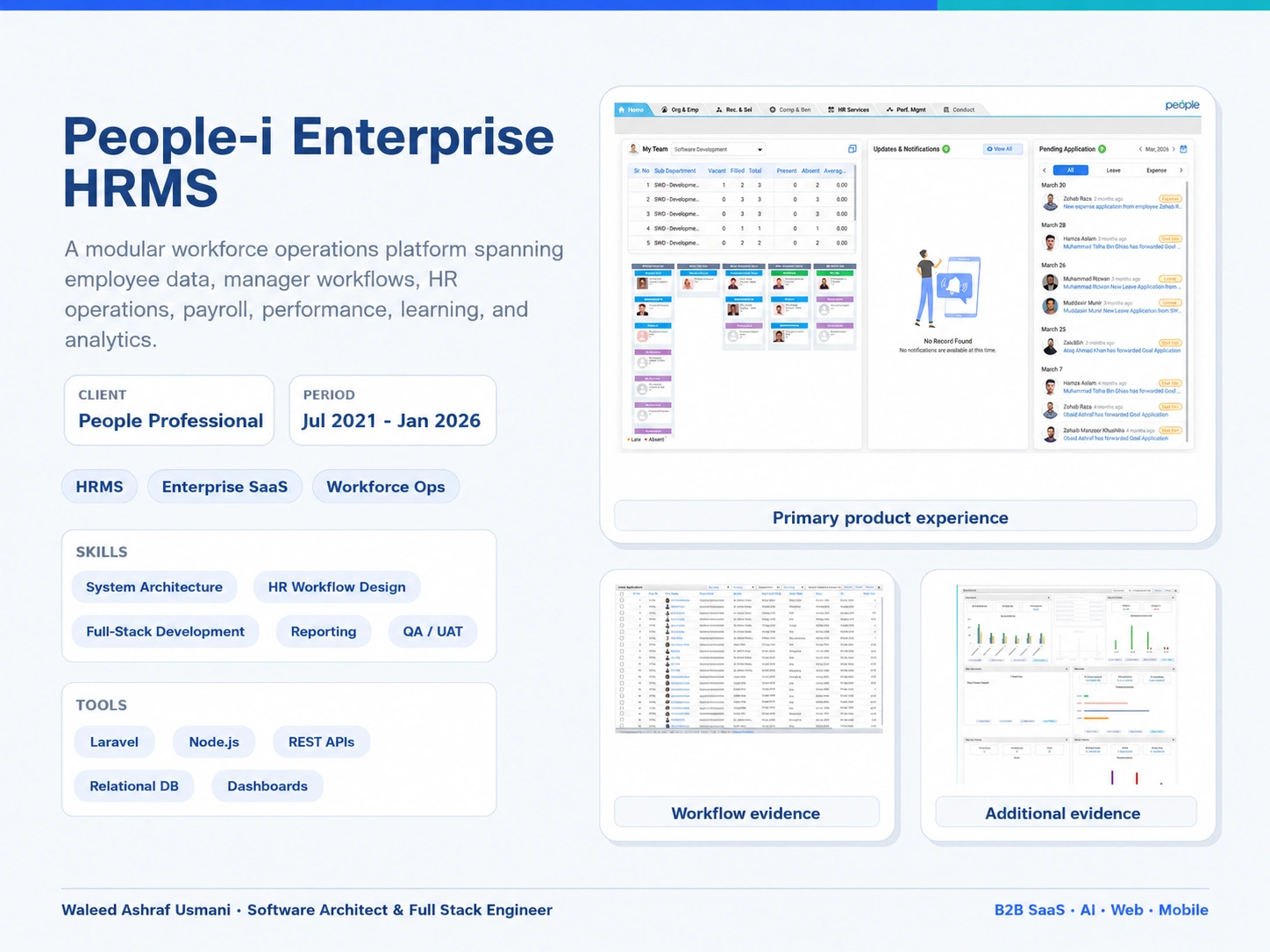
People-i Enterprise HRMS | Workforce Operations Platform

Waleed Ashraf Usmani


The Problem
Enterprise HR operations become difficult to scale when employee information, approvals, payroll, leave, performance, compensation, recruitment, and reporting operate independently.
People-i needed a connected workforce platform capable of supporting multiple HR domains while maintaining one reliable employee and organization data foundation.
Key challenges included:
Employee information spread across multiple HR processes
Different workflows for employees, managers, HR, payroll, and administrators
Complex approval and operational states
Leave and attendance management
Payroll and compensation workflows
Performance and employee development
Recruitment and workforce operations
Reporting across shared employee data
Maintaining role-based access across sensitive HR information
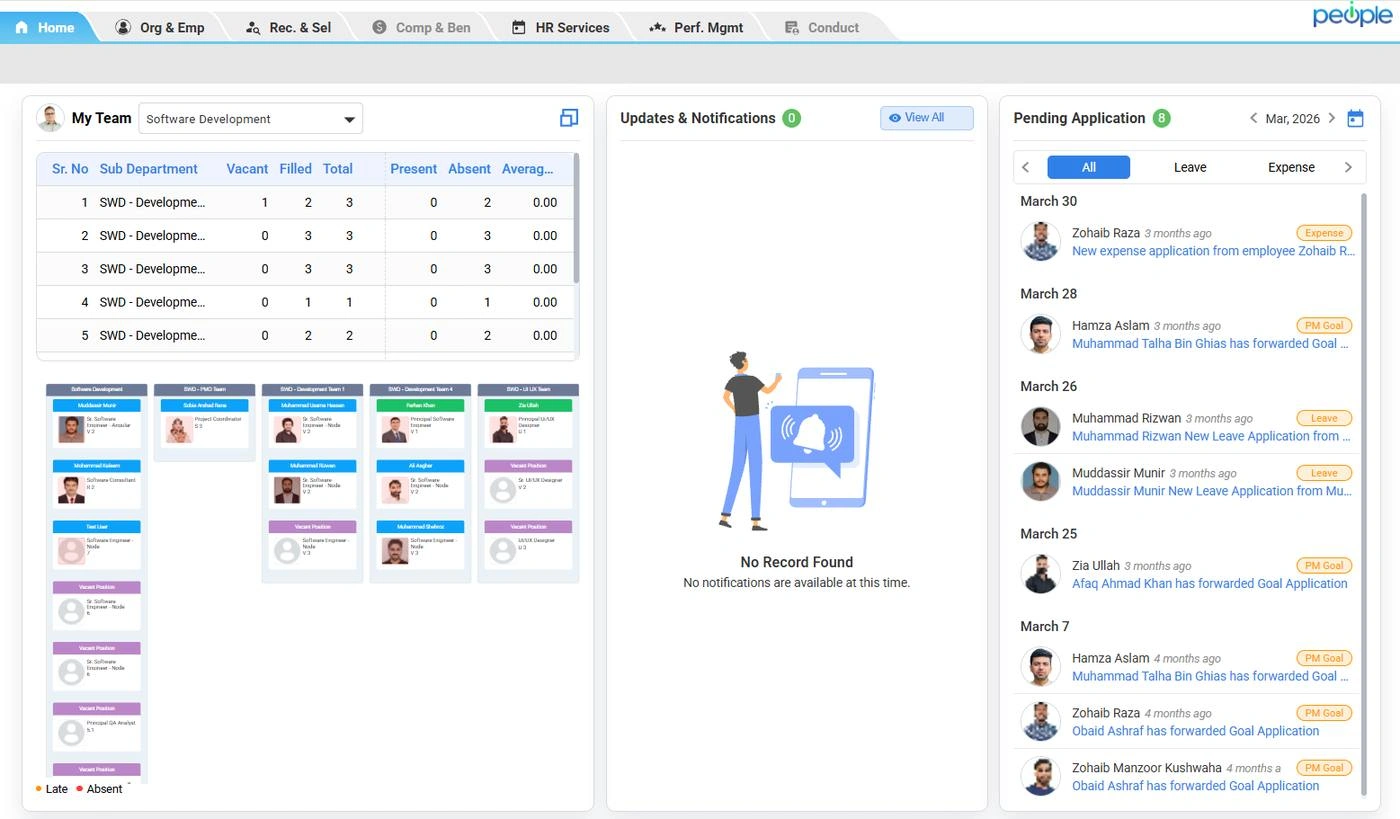
Enterprise workforce dashboard providing visibility across major HR operations.
The Approach
I approached People-i as a modular workforce operating platform, not a collection of disconnected HR screens.
Shared Workforce Foundation
I structured the system around reusable employee and organization data including:
Employee identity
Organization structure
Reporting lines
Employment history
Manager relationships
Role and permission context
Modular HR Workflows
Major HR domains operate independently while consuming the same workforce foundation.
The platform supports areas including:
Employee management
Leave and attendance
Payroll
Compensation and benefits
Recruitment
Learning
Performance
Manager self-service
HR operations
Reporting and analytics
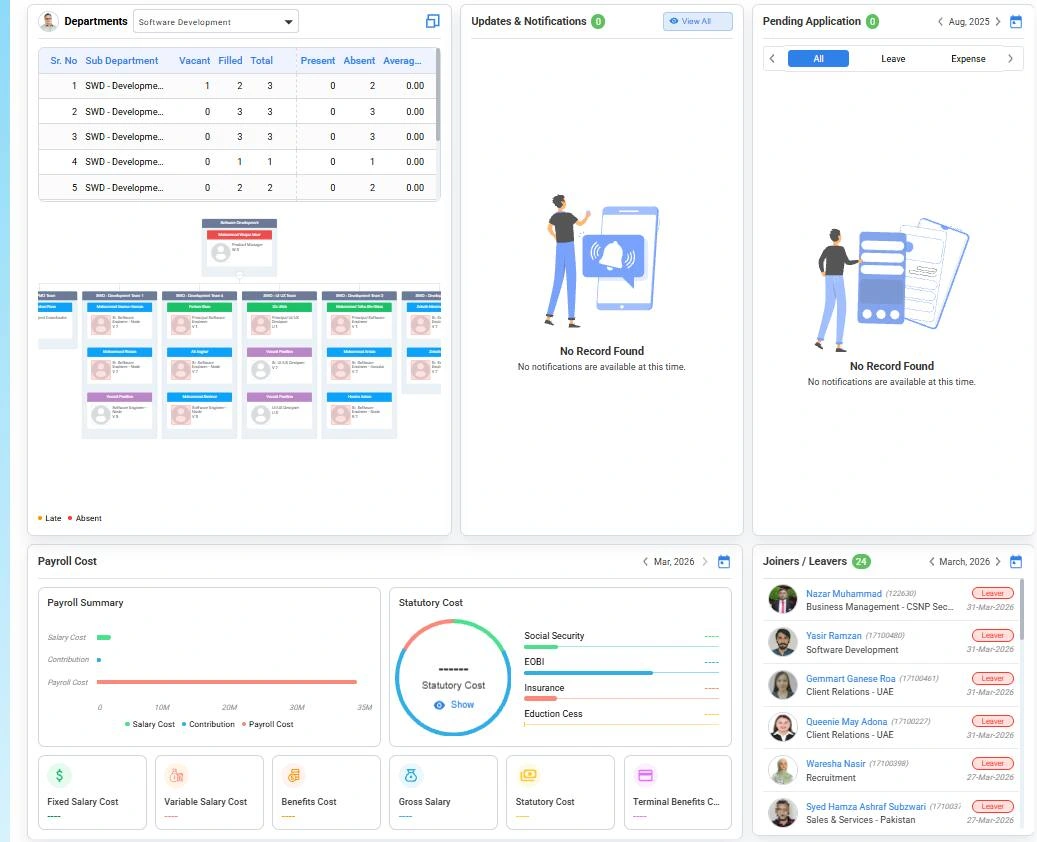
HR operations dashboard bringing workforce information and actions into one workspace.
Employee & Manager Experience
Employee and manager workflows were designed to reduce reliance on manual HR coordination.
The system supports:
Employee profile visibility
Manager access
Leave requests
Approvals
HR documentation
Reporting structures
Employee history
Operational notifications
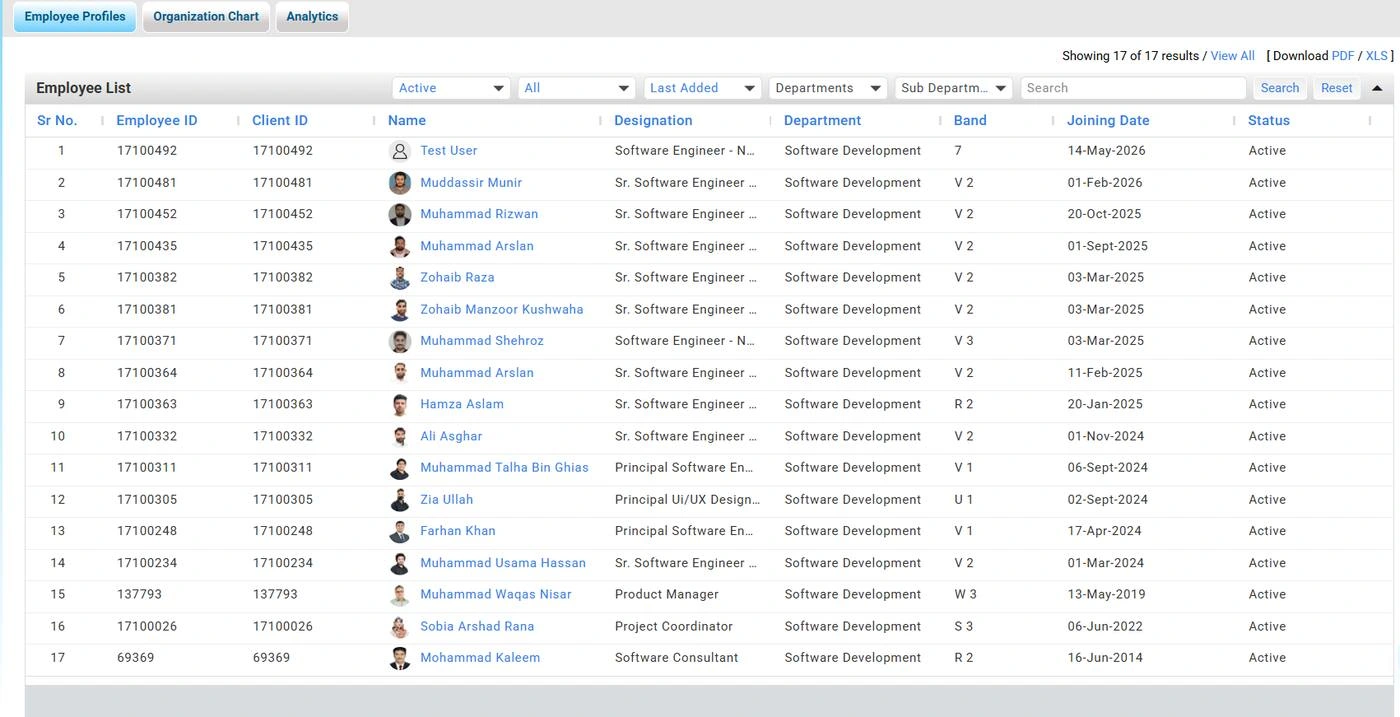
Structured employee management and workforce record visibility.
Architecture Decisions
Shared employee source of truth
Employee and organization records are reused across HR modules instead of being duplicated.
Modular HR domains
Payroll, leave, performance, compensation, recruitment, and other domains remain separated while sharing core workforce services.
Workflow-driven operations
Requests and approvals use controlled process states instead of informal email-based handling.
Role-aware experiences
Employees, managers, HR teams, and administrators see different information and permitted actions.
Reusable service boundaries
Shared APIs and services support continued product expansion without rebuilding the entire platform.
Reporting across shared workforce data
Consistent employee and organization structures create a stronger foundation for analytics.
My Role
I worked across architecture and hands-on implementation.
My contribution included:
Enterprise software architecture
Full-stack development
Workforce data modeling
Workflow design
Module integration
API architecture
Dashboard development
Technical leadership
Complex issue resolution
QA and regression support
Release planning
Deployment coordination
Core Deliverables
Employee self-service
Manager workspace
HR operations dashboard
Employee management
Organization structure
Leave management
Attendance workflows
Payroll work queues
Compensation & benefits
Recruitment workflows
Learning workflows
Performance management
Approval workflows
Reporting
Workforce analytics
Employee history
Role-based access
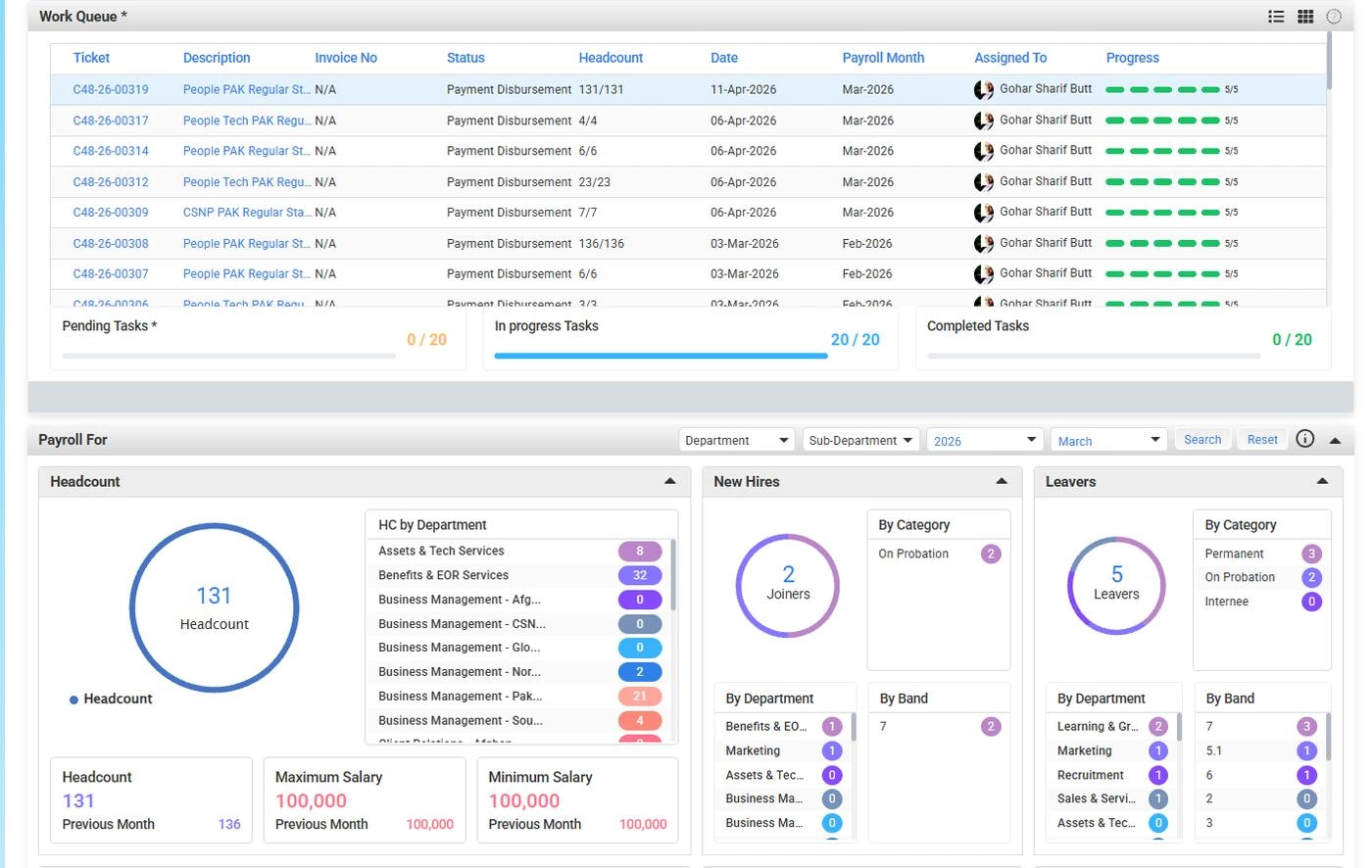
Payroll work queue designed for controlled operational processing.
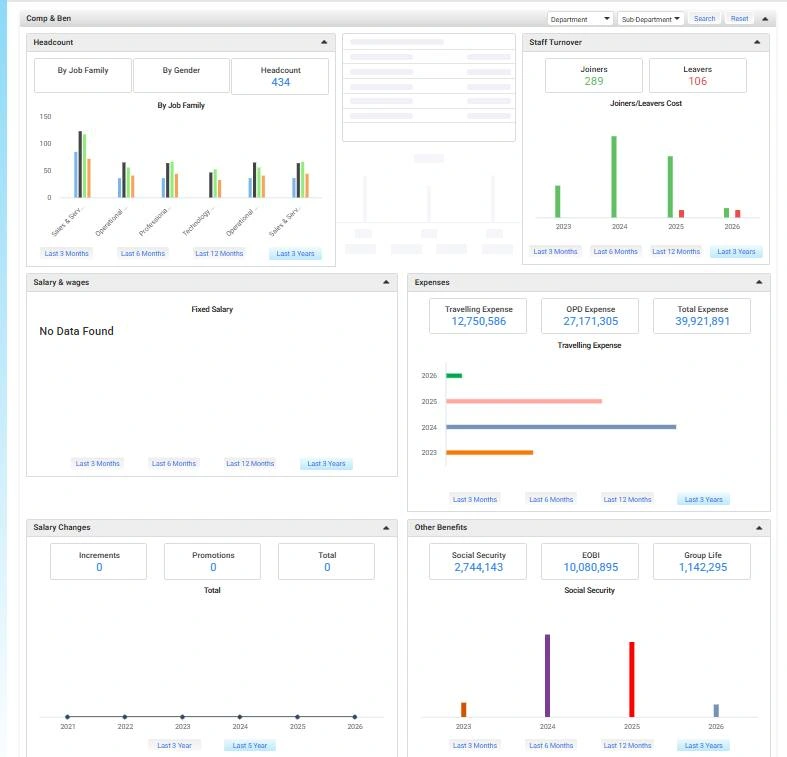
Compensation and benefits dashboard supporting workforce decision-making.
Results & Business Value
Unified major workforce operations into one enterprise platform.
Reduced fragmentation between HR processes.
Improved operational visibility for employees, managers, HR, and administrators.
Created reusable employee and organization data structures.
Supported modular expansion across multiple HR domains.
Established a scalable foundation for reporting and workforce analytics.
Like this project
Posted Aug 12, 2026
Architected and built an enterprise HRMS connecting employee, manager, payroll, leave, performance, compensation, and workforce operations.
Likes
1
Views
0
Timeline
Jun 7, 2021 - Jan 30, 2026