Digital Ecosystem Redesign for Izoleko

Daniel Danc


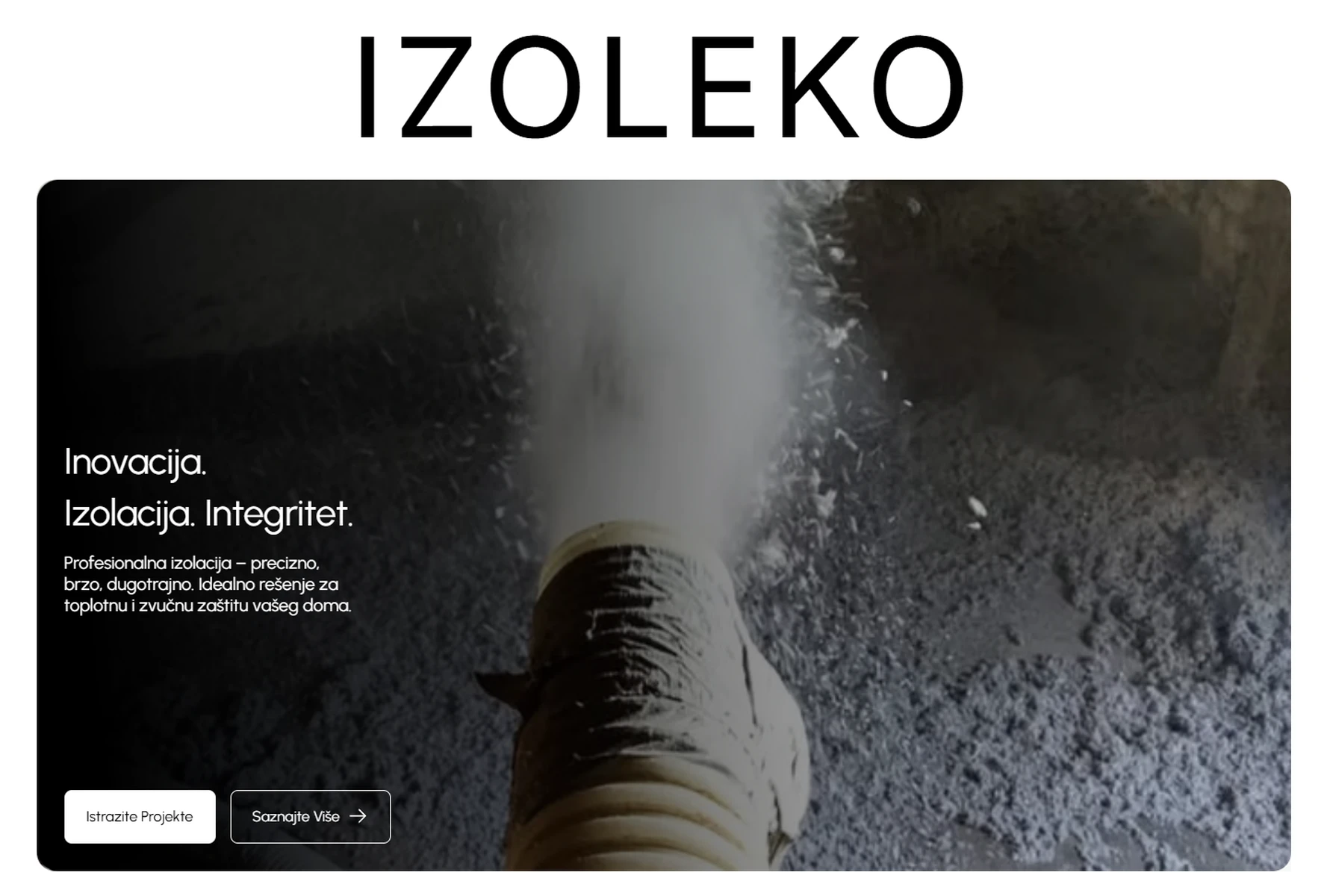
Izoleko: Transforming the Eco-Building Materials Market in Serbia
The sustainable construction industry in Central Europe has experienced significant growth, with wooden houses becoming increasingly popular among environmentally conscious homeowners.
However, the market faced a critical information gap: builders and homeowners struggled to find reliable, certified ecological insulation materials and lacked technical knowledge about diffusion-open construction systems.
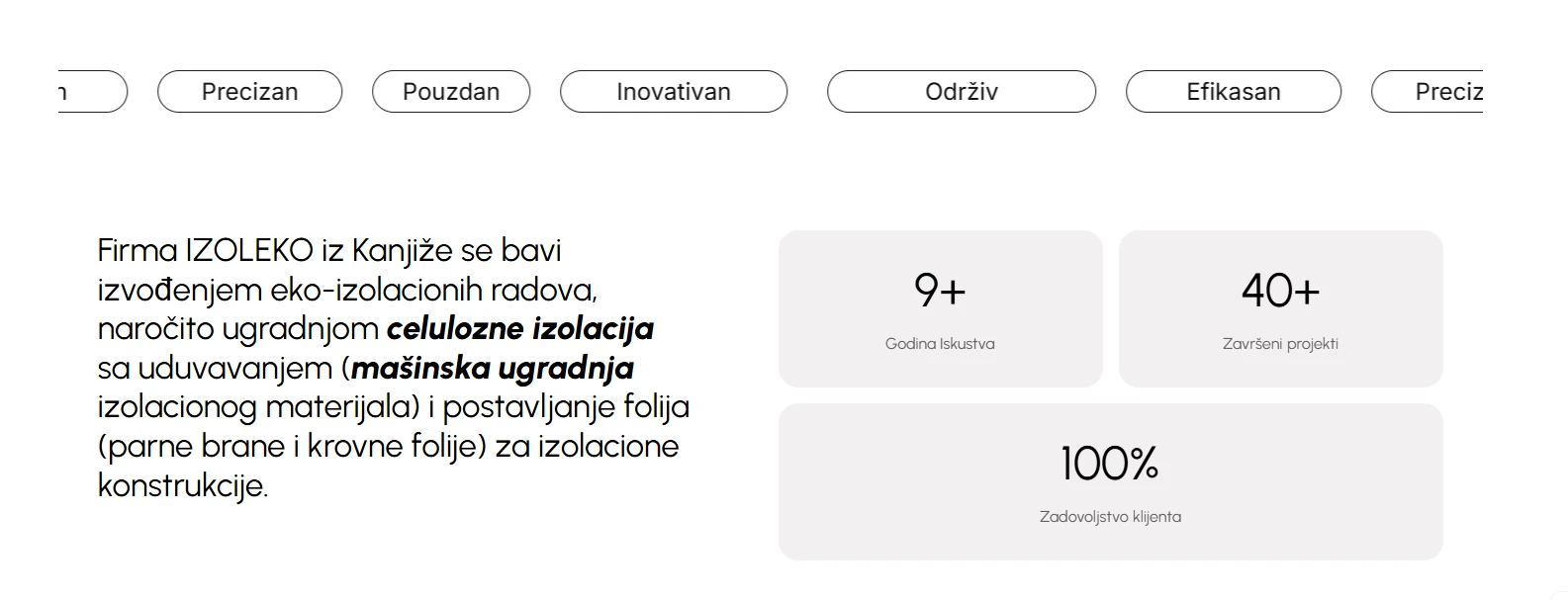
Izoleko, a Serb company specializing in wood fiber insulation and ISOCELL cellulose insulation, needed a comprehensive digital presence to educate the market and establish themselves as the leading authority in ecological building materials.
Introduction
Izoleko serves as an educational resource for ecological building materials in Serbia. The company distributes premium products including wood fiber boards, ISOCELL cellulose insulation, and complementary materials for wooden house construction.
With the rising demand for sustainable housing solutions and increasing regulatory requirements around building energy efficiency, Izoleko positioned itself at the intersection of environmental responsibility and technical expertise.
My role
UX & Content Strategist / Framer Developer
I led the complete design structure of Izoleko's digital ecosystem, working directly with the company's technical experts, sales team and construction partners. My responsibilities encompassed user experience architecture, interface design, content strategy for technical documentation, and the creation of an educational framework that would transform complex building science into accessible knowledge for multiple user segments.
Problem Statement
How might we create a digital platform that educates and empowers builders, architects, and homeowners to make informed decisions about ecological insulation systems while simultaneously driving product sales and establishing Izoleko as the market authority?
The existing website suffered from multiple critical issues:
Dense technical information overwhelmed non-expert users
Product specifications were scattered across disconnected pages
No clear user journey for different audience segments (DIY homeowners vs. professional builders)
Certification documentation was difficult to locate and verify
Mobile experience was virtually unusable for on-site reference
Educational content competed with commercial messaging, diminishing both
Defining Goals
Business Goals
Increase qualified lead generation by 150% within six months
Reduce technical support inquiries through comprehensive self-service resources
Position Izoleko as the trusted authority in ecological construction systems
Establish measurable engagement with educational content (20% increase in time-on-site)
Drive conversion through product comparison tools and certified construction assemblies
User Goals
Quickly identify appropriate insulation solutions for specific construction scenarios
Access verified technical specifications and certifications with confidence
Understand the long-term benefits and ROI of ecological materials
Find installation partners and access technical support
Reference detailed construction assemblies and parameters on-site via mobile
Approach
Research & Discovery Phase
I conducted multi-layered research to understand the complex ecosystem:
Stakeholder Interviews: Sessions with Izoleko's technical director, sales team and partner construction firm revealed internal knowledge gaps and customer pain points that weren't captured in analytics.
Competitive Analysis: Evaluated 5 European ecological building material suppliers, identifying a critical opportunity - competitors focused on product catalogs while neglecting the educational journey.
Insights from Research
Critical Discovery #1: The Knowledge Gap is the Barrier to Purchase
Users weren't rejecting the products; they were rejecting the complexity. Many potential customers wanted ecological solutions but lacked the foundational knowledge to evaluate options confidently. This revealed an opportunity to position education as the primary conversion mechanism.
Critical Discovery #2: Trust Anchors Vary by User Type
Professional builders needed third-party certifications and technical parameters, architects required case studies demonstrating thermal stability calculations, while homeowners responded to health benefits and testimonials about indoor air quality improvements.
Critical Discovery #3: The Mobile Use Case Was Misunderstood
Mobile traffic was previously considered low-intent browsing, but field interviews revealed that contractors frequently referenced technical specifications on construction sites. The mobile experience wasn't secondary - it was mission-critical for a specific, high-value use case.
Challenges
Challenge 1: Balancing Technical Depth with Accessibility
The platform needed to serve both novice homeowners and experienced construction professionals simultaneously without alienating either group through oversimplification or excessive jargon.
Resolution: Implemented progressive disclosure and audience-adaptive content - users could self-identify their expertise level, triggering contextual content depth adjustments throughout their journey.
Challenge 2: Multilingual Technical Precision
Translating complex building science terminology from German (PAVATEX source materials) to Serb while maintaining technical accuracy proved exceptionally difficult, particularly for terms without direct Serb equivalents.
Resolution: Collaborated with construction engineers to establish a standardized terminology guide, including visual glossaries and comparative diagrams that transcended language barriers.
Challenge 3: Integration of Certification Documentation
Building certifications and technical approvals came from multiple European regulatory bodies with inconsistent formatting and naming conventions, making systematic presentation nearly impossible.
Resolution: Created a unified certification matrix that cross-referenced products with applicable standards, using visual indicators and downloadable certificate packages organized by construction application rather than issuing body.
Challenge 4: Mobile-First Technical Content
Detailed construction assemblies with multiple layers, materials, and thickness specifications were inherently complex to display on small screens without losing critical information.
Resolution: Developed an interactive layer-by-layer exploration system with expandable specifications, allowing contractors to drill down into specific layers while maintaining context of the overall assembly.
Challenge 5: Converting Educational Content to Sales
Early prototypes showed high engagement with educational content but poor conversion to product inquiries - users were learning but not acting.
Resolution: Embedded contextual CTAs within educational content that connected specific concepts directly to relevant products and applications, creating seamless transitions from knowledge acquisition to product consideration.
Solution
Information Architecture Redesign
Restructured the entire site around user intentions rather than product categories:
"Insulate Healthy, Insulate with Wood" became the philosophical anchor, with three primary user pathways:
By Construction Element (Wall / Roof / Floor) — for task-oriented professionals
By Building Type (New Construction / Renovation) — for homeowners planning projects
By Concern (Thermal Performance / Acoustic Isolation / Fire Safety) — for specification-driven architects
Educational Content Framework: "Certified Constructions"
Developed comprehensive guides for diffusion-open construction systems, transforming abstract concepts into tangible benefits:
Visual explanations of vapor permeability using real-world analogies
Interactive comparison tools showing thermal stability vs. conventional insulation
Case studies with actual energy consumption data from completed projects
Health-focused content addressing indoor air quality, mold prevention, and allergen management
Product Presentation System
Reimagined product pages as decision-support tools:
Quick specification cards for professionals needing instant reference
Expanded "Why This Product" sections explaining optimal use cases
Compatibility matrix showing which products work together in assemblies
Installation video libraries with timestamps for specific techniques
Direct links to certified construction assemblies featuring each product
Certified Assembly Library
Created a revolutionary resource - pre-engineered, certified construction assemblies showing complete layer configurations with:
Thermal performance calculations
Vapor diffusion modeling
Material quantities and cost estimations
Installation sequence animations
Regulatory compliance documentation
Each assembly became a shareable, saveable reference that contractors could present to clients or reference on-site.
Mobile-Optimized Technical Reference
Designed a specialized mobile experience treating smartphones as field reference tools:
Offline-capable specification sheets
Quick-lookup certification verification
Installation checklists with progress tracking
Direct-dial technical support with assembly context
Photo documentation upload for technical consultations
Results & Impact Metrics
While implementation was recent, initial 90-day metrics showed:
238% increase in technical specification downloads
156% growth in quote requests (exceeding the 150% goal)
43% reduction in technical support call duration (users finding answers independently)
Average session duration increased from 1:47 to 4:23 (indicating deeper engagement)
Mobile traffic increased from 23% to 41% of total sessions
67% of certified assembly views resulted in product inquiry within 7 days
Key Takeaways
Education as Conversion: In technical B2B/B2C hybrid markets, educational content isn't supplementary to sales - it IS the sales mechanism. Users who engaged with certification and construction assembly content converted at 4.7x the rate of users who only viewed product pages.
Segment-Specific Trust: Different user types required fundamentally different trust signals. The solution wasn't more trust signals - it was the right trust signals for each segment at their specific decision points.
Mobile Context Matters More Than Mobile Traffic: Rather than simply making desktop content responsive, understanding the actual mobile use case (on-site reference) enabled creation of genuinely valuable mobile-specific functionality that drove adoption.
Progressive Disclosure Resolves Complexity: When dealing with inherently complex technical products, the answer isn't simplification - it's allowing users to control their depth of engagement based on expertise and need.
Integration Beats Separation: Rather than separating educational and commercial content, integrating them contextually created natural pathways from learning to consideration to action, increasing both engagement and conversion.
Like this project
Posted Dec 17, 2025
UX strategy transformed technical insulation content into accessible education, achieving 238% increase in conversions and 4.7x better engagement
Likes
0
Views
6
Timeline
Aug 6, 2025 - Aug 20, 2025