Ripple Cam

Toby Godden


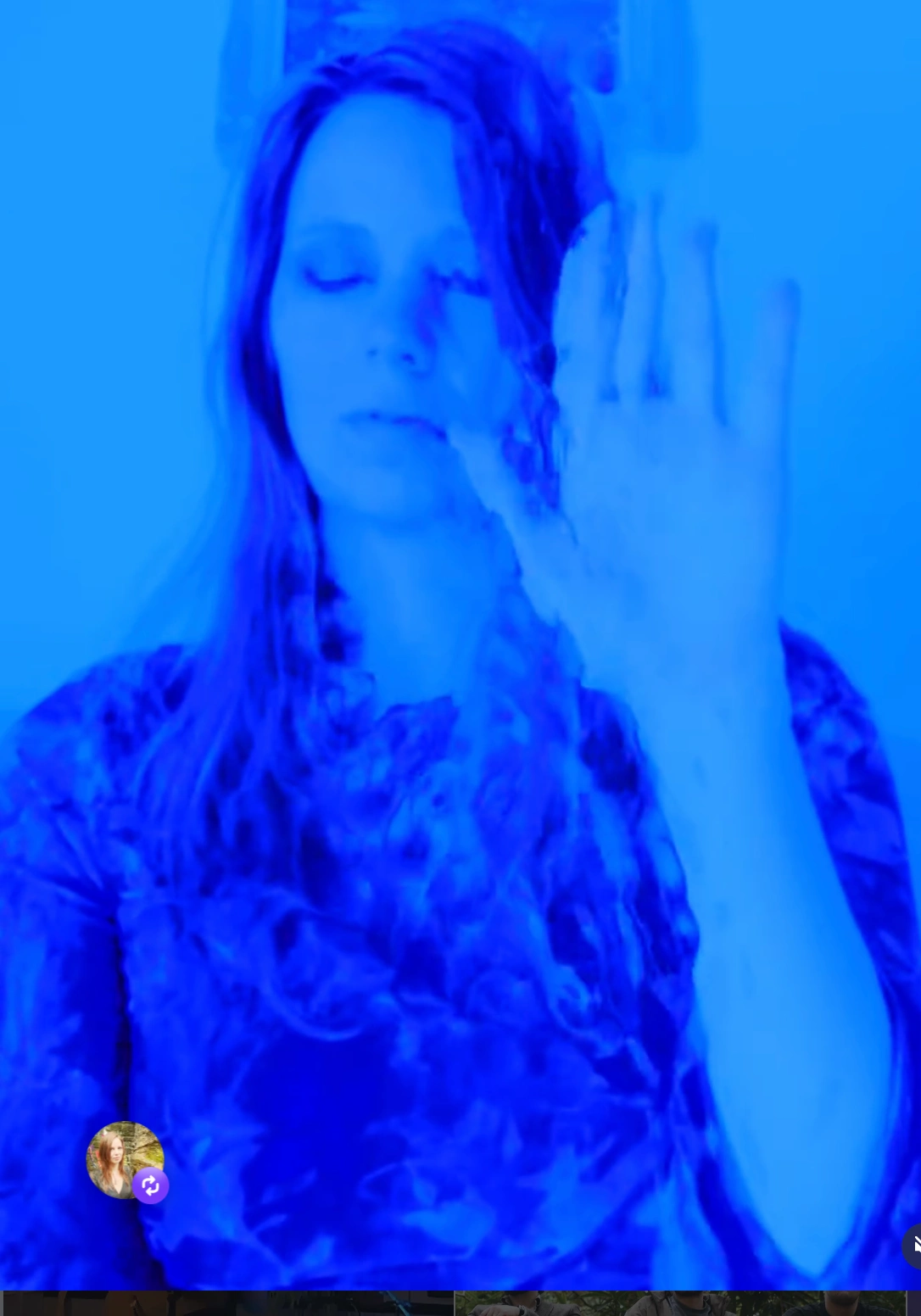
Ripple Cam captures live video and applies real-time fluid simulation driven entirely by your motion. Move in front of the camera and the image ripples outward from where you moved, as if the screen were the surface of a pond and your body just broke it.
How it works
The system uses WebGL2 to run a fluid dynamics shader on the live webcam feed. Motion detection compares frames to identify where movement is happening, then injects displacement energy at those points. The ripples propagate, reflect, and decay according to adjustable physics parameters.
Motion sensitivity controls how much movement is needed to trigger a ripple. Damping controls how quickly ripples decay. Bump sets the displacement intensity. Chroma adds chromatic aberration to the distorted image, splitting colour channels along the ripple wavefront.
A freeze mode locks the camera feed so ripples continue propagating across a still image, letting you watch the physics play out without new input.
No cursor interaction. No mouse rain. Waves come only from your body. The piece responds to presence, not clicks.
Installation context
Built as a creative technology demo intended for art gallery installation. The interaction is immediate and requires no instruction: walk up, move, watch the image respond. The parameters can be tuned for different spaces, from subtle surface tension in a quiet gallery to aggressive displacement in a more theatrical setting.
Runs in any WebGL2-capable browser. No plugins, no install. A screen, a webcam, and a body in the room.
Like this project
Posted Jul 24, 2026
Real-time webcam fluid simulation. Your body motion creates water ripples across the live video feed. WebGL2, no plugins, intended for art gallery installation