Digital products often feel static.

Anadil Raza


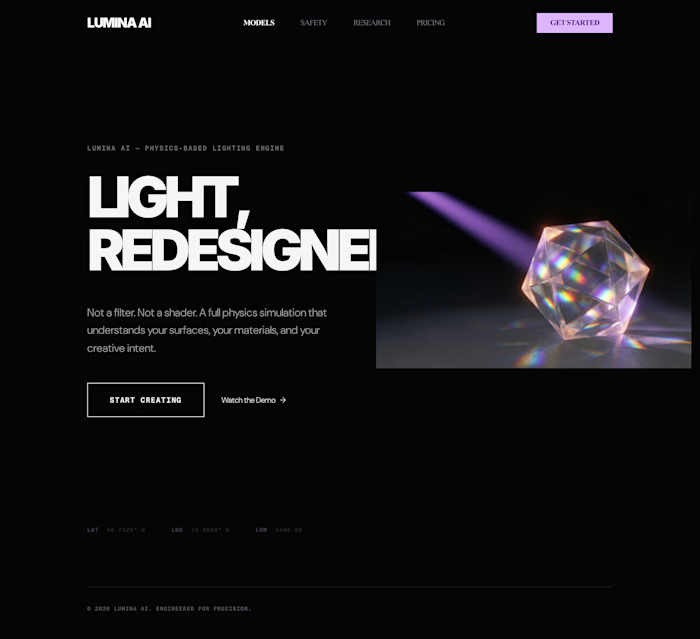
Digital products often feel static. For Lumina AI, my goal was to build an atmosphere an interactive environment where physics and light feel tactile to the user.
My Design Journey
The project began in Stitch to establish the core visual DNA, which I then brought into Figma for the primary UI/UX work. I focused on a neo-brutalist bento grid hierarchy, ensuring a balance between architectural precision and high contrast typography. To ground the concept, I used Nano Banana pro to generate brand-aligned assets that met the specific lighting requirements of the dark-mode aesthetic.
To move beyond static screens, I utilized Veo 3.1 to generate a 240-frame 3D sequence of a rotating prism. Collaborating with Claude in Antigravity, I implemented a custom scroll-driven canvas engine. This links the user’s scroll momentum directly to the 3D rotation, creating a fluid, high-fidelity experience that maintains 60fps performance. This project is a testament to how human creative direction can amplify AI-powered tools to transform a static vision into a functional, high-end digital artifact.
Tech Stack:
Strategy: Stitch
Design: @figma
Assets: Nano Banana & Veo 3.1
Development: @claude
Like this project
Posted Apr 23, 2026
Digital products often feel static. For Lumina AI, my goal was to build an atmosphere an interactive environment where physics and light feel tactile to the ...