Complaints Management Platform for a Forbes 10 Lifesciences Firm

Disha Shah

I designed a complaints management and investigation platform for a global life sciences manufacturer, unifying how product safety issues are captured, triaged, and resolved across manufacturing and regulatory teams.
The work spanned user research, product design, UX strategy, and AI-assisted workflow design within a complex enterprise system.
The Challenge
Complaints management in highly regulated manufacturing environments is inherently complex. Investigators navigate disconnected systems, process large volumes of unstructured data, and operate under strict compliance requirements—all while managing multiple investigations simultaneously.
The result: inconsistent triage decisions, slow resolution times, and significant cognitive load. A single investigation could span weeks, with critical context buried across email, spreadsheets, and legacy systems.
The Opportunity
Rather than automate away the complexity, the goal was to bring structure, clarity, and speed to human decision-making.
This meant conducting user research studies concretely to map and then design workflows that guide investigators without constraining them, and introducing AI-assisted inputs that support judgment without removing accountability.
What I worked on
I led user research analysis, product design and UX strategy across three integrated systems:
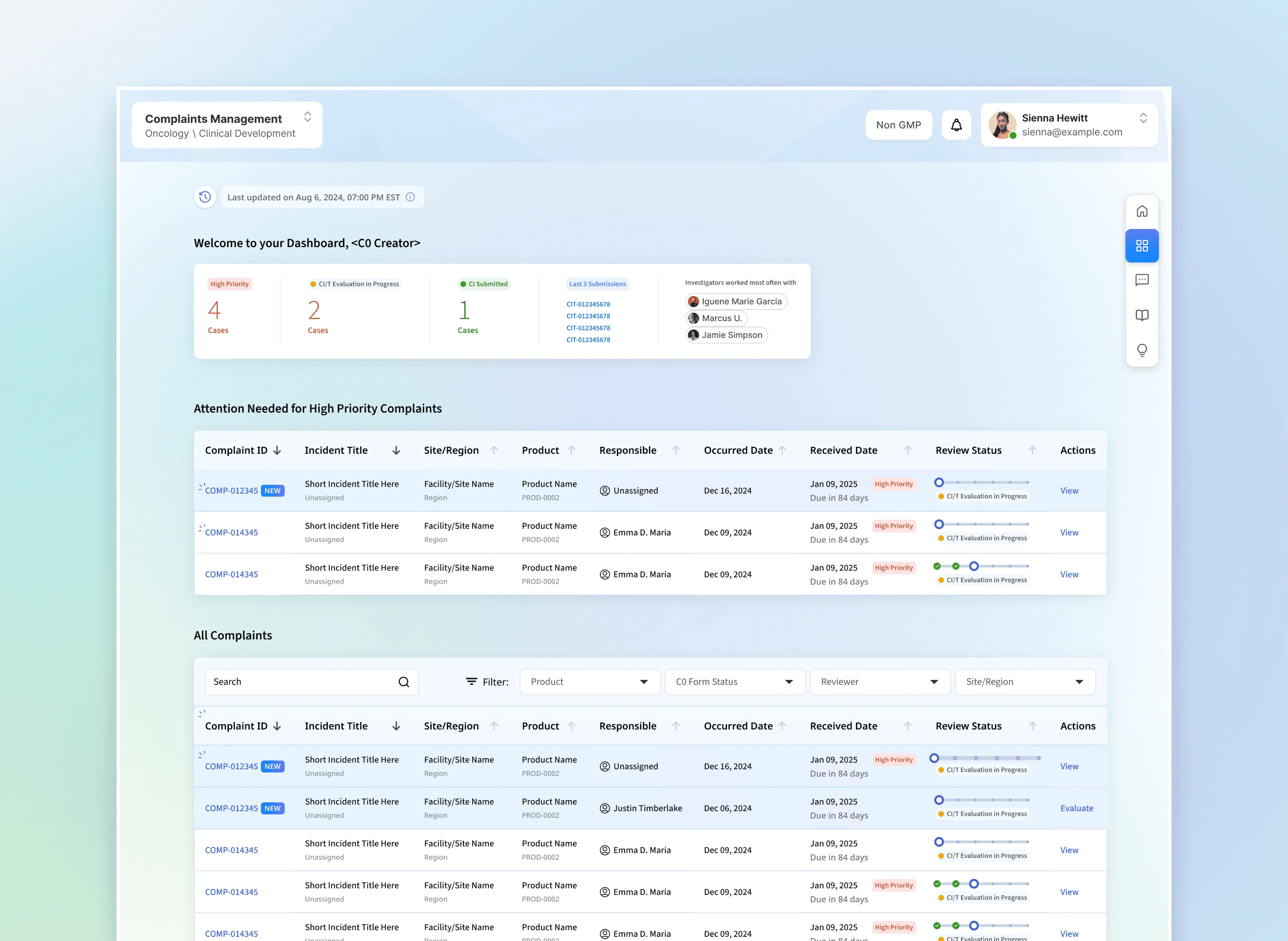
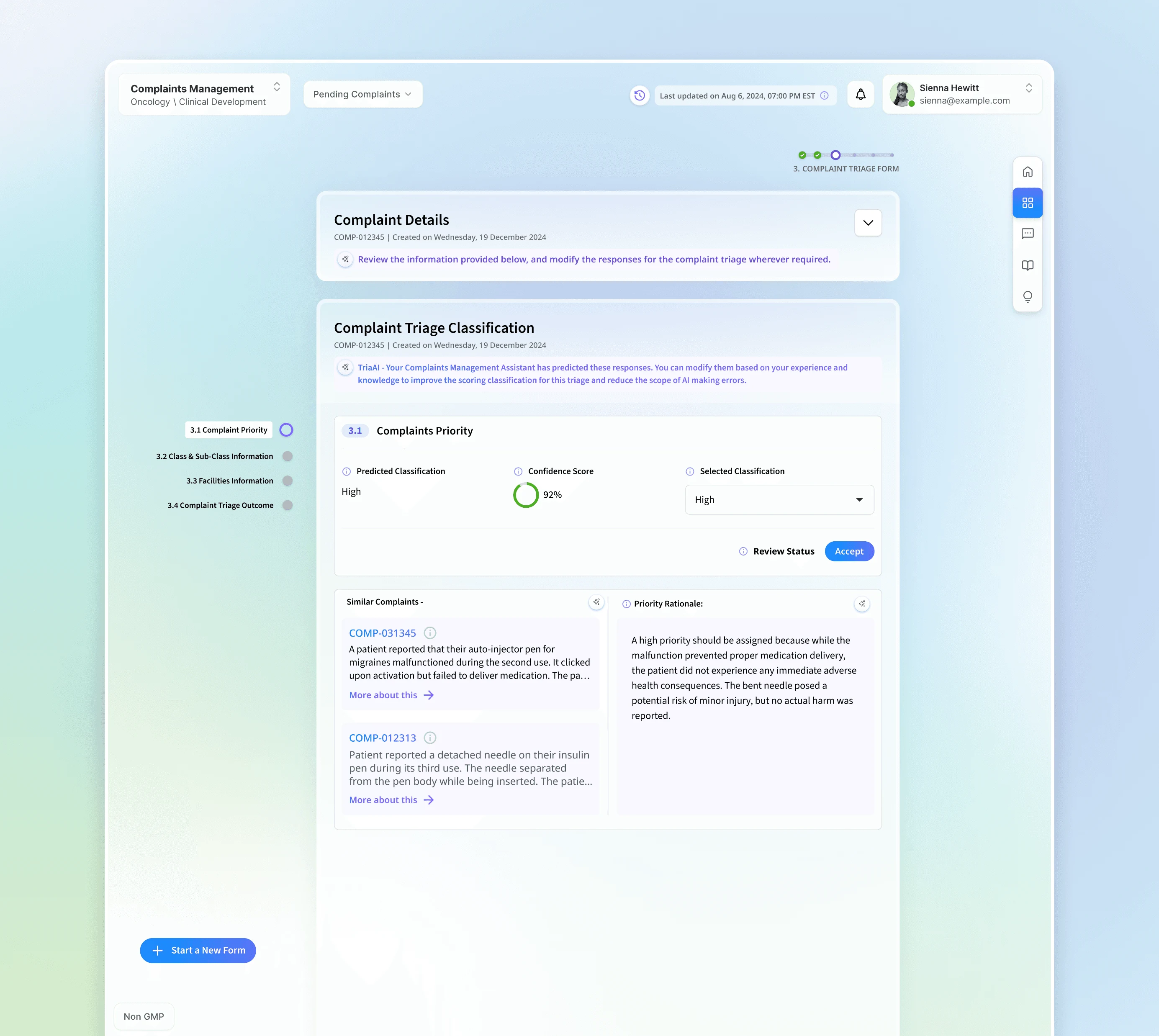
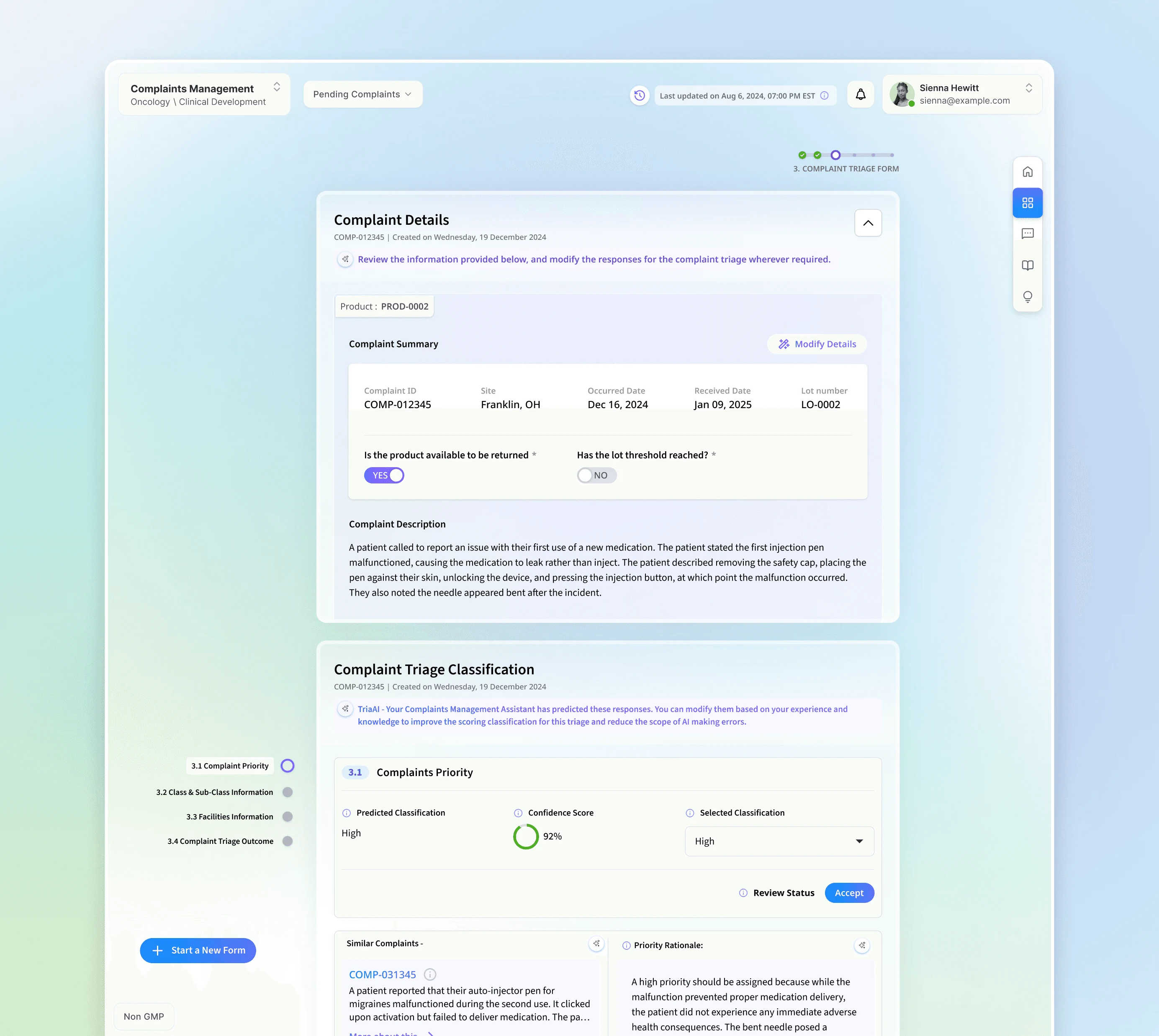
Intake & Triage — Structured data capture that ensures completeness without friction. Guided forms reduce ambiguity, while AI-powered classification flags potential patterns and regulatory risks upfront.
Investigation Workspace — A unified hub replacing fragmented tools. Investigators access complaint data, historical context, related cases, and AI-suggested investigation paths—all in one place, with full audit trails for compliance.
Review & Validation — Multi-layer review workflows with transparent reasoning. Human reviewers can see investigation logic, challenge AI inputs, and sign off with confidence.
The Design Approach
Research Analysis + Workflow mapping — Observed how investigators actually work: their pain points, decision criteria, and compliance checkpoints
Interaction design — Reduced friction at each stage through progressive disclosure, contextual guidance, and smart defaults
AI integration — Positioned AI as a thinking partner (pattern recognition, risk flagging, case recommendations), not a black box
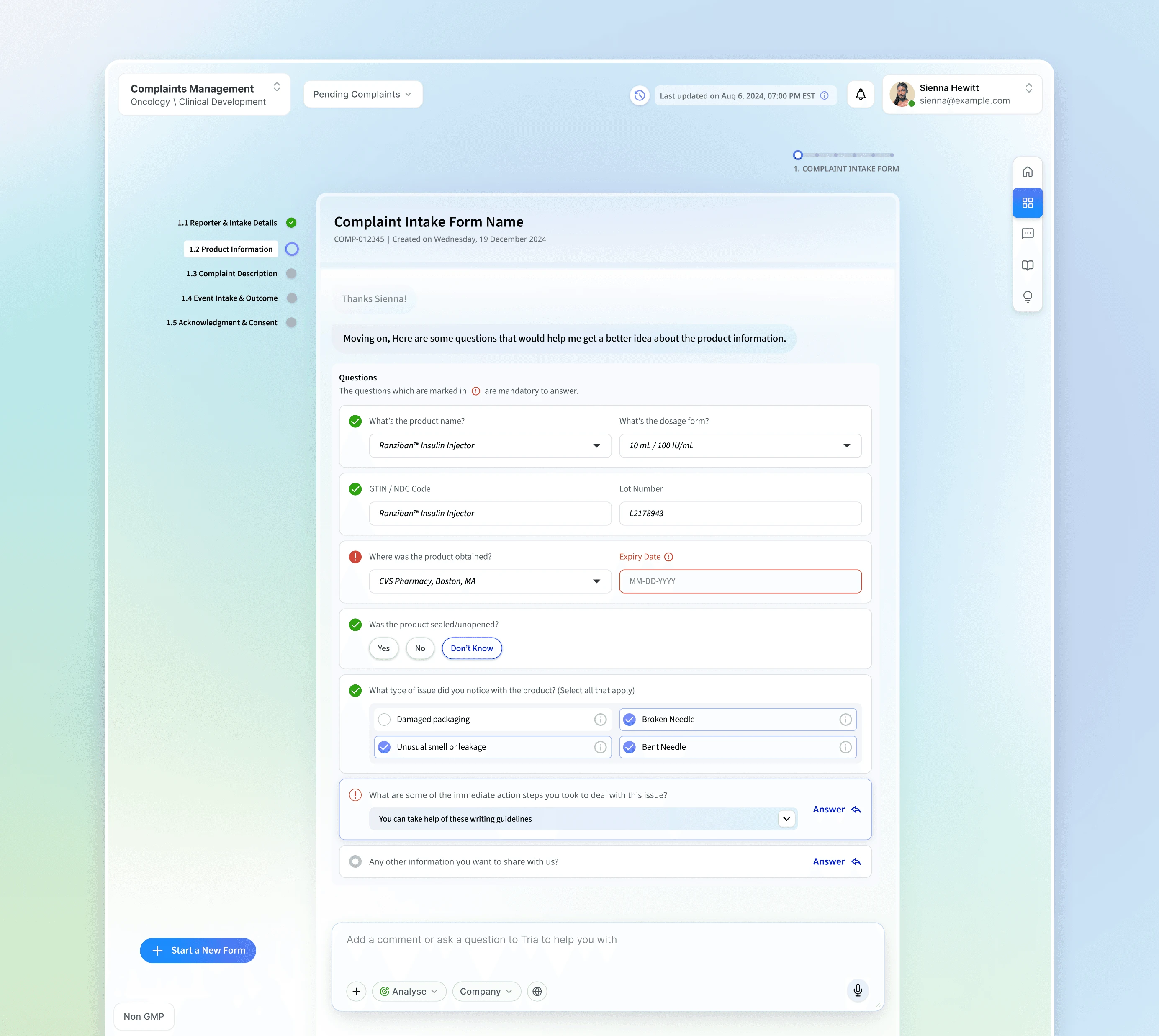
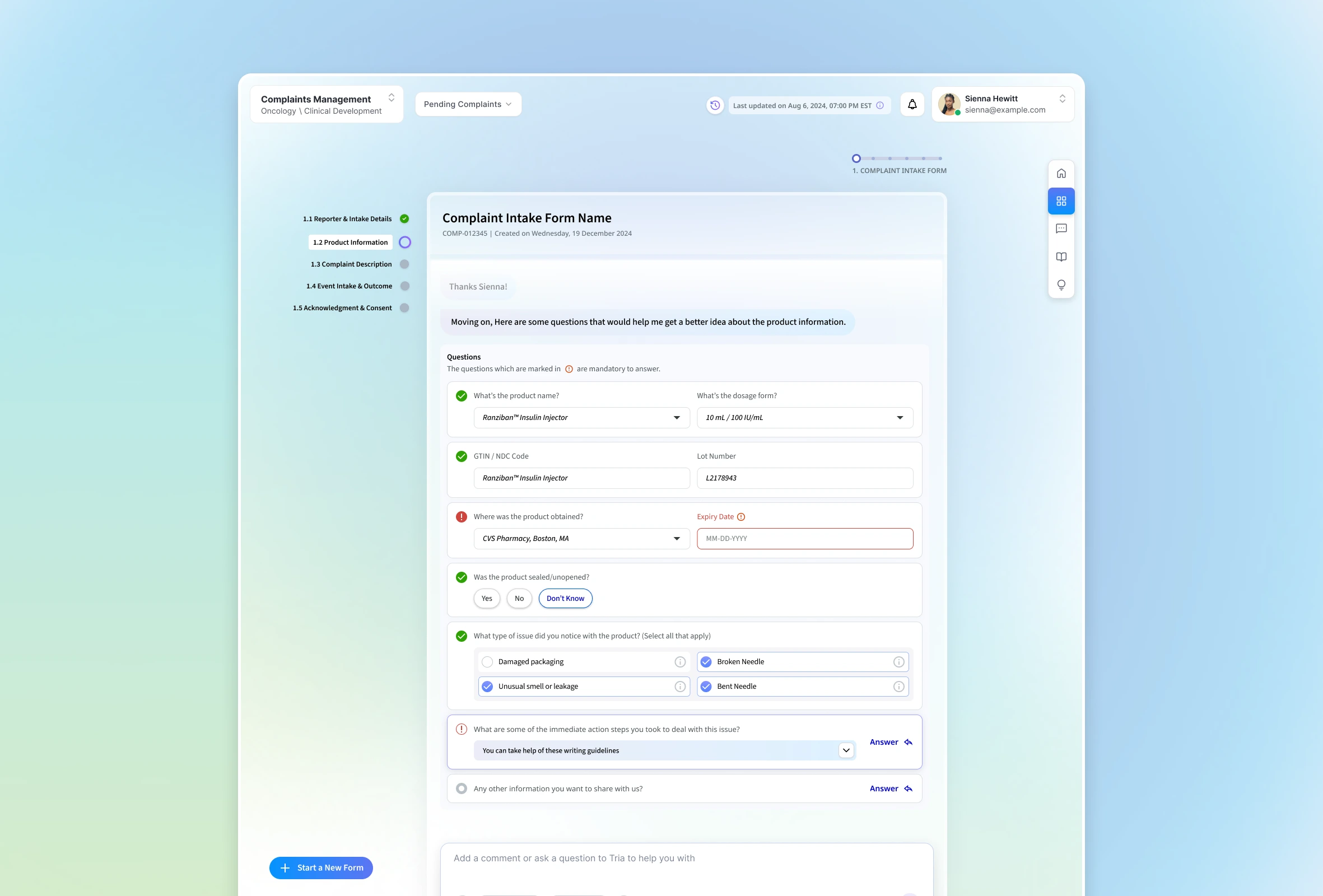
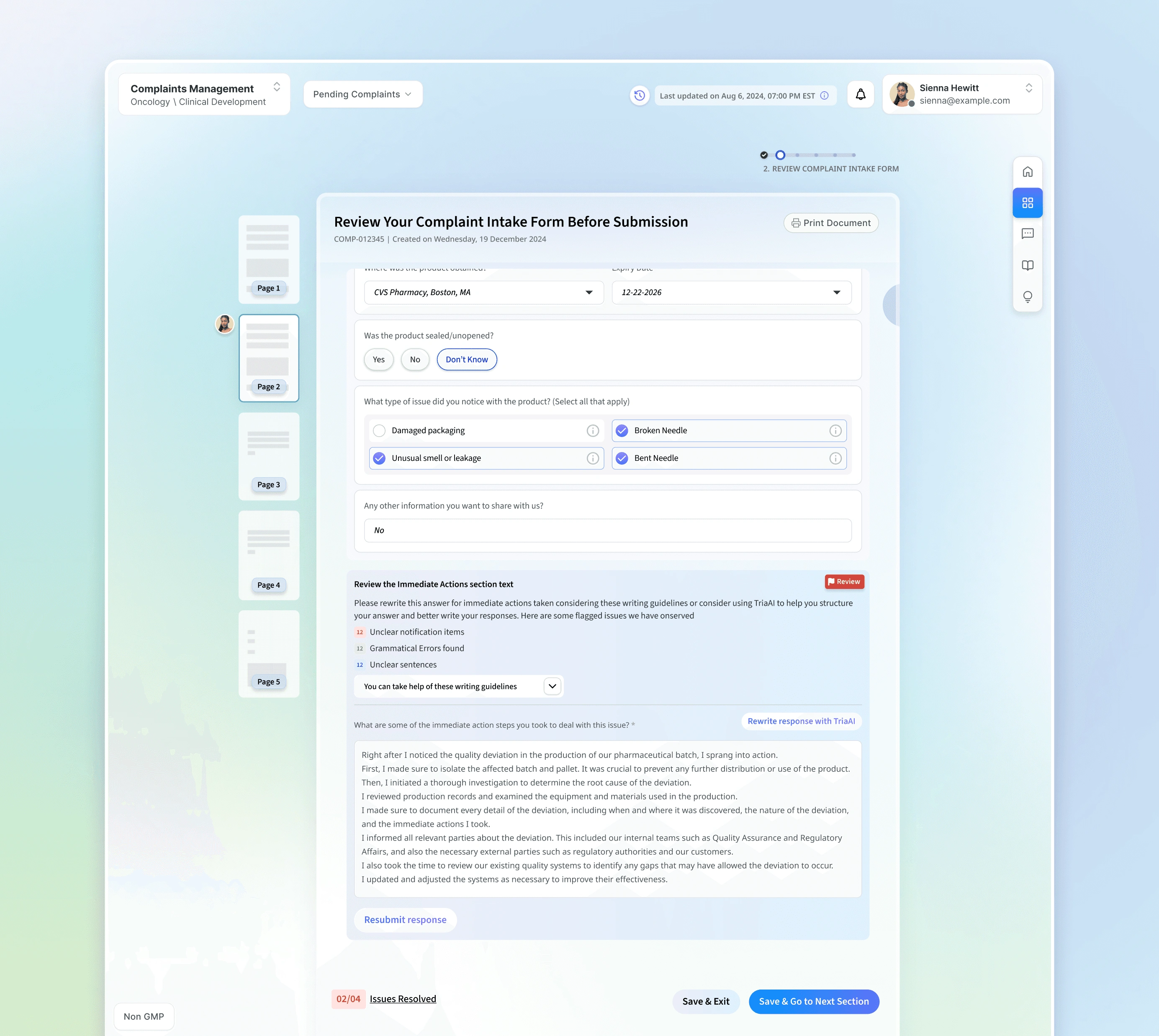
This is one of the complaint intake form's designed to increase the efficiency of form-based inputs and make cognitively less exhaustive. Writing guidelines are given to ensure that maximum information is captured well at the intake stage so investigations can be accelerated in a more time-sensitive manner and in also a structured way without the need to have more people involved than necessary.
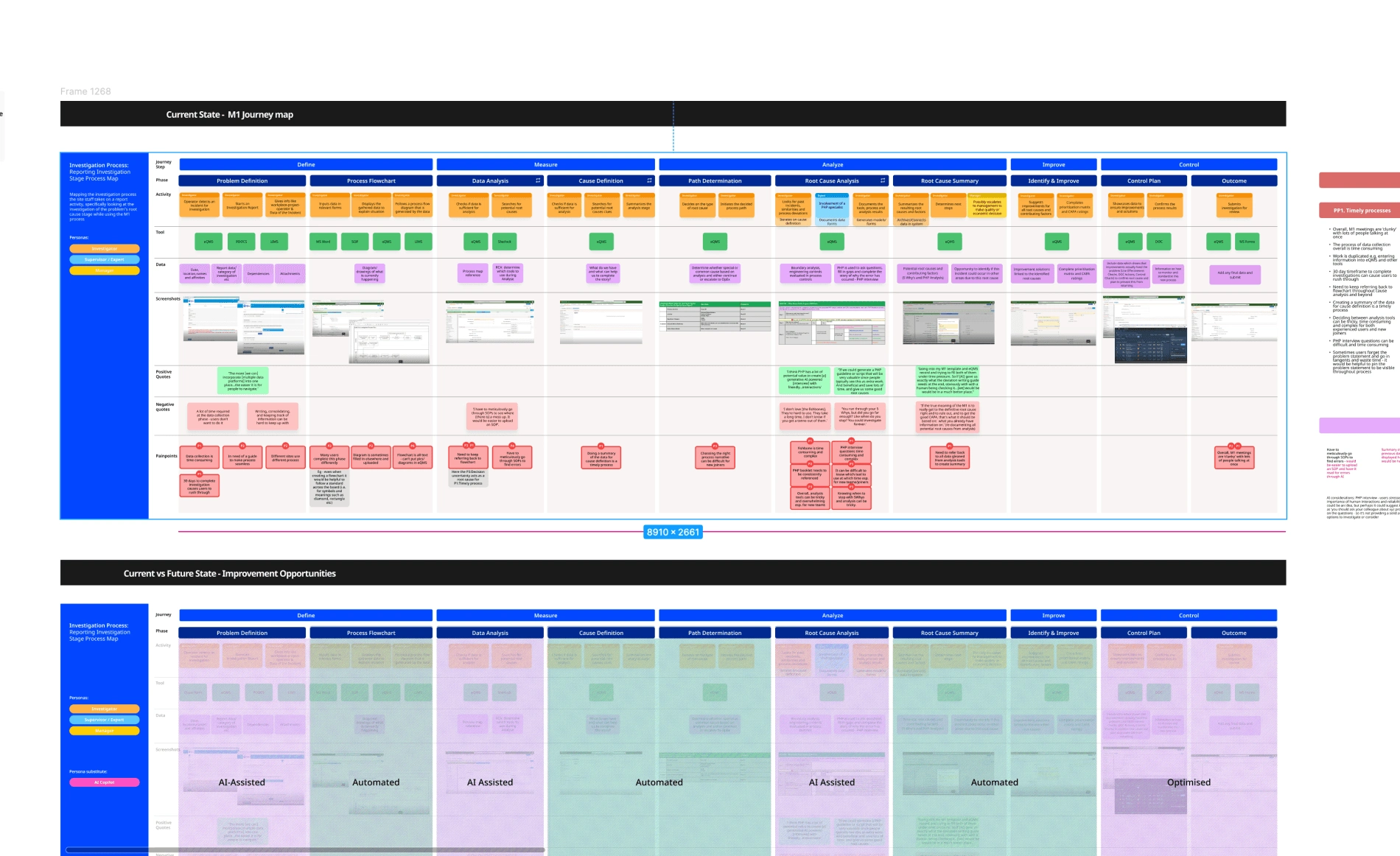
It was very important to segment across the user flow which flows need AI-assistance v/s which stages are better automated
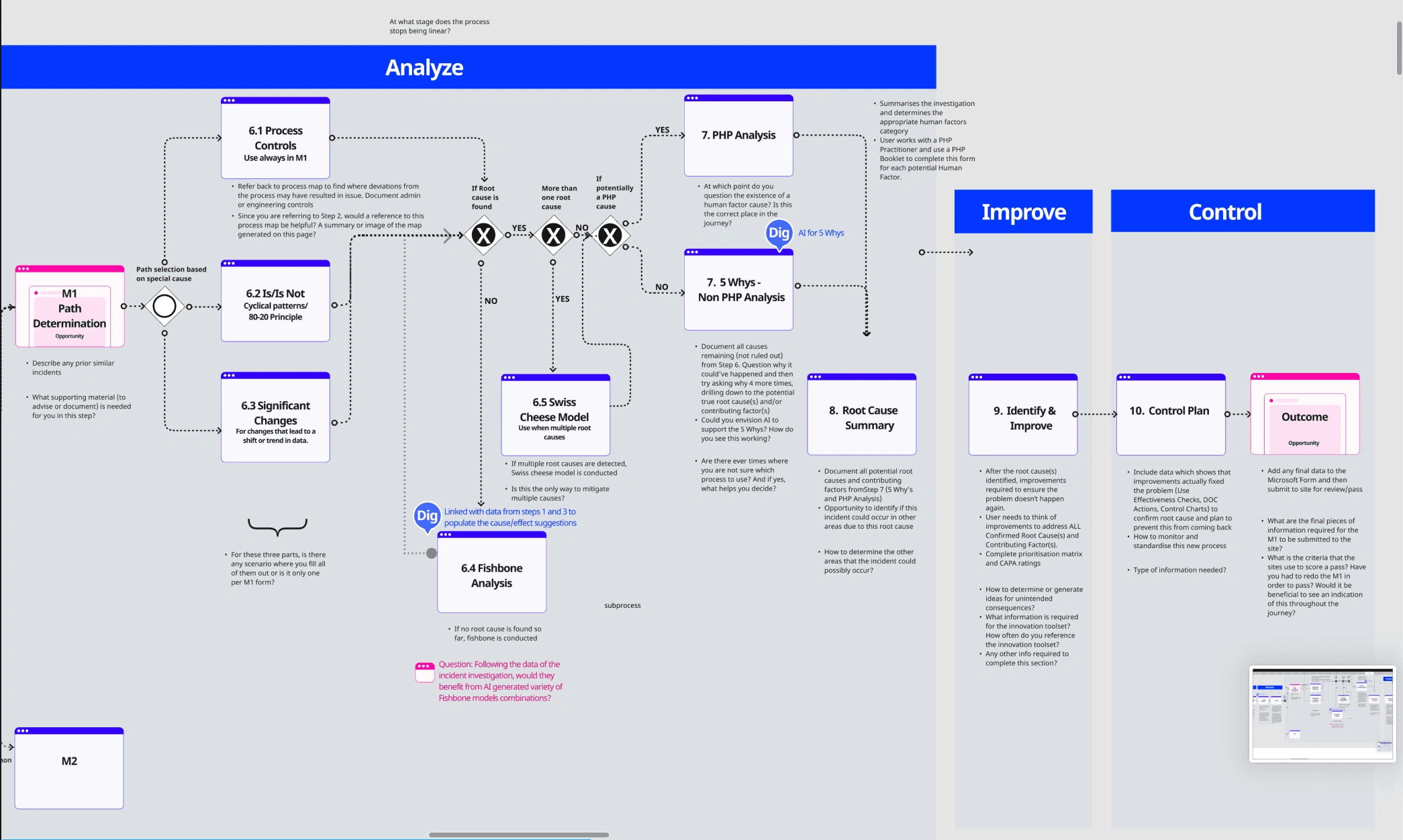
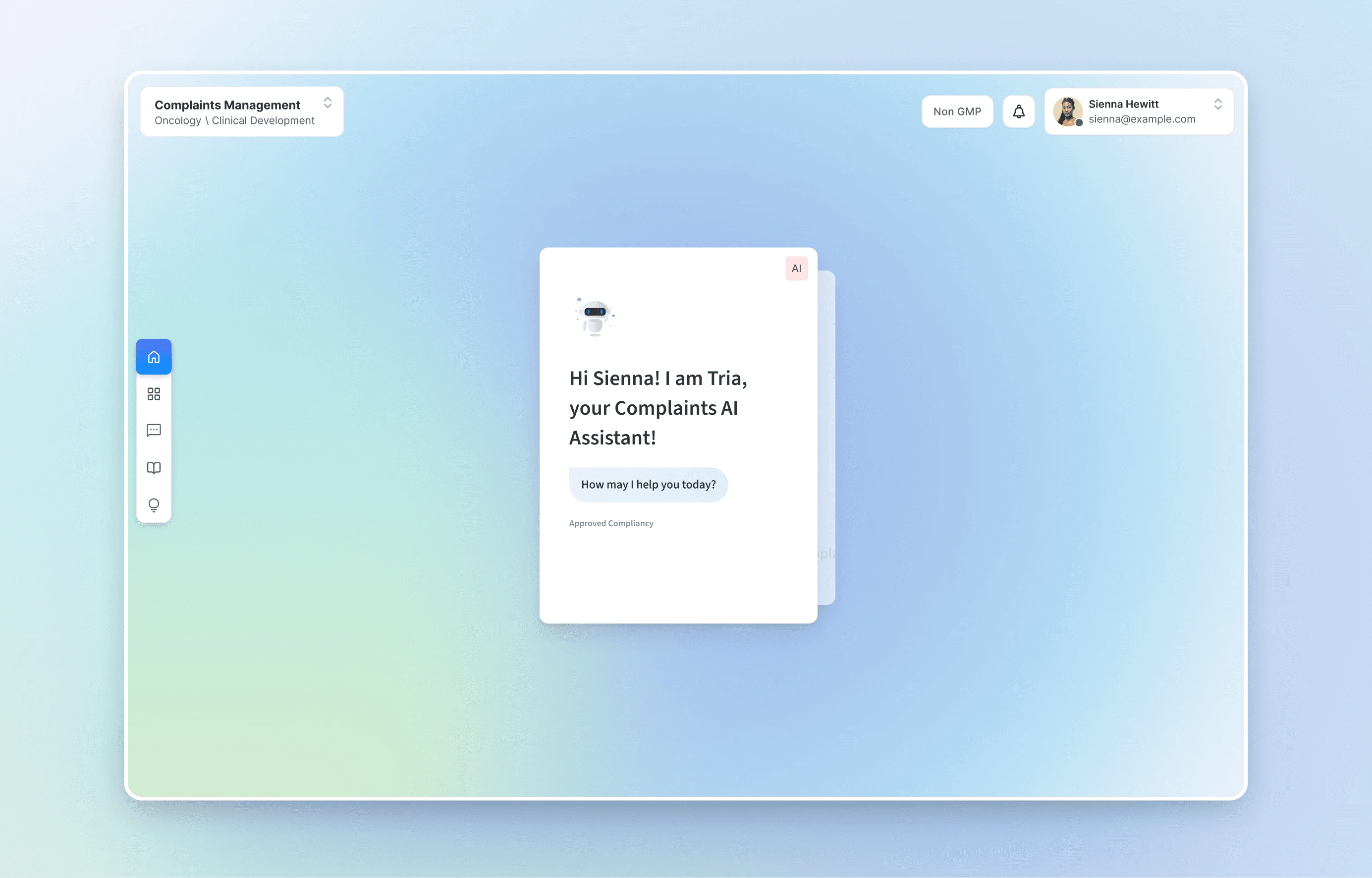
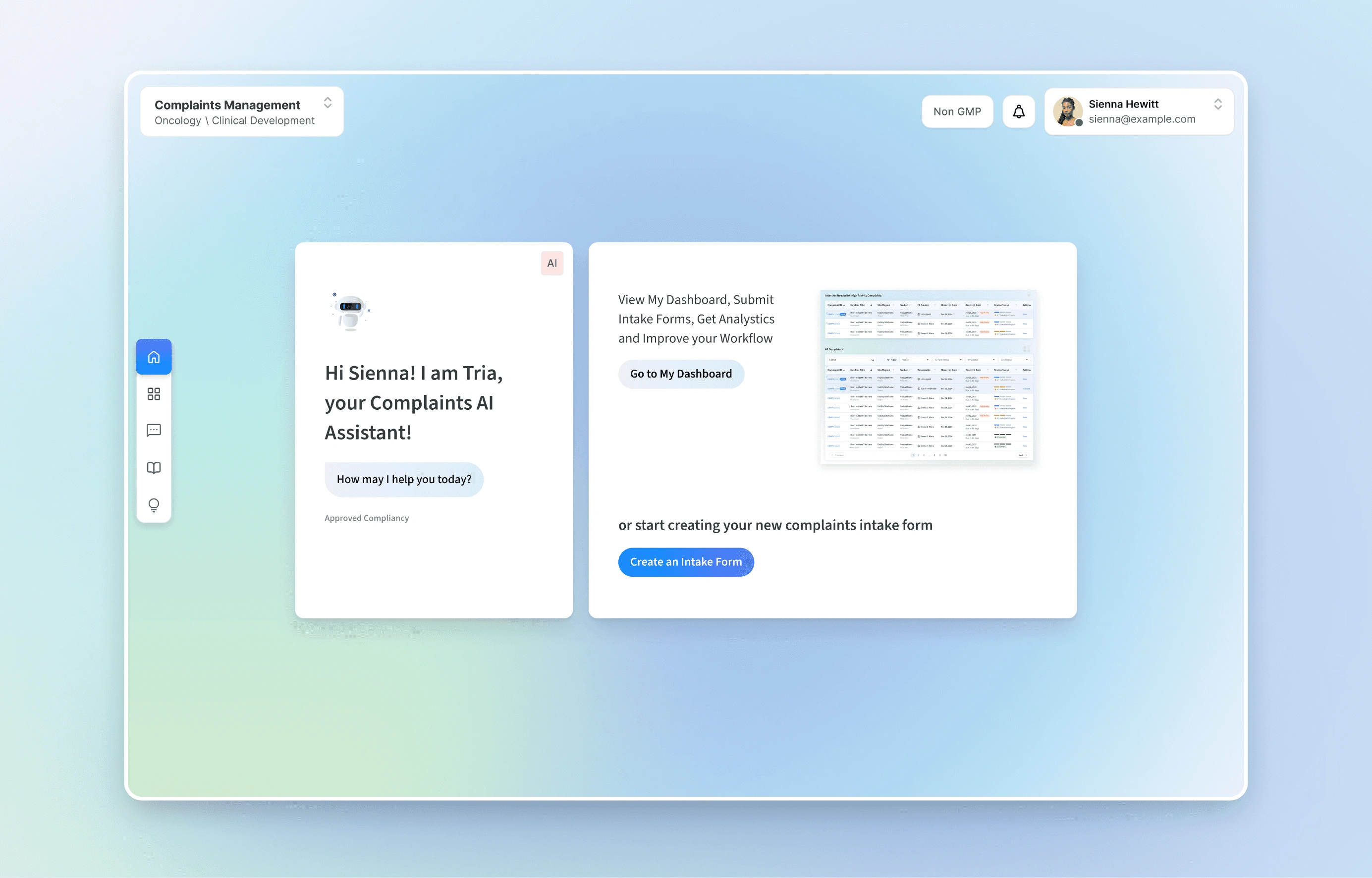
The product was designed around how investigators actually work — introducing structured workflows that guide users without restricting them, and integrating AI-assisted inputs that support decision-making without removing human control. The focus was on reducing friction across key stages, from intake and triage to investigation and validation.
This meant ensuring complete and high-quality data capture during intake, enabling faster and clearer triage decisions, supporting investigators with contextual AI inputs, and designing review and validation layers that maintain accuracy, transparency, and regulatory compliance.
Outcomes (Usabiloty testing results after 7 months(
The product was designed around how investigators actually work — introducing structured workflows that guide users without restricting them, and integrating AI-assisted inputs that support decision-making without removing human control. The focus was on reducing friction across key stages, from intake and triage to investigation and validation.
This meant ensuring complete and high-quality data capture during intake, enabling faster and clearer triage decisions, supporting investigators with contextual AI inputs, and designing review and validation layers that maintain accuracy, transparency, and regulatory compliance.
Triage time reduced by 60%
Investigation completion consistency improved to 95%+
Investigators reported 40% lower cognitive load
Full regulatory compliance is maintained across all workflows
Like this project
Posted Apr 17, 2026
White-labelled project for a leading global Lifesciences & Healthcare corporation.
Likes
0
Views
23