
The problem
Unofficial concept, not affiliated with Starlink. Phones with satellite today show "SAT" and leave the rest to support pages. Desk research on coverage and outages, an audit of satellite-to-phone features and four synthetic interviews pointed at the same question: did my message get through, and is anyone coming?
What the research changed
The first version was built around an AI assistant. Every synthetic participant pushed back on being listened to, so the assistant stays but demoted: push-to-talk only, it never sends on its own, and it keeps a log you can check.
Three decisions
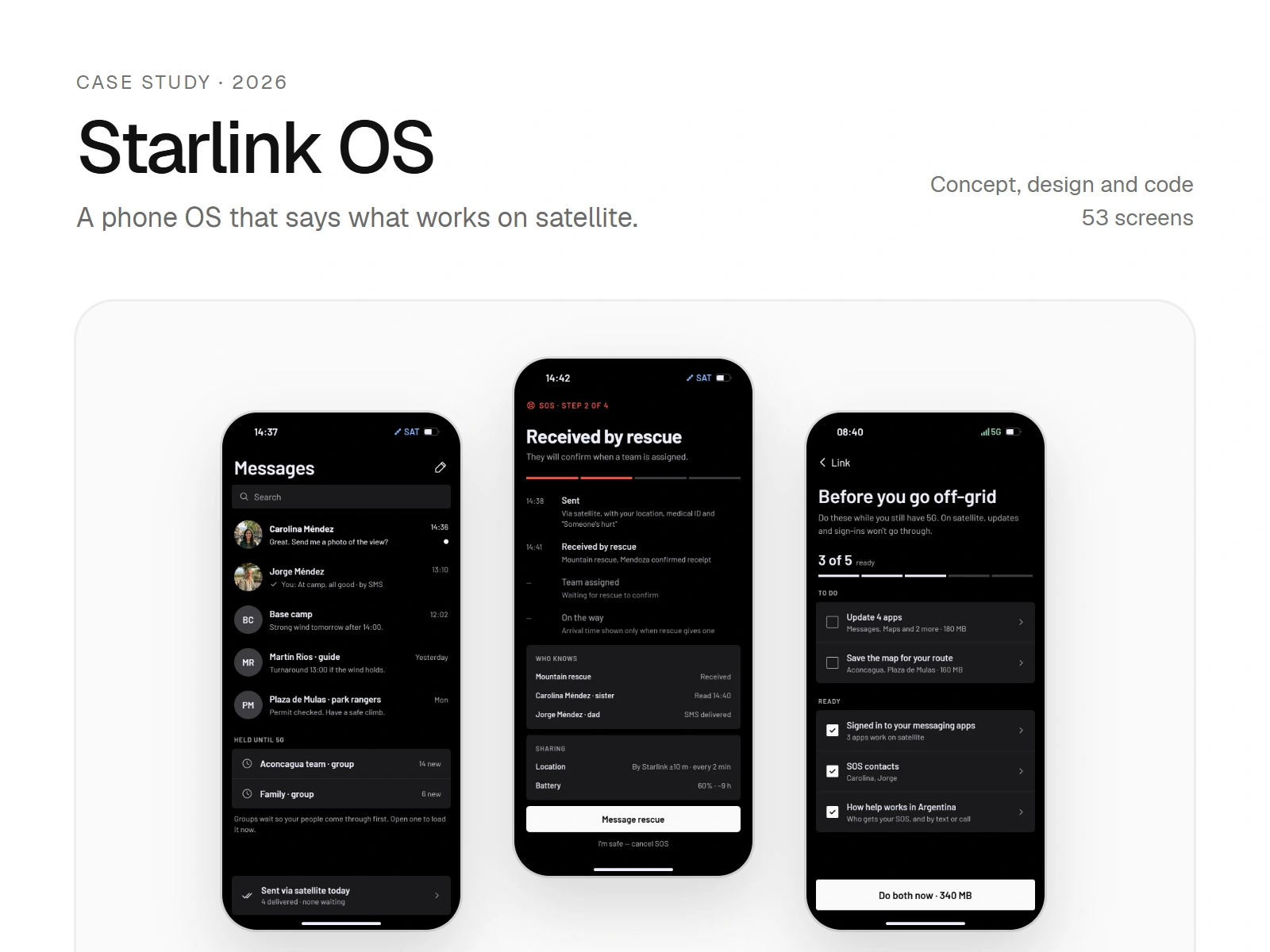
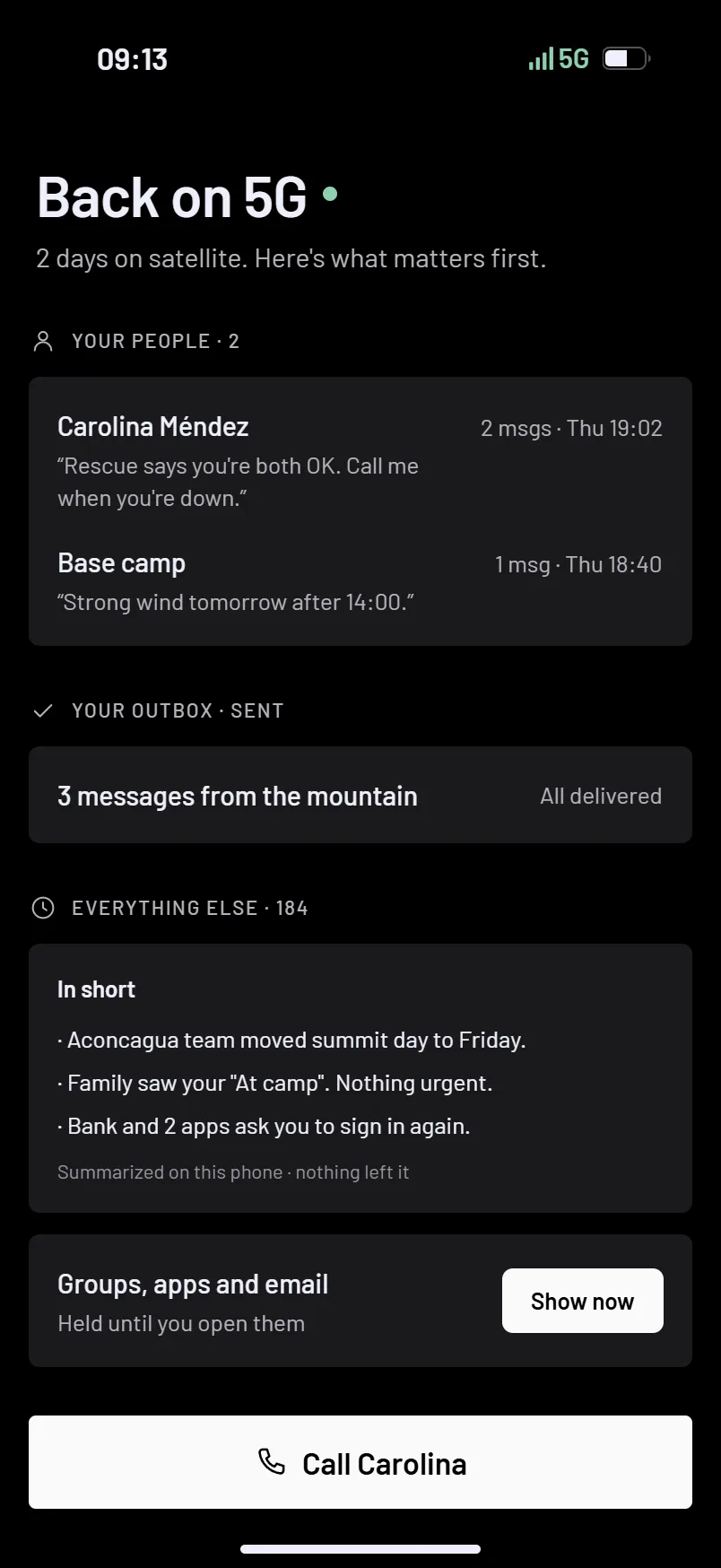
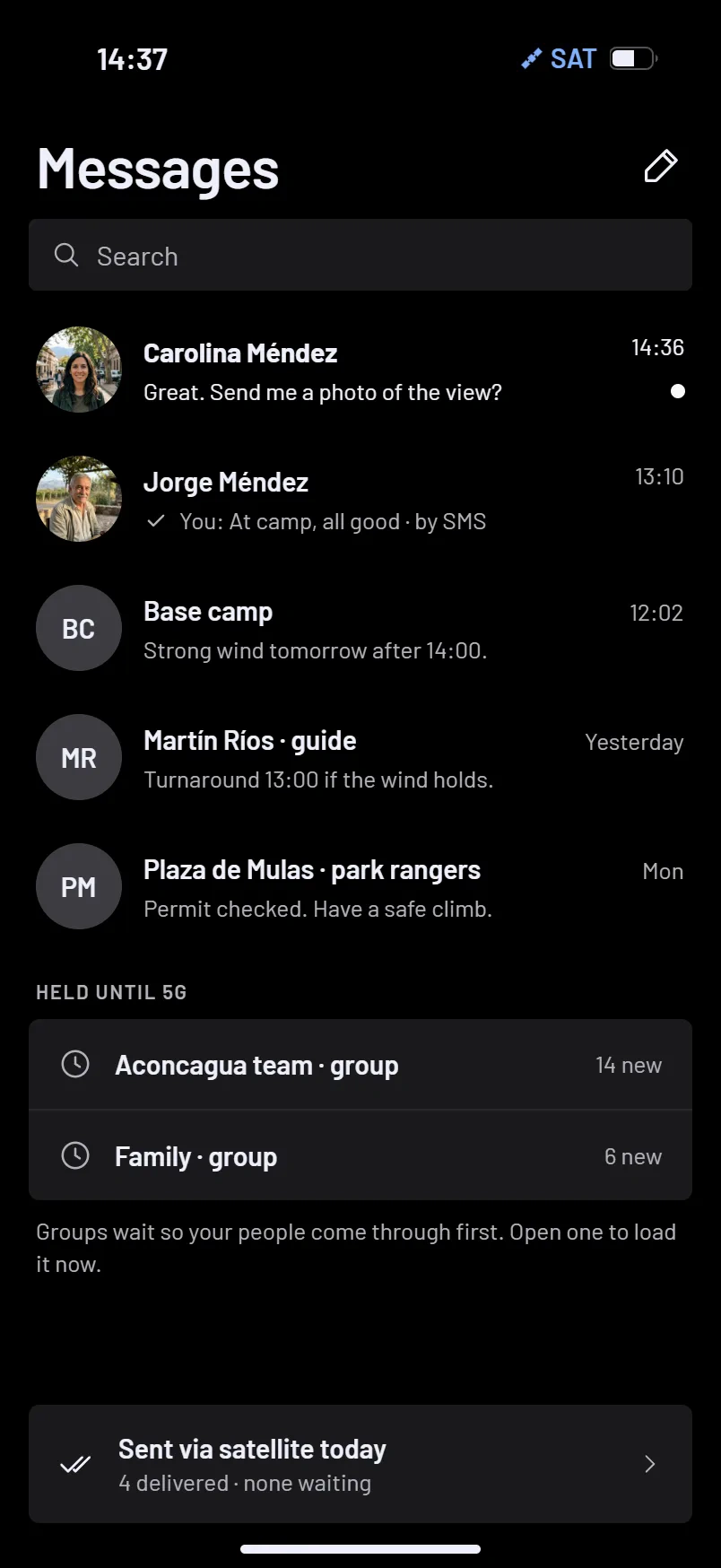
Messages: every message shows where it is, with times from the network. When 5G returns after days offline, your people come first, then proof your messages went out, then everything else.
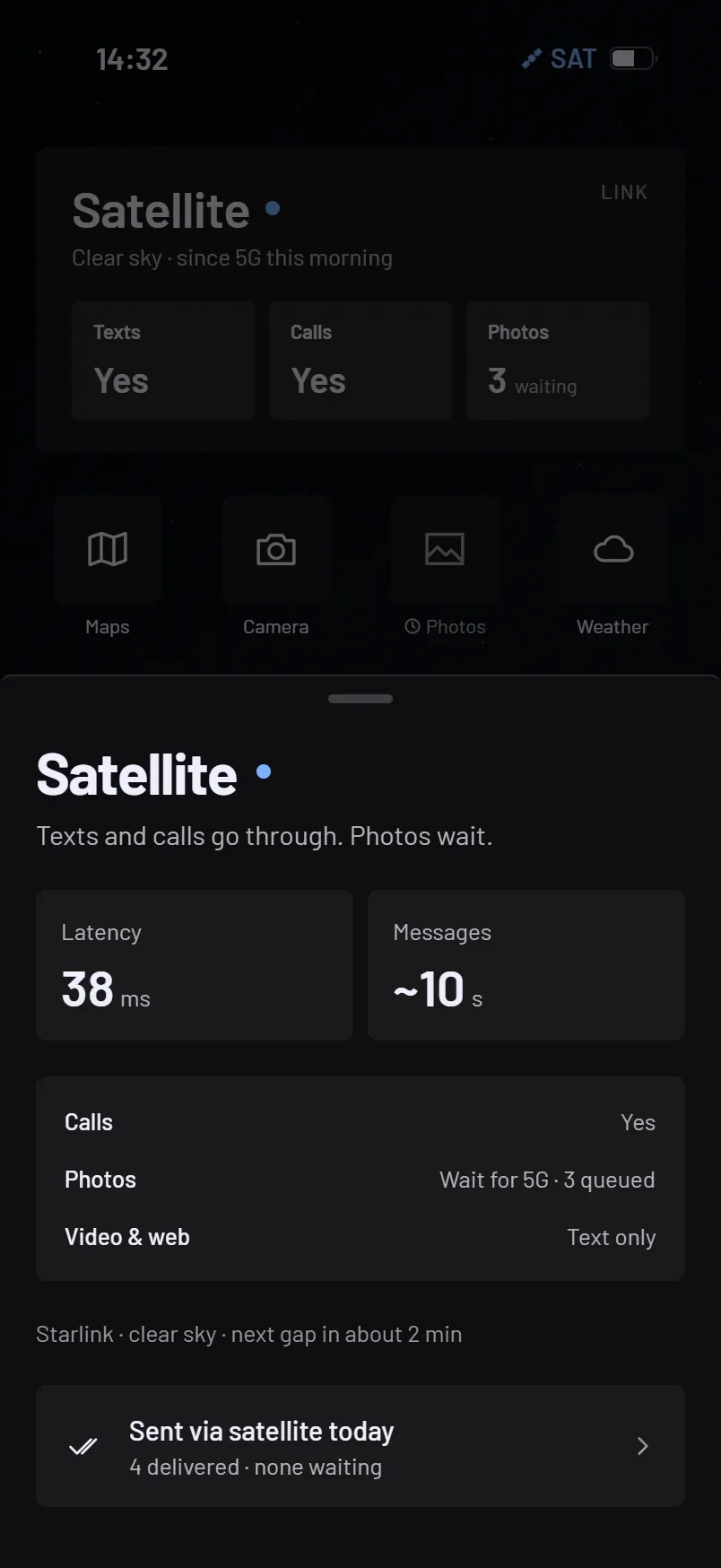
Link status: the home widget names what the link allows right now (texts yes, calls yes, 3 photos waiting), and a tap shows what is queued and what went out.
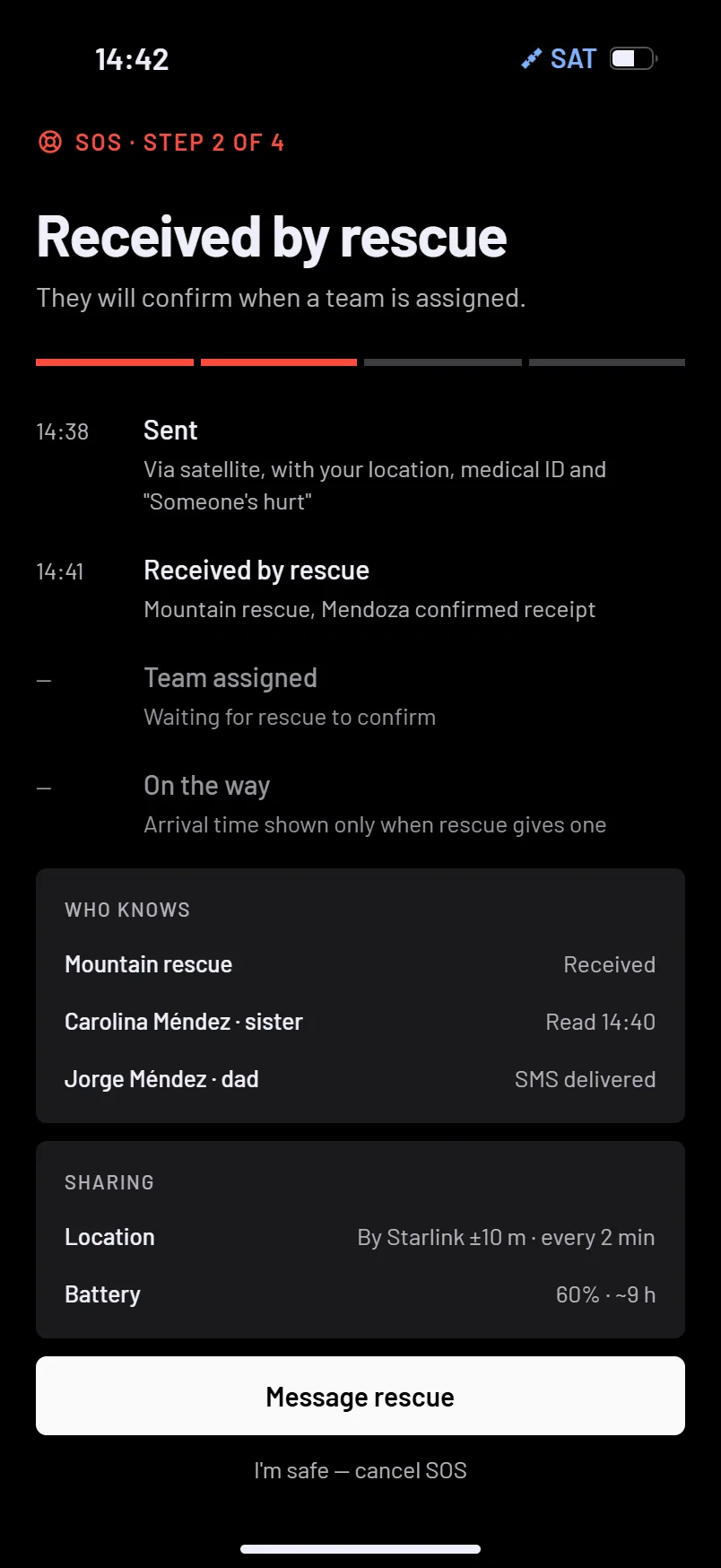
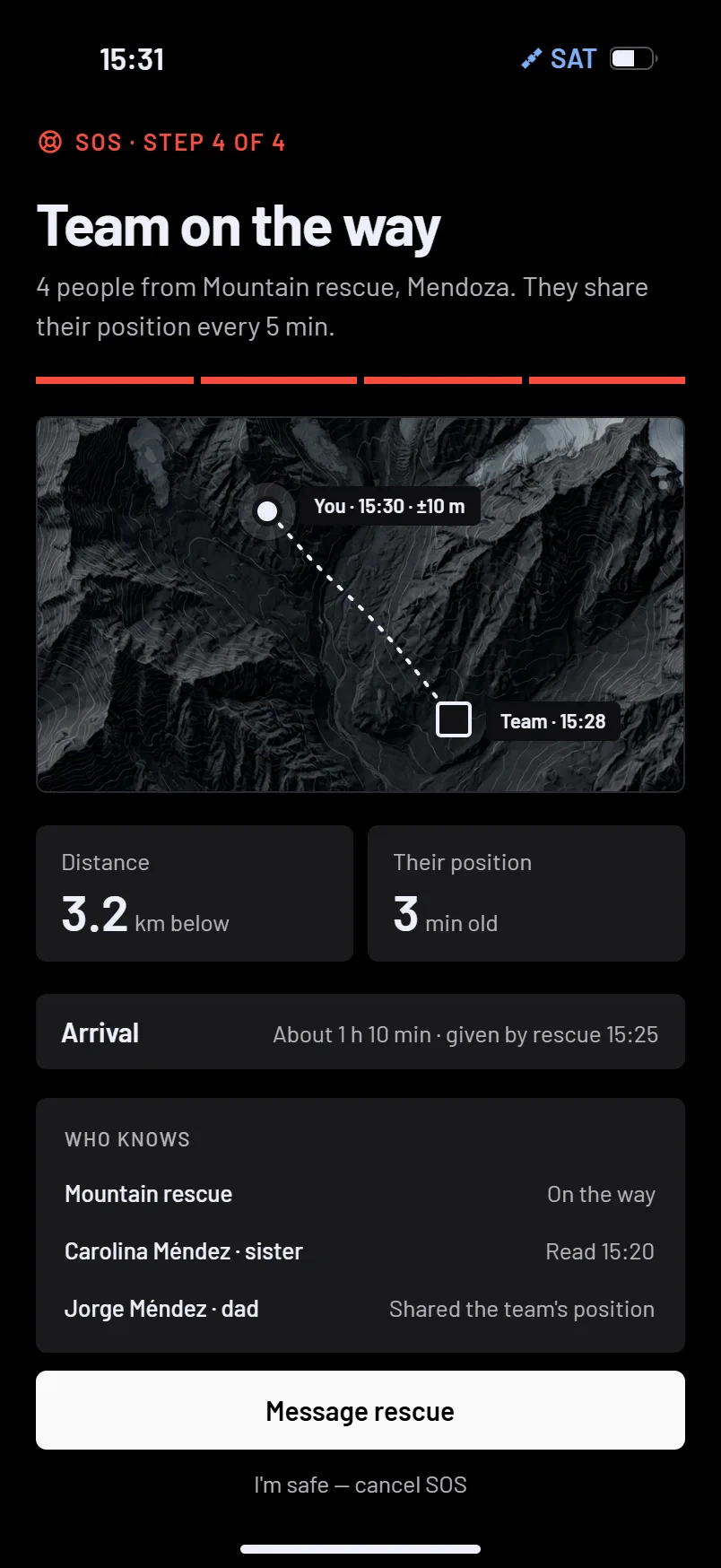
Emergency SOS: instead of ending at "sent", each step lands with its time, from sent to a team on the way, with who already knows. Every entry point except the side buttons asks you to slide first.
Design system
Black is the instrument. Color only appears when the link changes (terrestrial, satellite, degraded, no sky) or when someone needs help. One type family, Barlow, for everything.
Scope and limits
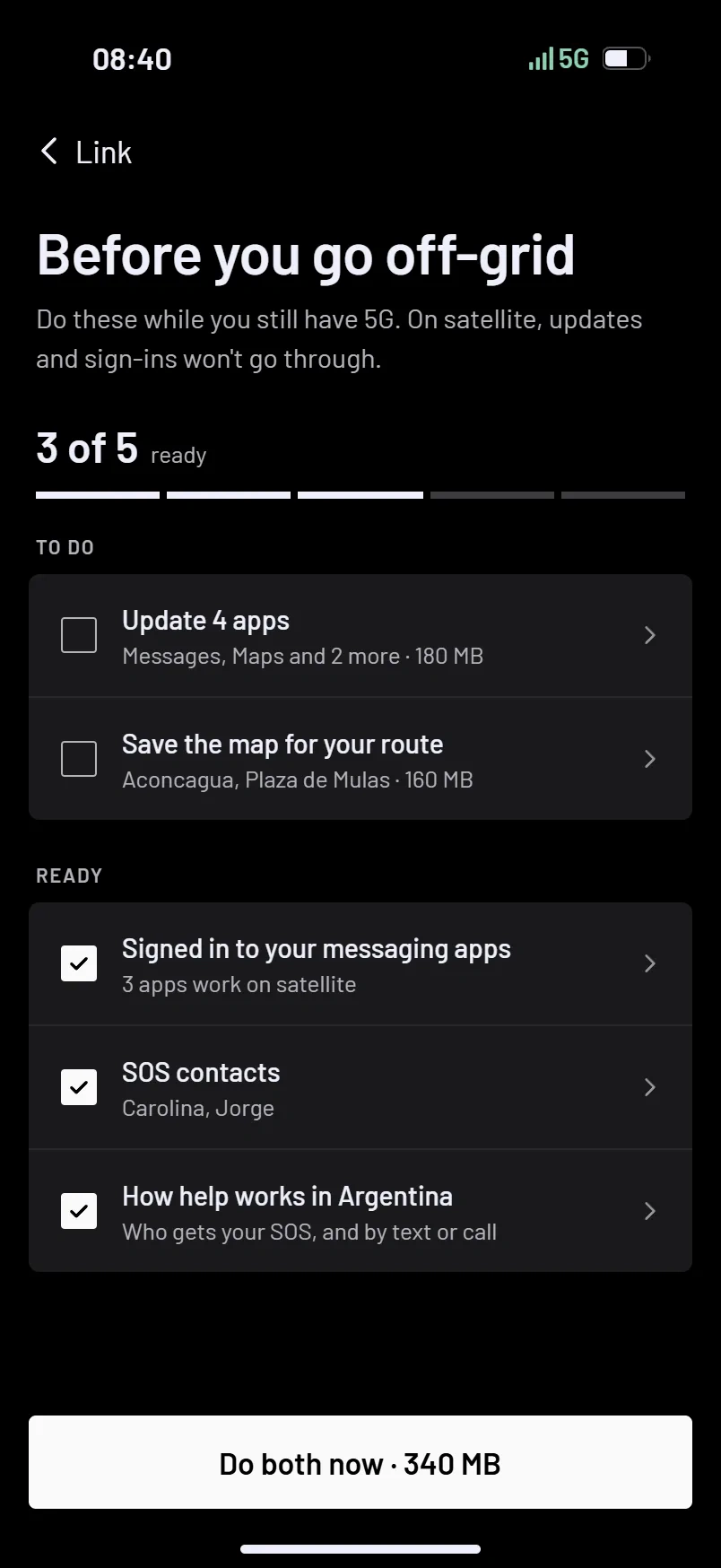
53 screens across 4 flows: Link status, Messages, SOS and Location. Concept, design and code. The research is synthetic and nothing here has been validated with real users yet; the case study lists the four hypotheses to test first.
Links
Interactive case study: https://josecastro.me/work/starlink-os
0 likes · 2 views · Oct 28, 2026
Unofficial concept. A full phone OS that says what you can do right now on satellite: link status, SOS, location and messages. 53 screens.


