Building an AI Travel Influencer With a World That Moves
Approve request to show earnings
View

Soumitro Halder Shan
Verified


Building an AI Travel Influencer With a World That Moves
An original virtual travel creator designed to share destinations through personal, social-first stories—from island escapes and European city breaks to food, culture, nature, and global events.
Role: AI character development, creative direction, travel storytelling, image generation, video generation, and visual curation
Current library: 124 still-image explorations and 22 short-form videos
Travel formats: Destination diaries, mini-vlogs, food and culture stories, resort content, outdoor adventures, and event travel
Tools: Higgsfield, Gemini Omni, Seedance 2.5

Overview
Nisha Arora is an original AI travel influencer I created to explore what happens when a consistent virtual character is given not only a recognizable face, but a point of view and a world to move through.
Her content follows the language of modern travel creators: speaking directly to camera, walking through unfamiliar streets, trying local food, visiting landmarks, sharing quiet resort moments, and capturing the smaller lifestyle details between destinations. The result is a character who feels less like a sequence of disconnected AI generations and more like a creator documenting an ongoing journey.
Nisha is an AI-generated character. The travel scenes in this case study form a fictional visual universe created for creative and portfolio purposes.
The challenge
A believable travel influencer has to do more than appear in beautiful locations. The audience needs to recognize the same person across different countries, climates, wardrobes, lighting conditions, camera styles, and types of activity.
The central challenge was therefore continuity: keeping Nisha visually recognizable while allowing each destination to have its own atmosphere. A tropical island should not feel like a European city with a different background. A food diary should not move like a resort film. A mountain trip should have a different pace and physical energy from an art-museum mini-vlog.
The project needed to balance three things:
Character continuity — one recognizable traveler across the entire series.
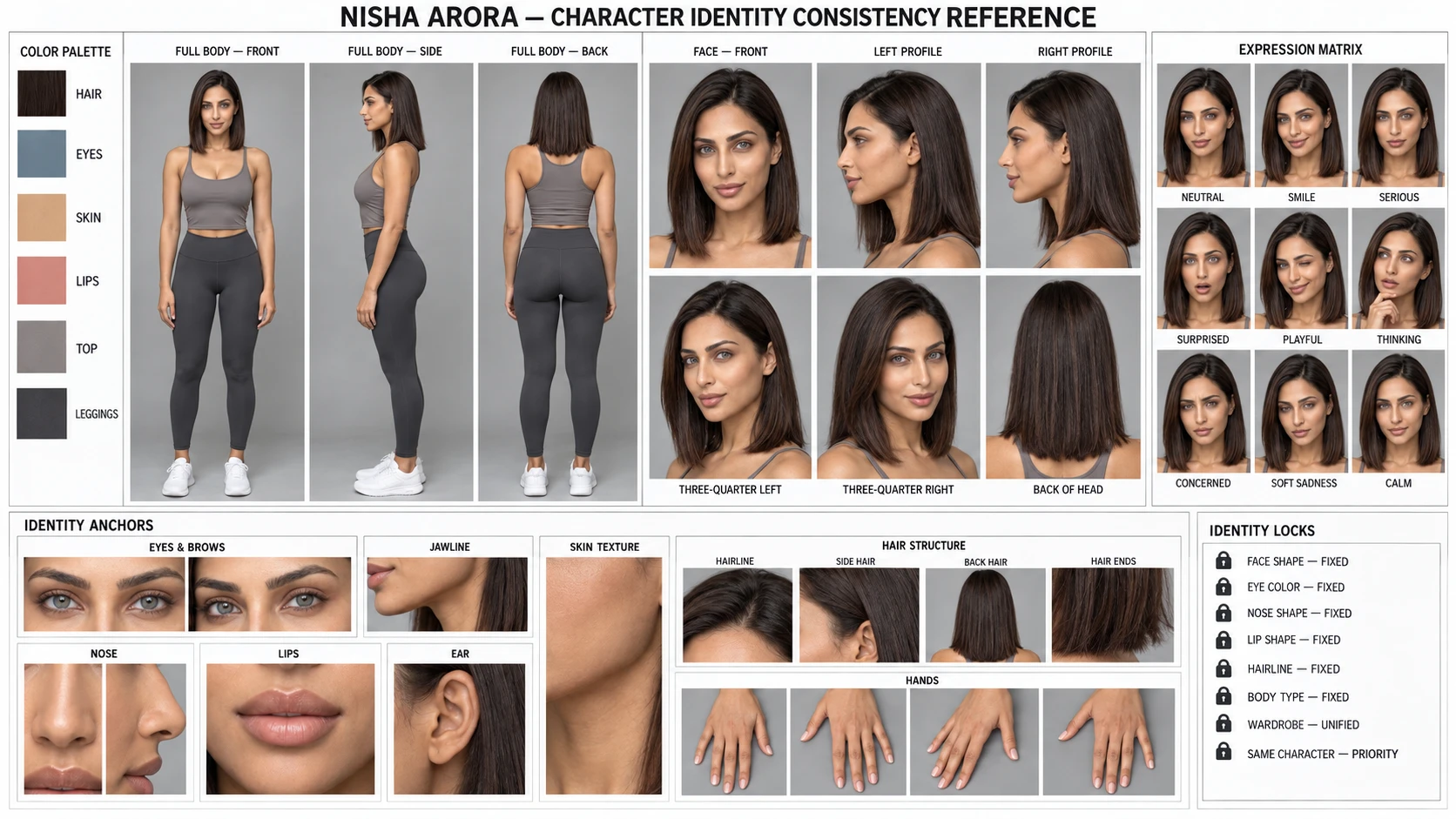
Character sheet that needs to be locked
Destination specificity — local food, architecture, landscapes, weather, and cultural details.

One location, one outfit, multiple shots.
Creator authenticity — direct-to-camera moments and imperfect, personal-feeling footage that resembles native social content.
Creating the traveler
I first established Nisha's core identity: facial features, proportions, hair, styling range, and on-camera personality. Her expression and energy were intentionally kept warm, curious, and confident so that she could carry both aspirational travel films and casual mini-vlogs.
The character system had to remain flexible. Nisha appears in eveningwear, hiking layers, resort clothing, streetwear, and everyday outfits without losing her visual identity. This versatility gives the travel world range while keeping the creator recognizable.
The travel content system
I developed four recurring formats that could support an ongoing creator feed.
1. Destination diaries
Short travel stories combine arrival energy, recognizable locations, environmental details, food, and direct-to-camera reactions. Rome, Italy, India, Japan, Korea, Nepal, Switzerland, Cairo, and rainforest environments each receive a distinct visual rhythm.
2. Cinematic escapes
The Bali-style island diary and Maldives resort film use slower, more atmospheric storytelling. Beaches, temples, cliffs, pools, wildlife, and sunset light create a more aspirational side of Nisha's travel identity.
3. Culture and city mini-vlogs
The Paris art-and-city reel follows the quicker, conversational language of a mini-vlog. Landmarks, museum interiors, movement, and direct engagement with the viewer make the destination feel experienced rather than merely displayed.
4. Life between trips
Outfit videos, lunches, shopping, wellness, fitness, food, and everyday routines give the audience continuity between destinations. These moments make the travel content feel like part of a larger life and also create natural openings for brand partnerships.
Making each place feel different
The creative direction changed with the emotional promise of each trip:
Bali-style island travel: discovery, nature, temples, cliffs, and wildlife.
Maldives escape: calm, privacy, resort luxury, water, and sunset light.
Paris mini-vlog: art, architecture, movement, and playful direct-to-camera energy.
India: street-food discovery and the intensity of a busy market environment.
Japan and Korea: food, nightlife, public transport, and contemporary city culture.
Nepal and Switzerland: weather, physical journey, mountain scale, and outdoor adventure.
Rome and Italy: landmarks, cafés, dining, and relaxed European lifestyle.
Cairo and rainforest travel: sensory environments, local details, and curiosity-led exploration.
World Cup travel: fashion, fandom, anticipation, and the collective energy of a global event.
I'm not an ARG fan BTW xD
From visual consistency to narrative consistency
Character consistency was only the first layer. The videos also needed narrative logic.
Each reel was designed around a simple creator-led progression: establish the place, show Nisha entering or moving through it, introduce an activity or detail, and finish with a personal moment. Even within 10–15 seconds, that structure helps the clips feel like stories instead of visual demonstrations.
I focused on:
recognizable identity across changing locations and outfits;
destination-led establishing shots;
direct-to-camera moments that create audience connection;
creator behaviors such as walking, reacting, tasting, filming, and exploring;
a mix of polished scenes and handheld or selfie-style footage;
concise pacing designed for short-form platforms.
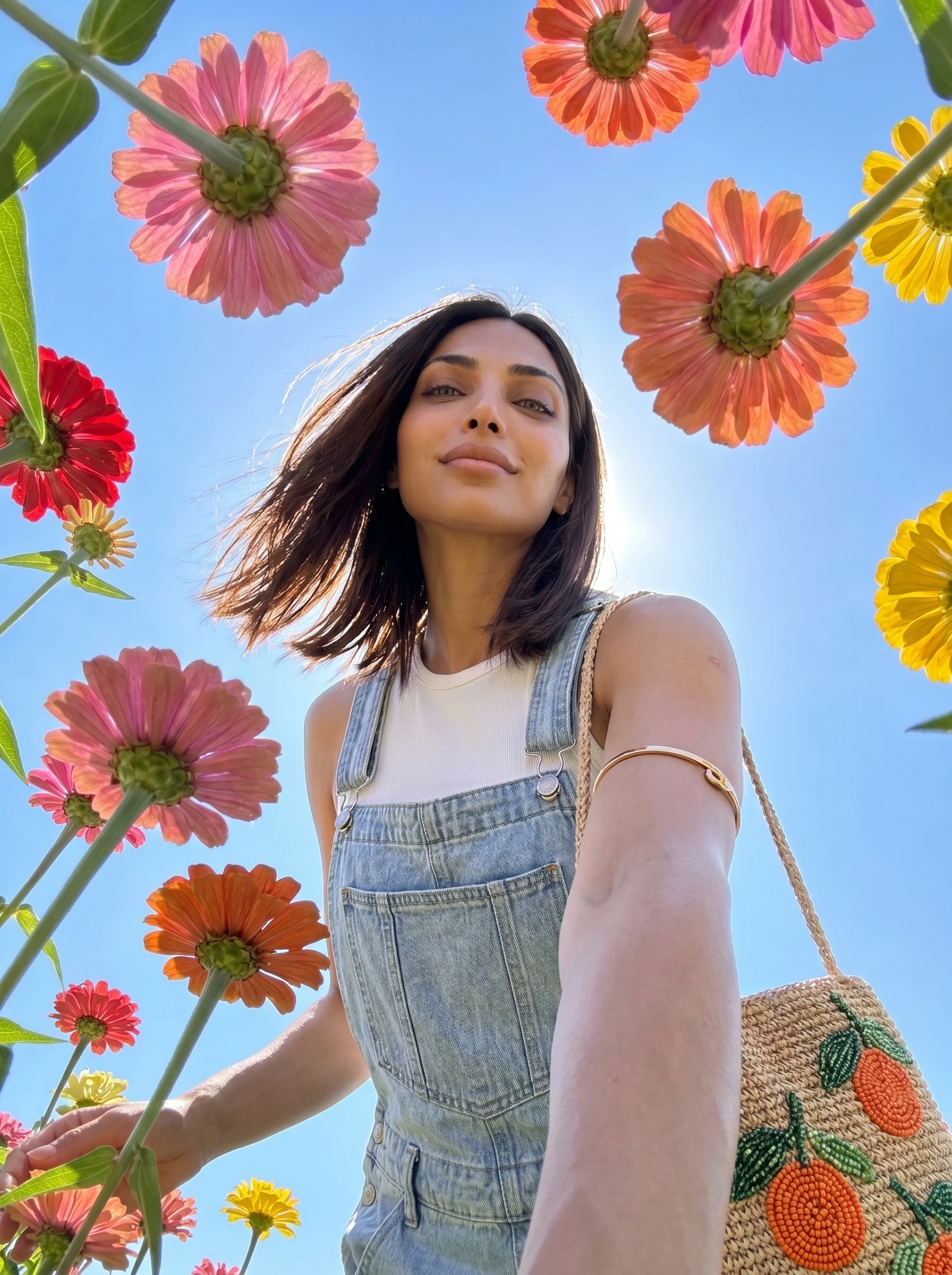
Creative workflow
Choose the travel promise — adventure, food, culture, resort, city break, or event.
Define destination signals — architecture, landscape, climate, local objects, and activities.
Direct Nisha's role — explorer, diner, hiker, resort guest, city narrator, or fan.
Set the camera language — cinematic observation, selfie, handheld vlog, point-of-view, or direct address.
Build a micro-story — arrival, discovery, interaction, reaction, and closing moment.
Review continuity — identity, anatomy, wardrobe, geography, movement, and environmental coherence.
Curate the feed — alternate destinations with quieter lifestyle moments to create rhythm.
Outcome
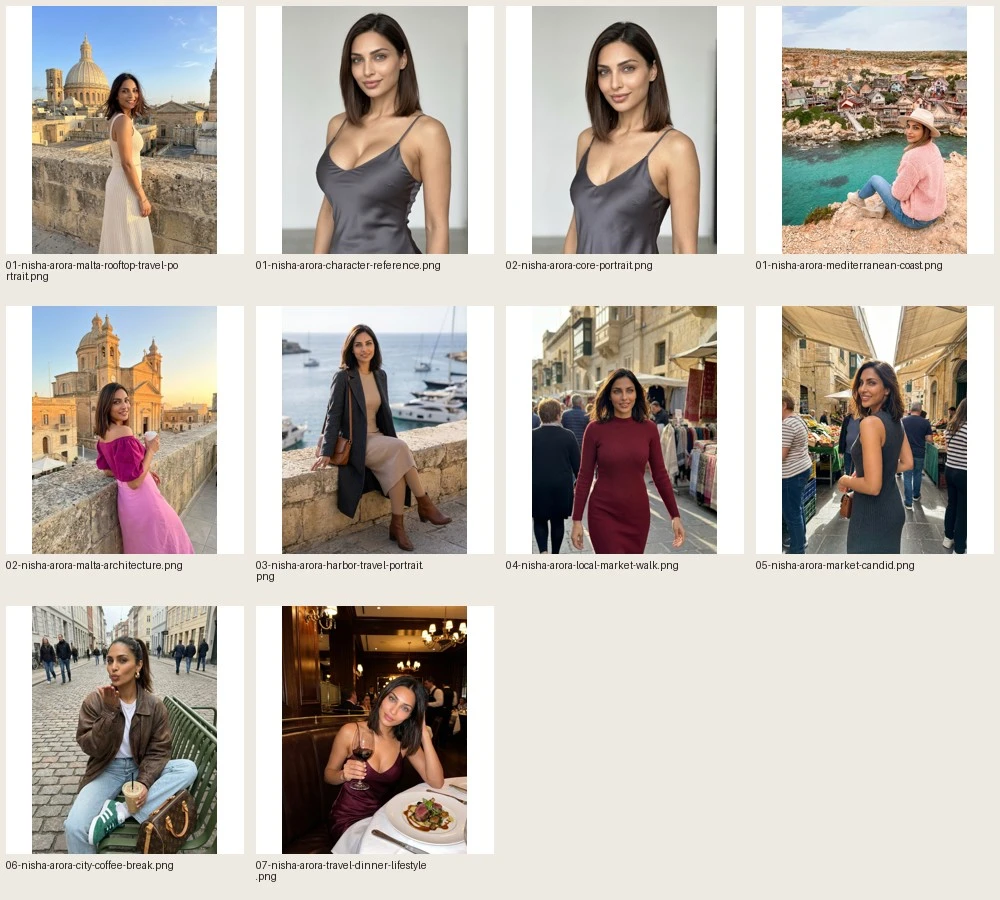
The project has grown into a travel-first virtual-creator system supported by 124 still explorations and 22 short-form videos. The revised portfolio includes a curated set of 15 reels spanning island travel, resorts, major cities, food, culture, mountains, nature, global events, and everyday life between trips.
Rather than relying on a single visual style, Nisha can adapt to the emotional identity of each destination while remaining recognizable. That gives the character the range to support tourism campaigns, hotels and resorts, airlines, restaurants, fashion and luggage brands, wellness experiences, and destination-led social series.
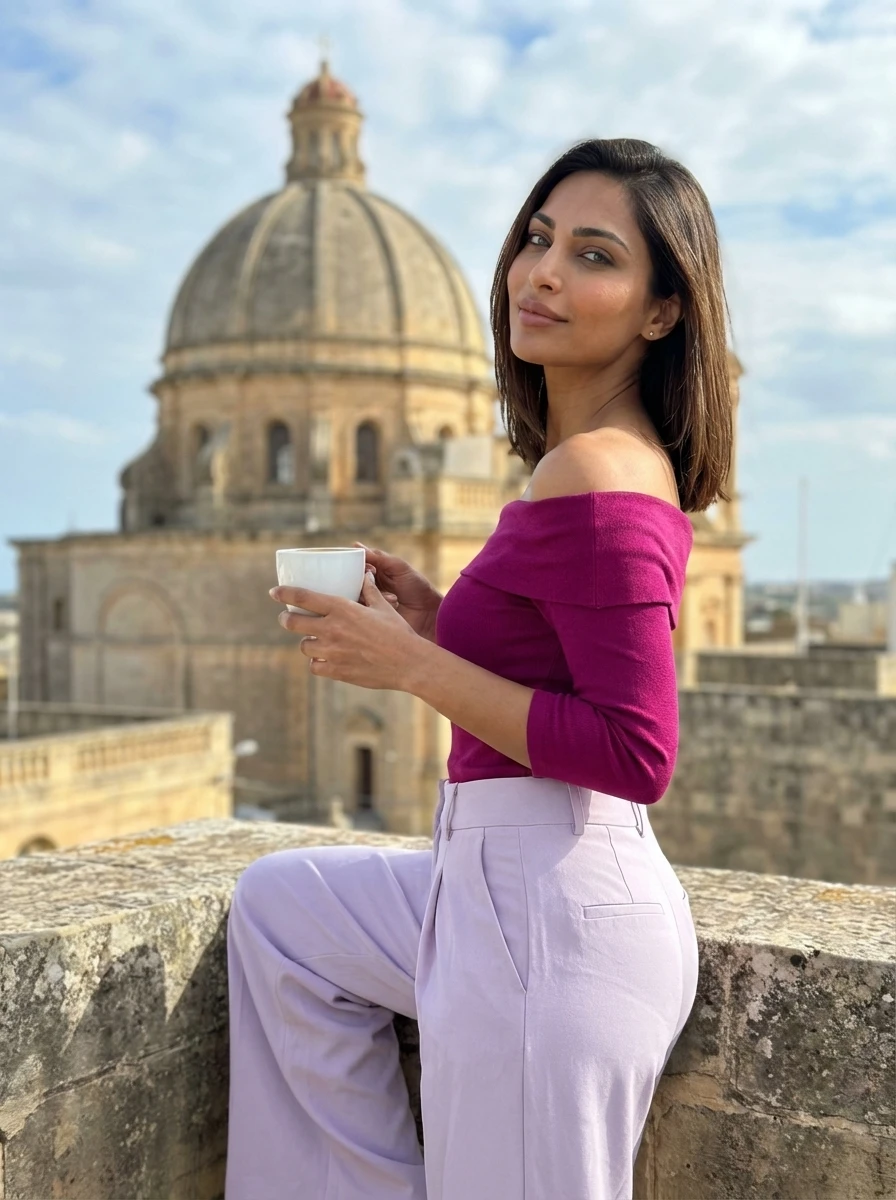
What this project demonstrates
Consistent AI character development across multiple destinations
Travel storytelling shaped around culture, food, landscape, and personal experience
Short-form narrative design for creator-led social platforms
A scalable format for recurring destination and mini-vlog series
Creative direction across cinematic, handheld, selfie, and lifestyle aesthetics
A virtual creator concept ready for hospitality and travel-adjacent brand campaigns
Reflection
The biggest lesson was that a travel influencer is defined by perspective, not location count. Beautiful scenery creates attention, but repeated behaviors—curiosity, reactions, food discoveries, direct conversation, and moments between the landmarks—create a recognizable creator. Treating each trip as an episode in the same life made Nisha's world feel connected.
I create consistent AI characters and develop the travel stories, visual systems, and short-form content that turn them into believable virtual creators.
Like this project
Posted Sep 16, 2026
I created Nisha Arora, a consistent AI travel influencer sharing cinematic destination diaries, culture, food, and lifestyle stories on social media.
Likes
0
Views
15
Timeline
May 17, 2024 - May 22, 2024