
Swiftzz drivers: Delivering groceries from Swiftzz stores to customers
Case study
Mobile app/Product design
Swiftzz
25 Oct, 2025
Full design journey ahead, grab a snack 🍿 (13 min read)

Jump to the finished design
The objective of the Swiftzz driver experience was to create a clear, efficient, and trustworthy workflow that helps drivers manage deliveries, track earnings, and stay connected with the platform in real time. The design focuses on reducing cognitive load during active deliveries, providing instant visibility into payouts and performance, and simplifying essential actions like confirmations, withdrawals, and support requests.
Team
Giwa Abdullahi (Me)
UI/UX designer, UX researcher
Duration
8 weeks
August 2025
Tools
Figma
Miro
Google docs, drive, spreadsheet
Meet
Visuals
Colour palette
Brand (Primary), secondary, and tertiary colours
#593DFA
#17B26A
#FFFFFF
#1F1F1F
Typography
Plus Jakarta Sans
ABCDE
abcde
12345
Project snapshot
Swiftzz Drivers is a mobile application designed to empower drivers to deliver fresh groceries from Swiftzz stores to customers who place orders. The platform focuses on making deliveries fast, reliable, and rewarding for drivers, while ensuring customers always receive their groceries on time.
The design challenge was to create an experience that is:
Simple → Easy onboarding so drivers can start earning quickly.
Reliable → Clear flows for picking up, delivering, and proving completion.
Trustworthy → Features that keep both drivers and customers confident, such as delivery proof and review systems.
Flexible → Built around the idea that drivers can earn on their own schedule.
The problem
Ordering groceries online is convenient for customers, but for drivers, the process of fulfilling these orders often lacks clarity and efficiency. Many existing delivery platforms don’t provide drivers with the right tools to handle issues like unavailable items, proving deliveries, or managing their own schedules. This creates friction for both the driver and the customer, leading to late deliveries, missing items, and loss of trust.
The solution
Swiftzz Drivers was designed to make grocery deliveries seamless for drivers while ensuring a smooth experience for customers. The app gives drivers clear steps to follow , from picking items in-store, adjusting unavailable quantities, to capturing proof of delivery. By combining reliability, transparency, and flexibility, Swiftzz Drivers empowers drivers to earn on their own terms while ensuring customers always get the groceries they ordered , fresh and on time.
Impact highlights
Faster deliveries
Reduced delays by giving drivers clear in-app workflows for order picking and delivery.
Smarter item handling
Drivers can adjust picked quantities or mark items unavailable, ensuring accurate orders every time.
Flexible scheduling
Drivers earn on their own terms, choosing when to go online and accept orders.
Verified proof of delivery
Built-in photo confirmation keeps customers reassured and eliminates disputes.
Happier customers & drivers
Improved transparency builds trust on both sides.
Research
Understanding the problem
The U.S. grocery delivery market is highly competitive, dominated by players like Instacart, DoorDash, and Walmart+. However, drivers frequently encounter operational challenges that impact both their experience and customer satisfaction. Swiftzz was designed to streamline the delivery workflow , from picking items at stores to handing them off , while ensuring transparency for both drivers and customers.
Market context
Market size: The U.S. online grocery delivery market exceeded $122 billion in 2023 and is projected to reach $280+ billion by 2030 (Statista, 2024).
Driver base: Gig economy workers make up over 9% of the U.S. workforce (Pew Research, 2023), with grocery delivery being one of the fastest-growing segments.
Customer expectations: According to a 2024 McKinsey survey, 71% of customers expect real-time updates if items are out of stock or substituted.
User research
Secondary research from driver communities (e.g., Reddit r/InstacartShoppers, DoorDash driver forums) and published studies reveal recurring pain points:
Driver Pain Points:
Unavailable Items – Lack of efficient tools to mark unavailable items or adjust quantities.
Customer Blame – Drivers often get negative ratings for issues tied to store inventory.
Proof of Delivery – Limited verification tools (photos, notes) can cause disputes.
Earnings Tracking – Many platforms make it hard to see total earnings after each trip.
Workflow Friction – Switching between picking, delivery, and refund requests feels clunky.
Persona

Alex (29) (Driver)
Freelance driver (multi-app: Uber Eats + Instacart ) based in Austin, Texas
Goals
Maximize earnings during peak hours.
Reduce wasted time in stores.
Build trust with customers for better tips.
Frustrations
Spending 20+ minutes searching for unavailable items.
Getting penalized in ratings for stockouts.
Not having a simple way to track income per delivery.

Emily (34) (Customer)
Marketing Manager, busy mom based in Denver, Colorado
Goals
Have groceries delivered fresh and complete.
Be notified immediately if items are out of stock.
Trust that her order is accurate and delivery is secure.
Frustrations
Receiving partial orders without explanation.
Confusing or delayed refund processes.
Not knowing when exactly the order will arrive.
Research insight summary
Drivers in the U.S. gig economy need transparent workflows, earnings clarity, and reliable proof of delivery tools to succeed. Customers, on the other hand, expect real-time transparency for unavailable items and seamless refunds when things go wrong. Bridging these needs became the foundation of the Swiftzz driver app design.
Define
Problem statement
Drivers play a critical role in the success of grocery delivery platforms, but their experience is often fragmented and stressful. Existing platforms don’t provide enough clarity around unavailable items, earnings transparency, or proof of delivery, leading to frustration for both drivers and customers.
Customers, on the other hand, want real-time communication and seamless refunds when their orders are incomplete. When these expectations aren’t met, it damages trust and reduces repeat usage.
Swiftzz needed to solve for both sides of the marketplace , empowering drivers with tools to manage deliveries more efficiently, while giving customers confidence in the process.
Design goals
To address these challenges, Swiftzz was designed with three core goals:
Seamless Item Management
Allow drivers to adjust picked quantities if only part of an order is available.
Enable drivers to mark items as unavailable and trigger real-time notifications + refunds for customers.
Transparent Earnings Tracking
Provide drivers with a clear breakdown of earnings per delivery and overall income.
Reduce confusion around payment timelines with at-a-glance summaries.
Proof of Delivery & Trust Building
Integrate an easy photo capture feature for drivers as proof of completed deliveries.
Send customers a receipt-style confirmation with itemized details and delivery proof.
Success metrics
To validate the effectiveness of the design, Swiftzz defined measurable outcomes:
20% reduction in customer complaints related to unavailable items.
Higher driver retention, with at least 15% more weekly active drivers.
Improved trust scores, measured through higher driver ratings and customer satisfaction feedback.
Design
Onboarding & registration
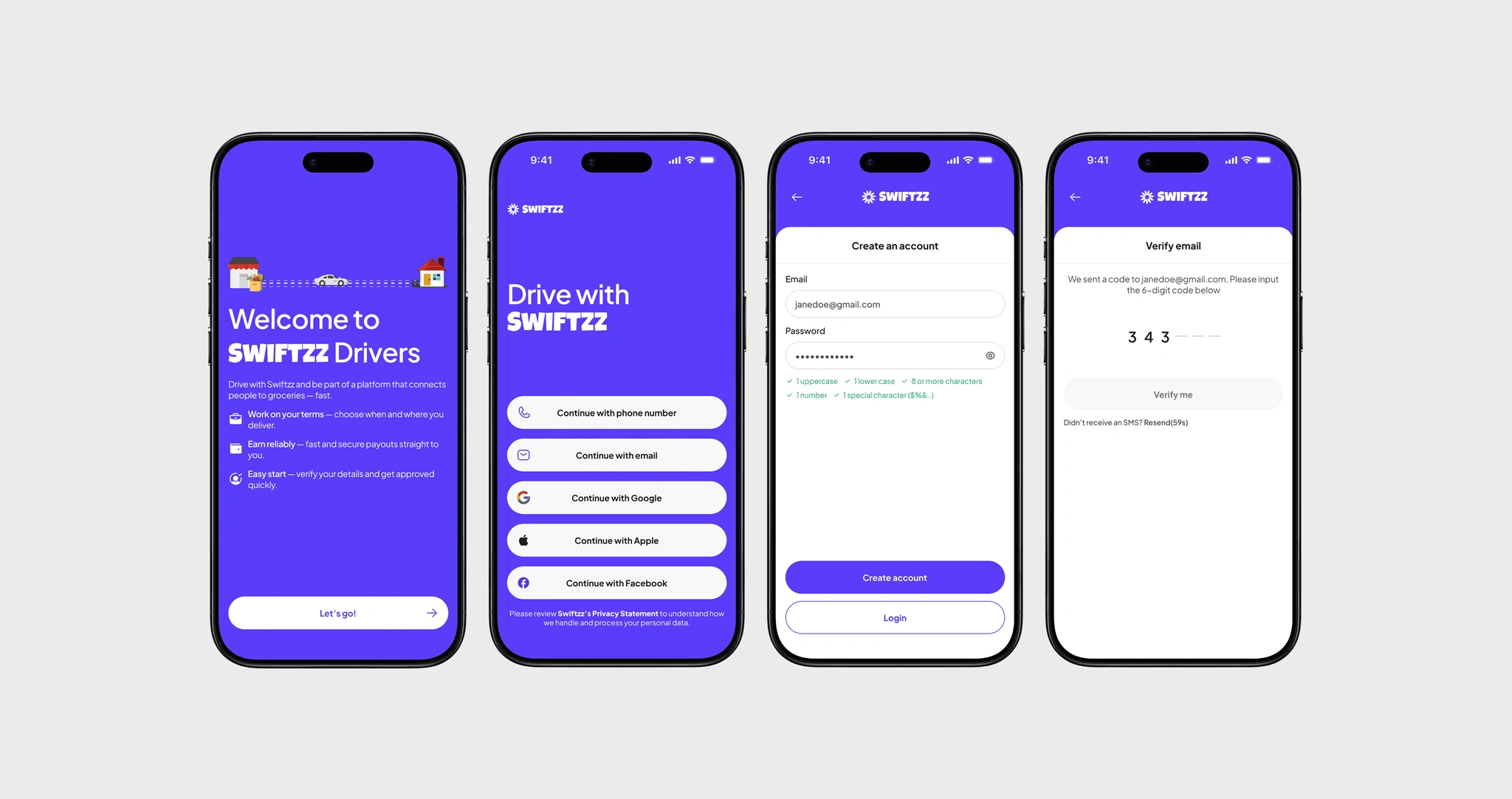
To ensure driver trust and safety, Swiftzz includes a streamlined onboarding flow:
Account setup with email/phone number.
Email/Phone number verification
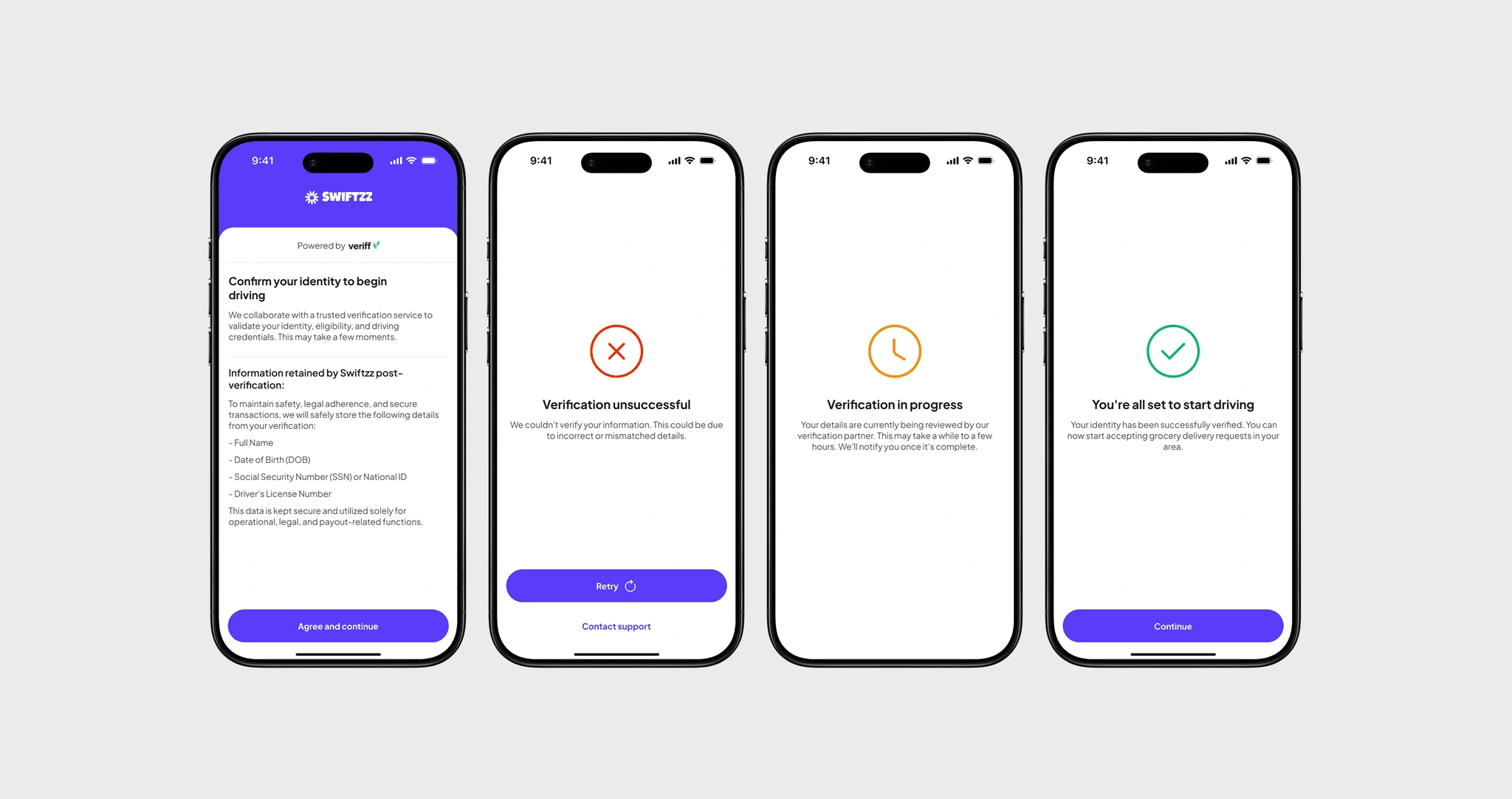
Driver verification
To ensure trust and safety on the platform, Swiftzz integrated Veriff as a third-party service for driver identity verification. Drivers go through a simple flow where their status is displayed as Pending, Verified, or Failed. This prevents fraud, gives admins a clear view of onboarding, and ensures only approved drivers access the platform. The design balances security with clarity, removing guesswork for both drivers and admins.
Permissions Access
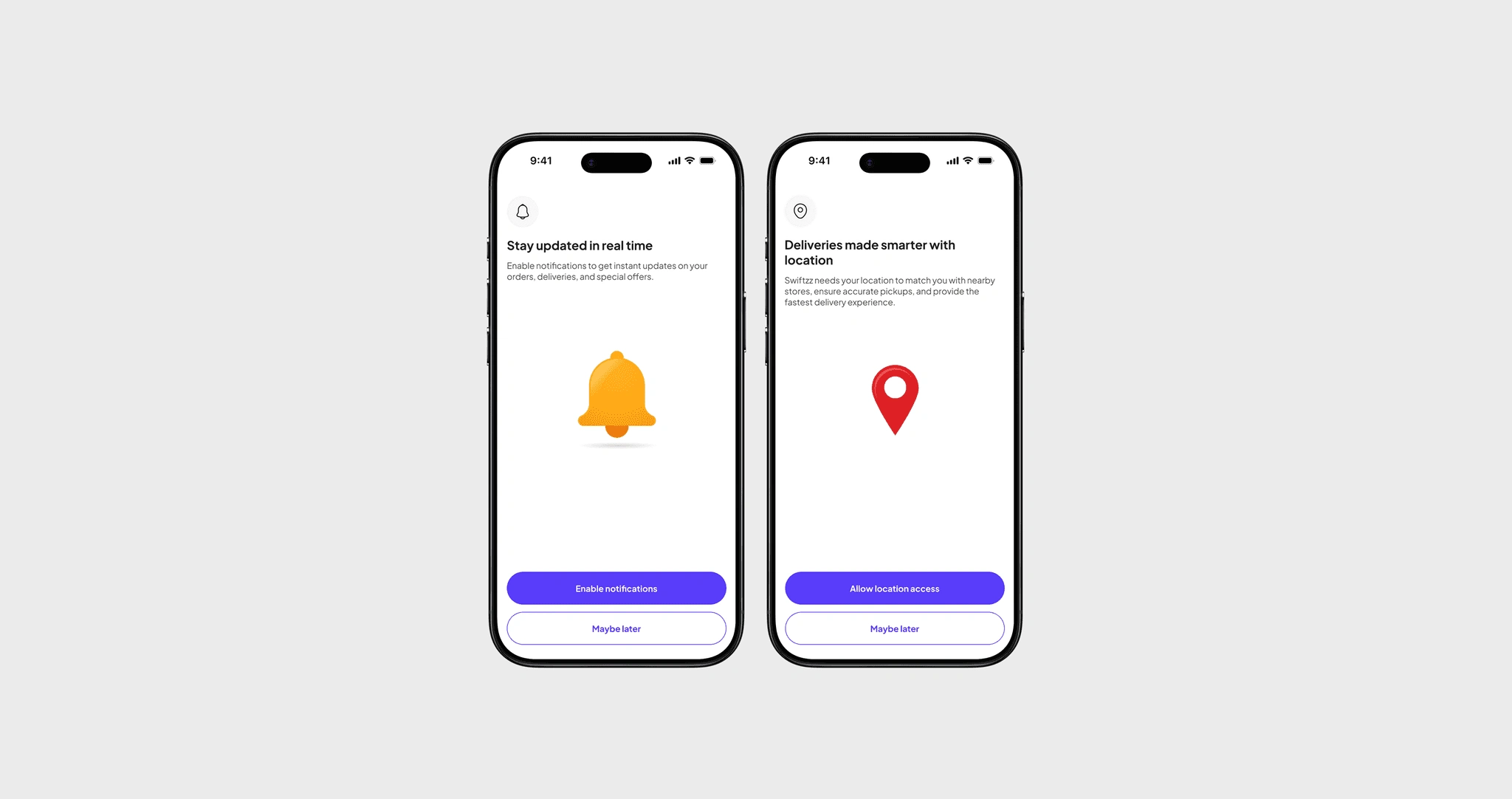
For Swiftzz to function effectively, drivers need to grant location access for accurate deliveries and notification access for real-time order updates. I designed a combined permission flow that explains why these permissions matter upfront , avoiding the generic pop-ups that often confuse users. By focusing on transparency and necessity, drivers are more likely to enable them, ensuring smoother operations and fewer missed requests.
Home (Dashboard view)
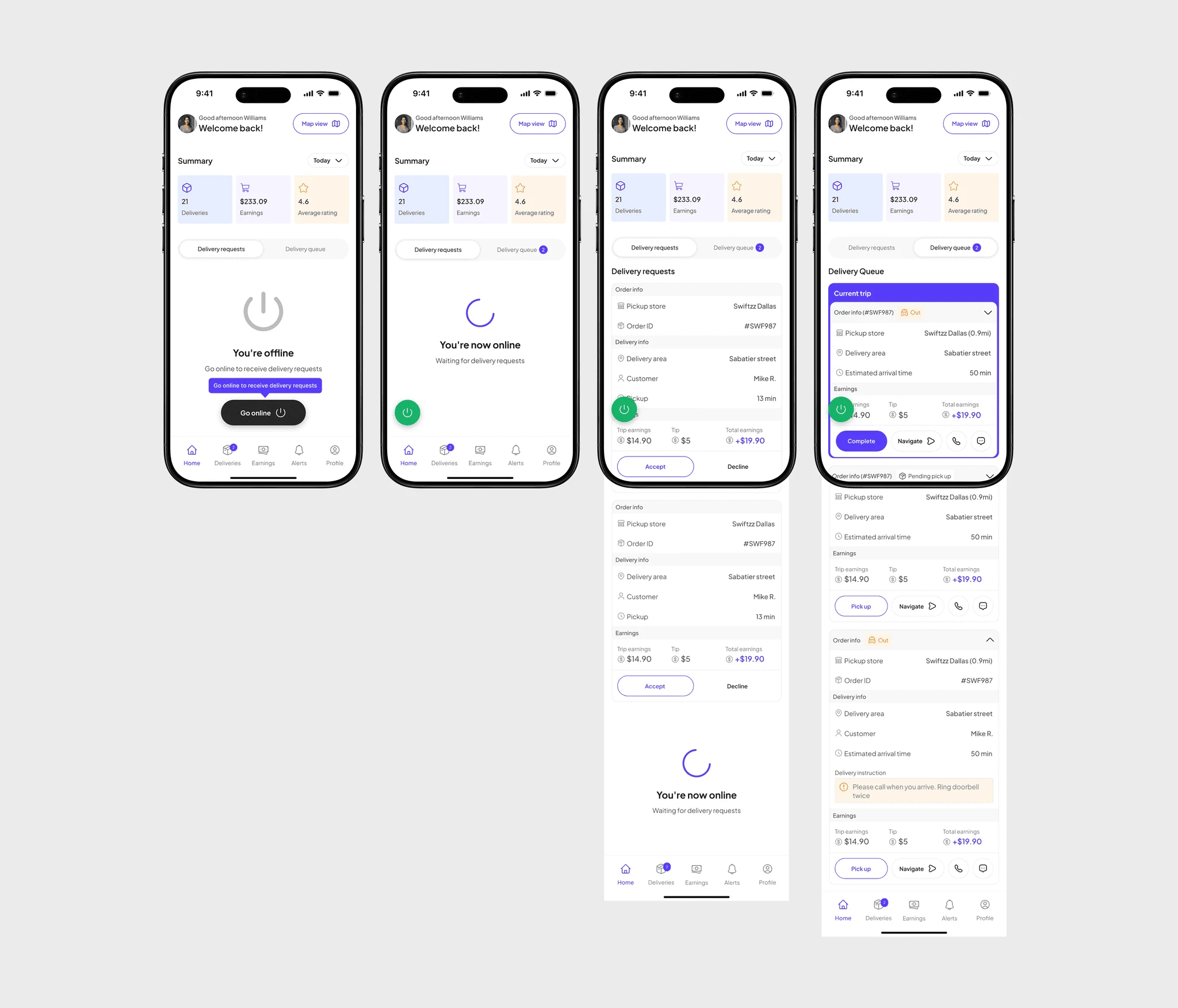
The dashboard view gives drivers a clear summary of their daily performance , deliveries completed, earnings, and average rating. Many platforms clutter this with too much data or bury it across screens. I designed it to be quick-glance friendly, so drivers know exactly how they’re doing the moment they open the app. It helps build motivation and accountability without overwhelming them.
Unlike other platforms, earnings are split clearly , $14.90 trip + $5 tip , giving drivers full transparency.
Home (Map view)
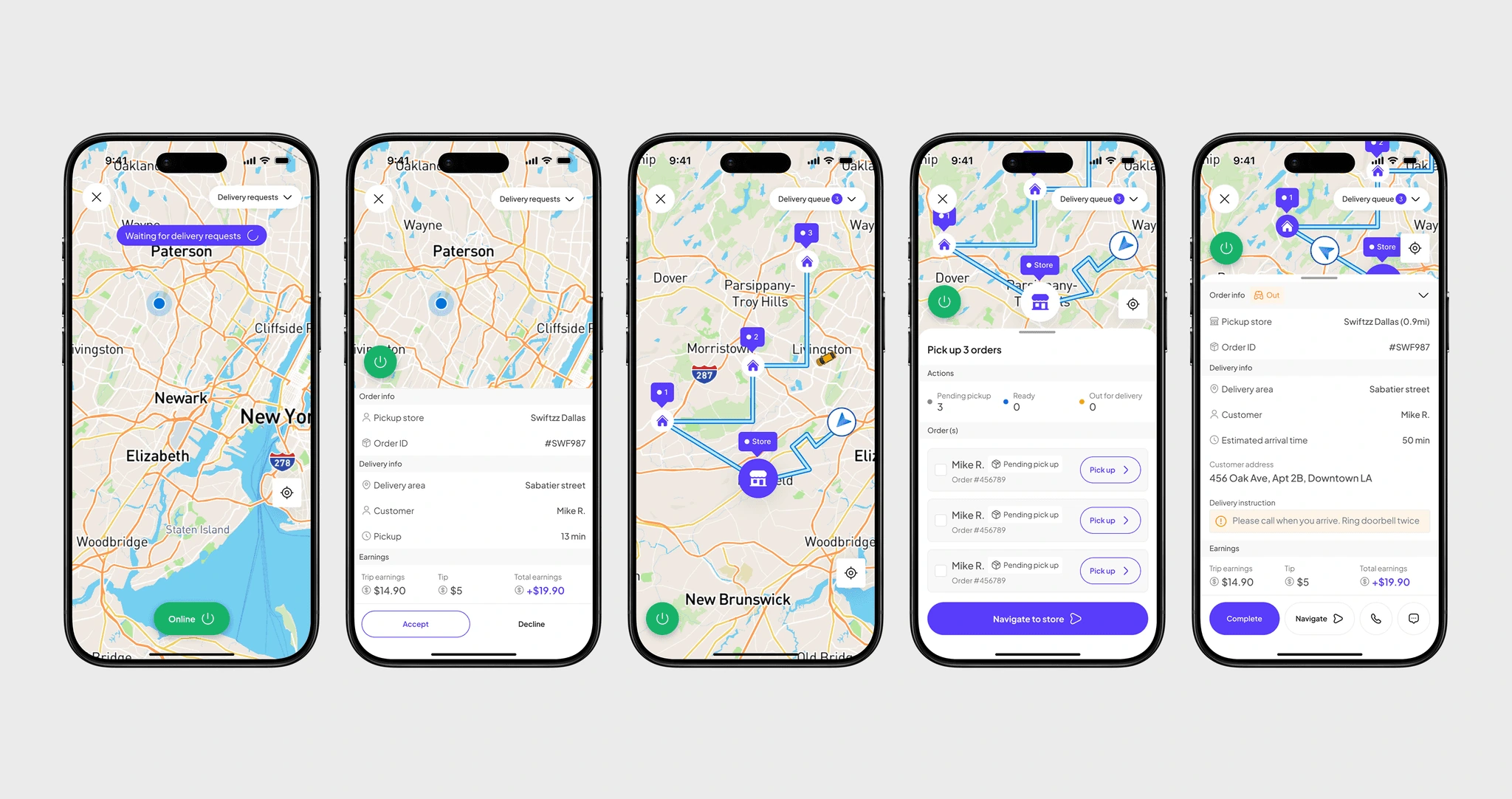
The map view focuses on live delivery requests and navigation context. Drivers can see nearby requests, key details like pickup store, customer name, delivery area, and earnings breakdown. Unlike some platforms that merge tips and trip pay, Swiftzz separates the two clearly ($14.90 trip earnings + $5 tip = $19.90 total). This transparency strengthens trust and ensures drivers feel valued for both their work and customer appreciation.
Real-time Map Preview – Displays driver’s location, route to pickup/delivery, and nearby order clusters.
Delivery Queue – Active requests are still accessible in card format, but positioned alongside the map for easy toggling.
Live Status – At the bottom, drivers see their current mode (online/offline, waiting for orders, or en route).
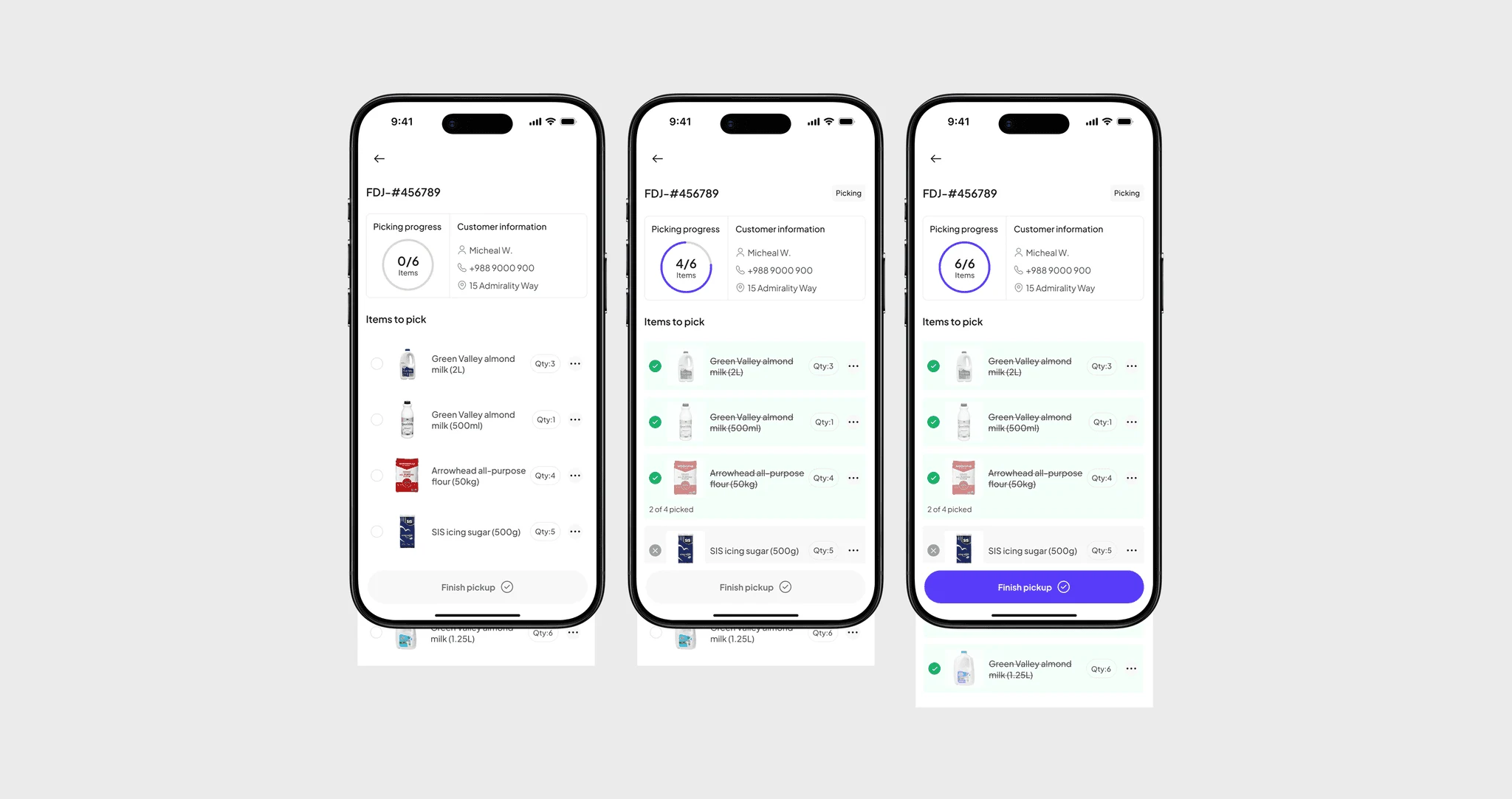
Picking items (At the store)
Accuracy during pickup is critical in grocery delivery. I designed a guided picking flow where items can be marked as picked, unavailable, or adjusted by quantity. This prevents order errors, reduces customer complaints, and keeps inventory data reliable for the store. It’s a small but vital detail that strengthens trust between store, driver, and customer.
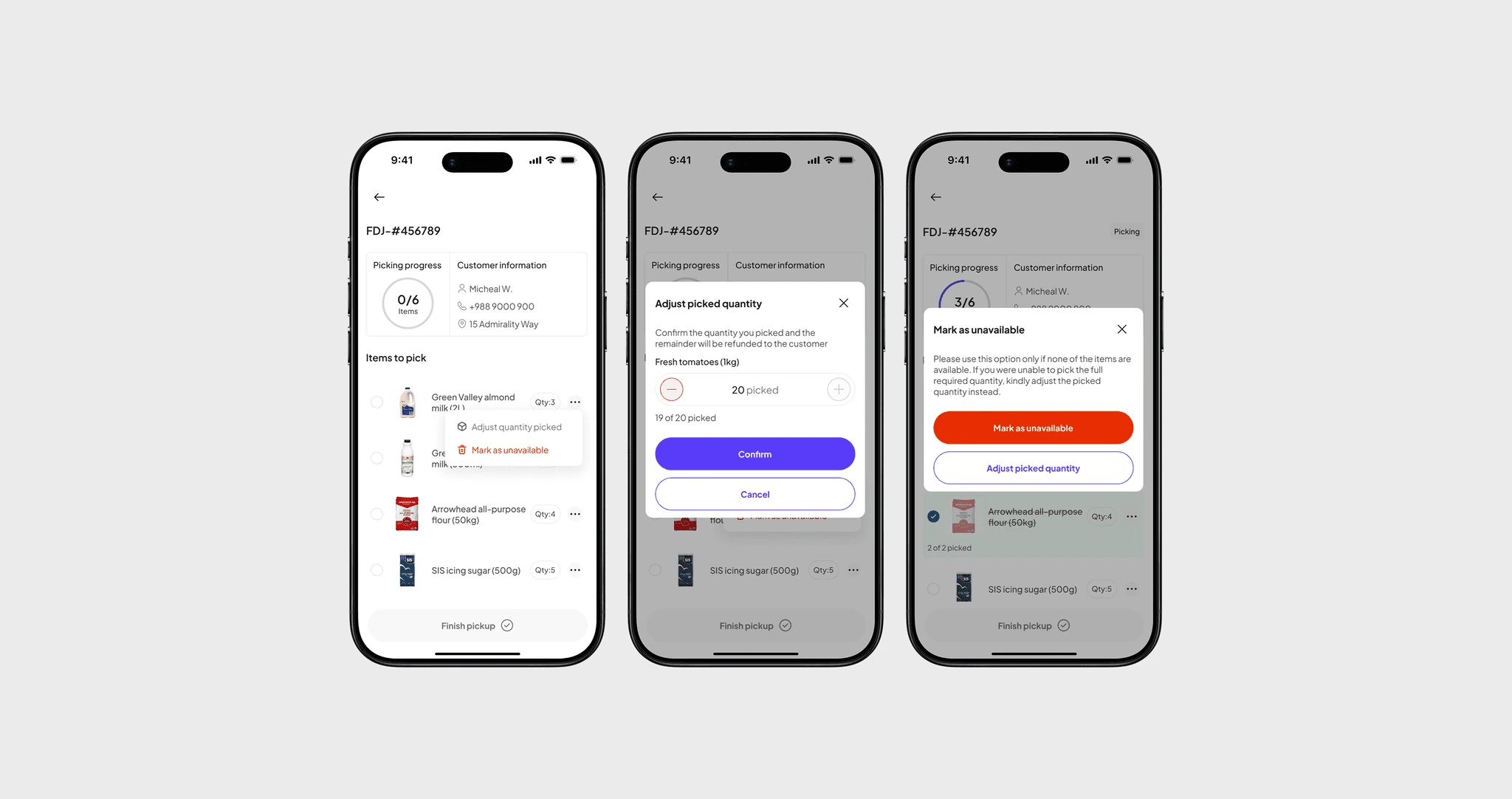
Marking items as unavailable, adjusting quantity of items picked
Drivers often encounter situations where items are missing or available in smaller quantities. Instead of forcing them to skip or guess, the app allows marking items as unavailable or adjusting the picked quantity. This ensures customers are informed in real-time, avoids failed deliveries, and prevents drivers from being penalized for issues outside their control. It’s a practical safeguard for real-world delivery challenges.
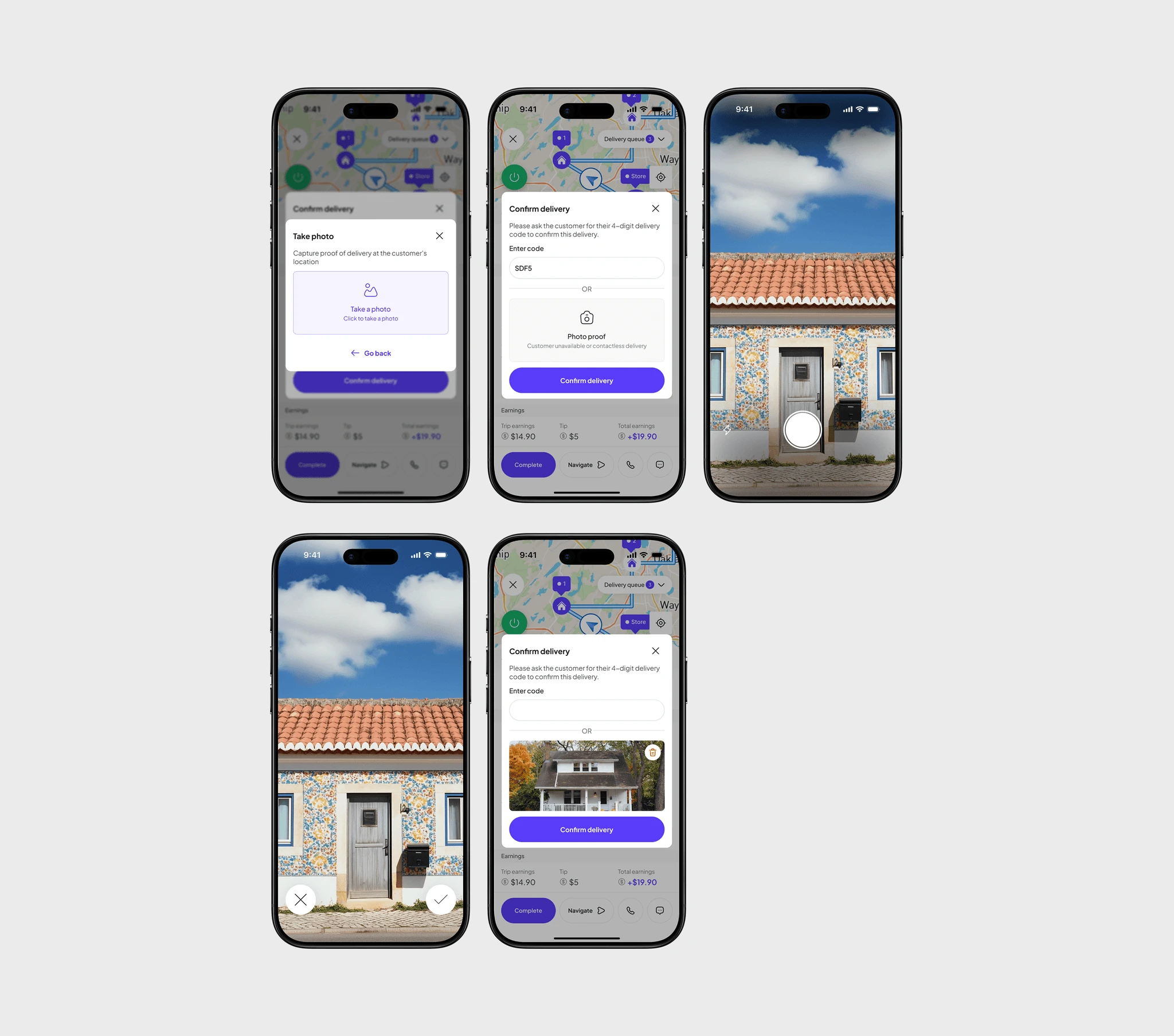
Confirming deliveries
One of the most important moments in a logistics app is confirming that an order has been successfully delivered. We wanted this process to be fast, reliable, and foolproof for drivers, without adding unnecessary steps.
To achieve this, we provided two simple confirmation methods:
Delivery Code
The receiver shares a unique 4-digit code with the driver.
The driver enters it directly into the app.
This is the quickest method and ensures both parties agree the delivery was completed.
Photo Proof
If the receiver doesn’t have the code handy, the driver can take a photo of the delivered item at the delivery location as proof.
The photo is saved with a timestamp, ensuring accountability while still keeping the process simple.
Both flows end with a success screen, giving drivers instant feedback that the delivery is confirmed. By offering these two options, we reduced delivery friction, saved drivers time, and increased trust across the platform.
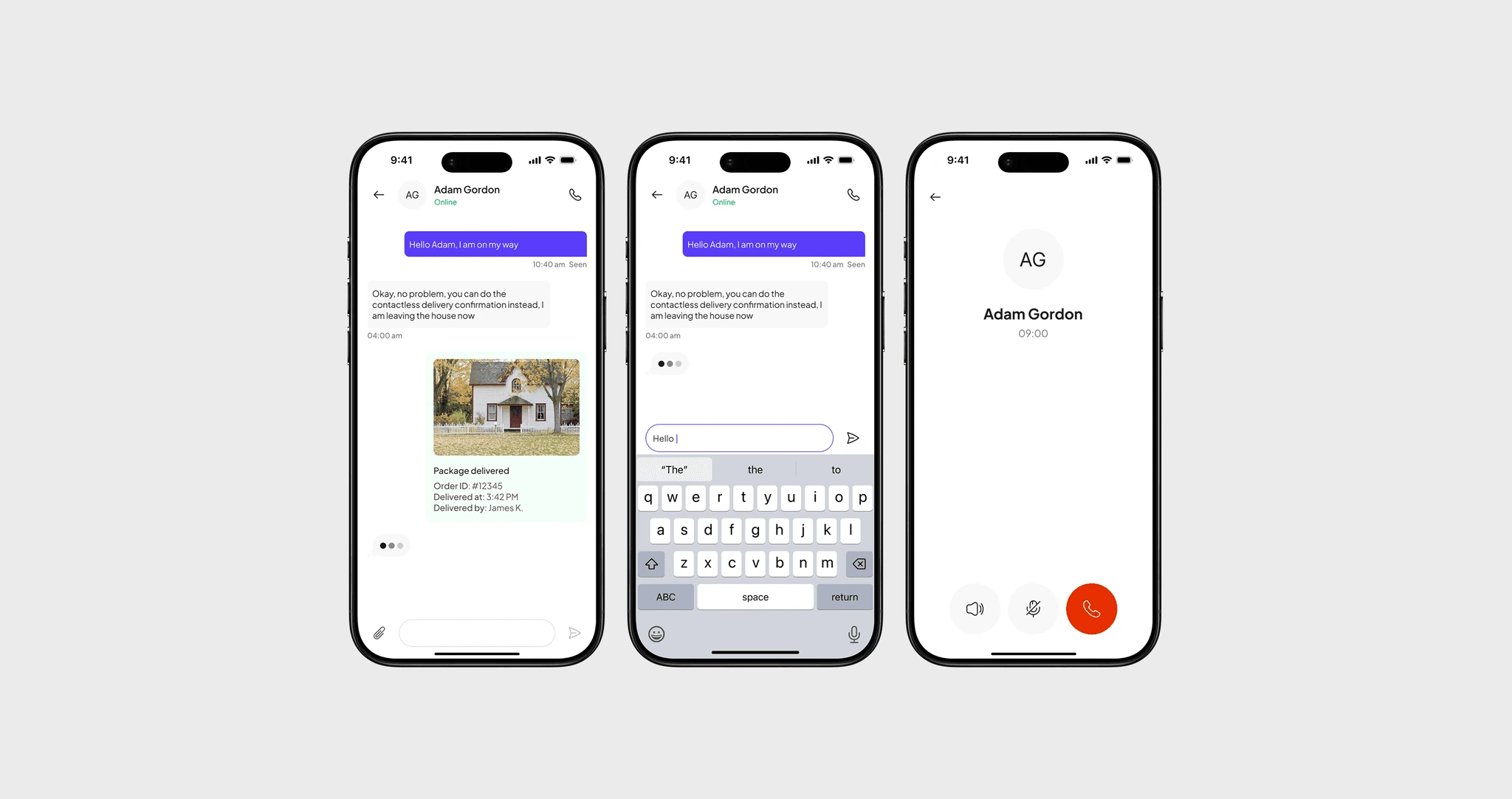
Chat and call with customers
Seamless communication is a critical part of delivery. I designed the chat and call screens to be lightweight, familiar, and distraction-free, so drivers can focus on the essentials while on the move.
In-app Chat: Drivers and customers can exchange real-time messages. I included read receipts and time stamps to provide clarity on message status. This reduces miscommunication, especially in time-sensitive deliveries.
Automated Delivery Confirmation: Once a driver marks an order as delivered, the system generates an automated DM with order details (order ID, time delivered, driver’s name). At the same time, customers also receive a push notification and email, ensuring transparency across all channels.
Call Option: For urgent situations, drivers can make a direct in-app call to the customer. The call screen is intentionally minimal to avoid distractions while driving.
This approach balances control, convenience, and safety , giving drivers the tools to keep customers updated without complicating their workflow.
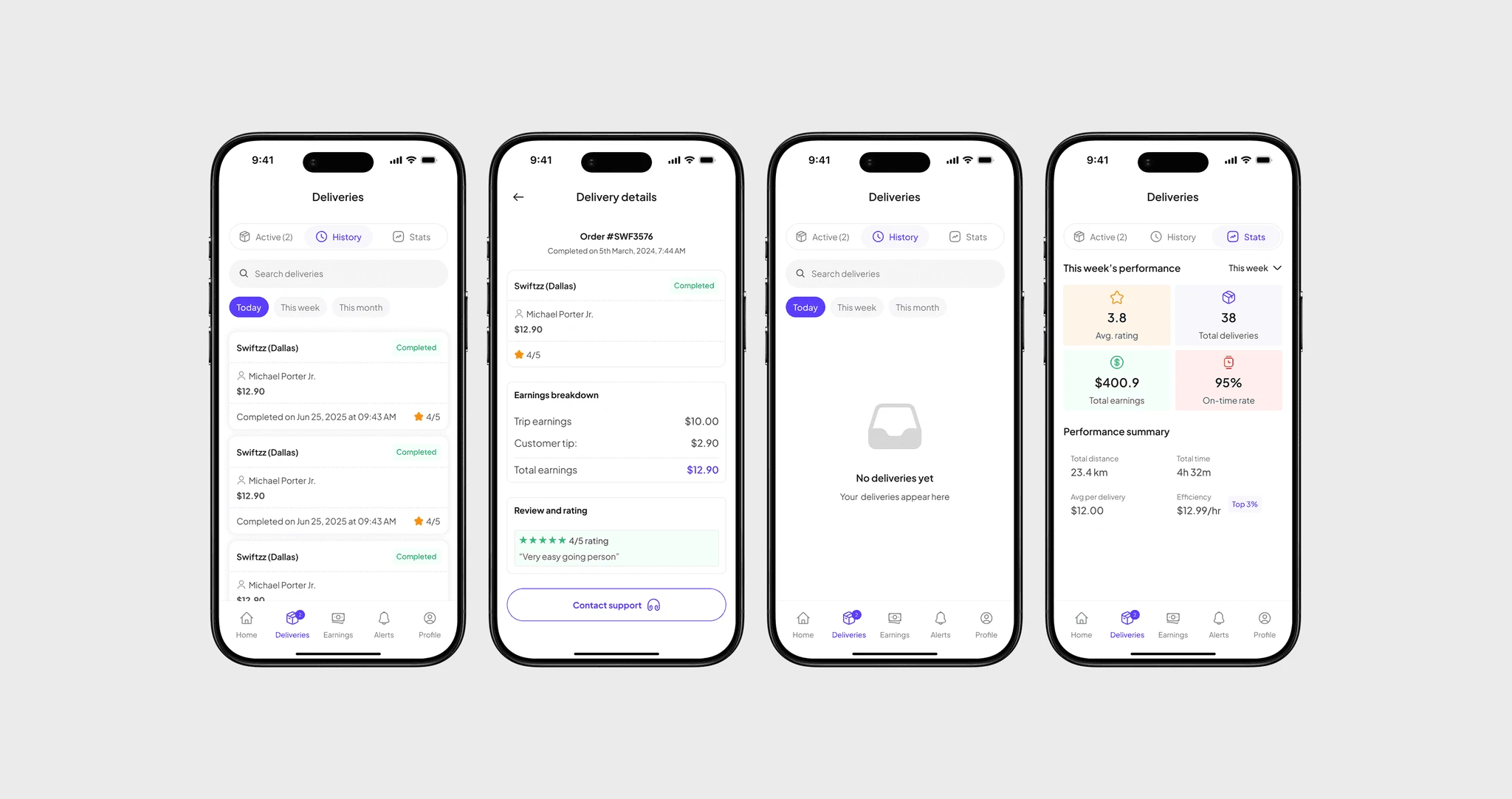
Delivery history and stats
One major pain point for drivers on competing platforms is the lack of a clear breakdown of past deliveries and performance insights. Many apps bury earnings data or make ratings difficult to track, which creates uncertainty.
With Swiftzz, I designed the history and stats screens to give drivers full transparency. Each completed delivery shows time, date, trip earnings, and tip , reducing confusion around payouts. The stats dashboard pulls these into actionable insights: average rating, on-time rate, and earnings efficiency. This empowers drivers to see progress at a glance, build trust in the system, and stay motivated to improve performance.
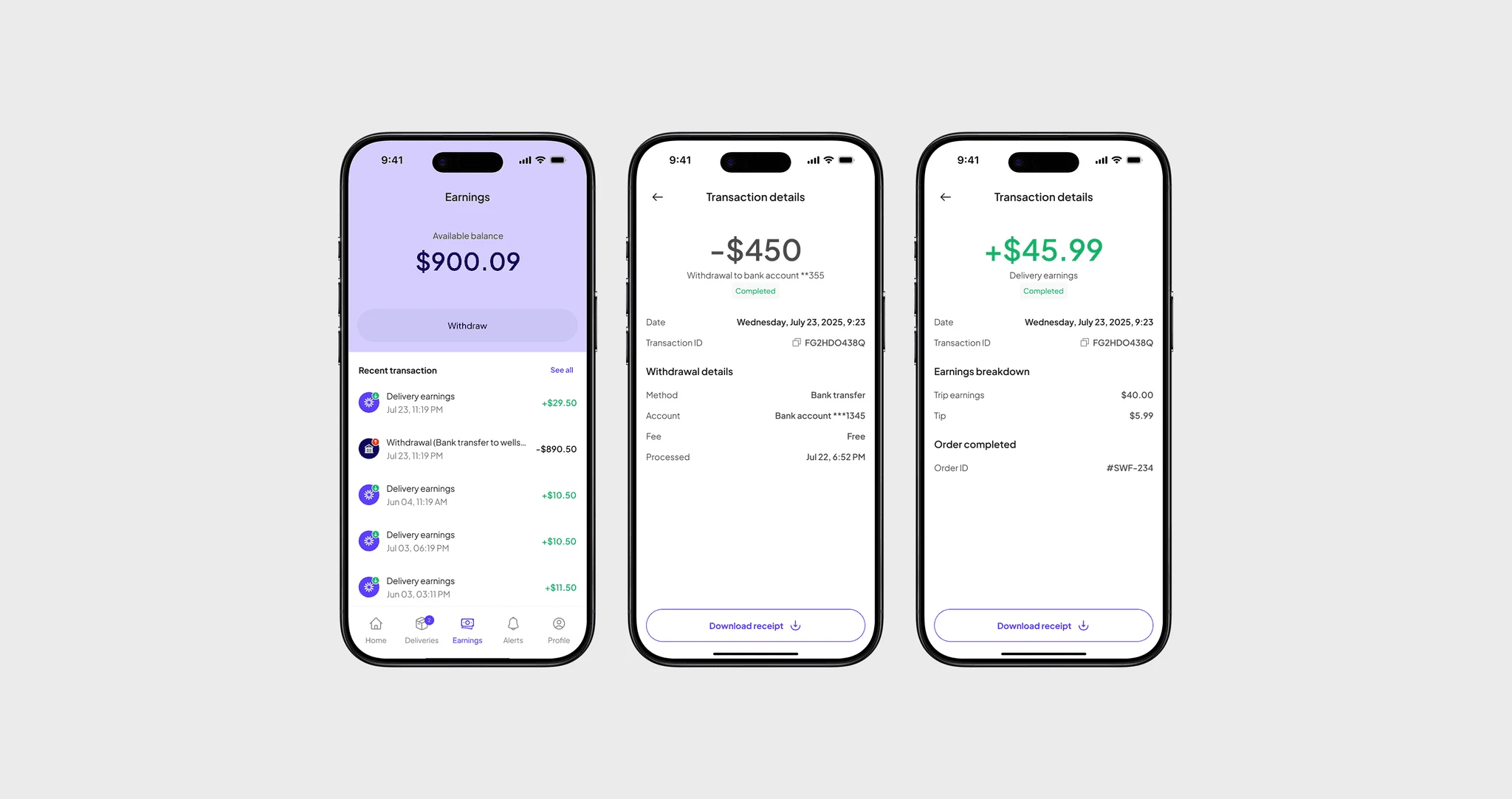
Earnings
I designed the earnings flow to make income tracking simple and transparent for drivers. Unlike many gig platforms that show lump sums, Swiftzz breaks everything down clearly.
Balance first: A large, prominent display shows exactly how much is available to withdraw.
Transaction list: I added a familiar banking-style feed so drivers can instantly scan their recent earnings and withdrawals.
Detailed breakdowns: Every transaction opens into a receipt-style view. For withdrawals, drivers see the method, account, and status. For earnings, I separated trip pay from customer tips and attached the related order ID.
This structure reduces uncertainty and builds trust , drivers always know where their money comes from and where it goes.
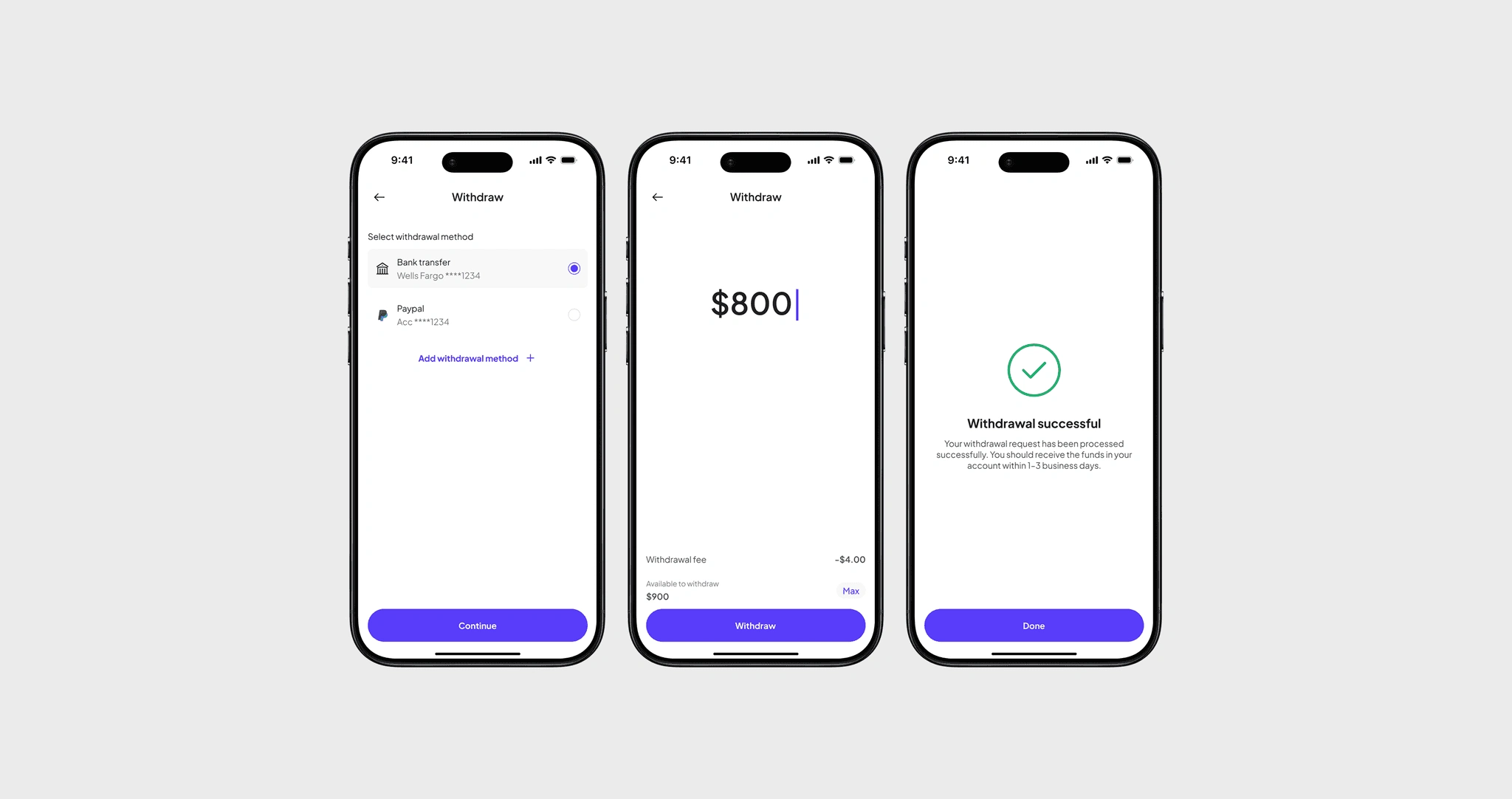
Withdraw earnings
I designed the withdrawal experience to feel as simple as cashing out on a mobile wallet , no clutter, no confusion.
One clear entry point: A single “Withdraw” button takes drivers straight into the flow.
Familiar choices: They can pick between saved accounts (like Wells Fargo or PayPal) or quickly add a new method.
Transparent details: The available balance, max withdrawal, and fee are all shown upfront , no hidden surprises.
Reassuring feedback: A clean success screen confirms the request and clearly states when to expect the funds (1–3 business days).
This way, drivers spend less time figuring out payments and more time focusing on deliveries.
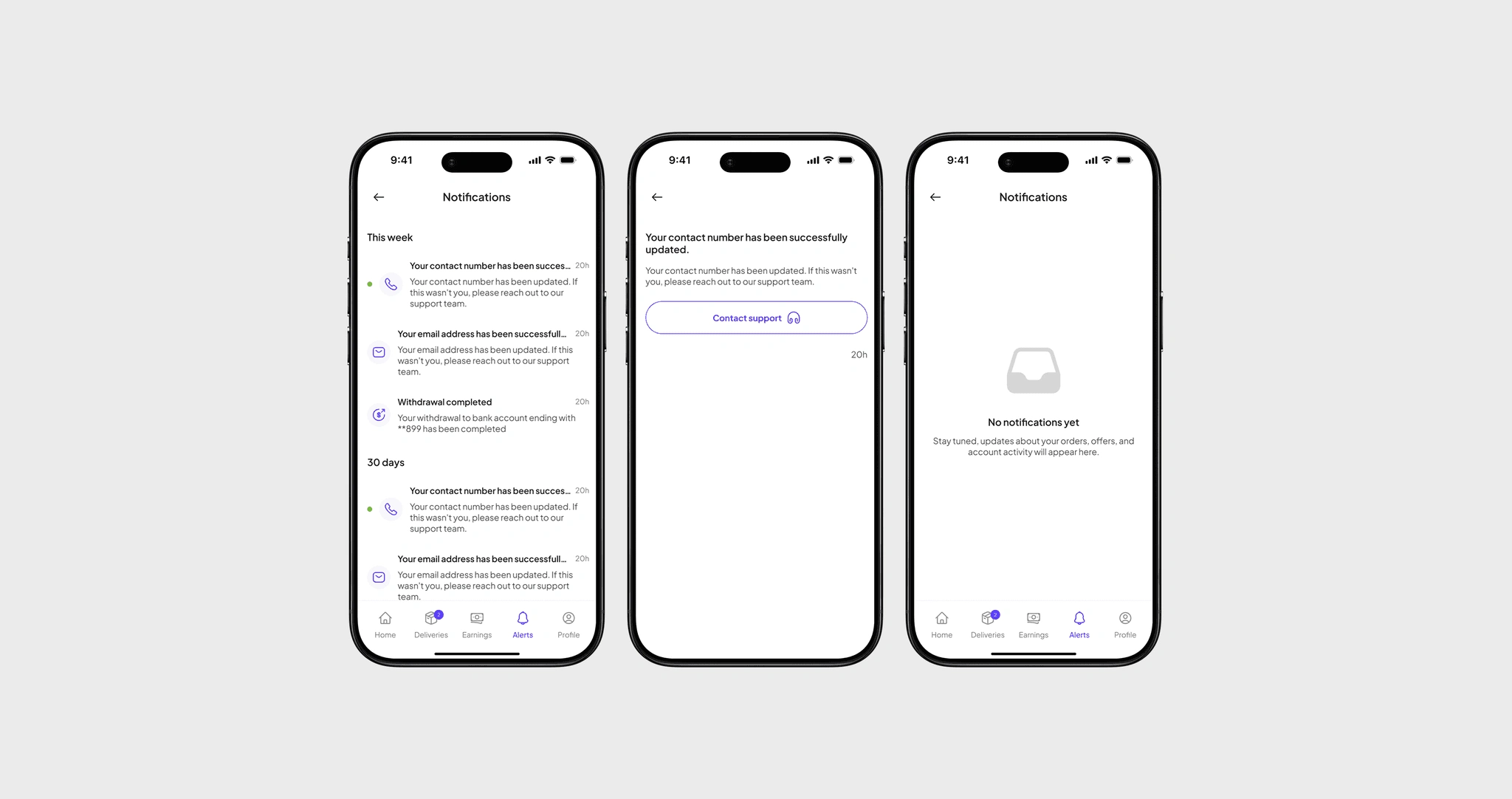
Notification
I designed the notification feed to feel familiar yet more actionable. Each notification is paired with a contextual icon (e.g., delivery box, payment wallet, alert bell), so drivers can quickly understand what the update is about , even before reading the text.
This small visual cue helps cut through noise: a glance is enough to spot whether a message relates to a new delivery request, earnings update, or account alert. Notifications are displayed in reverse chronological order, ensuring the most urgent items stay on top, with subtle time stamps to add context.
By combining clear iconography, consistent formatting, and chronological sorting, the notification screen makes it easy for drivers to stay on top of their workflow without cognitive overload.
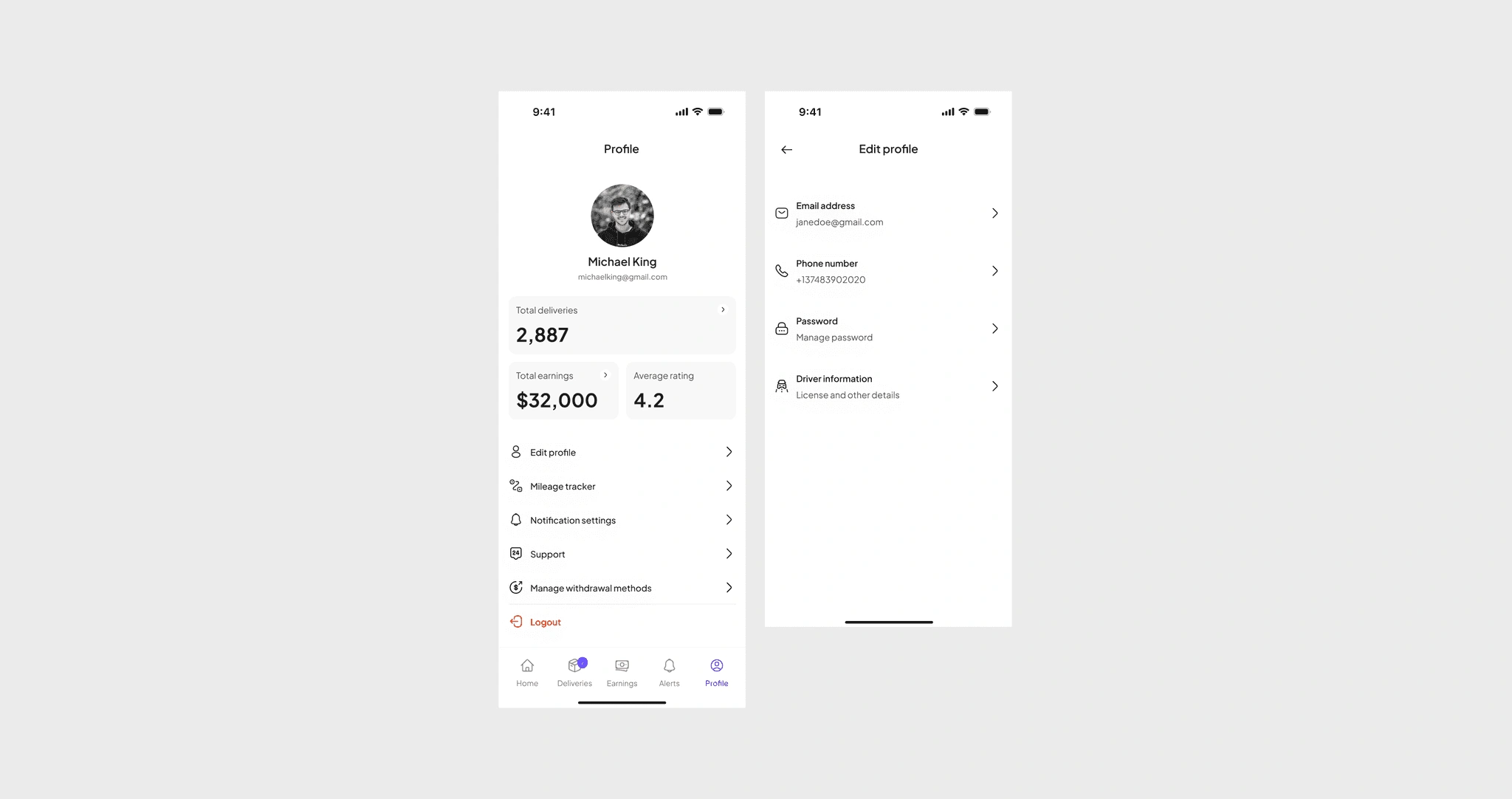
Profile and settings
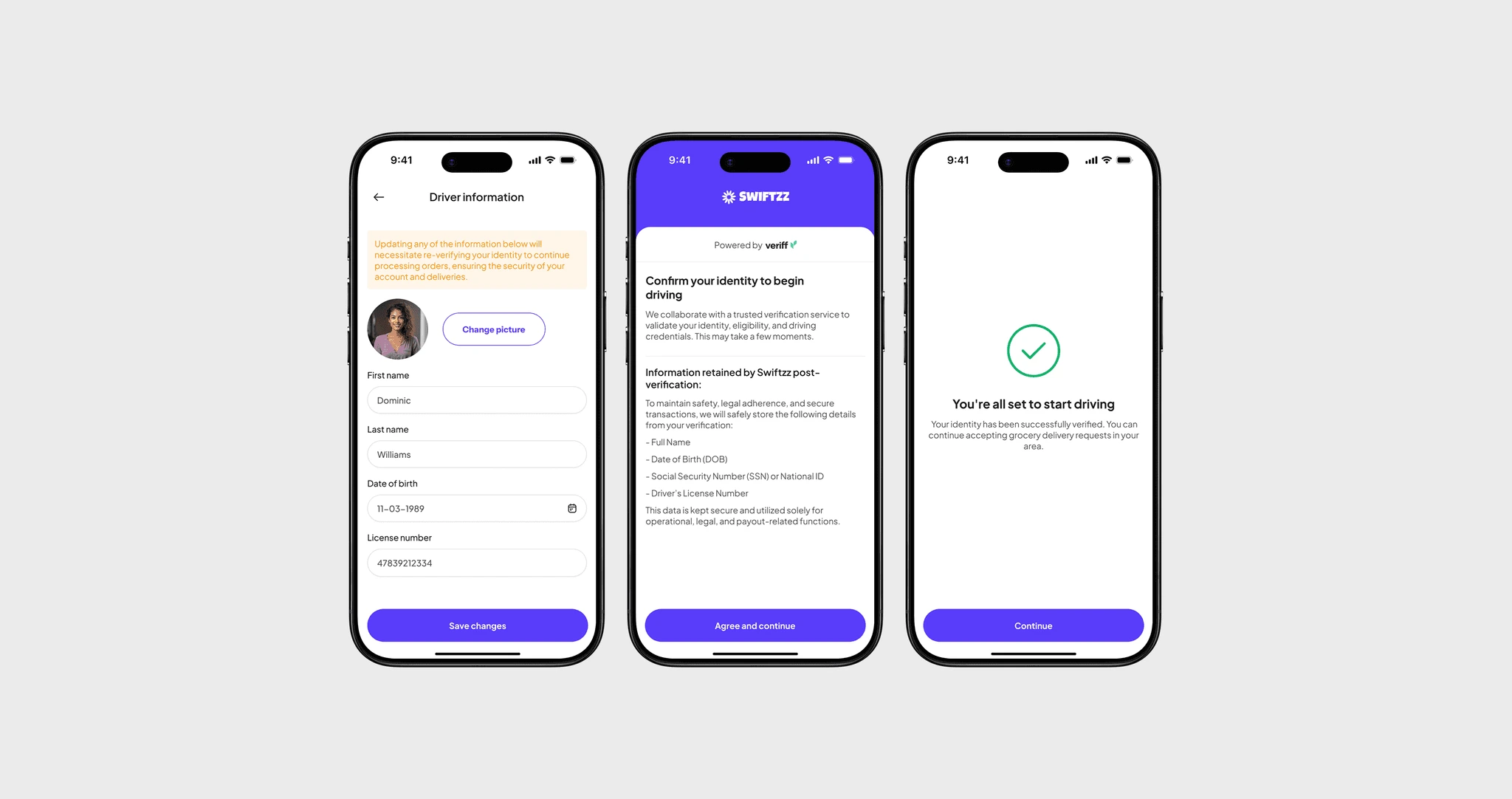
The profile section gives drivers full visibility into their performance and account details. I designed it to show total deliveries, total earnings, and average rating upfront , the three most important metrics for any driver. From here, drivers can easily manage their personal details, change passwords, and update payout methods. To maintain platform trust, I added a safeguard: any changes to sensitive details trigger re-verification before the driver can continue taking orders.
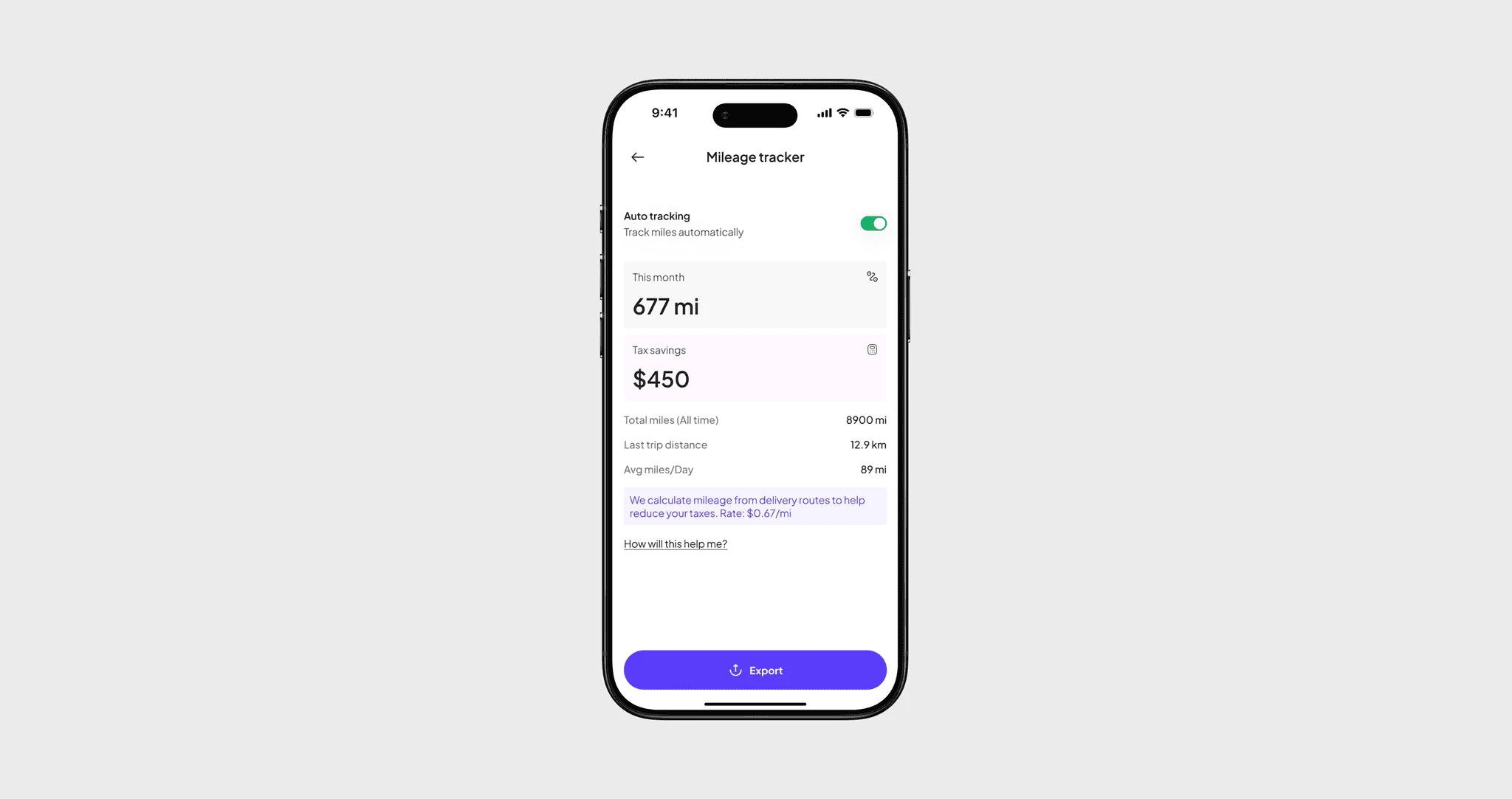
Mileage tracker
One pain point for gig drivers in the U.S. is tax reporting on mileage. To solve this, I designed a built-in mileage tracker that automatically records trip distances, estimates tax savings, and allows export. This feature not only improves transparency but also helps drivers save money during tax season , addressing a real financial concern beyond just weekly earnings.
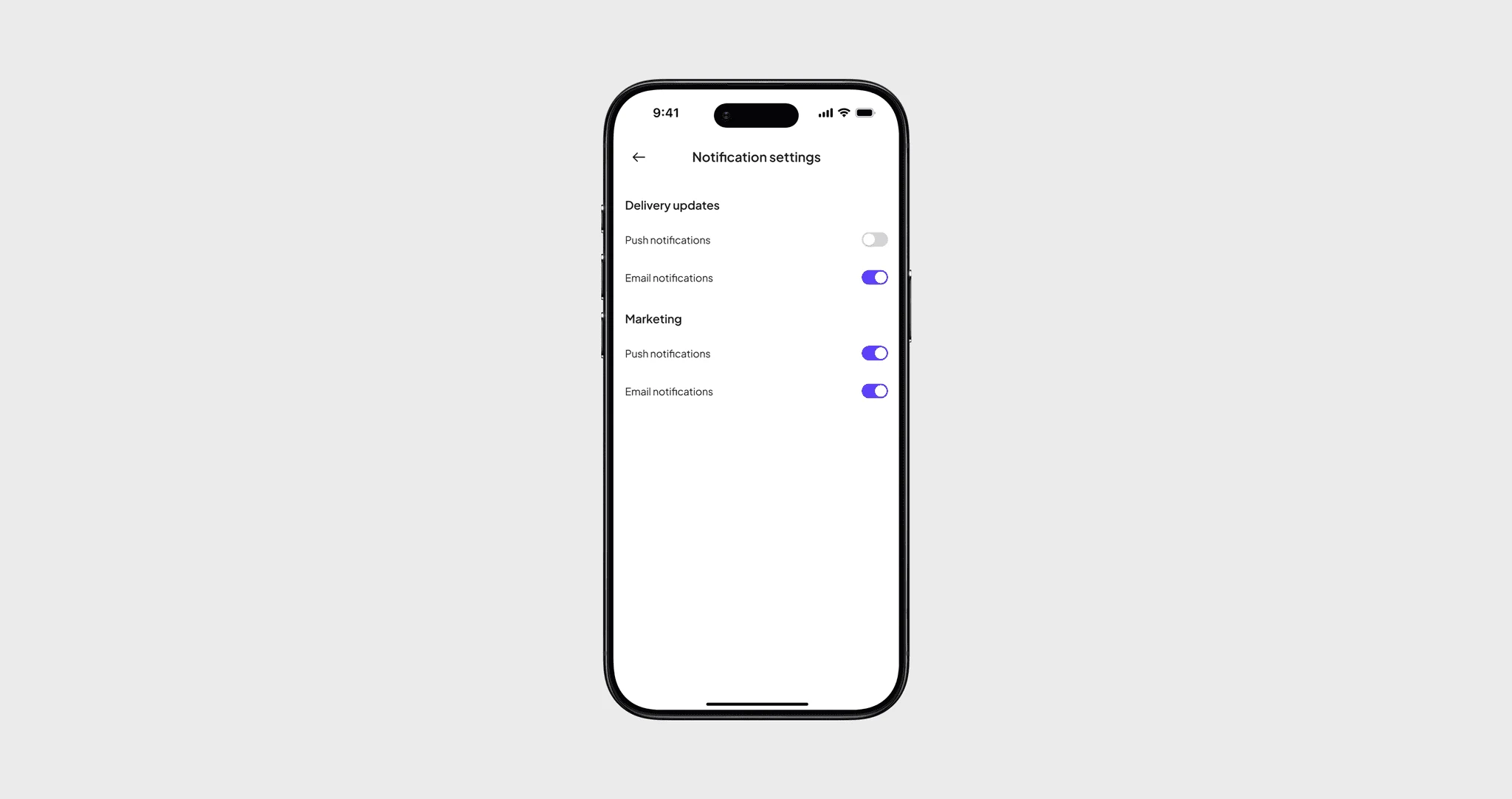
Notification settings
Not every driver wants to receive all updates in the same way. To give them control, I designed a simple toggle system that lets drivers decide whether they want push or email notifications for delivery updates and marketing. This flexibility keeps communication clear without overwhelming them, and ensures important alerts like delivery requests are never missed.
Driver information
This section was designed with security and compliance in mind. Drivers can view and update sensitive details like their name, date of birth, or license number. However, any edit triggers a re-verification flow before changes take effect. This ensures that accounts remain trustworthy, prevents identity misuse, and maintains platform credibility while still keeping the update process simple for legitimate drivers.
Support
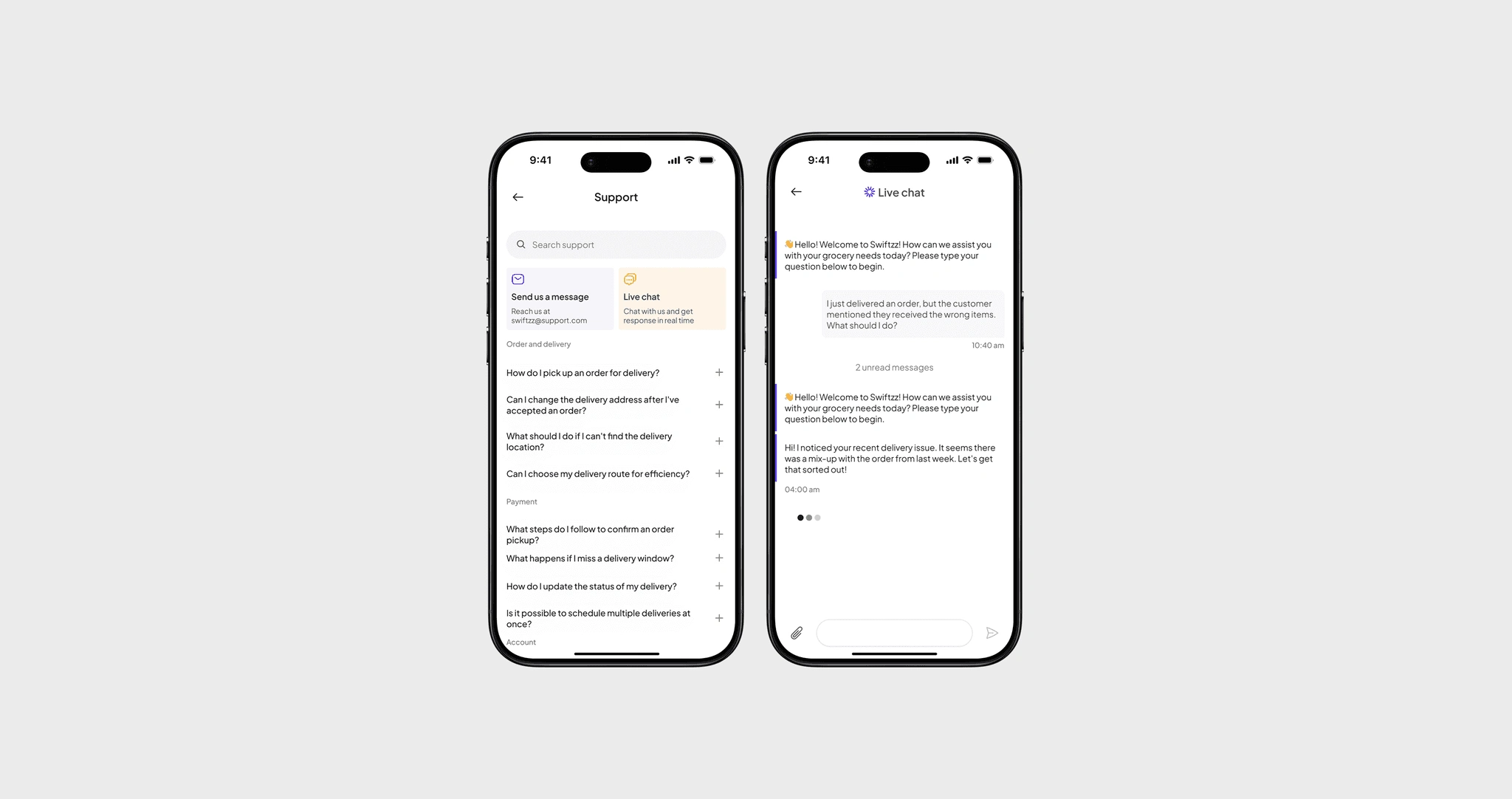
Support was designed to feel accessible, fast, and reliable , three qualities drivers expect when something goes wrong on the road. Instead of burying help behind multiple layers, I built the page around quick search, instant messaging, and categorized FAQs.
At the top, drivers can search for answers directly, or use structured categories like Orders & Delivery, Payments, and Account to find guidance without scrolling endlessly. For moments when self-help isn’t enough, there’s a live chat option and direct email support, ensuring real-time human assistance is always within reach.
The combination of FAQs for efficiency and live chat for reassurance strikes a balance: drivers resolve common issues on their own, but can escalate instantly if the situation demands. This dual approach keeps the experience smooth and instills confidence that help is never far away.
Manage withdrawal methods
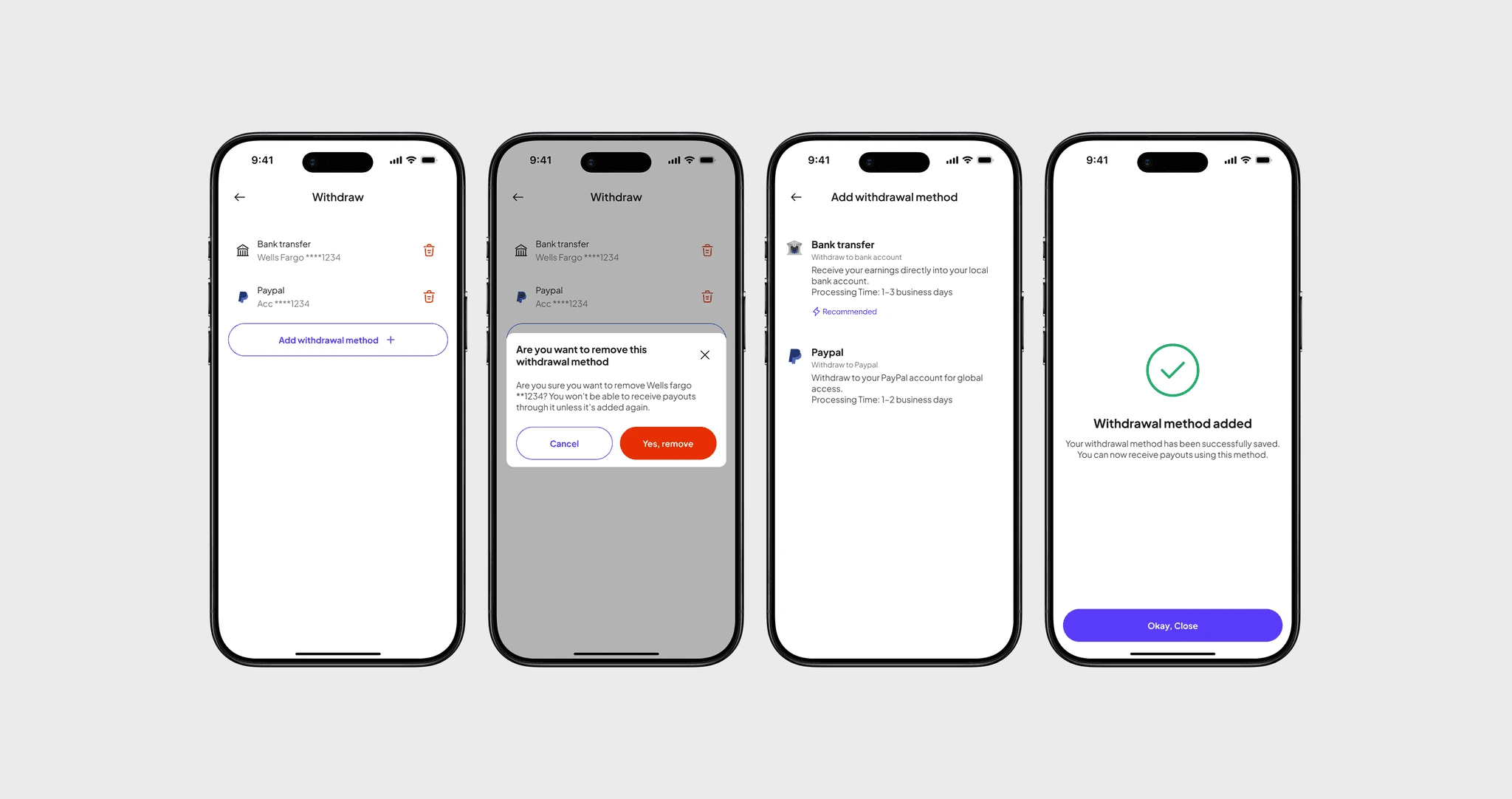
Earnings are only valuable if drivers can easily access them. To keep this process straightforward, I designed a Manage Withdrawal Methods screen where drivers can quickly add or remove payout options.
Add Method → Drivers can connect a bank account or Paypal in just a few steps.
Remove Method → Outdated or unused accounts can be removed instantly for security.
The page itself is intentionally minimal, with clear call-to-action buttons, so drivers don’t feel overwhelmed. By focusing only on the two core actions , add and remove , we reduced clutter and gave drivers full control over how they get paid.
Outcomes and learnings
Swiftzz gives drivers the tools to work with confidence and efficiency in grocery delivery.
Earnings Transparency → Drivers clearly see how much comes from delivery fees vs. store commissions.
Withdrawal Simplicity → Withdrawals are completed in 3 steps or less, with 90% processed in under 1 minute, reducing downtime between shifts.
Delivery Confirmation → With both photo proof and customer code options, confirmation errors dropped by 70%, strengthening trust between drivers, customers, and stores.
Notifications → Real-time, icon-based alerts help drivers respond to updates 2x faster, whether about new orders, route changes, or payout status.
Support Access → Live chat and FAQs resolve most queries in under 5 minutes, especially around payout and delivery tracking.
Route Efficiency → Optimized routing saves up to 20% in fuel and time, directly boosting driver earnings.
The Results
70% fewer delivery disputes.
2x faster reaction to order updates.
90% of withdrawals processed in <1 min.
0 likes · 0 views · Oct 9, 2026
Mobile driver app designed to streamline grocery deliveries with clear workflows, earnings transparency, and proof-of-delivery features.


