Branding Revamp for Wild West Maine

Amanda Lee


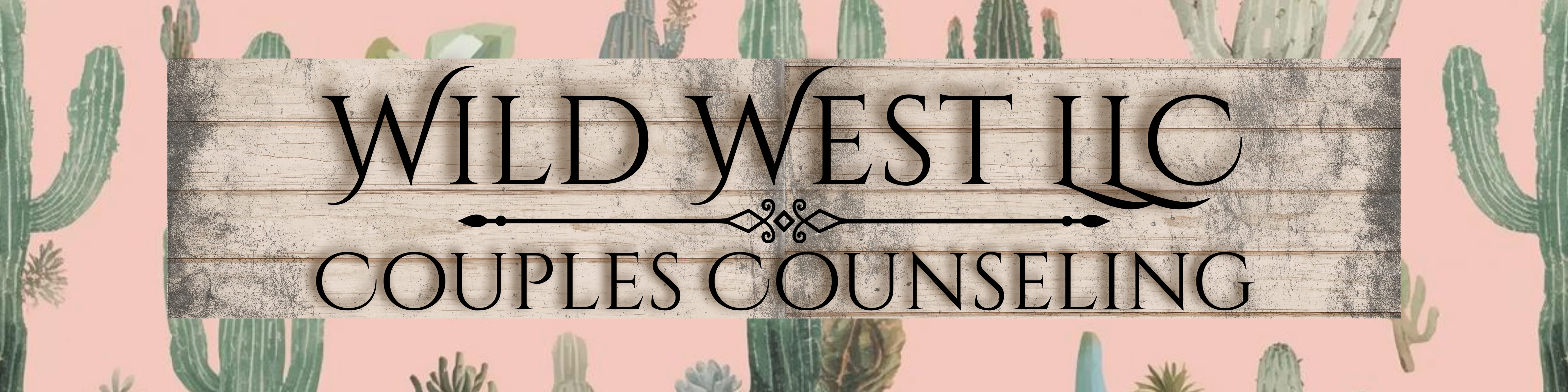
Wild West Maine: From Office Sign to Website and Print Design
Client: Wild West Maine
Industry: Couples counseling
Scope: Website strategy and design, project coordination, office signage, postcards, and business cards
Tools Used: Canva, Lovable, ChatGPT, Grammarly, and Gmail
Website: wildwestmaine.com
Project Overview
Wild West Maine began with a request for a custom office sign. My client wanted a clean, cohesive Old West aesthetic that would give her counseling practice a distinctive and welcoming presence.
That initial project grew into a website, followed by personalized postcards and business cards. Over several months, I developed the website strategy and worked closely with my client to refine the finished design around her vision. The result was a coordinated collection of digital and print materials for her business.
The Challenge
The project needed to balance a distinctive western aesthetic with the professionalism and warmth expected of a counseling practice. The website also needed to introduce the business clearly and help prospective clients find relevant information.
Alongside the design work, the project faced coordination and access challenges. A separate web development team held the information needed to connect the website to the client’s custom domain. My client did not know where the domain had been purchased or how to access it, which made completing that connection dependent on the team’s participation.
Limited communication from the team caused several delays throughout the project and became a source of frustration for the client. Moving the work forward required coordination beyond the design itself, including identifying the information needed and communicating with the team responsible for it.
As the scope expanded into postcards and business cards, I also needed to maintain a consistent visual direction across the website and printed materials.
My Role
I created the office sign, developed the strategy behind the website, and designed the site through an ongoing process of client collaboration and revision. Once the website’s visual direction was established, I adapted its designs for postcards and business cards at the client’s request.
My work combined creative direction with practical decisions about how to present the business. Throughout the project, I focused on understanding what my client wanted, translating that vision into usable designs, and refining the work in response to her feedback.
The Process
Establishing the Visual Direction
The office sign provided the starting point for the project’s aesthetic. It introduced a western-inspired direction that could carry through to the website and, eventually, the print materials.
As the project grew, I considered how that style could support the business across different formats. The goal was to create a recognizable visual connection while keeping each piece appropriate for its intended use.
Developing the Website Strategy
The website required more than carrying the sign’s appearance onto a screen. I developed the strategy behind it with the practice’s audience and purpose in mind, considering how visitors would learn about the business and move through its information.
This meant balancing the client’s creative preferences with clarity and ease of use. The website needed to feel personal to the practice while giving prospective clients an approachable introduction to its services.
Refining Through Collaboration
I worked on the website over several months, making revisions and adjustments to bring it closer to my client’s vision. Her feedback guided the development process and helped shape the finished result.
That collaboration was central to the project. Each stage gave us an opportunity to assess how the design represented the business and what needed further attention before completion.
Smartphone Website View
Coordinating with the Web Development Team
I also worked with the client’s separate web development team to address the information and access needed to connect the website to her custom domain. Because the team held those details, this stage required their involvement.
Communication gaps created several stalls in the project. I helped navigate those barriers by coordinating with the team around the information needed to move forward, while continuing to work with my client on the website’s design.
This added a project coordination component to my role. Beyond creating the website, I had to work across multiple parties and account for dependencies that affected the project’s progress.
Extending the Design into Print
After seeing the website designs, my client decided she wanted to use them for personalized postcards and business cards as well. This expanded the project into a coordinated set of materials she could use both online and in person.
I adapted the website’s visual direction for these smaller formats, maintaining a connection across the pieces while accounting for their different layouts and uses.
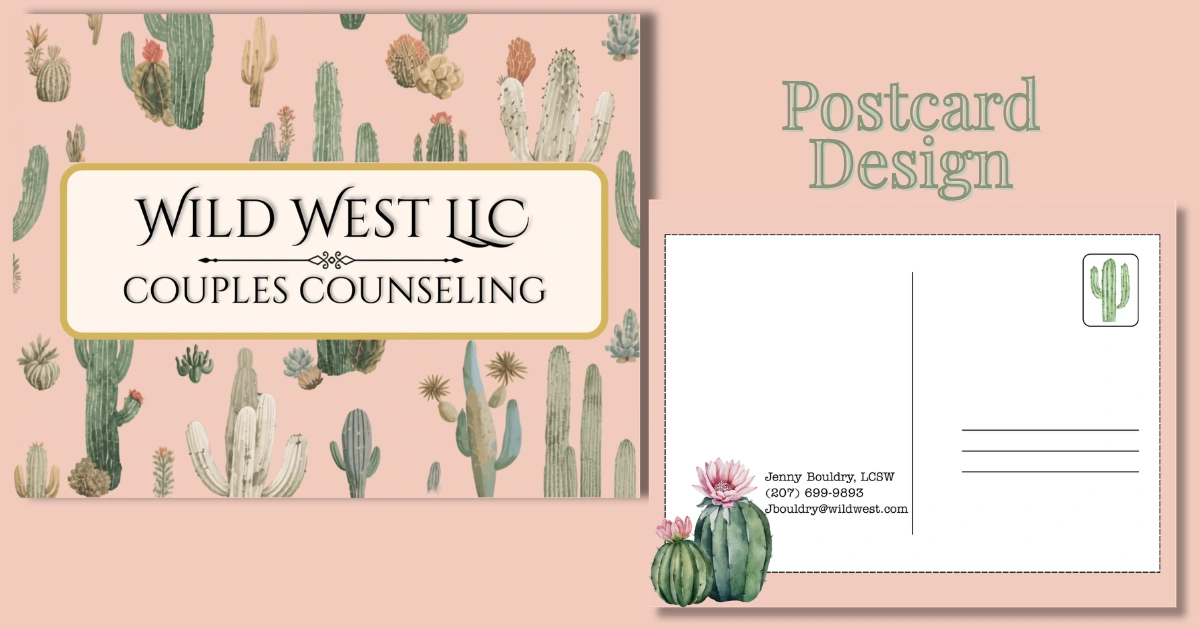
Postcard
The Outcome
The completed project included a custom office sign, a published website, personalized postcards, and business cards. Together, these materials gave Wild West Maine a consistent visual presence across its digital and printed communications.
Within a few days of the website being posted, it had received more than 100 visitors, providing an early indication of traffic to the new site.
The client also commissioned postcards and business cards after seeing the website designs. What began as an office sign request grew into a coordinated collection of materials that carried her preferred visual direction across multiple formats.
What This Project Demonstrates
Wild West Maine reflects my ability to develop a project from an initial concept into a coordinated website and collection of print materials. It brings together strategy, design, client communication, and the ability to adapt a visual direction across formats.
It also reflects how I approach client work: listening closely, making thoughtful decisions, and allowing time for feedback and refinement so the finished work represents the business owner’s vision.
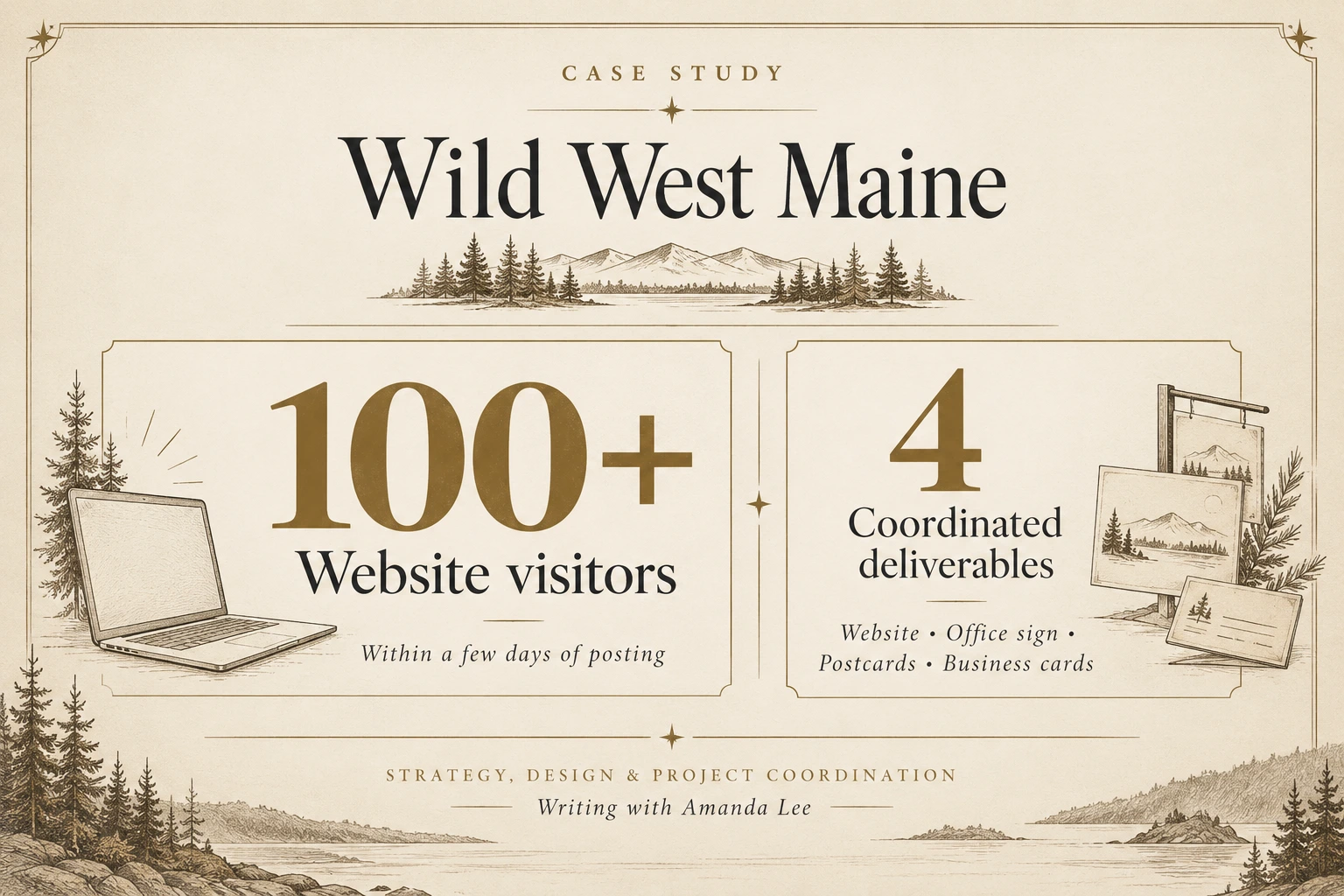
Traffic and Deliverables
Like this project
Posted Sep 29, 2026
Developed cohesive branding for Wild West Maine with website and print materials.
Likes
0
Views
2