
Project Overview
I developed TalkEase, a personalized AI English learning application that combines conversational AI, LangGraph-based workflow orchestration, retrieval-augmented generation (RAG), and persistent learning preferences.
The application helps learners practice English through conversations, grammar correction, vocabulary explanations, role-playing scenarios, and learning feedback.
Rather than relying on a single generic chatbot prompt, TalkEase uses a structured AI workflow to select the appropriate teaching approach based on user intent and available context.
TalkEase learning dashboard showing daily practice goals, recent sessions, and learning progress.
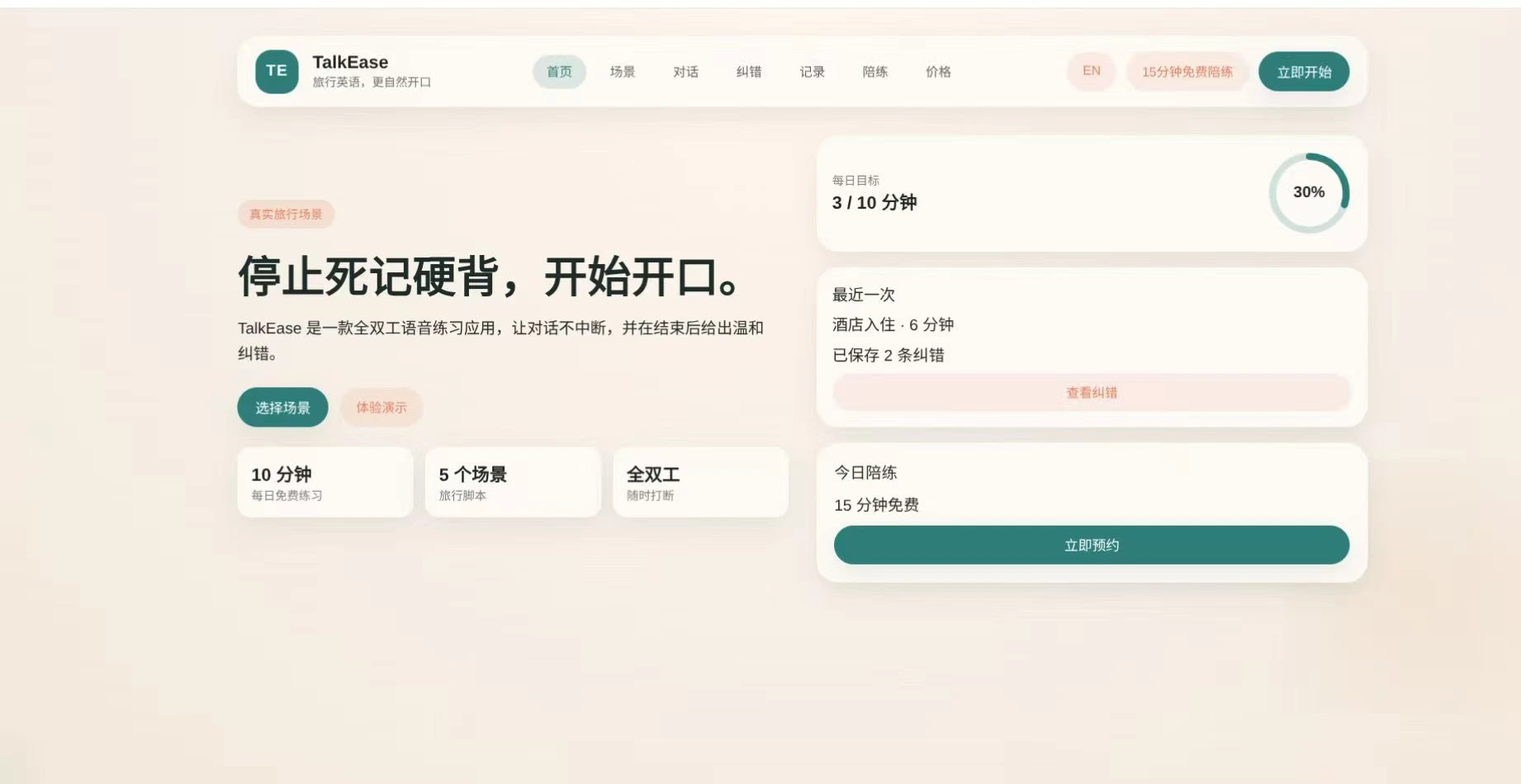
TalkEase – Learning Dashboard
The Challenge
Traditional AI chat applications can provide general answers but often lack structured teaching behavior and personalized learning support.
An effective AI learning assistant needs to understand the learner's intent, remember learning preferences, retrieve relevant educational materials, and provide appropriate feedback.
I built TalkEase to explore how AI agents, structured workflows, and retrieval systems can work together in a practical educational application.
Key Features
1. LangGraph AI Workflow
Implemented an agent preparation workflow using LangGraph.js.
Added intent routing to identify different learning requests.
Used conditional workflow paths for tools, knowledge retrieval, and coach selection.
Separated LLM provider execution from workflow preparation to support stable responses and fallback handling.
2. Personalized AI Coaching
Developed specialized coaching modes for conversation, grammar, roleplay, vocabulary, and evaluation.
Supported user-defined learning goals, interests, and areas for improvement.
Used learning preferences and available learner context to customize AI responses.
Scenario-based English practice covering hotel check-in, restaurant ordering, directions, airports, and social conversations.
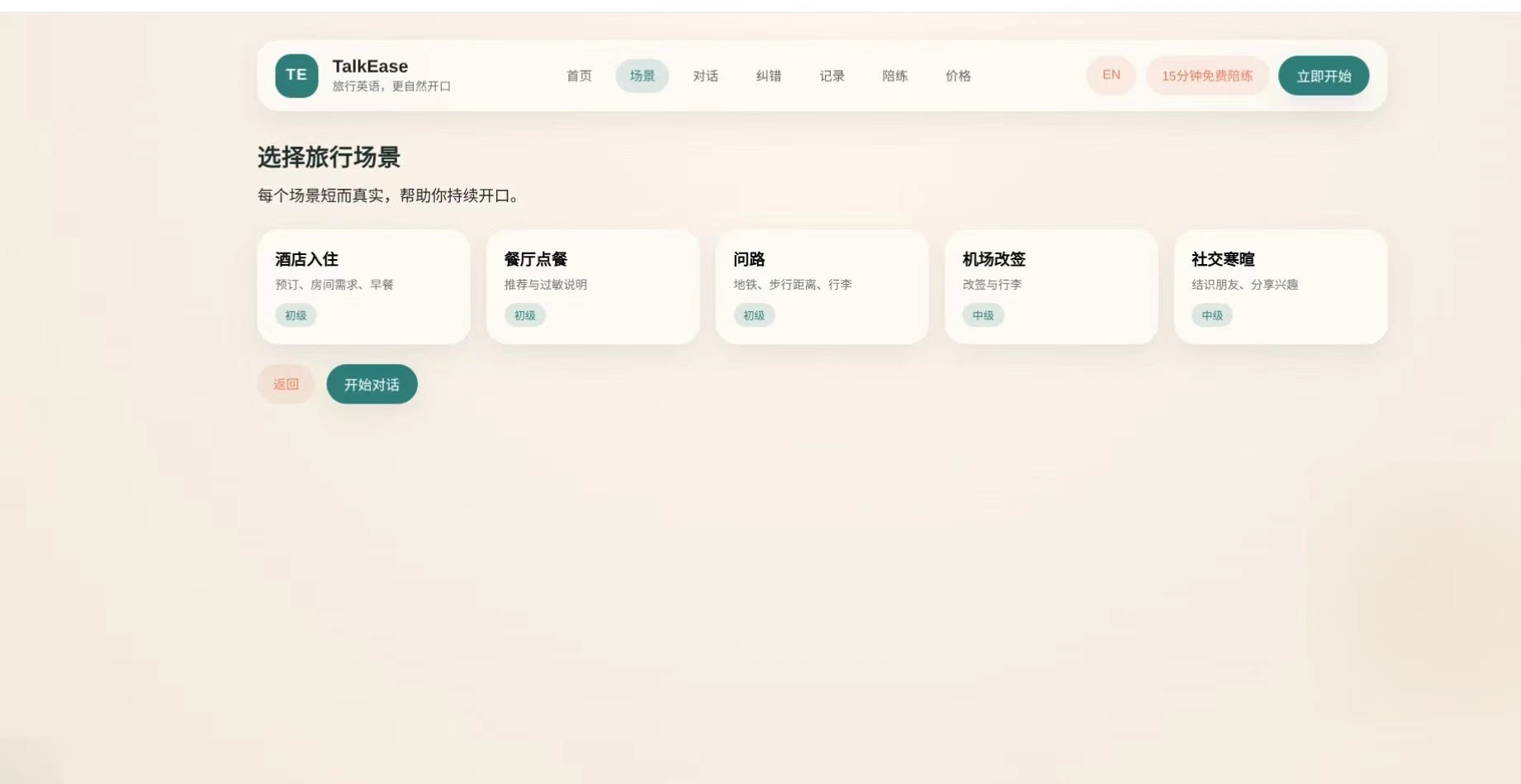
Scenario-Based English Practice
3. Retrieval-Augmented Generation (RAG)
Built a local Markdown-based educational knowledge base.
Implemented keyword-based retrieval for grammar, vocabulary, speaking scenarios, and assessment guidance.
Added context selection based on the detected learning intent.
Kept retrieved educational knowledge separate from personal learning records.
4. Learning Memory and Tools
Implemented learning preference storage and learning record management.
Added tools for retrieving learning summaries and recent mistakes.
Supported SQLite storage with an optional Redis backend.
Used authenticated user context to isolate learning data between users.
5. Voice and Chat Features
Supported text conversations and streaming responses.
Added browser speech recognition and server-side speech-to-text integration.
Implemented text-to-speech output for AI responses.
Included user registration, login, and learning preference management.
A hotel check-in conversation demonstrating AI-generated responses, contextual dialogue, and voice interaction controls.
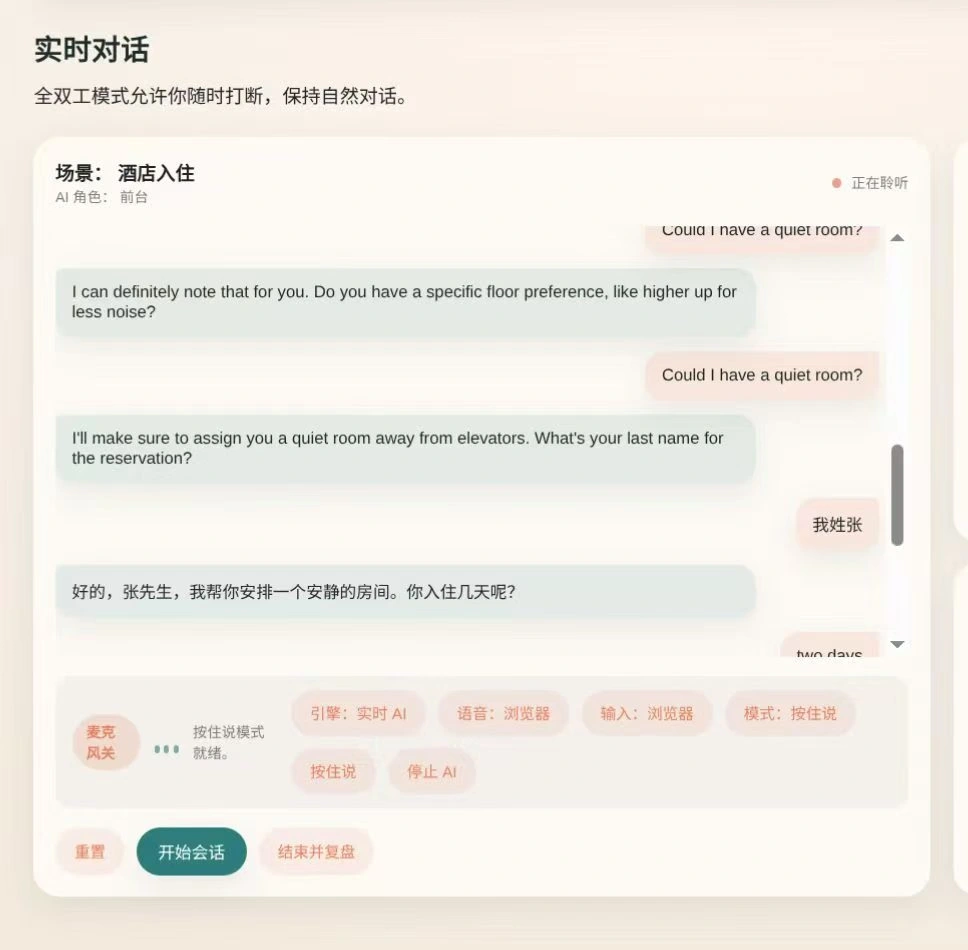
online chat 1
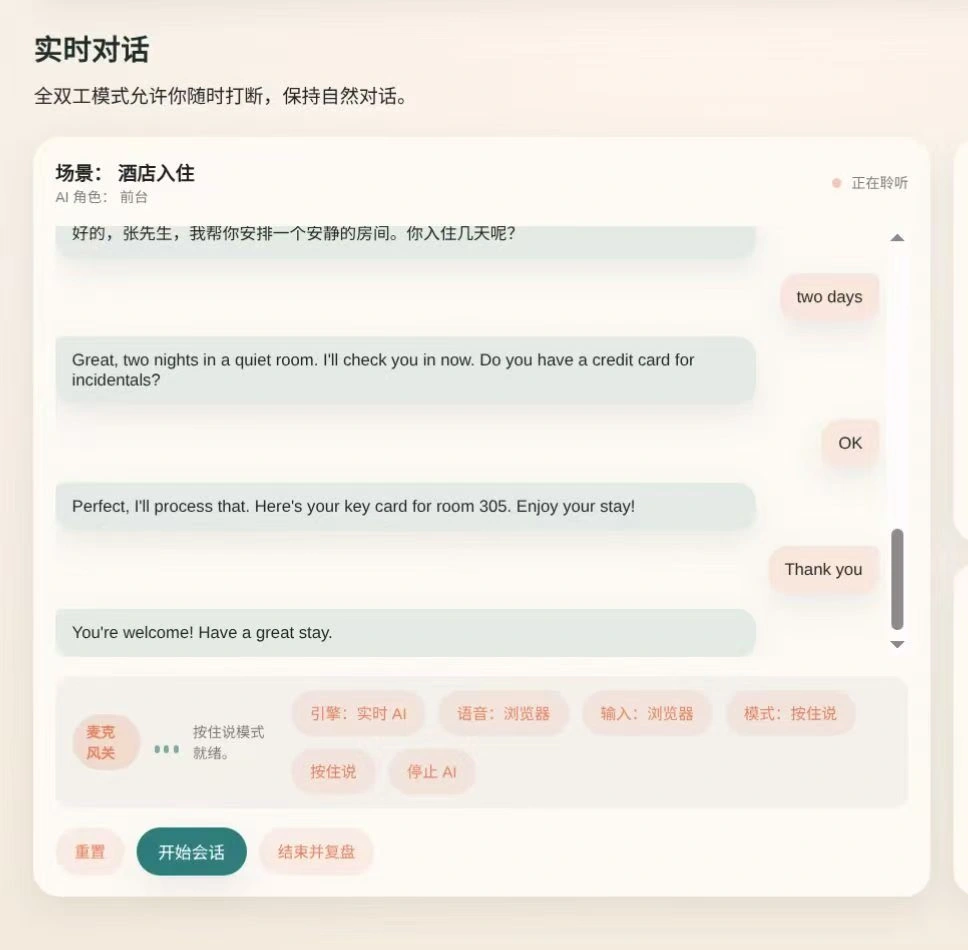
online chat 2
6. Reliability and Testing
Added LLM provider fallback handling.
Implemented workflow-level error handling and fallback preparation.
Created automated tests for agent routing, RAG retrieval, memory, authentication, and workflow behavior.
Added Docker configuration for local deployment and development.
Technology Stack
Node.js · JavaScript · LangGraph.js · LangChain Core · SQLite · Redis (optional) · OpenAI-compatible APIs · RAG · Jest · Docker
Project Status
TalkEase is a locally runnable MVP and AI agent architecture demonstration.
The current RAG implementation uses keyword-based retrieval rather than a vector database.
The application supports AI-assisted conversation and learning workflows, but production-grade monitoring, automatic learner proficiency assessment, and advanced pronunciation scoring remain outside the current implementation.
What This Demonstrates
This project demonstrates my experience with AI agent orchestration, LLM API integration, backend application development, contextual retrieval, structured workflow design, data persistence, and automated testing.
It also reflects my approach to building AI applications with clear component boundaries, controlled tool execution, validation, and graceful fallback.
GitHub Repository: https://github.com/ice789ice/TalkEase
0 likes · 1 view · Nov 14, 2026
AI English learning agent with LangGraph, RAG, and personalized coaching.


