Methylprednisolone drug monograph

Tasneem Abdallah

● Generic/Brand Name:
Solu-Medrol (methylprednisolone)
● Mechanism of Action
Methylprednisolone belongs to the synthetic corticosteroid family that exerts similar anti-inflammatory, and immunosuppressive effects to our natural cortisol in the body, but approximately 5 times more potent than the natural cortisol. Methylprednisolone has a dual mechanism of action to achieve its anti-inflammatory effect; it diffuses through the cell membrane binding to an intracellular glucocorticoid receptor then this complex blocks the promoter of proinflammatory genes and enhances anti-inflammatory genes expression. Additionally, it possesses inflammatory cytokines inhibition effect. It can also suppress COX-2 cyclooxygenase enzyme synthesis, which is important in the inflammation process. Regarding its immunosuppressive effect, methylprednisolone causes the following; (1) cell-mediated immunologic function inhibition, (2) neutrophilic leukocytosis, (3) monocyte elevation reduction, (4) eosinophil reduction, (5) lymphocytes reduction, (6) leukocytes adherence to the vascular endothelium reduction, leading to reduced leukocytes in the circulation.
● Indications Methylprednisolone could be used in a variety of indications either FDA-approved indications or off-label use indications:
- For FDA-Approved Indications:
1. skin inflammatory diseases like, Atopic dermatitis, Contact dermatitis
2. Skin immunologic diseases like Stevens-Johnson syndrome
3. Diseases in the endocrine system that occur as a consequence of cancer like congenital adrenal hyperplasia
4. Gastrointestinal inflammatory diseases like Inflammatory bowel disease (acute exacerbations)
5. Immunological hematology diseases like Autoimmune hemolytic anemia
6. Immunological neurology diseases like Multiple sclerosis (acute exacerbations)
7. Ophthalmological inflammatory diseases like Uveitis, Scleritis, Chorioretinitis
8. Nephrological diseases like Nephrotic syndrome (idiopathic or secondary to lupus
nephritis
9. Respiratory conditions like Aspiration pneumonitis and Asthma Rheumatology
conditions
10. Acute rheumatic carditis
11. Acute gout
-For Off-Label Uses:
1. As adjunct therapy for patients with acute spinal cord injury
2. Myasthenia gravis
3. Severe urticaria
4. Amiodarone-induced thyrotoxicosis (drug-resistant)
5. Moderate to severe acute distress respiratory syndrome (ARDS)
6. Severe alcoholic hepatitis
7. As adjunct therapy for patients with acute exacerbation of chronic obstructive pulmonary disease (COPD)
8. As adjunct treatment of Pneumocystis pneumonia in patients with HIV
9. As a palliative option for patients with castration-resistant metastatic prostate cancer
● Dosage
It is available in oral or intramuscular dosage forms For the oral administration, it is recommended to take methylprednisolone with food or milk to avoid the GIT problems associated with its administration, For the intramuscular administration, it should not be injected into the deltoid muscle, since that can cause subcutaneous atrophy. Moreover, injections into the dermis or areas with evidence of acute local infection should be avoided.
● Adverse effects
Most common adverse effects:
1. Iatrogenic Cushing syndrome. (moon faces)
2. Fat redistributes from the extremities to the trunk, the back of the neck, and the\ supraclavicular fossae.
3. Fine hair grows more quickly on the face, thighs, and trunk.
4. Steroid-induced punctate acne may appear,
5. Insomnia
6. Increased appetite
7. Myopathy and muscle wasting
8. Skin thinning
● Drug-Drug Interactions
It should be avoided to be administered with the following:
1. Chimeric antigen receptor T-cell therapy (CAR T-cell therapy): can lead to diminishing CAR T-cell activity in the context of CAR T-cell therapy
2. Hepatic enzyme inducers: Co-administration with enzyme inducers such as phenobarbital, phenytoin, and rifampin can lead to an increase in the metabolic clearance of methylprednisolone.
3. Hepatic enzyme inhibitors: Co-administration with enzyme inhibitors like ketoconazole/itraconazole may reduce the clearance of methylprednisolone, so that increased risk.
4. Oral anticoagulants: Methylprednisolone can affect the desired anticoagulant effect. Live vaccines: The Advisory Committee on Immunization Practices (ACIP) recommends that
5. Live-virus vaccines: they could be taken after 1 month of methylprednisolone administration to avoid the immunosuppression effect.
● Contraindications Methylprednisolone is contraindicated if:
1. You are sensitive to it.
2. You have a fungal infection
3. You are live or attenuated virus vaccinated.
● Warning and Precautions
Methyl prednisolone should be used with caution if there is one of the following;
(1) peptic ulcers, (2) heart disease, (3) hypertension with heart failure, (4) certain infectious illnesses such as varicella and tuberculosis, (5) psychoses,(6) diabetes,(7) osteoporosis, (8) glaucoma
● Monitoring during administration
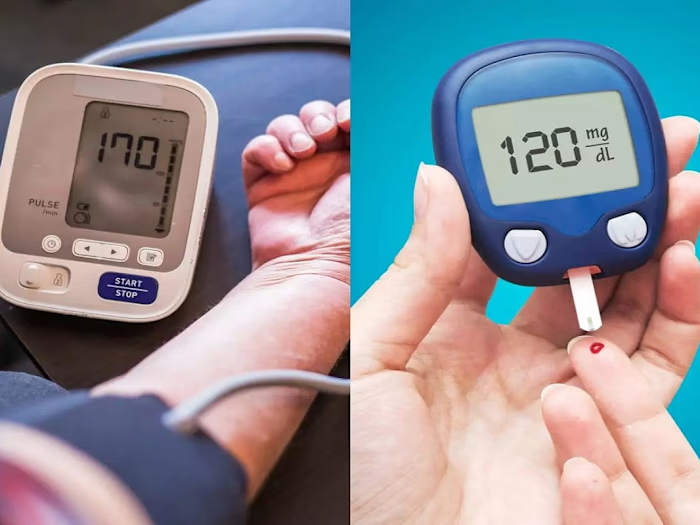
Blood pressure, blood glucose, electrolytes, weight, bone mineral density, hypothalamic-pituitary-adrenal axis suppression, and intraocular pressure all require monitoring in patients taking methylprednisolone. Growth and development monitoring should be in place for children
● References: https://www.ncbi.nlm.nih.gov/books/NBK544340/
Like this project
Posted Aug 7, 2025
Detailed overview of Solu-Medrol (methylprednisolone) including uses, dosage, and interactions.
Likes
0
Views
5