Centralized dashboard for preventive maintenance

Vaishnava Samudrala



How might we enhance ease of property management and maintenance for a property manager overseeing multiple apartments?
In an apartment there are more than 100+ devices that need maintenance, repair and might stop working at any point of time, which is a concern for property managers.
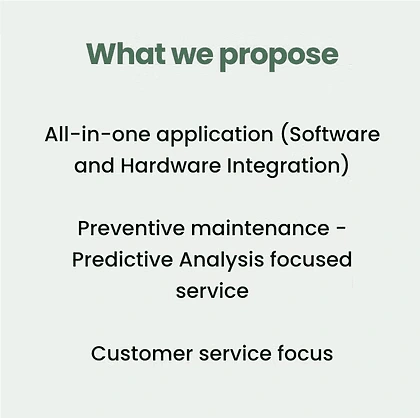
A smart sensor based preventive maintenance system which can detect issues before they occur and notify necessary personnel through a centralized dashboard.
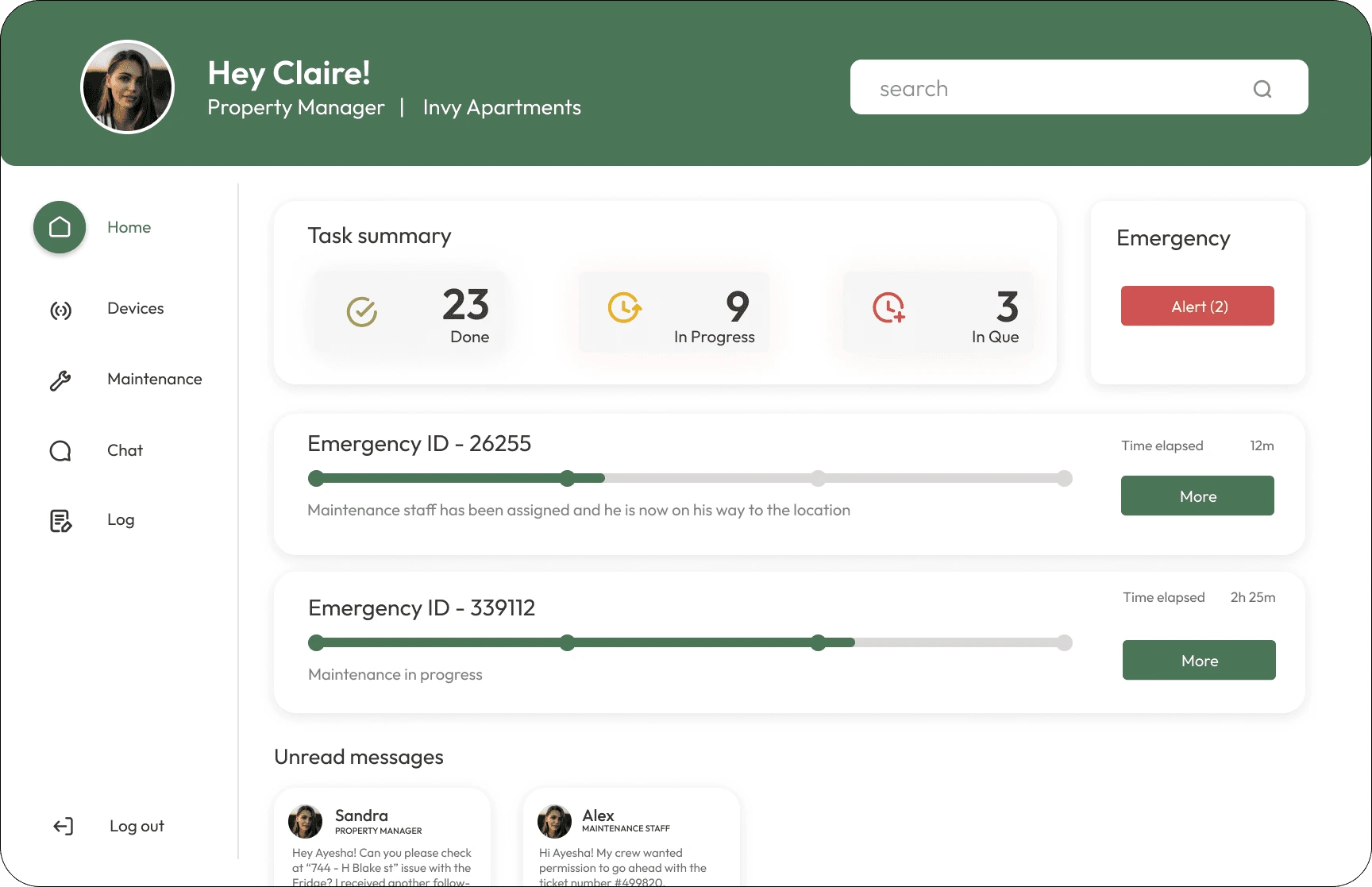
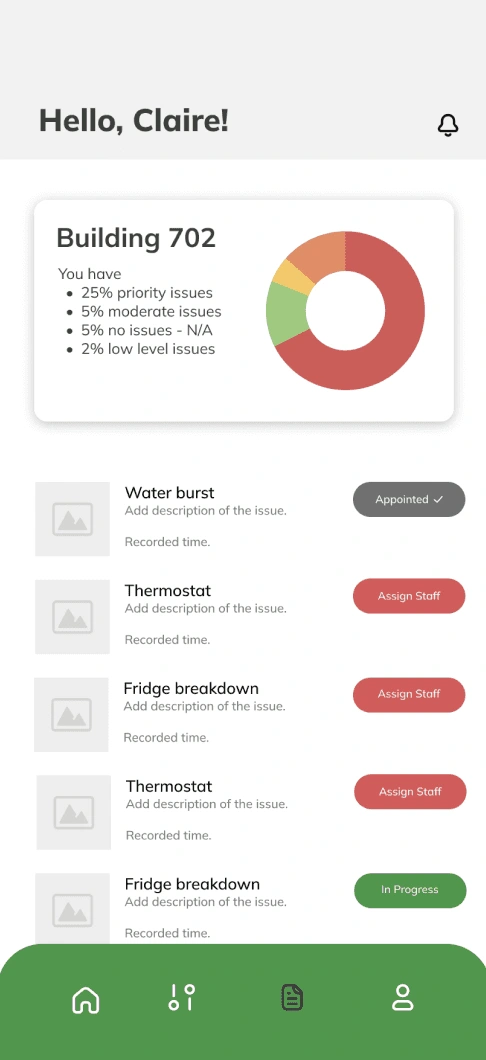
Property managers do not where any issue is and which device is faulty until they manually check all areas.
Camera access to sensors and emergency alerts
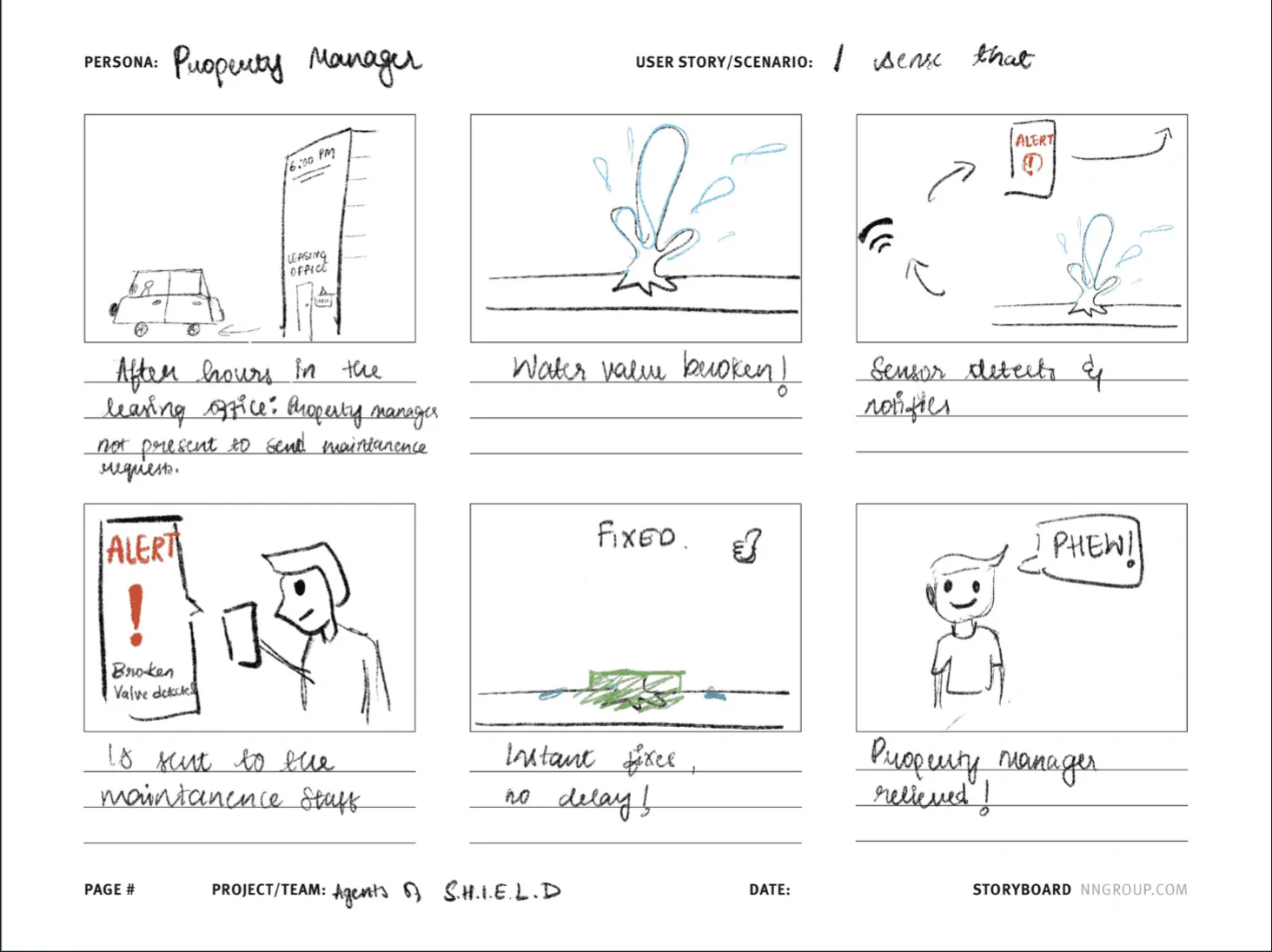
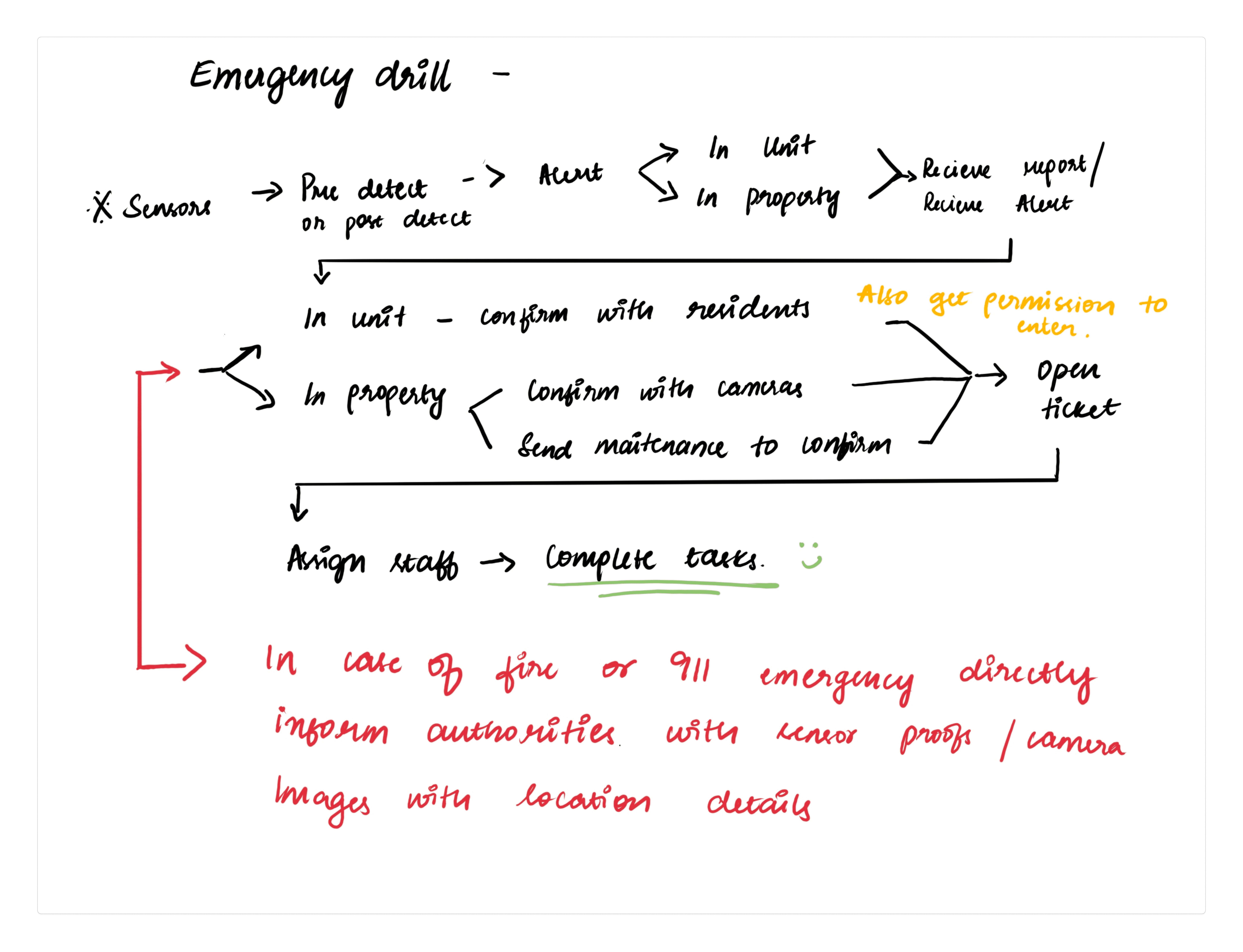
Emergency issues alerted on mobile to the property manager who can immediately check status on camera and respond.
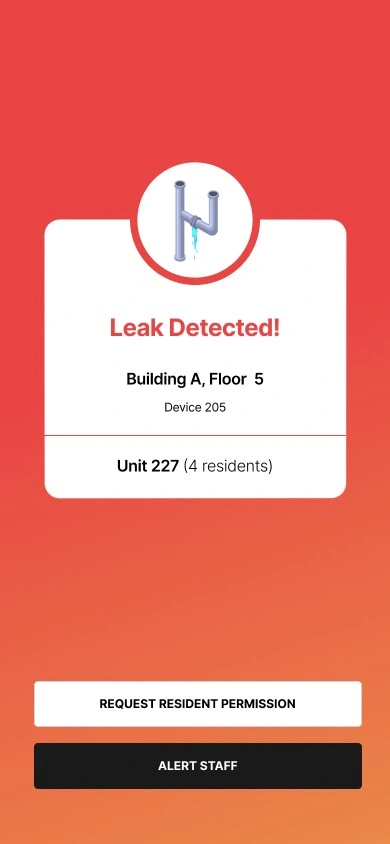
Maintenance issues irrespective of severity take a lot of time to fix.
If you see, the solution heavily depends on the sensors being installed in the apartment complex, why do you think we proposed this solution even though it might be expensive in the beginning.
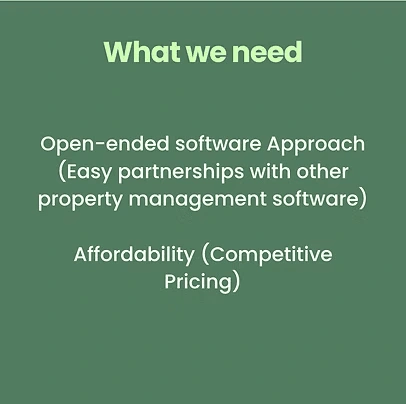
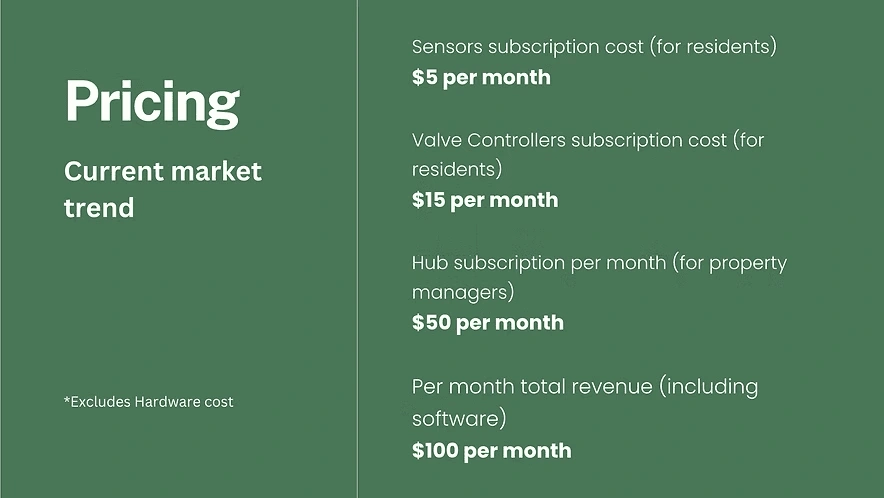
The smart home market is posed to grow exponentially and there is also a growing trend of users wanting enhanced security and seamless user experience in daily lives. This solution leverages the smart home market trend and stays ahead of it and at the same time provides extra revenue to our client.
The design process
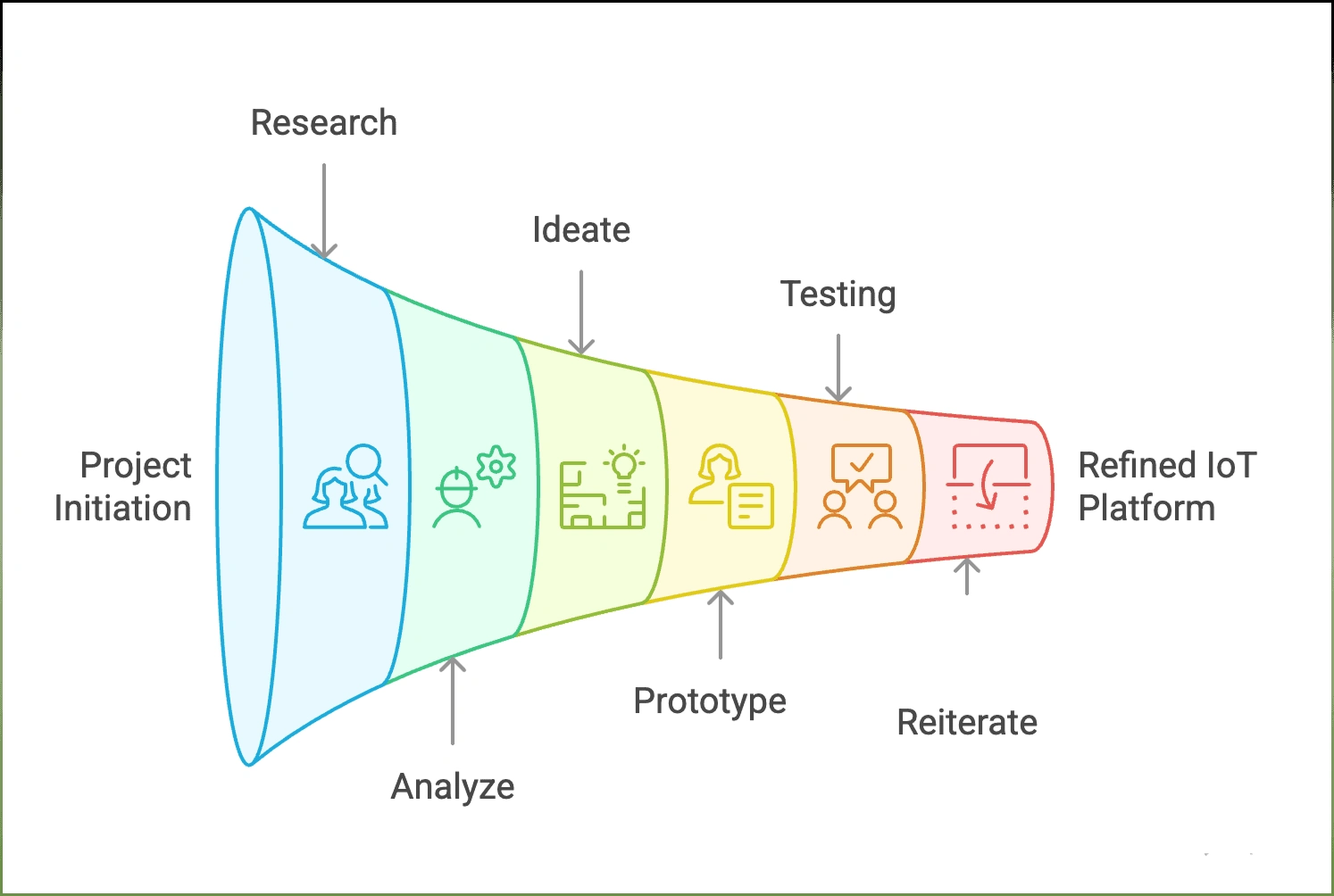
Let's dive in
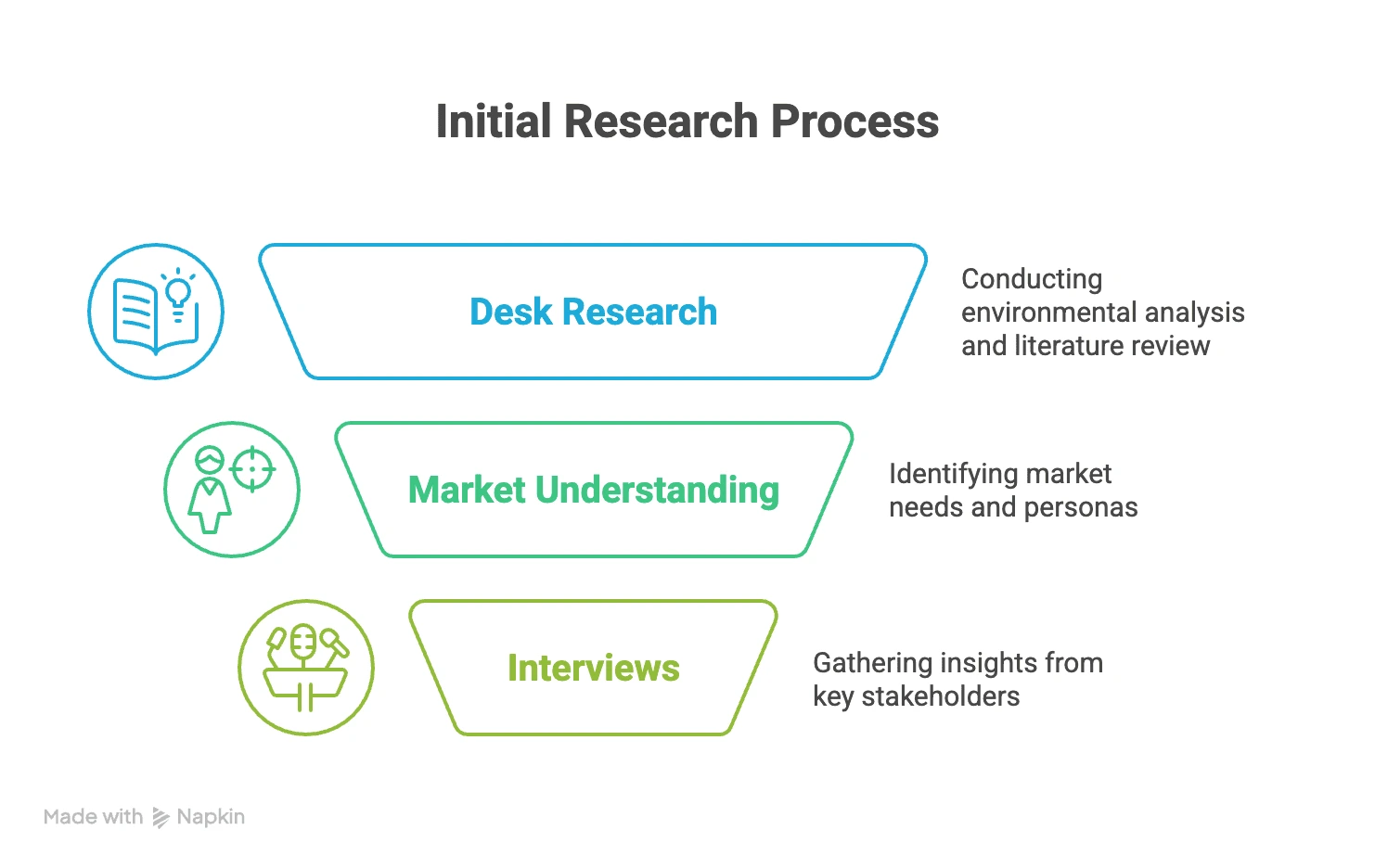
Before I started with the interviews, I wanted to understand what the market trends and how my TAM was generating or responding to the economic trends. How competitors were faring or what they were trying to do so that my client can stay ahead.
I found interesting data in this process:
There are going to be 71.9 Million Smart Households in USA (25% of population) by 2029.
The disposable income of an average household is going to grow by 12% by 2029.
The sensors market is to reach 350B$ by 2028 worldwide.
Competitors are venturing into security, one stop solutions and ads for revenue growth.
This data really helped me in brainstorming and sculpting the final solution out in the later stages of the project to make informed decisions.
What kind of security do the residents currently have?
What problems are the residents and leasing agents facing in their day to day life?
How well equipped are residents, with technology and how willing are they to learn new technology?
From the data gathered I used thematic analysis to understand common problems and themes my users felt.
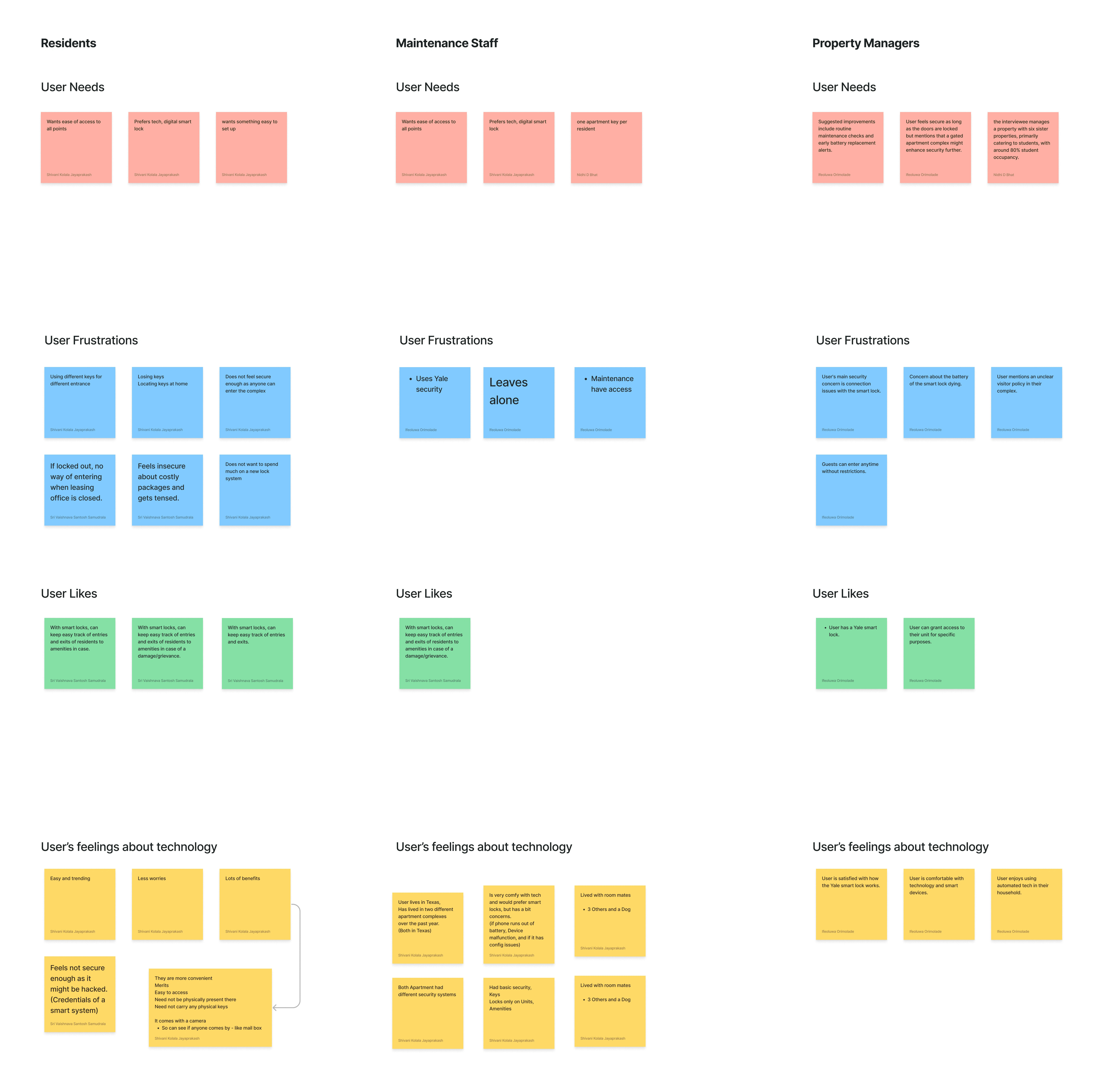

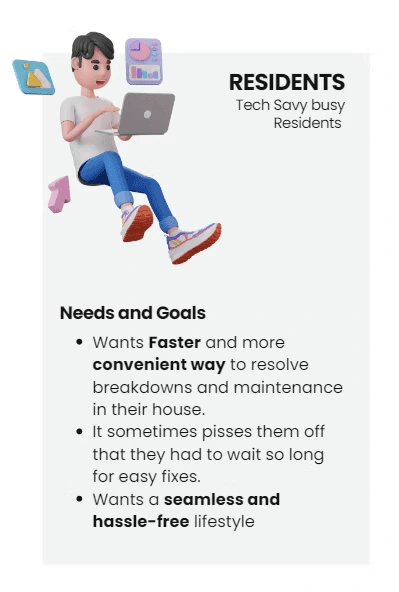
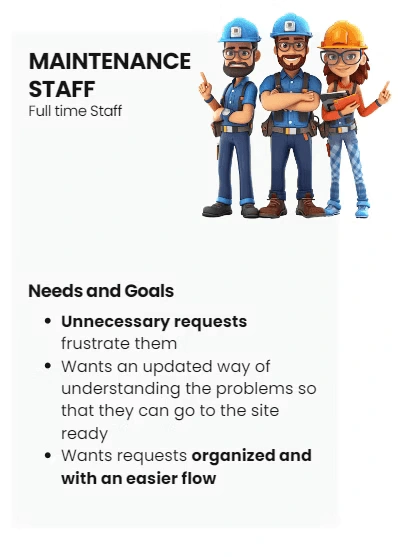
Insight 1: Property managers are worried about increasing costs
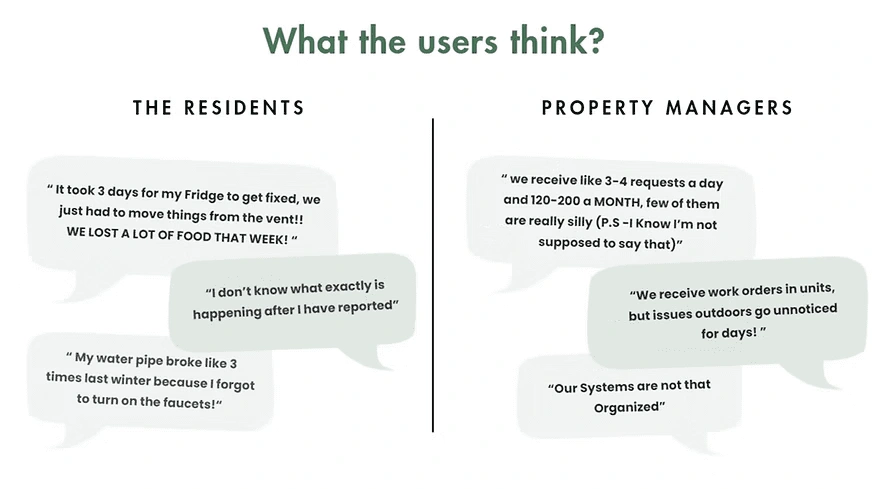
Properties often have many predictable and unpredictable costs and property managers find it very hard to keep track of data of their property.
Insight 2: Time to address maintenance issues
Residents are worried about how much time it takes to get their maintenance issue fixed, as often it take up to 3 days for a non emergency issue to get fixed.
Insight 3: Willingness to accept new technology
Property managers and residents are willing to learn new technologies, if that means savings in costs.
With the new issues and themes evolved and our information from desk research we tried creating new problem statements which were relevant to our users specifically rather than a broader problem statement.
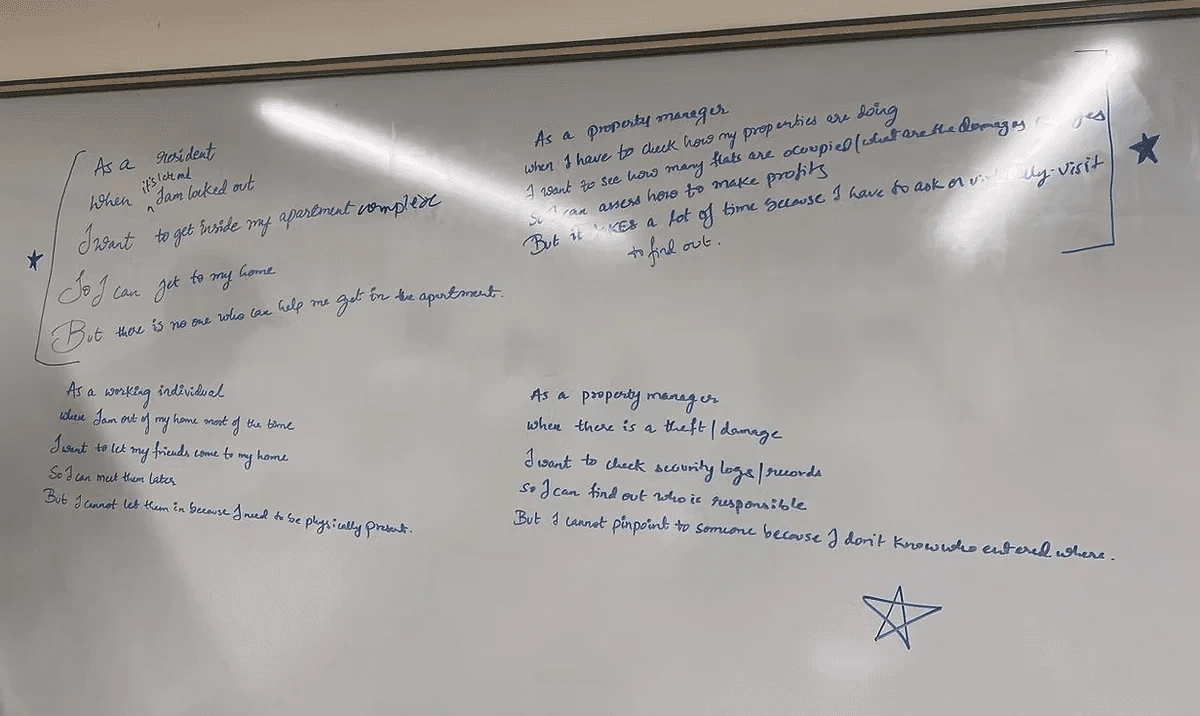
We ended up focusing on property manager's issues as the resident become subtext in case of property managers since they are looking to give the most optimal experience to residents.
I used Walt Disney ideation method and conducted 3 rounds of ideation:
1 individual round (Dreamers phase) + 2 rounds of group ideation (Realists and critics phase)
Individually we brainstormed ideas without any constrains. We came up with almost 35 ideas. We focused on generating big, imaginative ideas without limitations or concerns about practicality.
We took the ideas as a group and considered how we could make them a concrete plan based on our requirements (Environmental Analysis played a crucial role here). We boiled the ideas down to 3 based on feasibility.
In this phase we identified the potential flaws, weaknesses of each idea amongst our team and clients and based on the feedback and future scope we finalized one solution.
A sensor-based predictive maintenance solution that uses machine learning to identify potential problems before they cause equipment failure or disruption to service.
Components of the solution
Sensors:
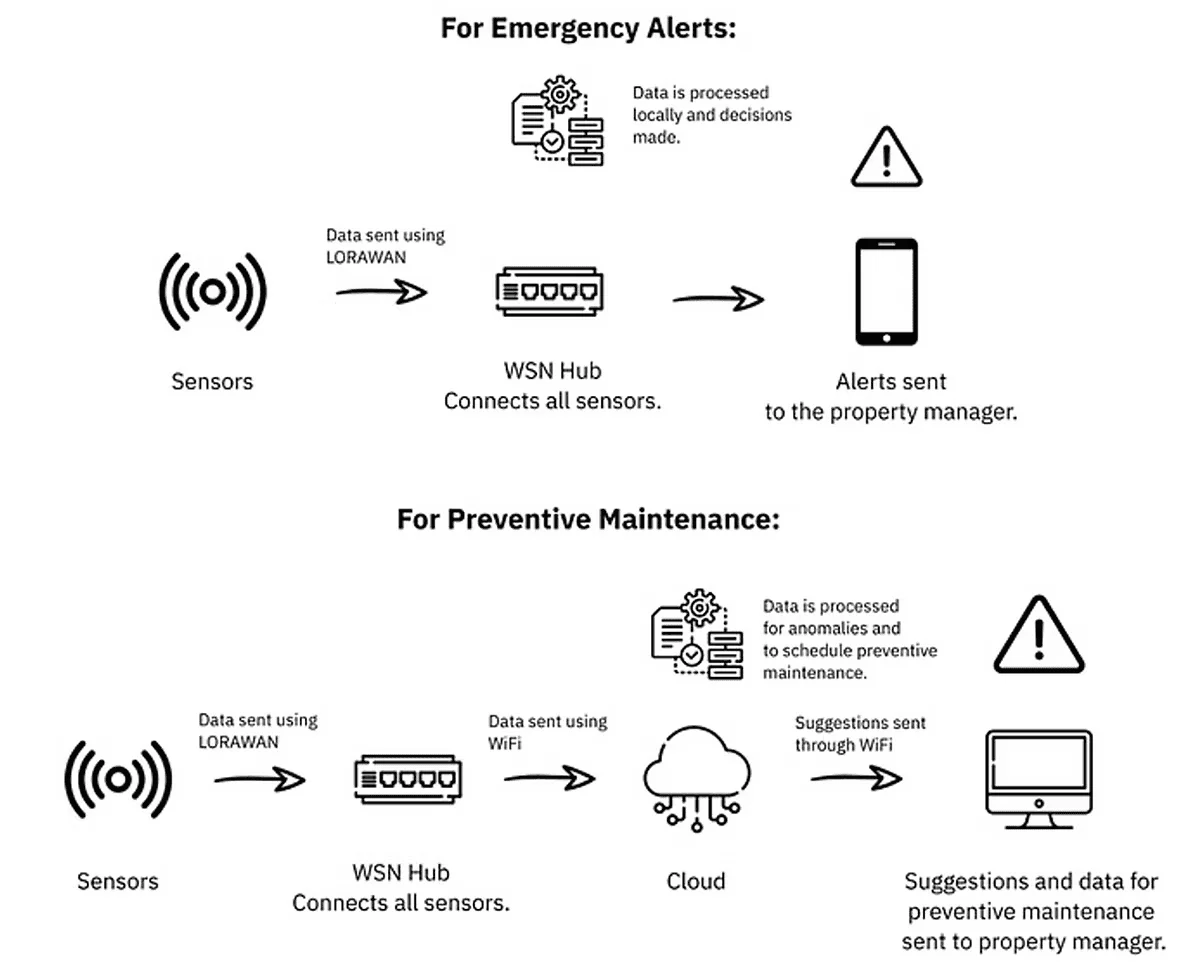
There would be sensors installed throughout the apartments, sensors include temperature, light, leak sensors and others.
Property Manager and Alerts:
The sensors monitor the property 24/7 and send alerts to the property managers about possible damages based on behavior analysis and preventive maintenance updates, upon which a property manager would act to reduce damage. (Example: Increasing temperature of pipe)
Resident:
Residents can request maintenance from the app and chose to self diagnose based on common issues before reporting, hereby reducing load for maintenance personnel and solving minor issues.
I started the Minimum Viable Product (MVP) prototyping process by:
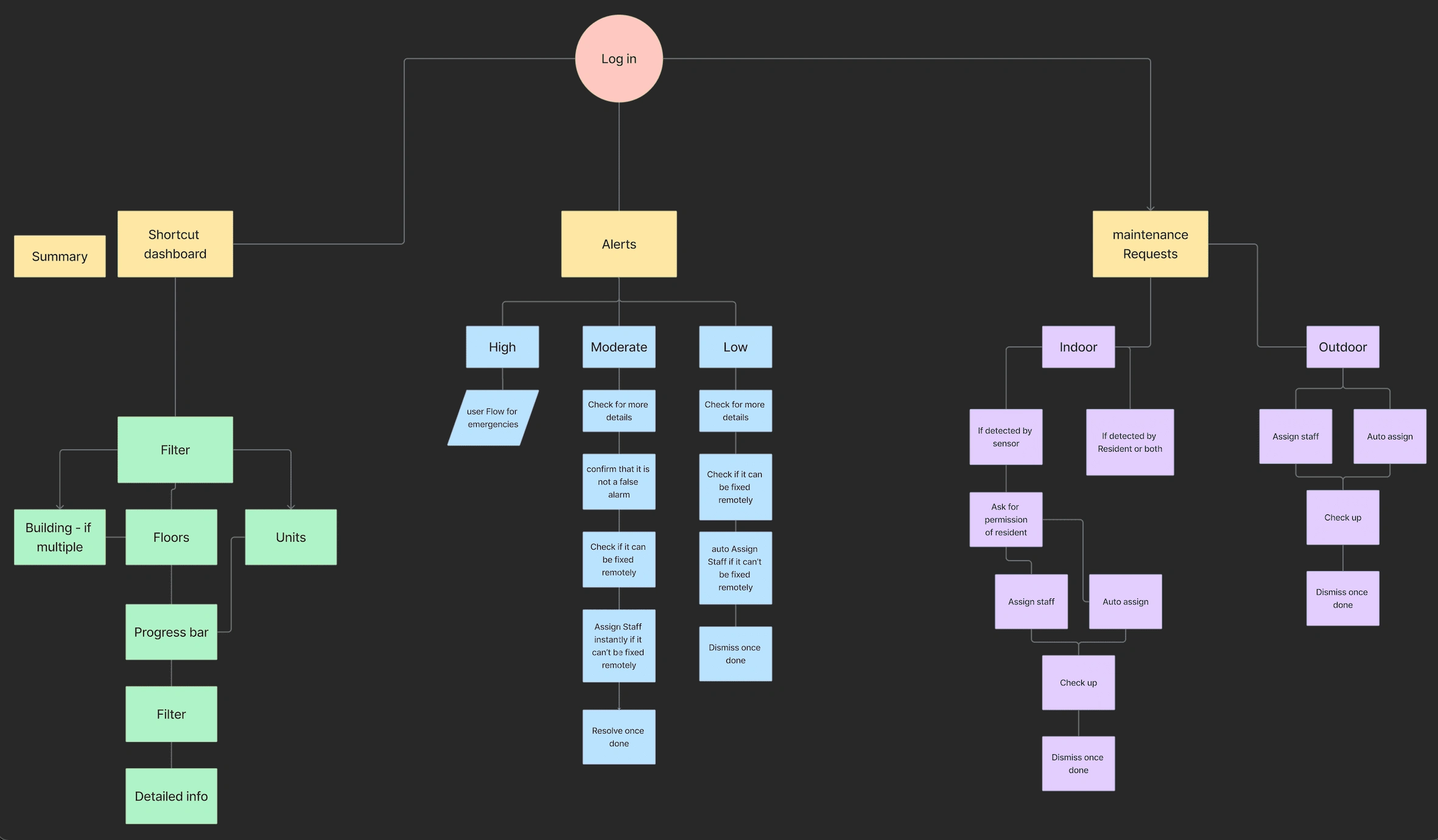
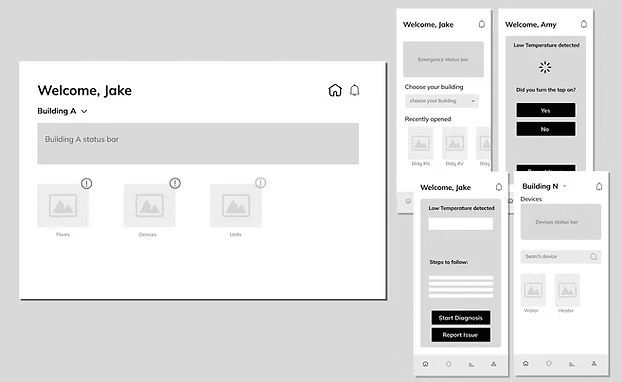
Building a flow for property managers to find issues and monitor device health by apartment and receive preventive maintenance alerts.
Building a flow for residents to report issues and self diagnose before reporting issue.
Actually the idea for self diagnosis before reporting an issue came to us while brainstorming on designs. While that was an additional thing we wanted to do we also cut out many features that were hindering our main flow (preventive maintenance).
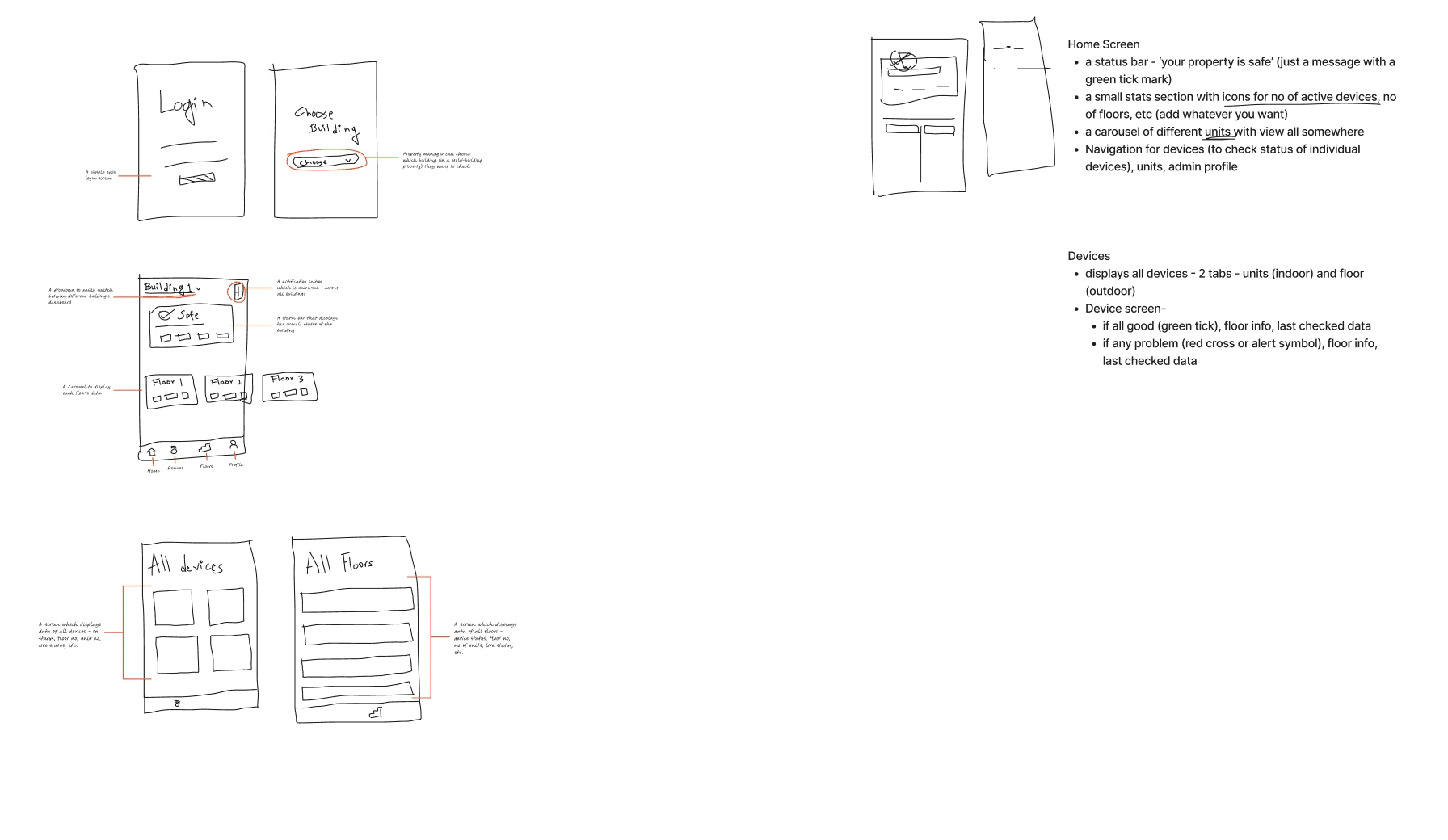
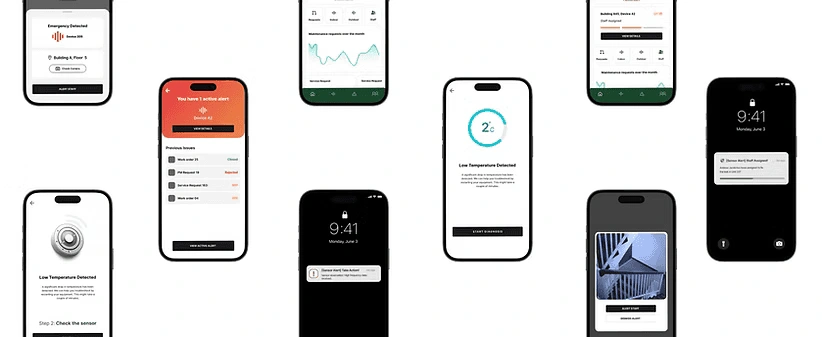
Followed by the sketches and low fidelity, we made high fidelity designs for 3 main flows:
Property Manager - A dashboard to check health of devices, monitor and assign maintenance requests
Residents - Residents can try to self diagnose issues before reporting.
Property Manager - Gets an emergency alert on phone after hours
We tested our high fidelity designs with property managers and residents using Wizard of OZ and think aloud. Some property managers thought, the dashboard interface was too crowded and might be hard to find relevant information during emergencies. Some managers were worried about how complex and expensive it might get in the future.
But most of the managers and residents felt confidence in the system and believed that maintenance costs could be reduced. They were also happy about how easy it is to send alerts to staff in emergencies. They also enquired about how the solution would scale indicating long term interest.

Like this project
Posted Oct 28, 2025
Developed a sensor-based predictive maintenance system for property managers to enhance device monitoring and maintenance efficiency.
Likes
0
Views
7
Clients
Allegion US