Swiftly Rescure Website Design

Gbenga Alabi


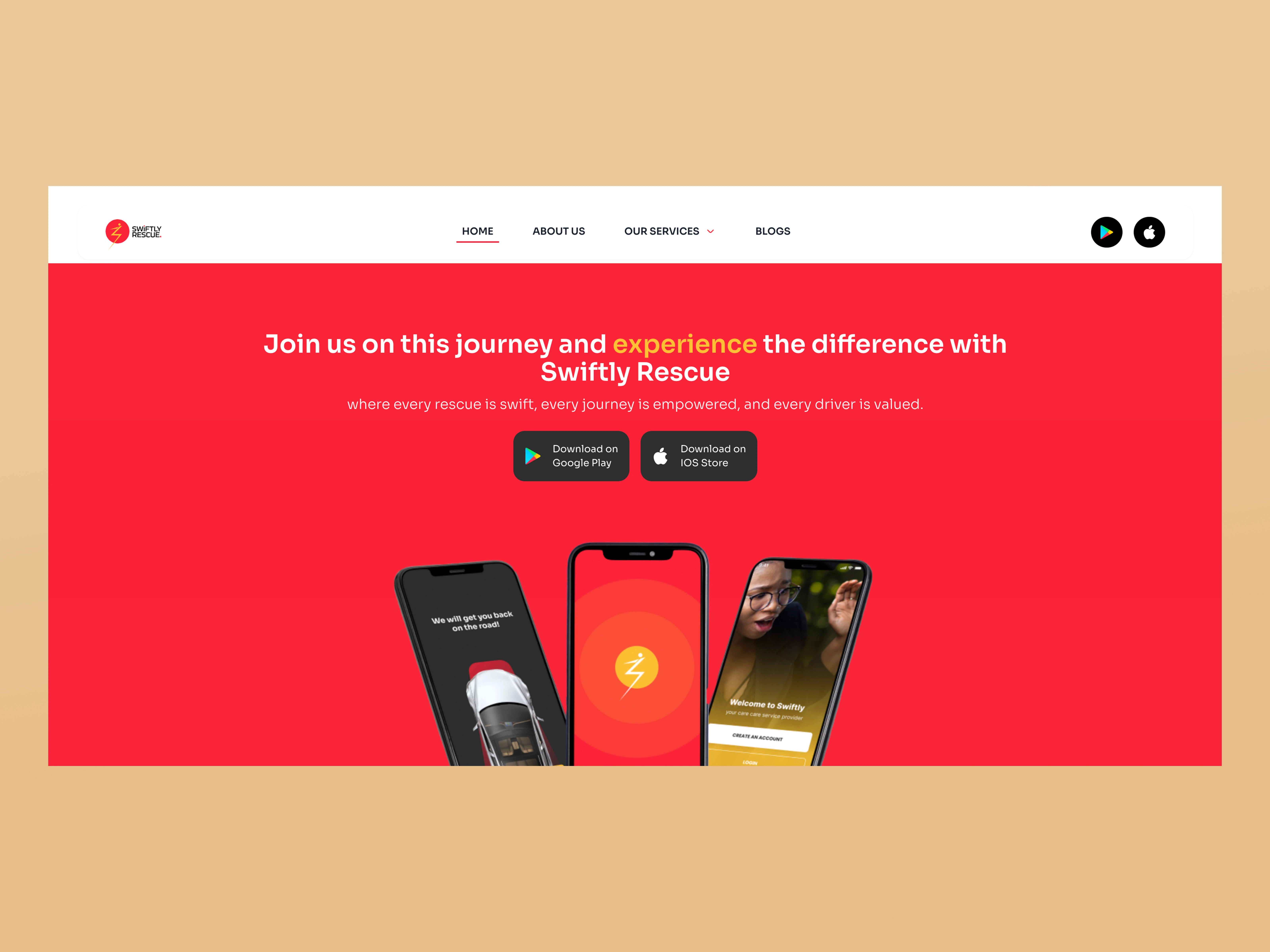
Swiftly Rescue
Modernizing Roadside Assistance with User-Centric Web Design
Client Overview:
Swiftly Rescue is an innovative service provider that offers immediate roadside assistance to motorists in distress. Understanding the urgent nature of roadside emergencies, Swiftly Rescue wanted a website that would provide quick, reliable, and user-friendly access to their services. The platform was designed to transform a typically stressful experience into a seamless one, ensuring that motorists receive prompt help while on the go.
The Challenge:
The primary goal was to create a modern, user-centric website that would simplify the roadside assistance process. Given that emergencies are unpredictable, the challenge was to design a platform that could effectively guide users through the process of requesting help, tracking their service in real-time, and making payments—all in a matter of minutes. The website needed to be accessible from any device, fast-loading, and offer a smooth experience under pressure.
Key challenges included:
Streamlining the Request Process: Users needed to be able to request roadside assistance quickly, without hassle or excessive steps.
Real-Time Tracking: Providing users with real-time updates on the location and status of their rescue team was essential for peace of mind.
Mobile Optimization: The website had to work seamlessly on all devices since many users would be accessing it from their smartphones while stranded.
Ease of Payment: Offering a secure, hassle-free payment system for services rendered was crucial for trust and convenience.
Research & Strategy:
1. User Research:
We started by analyzing the needs and expectations of motorists in distress. This involved surveys and user interviews with frequent travelers and individuals who had previously used roadside assistance services. We focused on understanding their pain points, such as delays in getting help, the stress of not knowing when help would arrive, and challenges with tracking services in real-time.
User Personas: Created detailed personas that reflected a range of drivers, from the young tech-savvy millennial to the busy working parent who might not be as familiar with technology.
Competitive Analysis: We examined the websites of competing roadside assistance services to identify gaps in their offerings and areas for improvement.
2. Design Goals:
Our design objectives were clear:
Speed and Efficiency: Ensure users could request help within a few clicks or taps.
Mobile-First Design: Since most users would be accessing the site on their smartphones, a mobile-optimized design was non-negotiable.
Real-Time Communication: Incorporating real-time tracking and live chat to reassure users during their wait.
Ease of Use: Simplify complex processes like service booking, payment, and tracking into easy-to-follow steps.
Design Process:
1. Wireframing & Prototyping:
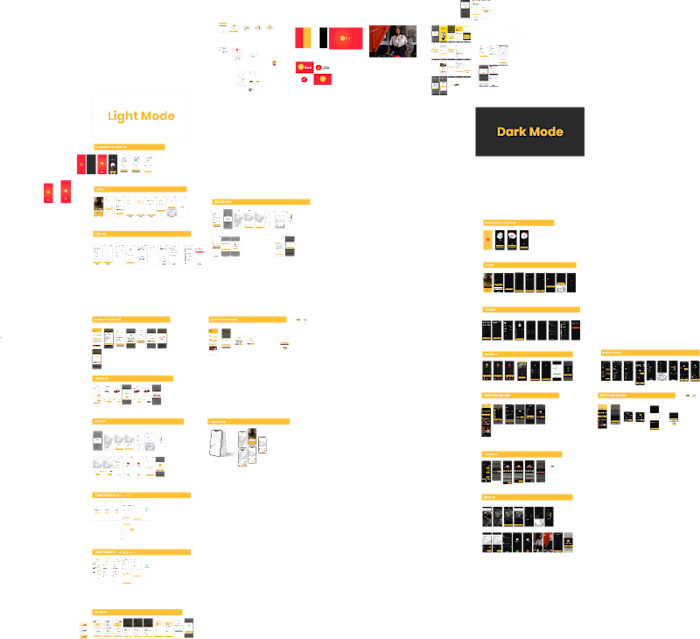
The project began with wireframing and building low-fidelity prototypes to outline the basic structure and flow of the website. This was followed by high-fidelity designs on Figma, where we focused on creating a clean, intuitive interface with large clickable buttons and easy navigation.
Key features included:
Emergency SOS Button: Prominently displayed for immediate help requests.
Service Scheduling System: A simple, interactive system that allowed users to schedule vehicle maintenance or emergency assistance without hassle.
Real-Time GPS Tracking: Integrated Google Maps API to provide users with real-time tracking of their rescue team, keeping them updated with live status.
2. User Interface Design:
After finalizing the structure, we worked on a clean and modern design with the following elements:
Branding: The color scheme and typography were chosen to convey trust and urgency, with shades of blue to represent reliability and safety.
Iconography: Simple, clear icons were used to represent services like vehicle maintenance, parts catalog, and payment, making it easy for users to understand the available options at a glance.
Responsive Layout: The design was made fluid, ensuring the website performed flawlessly across all devices, including smartphones, tablets, and desktops.
3. Key Features Implementation:
Emergency SOS Button: This feature was designed for instant accessibility, making it easy for users to get immediate help by pressing a single button. It also triggered a backend notification to dispatch the nearest available team.
Interactive Service Scheduling: Users could easily select the type of service they needed and schedule it based on real-time availability.
Comprehensive Parts Catalog: Integrated a dynamic catalog that updated in real-time to show which car parts were available for purchase and where they could be found.
Expert Mechanic Matching: Based on user input, the system matched them with a mechanic who had the right expertise for their service needs.
Payment Gateway Integration: A secure payment gateway (Stripe or PayPal) was integrated to ensure all transactions were safe and seamless.
4. Testing & Feedback:
After completing the design and development, we conducted extensive testing to ensure that every element of the site functioned as expected. We focused on testing the site’s usability across different devices and browsers, the effectiveness of the GPS tracking, and the speed of the payment gateway.
Results:
The Swiftly Rescue website went live with a responsive, user-friendly design that addressed every aspect of the user journey.
Increased Conversion Rates: The streamlined emergency SOS button and service scheduling system led to an increase in conversion rates, as users could easily request help without stress.
Real-Time Tracking: Real-time GPS tracking and automated service updates helped users feel more in control during their roadside emergency, reducing anxiety and building trust.
Improved User Engagement: The mobile-optimized design ensured that users could access services quickly, whether they were on the road or at home, leading to higher engagement with the platform.
Within the first month, Swiftly Rescue saw:
A 30% increase in service bookings.
A 50% reduction in service cancellations due to the more transparent and easy-to-use tracking features.
A 20% improvement in customer satisfaction, with many users praising the website’s ease of use and quick response times.
Lessons Learned:
Simplicity Under Pressure: The design needed to cater to people under stress, so simplicity and clarity were critical.
Speed Matters: Quick load times and easy navigation made a huge difference in how users interacted with the platform, especially when requesting help in emergency situations.
Mobile-First: Optimizing for mobile devices wasn’t just a bonus—it was essential. The majority of Swiftly Rescue’s users accessed the website through smartphones, so a mobile-optimized experience was crucial for success.
Tools Used:
Figma: For wireframing, high-fidelity design, and prototyping.
Google Maps API: For real-time GPS tracking integration.
Stripe/PayPal: For secure payment processing.
InVision: For interactive prototyping and user feedback.
Conclusion:
Swiftly Rescue's redesigned website has significantly enhanced the user experience by combining modern design with practical functionality. By focusing on user needs, especially in emergency situations, we created a platform that’s not only easy to navigate but also offers peace of mind through real-time assistance and tracking. This case study showcases how thoughtful design can make a critical service more accessible, efficient, and user-friendly.
Like this project
Posted Jan 5, 2025
Swiftly Rescue is your comprehensive automotive solution, offering a seamlessly designed website for emergency roadside assistance.
Likes
1
Views
7