Creating a more engaging journey.

Seth Benson

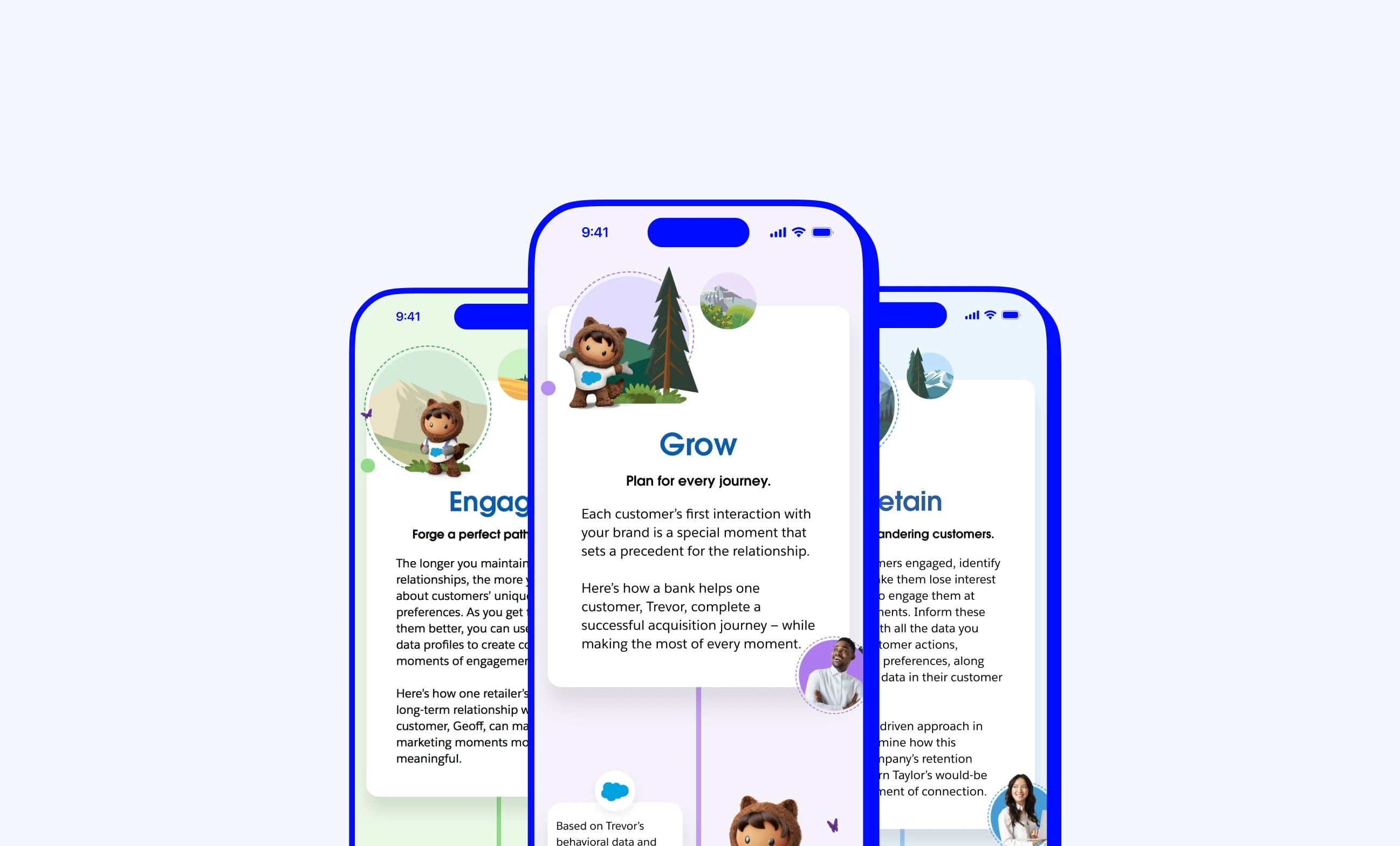
Salesforce sought to revamp their static, single-page PDF sales tool into a dynamic, interactive microsite. The goal was to illustrate five unique customer journeys while engaging users with an enhanced digital experience, showcasing how Salesforce solutions could drive loyalty and ROI.
Challenge
Static Format: The existing PDF lacked interactivity and was dense, making it challenging for users to navigate and engage.
User Flow Complexity: Translating multiple customer journeys into an intuitive digital format required careful planning.
Seamless Integration: Ensuring that the experience supported primary calls to action, like demo sign-ups, without overwhelming users with information.
Approach
Discovery and Planning
Reviewed the existing journey documents to identify common elements and opportunities for variation in a digital format.
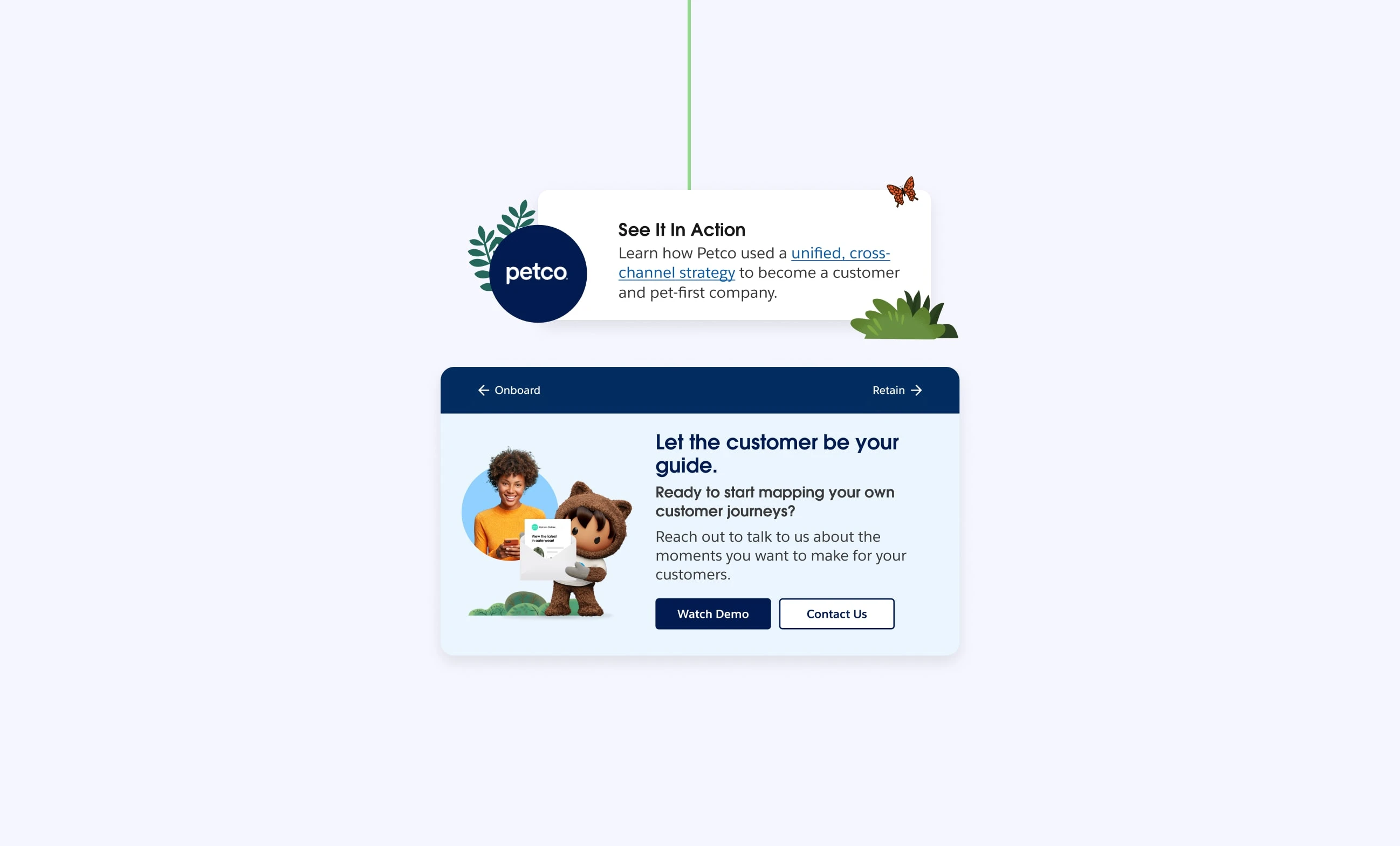
Highlighted areas where additional information could enhance understanding without distracting from key actions, such as demo sign-ups.
Prototyping and Testing
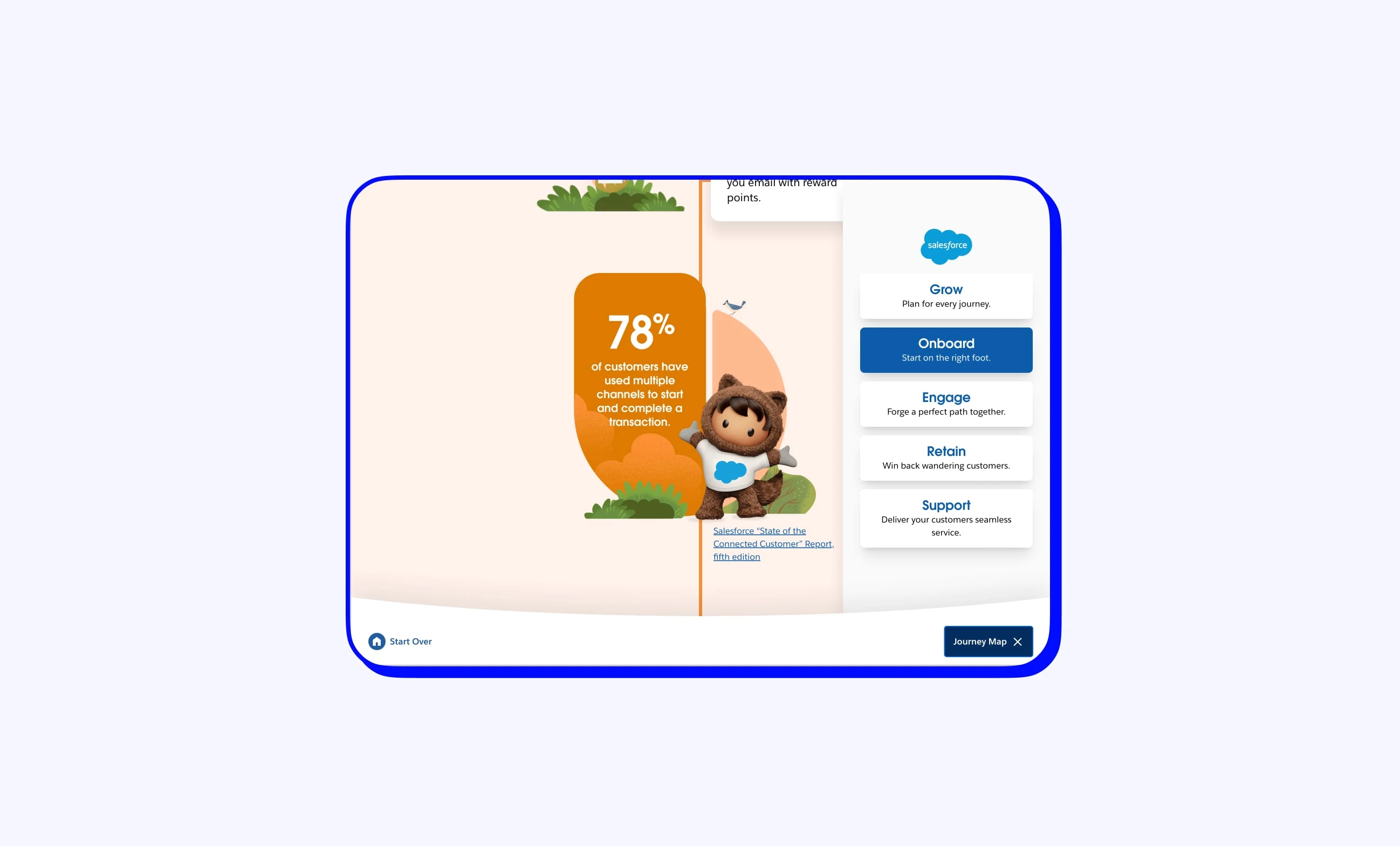
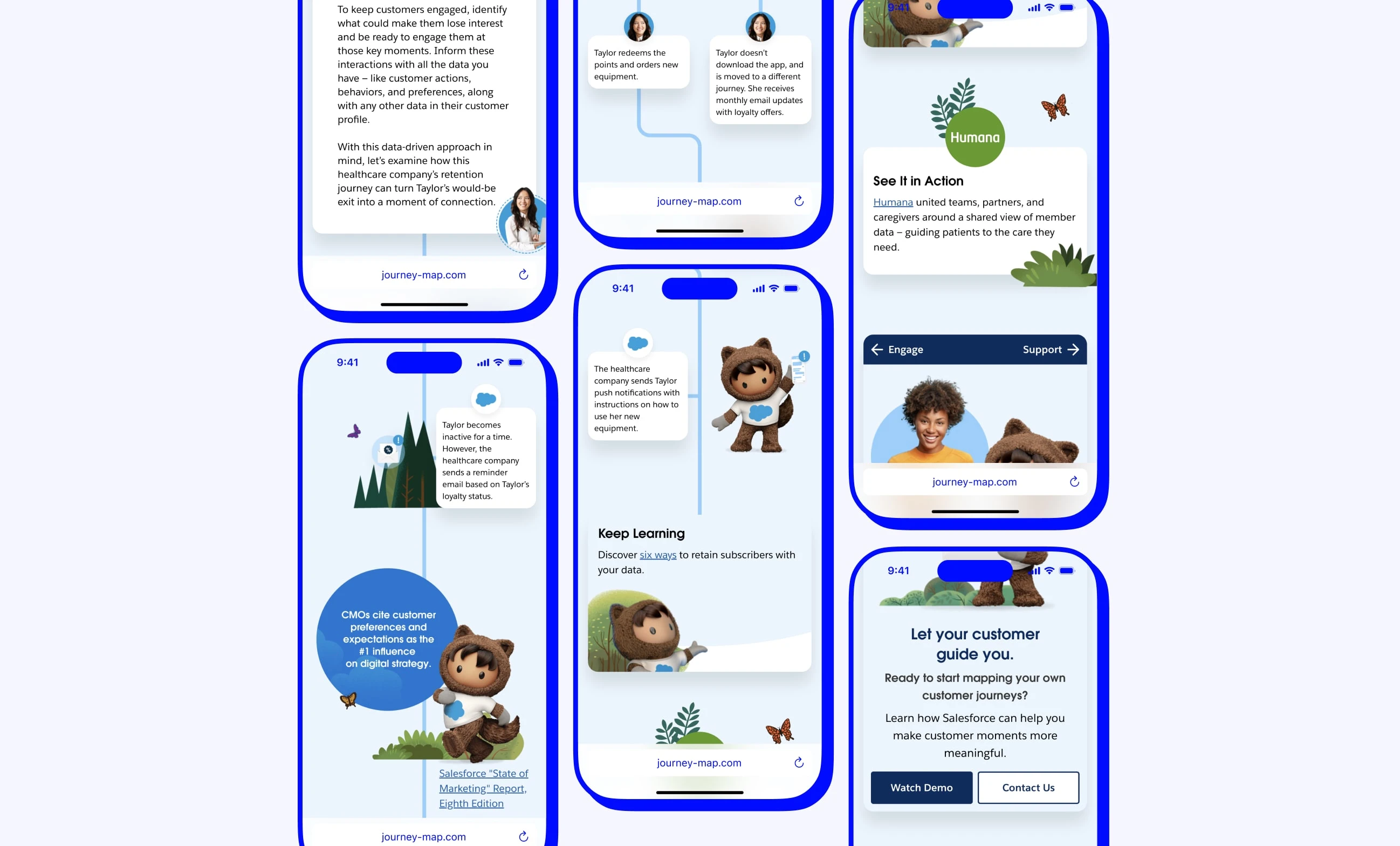
Created prototypes for mobile and desktop views, focusing on user flows through the starting points and various journey stages.
Conducted iterative testing to address potential navigation issues and ensure smooth transitions across journeys.
Design and Development
Collaborated with the engineering team to define a framework for reusable components, facilitating efficient site build-out.
Partnered with other designers to apply final brand and UI elements, bringing the microsite to life with animations and a polished aesthetic.
Results
Dynamic Interactivity: The microsite transformed a static PDF into a visually engaging, multi-page experience with animations that captivated users.
Enhanced Engagement: Clear, navigable customer journeys improved user understanding of Salesforce’s value propositions.
Increased Actionability: Integrated CTAs seamlessly guided users to demo sign-ups, aligning the tool with sales goals.
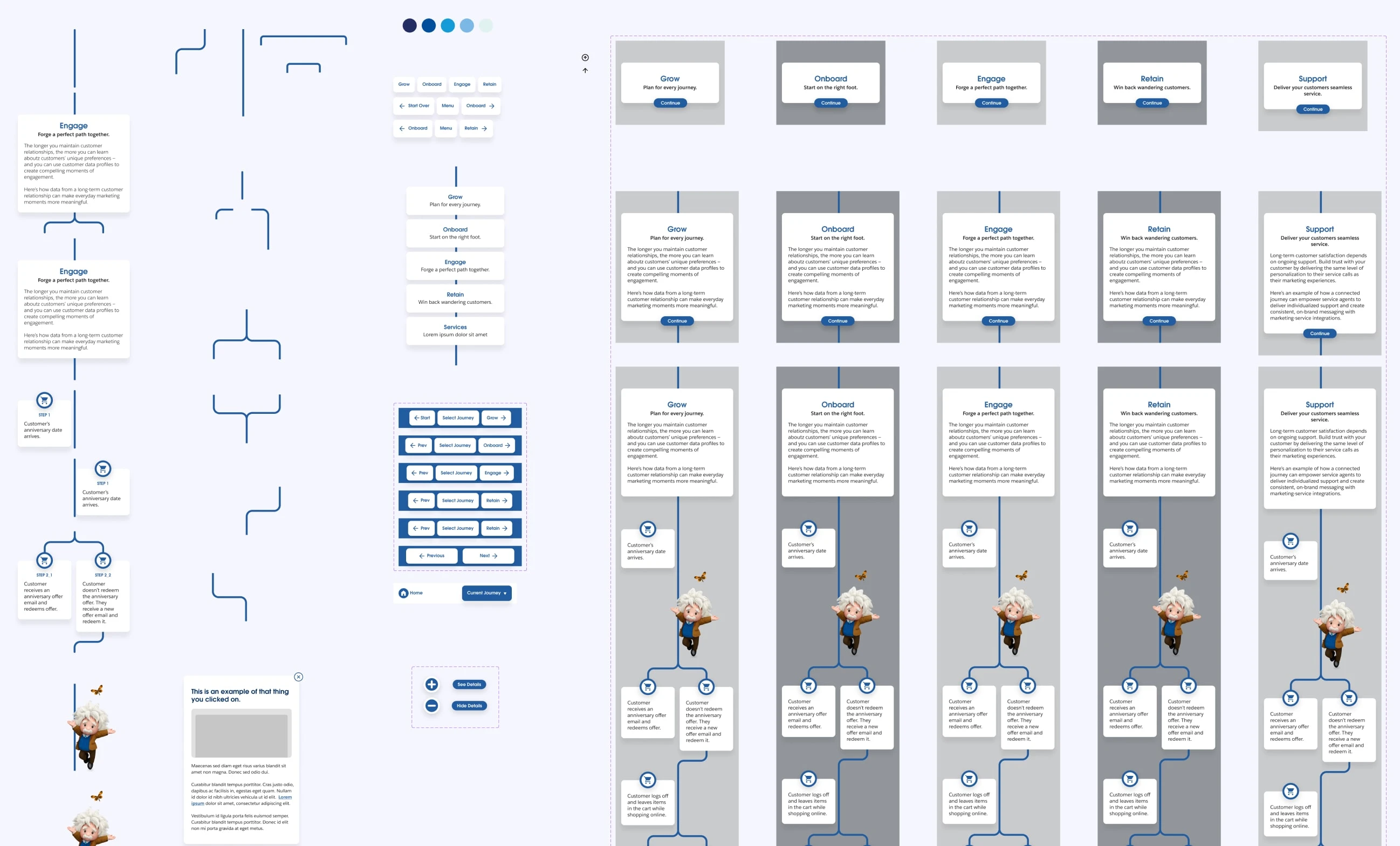
By defining component patterns early, we created detailed, interactive prototypes to validate content flow with the client. These prototypes, along with the component library, served as a roadmap for the development team while the design team worked simultaneously on final visual assets.
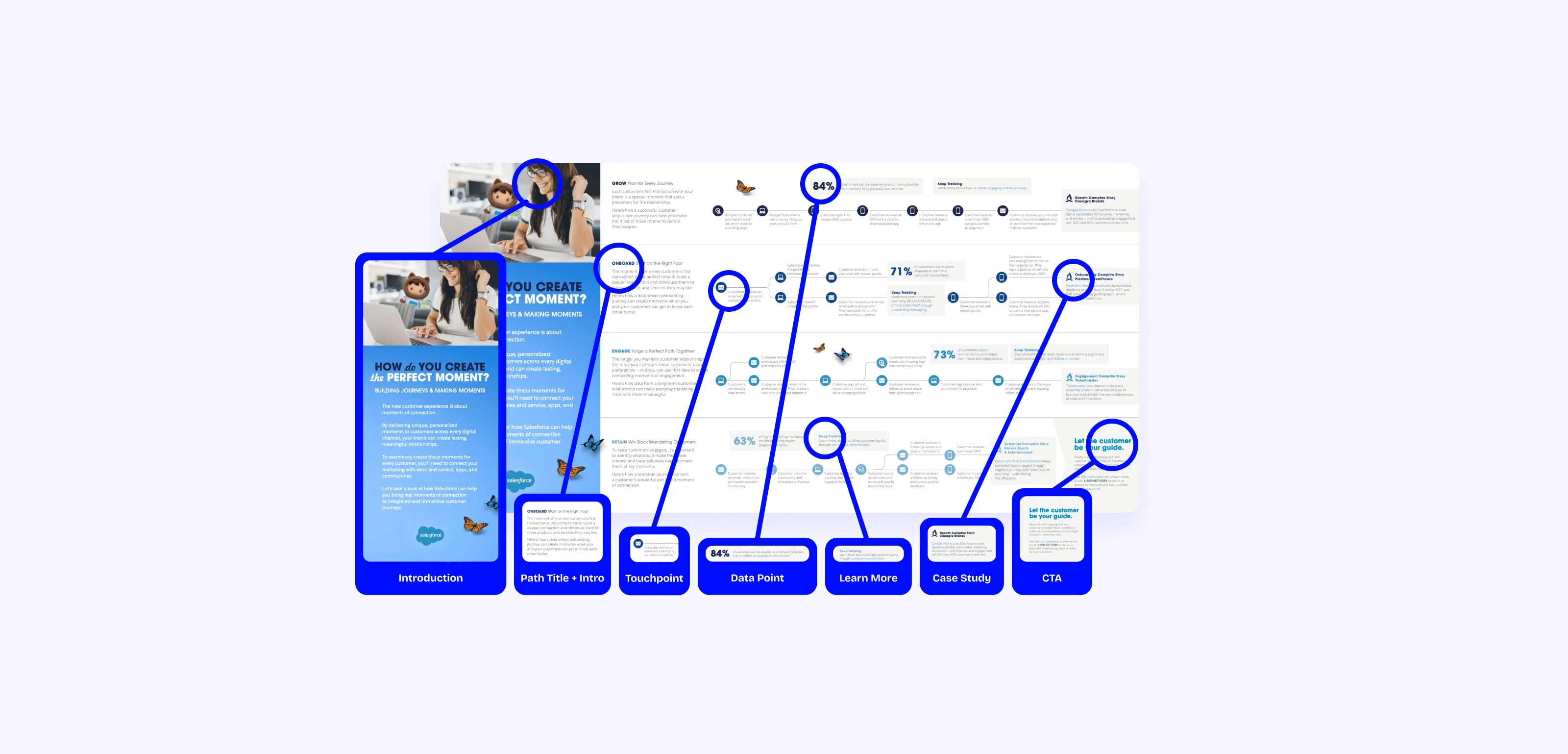
The original document outlined key phases of the Customer Journey, helping us determine how to structure unique content components for the website. From there, our focus shifted to transforming a dense, static document into an intuitive, mobile-friendly experience.
Like this project
Posted Jul 8, 2025
Learn more about a recent project I worked on with Salesforce.
Likes
0
Views
10