Strategic Insurance Advisory for Africa's Oil & Gas Sector

Opeyemi Osiyemi

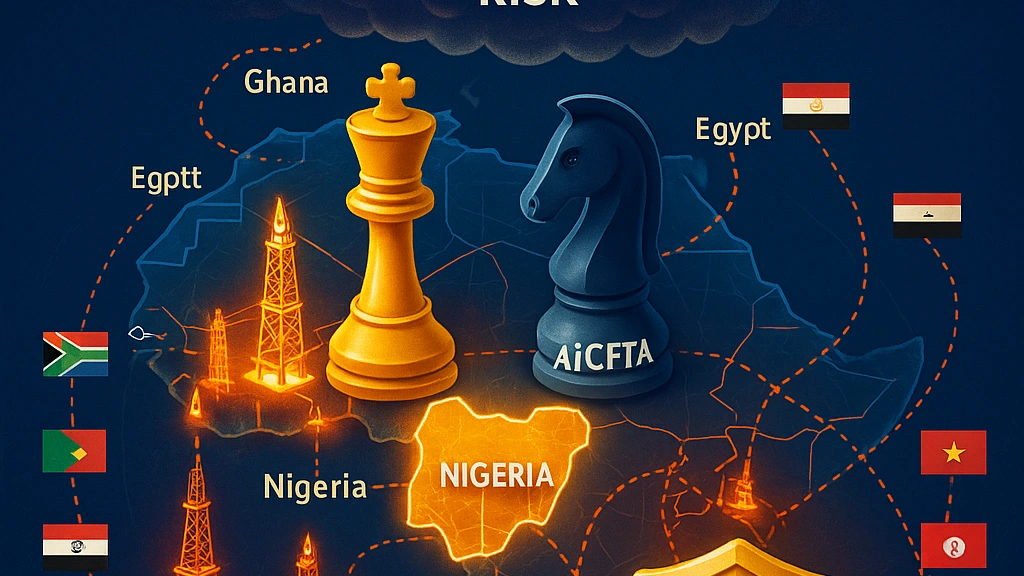
Africa’s Oil & Gas sector is a $500+ billion powerhouse, fueling global markets and local economies. Nigeria pumps 2 million barrels daily, Ghana’s Jubilee field scales up, and Egypt’s gas hubs drive regional trade. Yet, beneath this boom lies a silent disruptor: geopolitical risk. From banditry in Nigeria’s Delta to militia flare-ups in South Sudan, these risks aren’t just headlines- they’re reshaping boardroom strategies and threatening billions in assets. For C-suite leaders, ignoring this is a gamble you can’t afford. The good news? Strategic insurance, rooted in Africa’s realities and amplified by AfCFTA, is your master key to turning risk into opportunity.
Let’s unpack why geopolitical risk is the game-changer no one’s talking about- and how to lead with insurance.
The Geopolitical Minefield Threatening Oil & Gas
Africa’s energy landscape is a high-stakes chessboard. In Nigeria, banditry and pipeline sabotage cost significant billion annually, with about 70% of oil theft linked to local unrest. Libya’s factional chaos can slash 300,000 barrels of output overnight. South Sudan’s oilfields, critical to approximately 90% of its GDP, face militia disruptions, delaying $200 million projects. Egypt’s Suez Canal, a linchpin for 12% of global trade, saw a 2021 blockage that stalled $9 billion daily- hitting African exporters hardest. Add external pressures- US tariffs (10-25% hikes under Trump 2.0) squeezing margins, China’s Belt and Road loans tightening fiscal control- and the board gets messier.
These aren’t abstract threats. A single pipeline attack in Nigeria can trigger $50 million in losses. A regulatory shift in Ghana, spurred by election-year populism, can freeze $100 million in offshore rigs. For Oil & Gas executives, the impact is visceral: delayed projects, soaring costs, and shareholder scrutiny. Yet, many lean on outdated insurance models- generic policies from the west or global hubs that miss Africa’s nuances. The result? Gaping coverage holes and millions in uncovered claims.
AfCFTA: A Double-Edged Sword
The African Continental Free Trade Area (AfCFTA) is a $3.4+ trillion game-changer. With Nigeria and 22 other nations- Ghana, Egypt, Cameroon, Kenya, South Africa, Ethiopia, Rwanda, and more- gazetting tariff concessions, intra-African Oil & Gas trade could surge by $9 billion annually. Nigeria’s crude flows to South Africa’s refineries, Ghana’s gas targets Côte d’Ivoire, and Angola’s LNG eyes Senegal. By slashing 90% of tariffs by 2035, AfCFTA fuels cross-border projects like Nigeria’s $2.8 billion AKK pipeline or Egypt-Algeria gas corridors.
But this trade boom amplifies geopolitical risks. Piracy in the Gulf of Guinea, where 95% of Africa’s maritime kidnappings occur, threatens Nigeria and Cameroon’s oil routes, with $1.2 billion in losses yearly. Regulatory misalignment across AfCFTA’s 23 nations can spark disputes, stalling $500+ million projects. Currency volatility, like Nigeria’s naira swings, hikes trade credit risks. As US tariffs strain global exports, African producers lean on volatile regional buyers, adding payment default risks. Without strategic insurance, AfCFTA’s promise becomes a liability.
The Insurance Gap- and Its Hidden Costs
Most Oil & Gas firms rely on boilerplate policies- property damage, business interruption, or marine covers- often sourced from Lloyd’s or global reinsurers. These are unprepared for Africa’s geopolitical realities. Nigeria’s communal land disputes can halt $200 million drilling projects, but standard policies rarely cover regulatory risks. South Africa’s labor strikes, disrupting LNG terminals, demand political violence clauses most policies lack. Ethiopia’s border tensions, threatening energy corridors, require bespoke trade credit covers global insurers overlook.
The cost of this gap is staggering. A $100 million offshore rig in Ghana, uninsured for political unrest, faces ruin from sanctions shift. A Nigerian exporter, without trade credit protection, loses $10 million when a regional buyer defaults. Lloyd’s, strained by global climate and cyber claims, could charge 20-30% premium markups for African risks, assuming “high risk” without local insight. Worse, premiums flee Africa, draining billions in capital to London or Bermuda. For C-Execs, this isn’t just a cost- it’s an unsuccessful approach.
Insurance as the Strategic Solution
Smart insurance isn’t a cost center-it’s your competitive edge. By aligning coverage with Africa’s geopolitical and AfCFTA-driven realities, Oil & Gas leaders can protect assets, unlock growth, and lead the continent’s energy future. Here’s a strategic framework to make it happen:
Map Geopolitical Hotspots: Use AfCFTA’s trade data to pinpoint risks- Nigeria’s piracy-prone Gulf of Guinea, Egypt’s Suez vulnerabilities, Cameroon’s separatist zones. Forecast exposures like Ghana’s election-year regulatory shifts or South Sudan’s militia risks. This isn’t guesswork; it’s precision.
Leverage Local Expertise: Nigerian insurers, backed by African Reinsurance Corporation , Continental Reinsurance understand local nuances- Delta’s communal tensions - better than London syndicates. Underwrite 70% of risks locally to retain premiums, save 15% on forex losses, and speed claims by 30%.
Lagos can be Africa’s insurance hub. I SEE IT and I Believe IT!
Deploy Parametric Innovation: Parametric policies- payouts triggered by events like port blockages or militia attacks- deliver swift, transparent claims. Nigeria’s oil traders could save $5 million yearly with piracy-triggered covers. Kenya’s gas exporters need regulatory-shift policies. Scale these via AfCFTA’s digital trade protocols.
Balance Global and Regional: Reserve Lloyd’s for catastrophic risks-$1 billion LNG plant blowouts- while syndicating operational risks across Nigeria, Ghana, and Egypt. AfCFTA’s 23-nation network enables risk pooling, cutting premiums by 10-20%.
Future-Proof with Training: Build underwriter capacity for complex risks- cyberattacks on Nigeria’s smart pipelines, climate shocks to Ghana’s offshore rigs. Align policies with AfCFTA’s dispute resolution for seamless claims.
This isn’t charity; it’s building an envisioned $250 billion African insurance market.
Nigeria’s Opportunity to Lead
Nigeria, with 2 million barrels daily and a developing renewable sector, is Africa’s linchpin. Its gazetted AfCFTA commitments signal stability, attracting $10 billion in energy investments yearly. Lagos can anchor a regional insurance syndicate, underwriting risks from Ghana’s oilfields to Ethiopia’s hydropower. By blending local expertise with AfCFTA’s scale, Nigeria can keep billions in premiums home, rivaling Lloyd’s and fueling economic resilience.
Picture this: a $5 billion Nigerian-led pool insuring cross-border projects by 2030.
If you Got the P I C T U R E, COMMENT #ISEEIT!
The Broader African Impact
Beyond Nigeria, AfCFTA’s 23 nations offer diverse opportunities. Ghana’s 200,000-barrel output needs piracy and political risk covers. Egypt’s gas hubs demand Suez-specific trade disruption policies. Cameroon’s modest 60,000 barrels face separatist threats, requiring bespoke solutions. Renewable leaders like Kenya (45% green energy) and Ethiopia (3,000 MW hydro exports) need cyber and tech-failure covers for smart grids. South Africa’s LNG and wind projects require ESG-aligned policies. Strategic insurance unites these markets, turning risks into growth.
#Geopolitical risk isn’t a hurdle- it’s your chance to outpace competition.
Insurance, when done right, transforms volatility into stability.
We are committed to guiding Oil & Gas and Energy giants as well as the Energy Insurance eco-system to save millions by aligning coverage with Africa’s complexities- Nigeria’s pipelines, Ghana’s rigs, Egypt’s gas fields. Our framework will moderate premiums, close coverage gaps, and keep capital in Africa.
Ready to lead?
Audit Your Risks: DM me for a 15-minute consult to stress-test your portfolio.
Learn the Strategy: Join my Vision to Victory™ Energy Risk Course Wait-list for a deep dive on insuring Africa’s energy future.
Africa’s Oil & Gas boom is here, and geopolitical risk is its shadow. With smart insurance, you don’t just survive- you thrive.
As a Strategic Energy and Extractive Risk Advisor, I help African energy businesses and insurers solve complex risks and seize growth opportunities.
Be Part of The Risk Catalyst Community
Follow Opeyemi Osiyemi
The future is Africa, and it’s time to #insure IT!
#Energy #OilAndGas #EnergyInsurance #EnergyRisk #Insurance #GeopoliticalRisk #Leadership #Africa #AfCFTA
Like this project
Posted May 8, 2025
Advised on strategic insurance for Africa's Oil & Gas sector to mitigate geopolitical risks.
Likes
0
Views
1