Product Research for AI Job Hunting Extension

Agneta Petruta
1 collaborator

Project Overview
Client
Jobpedia.ai
Industry
Tech/AI
Year
2023
Location
London, UK
Category
Market Research / Kano Model

Jobpedia.ai is an AI-powered career discovery platform that helps people explore job paths, roles, and opportunities using data-driven insights and intelligent matching.
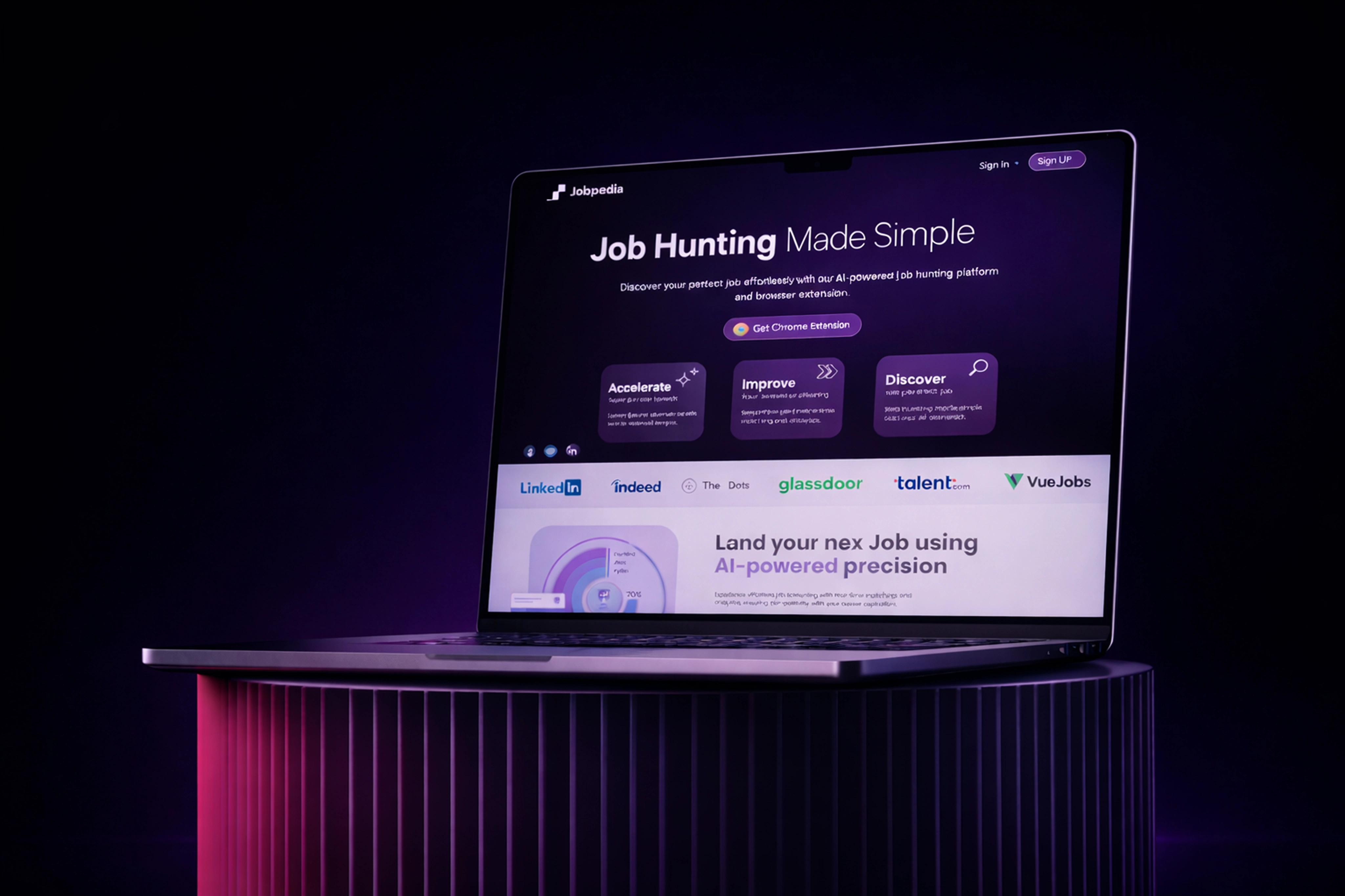
When Jobpedia.ai approached me, their product was evolving quickly, but the brand wasn’t keeping pace.
Jobpedia needed clarity on where they stood in the market and how to position their product to achieve product–market fit.
To get there, I focused on understanding who the product is for, what needs are underserved, and how Jobpedia’s value proposition could meaningfully differentiate in a crowded space.
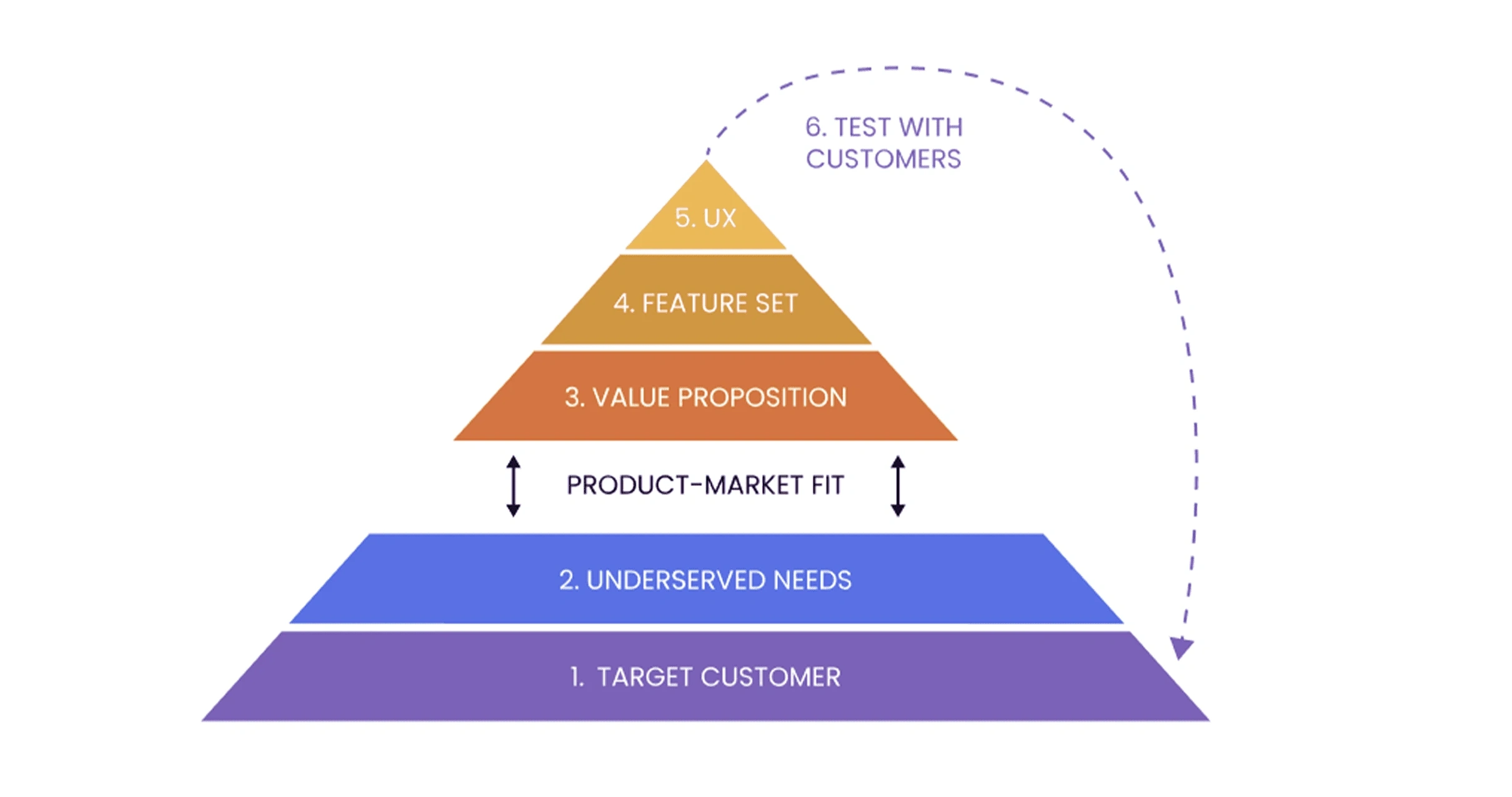
Product–Market Fit Pyramid
Concept Developed by Dan Olsen
I started by defining Jobpedia’s target customers and key user segments. From there, I conducted in-depth competitor research analyzing how competitors position themselves, which features they promote, and where users express dissatisfaction or unmet expectations.

Target Customers
Competitor research was conducted to understand how existing products are positioned versus how users actually experience them.
This included reviewing promoted features, pricing models, and recurring user complaints across competing platforms.
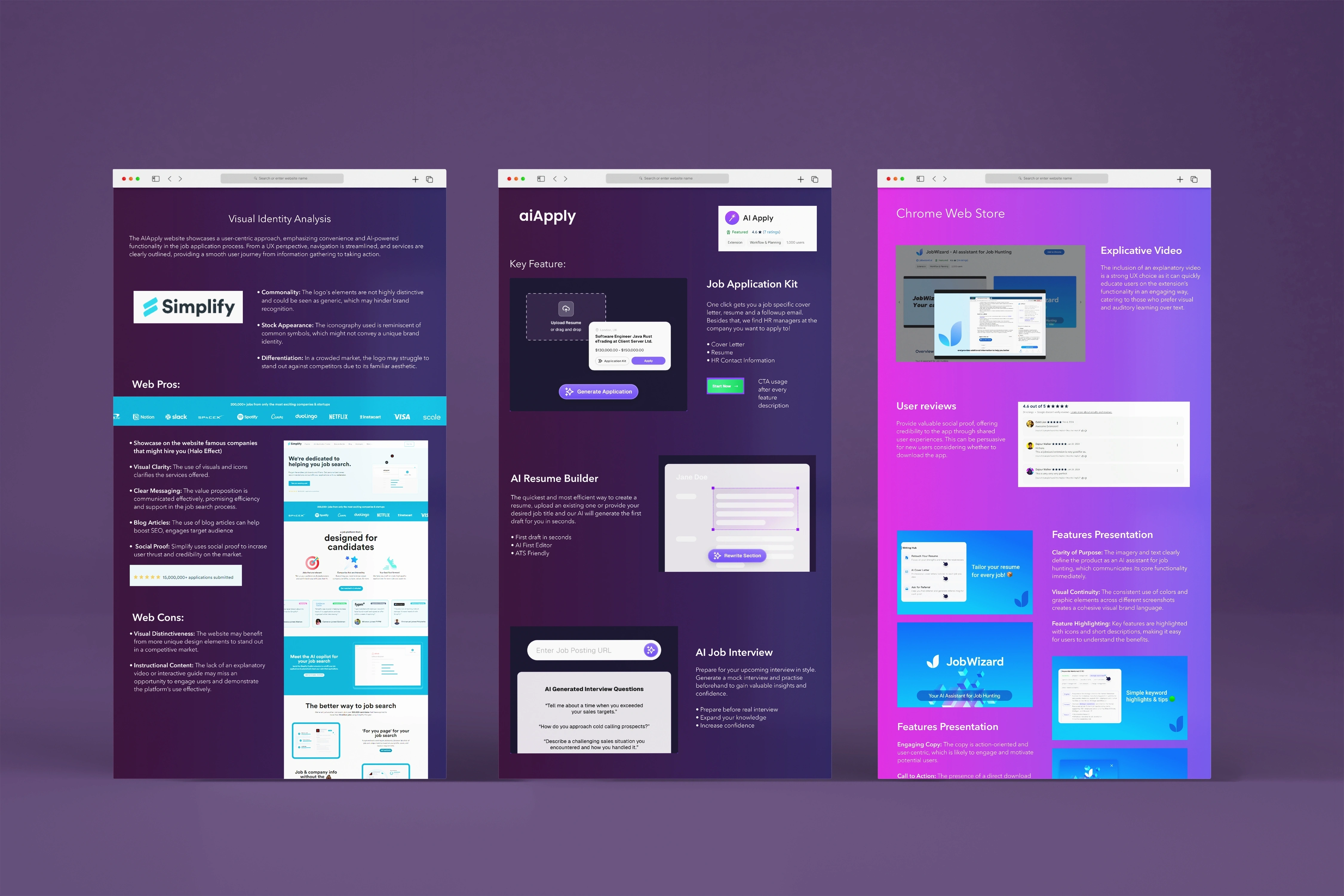
Competitor Analysis
By comparing promised functionality with real user feedback, consistent gaps emerged, such as missing features, unreliable performance, and unmet expectations.
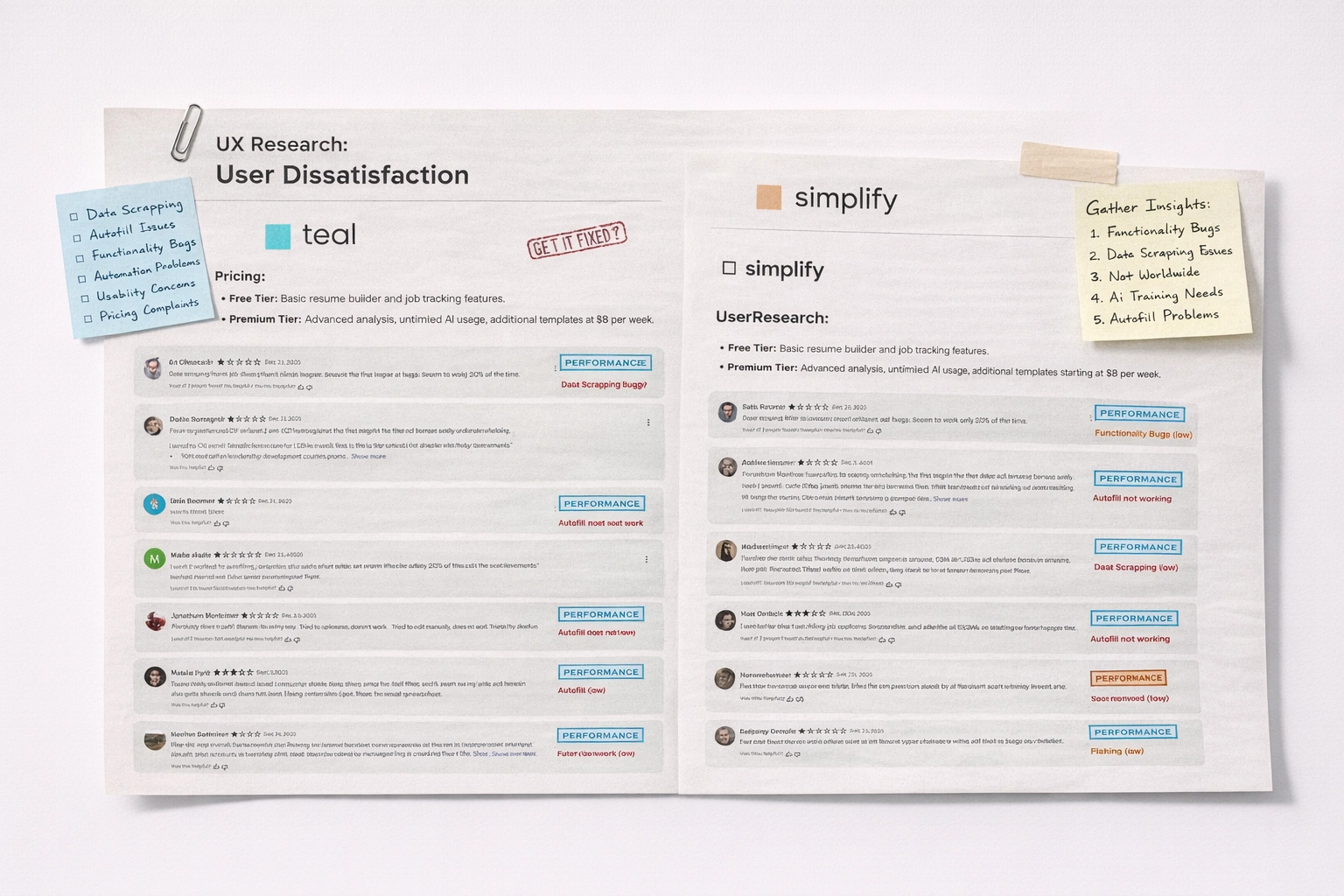
Analysis of competitor reviews and recurring user pain points
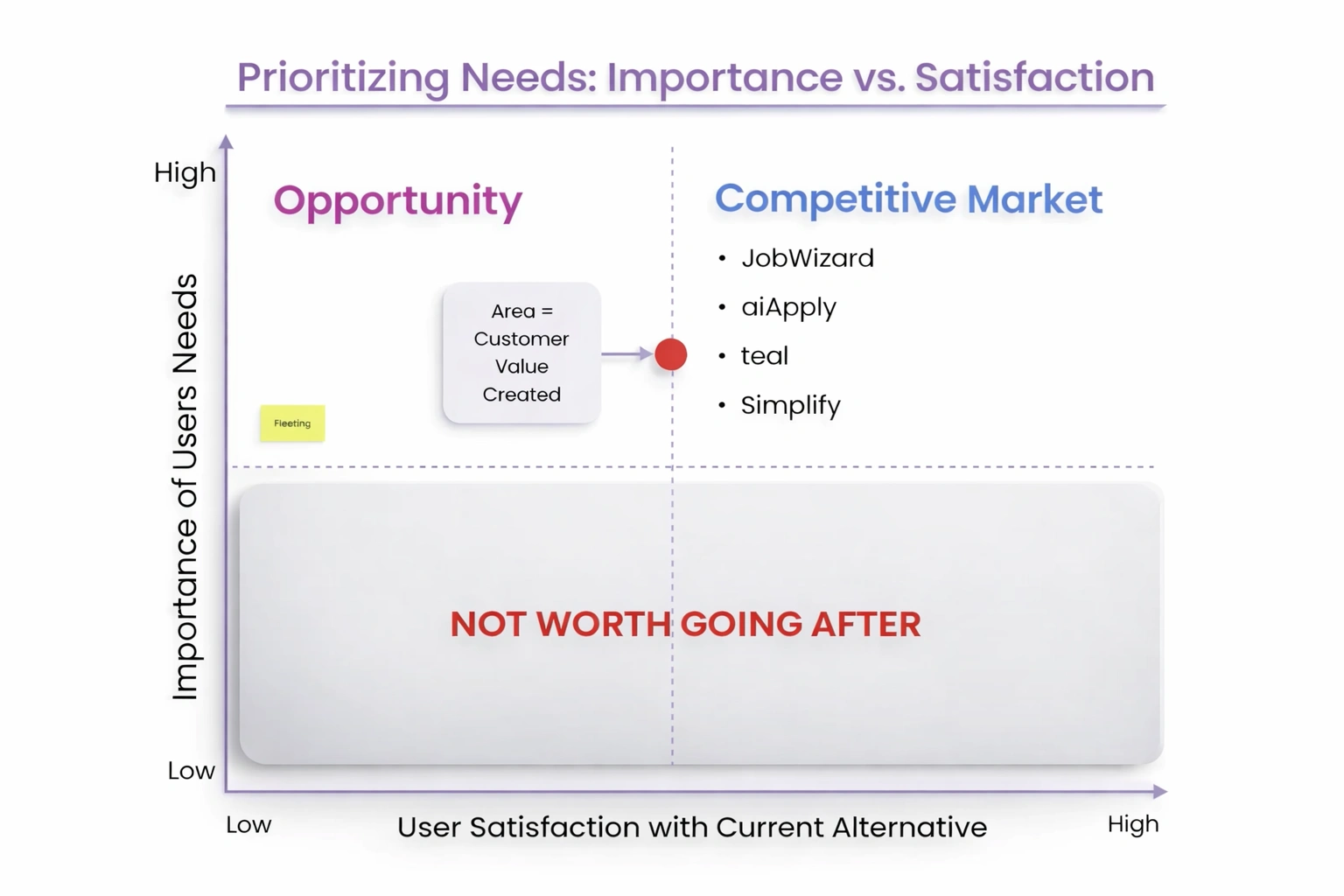
Prioritizing Needs: Importance vs. Satisfaction
Based on the earlier research into competitor reviews the insights were mapped onto an importance vs. satisfaction framework. The goal was to translate qualitative findings into a clear way of prioritizing which user needs matter most and how well they are currently served.
Defining Opportunity Areas
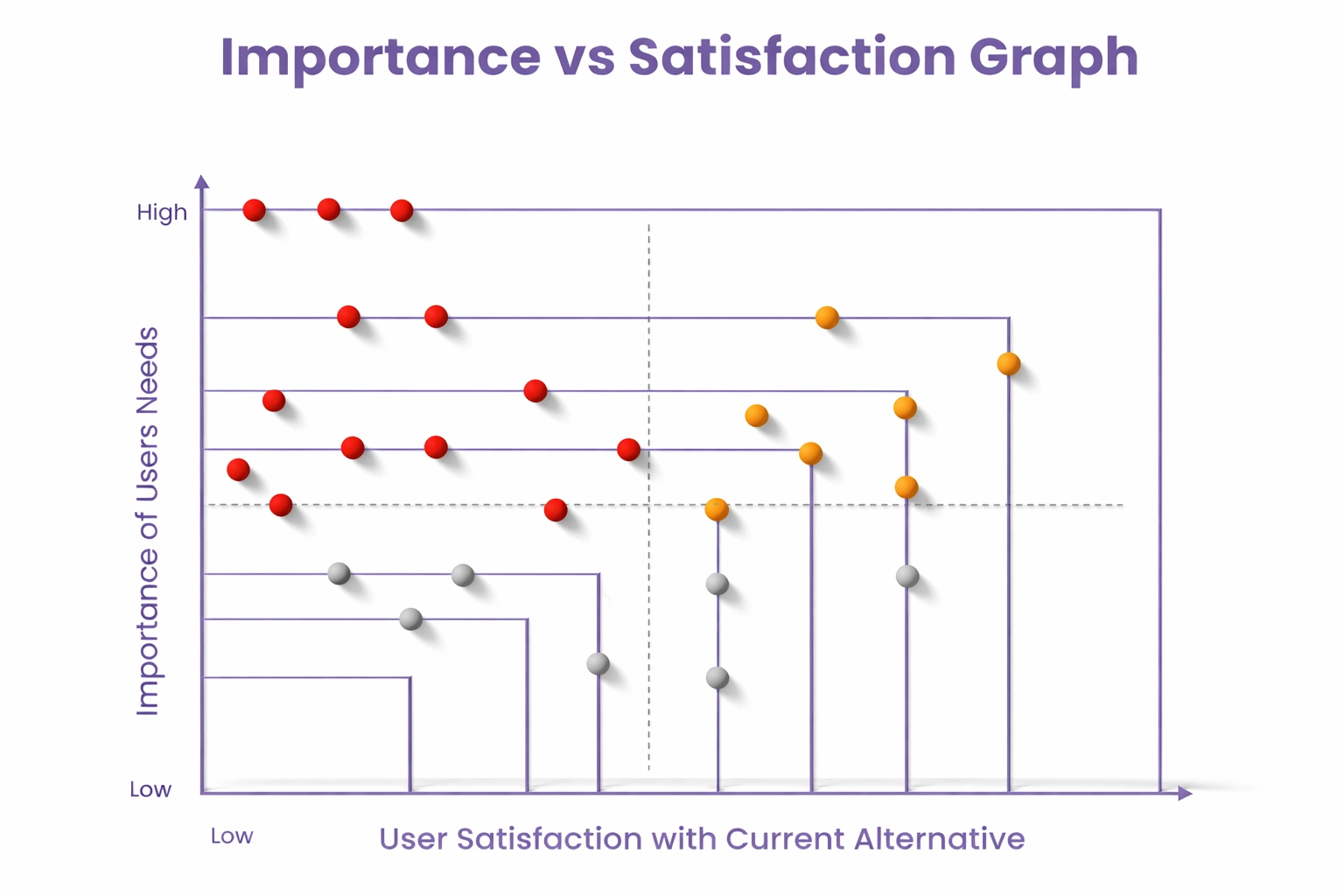
User needs and features were then mapped onto this framework to directly compare importance against satisfaction. Needs with high importance and low satisfaction clearly highlighted opportunity areas, where competitors consistently failed to meet expectations.
This made it easier to distinguish between crowded, competitive spaces and areas where meaningful product differentiation and value creation were possible.
Introducing the Kano Model:
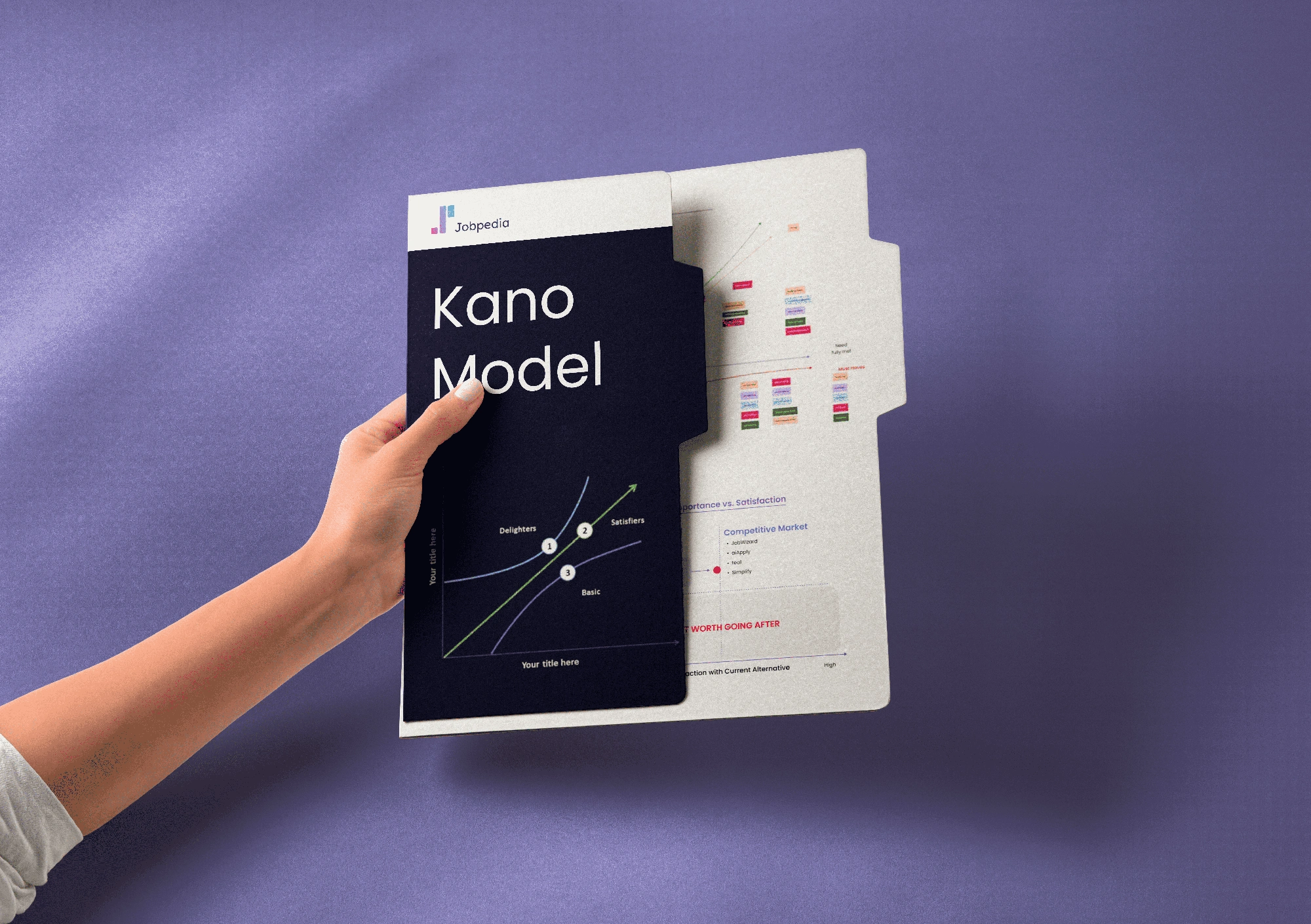
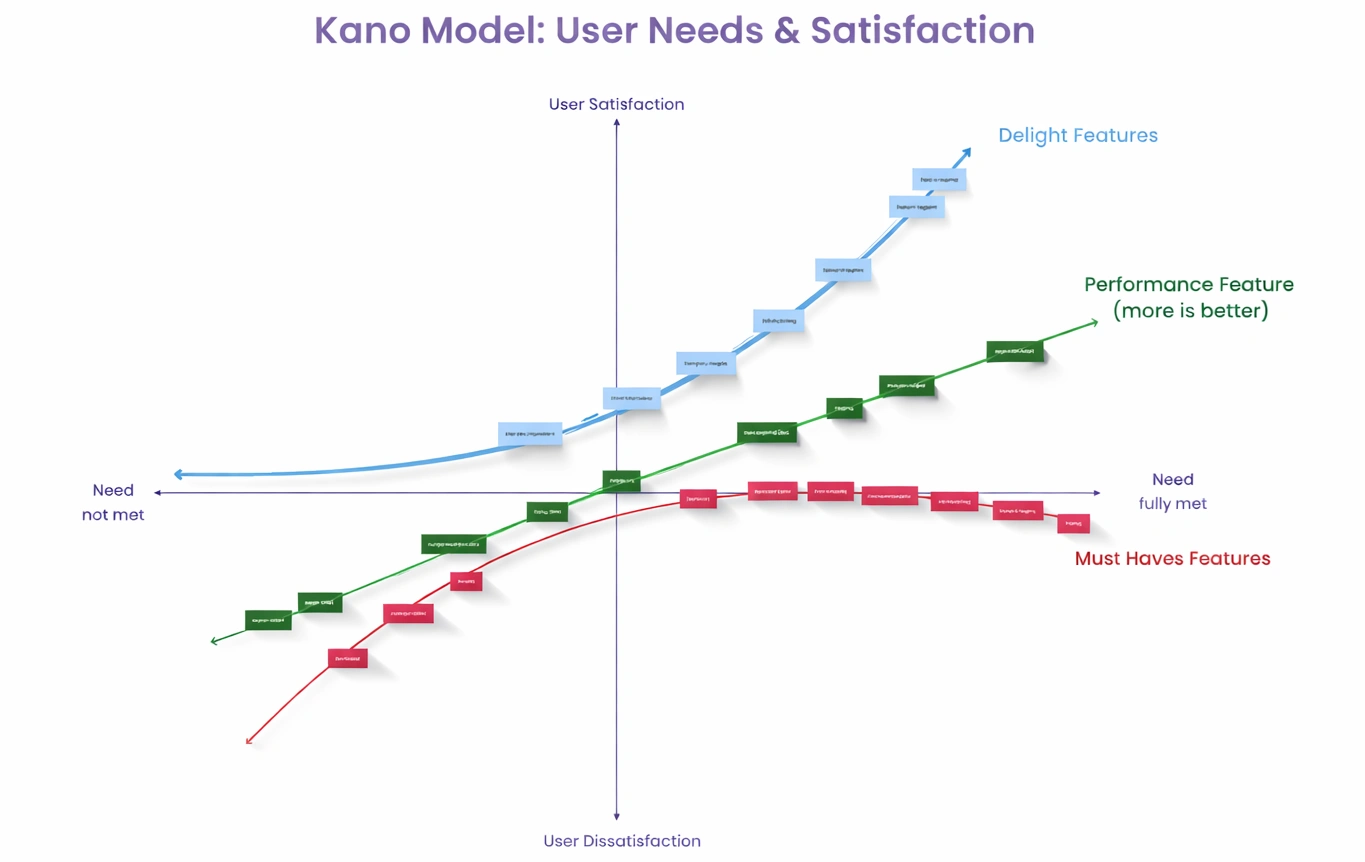
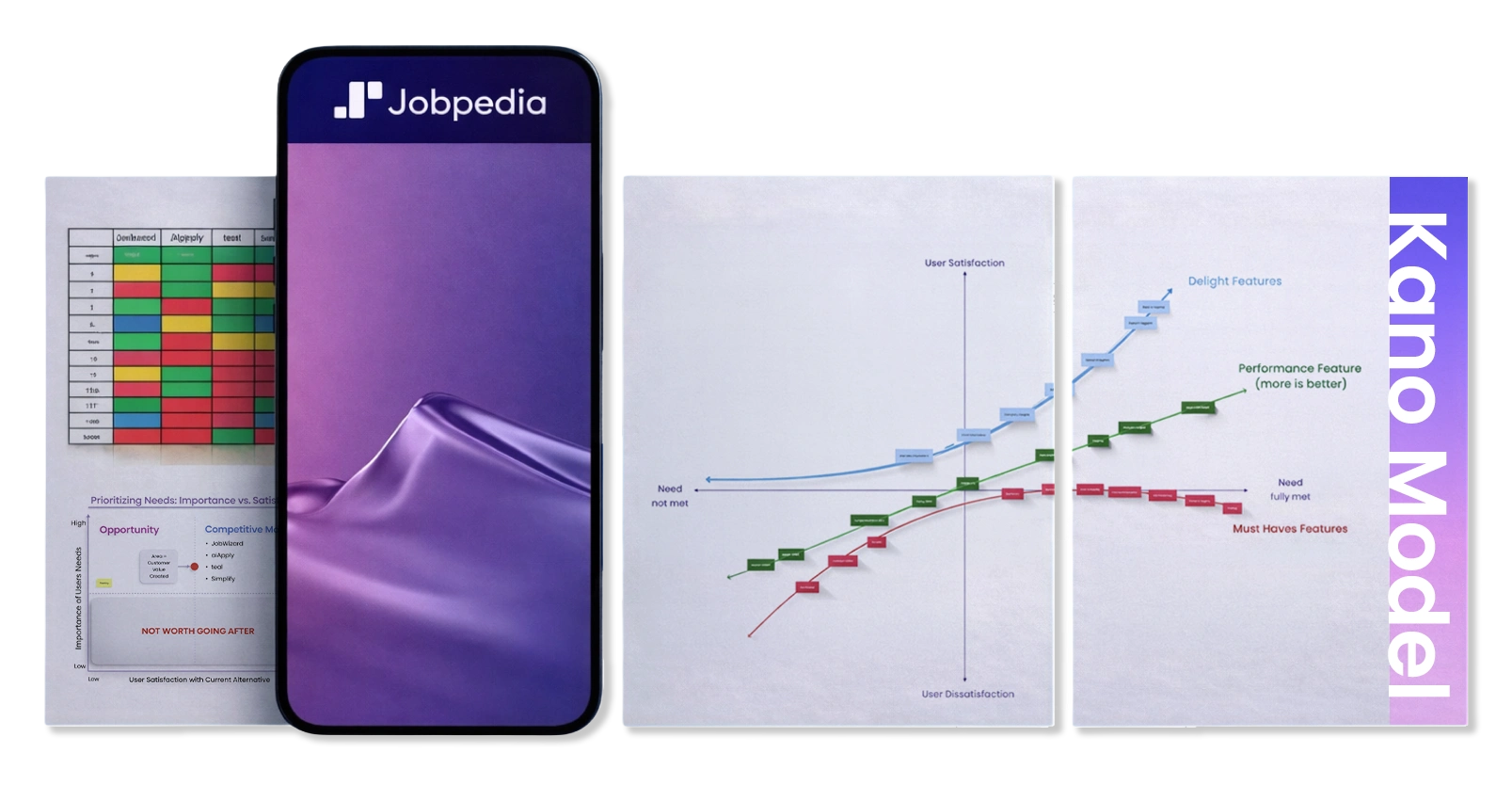
The Kano Model is a framework used to understand how different product features affect user satisfaction. It helps categorize features into:
must-have features
performance features
delight features
clarifying which features users expect, which improve satisfaction, and which can pleasantly surprise them.
Applying the Kano Model
Building on the earlier Importance vs. Satisfaction insights, the Kano Model was used as a decision tool to guide feature prioritization. It helped distinguish between features that needed:
to be present to meet basic expectations - must have features
features that could improve satisfaction - performance features
areas where Jobpedia could meaningfully differentiate - delight features
After applying the Kano Model, I created a Kano Feature Comparison Matrix to map must-have, performance, and delight features across Jobpedia and its five main competitors. This made it possible to directly compare which features were already standard in the market, which ones competitors competed on, and which delight features were largely missing or underdeveloped.
These insights helped define which features Jobpedia should prioritize, strengthen, or actively promote to better differentiate and create value for users.
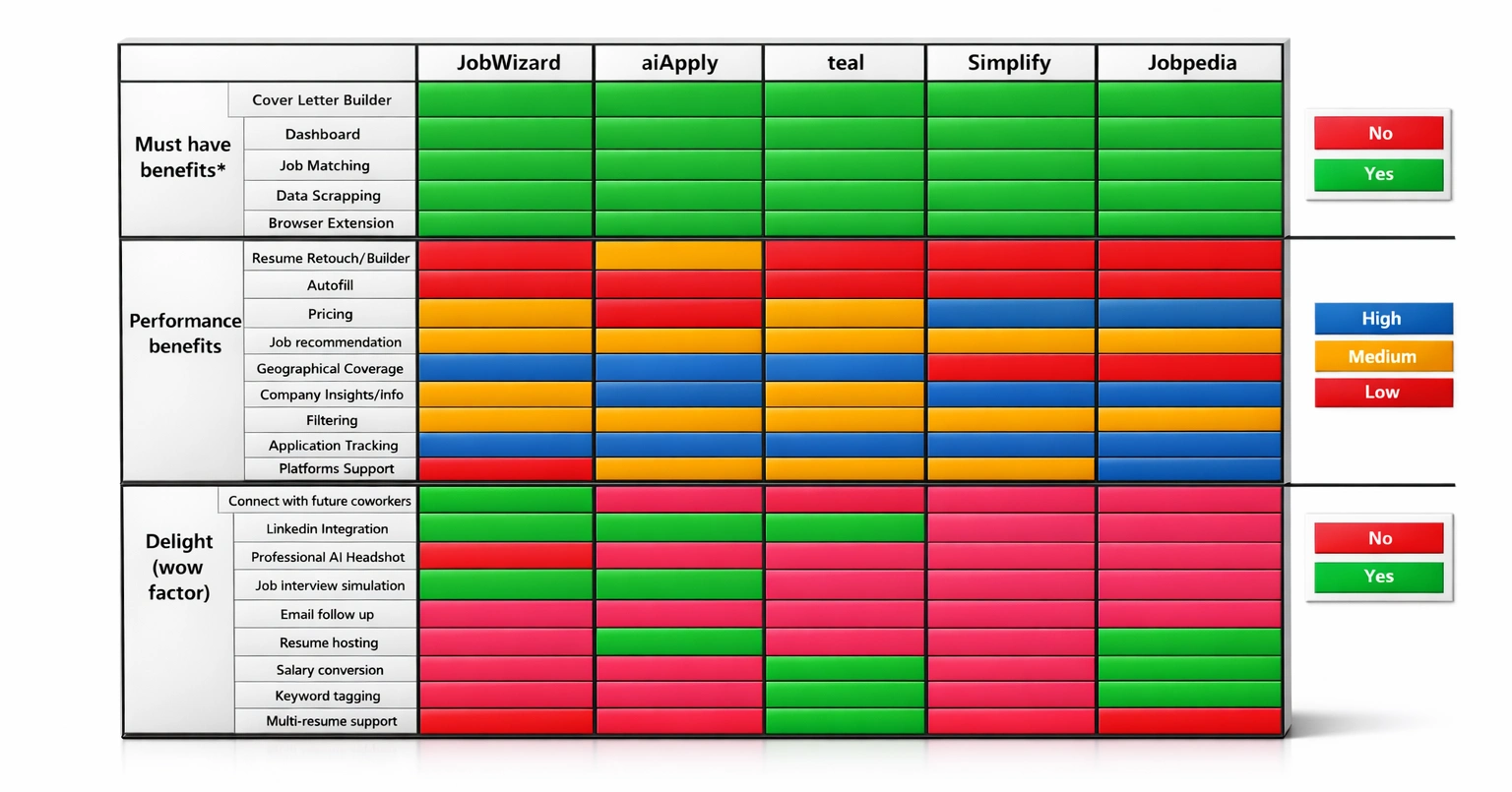
Kano Feature Comparison Matrix
These insights helped define which features Jobpedia should prioritize, strengthen, or actively promote to better differentiate and create value for users.
Like this project
Posted Apr 13, 2026
Product Research / Costumer Segmentation / Kano Model
Likes
1
Views
109
Collaborators