Content-First Redesign of Visa's AI Platform

Meghan Behnke


Overview
Visa’s internal AI platform started as a way to chat with language models. But as AI capabilities evolved, so did the needs of Visa's employees, requiring the platform to evolve into a broad ecosystem: more than 50 models, hundreds of published agents, customizable agents, tools, applications, files, prompts, APIs, and developer pathways.
From April through July 2026, I led a content-first redesign of the platform as the sole designer and content designer. An AI-first workflow let me expand my practice across interaction and visual design, shaping the content and product together in working prototypes. I owned the product model, information architecture, taxonomy, interface content, and design direction, partnering with engineering on production implementation.
At a glance
Regular users across Visa: 30,000+
Available AI models: 50+
Published agents: 200+
Areas of focus
Content strategy
AI UX
Information architecture
Taxonomy
Interaction design
Visual design
AI-assisted prototyping
Designing for intelligent defaults
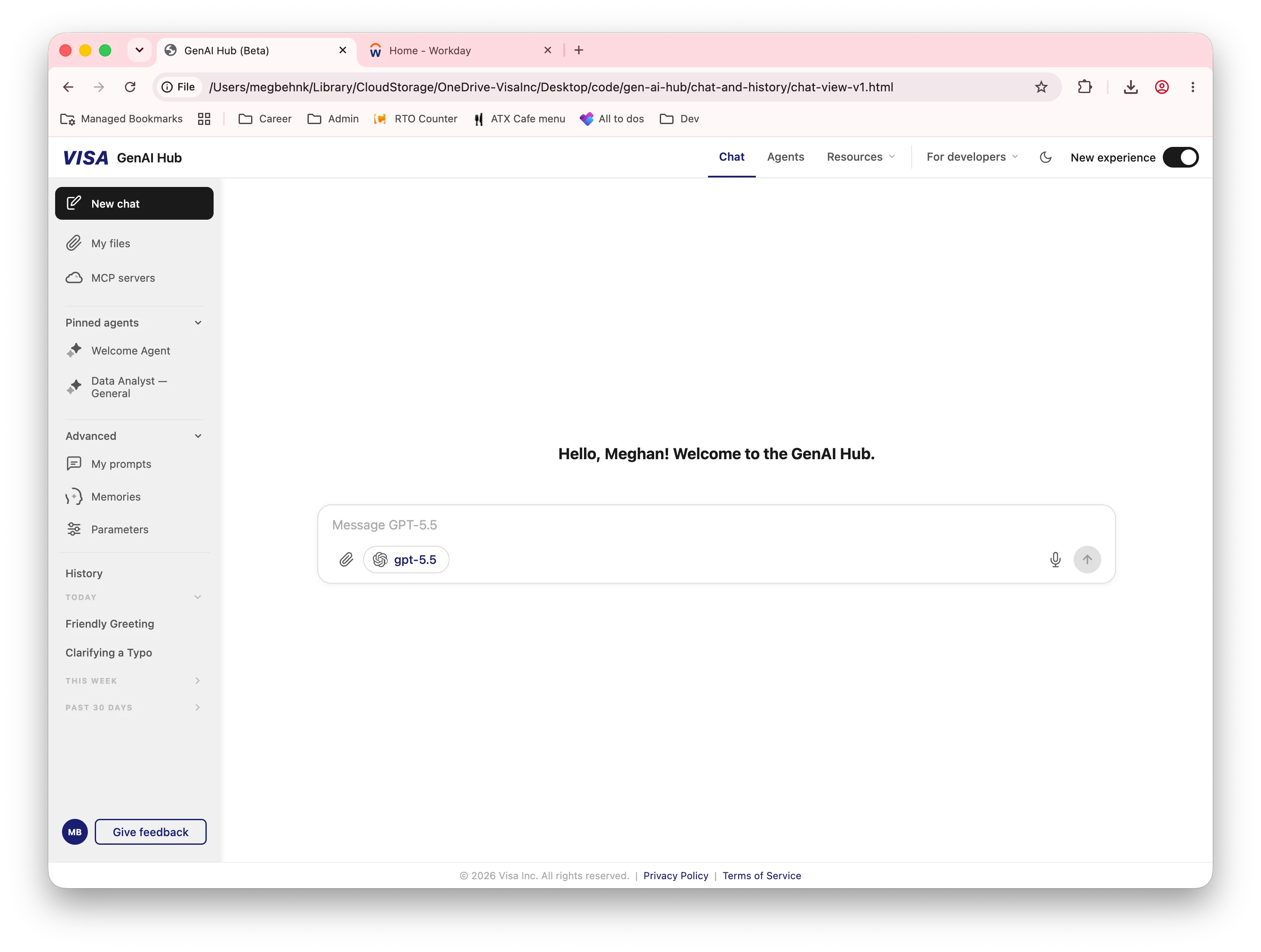
The platform was owned by an engineering team with deep AI expertise. They wanted maximum technical capability and configurability, which introduced complex choices for users. I advocated for a simpler experience: intelligent defaults that infer what users need for everyday tasks, with advanced controls available when needed.
Turning many capabilities into one platform model
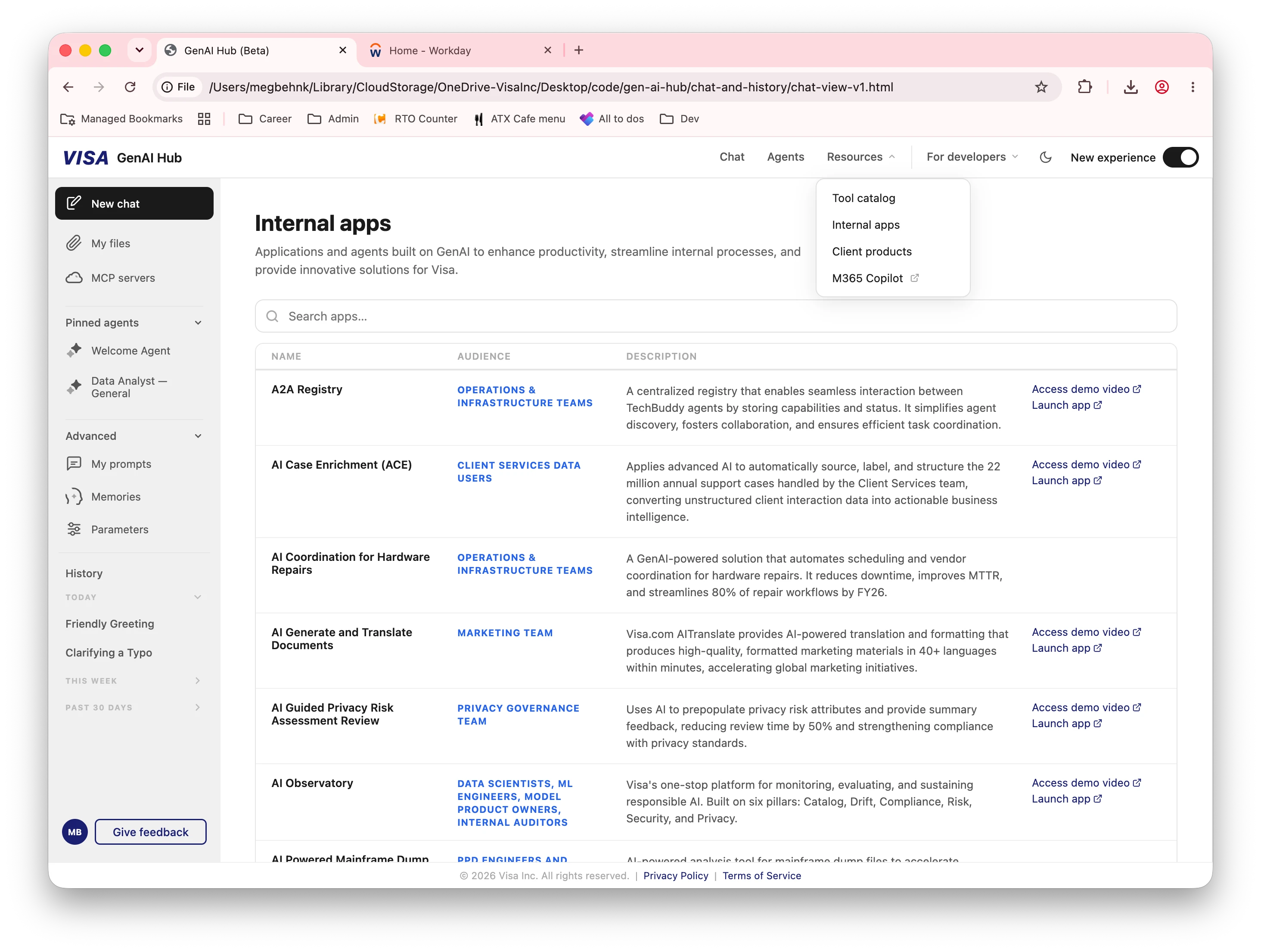
The growing platform needed a structure that prioritized chat while keeping its expanding resources accessible. I organized the experience around two levels. Global destinations in the top navigation—Chat, Agents, Resources, and developer pathways—helped orient users within the larger ecosystem. Contextual utilities stayed in the left panel, close to the chat workspace, for quick access to chat-related features.
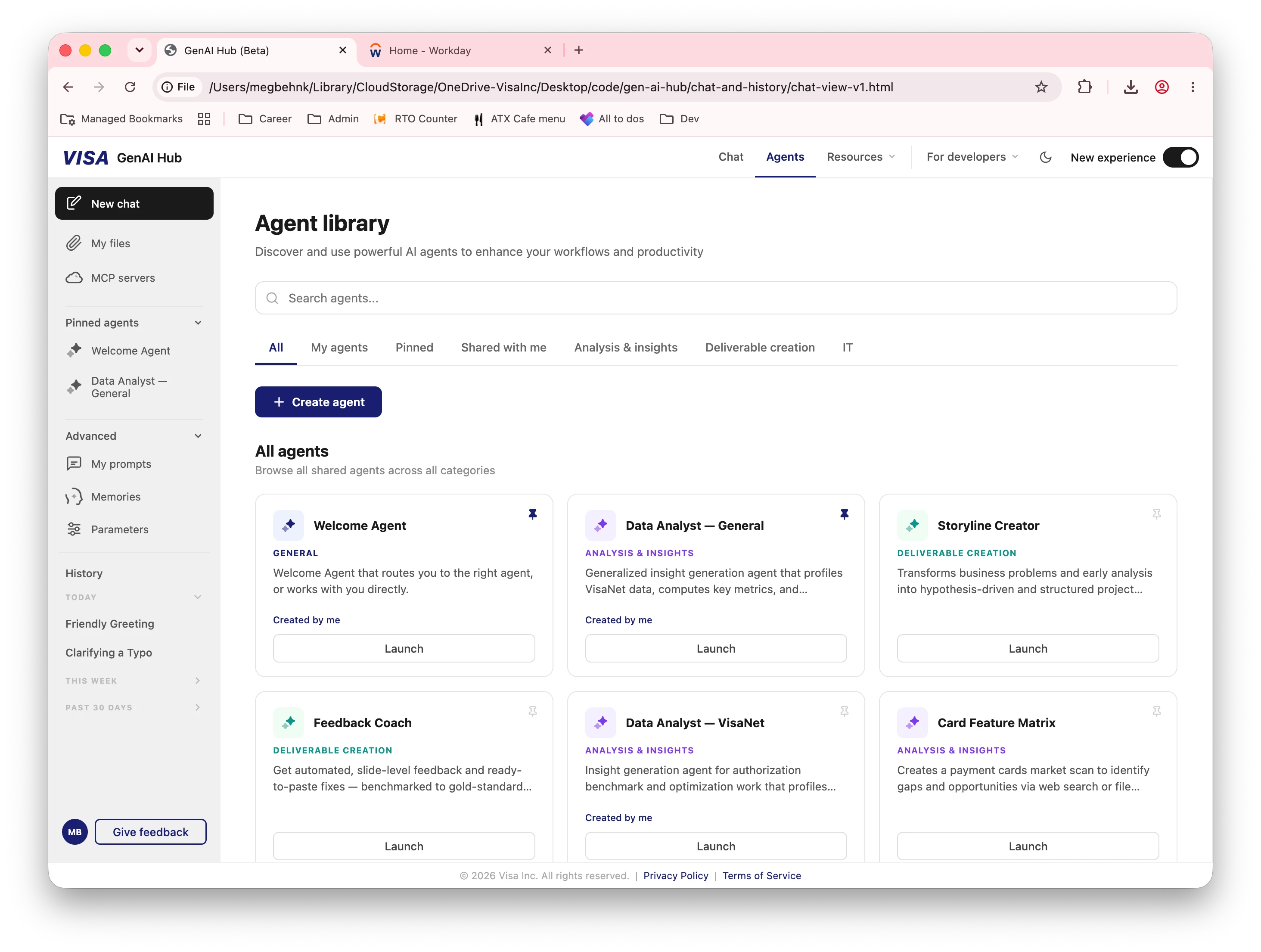
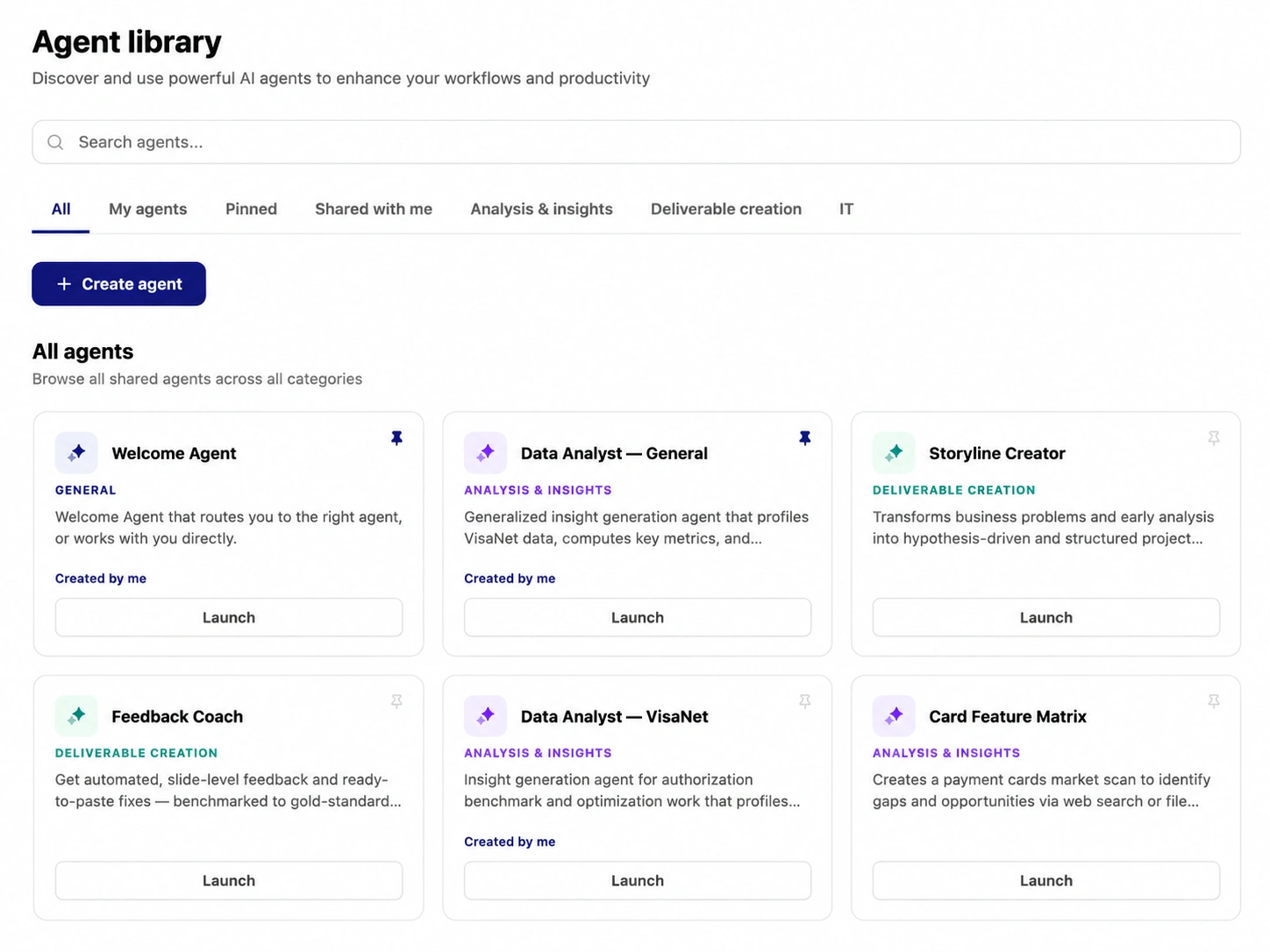
Different kinds of information also needed different structures. In the agent library, cards supported recognition and browsing, with a clear action to launch each agent. Tables surfaced denser information for tools and developer resources, helping users compare audience, category, provider, or use case.
Expanding my practice through an AI-first workflow
As AI changes how we build products, working across disciplines is an increasingly important part of design practice. This project gave me room to develop that breadth: applying my strengths in language, hierarchy, and audience needs while taking on interaction decisions, visual direction, and prototyping.
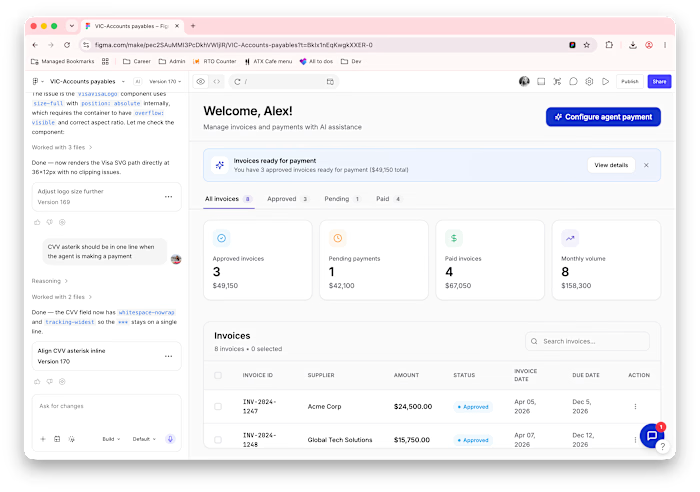
I used VS Code and Claude Code to build working HTML prototypes, making content, interaction, and visual decisions in context. I owned the design direction and partnered with engineering on production implementation.
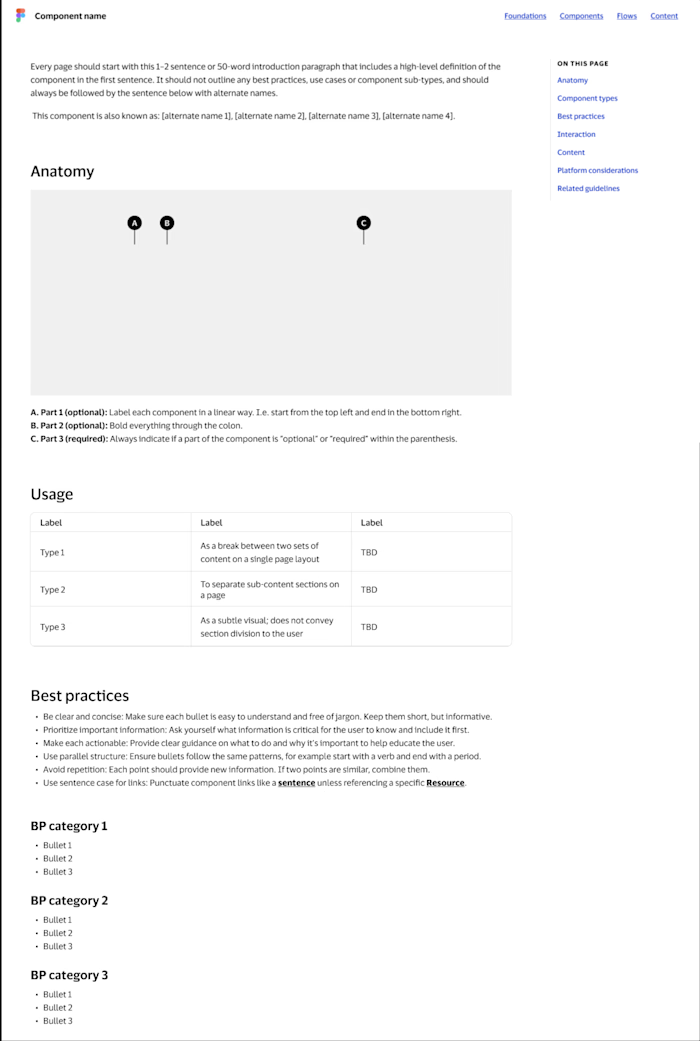
This revealed a new working process for AI-enabled, content-first practice:
01: Define the experience
Capability meanings, taxonomy, navigation, and interface language.
02: Make decisions tangible
Working HTML prototypes combining content, layout, and behavior.
03: Work through implementation
Like this project
Posted Nov 2, 2026
Led a content-first redesign of Visa's AI platform to improve UX, navigation, and product architecture.
Likes
0
Views
0
Timeline
Mar 31, 2026 - Jul 30, 2026
Clients
Visa