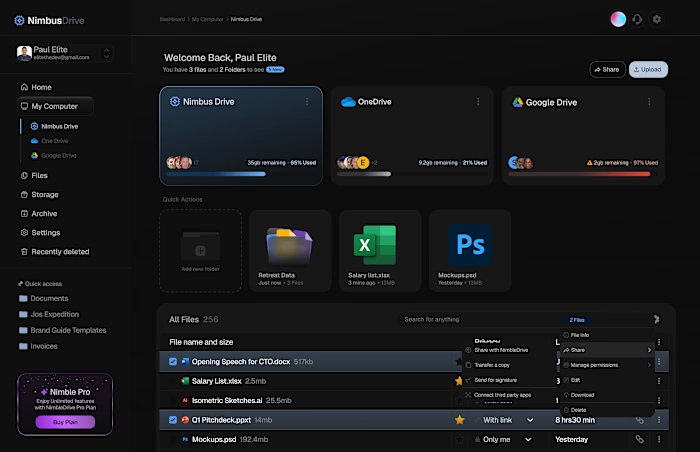
Designers should design for States,

Paul Elite

Designers should design for States, Not Just Screens.
A user interface is never truly static.
At any given moment, an element can be inactive, active, loading, completed, disabled, or in an error state. Each of these states represents a different point in the user's interaction with a product.
Yet, it's easy to design an interface around its ideal condition: when everything is working, the user knows exactly what to do, and nothing goes wrong.
But that's only one version of the experience.
A complete design accounts for what happens before, during, and after an interaction.
An input field, for example, isn't just a rectangle waiting for text. It needs to communicate when it's available, when it's receiving input, whether that input is valid, and what happens when something goes wrong.
These details establish a conversation between the user and the interface.
Without them, users are left to interpret what the system is doing. With them, the interface becomes more predictable, understandable, and responsive.
The goal isn't to design as many states as possible. It's to ensure that every meaningful change in the system is communicated appropriately.
Because good interaction design isn't just about what users see. It's about how the interface responds to what they do.
Like this project
Posted Sep 21, 2026
Designers should design for States, Not Just Screens. A user interface is never truly static. At any given moment, an element can be inactive, active, loadin...
Likes
0
Views
1