ONNO Apparel | Evidence-Led Creative Direction

Nebojsa Novkovic


ONNO APPAREL
PUBLIC EVIDENCE → CREATIVE DIRECTION
Independent portfolio study combining original concept work with a dated public Meta Ad Library observation. It was not commissioned by, produced for, or affiliated with ONNO Apparel, and it is not backed by account-side performance data.
WHY THIS CASE EXISTS
Creative production can expand quickly while the decision behind it remains vague. This case starts with the report: map what is visibly concentrated, separate that observation from performance, and use it to define a smaller account-side question.
01 — EVIDENCE WINDOW
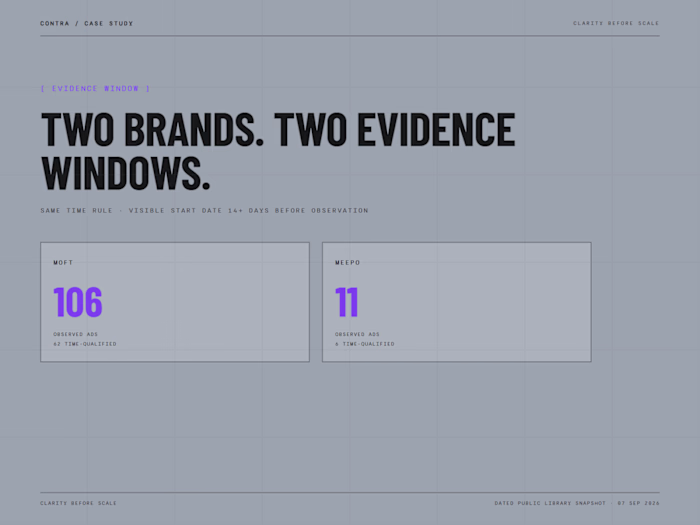
The 7 September 2026 snapshot contained 901 observed ads. Seven hundred forty had a displayed start date at least 14 days before the observation and form the dated structural sample. The reported median displayed age across the library was 40 days. These fields define the observation window; they do not establish why an ad remained visible or whether it performed.
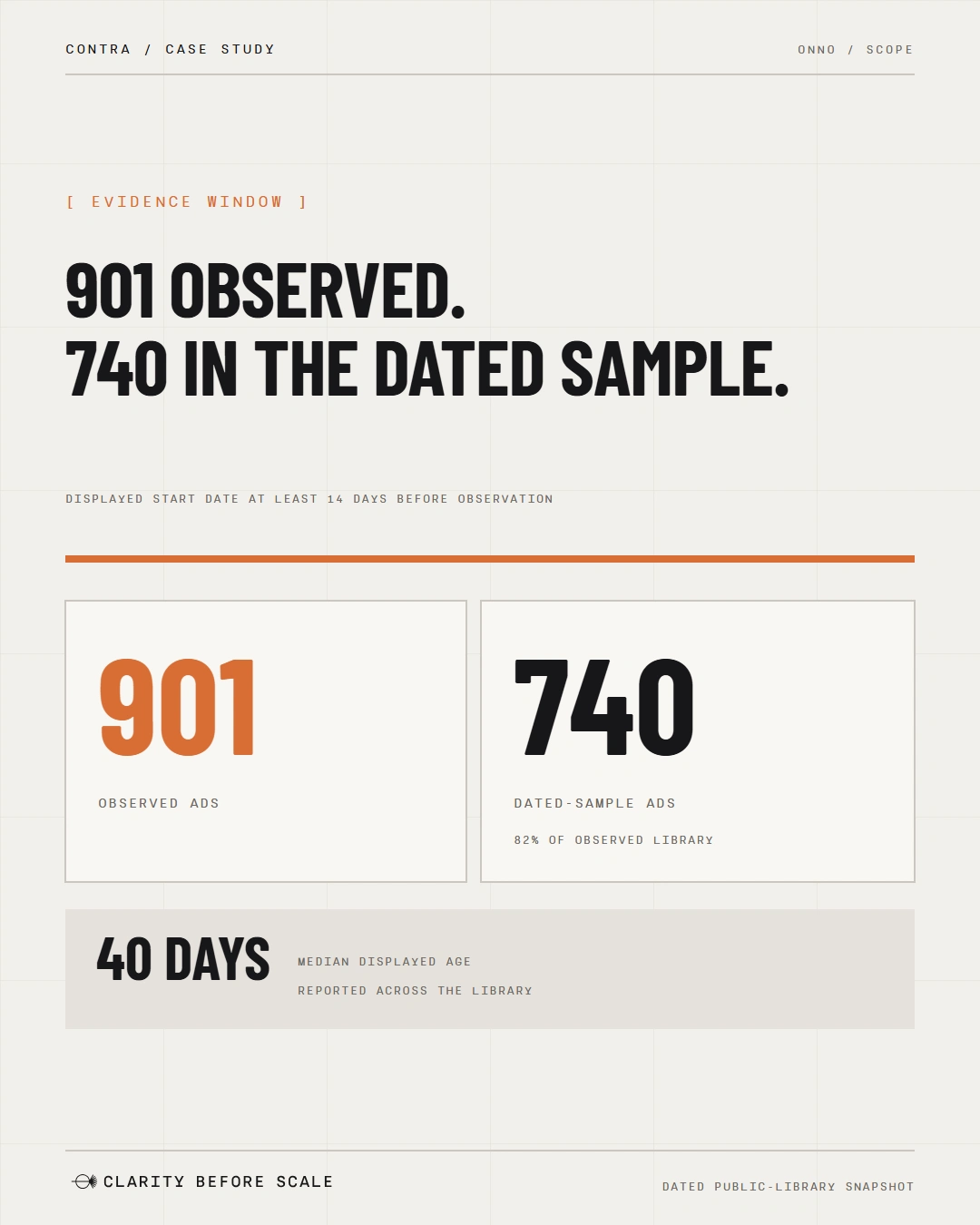
ONNO Apparel public-library evidence window: 901 ads observed, 740 with displayed age of at least 14 days, and a reported 40-day median displayed age. Public visibility does not establish performance.
02 — THE VISIBLE CREATIVE CENTRE
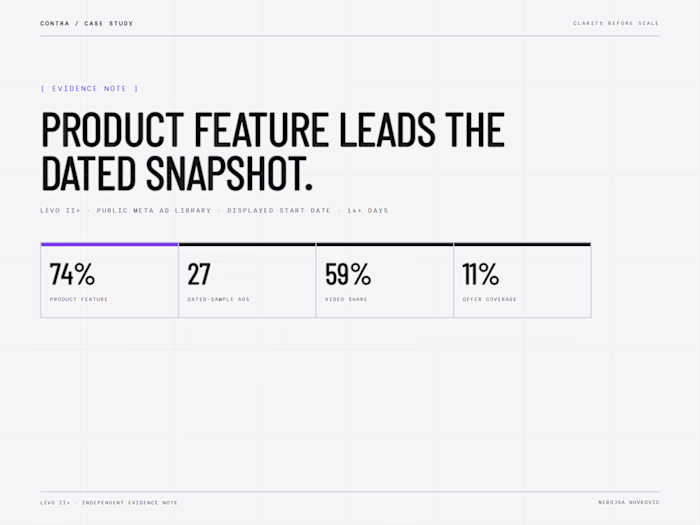
Product Feature accounts for 465 of 740 dated-sample ads and is the largest observed share (62.8%). UGC Content accounts for 174 ads, Social Proof for 49, and the remaining classified pillars for 52. A separate overlapping commercial flag identified a visible offer signal in 30 ads (reported as 4%). Lower representation is not evidence of an opportunity or a weakness; it identifies a question that still requires testing.
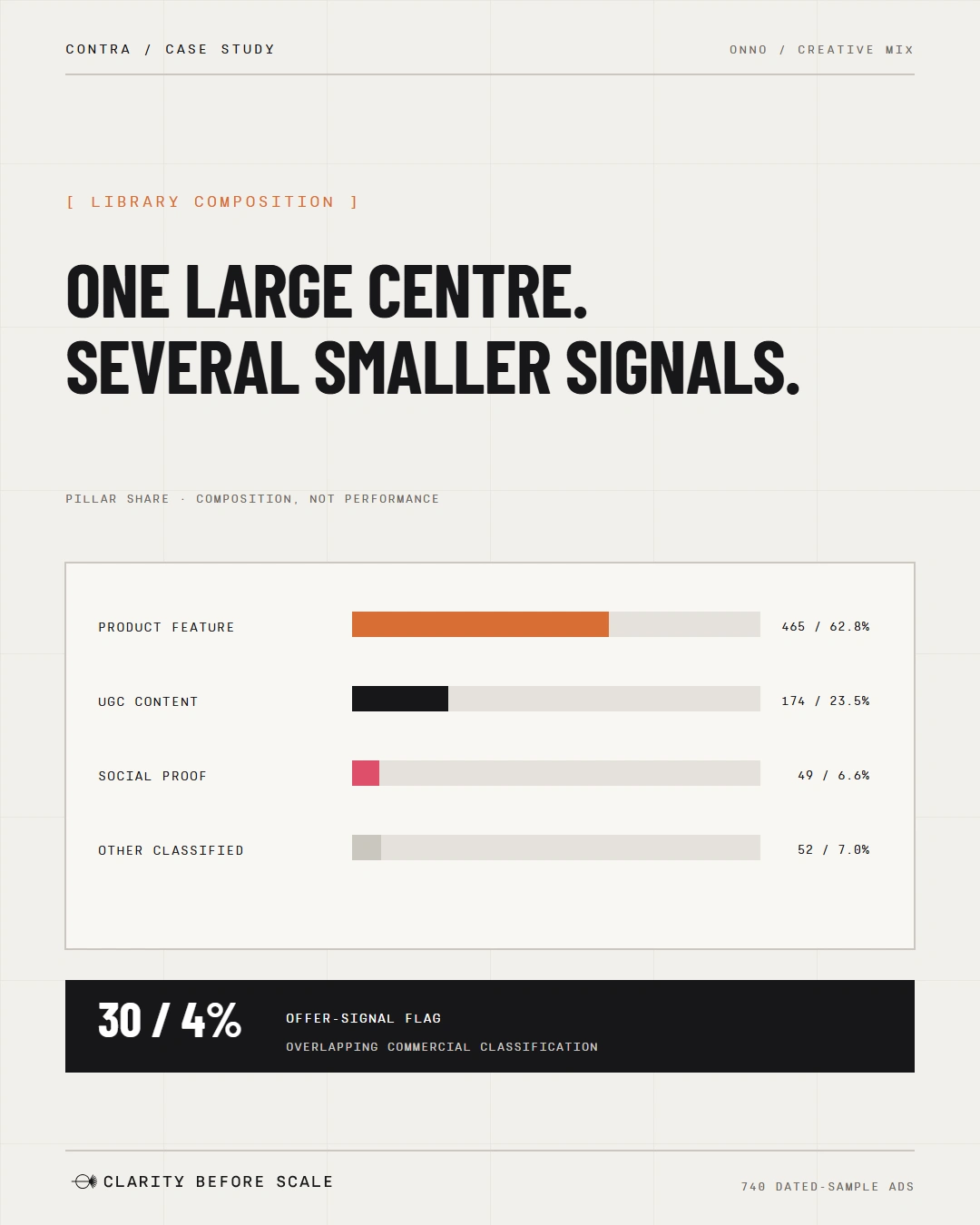
ONNO Apparel dated-sample composition: Product Feature 465, UGC Content 174, Social Proof 49, and 52 across remaining classified pillars; a separate overlapping offer flag appears in 30 ads.
03 — EXECUTION PROFILE
The dated sample contains 489 video ads (66%), 251 static or image ads (34%), and no carousel ads. Within the 738 assets with vision analysis, human presence was identified in 81%, product visibility in 96%, and text overlay in 88%. This documents the visible production mix, not spend allocation, response quality, or a winning format.
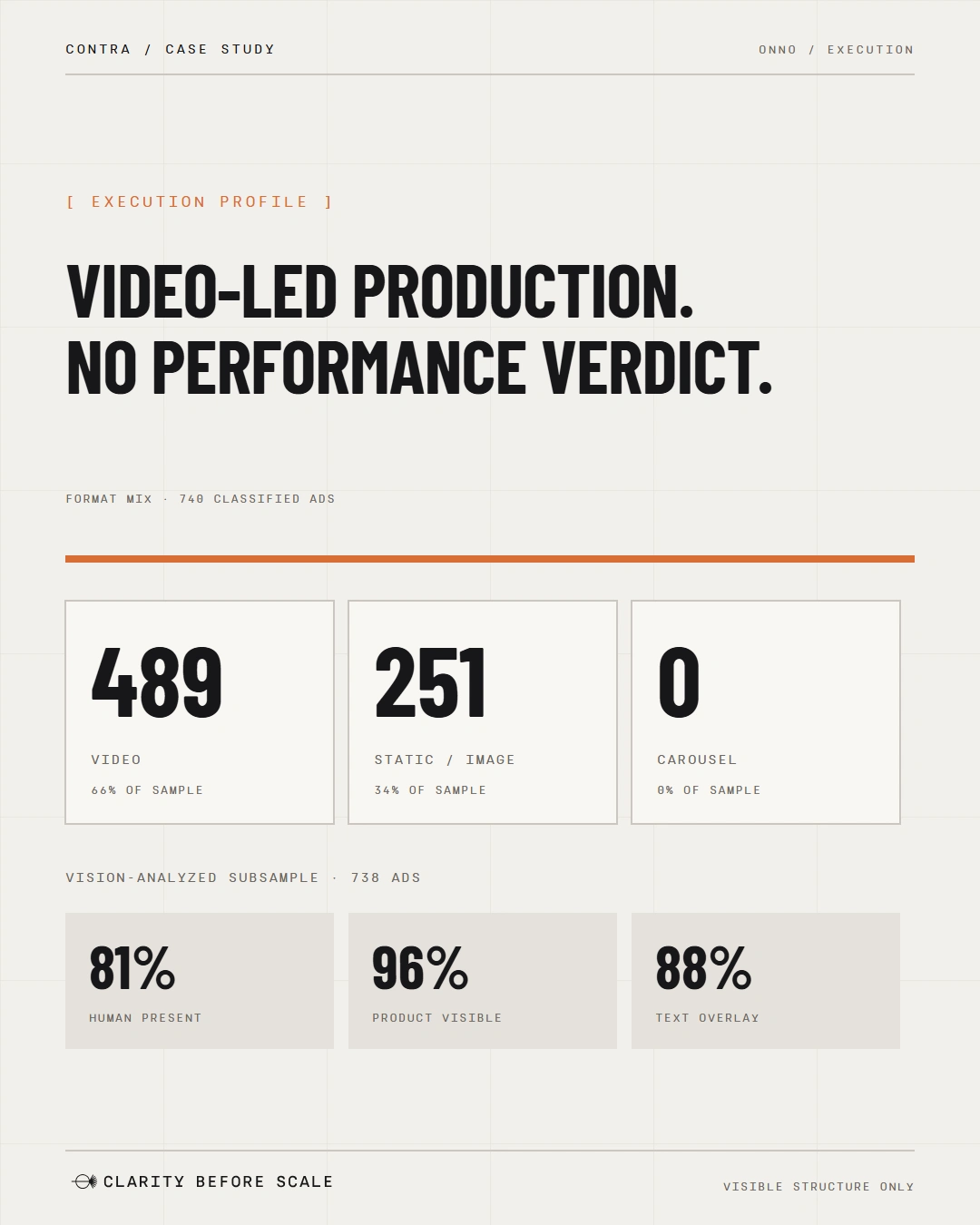
ONNO Apparel execution profile: 489 video and 251 static or image ads in the dated sample; among 738 vision-analyzed assets, 81% showed human presence, 96% showed the product, and 88% used text overlay.
04 — WHAT THE REPORT CHANGED
The report moved the work away from aesthetic preference and toward production constraints. Product Feature was already the largest visible pillar, so a visually different concept could not automatically be called strategic white space. Utility and sensory routes remained working hypotheses, and any new build needed a named variable and a clear account-side measurement boundary.
05 — ORIGINAL CONCEPT ROUTES
The retained concept pair explores two distinct questions: movement or use-case utility, and the sensory promise of lightness or comfort. They are portfolio concept routes, not reported results. Their role is to show how different buyer questions can be made legible before one is selected for a controlled test.
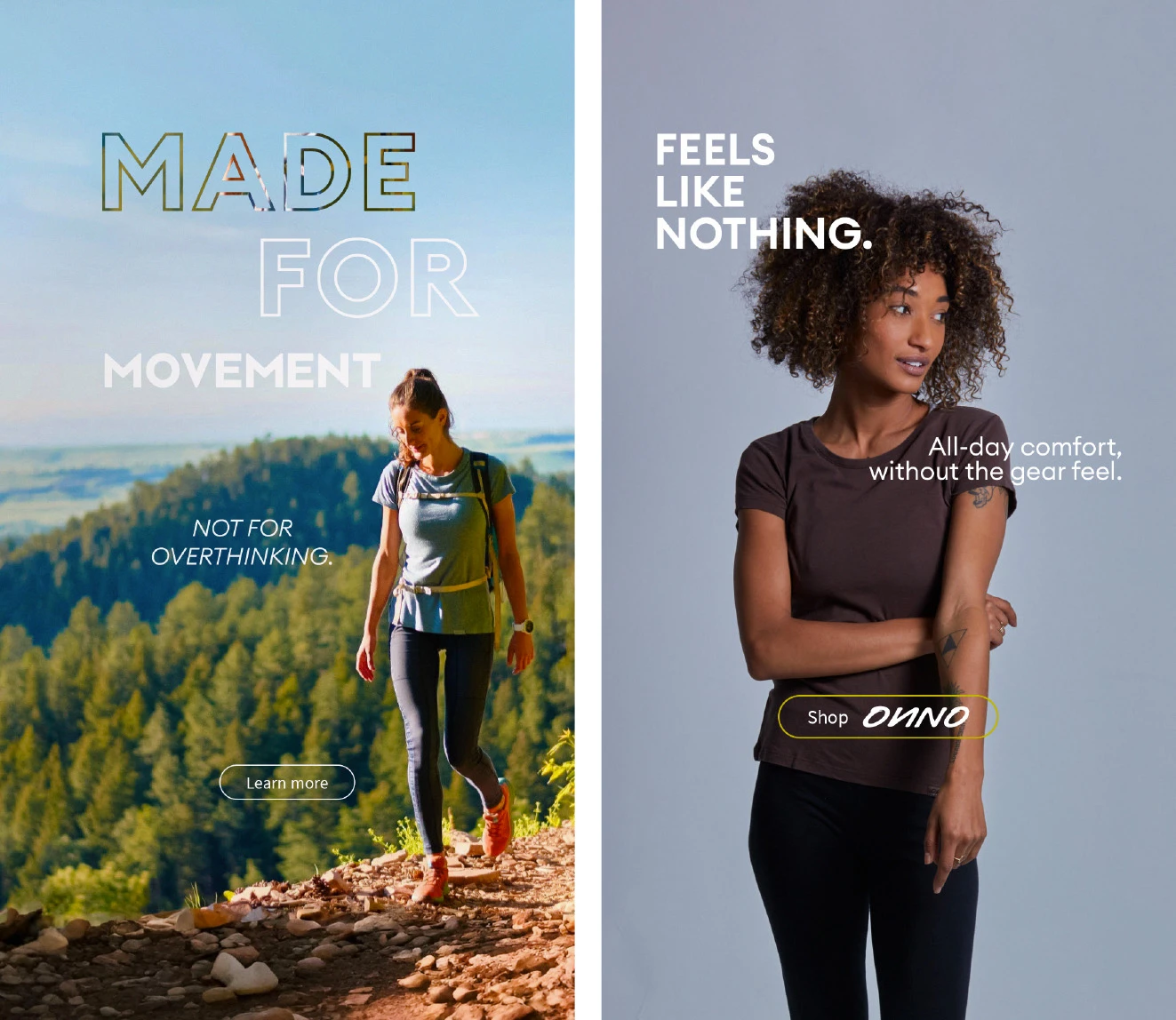
They are portfolio concept routes, not reported results.
Further exploration of the movement-led route.
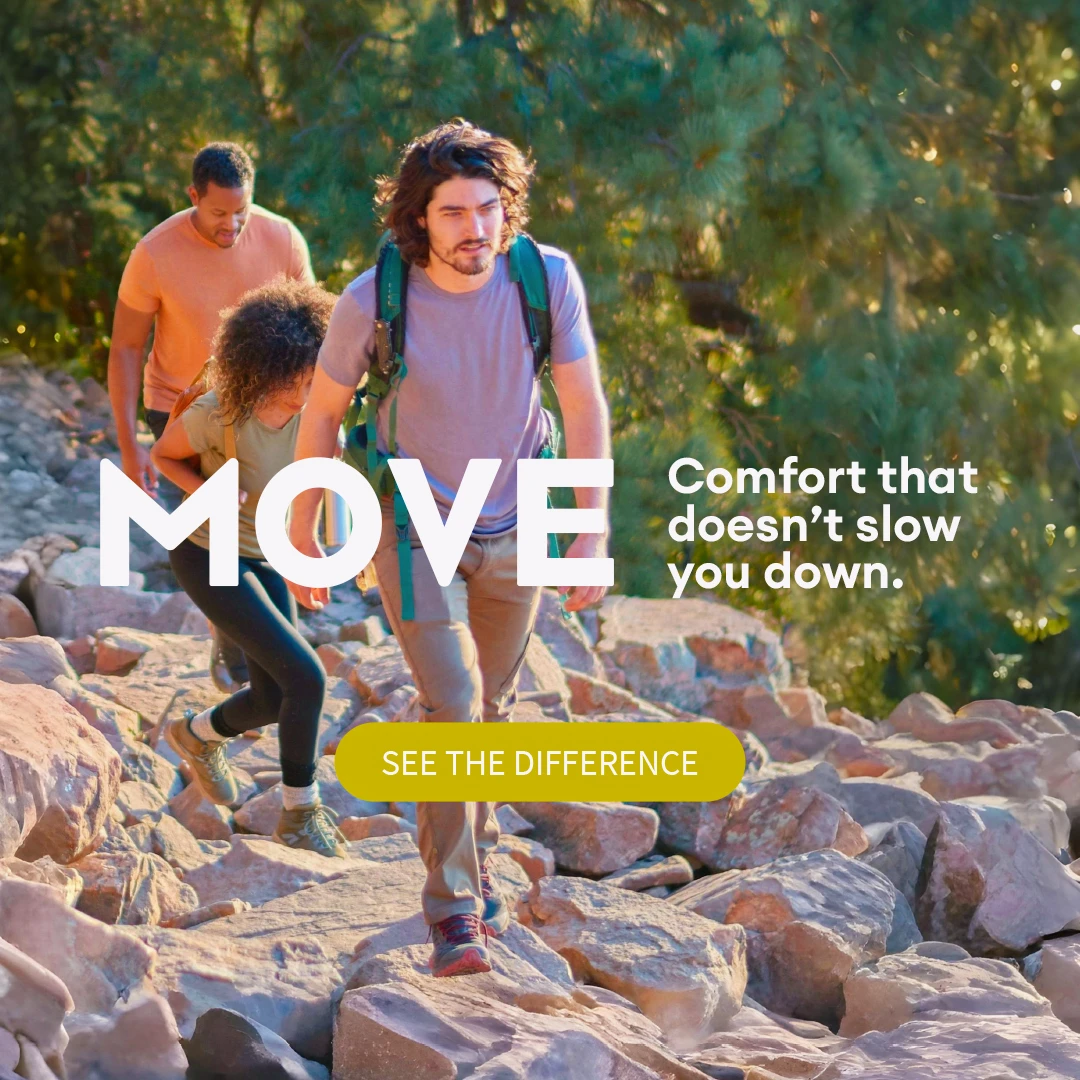
Square concept variant. Multiple creative elements change; this is not a single-variable test.
06 — ACCOUNT-SIDE CONTROL
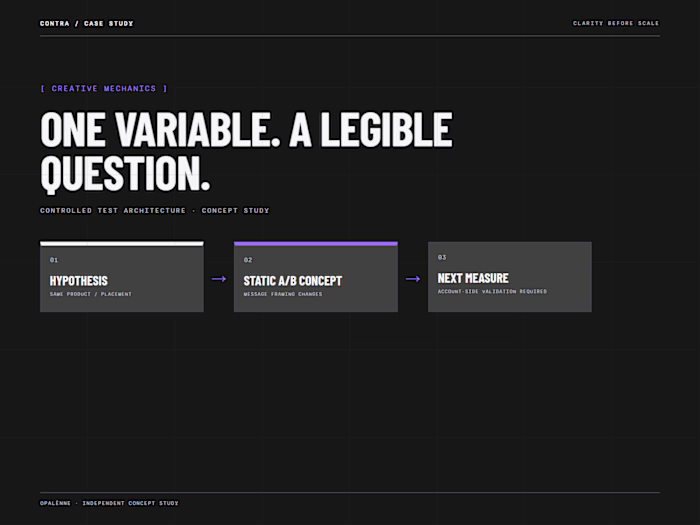
If one route moves into testing, the product treatment, format, audience and recognition hierarchy should remain fixed while one predefined message variable changes. The public report narrows the question; only account-side evidence can decide whether the route should continue, change, or stop.
WHAT THIS DEMONSTRATES
My role is to connect a dated evidence window to a smaller creative decision: document the current mix, prevent lower-share categories from being mistaken for proven opportunities, and define the production control required before more assets are justified.
SERVICE CONNECTION
Meta Creative Evidence Report → dated public-library structure and evidence boundary.
Creative Decision Support → observation translated into a narrower production question.
Creative Test Design (Phase 1) → 2–3 psychological directions, 2 hooks per direction and 4–6 controlled test units for account-side validation.
EVIDENCE BOUNDARY
This case does not report spend, CTR, CPA, ROAS, conversions, a validated message, a winning route or a scaling outcome. Public evidence documents what is visible. Account-side evidence decides what to do next.
CLARITY BEFORE SCALE.
SCOPE
This is an independent portfolio study using original concept work and public Meta Ad Library evidence. It was not commissioned by, produced for, or affiliated with ONNO Apparel.
Like this project
Posted Mar 12, 2026
Independent study of a dated public Meta Ad Library snapshot, used to frame specific creative hypotheses before production.
Likes
2
Views
18
Timeline
Jan 18, 2026 - Jan 22, 2026