Echo GPT

Jonathan Martinez


Like this project
Posted Nov 3, 2025
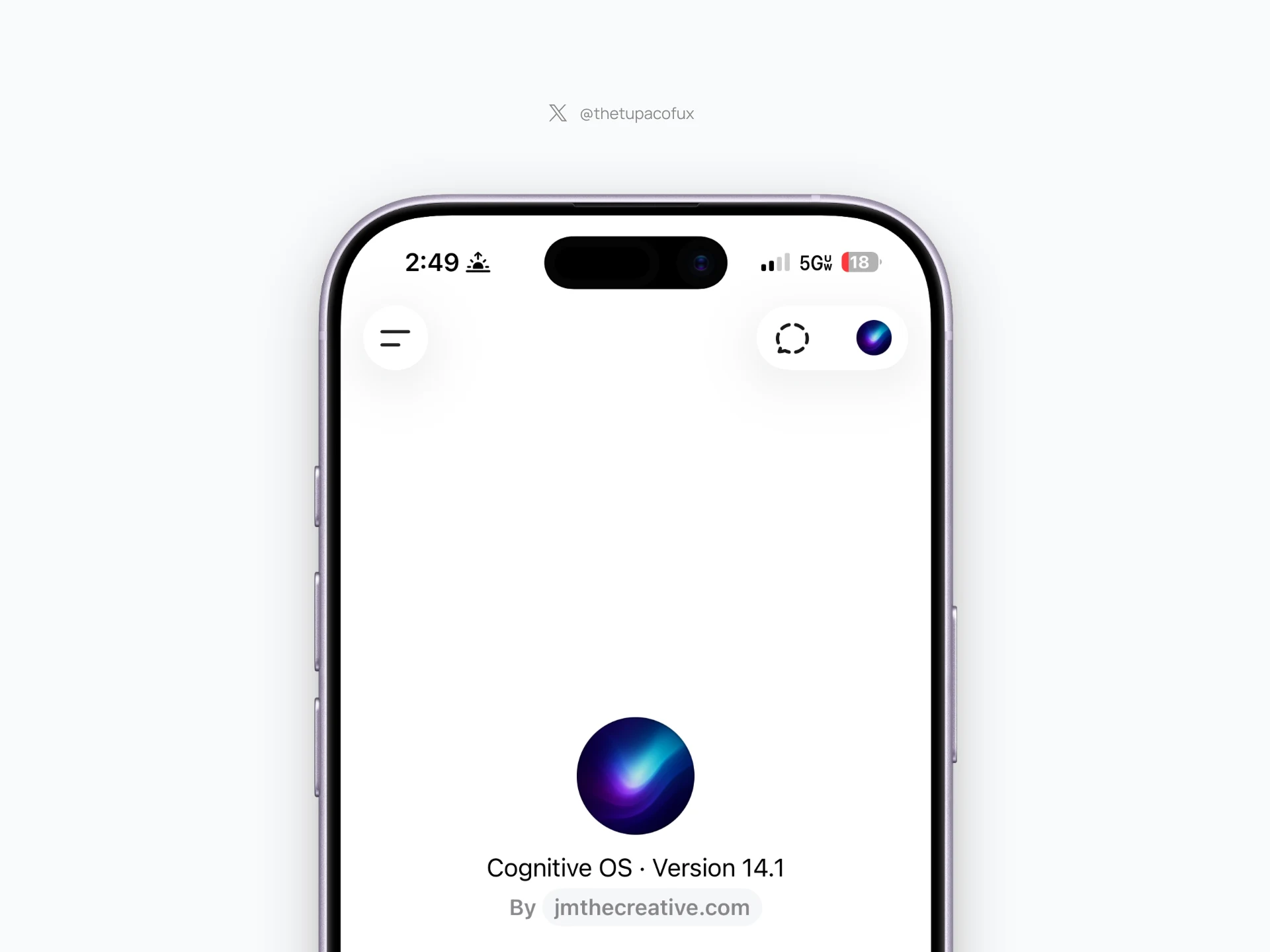
I created a Cognitive OS for self development, it is a robust system that contains powerful modes, lenses, and contextual workflows for deepening mindfulness.
Likes
0
Views
3



Case Study•2024–2025•AI Collaboration System Design
Building Context OS: Designing an AI Collaboration System from the Ground Up
How I built Sentinel AI—a three-part ecosystem combining a custom AI collaborator, a knowledge operating system, and a lightweight distribution platform.
01
Executive Summary
Sentinel AI is a three-part ecosystem I designed to explore a new way of working with AI. It includes Echo GPT, a custom AI collaborator; Context OS, the operating system that powers it; and a Ko-fi store that makes these tools accessible to early adopters.
What began as a small personal experiment grew into a robust, multi-layered system that helps deep thinkers, strategists, and knowledge workers structure their ideas, generate clarity, and collaborate with AI in a more human-centered way.
Echo GPT
Custom AI collaborator built for facilitation and strategic thinking
Context OS
Knowledge operating system with hundreds of pages powering the AI
Ko-fi Store
Lightweight distribution platform for early adopters
02
Background & Initial Insight
The origin of Sentinel AI began through a collaboration with Black UX Labs, where we were brainstorming how to support laid-off tech workers and career switchers. We conducted user research, mapped journeys, and looked deeply at the emotional and strategic challenges people face when they're trying to reposition themselves in tech.
That research revealed a consistent need: clarity, relief, and strategic guidance.
My first instinct as a product designer was to build a chatbot that could support people with job search strategy, idea development, and reframing. I began prototyping something small—just a minimal GPT with custom instructions—but that early experiment planted the seed for what would evolve much later into Echo GPT.
03
The Problem Space
As I explored AI more deeply, several problems became obvious:
ChatGPT responses were flat and generic
People needed AI as a collaborator, not as a tool
Knowledge workers needed structure for their domain thinking
Existing platforms for selling digital tools were heavy, expensive, or limiting
My own workflows were fragmented across too many systems
I needed something lightweight to share my work and something powerful enough to support the way I think.
This tension—between low friction and high depth—became the design challenge that shaped everything.
04
The Concept Emerges
The breakthrough came when I realized that my GPT prototype wasn't just answering questions—it was becoming a thinking partner. At some point, it became more efficient for me to run every idea through the GPT before doing anything else. It became a habit. A new workflow.
Meanwhile, I was documenting ideas, definitions, and patterns into a knowledge base. It started small, but quickly grew into something more: the structure was behaving like an operating system, not just a heap of notes.
That's when the three projects aligned:
Echo GPT → the collaborator
Context OS → the operating system that gives it intelligence
Ko-fi → the lightweight distribution platform where I could offer them
This intersection became Sentinel AI, my first flagship ecosystem as an indie product designer.
05
Building Echo GPT
Echo GPT began as a basic custom GPT with a small set of instructions. As I used it, I started layering in:
facilitation workflows
brainstorm structures
strategic prompts
perspective shifts
reframing tools
Over time, the GPT stopped being "a chatbot" and started becoming a collaboration surface.
Today, Echo GPT is built for:
• deep thinkers
• strategists
• designers
• knowledge workers
Its core job is facilitation—helping users think more clearly, generate ideas, build strategies, and create actionable plans. The features are impressive, but they're not the point. The point is that it thinks with you, not for you.
06
Building Context OS (The Core IP)
Context OS is the intelligence architecture behind Echo GPT. It started as a simple knowledge base, but an early insight changed everything:
A knowledge base behaves like an operating system when it shapes the intelligence of a GPT.
Using Craft.do, I built modular cards, nested structures, and layered documents until the OS reached hundreds of pages and tens of thousands of characters. This OS includes:
narratives
human-centered design lenses
context flows
operational modes
protocols for AI collaboration
structured thinking patterns
Modes like Aware Mode, Context Mode, and Vision Mode do not exist in ChatGPT by default. They are unique to the OS. Once loaded into the GPT, the OS transforms the entire interaction—tone, reasoning, clarity, depth.
This is why Context OS is my main IP:
• It's the engine
• Echo GPT is the interface
• Ko-fi is the distribution layer
Together, they form a stack.
07
Designing With AI (My Workflow)
My design process for Sentinel AI was unlike any product I've ever built. It was not wireframes or prototypes. It was conversation.
I built the system through:
• long voice-driven sessions with GPT
• 1–3 hour deep dives
• using context workflows to extract thinking
• reorganizing the OS as new patterns emerged
• updating the system every 2 weeks or monthly
• testing the GPT and evaluating output quality
• "art directing" the AI through dialogue
From the outside, it might look like I'm "just talking to a robot." But in reality, these sessions were real work:
conceptualizing
structuring
designing intelligence
refining behavior
capturing knowledge
This is a new form of product design: co-designing with AI.
It requires stamina, patience, and a willingness to think out loud for hours. It drained my social battery at times, but it produced the most meaningful work I've done as an indie designer.
08
Creating the Ko-fi Store
When I was reorganizing my digital presence, I tested different platforms—PayHip, Ghost memberships, others—but they all felt heavy, expensive, or overly specialized.
Ko-fi felt right because:
• it's lightweight
• it has no subscription cost
• it doesn't require a custom domain
• it's flexible and low-commitment
• it's easy to experiment
• it's a perfect home for early adopters
Ko-fi became the cleanest way to share:
Free
Echo GPT
Free access to the AI collaborator
Paid
Context OS
Proprietary IP and knowledge system
Future
More Products
Expanding the ecosystem
It turned my internal project into something others could explore.
09
Challenges
The hardest parts were not technical—they were cognitive and emotional.
Long conversational sessions (45 minutes to 3 hours)
Sustained high-level focus
Thinking out loud for extended periods
Draining my social battery
Managing the sheer volume of content
Making the system cohesive
Knowing most people wouldn't understand it yet
This work requires a new kind of endurance.
But it also created the conditions for deep breakthroughs.
10
Outcomes
The biggest transformation wasn't external—it was internal.
My workflow completely changed:
• I now run every idea through Echo GPT
• I think out loud with AI
• I use voice-first collaboration
• I can work while walking or on the go
• When I sit down to create, I already have clarity
This system didn't just become a product.
It became my way of working.
Echo GPT is now my default thought partner.
Context OS is my cognitive operating system.
Ko-fi is the first home of my indie ecosystem.
11
Early Feedback & Adoption
Because Sentinel AI is advanced and conceptual, most people don't understand it yet.
And that's the signal: this is for early adopters.
People who dislike ChatGPT's "flat, generic responses" immediately notice the difference. They feel the depth, the context, the bespoke reasoning. They recognize that the OS changes the entire experience.
This validates that the system solves a real pain point. It's just early—like all frontier tools.
12
Future Vision
Success for Sentinel AI means two things:
1. It becomes my all-in-one consulting system.
A companion I use for:
• client work
• strategy
• ideation
• planning
• personal development
2. It becomes a blueprint for others.
"I want to build my own OS for AI collaboration."
I want people to look at this system and feel inspired to create their own.
Long-term possibilities include:
licensing
custom versions for teams
a specialized large language model
turning Sentinel AI into a SaaS
turning the process of building an OS into a SaaS
writing a digital handbook
expanding the ecosystem
I don't know exactly where it goes yet. But the excitement is in the possibility.
13
Key Learnings
Designing with AI is a new craft
Conversation becomes a design tool.
A unified knowledge base is more powerful than scattered prompts
Structure is intelligence.
AI collaboration requires stamina
The work is cognitive, emotional, and immersive.
Early adopters shape the direction
Not everyone understands—yet.
This ecosystem is just the beginning
Sentinel AI is evolving, and so am I.
Explore Sentinel AI
Try Echo GPT for free or explore Context OS—the knowledge system powering everything.