UX/UI Design for NewRoots Community Platform

Valeria

Role: UX/UI Designer
Tools: Figma, FigJam
Duration: 08/2024 - 03/2025
Many people who’ve moved abroad will agree - it’s an exciting, but it can also feel so overwhelming!
Between cultural differences, loneliness, and the stress of starting fresh, it’s easy to feel unrooted. NewRoots helps newcomers restore balance by offering yoga, sound healing, and authentic gatherings that spark connections and create a true sense of belonging.
People often struggle with some challenges when they move to a new place
Moving to a new country is often seen as exciting, but in reality it can be stressful and complex. Beyond the paperwork and logistics, newcomers face cultural barriers, loneliness, and uncertainty about where to find reliable information or genuine social support.
Most relocation resources focus only on practical needs like housing, visas, or insurance. While essential, these don’t address the emotional challenges of starting fresh - stress, isolation and the lack of meaningful connections. As a result, many newcomers struggle to adapt smoothly, often feeling unrooted in their new environment.
To make adaptation more supportive and human-centered, I designed NewRoots - a platform that combines wellness practices with authentic local experiences:
Stress relief through wellness ➡️ yoga, sound healing, and guided activities to nurture emotional balance.
Belonging through community ➡️ networking brunches, social events, and cultural gatherings hosted by locals.
Together, these experiences help newcomers ease the transition, connect with people, and establish a true sense of home.
I looked at how other relocation and community platforms support newcomers to see what they already offer and why people still struggle during the adaptation process. This helped me better understand the landscape and the gaps newcomers continue to face when moving to a new country.
Moving abroad isn’t only about visas and checklists - it’s about how people rebuild their lives and connections from scratch
To better understand the real challenges newcomers face, I conducted 4 interviews with people who had recently relocated to different countries. Their stories revealed not only practical struggles, but also deeper emotional needs that existing platforms rarely address.
Explore the main challenges people face when relocating.
Understand how they adapt to a new lifestyle and build routines.
Identify pain points related to cultural differences, emotional well-being, and loneliness.
Uncover unmet needs that could be supported through community and wellness.
After the interviews, I synthesized insights with affinity mapping, which helped me surface recurring patterns and pain points that weren’t obvious at first.
Original approach:
Relocation platforms mostly focus on practical information like visas, insurance etc. While useful, they rarely address the emotional and social side of adaptation.
➡️ Newcomers feel stress, loneliness, and disconnection, even when they have access to practical resources.
Listeners want playlists that match their activity and mood in the moment, plus simple ways to stay connected to favorite artists.
➡️ They crave belonging, emotional balance and authentic connections.
What if…
moving abroad could feel less like a lonely struggle and more like a supported journey, where newcomers could join activities, connect with locals and quickly feel at home? 🌱
According to the knowledge and insights that I got from the interviews and competitive analysis, here I would like to introduce the user persona - Kate, who just moved to Italy to her husband.
How might we make people that are moving to a new place feel more emotionally stable during the moving process or during the adaptation period?
From the HMW, I defined clear project goals, aligning user needs with business objectives to guide the design process.
At first, I considered building a tool that helps newcomers map out favorite spots and routines in their new city. But research showed that while information is everywhere, what people miss most is human connection and emotional support. This insight led me to choose Idea 1 - a community-based platform where locals and newcomers meet through meaningful events, easing both adaptation and well-being.
To give NewRoots a clear backbone, I mapped out a sitemap that organizes the app into its core areas: community spaces, events & experiences, and user support.
While the platform includes multiple sections - like profiles, communities, local partners and live chat - I focused my design process on the two most critical user journeys:
Sign In / Sign Up - the starting point for newcomers to join the platform.
Book an Event - the core action that helps users discover, join, and connect through meaningful experiences.
To quickly explore solutions, I sketched out two different low-fidelity versions, experimenting with layout and navigation to see which flow would better support newcomers. These early explorations guided the transition into mid-fidelity wireframes, where the structure became more defined while still leaving room for iteration.
When I started thinking about my brand values and what my platform will represent, I've come to the conclusion that I want to create a space, where users will feel warmth since they join the community, a sense of belonging. That is why every, even a small detail (meaning of each shade in color palette, history of this specific typeface etc) has a meaning of balance, belonging, community, connection and warmth.
At this stage, the ideas came to life. I refined the Sign In/Sign Up flow to make onboarding simple and welcoming, and the Book an Event flow to ensure discovering and joining activities felt effortless, turning NewRoots into a platform that supports both adaptation and connection.
Newcomers found joining and booking simple and motivating, with only small improvements needed for clearer feedback
Usability testing with 5 participants focused on two core flows - creating an account and booking a yoga class. The goal was to see how easily users could navigate and browse the platform and to identify areas that may require improvement.
All participants successfully completed both tasks, describing the experience as clear, smooth, and engaging. The sign-up flow was seen as simple and intuitive, while the event booking flow felt motivating, especially with the ability to browse by activity. Only minor refinements were noted, such as making some buttons more visible and improving confirmation feedback.
Overall, the experience was smooth and engaging, though subtle issues in clarity and visibility surfaced, guiding the next round of refinements.
2/5 participants found the current version confusing. A simpler, more familiar layout will make event booking smoother.
Needs clearer labeling to reduce ambiguity and ensure users instantly understand their options.
Users suggested switching to a “Show More” button for smoother browsing, which I plan to revisit in future iterations.
Users suggested adding smaller icons with visible dates on the Yoga page to make schedules easier to scan.
Through iterative testing and design refinements, the final prototype now captures the core journeys - creating an account and booking an event, making adaptation smoother, clearer, and more engaging!
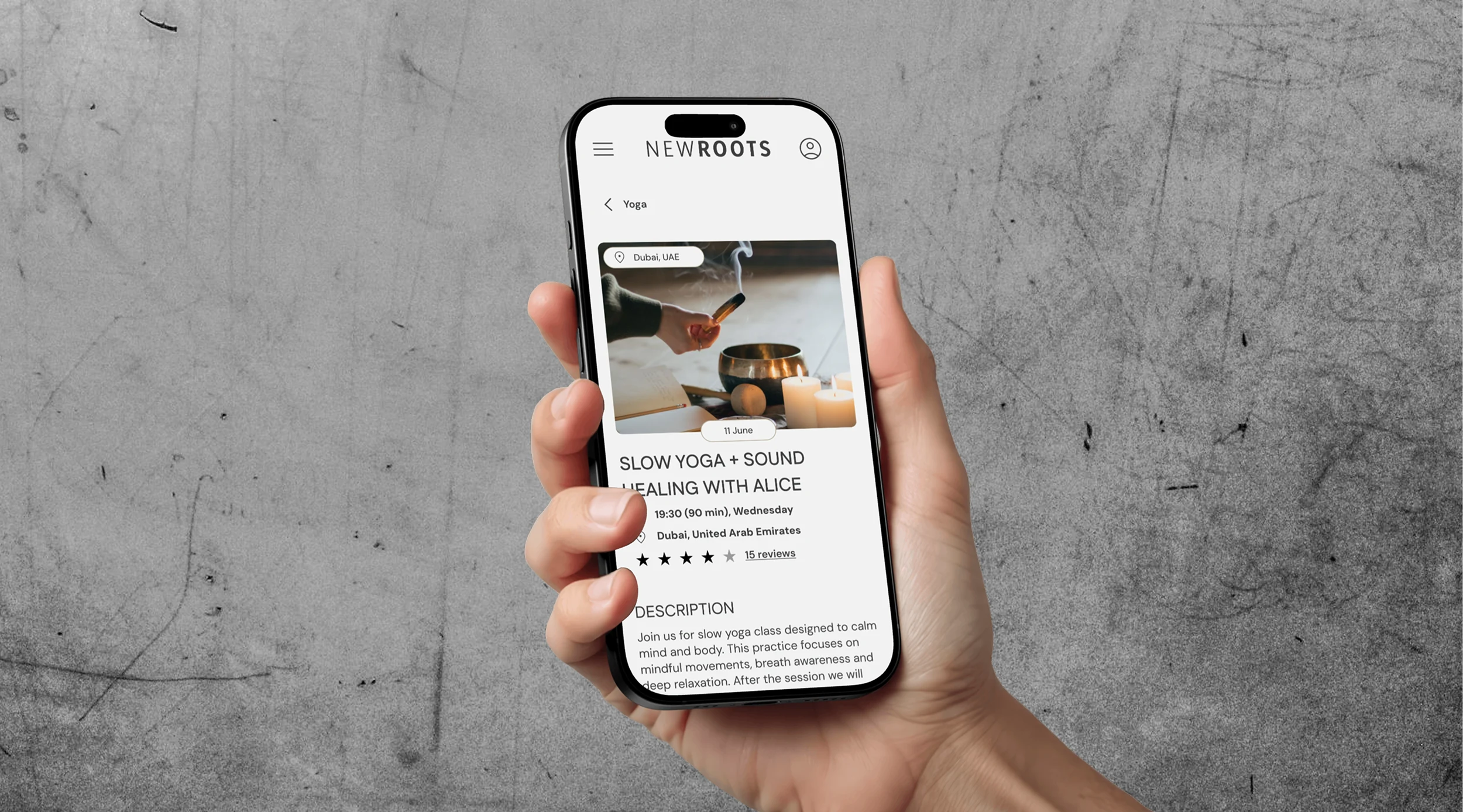
From the Events & Experiences section, users can easily browse and select activities that fit their interests. With clearer layouts and improved navigation, booking a class, like yoga, feels smooth, intuitive, and stress-free.
The journey starts with the Sign In/Sign Up flow, where newcomers create an account and set up their profile. This streamlined process makes entering the platform simple and welcoming, helping users quickly access events and connect with the community.
Listening to newcomers’ stories reminded me how powerful it is to design beyond just functionality. Belonging, clarity, and connection are what really help people adapt in a new place.
Testing showed me that feedback isn’t criticism - it’s guidance. Each small comment (like “the calendar feels unclear”) pointed me toward a better, stronger solution.
I’d conduct surveys or diary studies to capture even deeper insights into newcomers’ emotional journeys, not just user interviews.
I would explore different calendar and booking flows earlier in the process to validate which design feels the most natural.
I’d also add more visual warmth (photos, cultural elements, local voices) to help users feel connected to the community right from their first interaction.
Like this project
Posted Jan 23, 2026
Designed NewRoots platform for newcomers, enhancing adaptation with community and wellness events.
Likes
0
Views
3
Timeline
Aug 1, 2024 - Mar 1, 2025