Urban Hydration: Amazon PPC ACOS Cut from 104.85% to 32.37%

Ateeb Syed


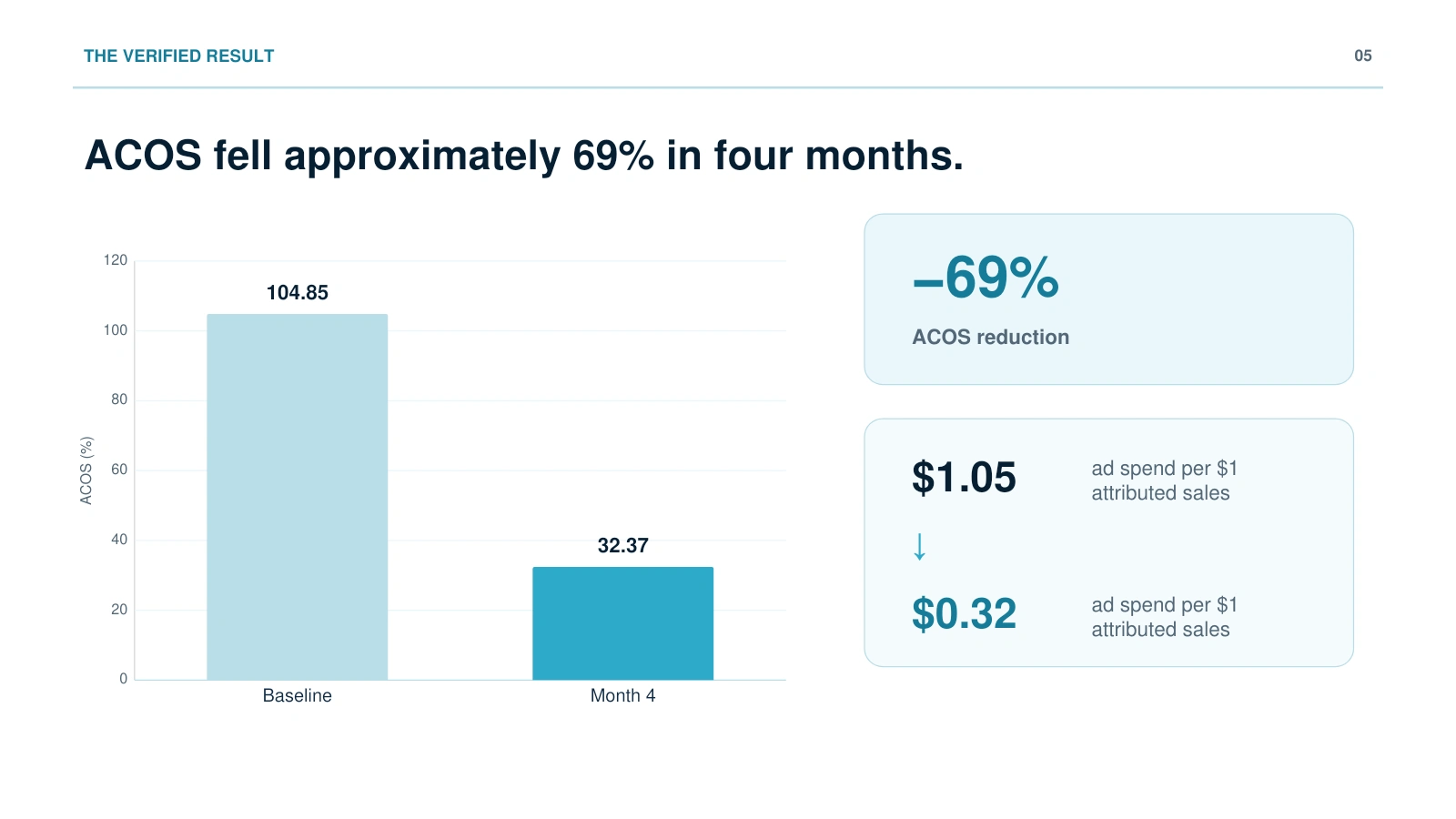
Verified result: ACOS fell approximately 69%, from 104.85% to 32.37%, within four months.
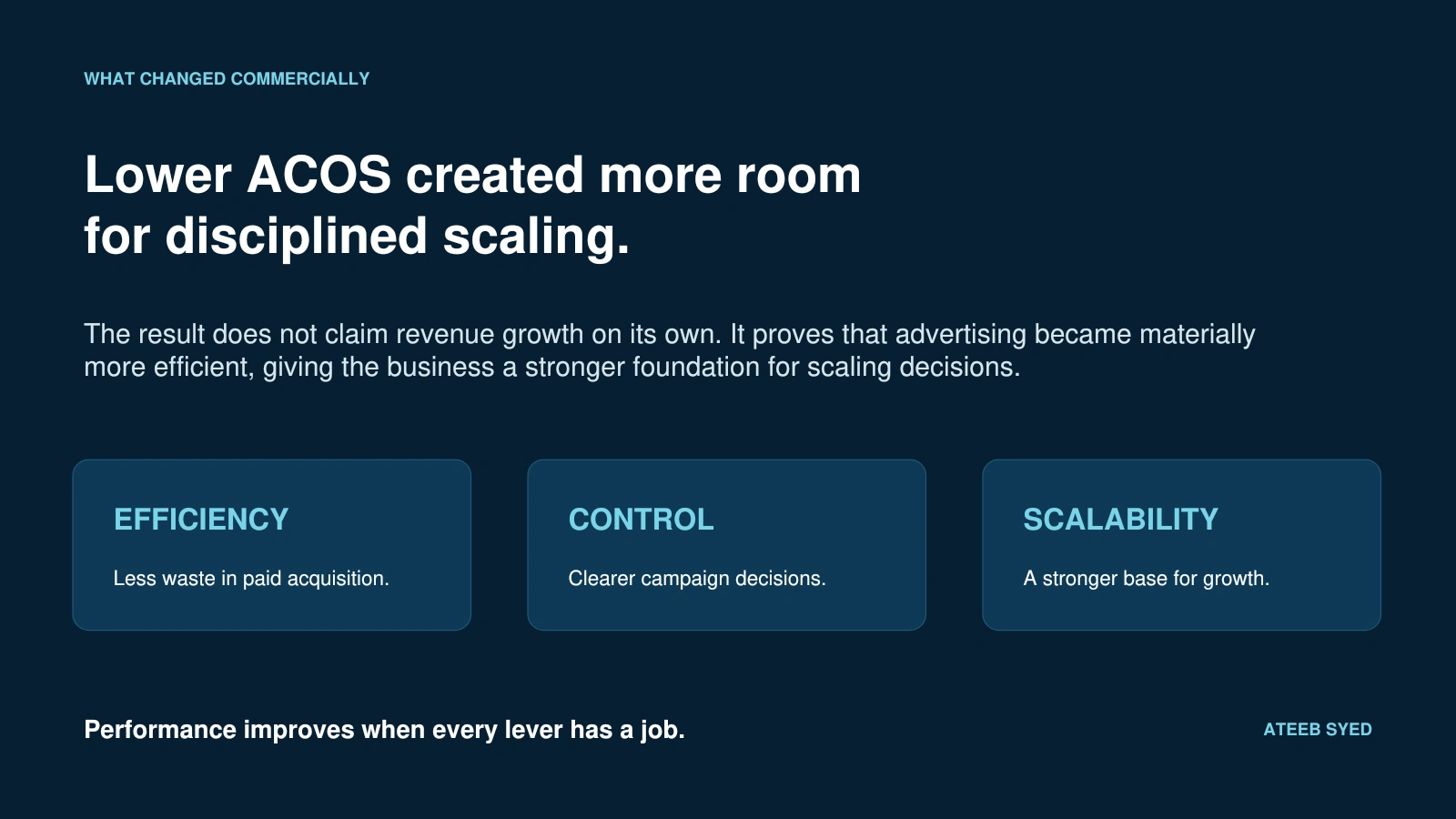
Commercial impact: lower ACOS created greater efficiency, clearer control and more room for disciplined scaling.
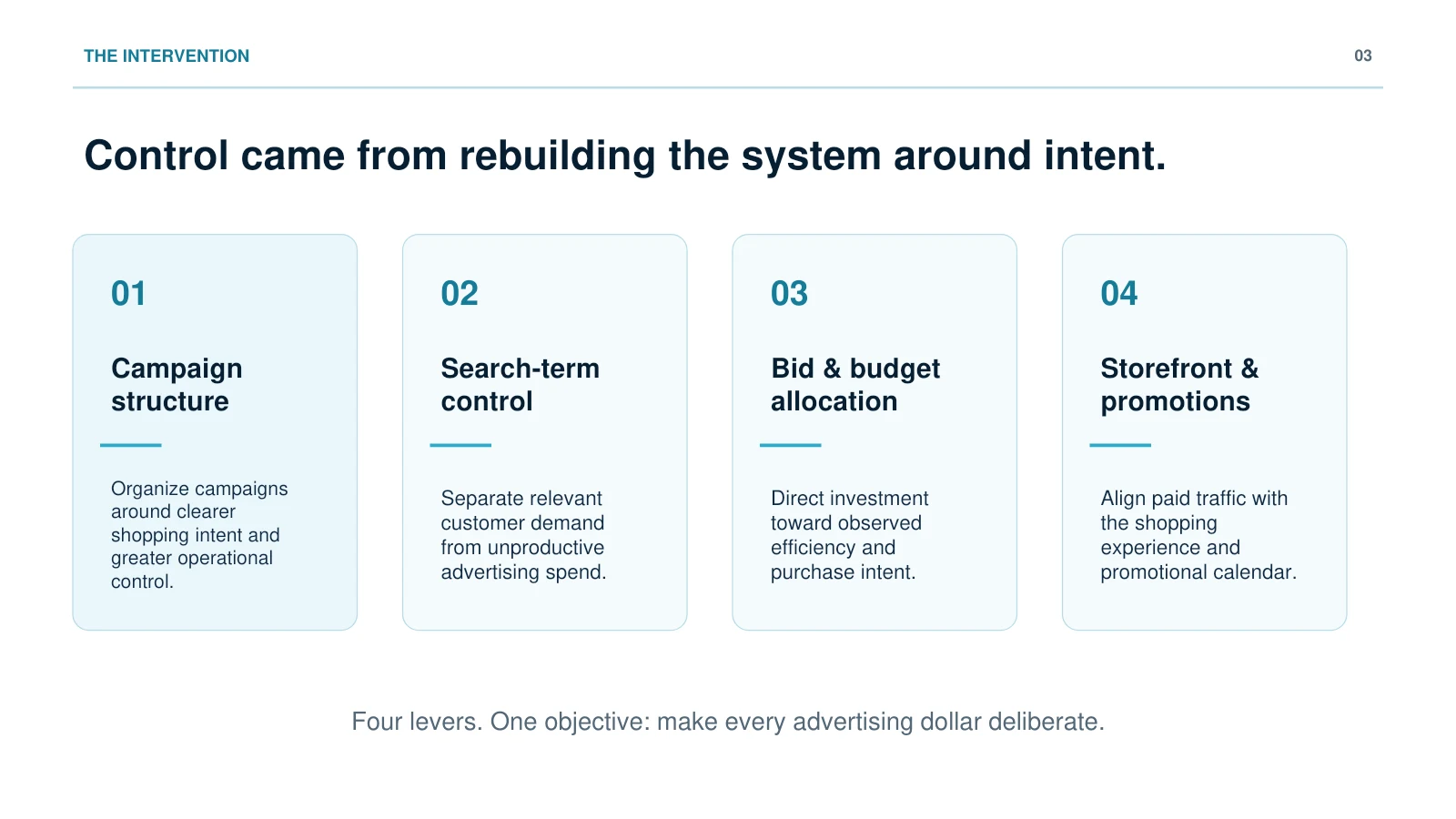
Intervention: campaign structure, search-term control, bid and budget allocation, and storefront-promotion alignment.
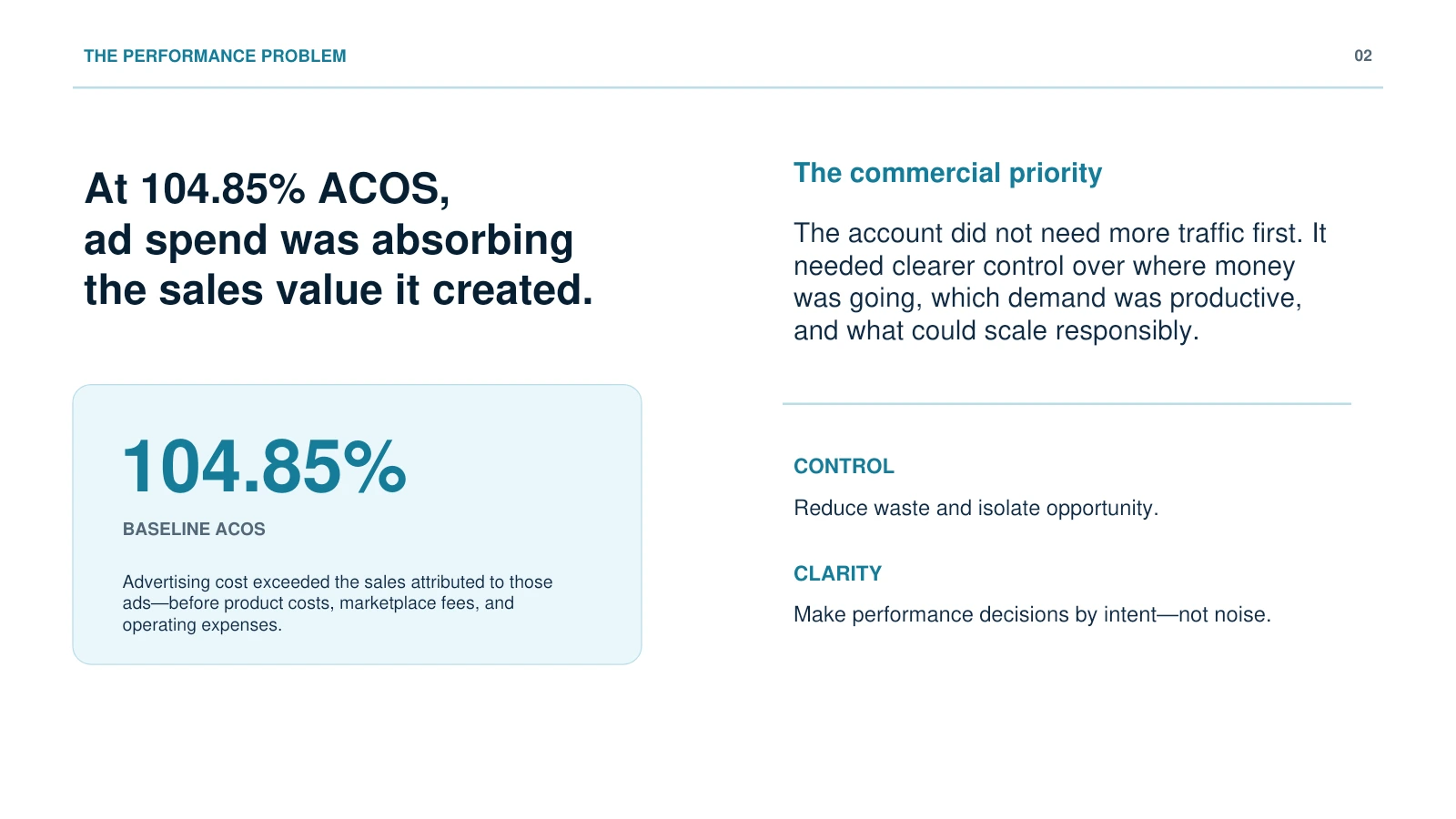
Performance problem: a 104.85% baseline ACOS meant advertising cost exceeded attributed sales before product costs and marketplace fees.
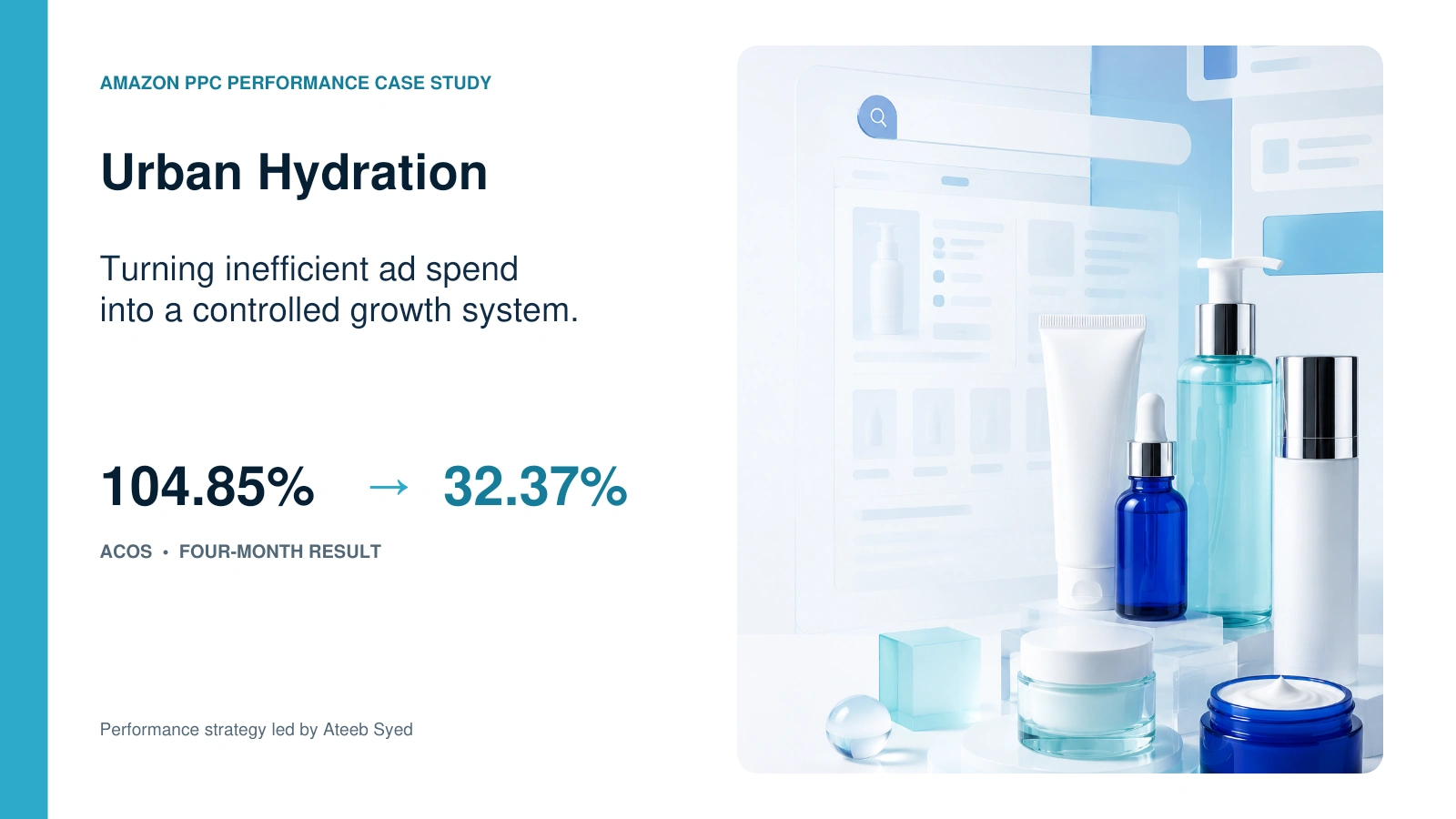
Urban Hydration Amazon PPC case study: turning inefficient advertising spend into a controlled growth system.
Overview
Urban Hydration is a mission-led beauty brand offering dermatologist-inspired, plant-powered skincare for multicultural families. On Amazon, the brand was competing in a crowded, promotion-heavy category where inefficient media spend can quickly erase margin.
The Challenge
The account's baseline ACOS was 104.85%. In practical terms, advertising cost exceeded the sales attributed to those ads—before product costs, marketplace fees, and operating expenses. The priority was not simply to generate more traffic. It was to create clearer control over where budget was going, which demand was productive, and what could scale responsibly.
What I Changed
Campaign structure
I reorganized campaigns around clearer shopping intent and tighter operational control, making it easier to distinguish branded demand, category discovery, and product-level opportunity.
Search-term control
I separated relevant customer demand from unproductive spend, using search-term performance to reduce waste and improve the quality of traffic being funded.
Bid and budget allocation
Investment was redirected toward observed efficiency and purchase intent. Bids and budgets were adjusted through a repeatable optimization rhythm instead of reactive campaign changes.
Storefront and promotion alignment
Paid traffic was coordinated with the Amazon shopping experience and promotional calendar so acquisition activity supported a more coherent conversion path.
Operating Model
Diagnose — separate structural waste from product-level opportunity.
Restructure — organize campaigns around clearer intent and control.
Optimize — reallocate bids and budgets using observed performance.
Reinforce — align storefront experience and promotions with traffic.
The system followed a simple loop: test, learn, reinvest, repeat.
Verified Result
Over four months, ACOS fell from 104.85% to 32.37%—an improvement of approximately 69%. Put another way, ad spend moved from about $1.05 to $0.32 for every $1 of attributed sales.
Commercial Impact
The result demonstrates materially stronger acquisition efficiency, clearer campaign decision-making, and a more disciplined foundation for scaling. It does not claim revenue growth on its own; it shows that the advertising system became substantially more efficient and commercially controllable.
My Role
I led the performance strategy, account diagnosis, campaign restructuring, optimization framework, and coordination between paid media, storefront experience, and promotions.
Like this project
Posted Aug 5, 2026
Rebuilt Urban Hydration’s Amazon PPC system across campaign structure, search-term control, bids and promotions—cutting ACOS 69%, from 104.85% to 32.37%.