The Stars Are Moving: A Cosmic Horror Exploration

João Araújo

The Stars Are Moving
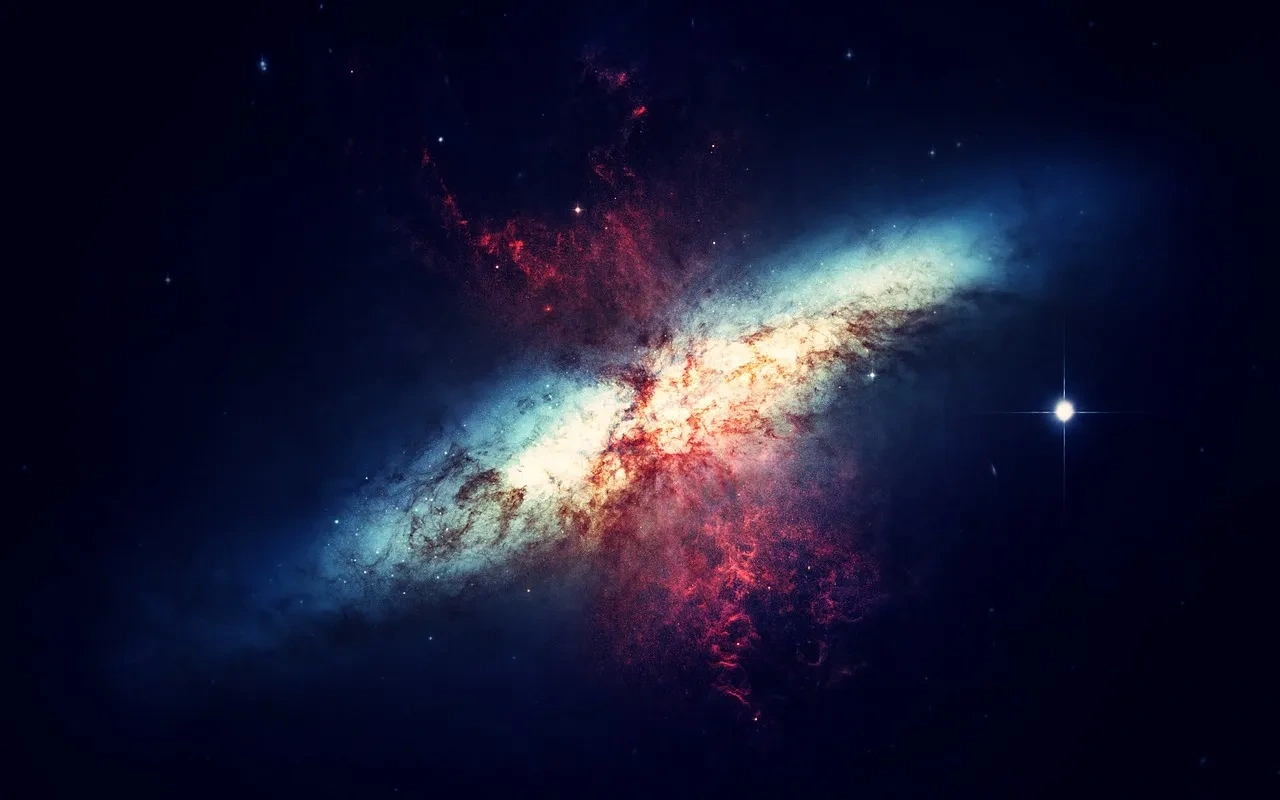
To gaze upon the darkness of the night sky and bask in its infinity is a storied, human tradition; one that invites thought, wonder, and questions of what was — and what will become of us. It evokes primordial emotions nestled deep into the root of our beings, most of all fear.
There is little else as sobering and frightening as to gaze at the stars that made us, to witness the light of the most ancient crucibles, and know they are too distant and gone to ever be known. To witness the remnants of cosmic life, lost to the endless dark in explosions of light that came eons before our birth, is to contemplate the fleeting nature of humanity and all things; to know that, on the scale of the cosmos, we are but fading breath on a mirror.
But, in a sea of darkness therein lies beauty — of stars and nebulas, and all wonders most radiant.
Some take comfort in the enduring light of stars and the shining brilliance of galaxies. We are curious creatures, and to ponder the night sky, the window to the rest of the universe, we can only wonder about what lies beyond. We consider the vastness before us, the beauty of it all, and take respite in its beauty. To think the stars, the planets, and the galaxies unending is a natural, most human tendency. They are, after all, majesty incarnate and will outlast our time in this infinite cosmos. In a spiritual sense, perhaps to some, their brilliance bears a glimpse of an eternity we might come to experience, once our atoms are scattered by the fires of an exploding star and reunited with its celestial origins.
It is a beautiful thought, indeed; a thought born from an appreciation of the universe’s cold beauty. However, to those who hold comfort in the radiance of the cosmos, it will be disheartening to learn that the stars are moving apart.
Scientists have found that the very fabric of reality is moving away from itself, accelerating with each cosmic moment — and it has been doing so for quite a while now; far before we came into being. Evidence suggests that the speed at which the universe is expanding will exceed the speed of light–thus crossing a barrier we, as a species of scientific discovery, thought impossible to cross. But, in the face of the laws of physics, what we think is irrelevant; the cosmos simply is.
The universe is expanding and, at some point, even starlight will die in the dark.
Some may fall prey to the fear that finality brings. After all, if our scientific understanding is challenged to such an extent — if something we’ve taken for granted is to vanish from our reach — how do we fare when our place in the universe is questioned? If even the immortal constants of our existence are to change, to end as we mortals do, where do we sit in the cosmos?
When facing this truth, we may find fear in our voices as we ask questions; but how will we fare when confronted with the answers? What will we find in the face of it all?
I have found perspective.
Existential wondering, and the dread it brings, is a human necessity. We cannot be bearers of conscious thought and reason without wonder — without the capacity to question, learn and grow. But if we are holders of reason, which many say to be what separates us from animals, then we must too hold the responsibility of using it, regardless of what emotions our world burdens us with.
To ponder the origins and destination of our most primordial roots is, by its very nature, a terrifying thought. Yet, to run from it is dishonest, I’ve found.
That desire to run, to avoid that which we fear, is a biological imperative. Fear is a response to danger, one that brings forth our natural preservation and allows us to survive the dark jungles of the world. Yet we, as a society, have come to fear fear itself. We avoid it, ignore the dangers it presents us, and thus we remain unable to face them.
If all we do is act upon impulse, then we are not holders of reason; if we are unable to face our emotions, understand what they tell us, and learn from them, then we are not conscious humans, only human animals.
Therefore, to avoid fear is to keep us shackled. To face it — to stand on the edge of the abyss and not blink before its immensity — is to make our lives unbound, free.
Facing one’s fears does not remove the danger they represent, but it does prepare us to handle them better. As terrifying as the endless dark beyond our skies might be, to face it is to answer questions we never before dared ask.
Gaze upon infinitude and wonder! Ponder the expanse of reality and how far it stretches. Feel the towering presence of giants beyond your understanding, the endless stars that burn, the endless planets that travel the universe. Feel the passage of time and allow yourself to feel its weight; to feel that question gnawing at your mind — the same question we’ve all asked ourselves in the face of the ever-expanding universe before us:
Do I matter?
That fear you feel is normal. Personally, these words I bring you did not come to me freely; after all, I too had to delve into my questions and the deep fears they bring me.
To dance with the possibility of meaninglessness is terrifying, but most human. So much so that existential dread is the root of a whole genre of fiction: Cosmic horror.
It was born out of fear of the cosmos; of how, on a cosmological scale, our existence is infinitesimally small when compared to nearly everything else. In the hands of H. P. Lovecraft, the genre’s founding father, Cosmic horror — also known as Lovecraftian horror — took the form of incomprehensible horrors, creatures born out of the stars and infinitely more complex than us; so complex that simply gazing upon them would instil madness.
The creature most strongly associated with the genre, Great Cthulhu, represents the author’s fear of deep waters, the deep unknown beyond understanding. Lovecraft envisioned the alien landscape that hides beneath our oceans, the world and the creatures that dwell in the lightless space below, and equated it to the endless expanse of the universe.
Out of that fear, and its expression, came a great vision of horror — the Great Old One, Cthulhu, who slumbers in the city of alien and impossible architecture, the sunken city of R’lyeh. A creature with a bulbous body, octopus-like head, and the wings of a dragon, whose dreams herald prophecy and conjure insanity in the minds of the creative and imaginative among us. A creature so iconic that it inspired the Illithid — the Mind Flayers — of Dungeons and Dragons; ruthless creatures who live in the Astral Sea (one of D&D’s interpretations of space), and are associated with conquest and invasion, body-horror, and psychic powers beyond our comprehension. All things that would make us squirm and revolt with disgust and fear.
Within the Lovecraftian mythos, Cthulhu, for all the madness that he brings, was always depicted as a priest, an emissary of things much more grandiose and terrible than he: the Outer Gods. Such beings — like Azathoth, the Blind Idiot God — represent more primordial aspects of reality and the fears they conjure up in us. Azathoth himself is the closest thing to a creator deity that Lovecraft ever put to paper — a representation of entropy and true madness. This maddening entity slumbers at the centre of reality, while it dreams of reality. Within Lovecraft’s mythos, reality exists only in Azathoth’s dream and, should he wake, we would simply cease.
So, why explore such themes? And to that, I ask you in return: Why not?
I cannot speak on behalf of Lovecraft himself but, given his tendencies and phobias, it is not surprising he found writing and storytelling as a fitting medium to express them. After all, is that not the role of fiction? To escape the bounds of reality, abscond with its laws, and ask questions of ourselves, and our world?
At its core, fiction asks only one question. What if?
When it comes to Cosmic horror, that question focuses on fear, its monstrous representation, and how we interact with it. The result was the birth of a whole genre of literary fiction dedicated to exploring what humanity would do in the face of incomprehensible truths. A whole genre, born out of its creator’s fears; and there were many.
H. P. Lovecraft was, at his very core, terrified of everything.
His sheltered life led to a great fear of the unknown, instilling fear of scientific advancement, of people of different races and cultures, and even of people with a rudimentary background or education from — as he perceived it — a lower class than his.
What developed to be a source of ill-conceived stereotypes and phobias, present throughout his life, became a strange focal point for the exploration of fear on the page. Though the man himself was, by circumstance and upbringing, a complicated man, his most irrational fears became the source behind one of fiction’s most fascinating genres — one now elevated by the hands of people far less troubled than he.
Regardless, it is no surprise to me that a genre that explores our deepest existential fears came from a man who feared deeply, and intimately. Despite his many failings — or rather because of them — the literary world and beyond has gained a platform to ask a most important question:
How do we cope when confronted with our own mortality?
Could we possibly understand the truths and expansive facts of the universe, as presented in cosmic horror, and face the diminute essence of our being before their presence?
In the Lovecraftian mythos, we humans are represented as mere ants when compared to the Great Old Ones and the Elder Gods. After all, if we don’t even notice the small and insignificant ants in our path; so why would these otherworldly beings even notice us?
In the face of the universe’s boundless infinitude, personified in these cosmic deities of madness — with the truth of the cosmos laid bare and naked — Cosmic horror poses the question: What meaning do we hold, as people, as a species?
It is a big question, one that fiction has been trying to explore and represent for decades.
To look at the stars and wonder is human nature — and to question what we see, and our place in it, is synonymous with living, with being.
Earlier I spoke of perspective, so let’s put this collective fear we share into one.
If we consider the human lifespan, when compared to the immensity of the cosmos, a single human life is but a blip. If the story of the universe could be put into the shape of a calendar year, one human life would be a generous nano-second. The whole of humanity’s history would barely be a day! And yet, Earth’s existence would nearly take a week of that whole year.
A week is brief. A week is filled with seven days — five of which are eight-hour work days, leaving only the other two for some rarely found free time. A week barely has enough time for hobbies, family, and friends, and it leaves us ragged. That so-called exhausting week would be brief in the face of the sheer scale that is the universe’s lifespan. And, during a single week, a nano-second goes by unnoticed.
Given this fact, one would be forgiven for thinking of us as meaningless. Truthfully, finding meaning in such a vast expanse is daunting. But, as I’ve pointed out before, we are curious, inquisitive creatures and the answer to the question of “what is meaning” is one we, as a species, have been searching for since dawn immemorial. But we needn’t look so far back in our history for a path to follow; we need only look at the 20th century.
During this period, the search for meaning was a predominant subject in the field of philosophy, one that gave way to Existentialism in its many forms. A discipline that tackles the issue of human existence, Existentialism addresses meaning, purpose, and value, as well as where they begin in the face of human existence.
According to Sartre, “man first of all exists, encounters himself, surges up in the world, and defines himself afterwards.” His reasoning? Existence is devoid of meaning without humanity’s experience. In this vast universe, we are the ones who give life — our life — meaning through our experiences.
From this perspective, one can feel the weight that choice bears upon us.
If our actions determine who we are and, therefore, the value we attribute to ourselves and our lives, then the choices we make are what determine our values.
To some, this is a burden.
There is, however, freedom in this idea; the world cannot tell you who you are, regardless of how much it tries to cage you. Thus, if your choices define you, and we must “surge up in the world”, then beauty can only be found in a journey of discovery — in the many attempts to discover what our actions mean to us, in the face of morality, of faith, and curiosity. But while we hold the possibility of meaning through choice, so must we hold the responsibility of its follies; after all, there is no journey — no mountain to climb–without a few missteps along the way.
So, what happens when you do fall?
Do you pick yourself up and learn the lesson the world has taught you, or do you curse the ground you walk on, for being all too treacherous, and tread on — blaming all but yourself for the stumble and injury?
While determination is a valuable tool, for anyone travelling the path of meaning — like a sharp knife to cut the tangled vines in your way — it must not be dulled by pride or ego, lest we lose sight of whom we seek to be. There are already many obstacles on our path; why must we add the thick fog of pride or the cold-cutting tempest of ego?
Sartre’s words can and have been interpreted to mean that human beings can, according to their own will, be anything. Sartre was against such an idea.
In his own words, such a perspective was to hold these philosophical values in “bad faith” and to lead an inauthentic life. To say that we can be anything through this imperative is a crutch; it denies one’s true being despite one’s actions. It would be an act of delusion to act in one way and define yourself in another, simply because you believe it; like a brutal, unjust murderer calling himself righteous and lawful, based only on their own perception.
Sartre defended that to “encounter oneself and surge up in the world” is to define oneself by one’s actions, not how one perceives oneself. A cruel person would be a person who acts cruelly, the same way a kind person would act kindly.
In truth, to declare oneself one thing and act like another — fully unable to see the distinction — is either delusional or wilfully facetious, depending on an individual’s state of mind. However, as I see it, humanity does have the potential to be anything.
Sartre makes the point that we are as we act, through experiencing the world — and ourselves — but that does not negate the concept of endless possibility. Anyone can be anything; but where does the goal lie?
Can we only discover who and what we are, or can we aim ourselves towards something that already exists, towards someone we admire? Is there no place in life — in the meaning of life — for inspiration?
By elevating an ideal, or even another person, to that of a paragon or exemplar — of what we wish to be — we can set our own path towards that particular meaning.
That possibility does raise the question: Is that truly being? By emulating another’s actions, are those actions our own? Are we being truthful to ourselves, or simply forging our own nature to become something we are not?
Perhaps that is what Sartre means by “bad faith”, that without self-discovery there is no individual meaning. Confining ourselves to the moulds of another is to negate the journey they took to get there; to deprive ourselves of the lessons they carry, imprinted on their minds and souls. If that is true, then one can only conclude that there is no meaning without the journey.
But what is a journey without a destination?
To set out on a journey is to determine oneself to reach an end, a goal. So why not make someone the goal? Since the journey itself is paramount, and the goal is only the direction one must walk in, then reaching the goal is irrelevant.
So, if the goal is always idealized, then whomever we choose as our paragon doesn’t have to be real. After all, the meaning one finds in oneself need not be the meaning others prescribe to them — meaning that any idol or muse will never be real, and will always be an idealized, fictional version of a human being.
Thus, we see that there is much to learn through emulating an example. If there is to be a clash between who we are and who we wish to be, will there not be a coalescence of those two ideals? Perhaps it too is a form of discovery — to unearth our potential through the lens of another and discover ourselves reflected in their light. So long as we wish to be like our paragon, and not be them, any goal is a worthy one.
Of course, all this is only possible if there is free will.
Personally, I find that to discard the possibility of a lack of free will is hubris. After all, who are we — insignificant humanity, drifting in the endless expanse of the cosmos — to even presume to understand the far reaches of existence, let alone determine that one thing is a certainty or its opposite? Yet, at the same time, I believe that we do have free will and, thus, the potential to be whatever we choose.
Surely it is a paradoxical stance, and proof that I too am on a journey of self-discovery; one that will take my whole life to tread, but never finish. Still, it is where I stand.
The way I see it, we are not bound by our actions. As far as we have control over them, we also have control over who we are. Who we were, and what we did, does not define who we are now or who we will be tomorrow.
The future is not written, so long as we act how we wish.
As liberating as that thought might be, another perspective surges: If we give value to life, then life itself has no value.
If “existence precedes essence,” as to reflect value and meaning, then there is no meaning without being; it means that human beings come to a meaningless existence, and only we can give it meaning. Furthermore, once we cease to be, so does the meaning we carry, thus raising another question:
With it being so ephemeral, has meaning ever truly existed?
All these questions have lived in the minds of many, for decades, and will grow and root themselves in the social paradigm of years far beyond my own; past my life, lineage, and legacy. It is not my purpose here to build those answers, out of the brick and mortar of my beliefs, but to tread the path toward them — because to search for meaning is to experience it, regardless if it is found.
With that in mind, all I can find in this life is what I have experienced; even in the face of infinitude, the vast darkness of a cold and uncaring universe, ever-expanding and impossibly beyond my mortal mind, I find hope.
Hope that there is a meaning to be found and that I can find it within myself.
I know not what you will find on this journey we call life, nor do I know if your path will cross with mine; but, should you ever face the endless abyss — should you falter and find yourself afraid of what you will find — do not see yourself a coward if you blink.
Remember, traveller: courage can only exist in the face of fear. Search for your meaning — search for your place in the world. And, above all, look upon the stars and wonder!
Like this project
Posted Jul 12, 2025
Exploration of cosmic horror and existential themes in literature.
Likes
0
Views
6