Antlers

Damilola Adelaja

Antlers
Mobile App
2024
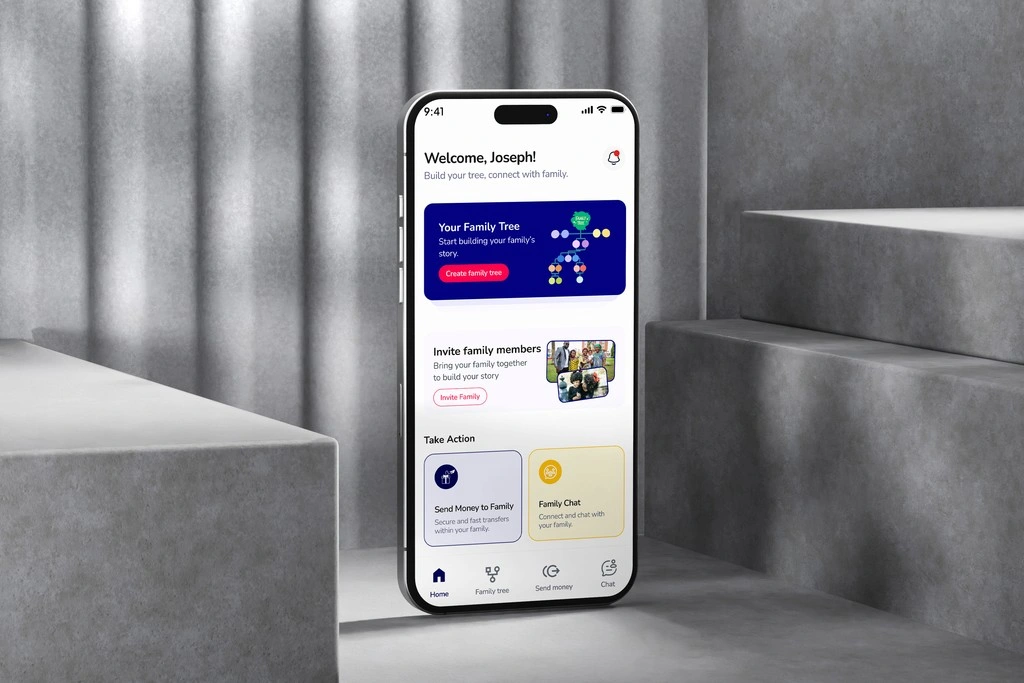
Antlers is an AI-powered family tree app that helps families build, visualize, and preserve their family stories together. Unlike traditional genealogy tools that focus on data and dates, Antlers was designed to foster emotional connection, shared memories, and collective storytelling, blending technology with human warmth.
The Challenge
Most family tree apps are built for individual use, making them feel impersonal and outdated. The goal for Antlers was to create a tool that felt alive — a space where families could co-create their history in a meaningful, intuitive way.
I wanted to answer a simple but powerful question:How might we design digital tools that make family history feel collaborative, emotional, and enduring not transactional?
Research Approach
I used a human-centered design approach informed by qualitative HCI research methods:
User Interviews (n = 5 families): To understand how families currently document memories, share updates, and what “connection” means to them in a digital context.
Contextual Inquiry: Observed how family members of different ages use mobile devices together, noting patterns of assistance, hesitation, and excitement.
Affinity Mapping (Miro): Synthesized findings to uncover core themes like trust, simplicity, and shared meaning.
Competitor Analysis: Studied genealogy tools like Ancestry and FamilySearch, identifying gaps in emotional design and collaborative engagement.
Rapid Usability Tests: Conducted early testing with low-fidelity wireframes to assess if multi-generational users (ages 16–60) could intuitively navigate and build a tree together.
Key Insights
Families preferred story-first interactions over data entry.
AI was seen as helpful only if it felt “assistive,” not “intrusive.”
Emotional feedback (like small animations or affirmations) made the process more rewarding.
Shared control — being able to invite and edit together, strengthened family trust.
Design Strategy & Decisions
Using these insights, I mapped my design decisions directly to user needs:
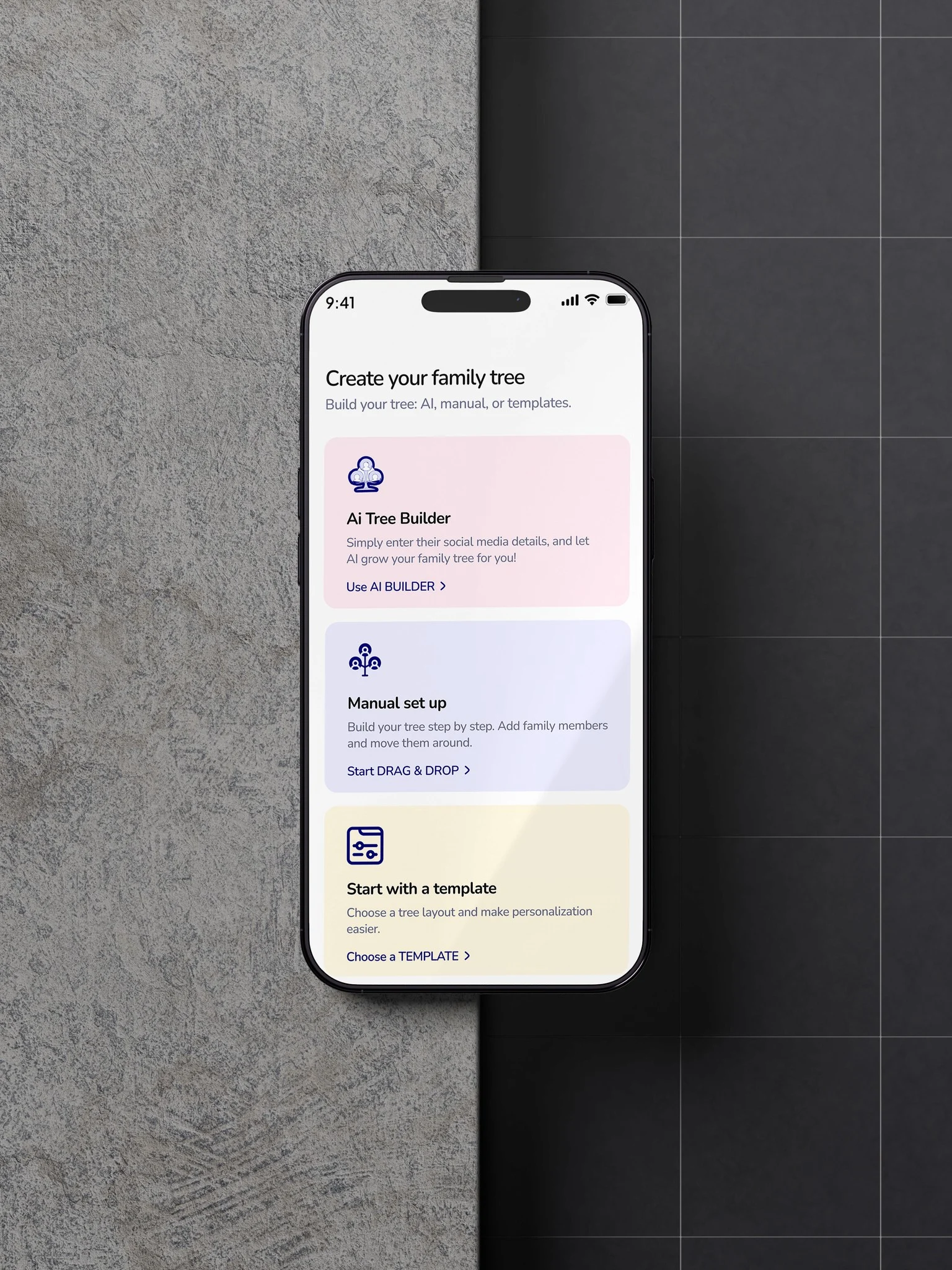
Drag-and-drop tree building: Simplified navigation for older users and first-time participants.
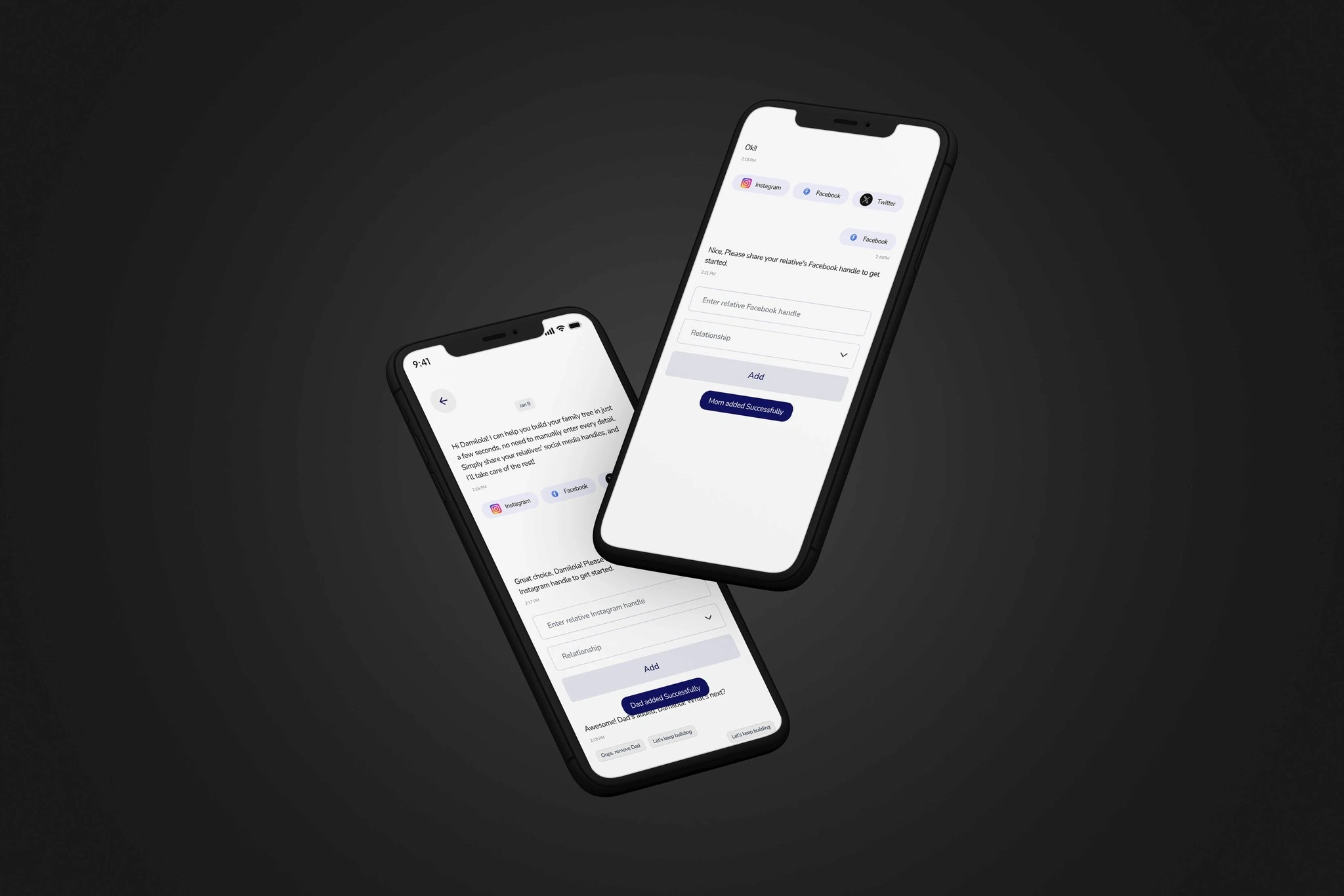
AI-assisted generation: Reduced cognitive load and supported users who might not know full family details.
Family invites & roles: Enabled shared authorship, a key HCI principle for collaborative interaction.
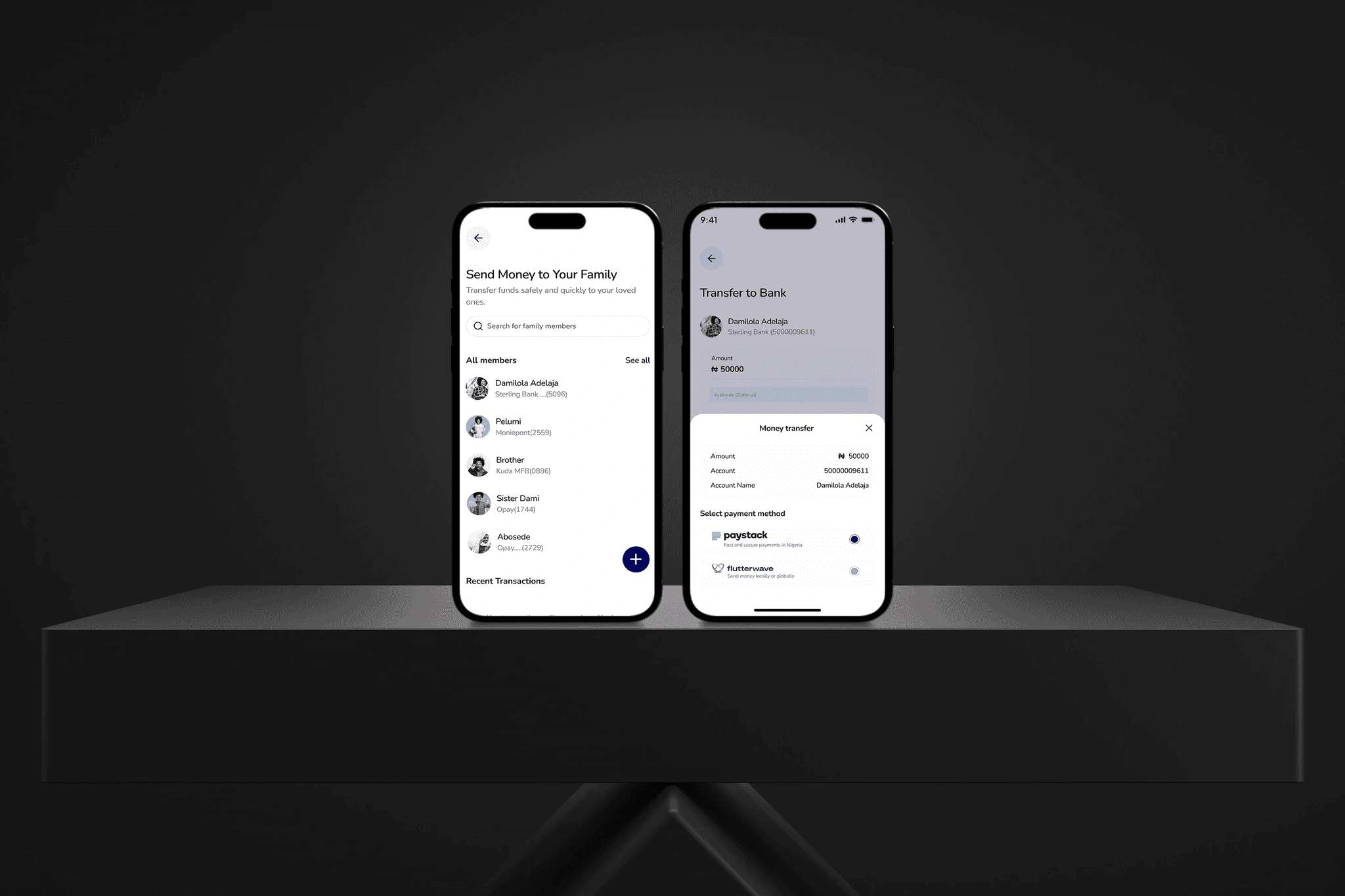
“Send money to family” feature: Integrated social utility, making Antlers not just about heritage but ongoing connection.
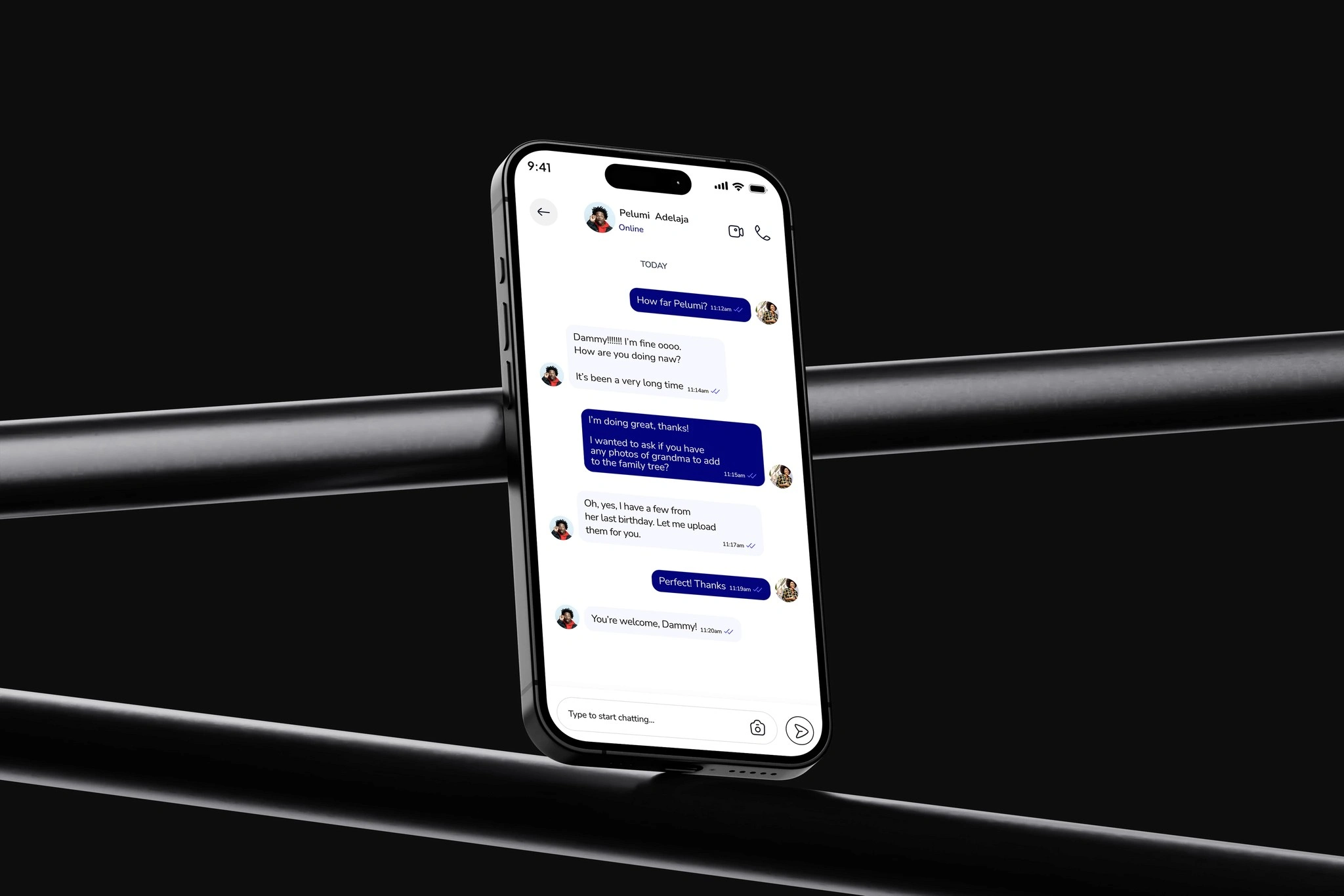
Family chat space: Created emotional continuity where conversations sustain memories.
Ethical & Accessibility Considerations
Designing for families meant designing across generations, abilities, and sensitivities:
Ensured legibility and accessibility for older users (contrast ratios, large tap targets).
Incorporated privacy controls for data and image sharing (users can approve who edits what).
Used inclusive language and imagery to reflect diverse family structures.
Avoided cognitive overload through progressive disclosure showing only relevant information per task.
Success Metrics
Onboarding completion: 82% (testing showed the guided flow made setup easier for non-tech users)
AI branch generation usage: 65% of users used it during first session
Collaborative invite acceptance: 78% of invited members joined shared trees
Emotional satisfaction rating: 4.6/5 (average from post-test surveys)
Outcome & Reflection
Antlers achieved what we set out to do, it transformed genealogy from a solitary activity into a shared, emotional experience.Families reported that the app “felt like a family member itself, warm, simple, and alive.”
Reflection:This project deepened my belief that technology doesn’t connect people by being smarter — it connects by being more human. By integrating HCI research with empathetic design, Antlers became more than an app — it became a bridge between generations.
Like this project
Posted Aug 19, 2026
AI-powered family-tree app focused on collaborative storytelling; HCI research, AI-assisted features, and multi-generational usability improvements.
Likes
2
Views
0
Tags