AGENTME — AI Agent Platform for Jobs & Freelance

Snapra Studio


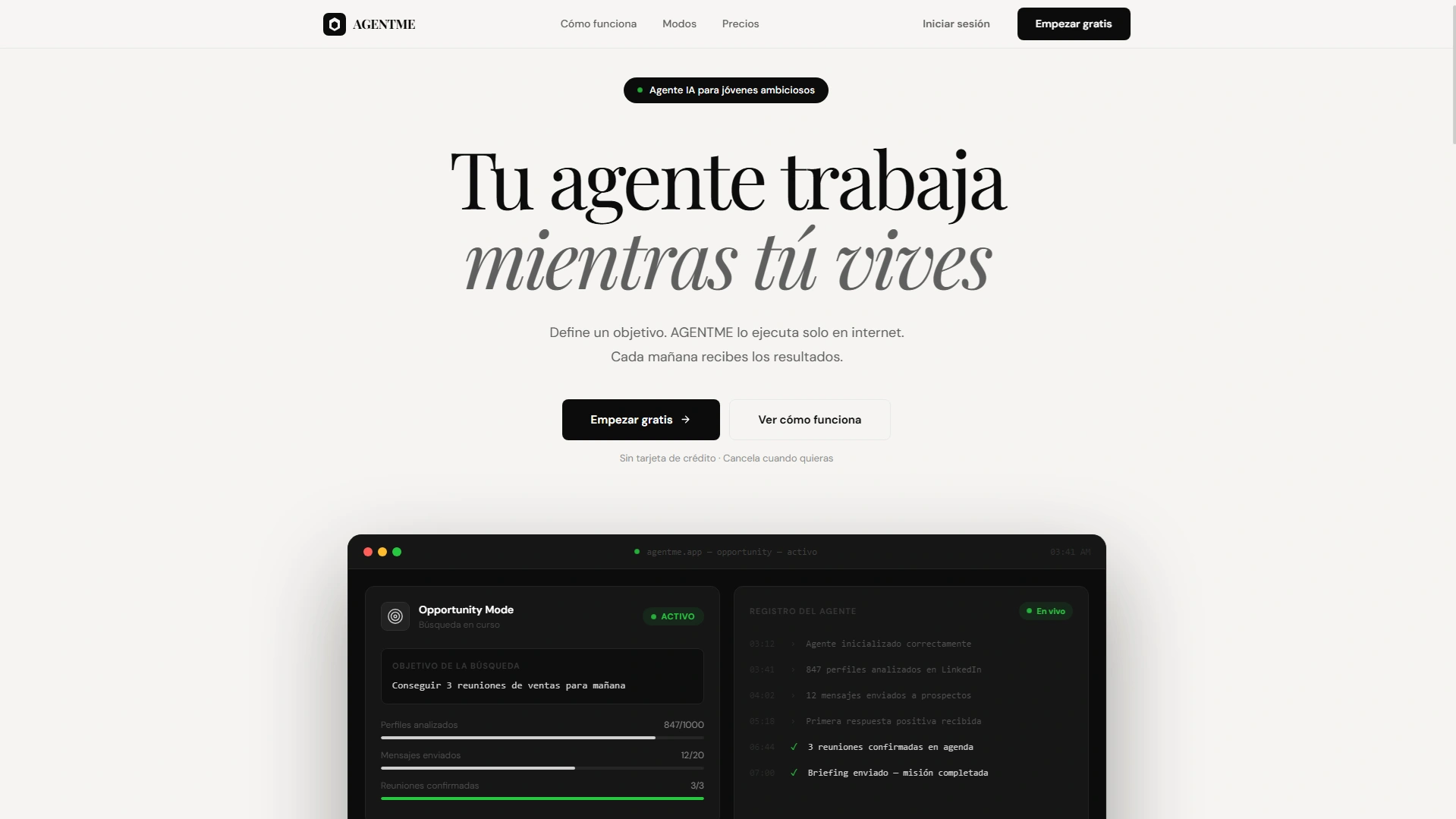
AGENTME - An AI agent platform for job opportunities, social content, and freelance workflows
Executive Summary
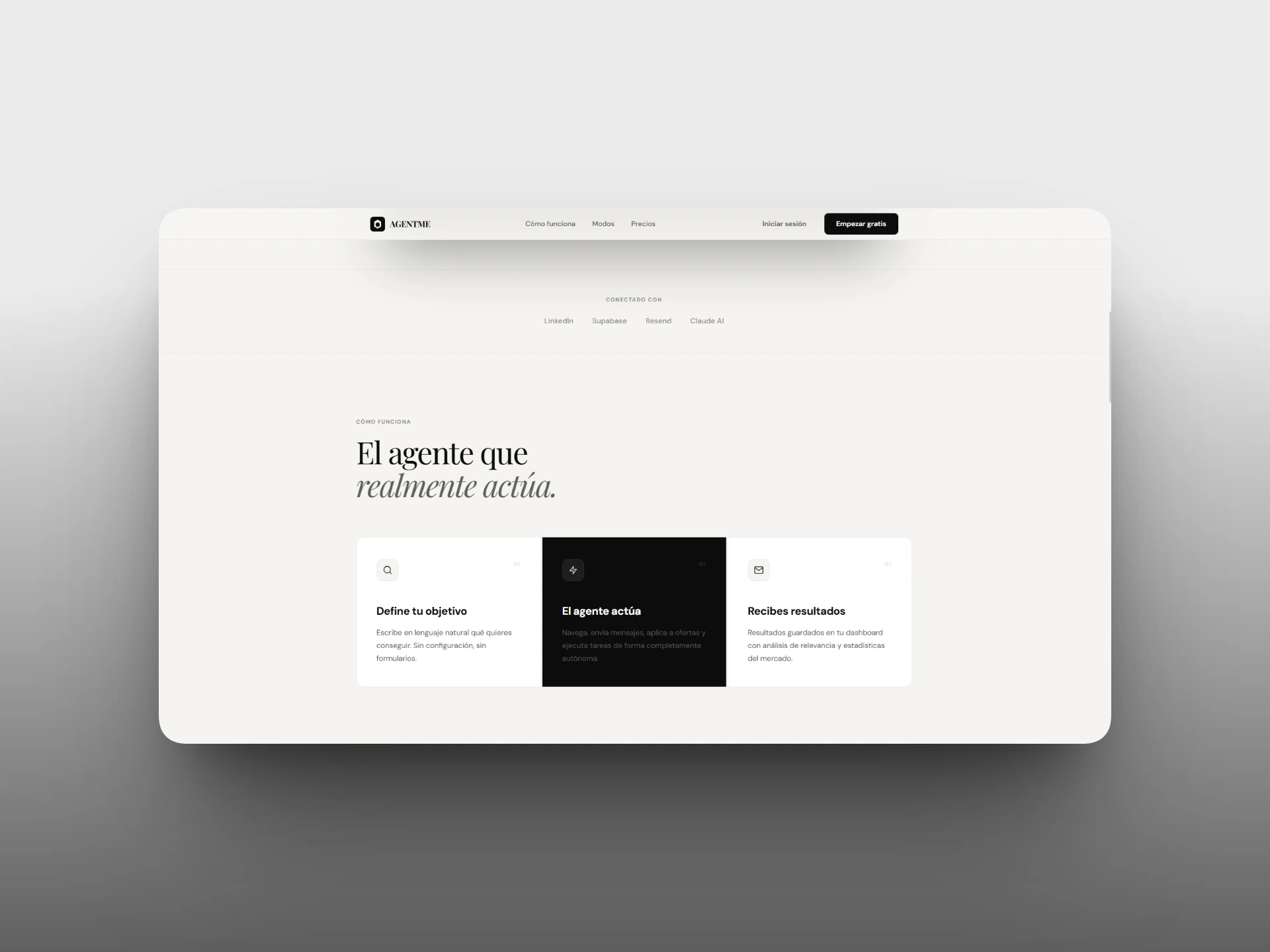
AGENTME is a full-stack web app where users describe goals in natural language and the platform turns them into missions powered by AI and persistent data — covering job opportunity search and analysis, social content (editorial calendar and hook lab), and freelance-oriented flows (leads, proposals).
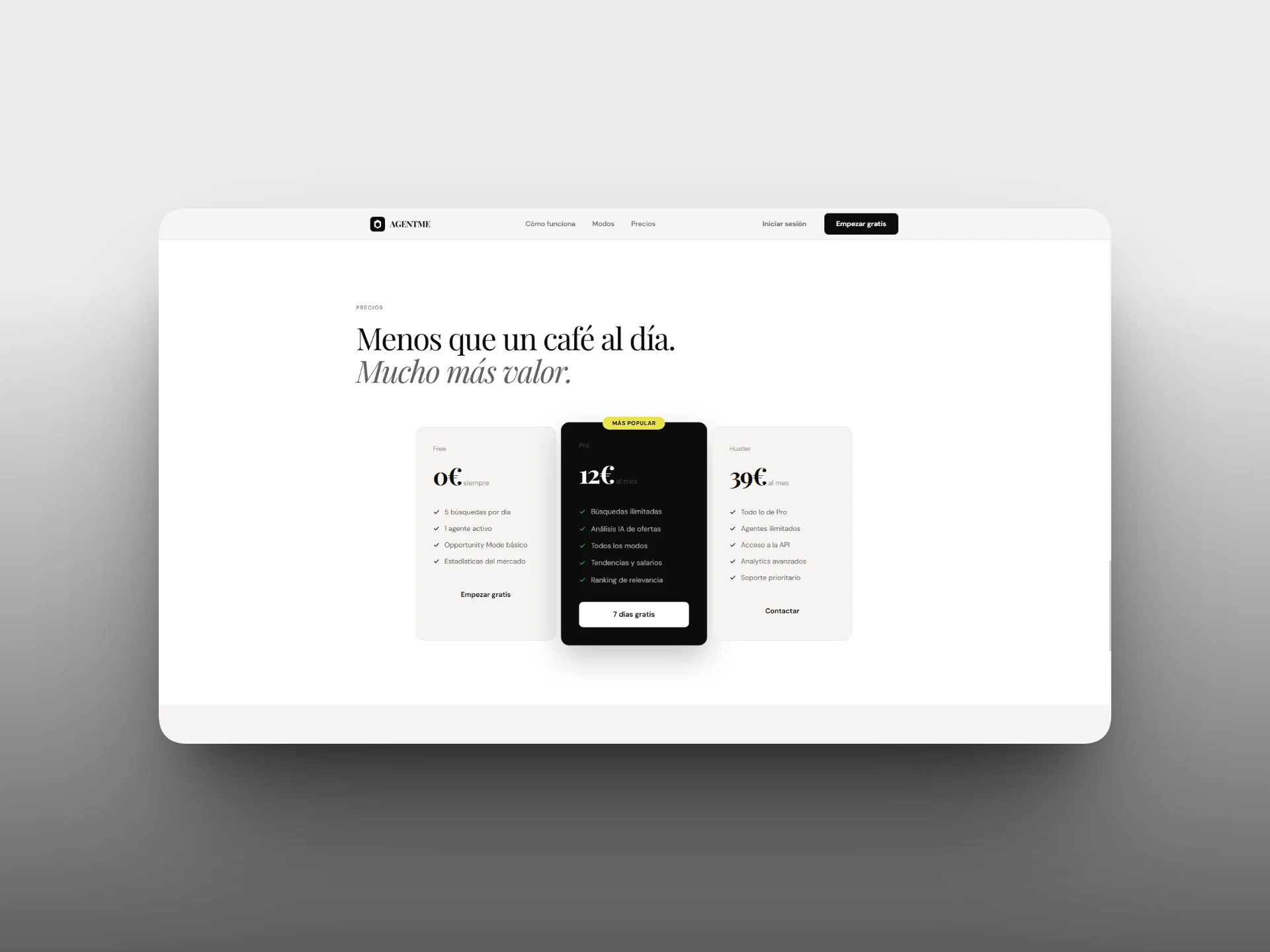
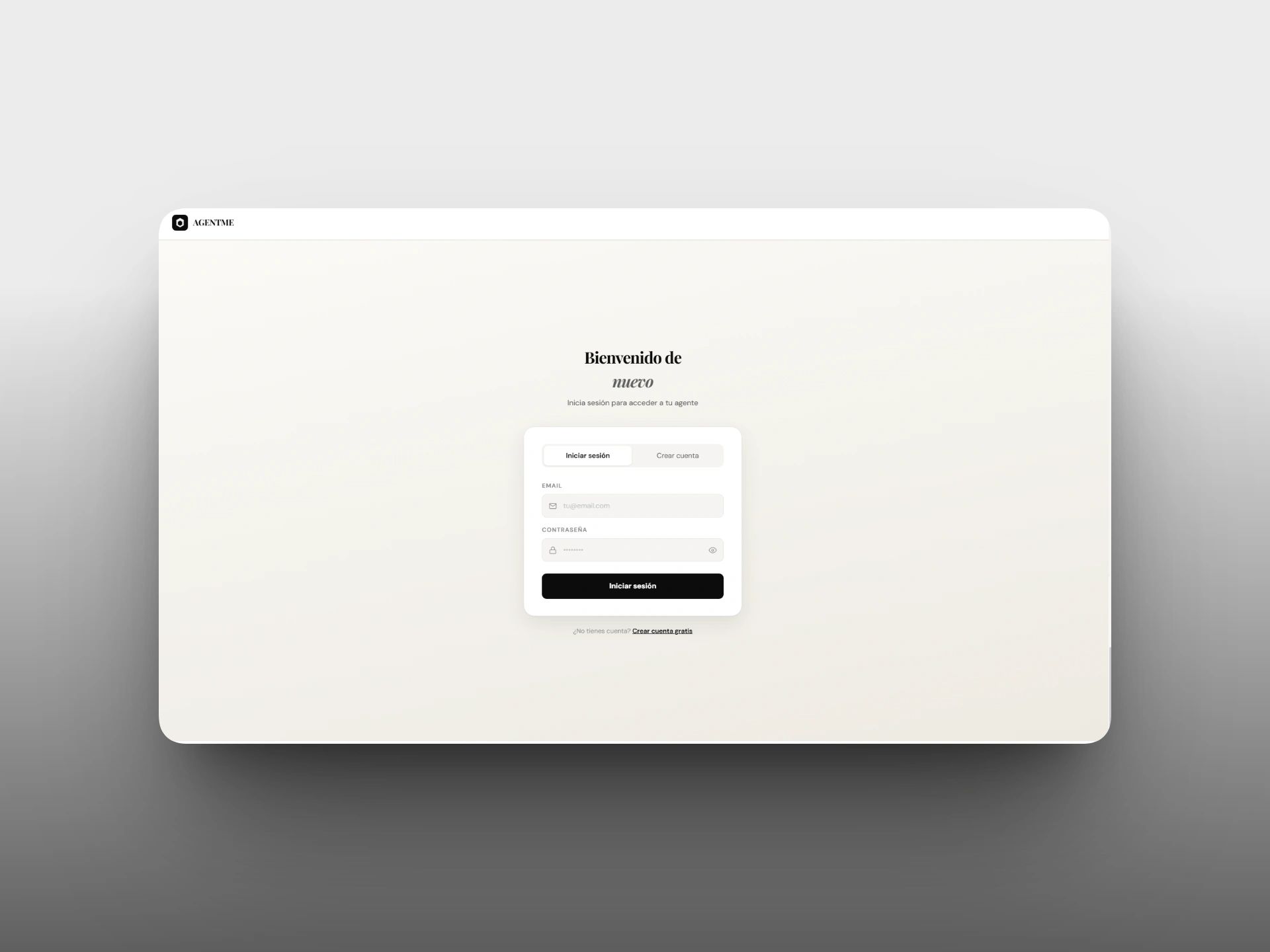
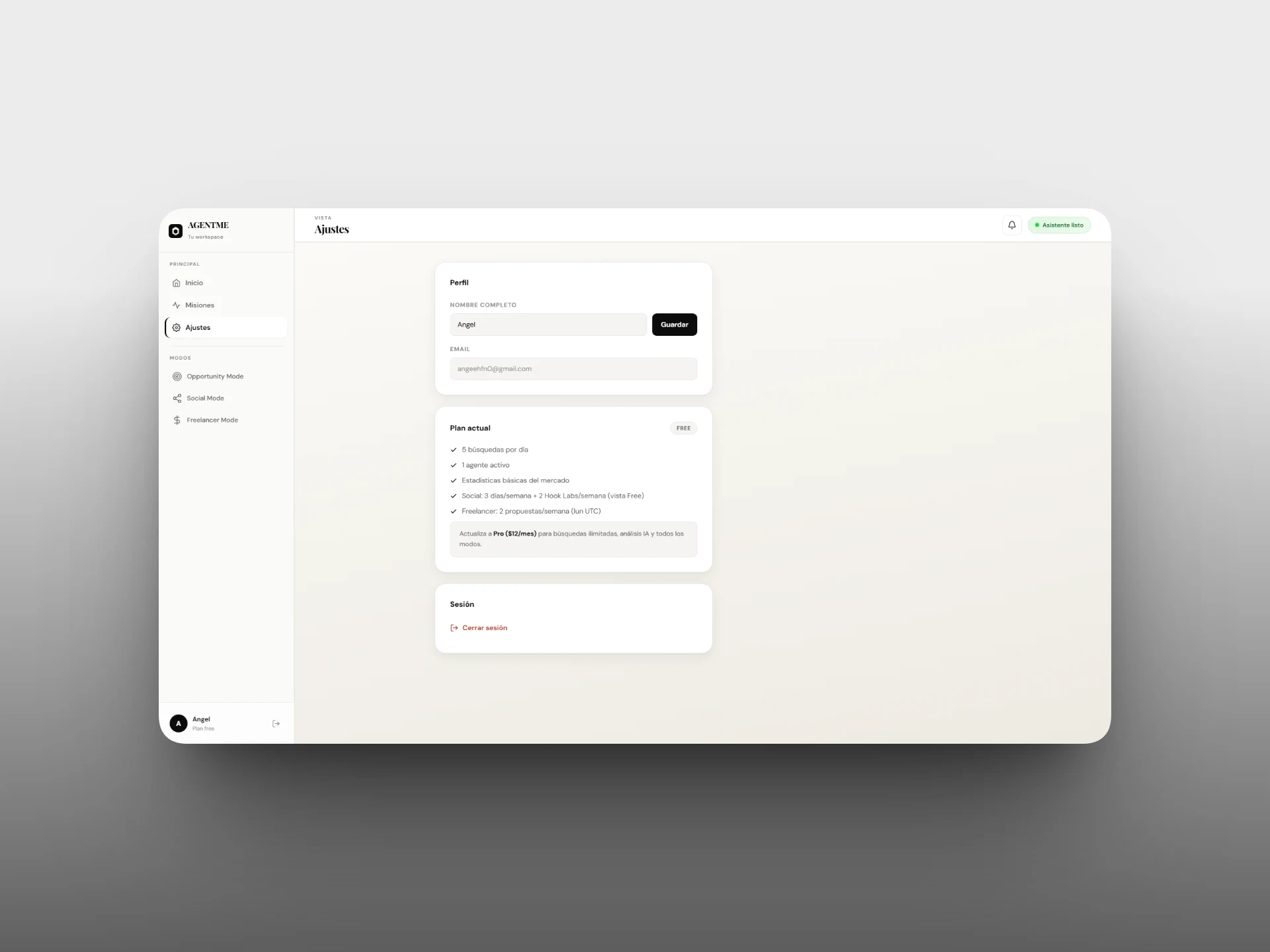
The product includes a marketing site, authentication, a unified dashboard, plan-based usage limits, in-app notifications, and transactional email.
The Problem
Many early-career users and freelancers split their time between LinkedIn, social content, and client outreach using disconnected tools — notes, spreadsheets, ad-hoc AI chats — without a clear history or a single place to see what the agent produced and what was saved.
Three core tensions drove the design:
Fragmentation — different needs (jobs, social, freelance) without a shared "mission → result → history" model.
Trust and control — real auth, first-party user data, and actionable feedback when results are thin or something fails.
Product sustainability — heavy LLM usage and scraping require quotas, secure API routes, and coherent database persistence.
The Solution
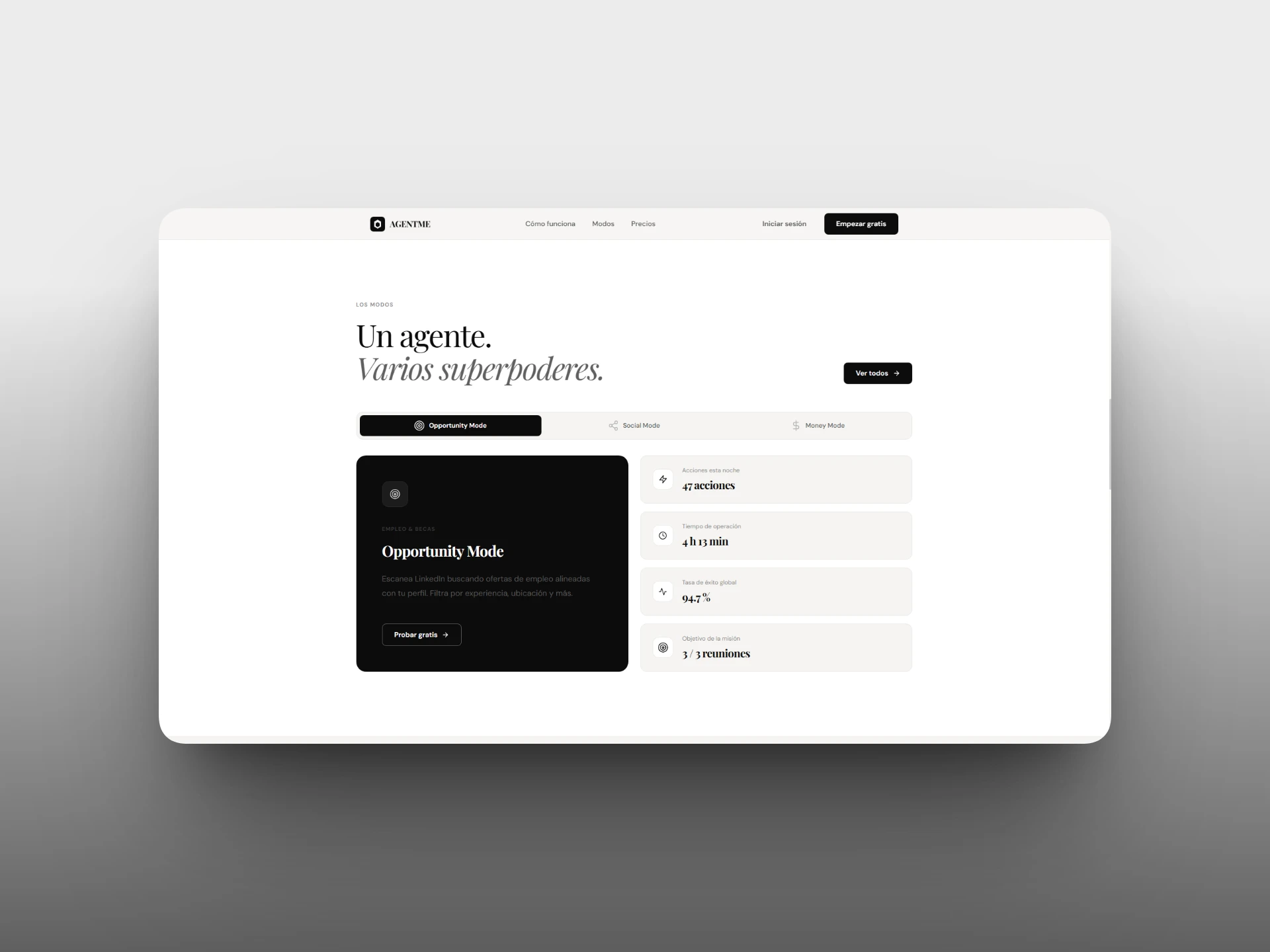
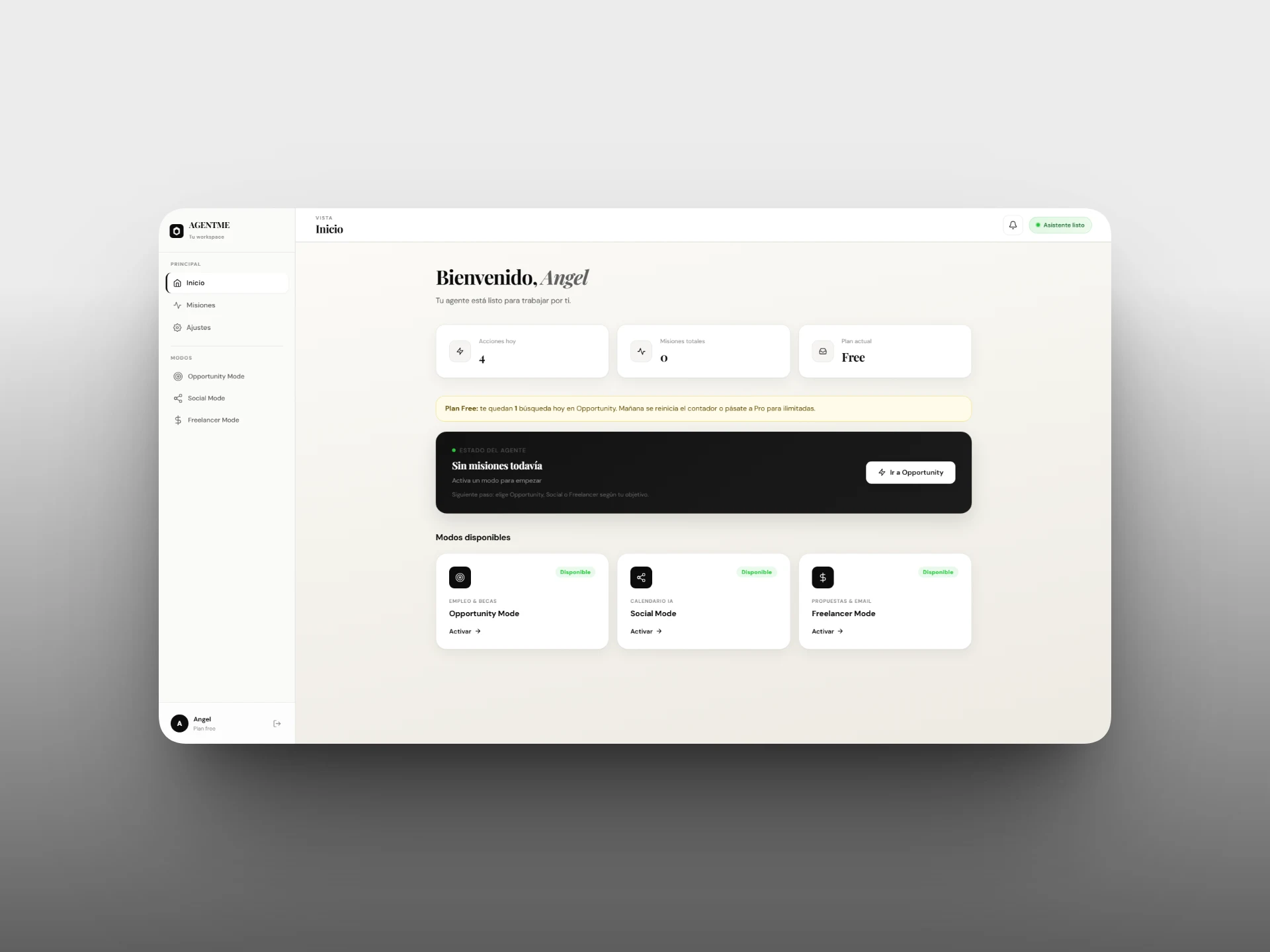
A SaaS-style experience built around a unified mission model, with three modes:
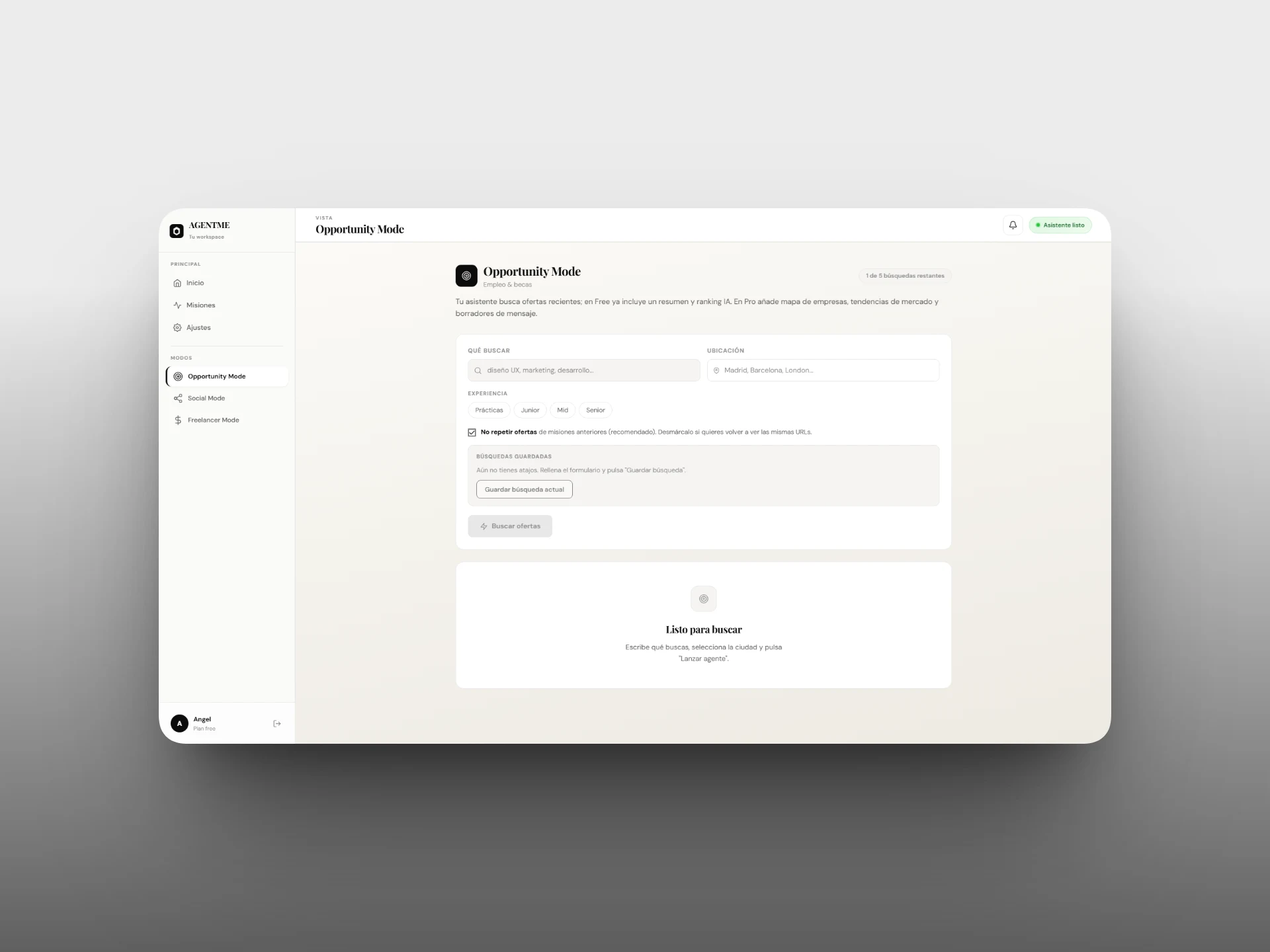
Opportunity — job-oriented search with Playwright-assisted scraping and relevance filtering against the user's query.
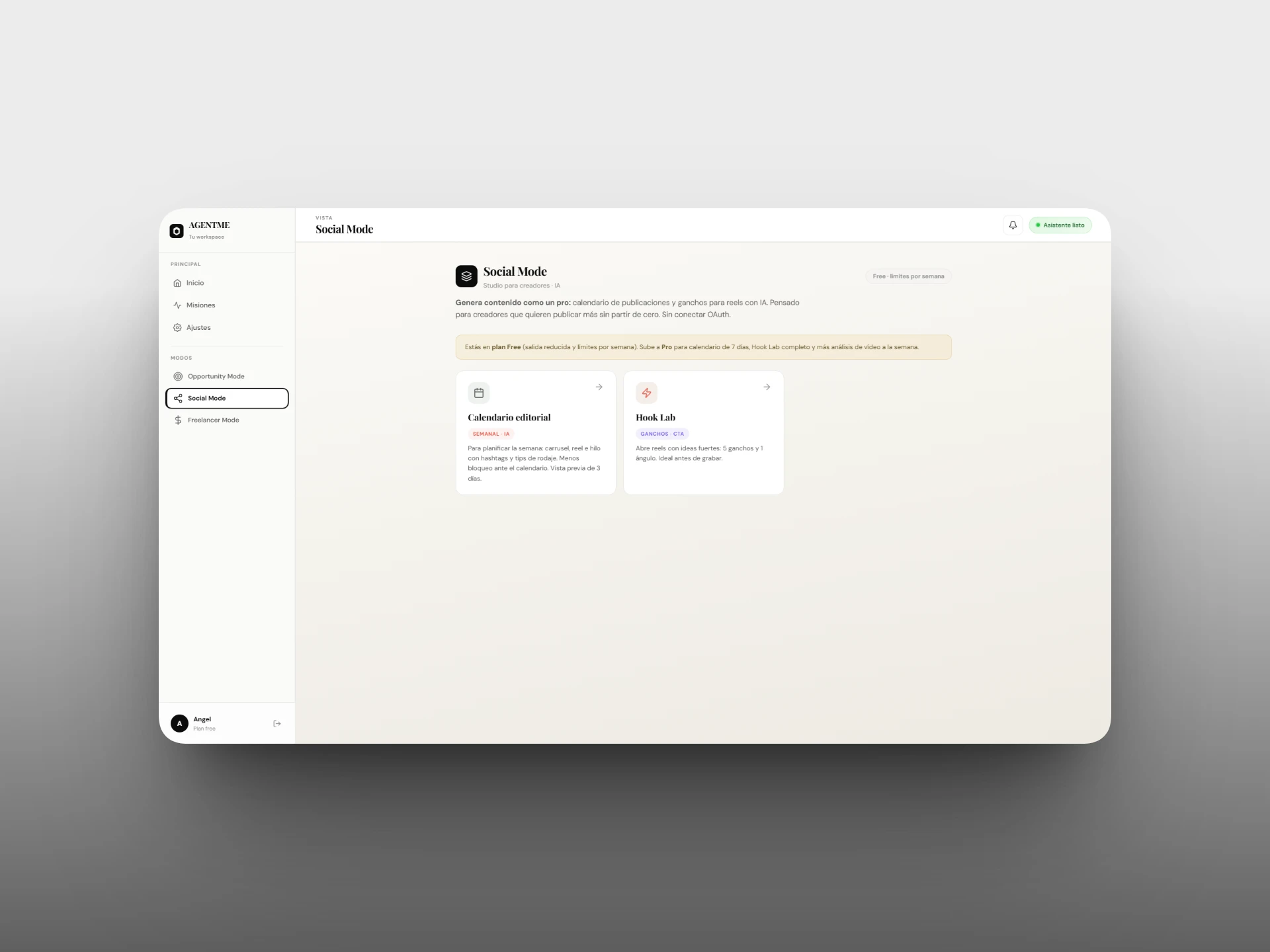
Social — editorial calendar and a hook lab for post ideas structured for real channels.
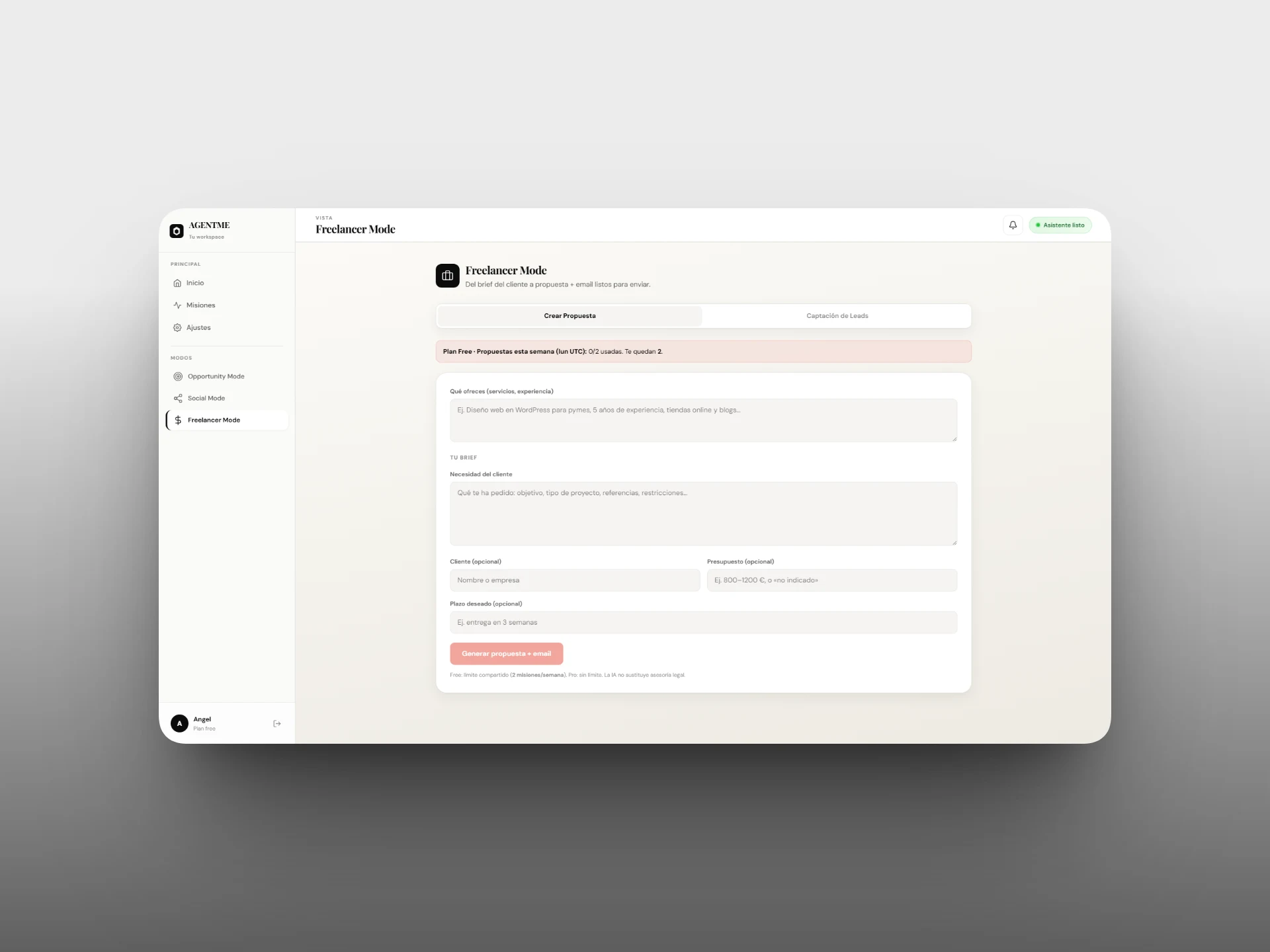
Freelancer — copy-oriented flows for leads and proposals, tied to the same mission model.
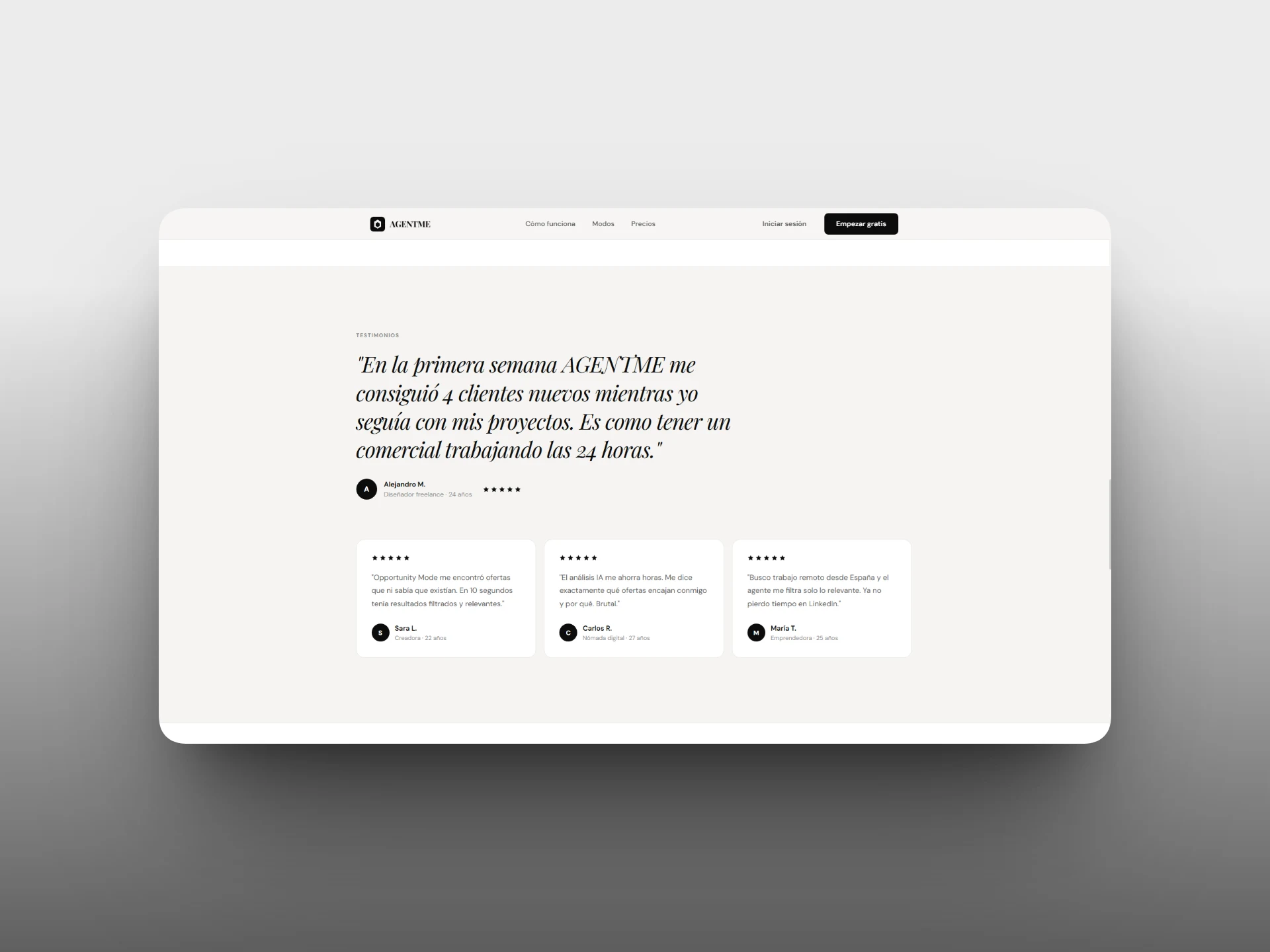
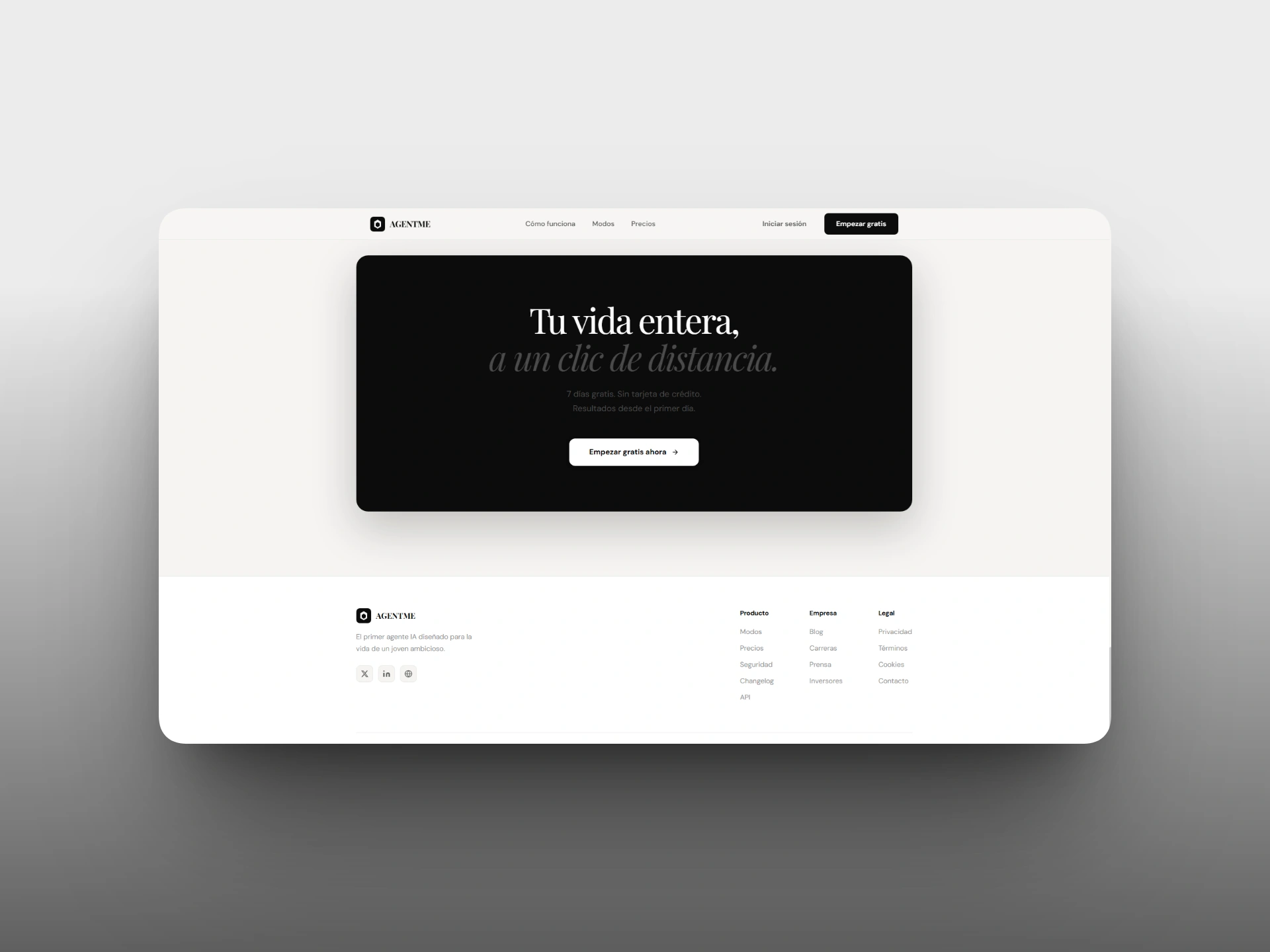
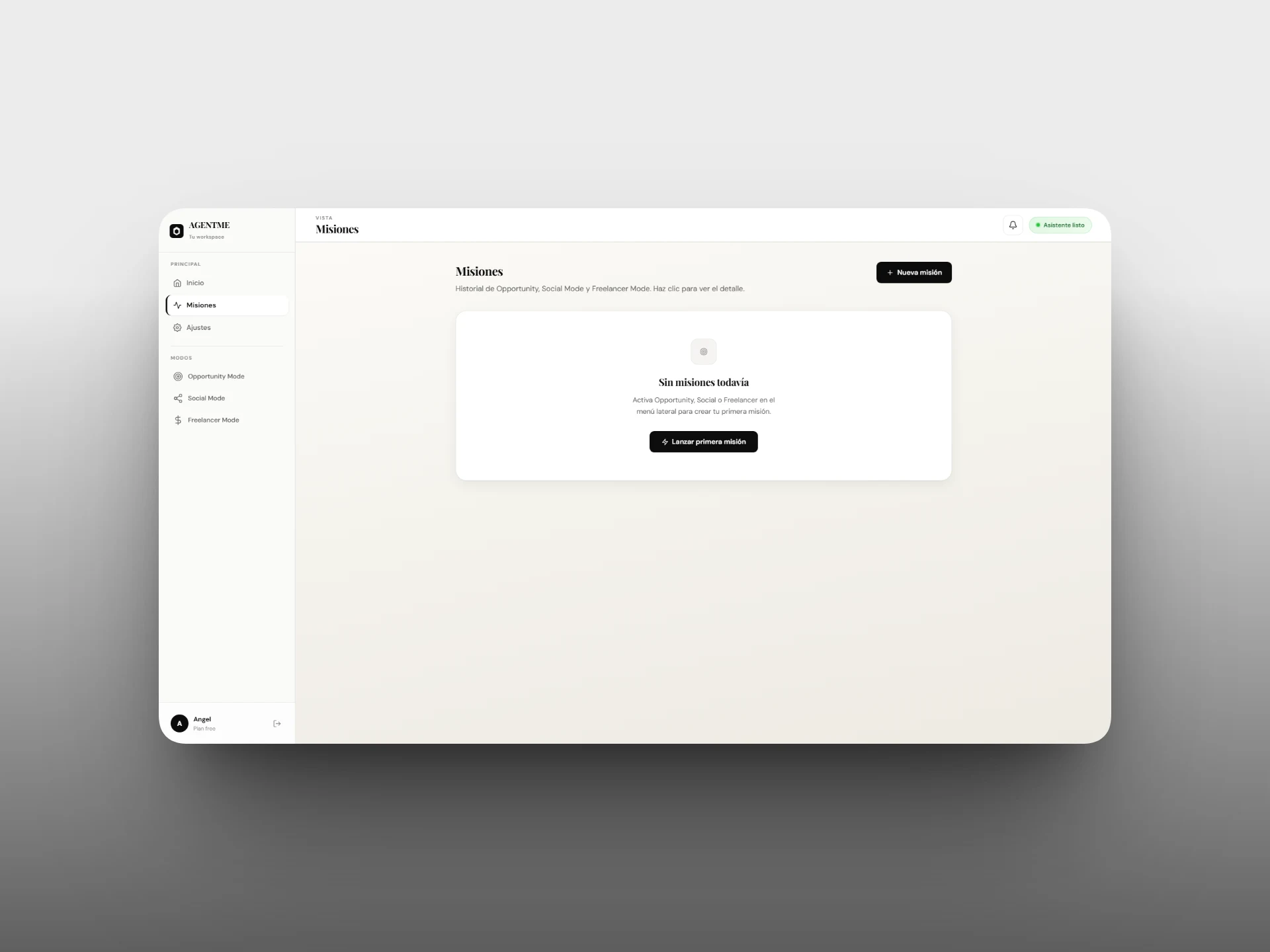
Every mission persists with its state, action counts, and suggested next steps. Onboarding and a notification center improve both first-run and return visits. The landing page communicates value, surfaces modes and pricing, and routes users to sign up or sign in.
Technical Approach
Frontend — Next.js 16 (App Router), React 19, TypeScript, Tailwind CSS 4, consistent UI across marketing and app.
Backend — Route Handlers in the same repo that validate session, enforce limits, and call agent services.
Data & auth — Supabase for users, profiles, missions, and notifications, with SSR via
@supabase/ssr.AI — Anthropic Claude through the server-side SDK; agent logic organized by mode. Secrets never touch the browser.
Email — Resend for transactional mail scoped to valid sessions.
Client data — SWR for dashboard refreshes without full reloads.
Notable choices: strict client/server split for secrets; lazy-loading Playwright to keep dev startup light; mission metadata reused across modes for context prefill.
Outcome
An end-to-end usable product: sign up, run agents per mode, browse mission history, and receive key emails. The architecture supports adding modes and business rules without rewriting the session or data core.
Learnings & Next Steps
A single "mission" mental model reduces perceived complexity even when the pipelines underneath differ significantly.
Planned next steps: E2E tests with Playwright, retention analytics, Stripe billing, and shipping the "Money" mode out of coming soon.
Role: Full-stack / product · Stack: Next.js 16, React 19, TypeScript, Tailwind 4, Supabase, Claude, Resend, SWR, Playwright
Like this project
Posted Apr 14, 2026
Full-stack SaaS where users describe goals in plain language and AI turns them into missions — job search, social content, and freelance flows.