
Die Koffer mit den Rillen
A brand site concept for RIMOWA. rimowa-concept.vercel.app
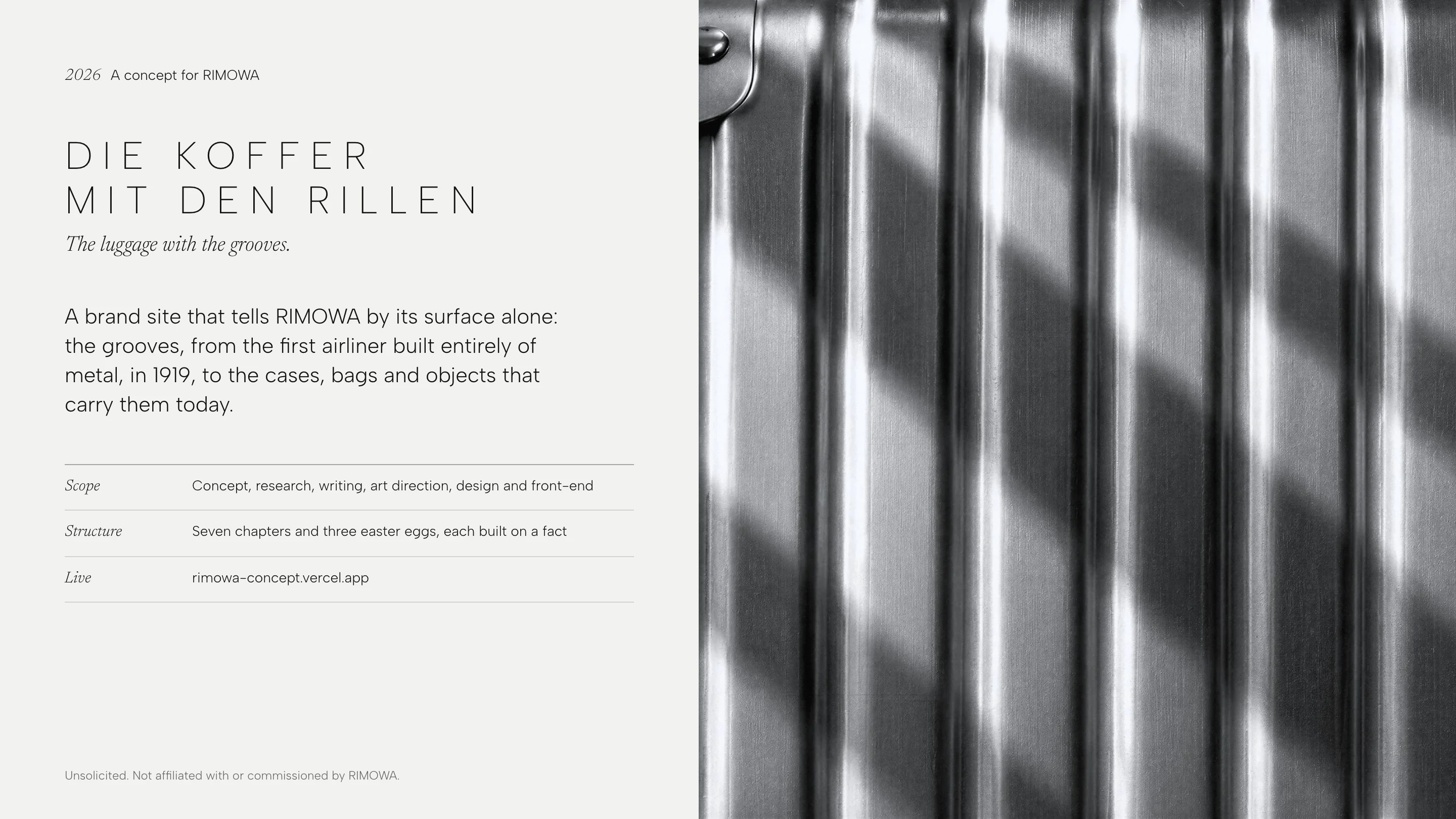
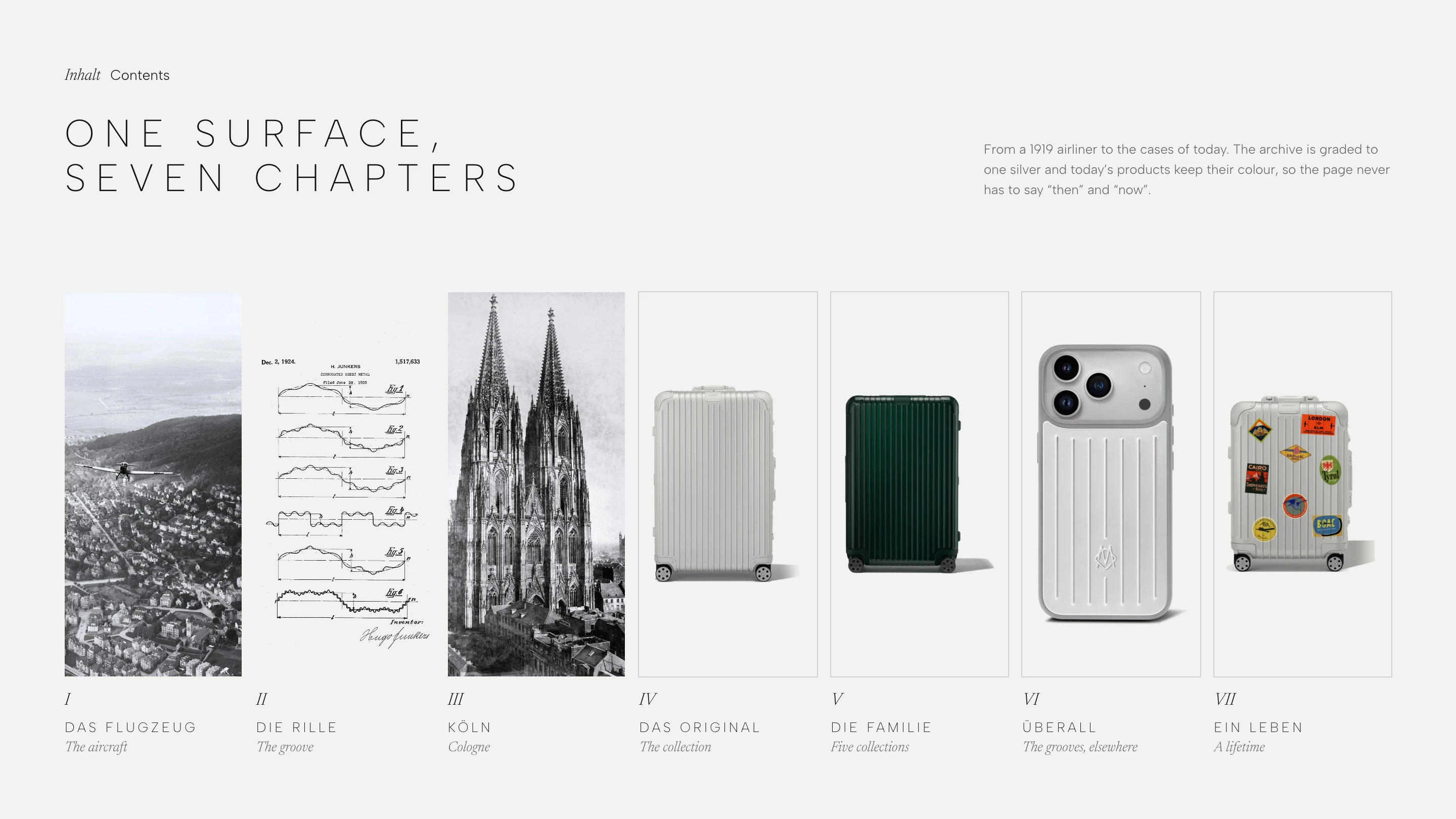
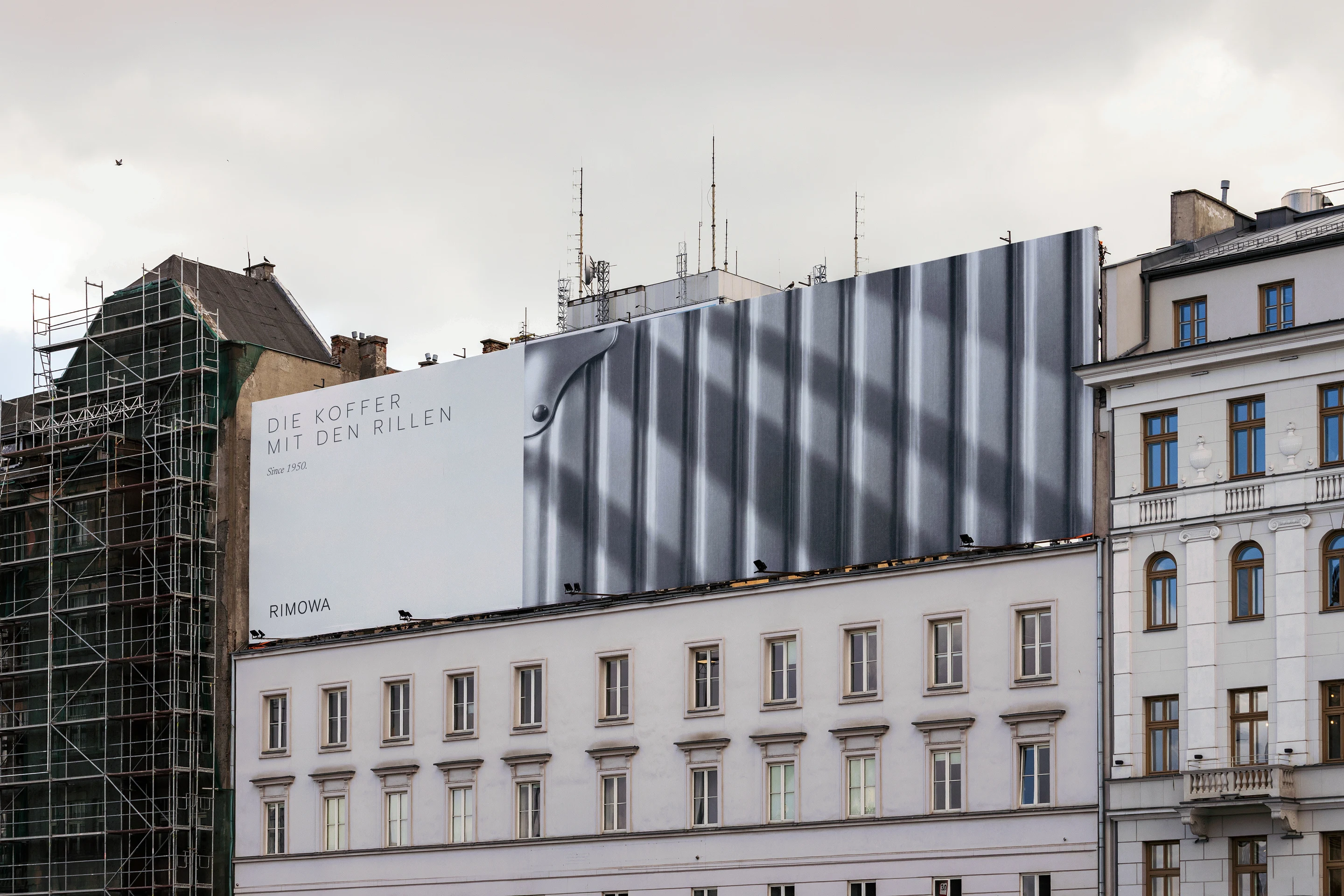
The grooves were not drawn for luggage. On 25 June 1919 the Junkers F 13 flew at Dessau, the first airliner built entirely of metal, its skin pressed into ridges so that a thin sheet would keep its shape. Thirty years later RIMOWA brought the same ridges down to the size of a suitcase. A hundred years on, they are still on every Original.
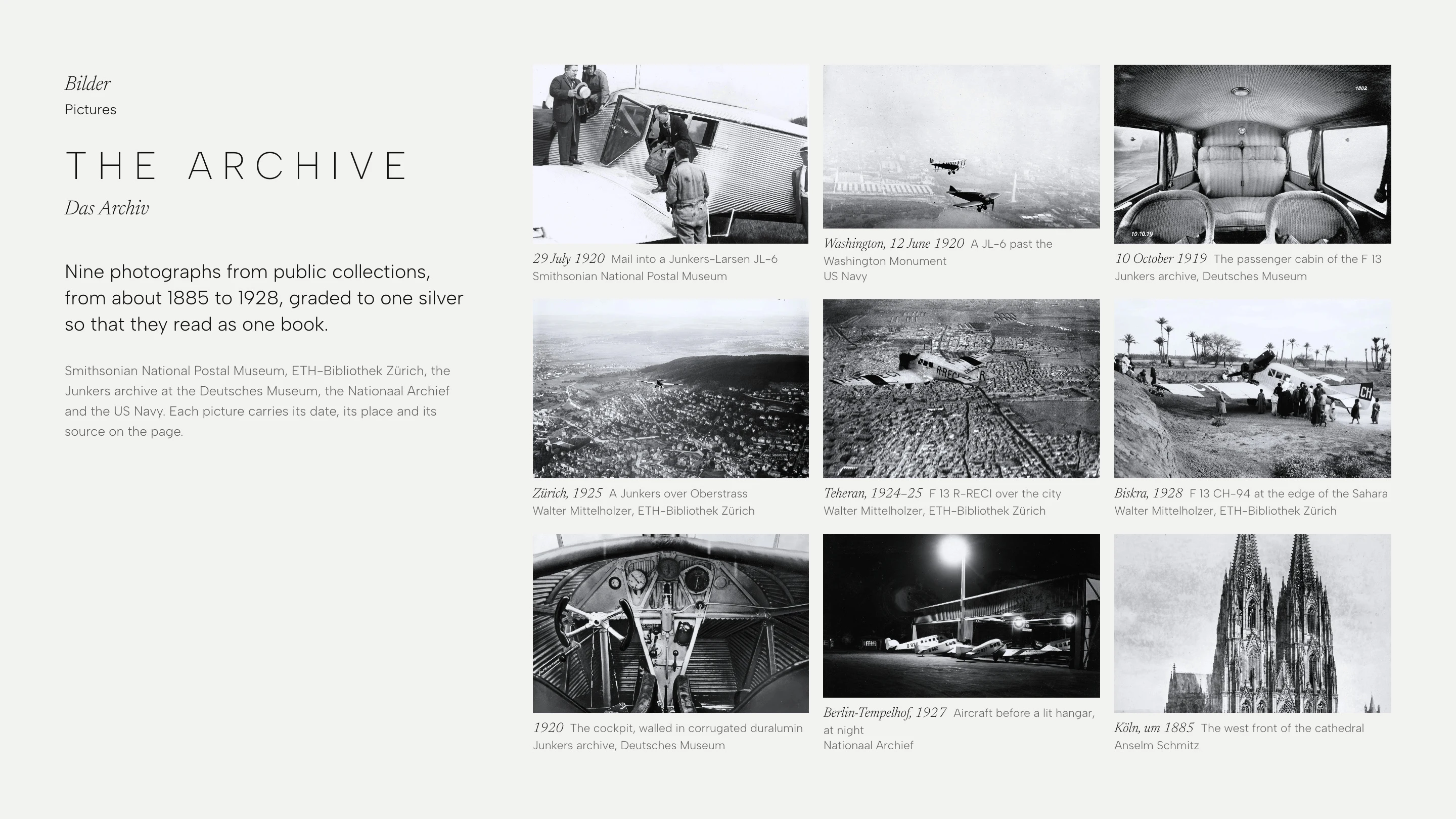
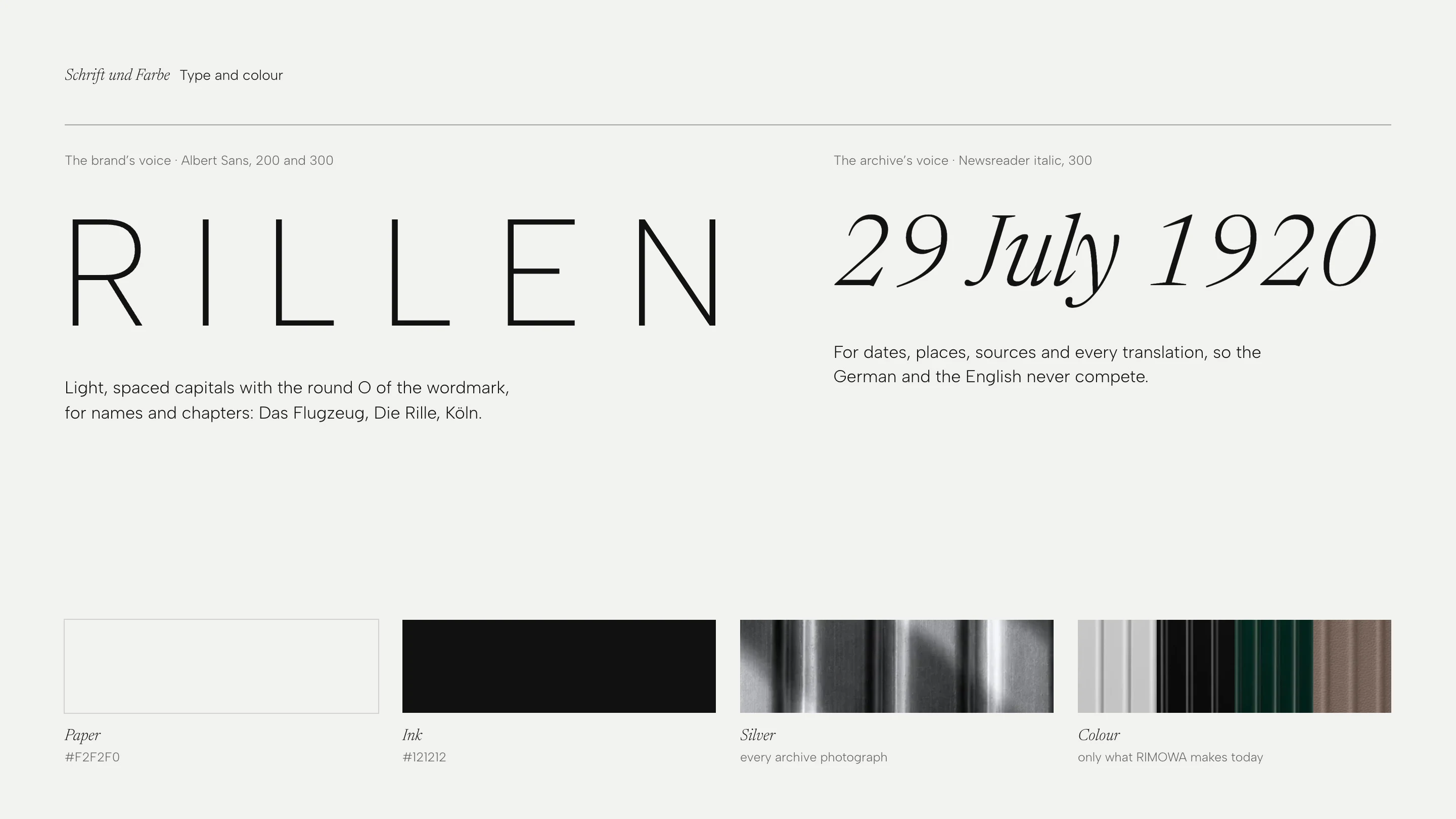
The site tells that story with one surface and no labels for "then" and "now". Every archive photograph comes from a public collection and is graded to one silver; everything RIMOWA makes today appears in colour. The reader never needs to be told which is which.
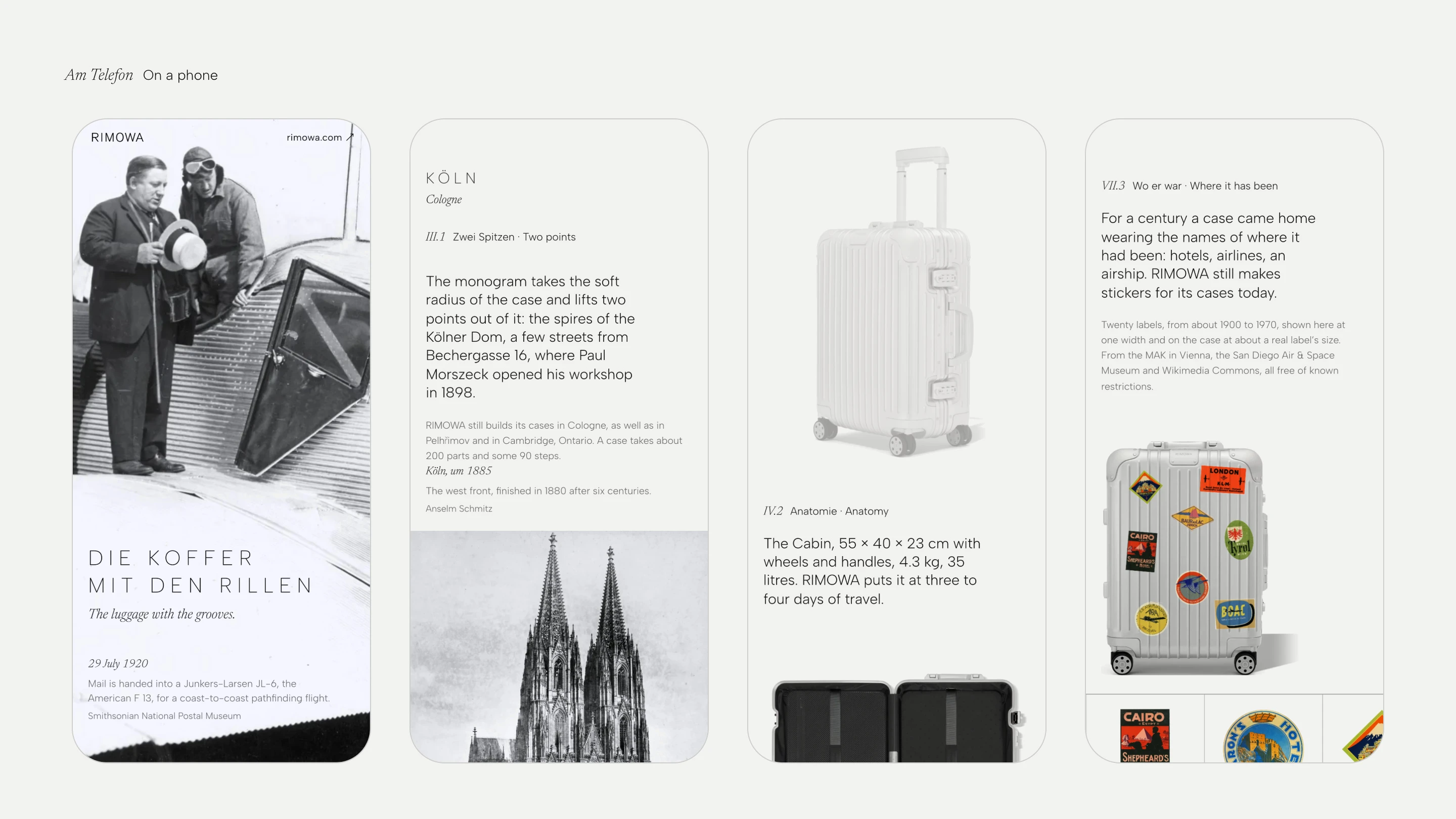
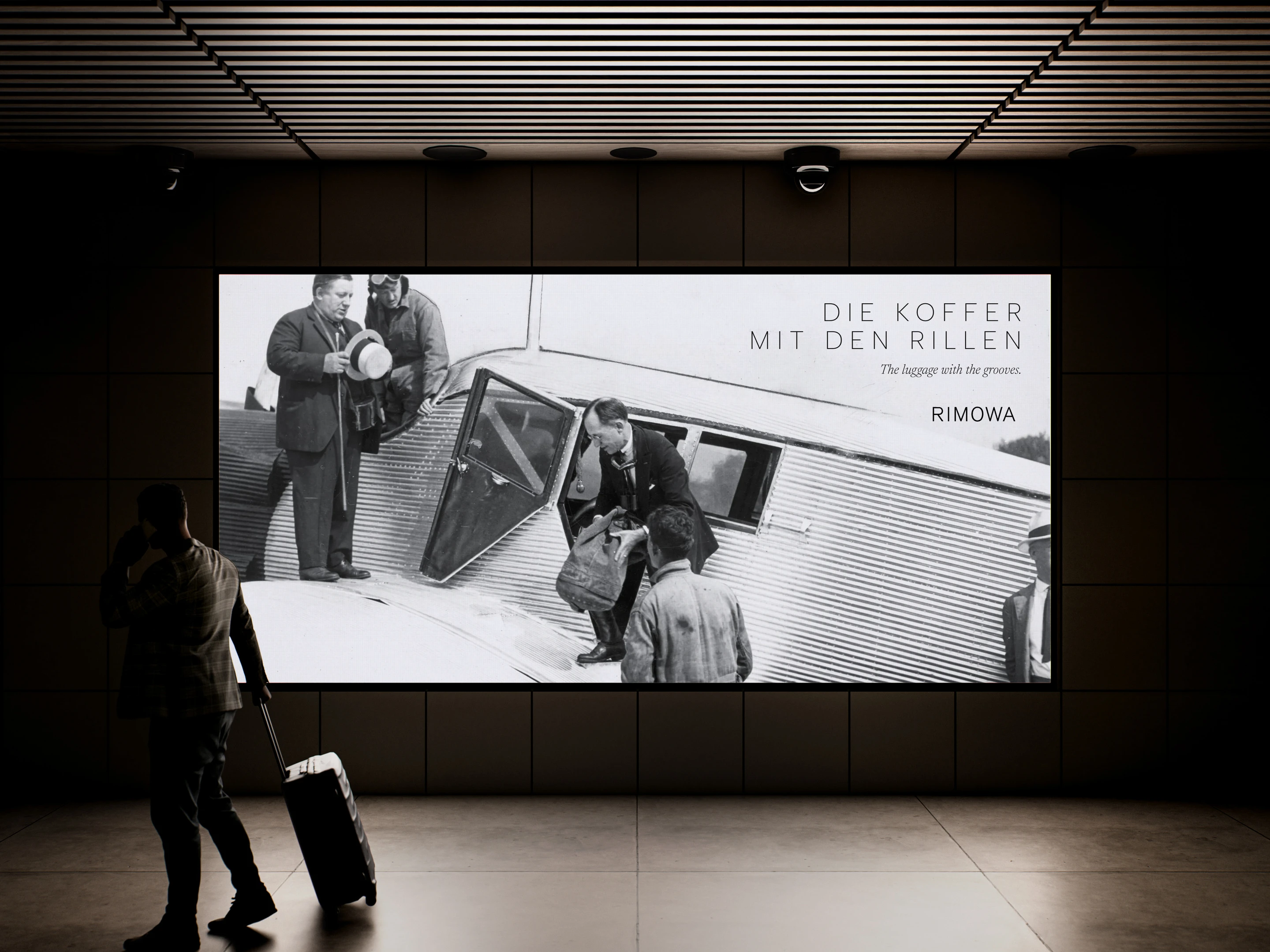
It opens on mail being loaded into a corrugated Junkers-Larsen JL-6 on 29 July 1920. The photograph develops like a print; scrolling closes in on the fuselage until its corrugation becomes the grooves of a case, which turns upright and draws back for one line: in 1950, RIMOWA pressed the airliner's grooves into an aluminium suitcase. From there, seven chapters. Aerial photographs from 1920 to 1928 rise over one another. A drawing shows the same load bending a flat sheet and not a grooved one, then gives way to Hugo Junkers' patent. The monogram is traced out of the spires of the Kölner Dom. Five sizes of the Original stand to one scale, the Cabin is labelled where its parts sit, and five collections and the grooves on a phone case and a watch case each link to their page on rimowa.com.
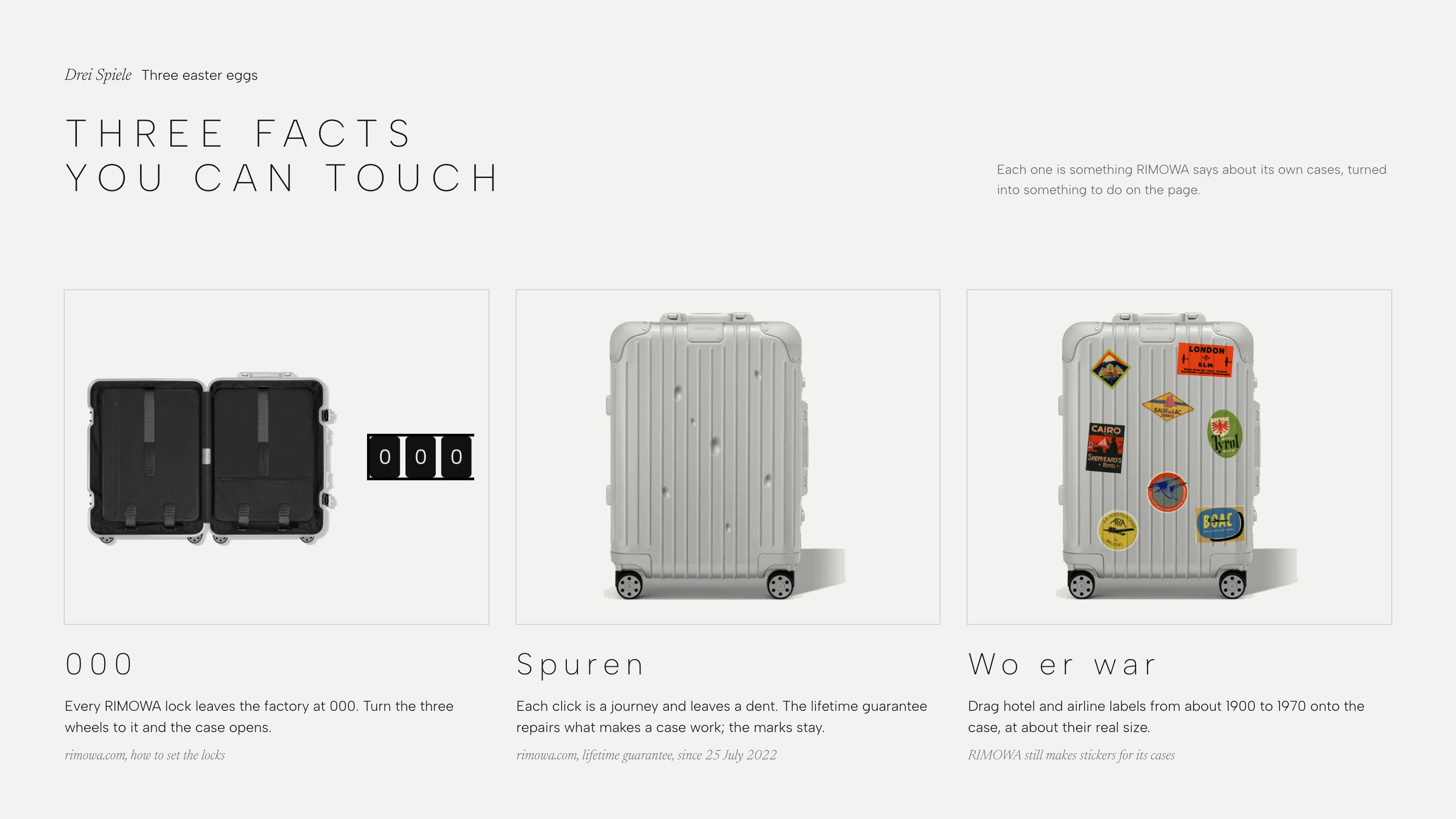
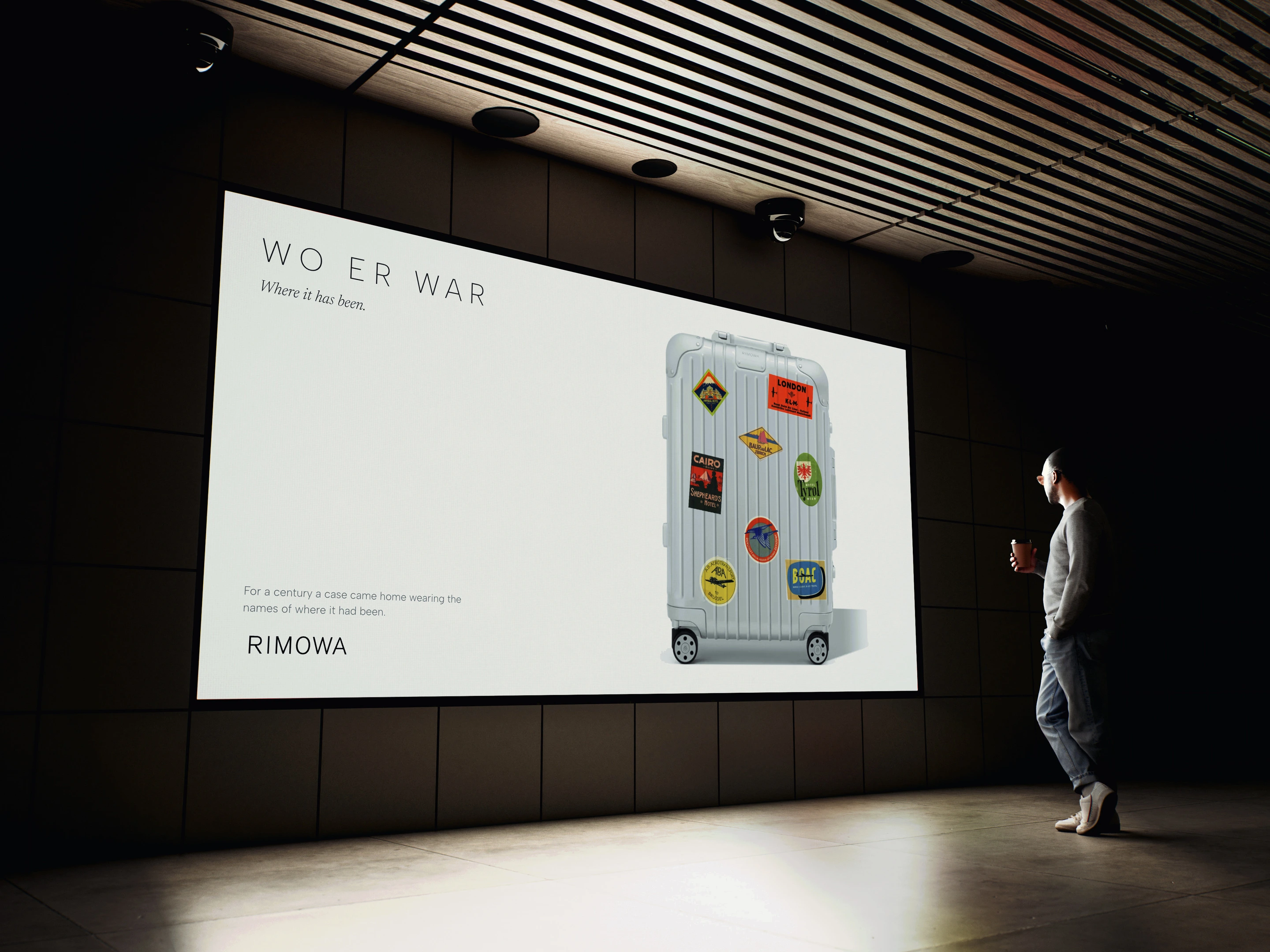
Three easter eggs turn RIMOWA's own facts into something to do. Every RIMOWA lock leaves the factory at 000: turn the wheels to it and the case opens. The lifetime guarantee repairs what makes a case work and leaves the marks, so every click on a new Original adds a dent. And twenty hotel and airline labels from about 1900 to 1970 can be dragged onto the case at about their real size, where they take the light of its grooves.
Type in two voices: Albert Sans, light and spaced, with the round O of the wordmark, for the brand; Newsreader italic for dates, places and translations. One HTML file, no framework: scroll-driven scenes, smooth scrolling and drag and drop on desktop and phone. Lighthouse 98 for performance on a phone, 100 for accessibility.
Karnak. Creative direction: Alan Yang. karnak.design
Archive photographs: Smithsonian National Postal Museum; US Navy; Walter Mittelholzer, ETH-Bibliothek Zürich; Junkers archive, Deutsches Museum; Nationaal Archief; Anselm Schmitz; US Patent 1,517,633. RIMOWA museum photographs: 1971markus, CC BY-SA 4.0. Luggage labels: MAK Vienna, San Diego Air & Space Museum, Wikimedia Commons. Product photographs: RIMOWA. The grooved detail in the opening was generated for this concept. Out-of-home scenes: mockups-design.com.
Concept: RIMOWA. Not affiliated with RIMOWA. RIMOWA, its wordmark and monogram are trademarks of their owner.
0 likes · 0 views · Nov 10, 2026
A brand site concept that tells RIMOWA through its grooves alone, from a 1919 airliner to the cases of today. By Karnak.