Skelmet store: a 3D skull that follows your scroll

Hemant Nandal
Verified


Client: Skelmet · My role: design and build of the online store · Built with: Next.js and Three.js · Live: skelmet.in
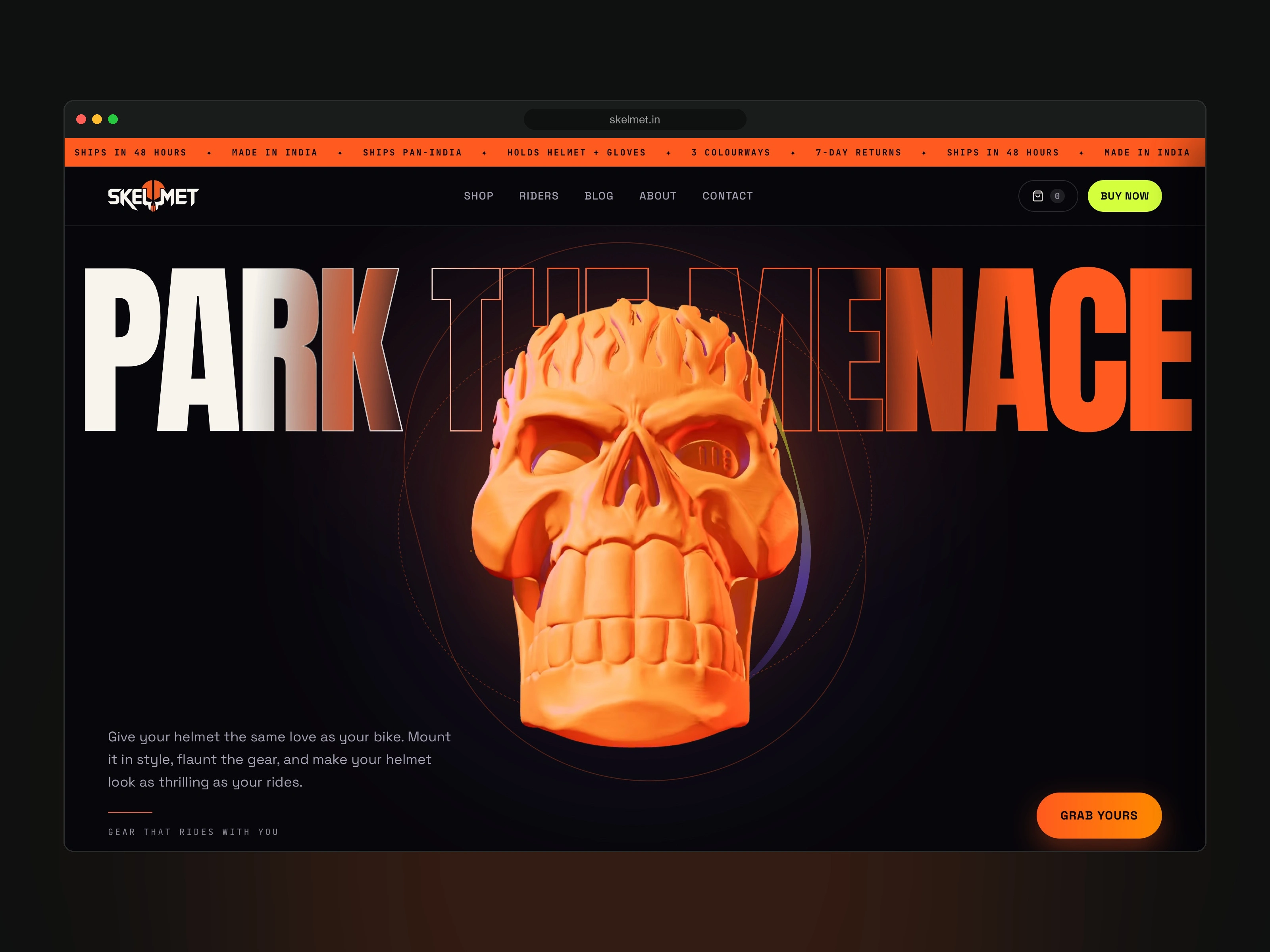
The skelmet.in homepage: a 3D flame skull in front of the headline Park the menace
The idea
The product is a 3D-printed flame skull, so the store opens on the skull itself, in 3D. You can drag it to spin it. Scroll, and it turns, drops out of the hero and lands on its own card in the lineup, where it becomes the product photo.
The page never stops selling the thing it's about.
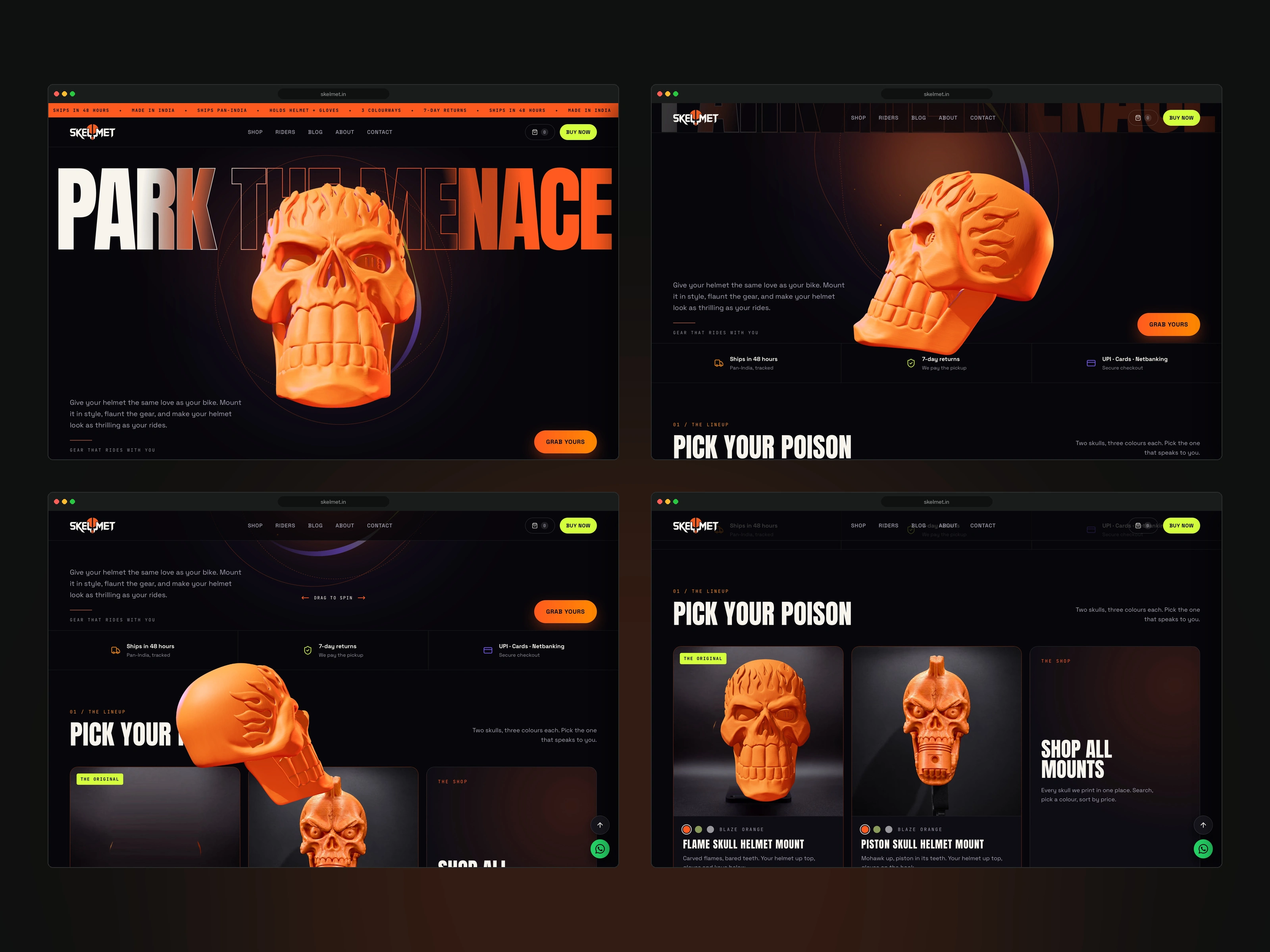
Four moments from one scroll: the skull front-on, turning, falling, and landing on its card
A store that sells, not just shows
Under the hero, the page answers a first-time buyer's questions in the order they ask them: which skull, why bother, will it hold, what does it look like up close, and how do I pay.
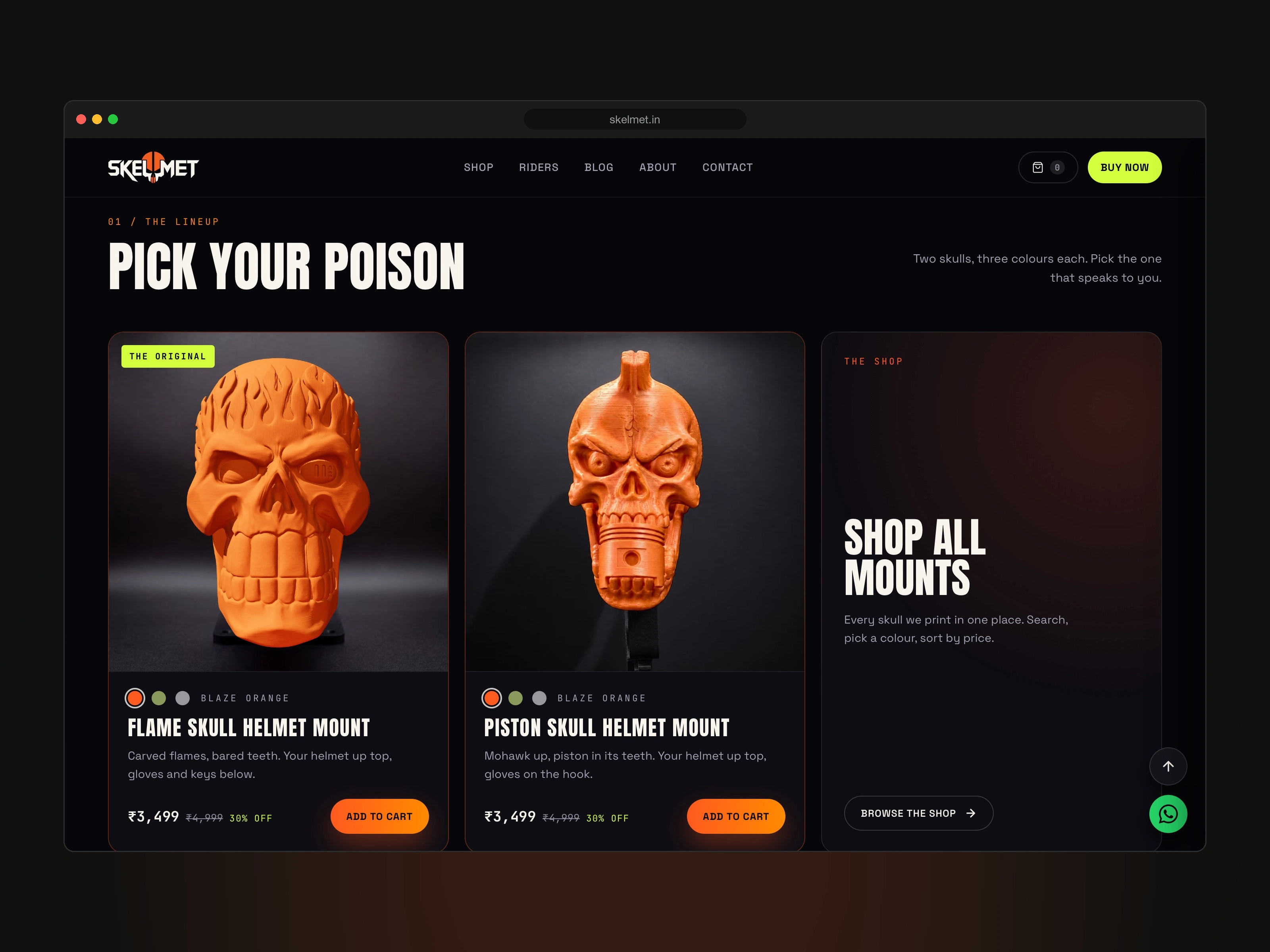
Two skulls, three colours each, with the price and add to cart on every card
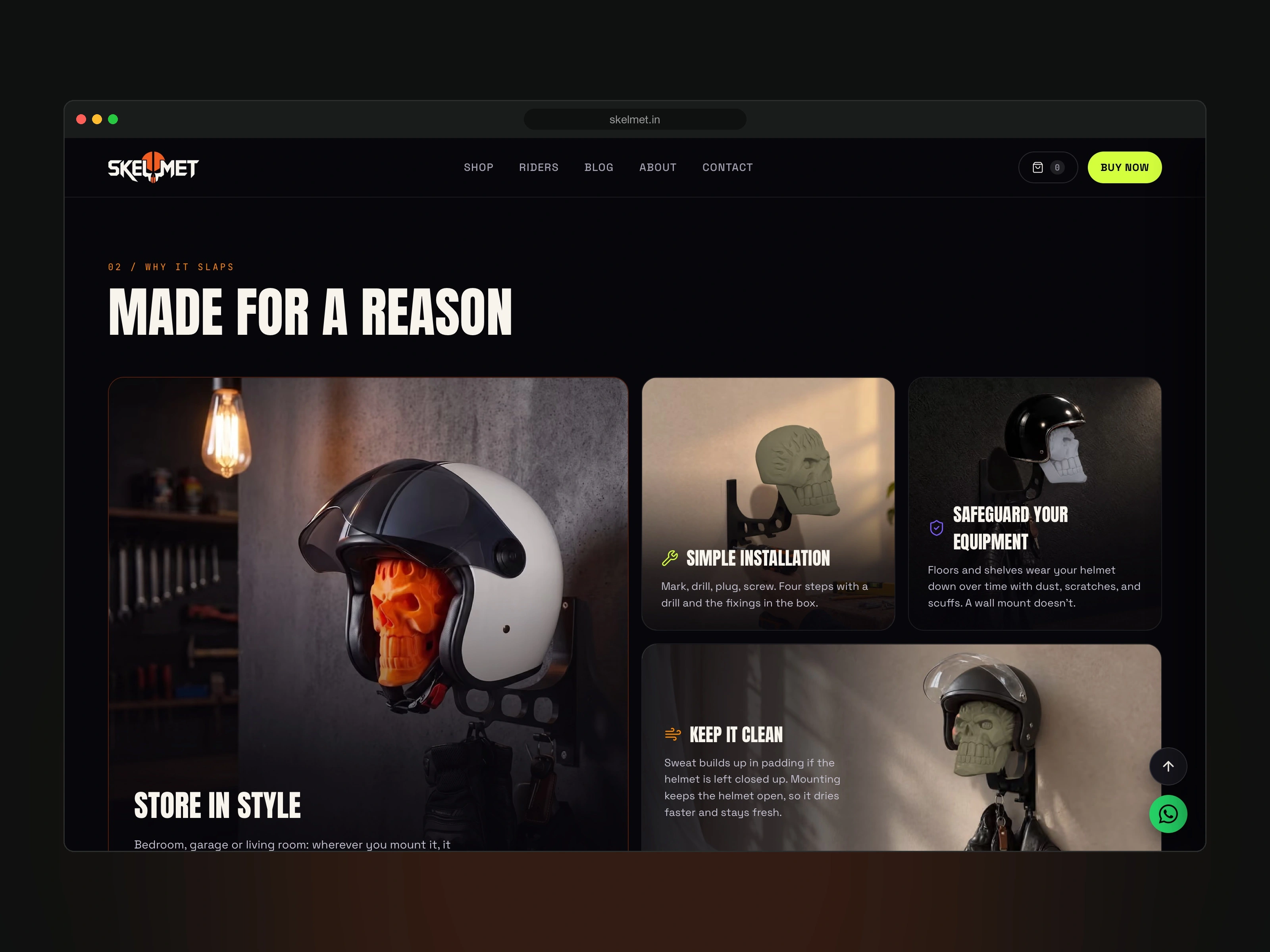
Why it beats the floor or a hook, in five short benefits
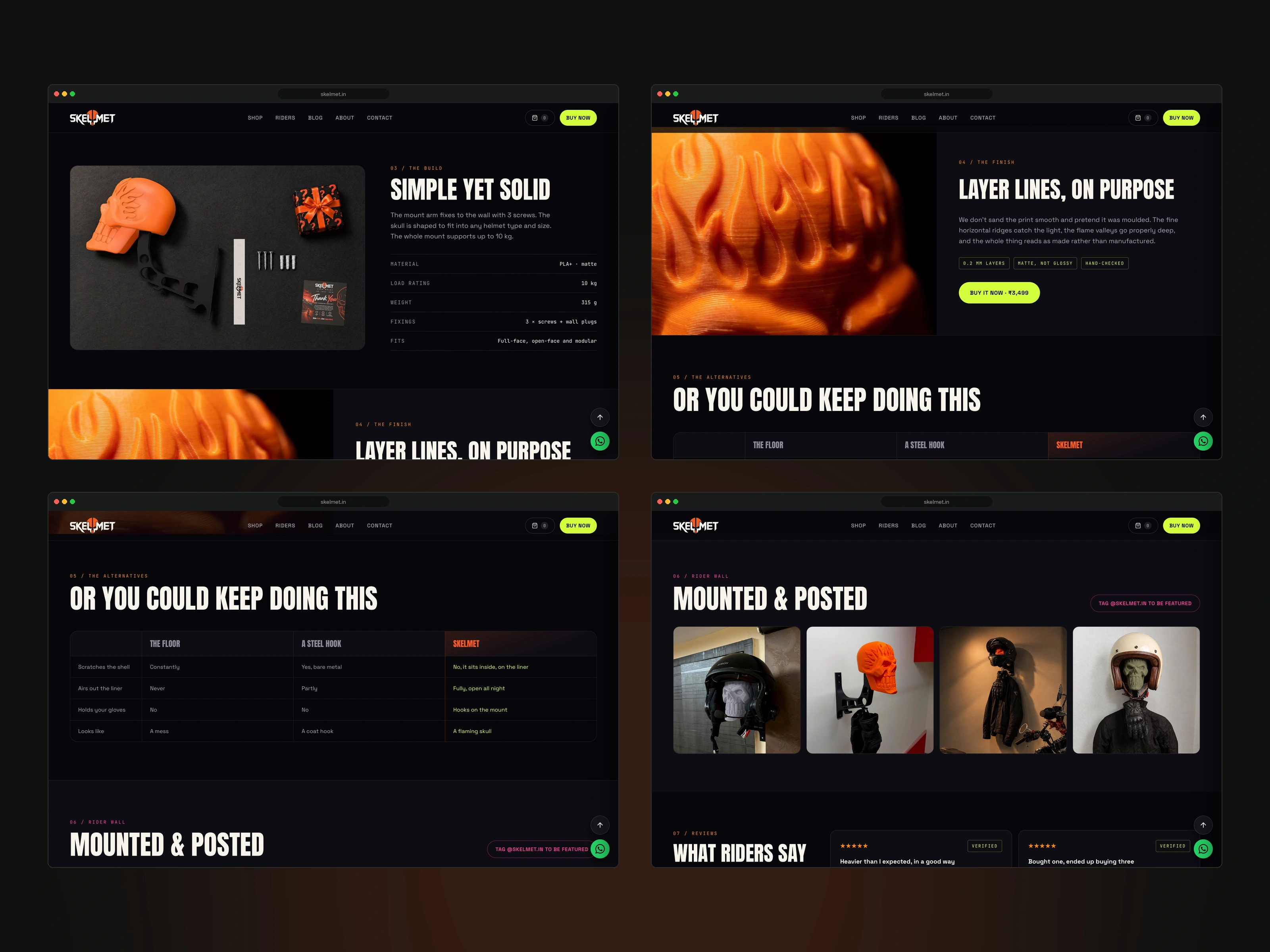
The build specs, the print up close, the comparison table and the rider wall
The product page
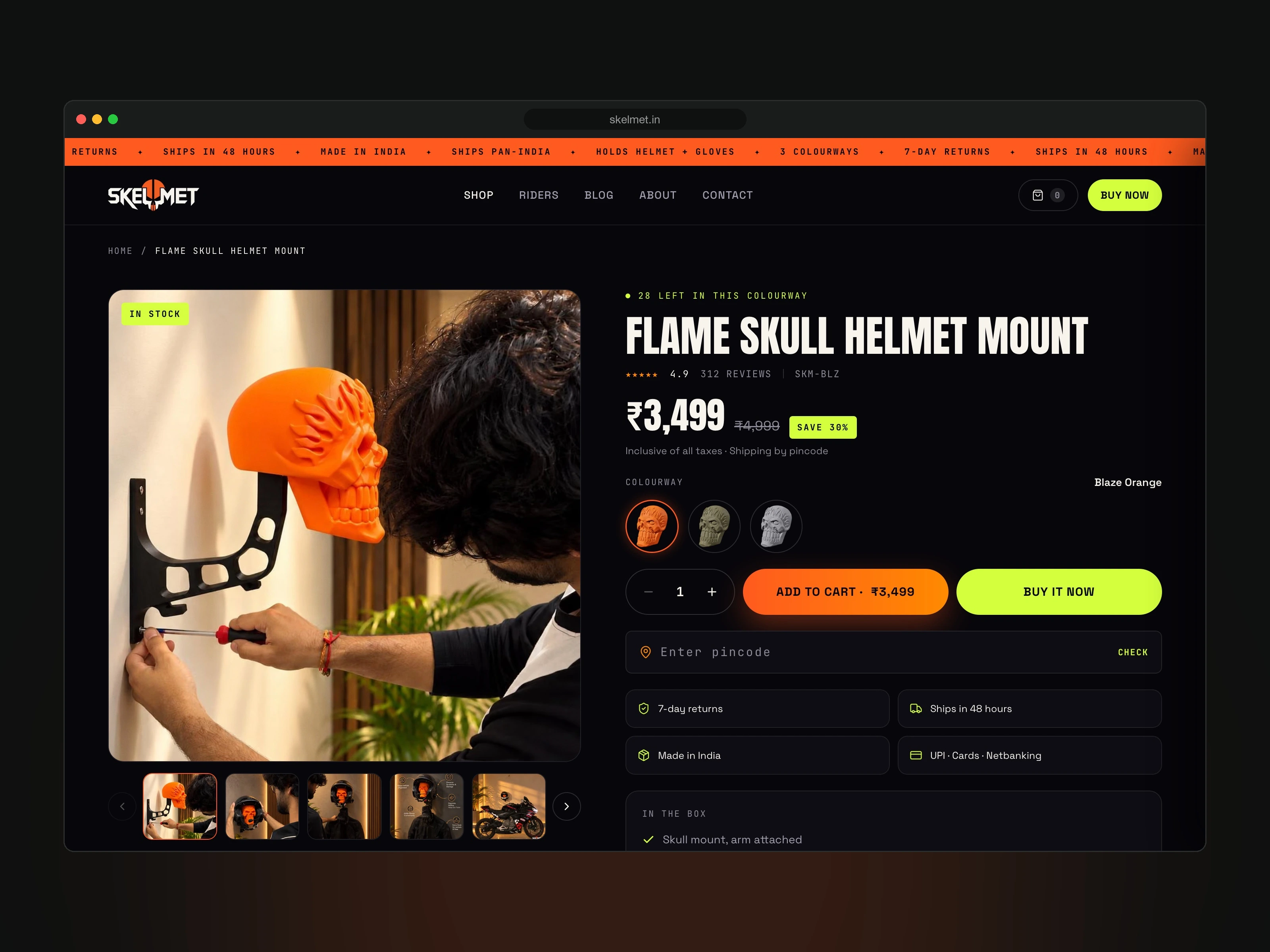
Gallery, colourways, a pincode delivery check and UPI checkout
On a phone
The same store at phone size: the 3D hero, the skull flying into the lineup, and a buy button that stays in reach.
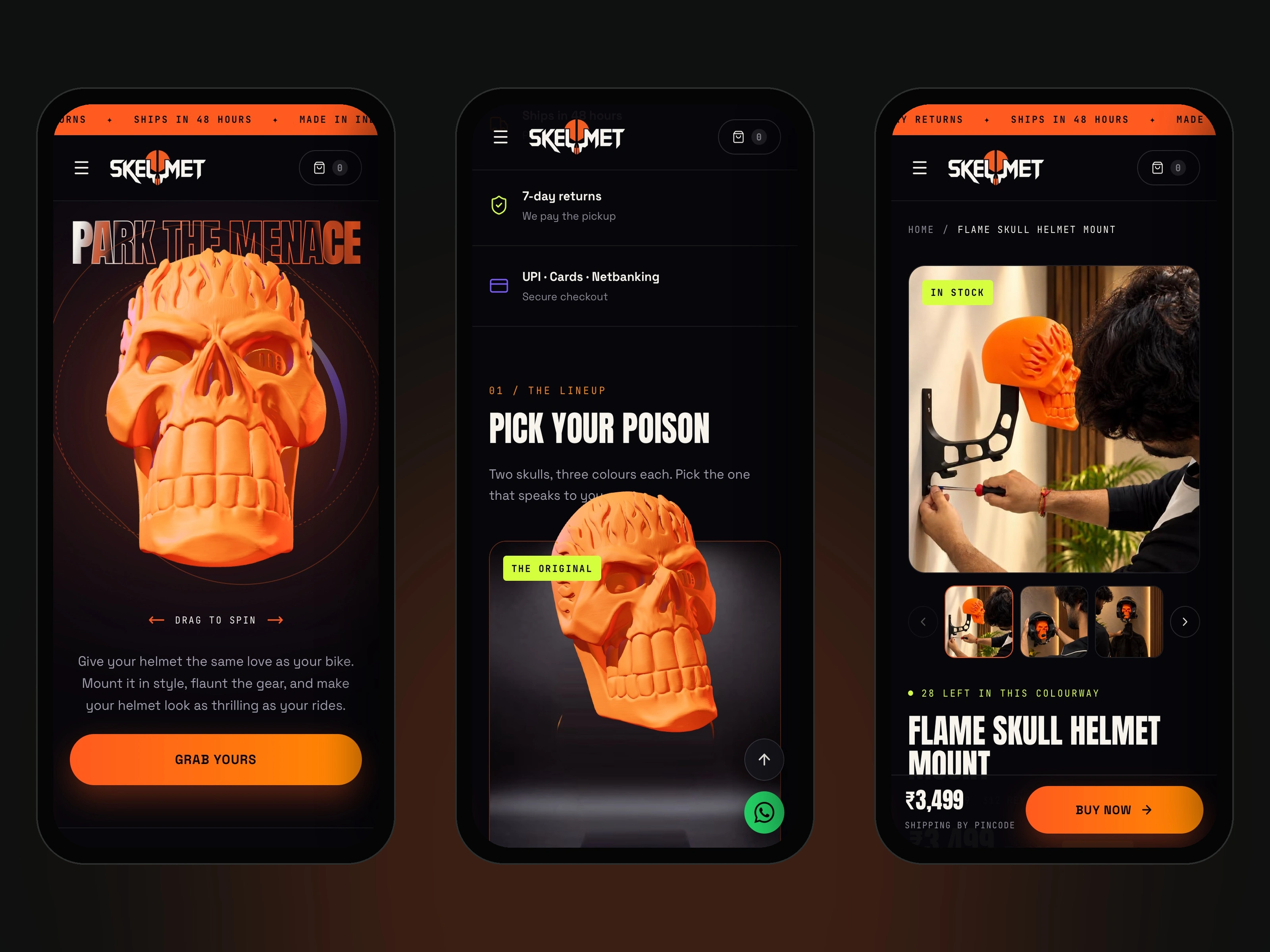
Three phone screens: the 3D hero, the scroll into the lineup, and the product page
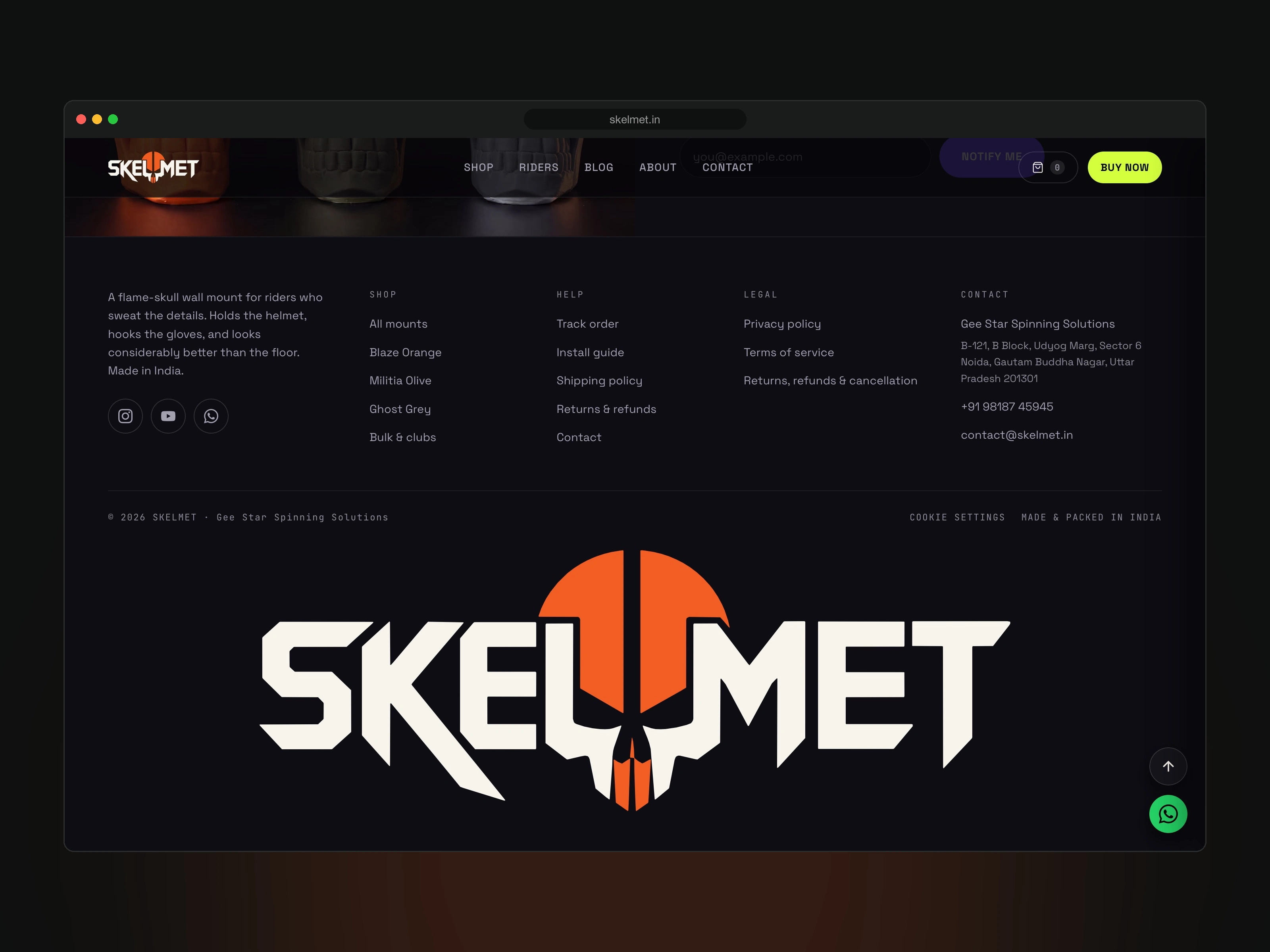
The footer closes on the wordmark, big
How it's built
Next.js for the store: the shop, product pages, cart and checkout flow.
Three.js for the skull: a real-time model you can drag, which also moves with the scroll.
The brand system from the identity I designed: orange and near-black, with an acid-green accent for anything you can buy.
The identity, packaging and imagery have their own Skelmet case study on my profile.
Skelmet brand assets belong to Skelmet. Product imagery made with AI from photos of the real mount.
Like this project
Posted Oct 11, 2026
The online store for Skelmet, a 3D-printed flame-skull helmet mount: a Three.js skull that turns and lands on its product card as you scroll, built in Next.js.
Likes
1
Views
3
Timeline
Nov 20, 2023 - Sep 25, 2026
Clients
Skelmet