
YOUR MEDICATION APP IS NOT FAILING BECAUSE OF UX.
IT’S FAILING BECAUSE IT DOESN’T MAKE PEOPLE ACT.
Most healthcare apps celebrate:
“Reminder sent”
“Notification opened”
“Session started”
None of this matters.
The only metric that matters:
Did the person actually take the medication - on time - without doubt?
In most products - the answer is no.
Not because users are careless.
Because your product is weak where it matters.This is not an attention problem.
This is an action reliability problem.
Where apps break:
action is easy to delay
gap between reminder and real action
weak confirmation
user ends with doubt
In healthcare, that means:
missed doses • duplicated intake • real consequences
CORE SHIFT:
Stop designing reminders.
Start designing completed actions.
Signal → Action → Confirmation → Certainty
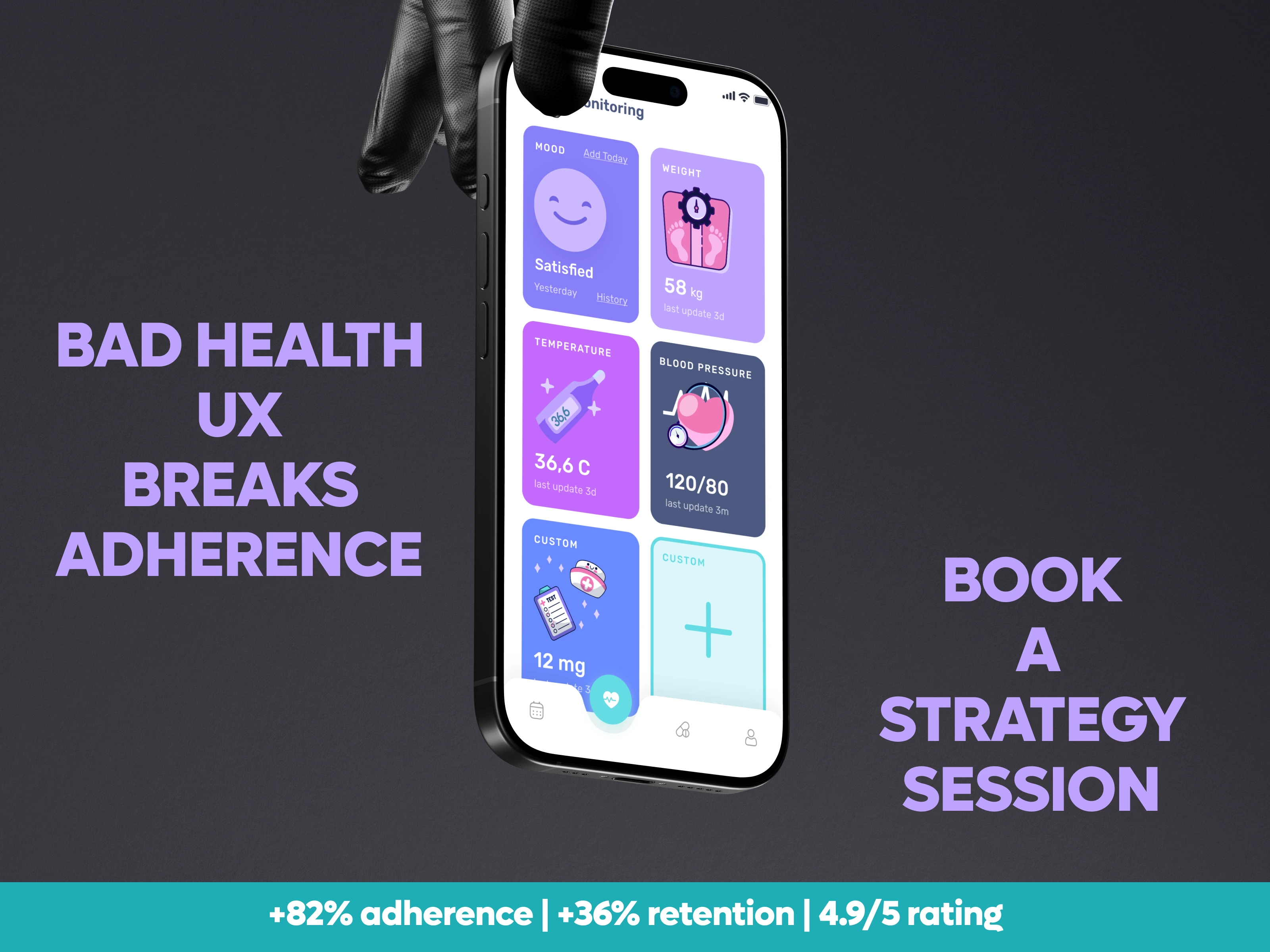
We redesigned PillsAlert with this focus:
RESULTS:
4.9 rating
+82% adherence
+36% retention
App Store
📱 https://lnkd.in/egbVz6Uq
Users say:
“Now I don’t miss my medication.”
But the real signal wasn’t metrics.
It was App Store reviews:
“Now I don’t miss my medication.”
That’s the difference between UI
and a product that actually works.
If your product tracks intent
but doesn’t guarantee action -
you don’t have UX.
You have a dashboard.
👉 BOOK A DIAGNOSTIC CONSULTATION
https://contra.com/s/k6qZgFA2-mobile-app-ui-ux-design-audit-and-growth-strategy-for-mobile-app?r=ann_asol_36smcwac
#uxdesign
#mobileappdesign
#healthtech
#digitalhealth
#userretention
#productdesign
#growthdesign
#appgrowth
#asol_design

1 like · 8 views · Apr 27, 2026
YOUR MEDICATION APP IS NOT FAILING BECAUSE OF UX. IT’S FAILING BECAUSE IT DOESN’T MAKE PEOPLE ACT. Most healthcare apps celebrate: “Reminder sent” “Notific...


