

Case Study: Building a Scalable & Engaging Website for KitaHQ with Webflow
This case study explores the process of designing and developing KitaHQ, a scalable and engaging website for Kitalulus using Webflow. The project involved UI/UX design, Webflow CMS implementation, lead generation form setup, and SEO tracking enhancements. Through strategic collaboration with the Product, SEO, and C-Level teams, the website was built to support content management, lead capture, and user engagement while ensuring long-term scalability and optimization.
🚀 Overview
Kitalulus is a growing career platform that helps professionals upskill and find job opportunities through innovative learning programs and community engagement. As part of this initiative, Kitalulus launched KitaHQ, a dedicated platform aimed at providing insights, resources, and company updates to users. To support its mission, KitaHQ required a scalable, high-performing website to enhance its online presence, improve content management, and optimize lead generation. As a Webflow Designer & Developer, my role was to design, develop, and implement Webflow CMS, set up lead generation forms, and optimize tracking for SEO & marketing campaigns.
🎨 Design & Development Process
1️⃣ Ideation & Design
Analyzed user needs & business goals to create a design structure.
Developed wireframes & UI designs to align with the brand’s identity.
Ensured responsive layouts for seamless experience across devices.

📌 Wireframe & UI Design
2️⃣ Webflow CMS Implementation
Built a dynamic CMS for the blog section to allow easy content management.
Developed custom layouts & components while ensuring Webflow best practices.
Optimized SEO settings for blog posts, including structured metadata and alt-text.
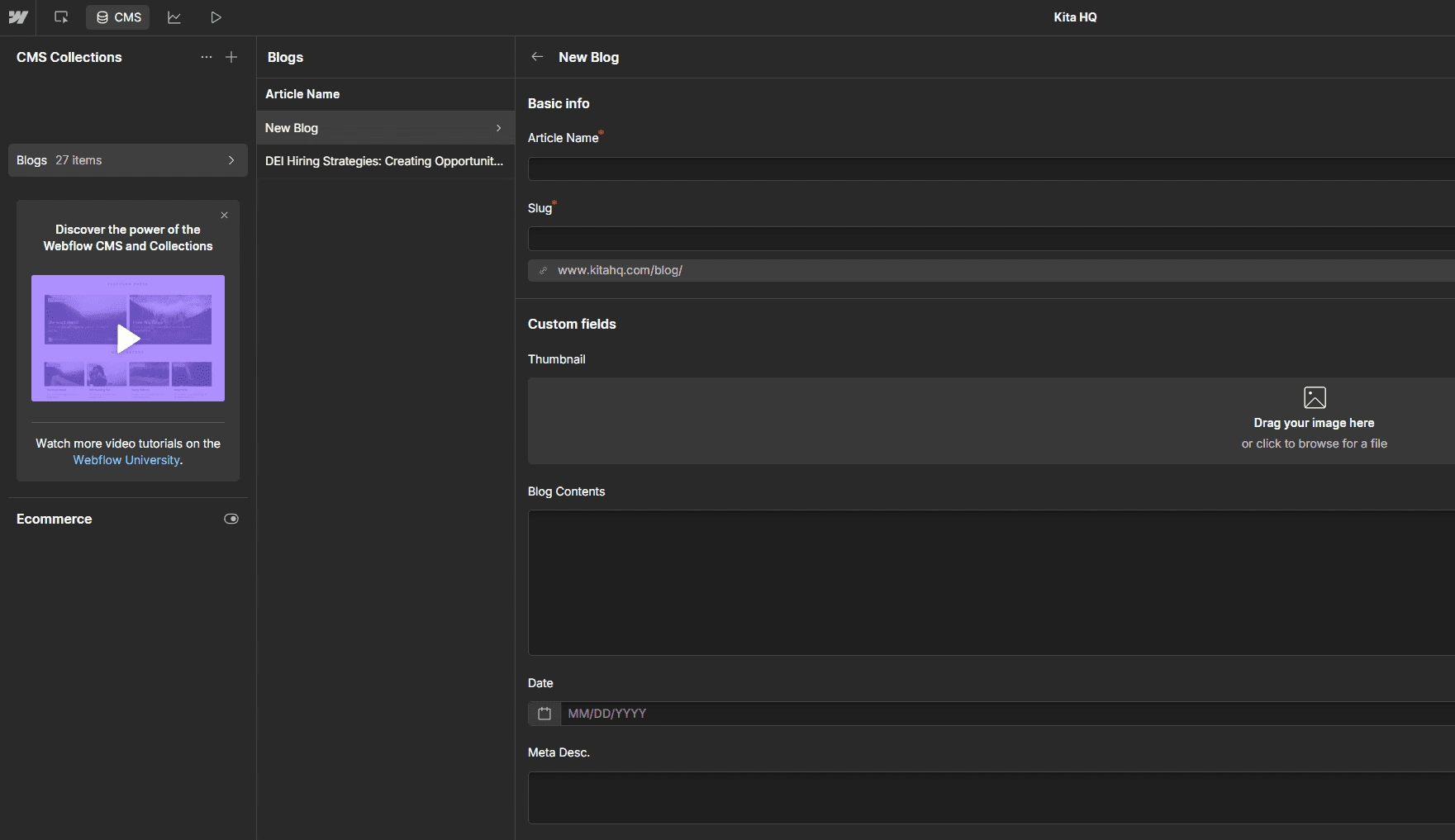
📌 Blog CMS Preview

📌 Blog UI Structur Preview
3️⃣ Lead Generation Form Setup
Designed & implemented Webflow forms to capture user leads.
Configured forms to store lead data efficiently.

📌 Book a Demo Form Screenshots
4️⃣ SEO & Analytics Optimization
Worked with the SEO team to set up Google Tag Manager (GTM) for tracking and implemented UTM parameters (utm_source, utm_medium, utm_campaign) on lead forms to effectively track the performance of different marketing campaigns and sources, UTM parameters were implemented within the Webflow forms. This setup allowed the marketing team to attribute lead generation accurately to specific traffic sources, helping them measure the impact of each campaign.
UTM Source (
utm_source) → Identifies where the traffic originated (e.g., Google, Facebook, Email).UTM Medium (
utm_medium) → Specifies the marketing medium used (e.g., CPC, organic, social).UTM Campaign (
utm_campaign) → Tracks the specific campaign generating the lead.These parameters were dynamically integrated into lead capture forms, ensuring that each submitted form carried relevant tracking data. This information was then used for analytics and performance assessment.
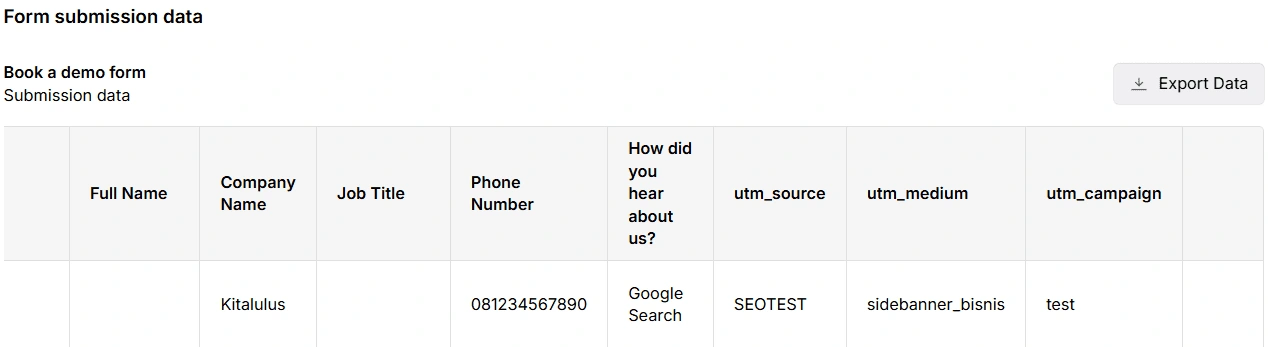
📌 Form submission data Screenshots
💡 Outcomes & Learnings
Faster website management with Webflow CMS for easy content updates.
Enhanced lead tracking through properly configured UTM parameters.
Optimized SEO performance, improving website discoverability.
Improved user interactions, increasing form submissions & conversions.
📌 Lessons Learned & Next Steps
✅ Collaboration with SEO & marketing teams ensures better conversion tracking.
✅ Webflow’s CMS capabilities can significantly improve content scalability.
✅ Proper GTM & UTM setup provides valuable insights for marketing campaigns.
💡 Next Steps: Continue refining website performance, optimizing UX, and enhancing tracking for further growth.
Live Project: https://www.kitahq.com/

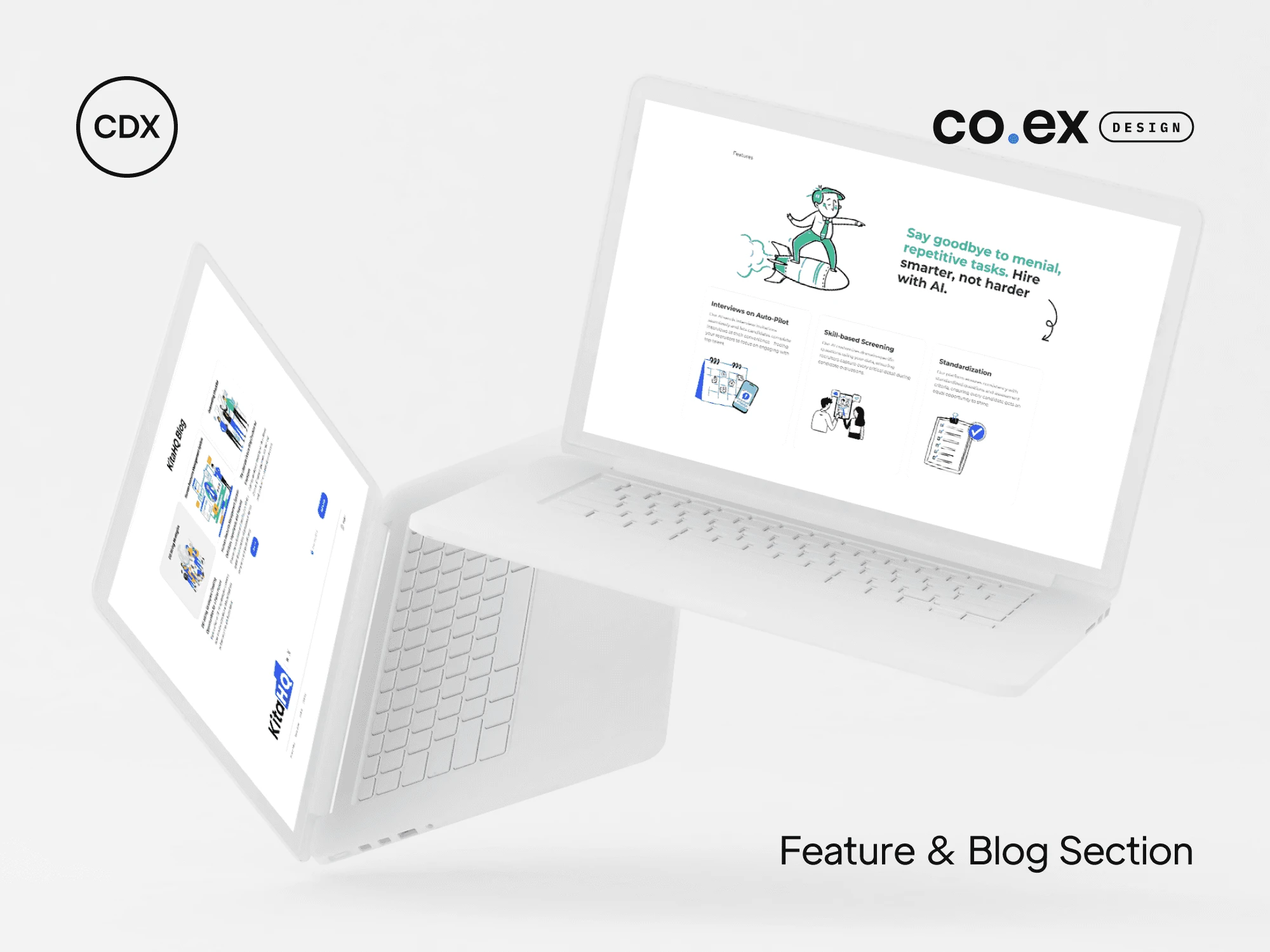
0 likes · 10 views · Mar 11, 2025
This case study explores the process of designing and developing KitaHQ, a scalable and engaging website for Kitalulus using Webflow.
Timeline
Jan 11, 2025 - Mar 10, 2025

