VLR Token Distribution Platform Design

Younes Hadry


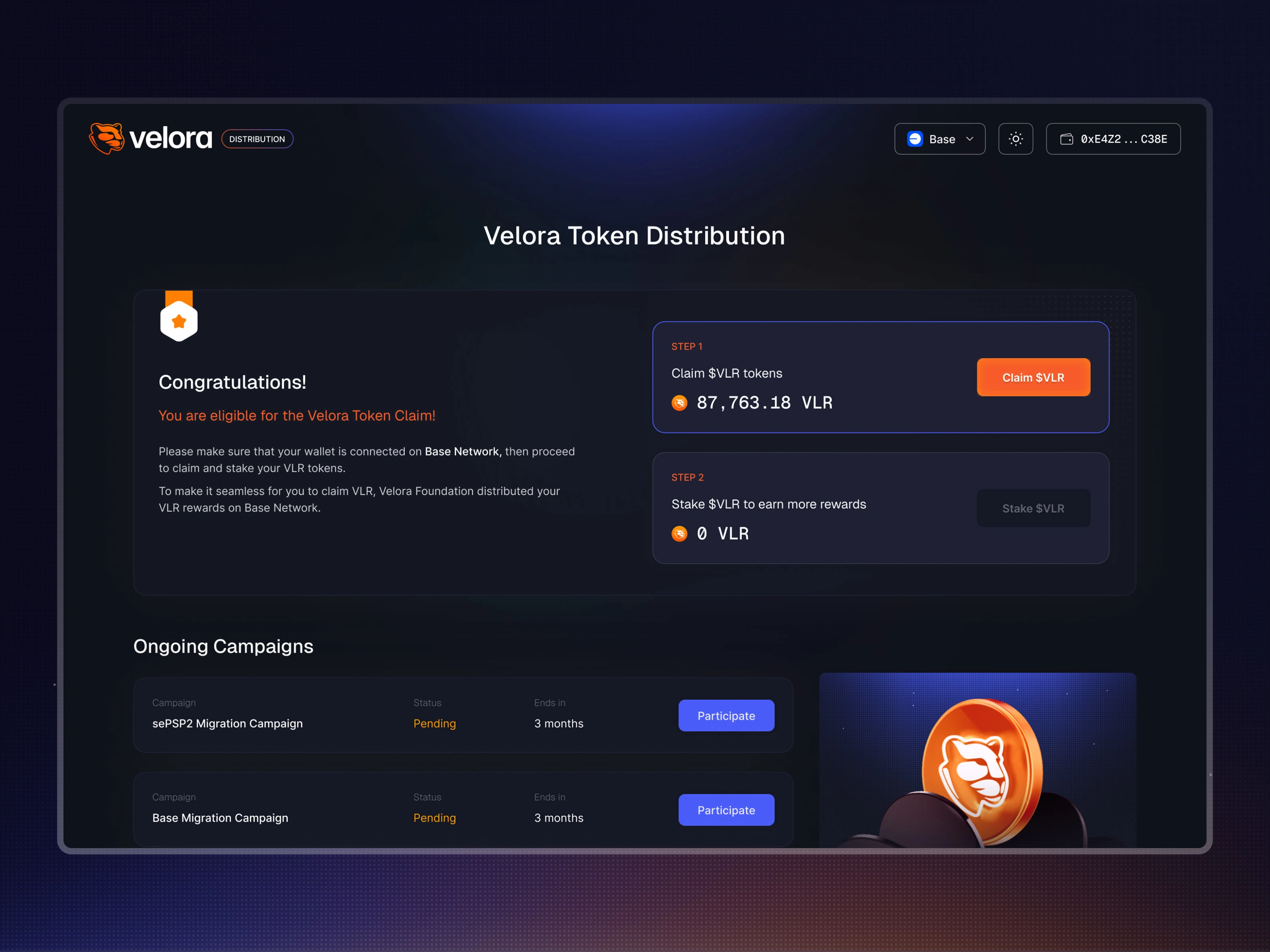
VLR Token Distribution Platform
VLR Token Distribution PlatformThe ProjectRoleTimelineToolsThe ContextThe Challenge: A major protocol milestone, no tool is fit to deliver itThe Approach: Designer As BuilderInformation Architecture: Mapping the Claim ExperienceLook & Feel: Building on Velora's Design System To Capitalize on FamiliarityThe Product: Built In Two Weeks, Used By ThousandsThe Claim Flow: Reward Claiming Modal, Step By StepThe Impact: A protocol milestone, delivered on time
The Project
A production-grade token distribution platform, designed and shipped in 2 weeks, by a designer: https://distribution.velora.xyz
Role
Head of Design
Timeline
2 weeks, September 2025
Tools
Figma, Figma MCP, Claude Code, React/Wagmi
The Context
ParaSwap launched in 2020 as one of DeFi's earliest DEX aggregators, growing to 5M users and $140B in cumulative trading volume. After four years of establishing itself as core Ethereum infrastructure, the team and the DAO initiated Project Miro, a strategic pivot from swap routing to intent-powered, cross-chain trading.
ParaSwap became Velora. $PSP migrated to $VLR. Updated tokenomics, simplified staking mechanics, and community rewards marked the beginning of a new chapter for the protocol.
With the token generation event (TGE) approaching, roughly 100M $VLR tokens are needed to reach eligible community participants across multiple marketing campaigns. No internal distribution tool existed, and engineering was fully committed to the core protocol. That gap became the design problem.
The Challenge: A major protocol milestone, no tool is fit to deliver it
Third-party distribution platforms existed, but none fit: too expensive, too slow, too rigid for VLR's campaign structure. The stakes went beyond distribution. ~40M tokens entering the market in the first phase without a staking incentive risked a significant price drop, so the platform had to distribute rewards and guide users toward staking before they could sell.
The window was two weeks, it had to be production-ready and reusable, and a poor experience at the DAO's most visible milestone risked losing community trust built over four years.
The Approach: Designer As Builder
No spec handoff, no sprint queue. I owned the full loop from scope to production code, learning the AI-assisted build stack as I shipped it. Zero to live in 14 days.
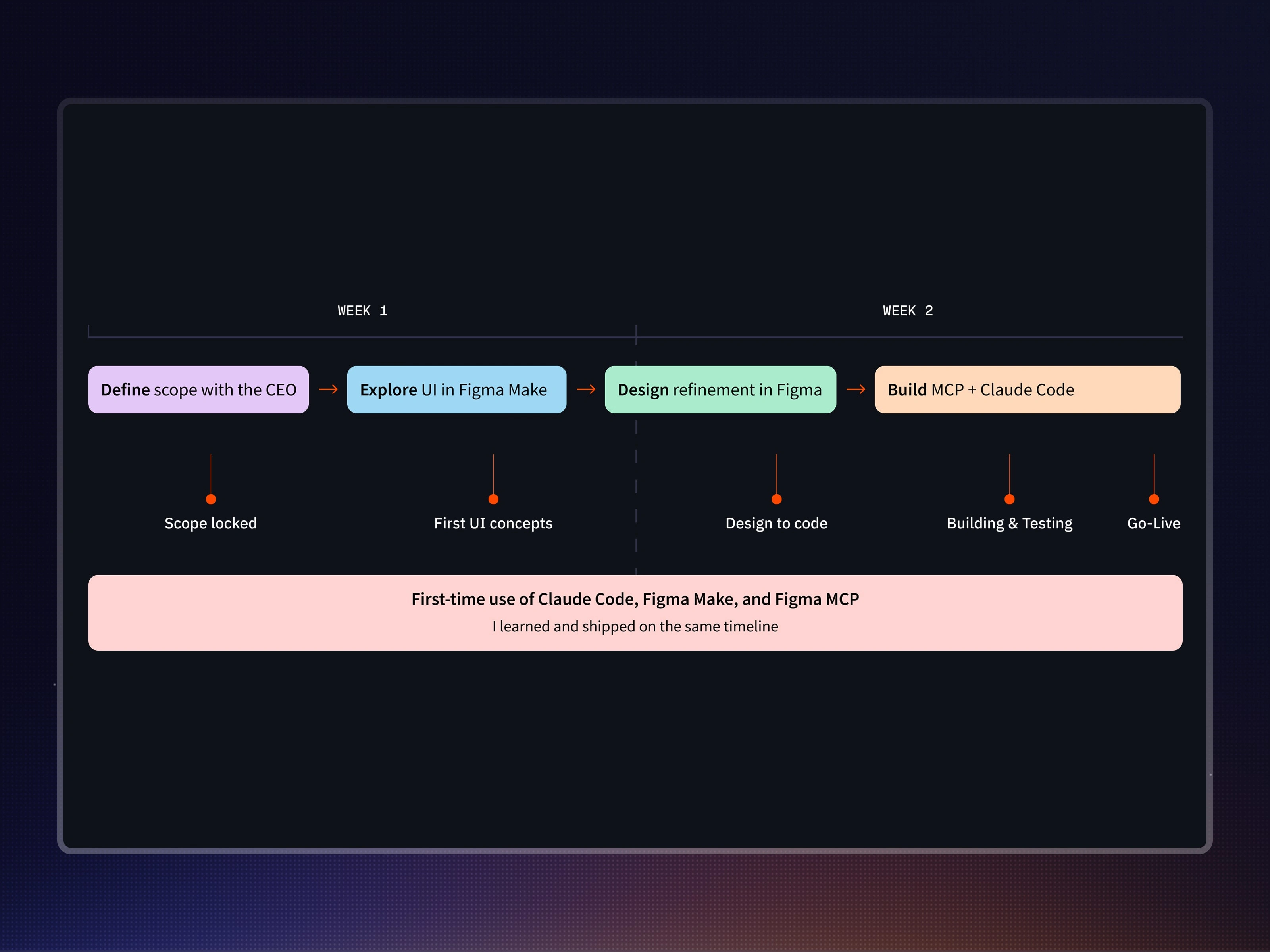
Timeline of the project: 2 weeks from start to finish
Information Architecture: Mapping the Claim Experience
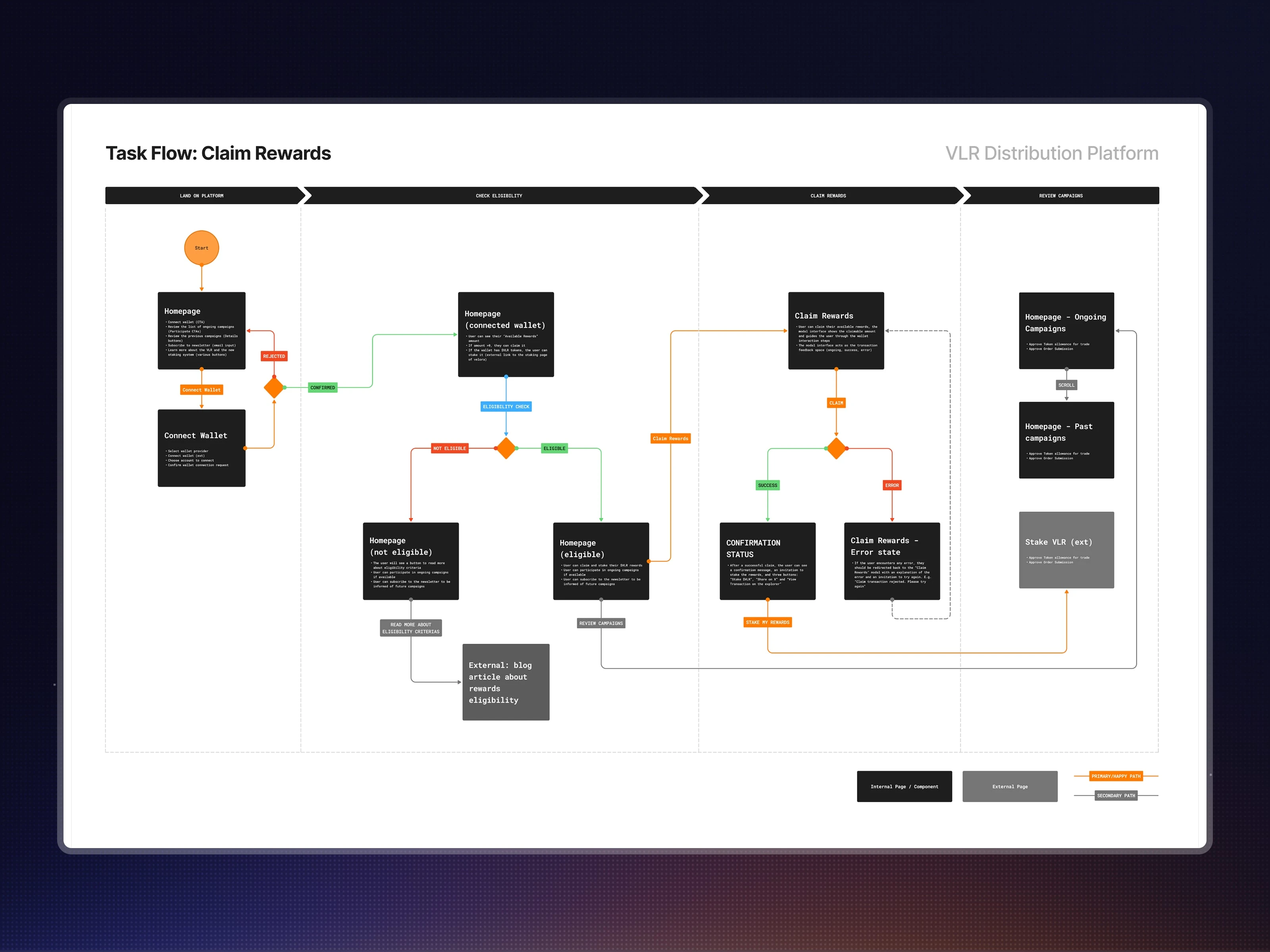
Task flow diagram with focus on the claiming experience
Look & Feel: Building on Velora's Design System To Capitalize on Familiarity
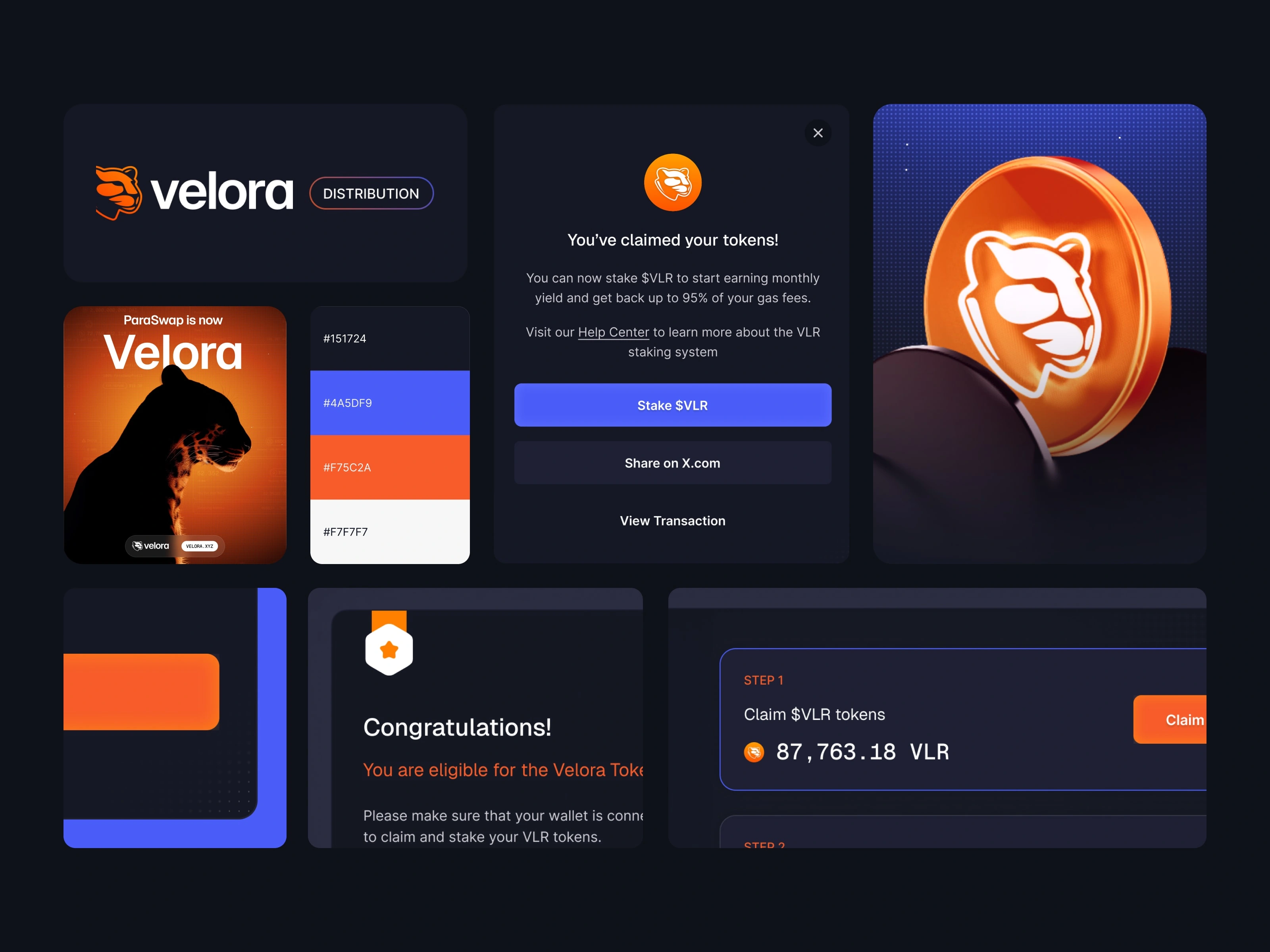
Bento style UI elements, inspired from Velora's UI and design system
The Product: Built In Two Weeks, Used By Thousands
I took it on alongside my existing responsibilities, I learned to use Claude Code, Figma Make, and Figma MCP from scratch, and I shipped a production-ready platform in two weeks.
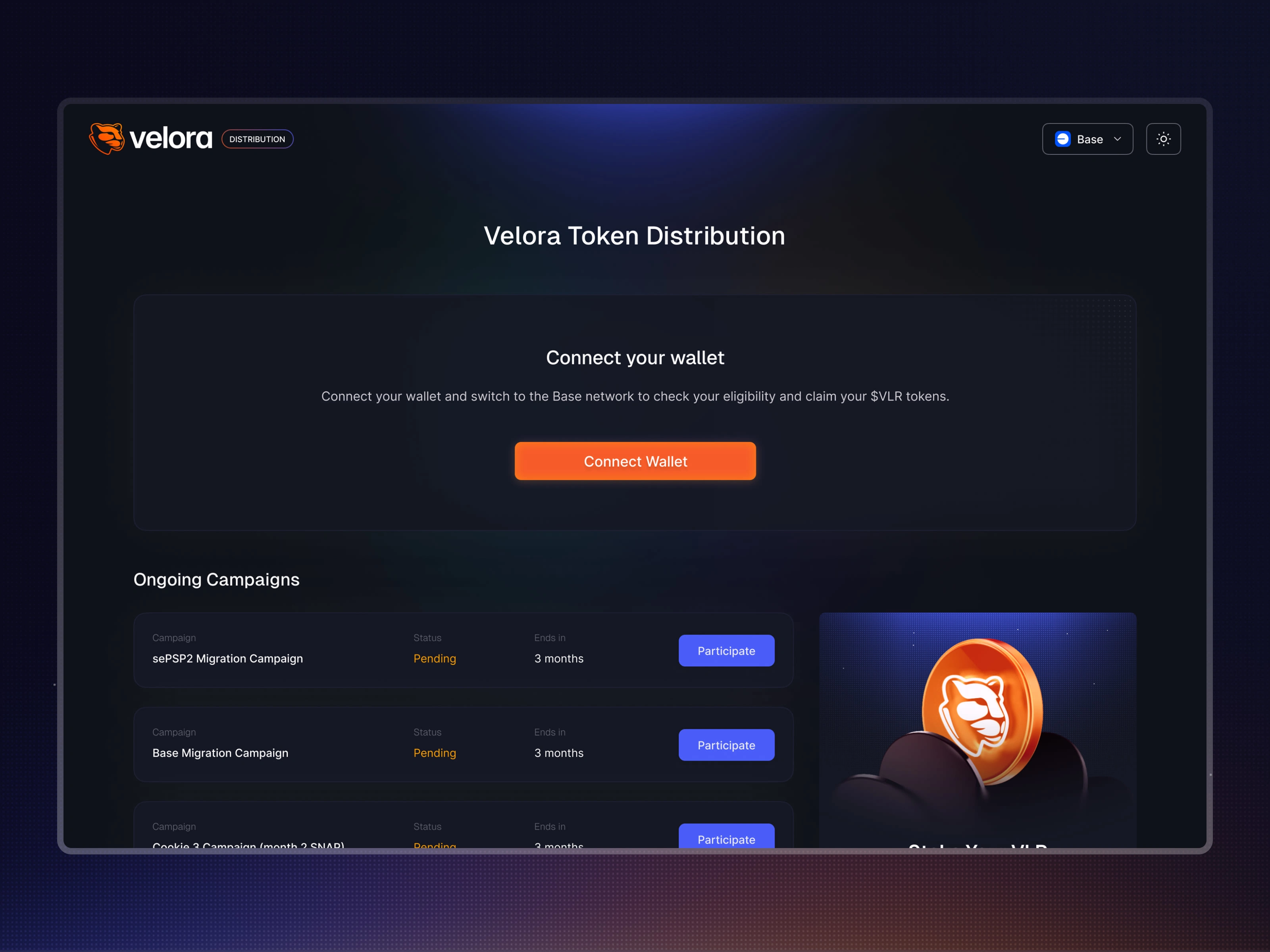
Disconnected wallet state of the platform
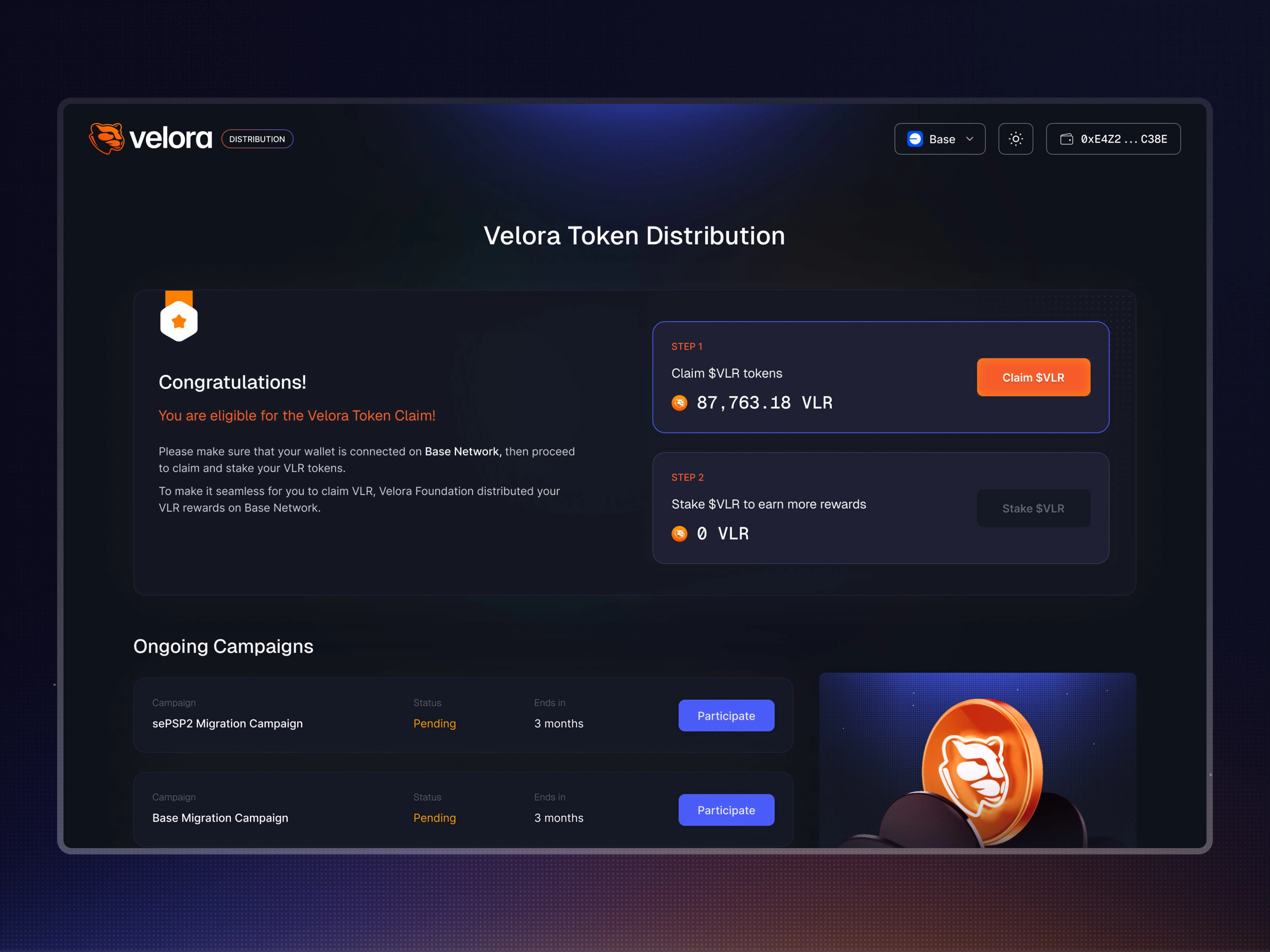
Connected state of the platform, where users can check their eligibility, claim and stake their rewards
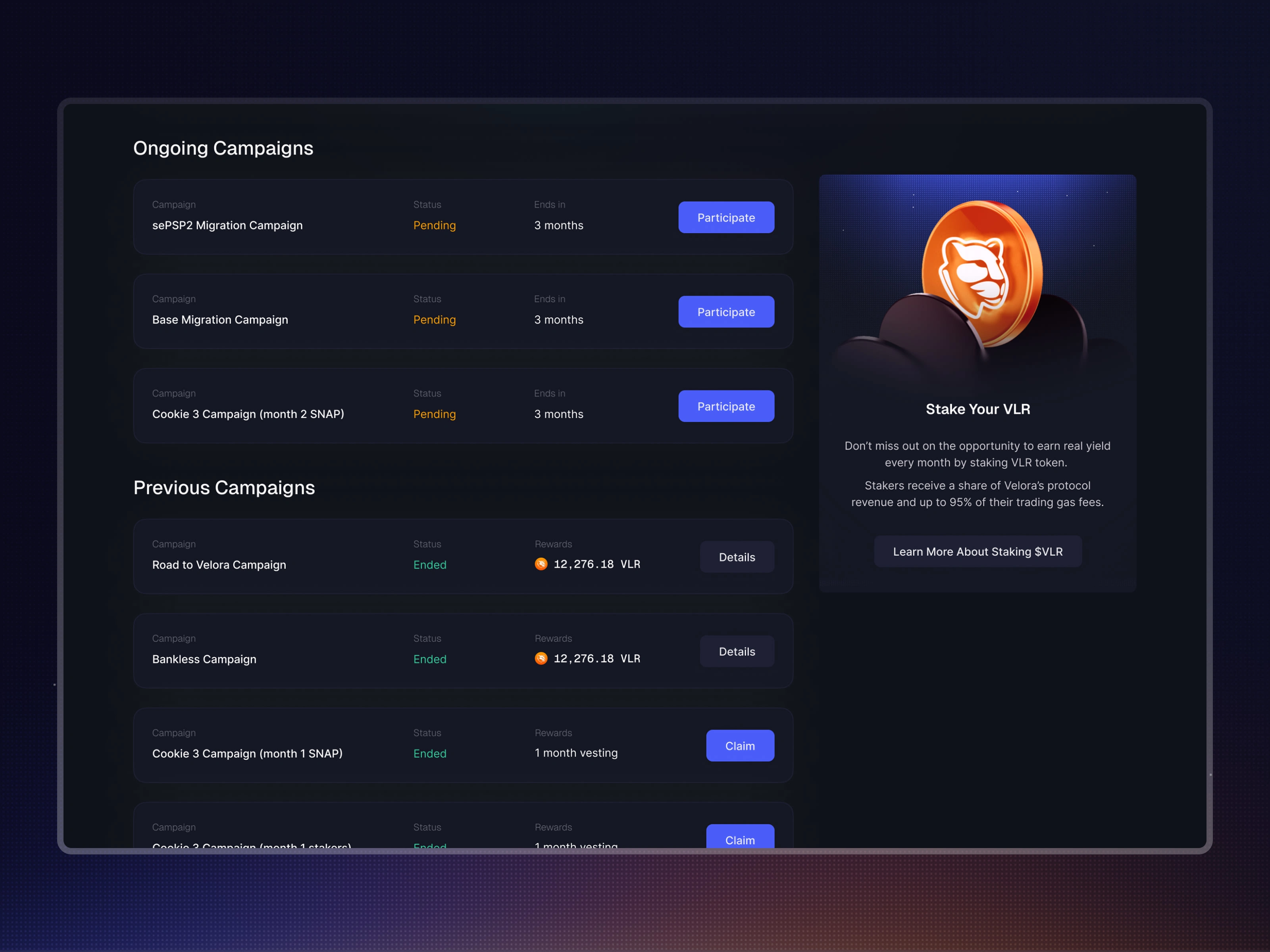
List of campaigns to invite users to participate and details about their rewards from previous campaigns
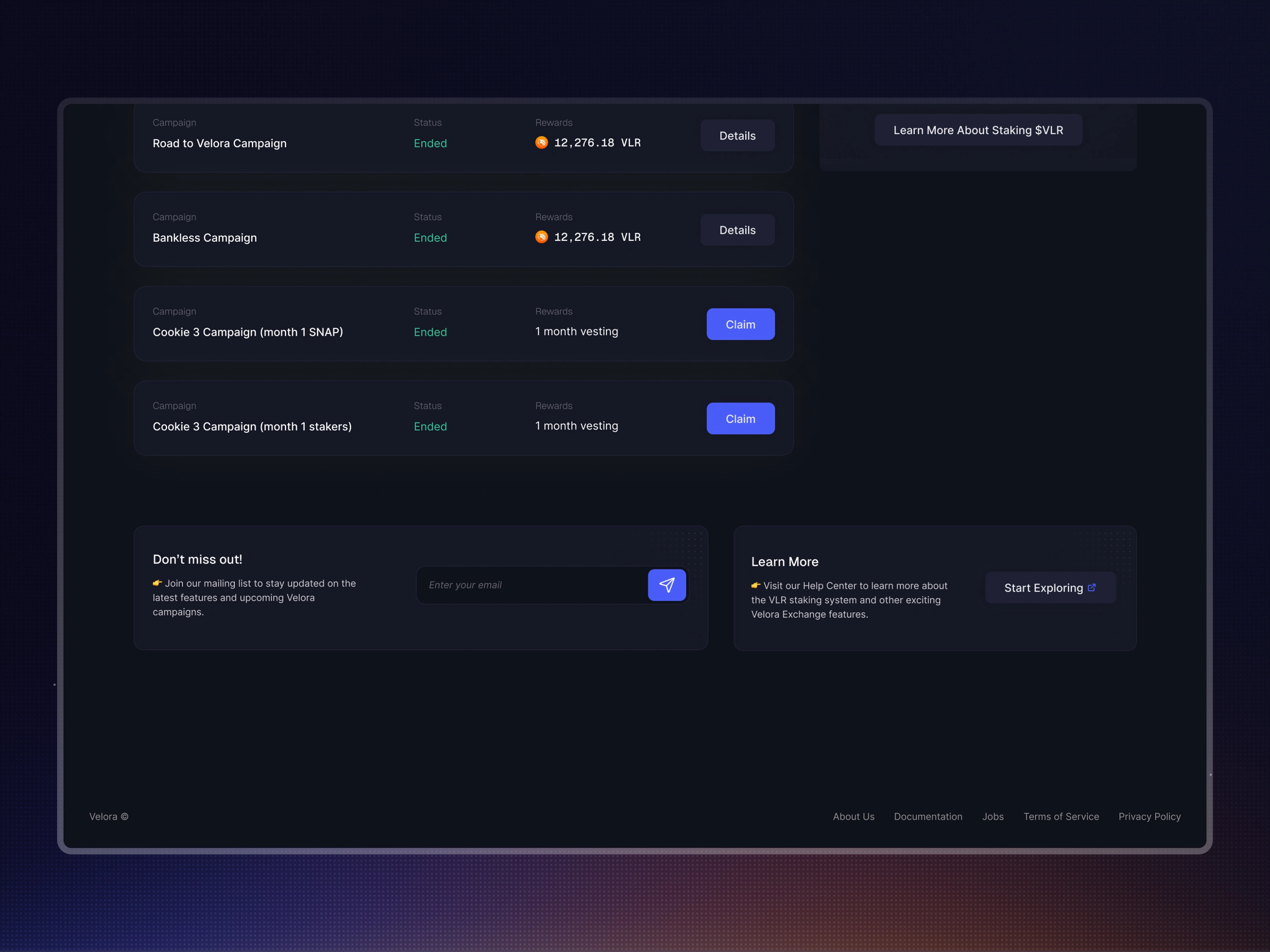
Retention elements of the interface, inviting users to keep in touch for future campaigns, and "learn more" about VLR and its distribution
The Claim Flow: Reward Claiming Modal, Step By Step
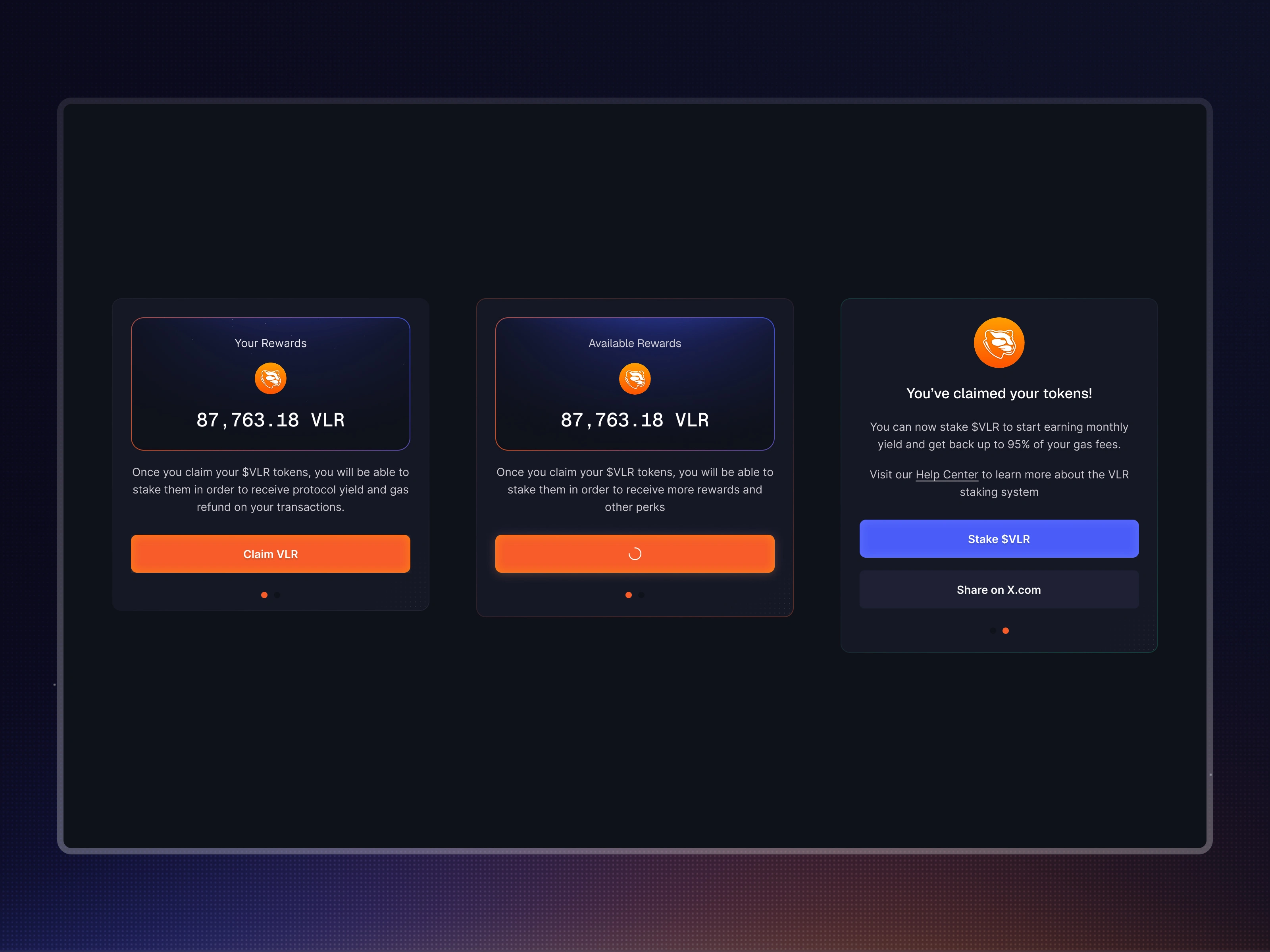
Three states of the claiming modal: normal, loading and success/confirmation
The Impact: A protocol milestone, delivered on time
Project Miro transformed ParaSwap into Velora with a new brand, token, and mission. The Distribution Platform played a key role in that transition by rewarding community members and driving early adoption of the VLR staking system. It supported the distribution of ~100M $VLR tokens across multiple marketing campaigns, and the TGE was executed on schedule with no delays.
The claim-to-stake flow reduced immediate sell pressure by guiding users directly into staking rather than selling. The platform was later reused for post-TGE campaigns, proving its longevity beyond launch day. It was designed, built, and shipped by one designer in two weeks with nearly zero engineering resources.
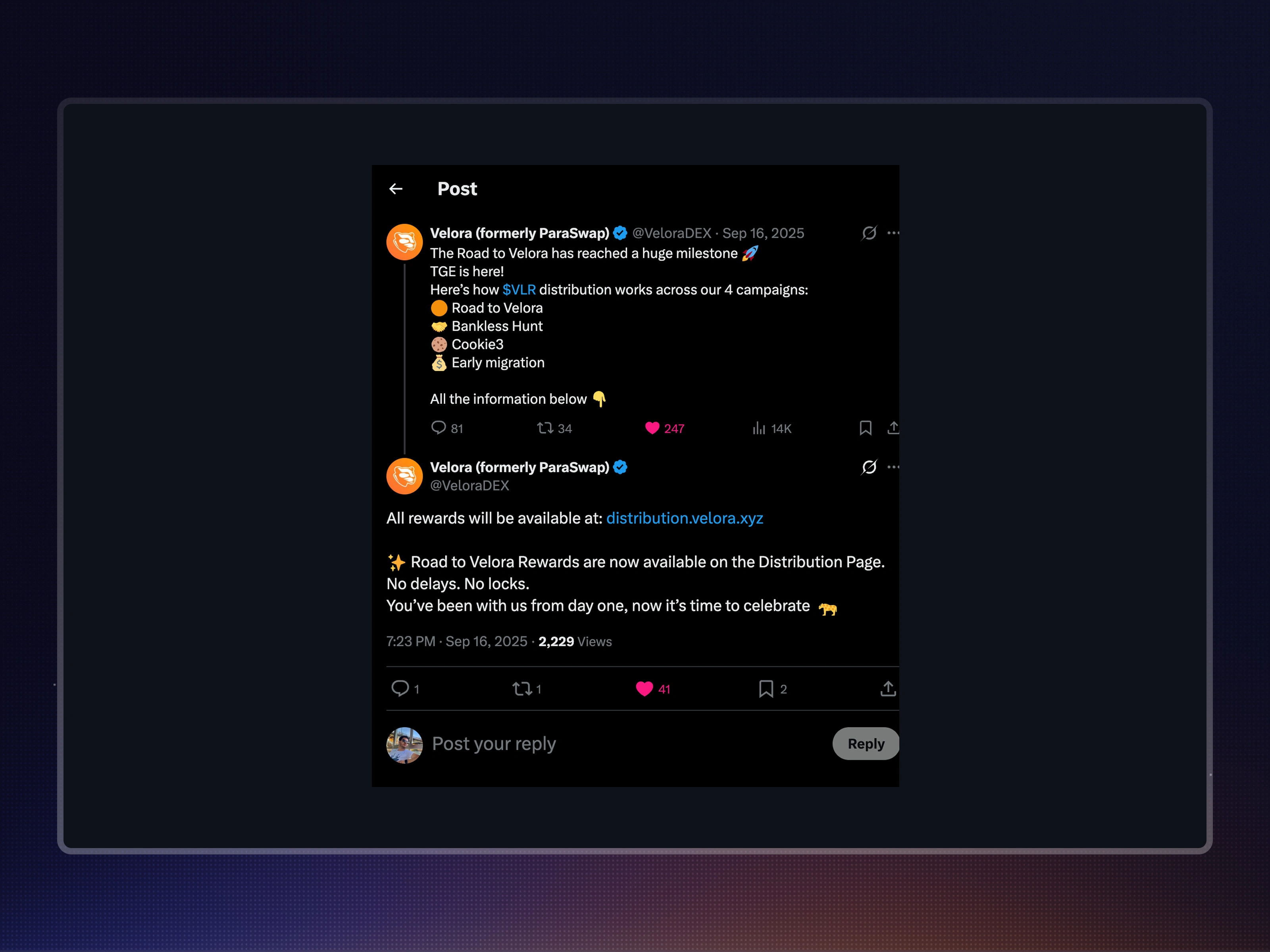
Twitter announcement of the distribution platform following the TGE launch on September 16, 2025
Like this project
Posted Apr 15, 2026
Designed and built a token distribution platform for Velora's TGE.
Likes
0
Views
21
Timeline
Sep 1, 2025 - Sep 12, 2025
Clients
ParaSwap