LEO Demonstrator Mission Recovery and Management

James DiCorcia


Overview
An emerging space hardware startup was racing to launch a Low Earth Orbit (LEO) demonstrator mission—one that would validate its core technologies on a space platform and bolster investor confidence. Suddenly, the executive leading this critical initiative departed, leaving a gaping hole in the program’s leadership and threatening a nine-month schedule slip. Through a mutual acquaintance, the founder reached out to us for urgent systems engineering (SE) and program management support. Our team stepped in, rebooted the development program, and laid down a robust framework that not only salvaged the schedule but set a strong foundation for the new VP of Space to grow the mission efficiently.
Client Profile
Industry: Small-satellite / LEO demonstrator mission
Stage: Early-stage (funded, but pre-Series A)
Core Need: Immediate systems engineering leadership and program management, following the sudden departure of a key executive
The Challenge
Personnel Crisis
A critical hire responsible for the LEO demonstrator abruptly ended their engagement, creating a leadership void. The founder needed someone to jump in fast—while the company launched a hiring search for a permanent replacement.
Fragmented Program Structure
Without a dedicated systems engineering lead, existing documentation and processes had become disjointed. The lack of a cohesive schedule and risk management strategy heightened the potential for costly mistakes and rework.
Looming Schedule Slip
Losing an executive midstream threatened to push the program back by at least nine months. Investors were already anticipating a separate deliverable that required the focus of their engineering team; any further delay could shake investor confidence and jeopardize additional funding.
Our Approach
1. Rapid Onboarding & Program Reboot
Immediate Engagement: After the introduction by a mutual colleague, our team quickly assessed the program’s status. We identified key gaps, from missing requirements documents to unstructured communication between subsystems.
Mission Concept Review (MCR): We led a rapid MCR to ensure everyone was aligned on the overall mission objectives, success criteria, and constraints.
2. Systems Engineering Backbone
System Requirements Review (SRR): Our engineers facilitated an SRR to refine technical requirements, validate mission-level objectives, and determine measurable success criteria.
Systems Engineering Management Plan (SEMP): We created a comprehensive SEMP, defining processes for requirements tracking, design changes, and acceptance criteria.
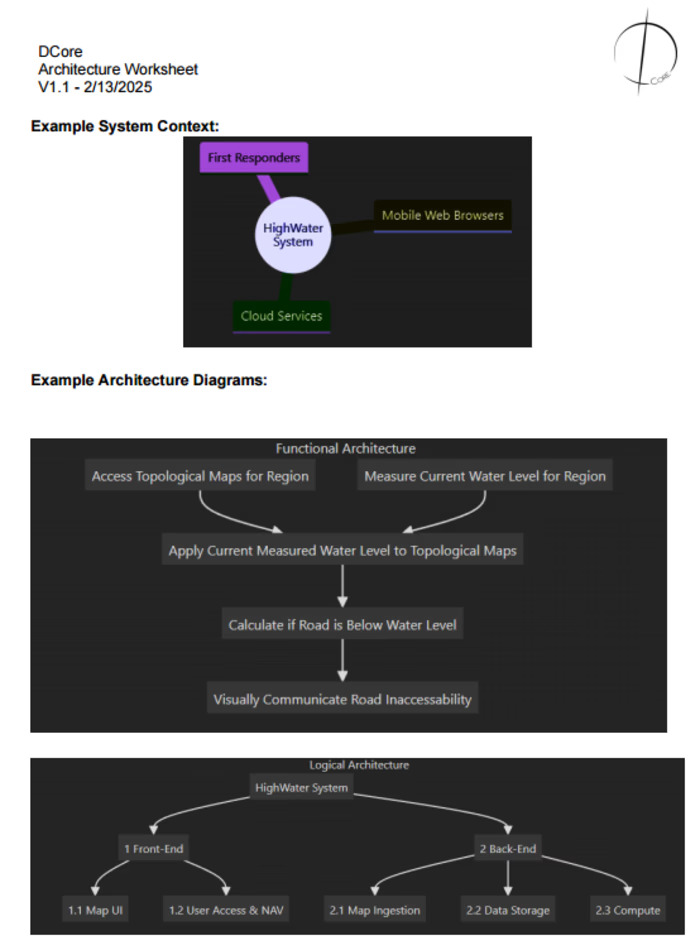
System Concept & Architecture: In parallel, our team collaborated with the startup’s engineering leads to detail the system architecture, identifying major subsystems, interfaces, and control documents.
Configuration & Risk Management: We established processes for version control of design changes and a risk management framework, allowing the team to proactively detect and mitigate potential issues.
3. Integrated Project Tools & Governance
Confluence & Jira Setup: We introduced and customized Confluence and Jira to capture all documentation, action items, and timelines in a single digital ecosystem.
Detailed Schedule: Working alongside the engineering team, we built a bottom-up schedule that accounted for design, manufacturing, integration, and test phases—tying tasks directly to development and risk reduction milestones.
Make/Buy Analysis: We quickly performed a critical make-or-buy assessment of key components to balance time-to-market with cost constraints, ensuring the path forward was both feasible and resource-efficient.
Results
1. Averting a Nine-Month Schedule Slip
By rapidly integrating new processes and documentation, the program stayed on track—what would have been more than a half-year delay became a non-issue.
Investors were reassured that the mission timeline remained intact despite the executive departure.
2. Strong Foundation for the New VP of Space
When the company hired a new VP of Space, they inherited a clean, organized, and up-to-date framework.
Configuration management, risk tracking, and interface documentation were already in place, enabling the new VP to hit the ground running instead of spending months reorganizing.
3. Enhanced Credibility with Investors
Demonstrating robust systems engineering rigor and transparent project management strengthened the startup’s pitch for follow-on investment.
The founder reported renewed confidence from current and potential investors, who saw the company’s professionalism in managing personnel crises and technical complexities.
4. Scalable Processes for Future Missions
The newly established Confluence/Jira infrastructure became a template for subsequent missions, reducing onboarding time for future hires and streamlining collaboration with suppliers.
Clear make/buy strategies and system architecture documents allowed the team to quickly iterate on designs for future missions.
Lessons Learned for Startup Founders
Plan for Personnel Gaps
Even with a lean team, founders should have a contingency plan for key roles. Temporary consulting support can bridge the gap, maintaining momentum while searching for a permanent hire.
Systems Engineering & Documentation Matter
Early, consistent systems engineering practices prevent chaos when critical staff changes occur. Well-organized documentation ensures continuity.
Leverage Tools to Increase Transparency
Tools like Confluence and Jira help keep everyone aligned, reduce duplication of effort, and make it easy for new leaders or investors to see real-time project health.
Insights for VC Firms
Look Beyond the Core Tech
Early-stage hardware companies need more than just a great invention—they need robust program management to handle unforeseen changes or crises.
Encourage Process Maturity
Supporting portfolio companies with resources for systems engineering and PM can significantly mitigate schedule risks and stabilize growth trajectories.
Bolster Confidence Through Collaboration
Providing your portcos with access to seasoned consultants during a time of crisis can help protect your investment, maintain schedules, and preserve valuations.
Conclusion
The abrupt departure of a key executive could have derailed this LEO demonstrator program—potentially setting it back by nine months and unsettling investors. By bringing in our specialized systems engineering and program management team, the startup not only overcame the immediate leadership gap but also established a powerful framework for future missions. With a clarified mission concept, refined requirements, and modern digital tools, the new VP of Space stepped into a program primed for success. For founders facing a similar challenge or investors aiming to safeguard their hardware portfolios, our consulting services offer the rapid, expert support necessary to keep momentum strong and deliver on critical milestones.
Like this project
Posted Jun 11, 2025
Provided urgent systems engineering and program management to avert a nine-month schedule slip for a LEO mission.