Period care is one of

Muyiwa Ajisafe


Period care is one of the most taboo topics in Southeast Asia.
Most brands in that space post soft, clinical, safe content. Pastel colours, careful language, nothing that makes anyone uncomfortable.
We did the opposite…
When I joined Bobble in 2020 as their digital marketing executive intern, it was a startup in Kuala Lumpur. Some of the main focus at the time was building a real community, a clear voice.
As a product that half the target market had been conditioned to never talk about out loud. The first thing I did was stop trying to be palatable.
We built a content calendar around four core pillars, and one of the most important decisions we made early was to deliberately create content around controversial topics. Not offensive, not reckless, just honest. The kind of content that made people stop scrolling because they couldn’t believe a brand was actually saying that.
“Can others smell it?” was one of our posts. On a period care brand’s Instagram. In Malaysia.
People talked. We got a few interactions and more people were slowly starting to step forward and be more comfortable sharing experiences around certain topics in the comments
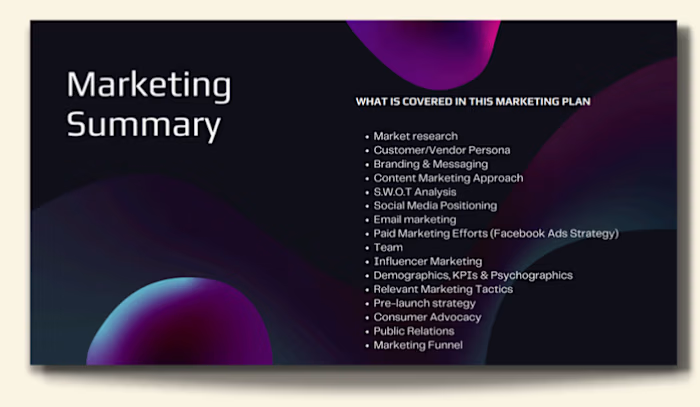
We also used polls extensively, but not just for engagement. Every poll was a data collection exercise. We were building a real-time picture of what our audience believed, feared, and wanted, and feeding that directly back into the content and product messaging.
Then came the paid side. I built a full acquisition funnel, TOF to BOF, with a retargeting layer sitting underneath it. Cold audiences at the top, warming them with content they already proved they engaged with, then converting at the bottom.
And with Malisse Tan, Bobble’s founder being notable in Malaysia for her brilliant work. That opened doors to a network of credible evangelists who actually matched the brand’s voice.
12 weeks later, average reach had gone from 8,895 to 32,400+ and more juicy stats.
Not from going viral. From a repeatable system built around knowing exactly who we were talking to and refusing to be boring about it.
The lesson isn’t “be controversial for controversy’s sake.” The lesson is: if your product operates in a space people are uncomfortable talking about, leaning into that discomfort with intention is often the most powerful positioning move available to you.
Most brands flinch. The ones that don’t, win the attention.
View full portfolio here
Like this project
Posted Apr 25, 2026
Period care is one of the most taboo topics in Southeast Asia. Most brands in that space post soft, clinical, safe content. Pastel colours, careful language...