
𝟗𝟗% 𝐨𝐟 𝐰𝐫𝐢𝐭𝐞𝐫𝐬 𝐚𝐫𝐞 𝐦𝐢𝐬𝐬𝐢𝐧𝐠 𝐭𝐡𝐢𝐬 𝐨𝐧𝐞 𝐭𝐡𝐢𝐧𝐠.
Writing is not about writing.
It’s about control…
Control over tone, control over words, control over sentence flow… and what to remove.
Most writers keep adding more.
But legends trim more.
The real job of a writer is simple:
choose precise words (not fancy ones)
tweak sentences until they feel natural
trim paragraphs until only value remains
And one more difference most people ignore:
Real writers take more time… and write less.
Others write more.
Once this foundation is strong, writing becomes structure.
> A hook title that stops the scroll…
> An opening that creates curiosity…
> A body that doesn’t feel flat…
> An ending that gives direction or leaves a clear next step.
Good writing doesn’t stay in one tone.
It moves - sometimes logical, sometimes emotional, sometimes sharp.
Subheadings (H2, H3) also matter.
For SEO, subheadings help both readers & search engines understand your content better, so keep the intent obvious.
Also, control your keywords.
Keep the primary around 1-2%, and use secondary ones naturally.
If it feels stuffed, it is stuffed.
In authority style blogs, flow matters more.Too many breaks reduce depth - fewer, stronger sections perform better.
For LinkedIn posts, simplicity wins.
Short paragraphs, strong first 2 lines, and easy to scan formatting matter more than perfect grammar.
The goal is to hold attention, not sound perfect.
Formatting matters.
Too much emphasis or emoji makes content noisy.
Use quotes, dashes & symbols with control.
Paragraph structure matters even more.
Use a mix of short, medium, and longer paragraphs to keep the flow natural.
A simple rule for long-form articles:
Break paragraphs every 50-70 words, and sections every 150-200 words to keep content readable & scannable.
In short-form content, break paragraphs more frequently - like in this post.
Sometimes, you can also use a run-in subheading to guide the reader without breaking the flow.
Numbers add clarity.
But overusing them feels forced.
Use them where they simplify the message, not decorate it.
Bullet points help when you want to simplify or highlight key ideas.
Use them for clarity, not for every section.
Too many bullets break the flow.
(As a rule: 2-3 bullet blocks & 2-5 points per block in a 1000 word article is enough.)
Structure should guide the reader…not interrupt the experience.
Before action, you need attention.
If the content is long, use matching visuals.
(You can also use visuals in short-form content.)
A relevant image or simple graphic breaks monotony, keeps the reader engaged, and makes your point easier to remember.
Because writing is not just language.
It’s attention management.
If you can’t hold attention, even good words won’t work.
Now comes the part most people confuse:
Content writing & copywriting are not the same.
They overlap, but the intent is different.
"Content builds trust"
"Copy drives action"
A good writer can work in one or both - that’s not the issue.
The real difference is understanding what the piece is supposed to do.
That’s why writing isn’t built in classrooms.
Writing is not just a skill… it’s an art.
You learn it by reading what works, observing patterns, and rewriting in your own way.
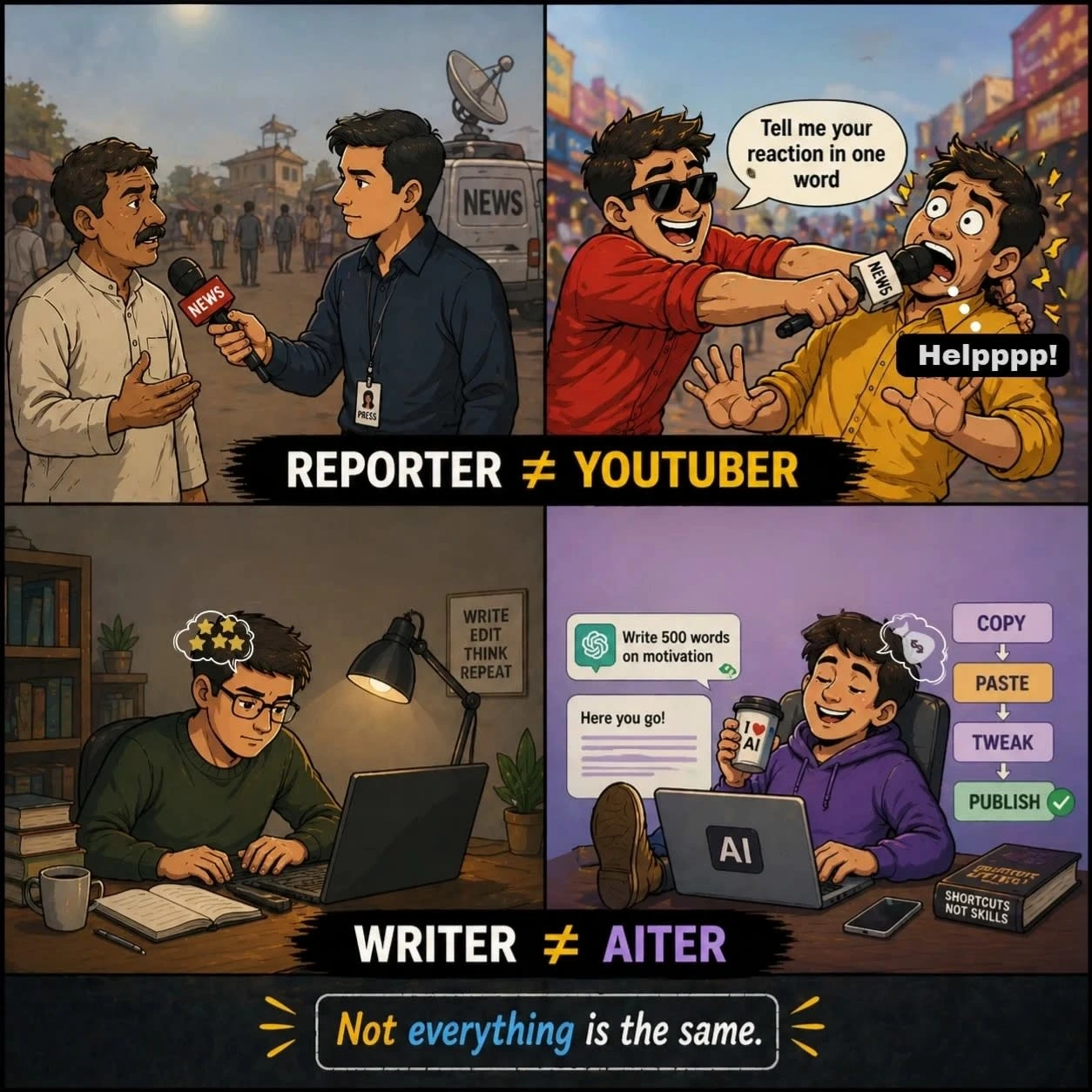
AI can help, but only if you use it right.
Use it for research and exploring ideas, not for dumping content.
For example, even this post is AI-assisted. The idea is mine. The execution is assisted.
(It took around 2 days to shape this piece.)
And how you end matters just as much.
Because…
Real readers don’t read.
They scan.
In the end, writing is not about writing.
It’s about control...
#ContentWriting #Copywriting #ContentStrategy #SEOContent #BlogWriting #ContentMarketing
0 likes · 0 views · Apr 27, 2026
𝟗𝟗% 𝐨𝐟 𝐰𝐫𝐢𝐭𝐞𝐫𝐬 𝐚𝐫𝐞 𝐦𝐢𝐬𝐬𝐢𝐧𝐠 𝐭𝐡𝐢𝐬 𝐨𝐧𝐞 𝐭𝐡𝐢𝐧𝐠. Writing is not about writing. It’s about control… Control over tone, control over...
