Courtly — Tennis Booking App UX/UI Design

Anna Peredelskaia


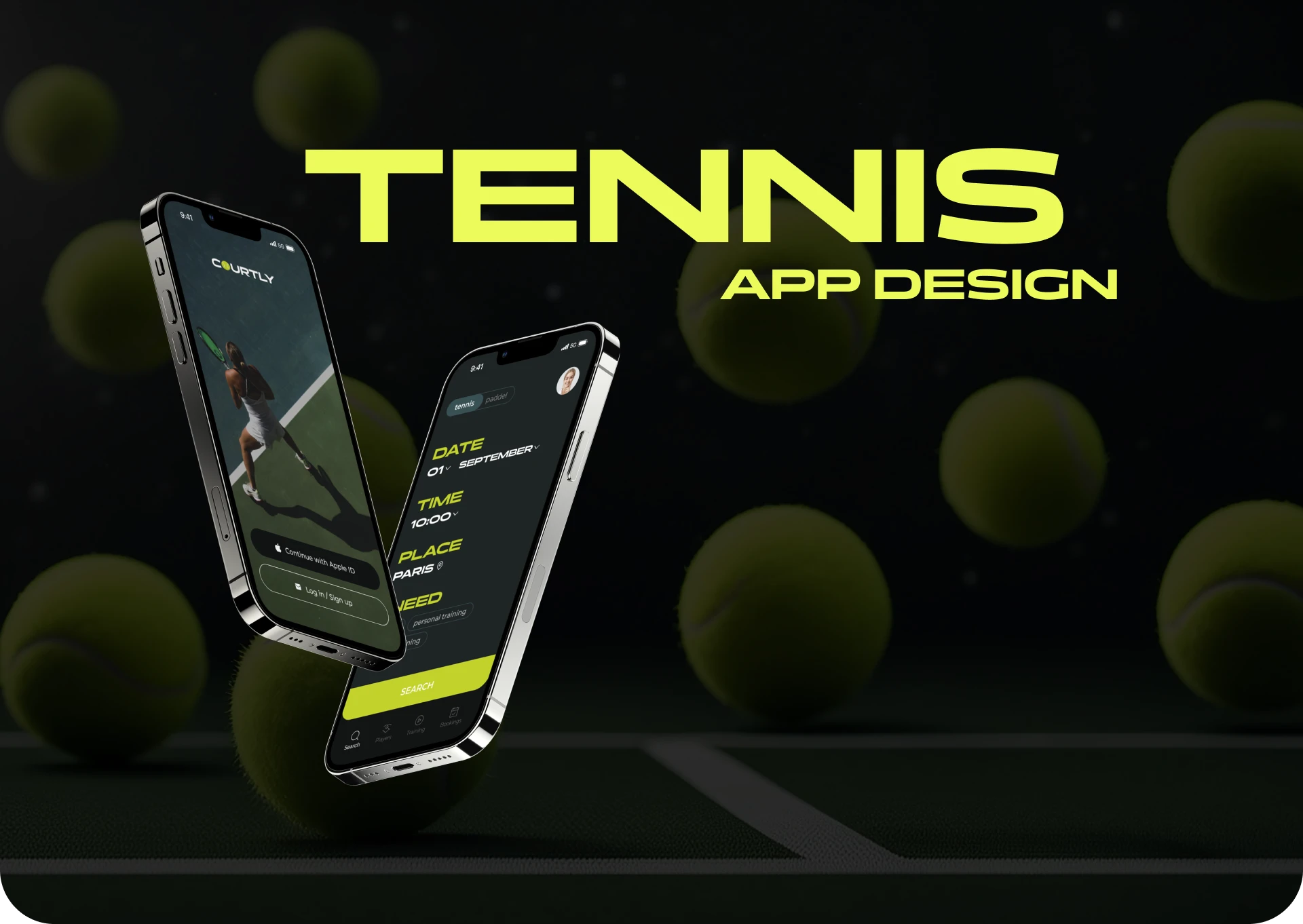
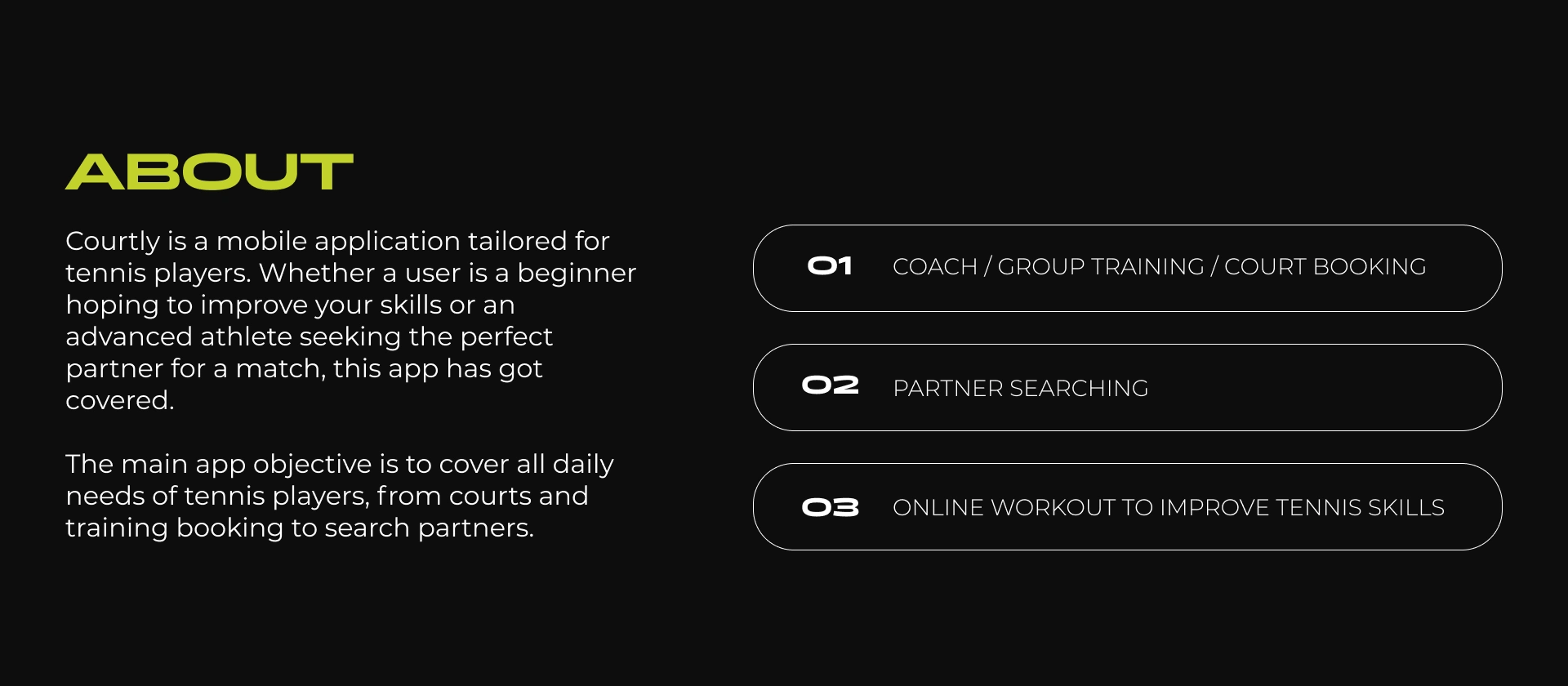
Courtly sports app concept addressing everyday tennis needs: finding courts, booking coaching sessions, meeting playing partners, and exploring training videos.
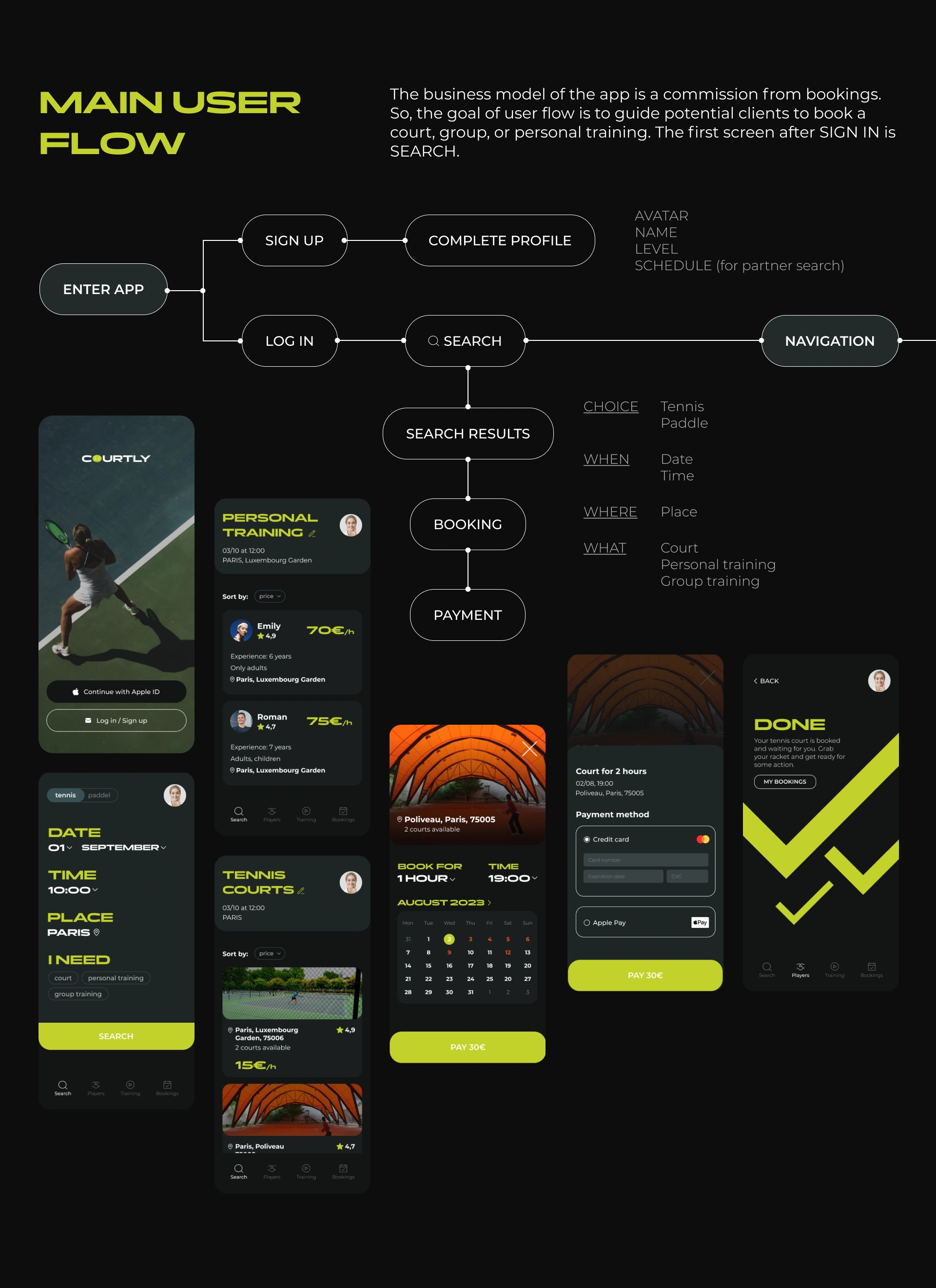
Mobile app user flow mapping the Courtly booking journey, from sign-in and search to selecting a court or coach, payment, and confirmation.
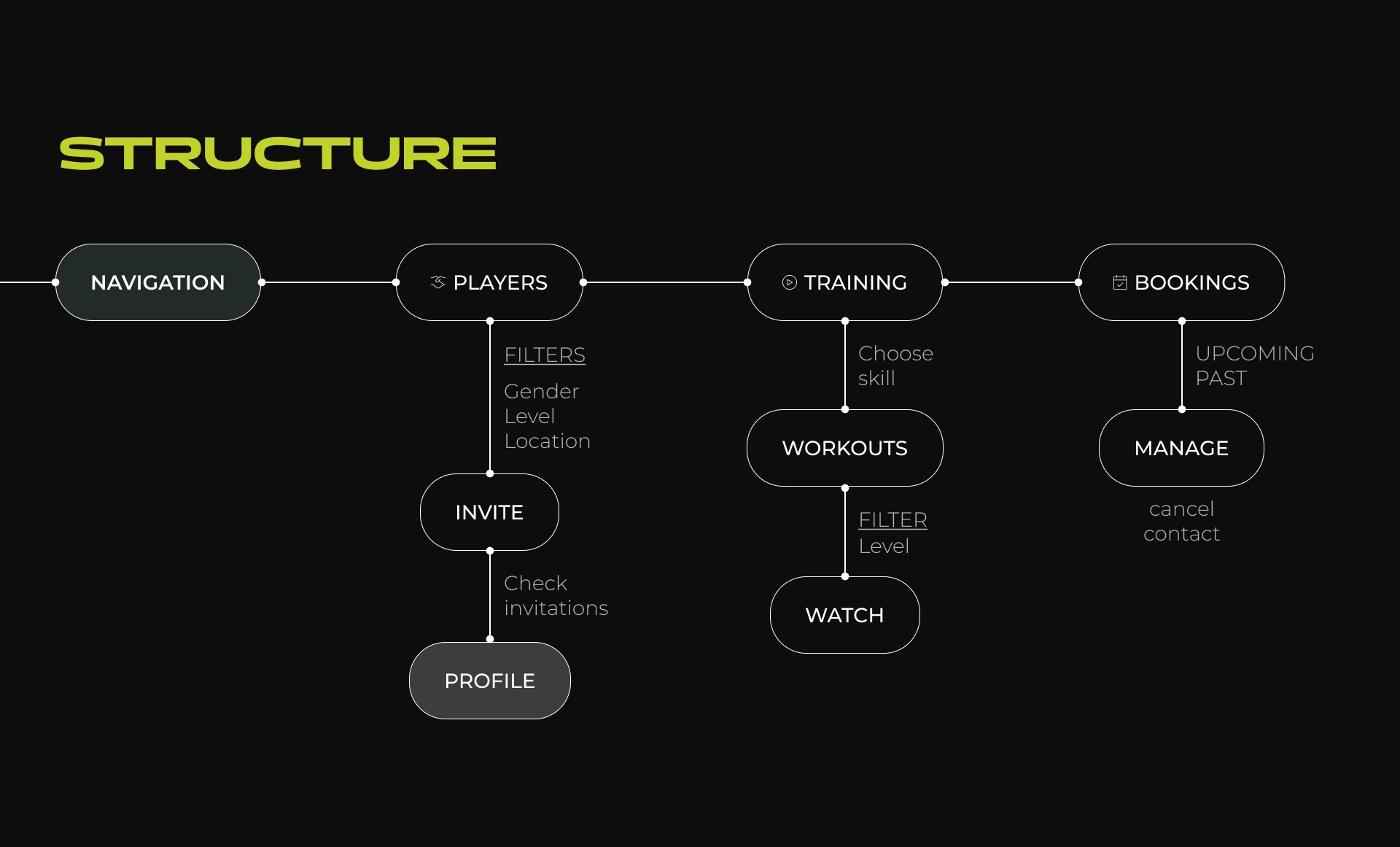
Information architecture for Courtly, organizing player discovery, invitations, online training, and booking management into connected user journeys.
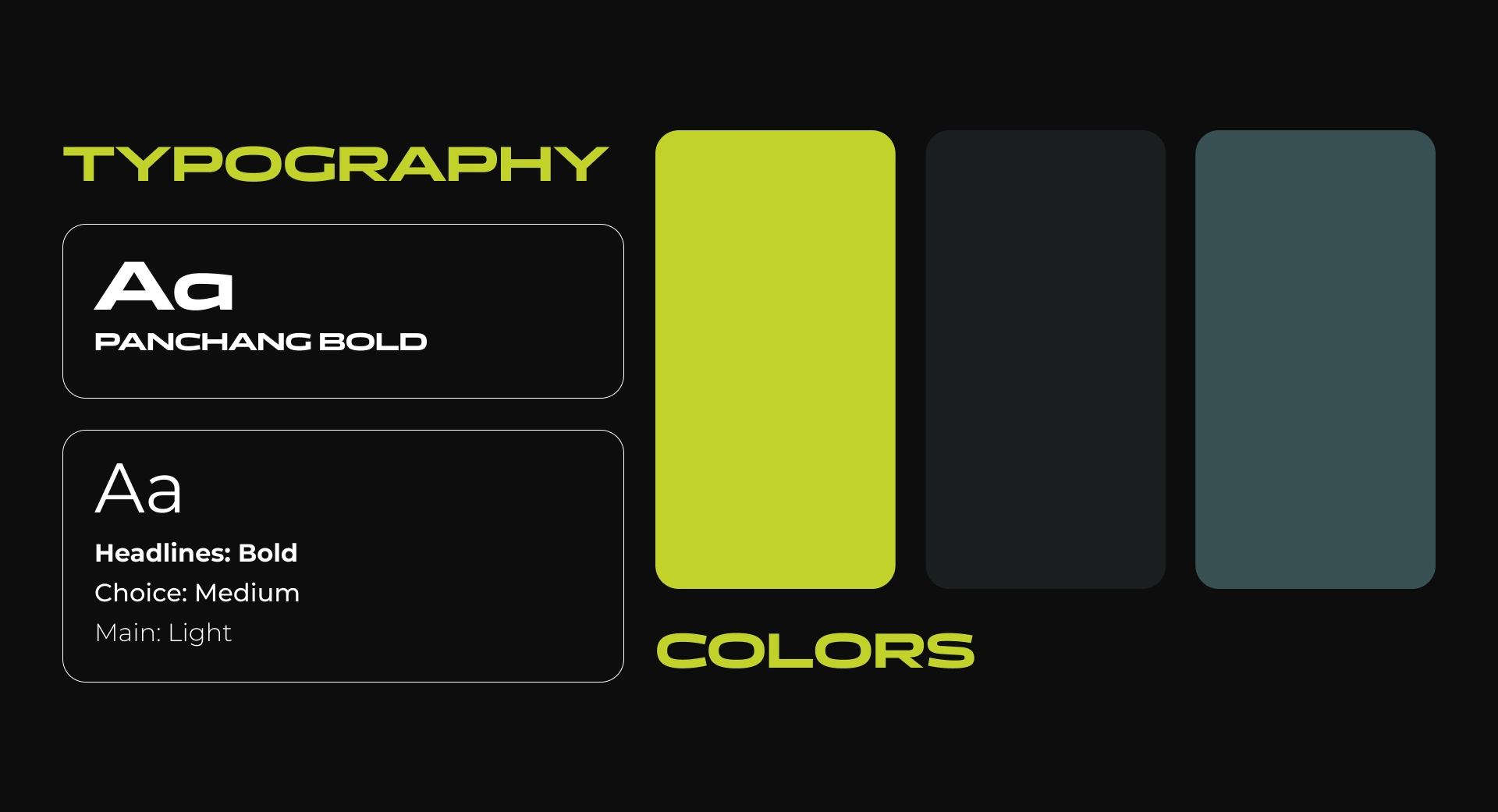
Visual foundations for a tennis mobile app, combining Panchang display typography, dark surfaces, muted teal, and lime accents.
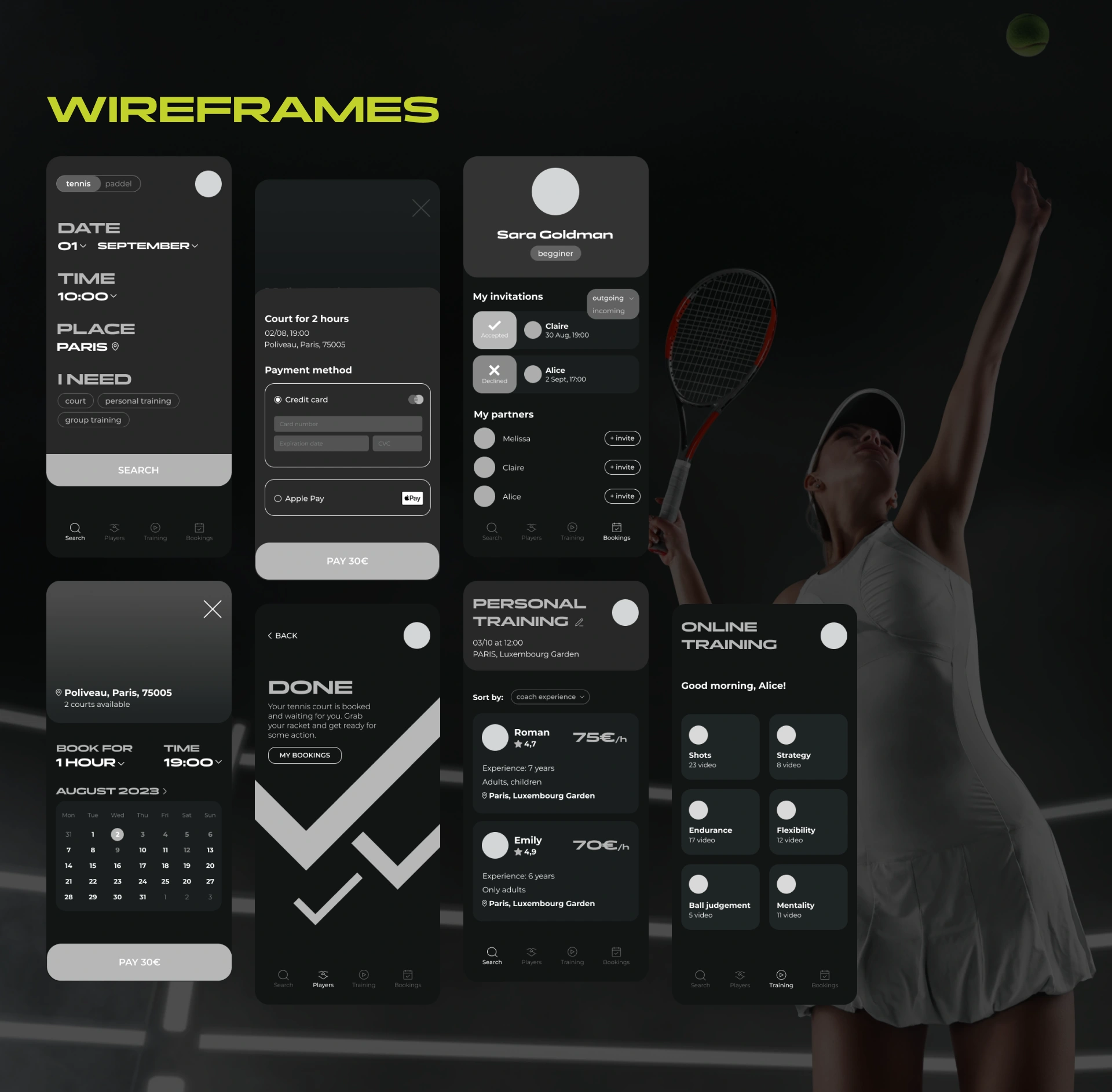
Mobile UX wireframes exploring search filters, court reservations, payment, coach comparison, player profiles, and training content.
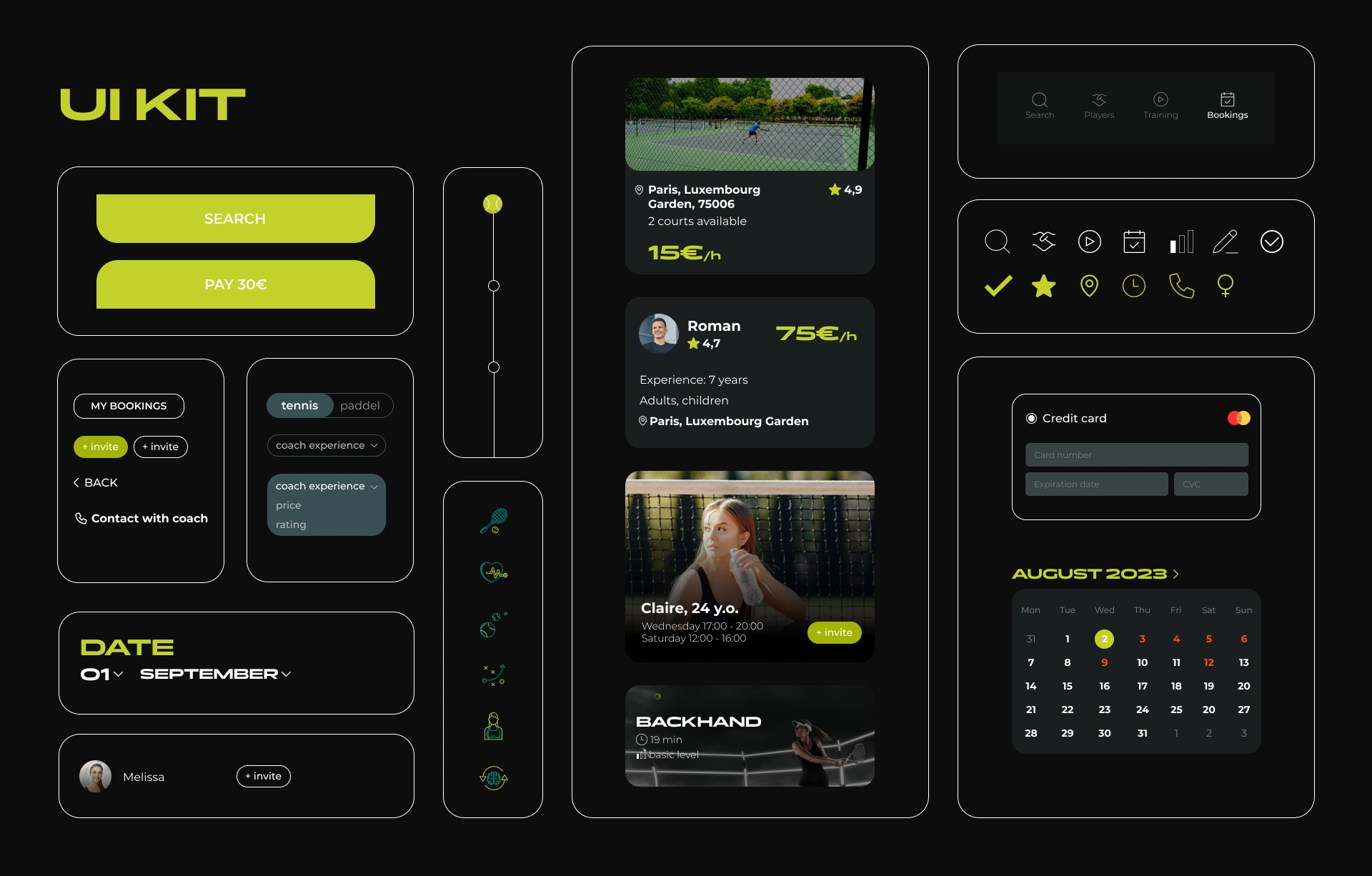
Courtly mobile UI kit featuring reusable booking cards, player profiles, buttons, filters, navigation icons, calendar controls, and payment fields.
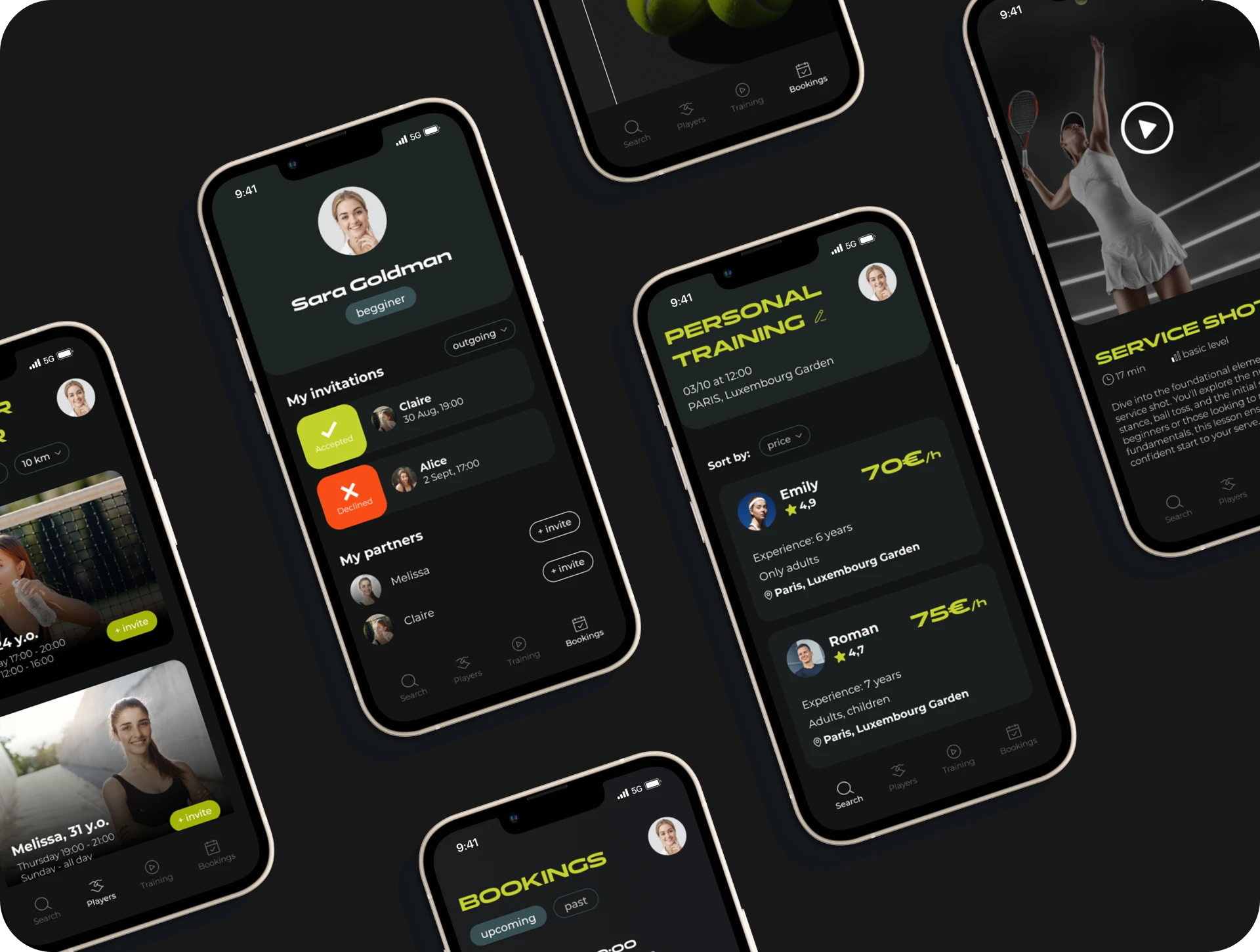
Courtly mobile interface design showcasing player invitations, coach listings, booking management, and video lessons within a consistent sports visual identity.
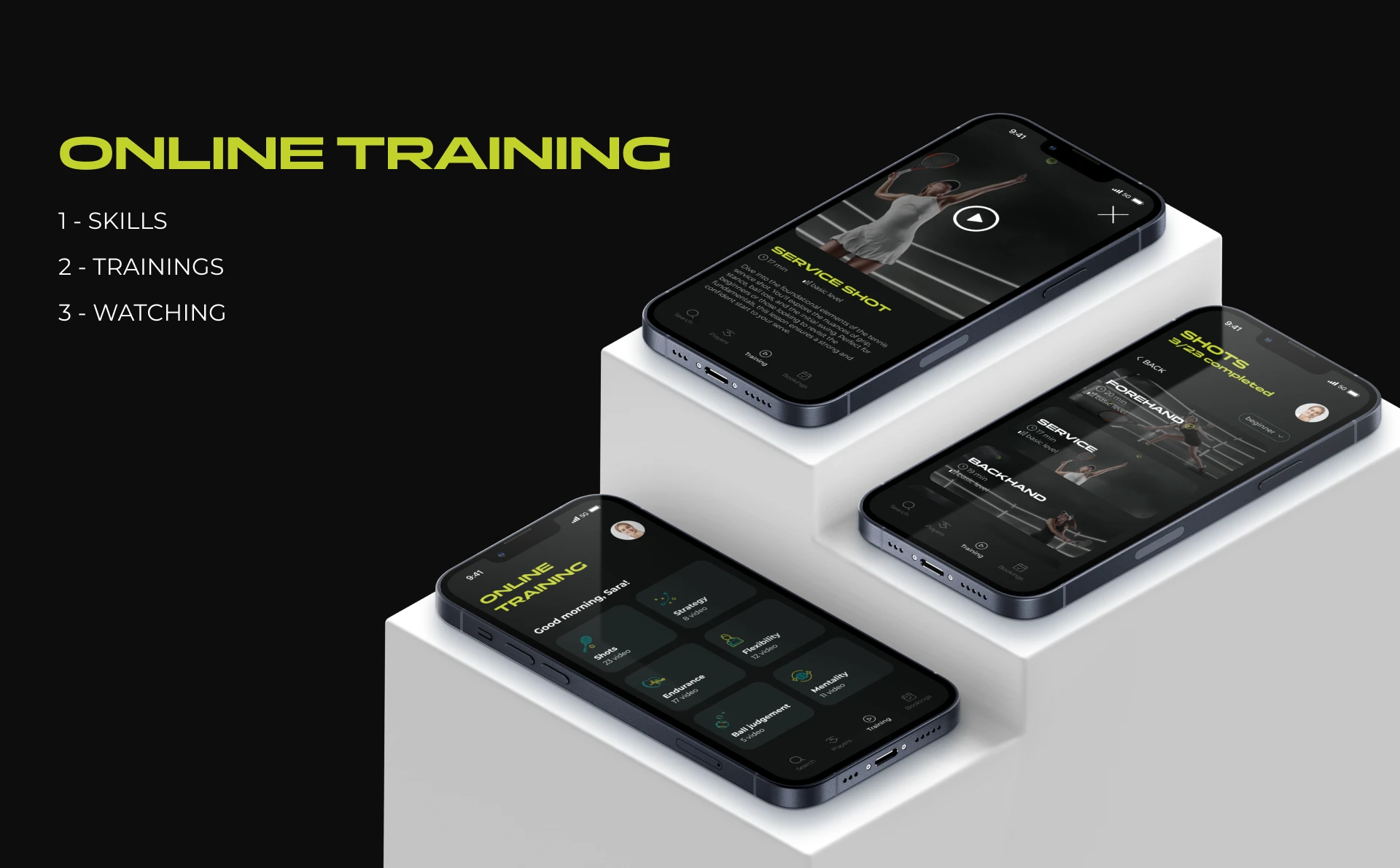
Online tennis training UX/UI, guiding users from skill categories to lesson selection and video viewing, with duration and difficulty information.
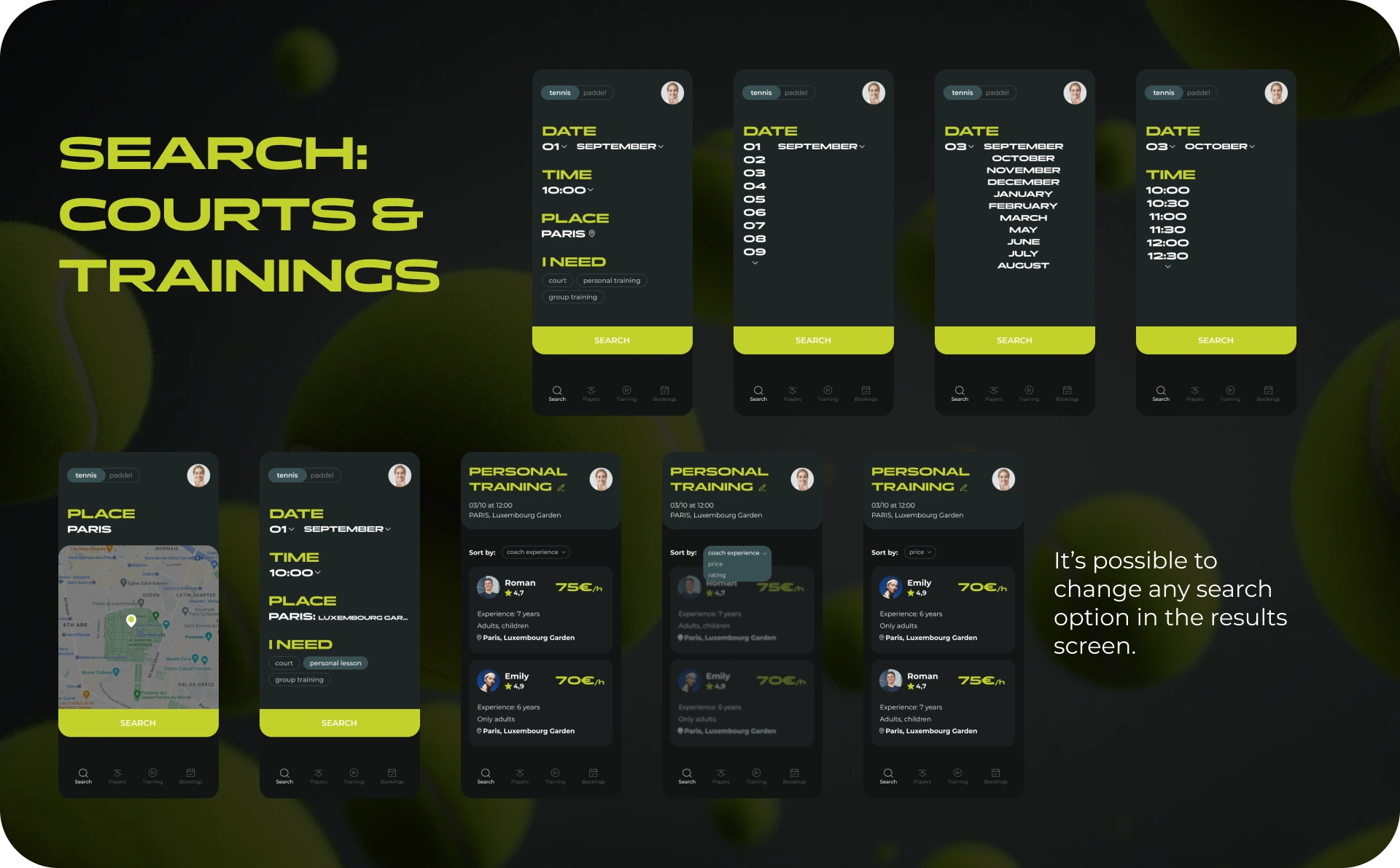
Court and coaching search UX with date, time, location, and session filters, plus editable search criteria and sortable results.
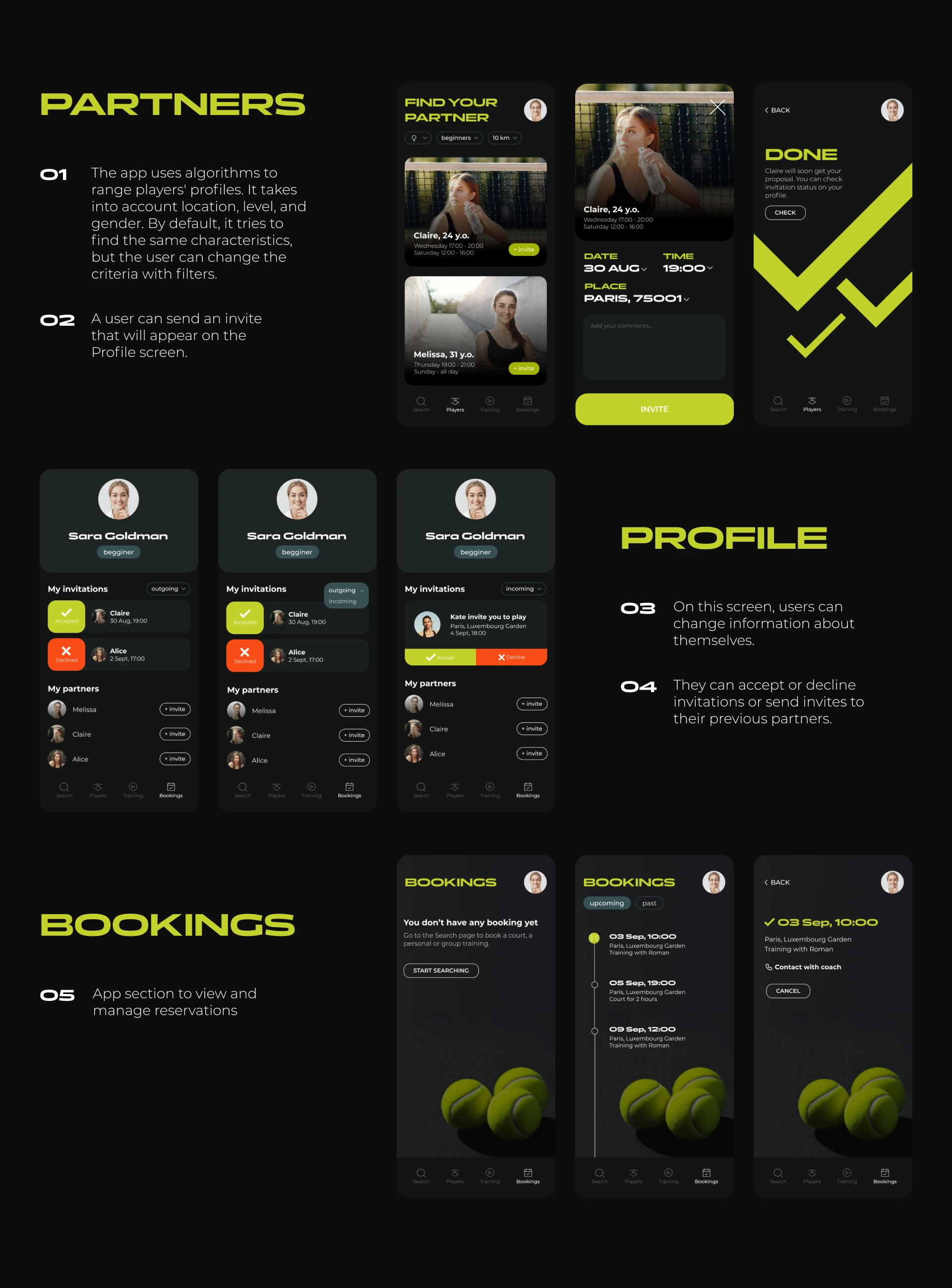
Tennis partner discovery and booking management UI, covering player filters, match invitations, response states, upcoming reservations, and empty states.
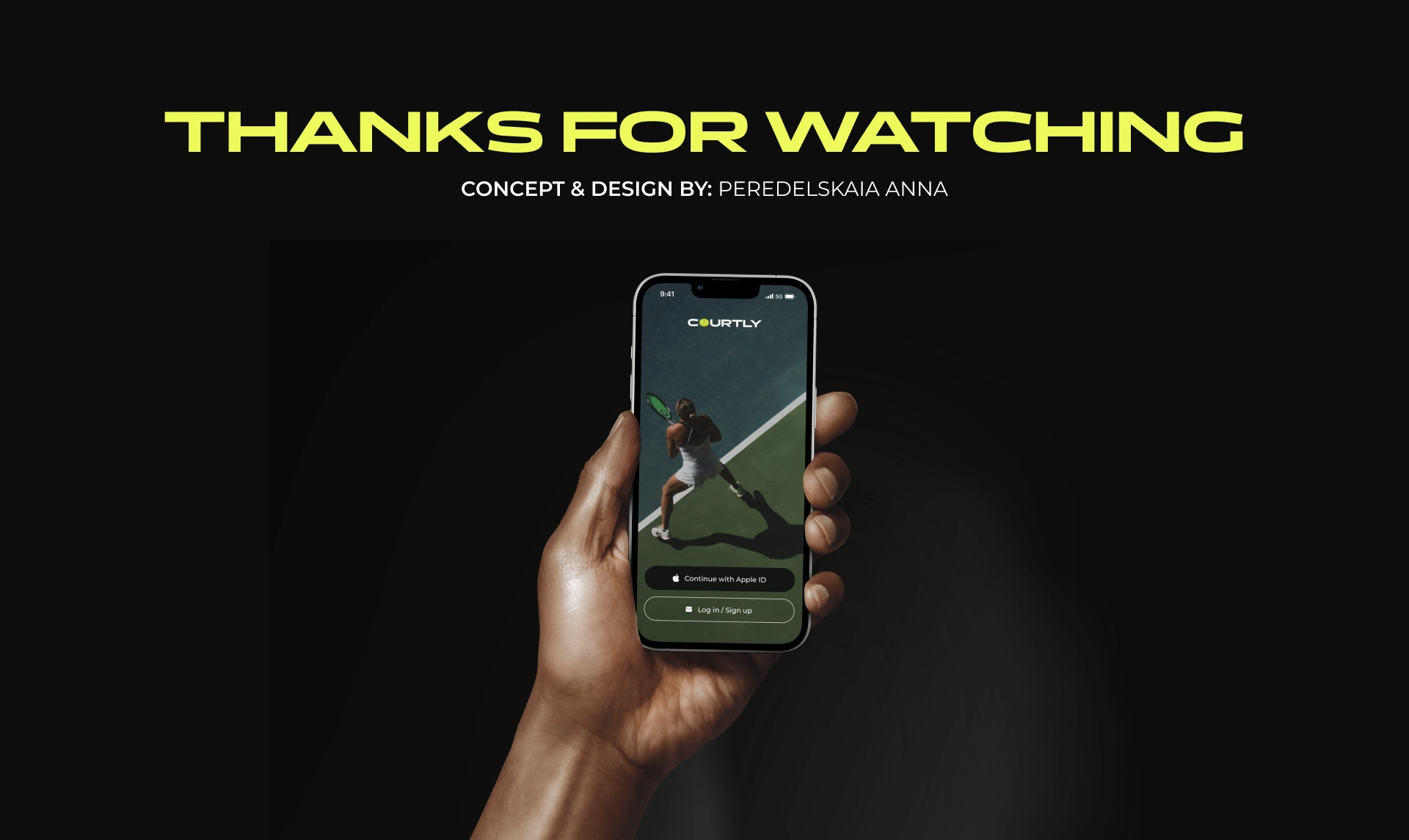
Courtly — a self-directed mobile app UX/UI practice project by Anna Peredelskaia, exploring tennis booking, player connections, and training.
Project context
Courtly is a mobile app concept I developed as a practice project to consolidate my UX/UI skills. After learning the foundations, I wanted to apply them to a product with several connected journeys: booking a tennis court, finding a coach, arranging a match, and accessing training content.
My work covered user flows, information architecture, wireframes, visual direction, and a reusable UI kit.
Connecting product structure to the core task
The concept used a booking commission model, which gave the main journey a clear focus: helping players find and reserve a court or training session.
I made search the starting point for returning users, with date, time, location, and session type as the main inputs. This was an exercise in connecting a proposed business model to navigation and screen hierarchy.
Supporting activities — finding partners, watching lessons, and managing reservations — received their own sections so they could remain accessible without crowding the booking flow.
Designing for comparison and adjustment
Court and coach searches require different information. Court listings emphasize location, availability, and hourly price. Coach listings add experience, ratings, and the audiences they teach.
I used a consistent card structure while adapting the content to each decision. The results screens also allow users to change search criteria and sorting without starting the search again.
This part of the project helped me practice designing the steps between an initial request and a final choice.
Extending the journey beyond confirmation
I explored what happens after a booking or invitation is sent. Reservations have upcoming and past views, with access to details, cancellation, and coach contact. Player invitations include incoming and outgoing views, along with accepted and declined states.
I also designed an empty booking state that directs users back to search. Working through these states helped me move beyond ideal screen sequences and consider how the interface responds to different situations.
Developing a reusable visual language
The visual direction draws on tennis through lime accents, dark court-inspired tones, sports photography, and bold display typography.
I developed recurring components for listings, filters, invitations, calendars, and navigation. This let me practice keeping several feature areas visually connected while giving each screen its own content hierarchy.
What the project helped me develop
Courtly strengthened my ability to work from a product idea through flows and wireframes to a consistent interface. It also gave me practice balancing a core transaction with supporting social and learning features.
The outcome was a UX/UI design concept. Its value in my portfolio is the reasoning behind the structure and the range of interface states explored, rather than measured results from a launched app.
Like this project
Posted Sep 8, 2026
Designed a tennis app concept with court booking, coach search, player invitations, and video training, supported by user flows, wireframes, and a UI kit.
Likes
1
Views
11