AI Application Development: From ML Models to Production

Muhammad Usama


What I Do
I build AI-powered applications that go beyond chatbot wrappers. My AI work spans computer vision, conversational AI, voice synthesis, NLP, recommendation engines, and vector-based memory systems, all shipped inside production mobile apps with real users.
AI Apps I've Built
Savage Mushroom Fitness — AI Personal Trainer
Built a conversational AI coaching engine that adapts to each user's goals, fitness level, and injury history. The system uses OpenAI for coaching intelligence, ElevenLabs for real-time voice guidance during workouts, and pgvector for persistent memory that remembers user context across sessions. The AI generates personalized meal plans, suggests progressive overload adjustments, and coaches users through exercises with voice cues.
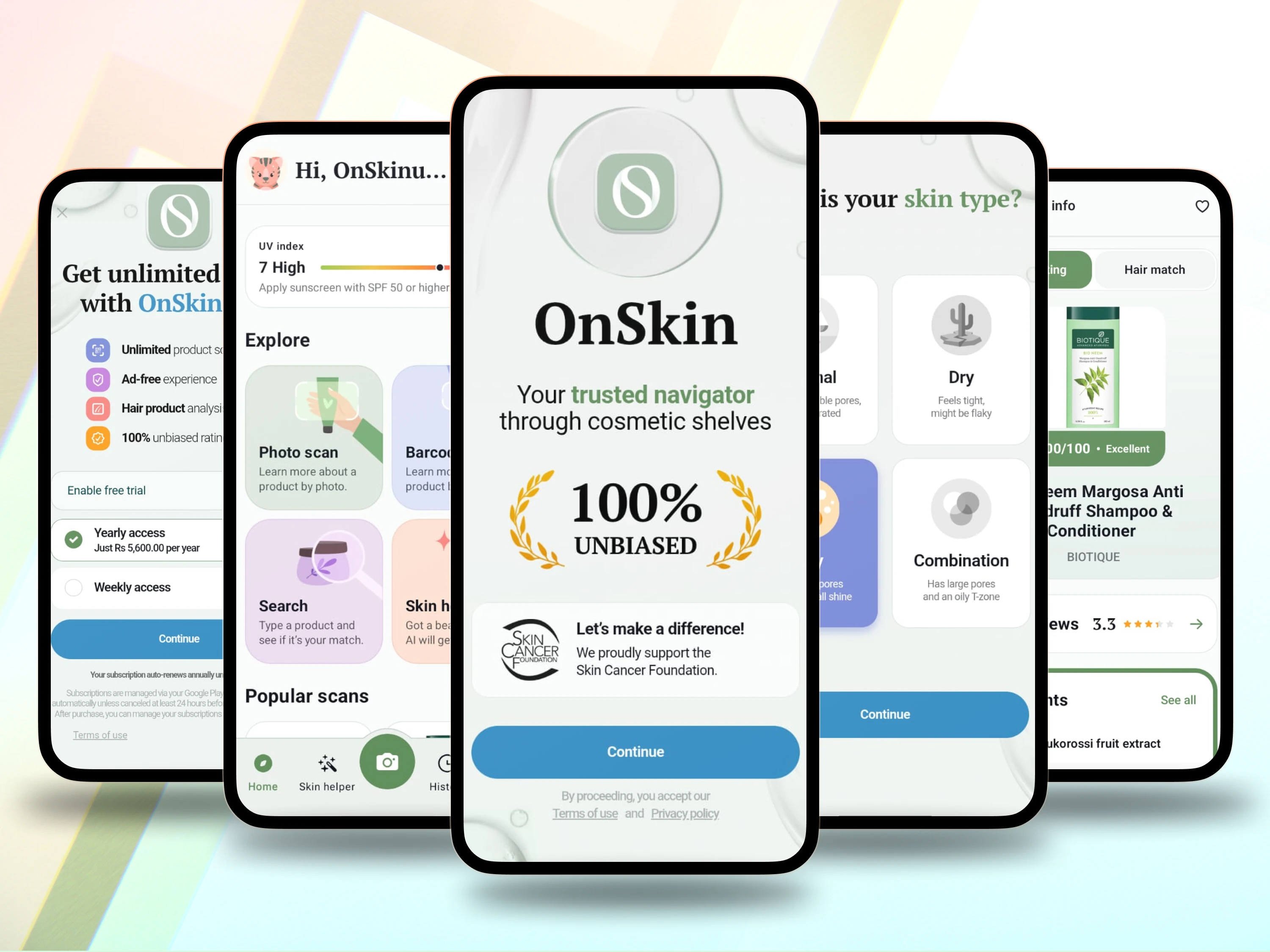
AI Skincare Scanner — Computer Vision + TensorFlow
Built a custom computer vision pipeline using TensorFlow Lite that runs entirely on-device. The app scans a user's face, segments it into zones (forehead, cheeks, chin, nose, under-eyes), and detects conditions like acne, dark spots, wrinkles, and texture issues in under 2 seconds. OpenCV handles face detection and zone mapping. AWS Rekognition serves as a server-side fallback for complex conditions. The app generates personalized skincare routines and tracks skin improvement over time.
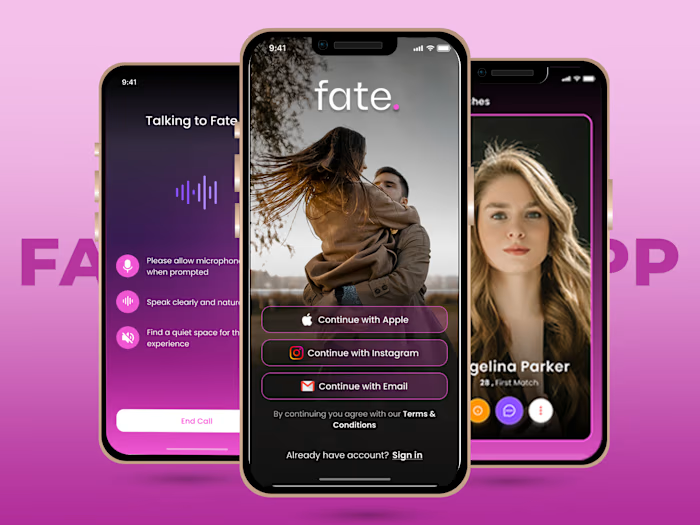
AI Dating App — Voice-First + NLP Matching
Built an AI-powered matching engine that learns from user behavior: swipe patterns, conversation engagement, and feedback signals. The system generates contextual icebreakers using NLP based on shared interests and profile data. Real-time voice chat runs on WebRTC with sub-200ms latency. Dual verification (photo + voice authentication) reduces fake profiles.
Dating & Matchmaking App — AI Compatibility Engine
Built an AI compatibility scoring system that goes beyond basic preference matching. The engine analyzes personality questionnaire responses, behavioral patterns, and interaction history to surface high-quality matches.
Fitness & Workout App — AI Personalization
AI-driven workout personalization that adapts training plans based on user progress, recovery patterns, and wearable data from Apple HealthKit.
Technical Capabilities
Conversational AI: OpenAI API integration with context-aware prompting, persistent memory via pgvector, and multi-turn conversation management
Computer Vision: TensorFlow Lite on-device inference, OpenCV face detection and segmentation, AWS Rekognition for server-side analysis
Voice AI: ElevenLabs real-time voice synthesis, WebRTC voice chat infrastructure
NLP: Contextual text generation, sentiment analysis, conversation starters, content moderation pipelines
Recommendation Engines: Collaborative filtering, behavioral learning, personality-based matching algorithms
Vector Databases: pgvector for semantic search and persistent AI memory
My AI Stack
LLMs & APIs: OpenAI API, Anthropic Claude
Voice: ElevenLabs, WebRTC
Computer Vision: TensorFlow Lite, OpenCV, AWS Rekognition
Vector Storage: pgvector (PostgreSQL)
Infrastructure: AWS Lambda, S3, EC2
Mobile: React Native (all AI features ship inside production mobile apps)
Backend: Node.js, PostgreSQL, Firebase
How I Approach AI Projects
I don't bolt AI onto apps as an afterthought. I architect the AI layer as a core product feature from day one: data pipeline, model selection, inference optimization (on-device when possible for speed and privacy), fallback strategies, and continuous improvement loops. Every AI feature I build ships inside a real app with real users, not a demo notebook.
Like this project
Posted Jul 6, 2026
AI-powered production apps: computer vision, conversational AI, voice synthesis, NLP matching, and vector memory systems. TensorFlow Lite, OpenAI, ElevenLabs, pgvector. All shipped inside real mobile apps.
Likes
1
Views
18
Timeline
Mar 1, 2025 - Jun 30, 2026